Ranunculaceae

(D.Don) Holub

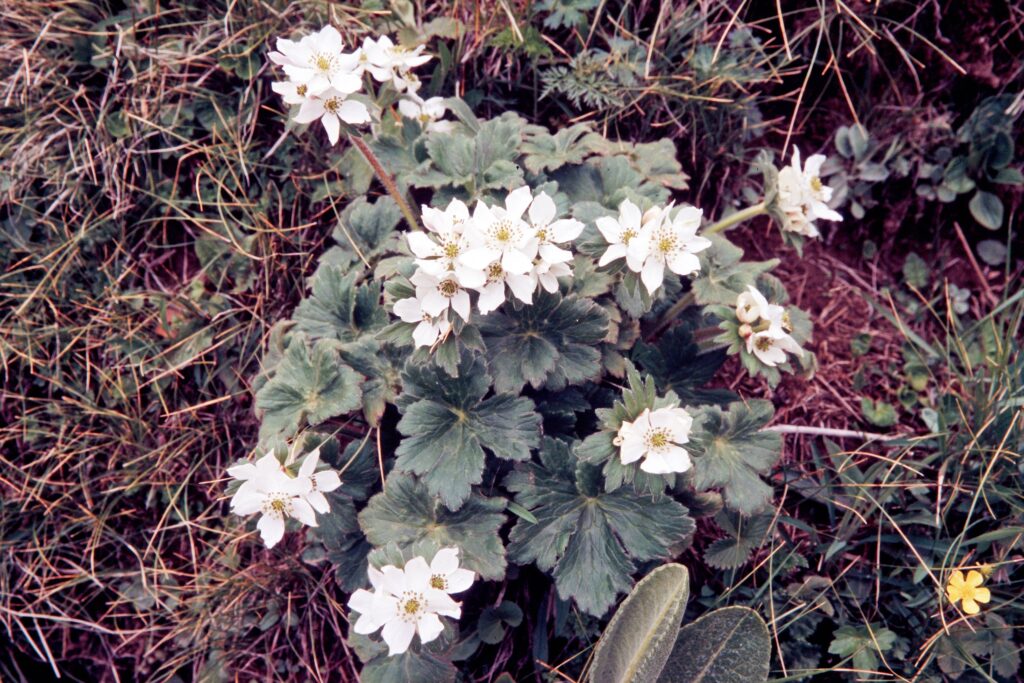
Nepal 2001 432 ergebnis ergebnis
Nepal (Gorkha) Laprak 1900m, May

Description

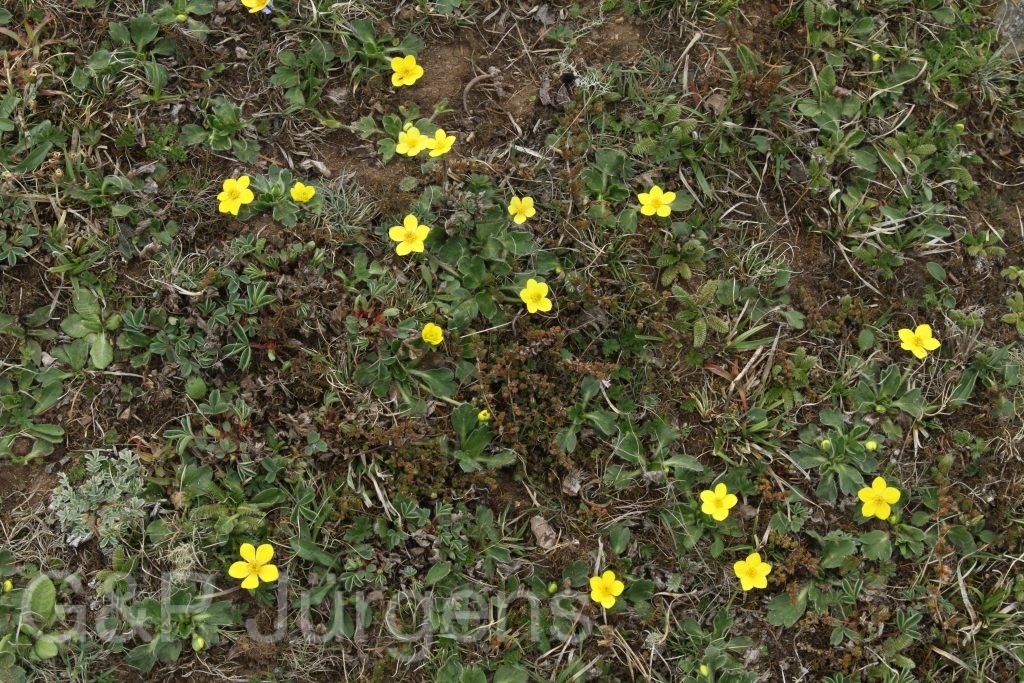
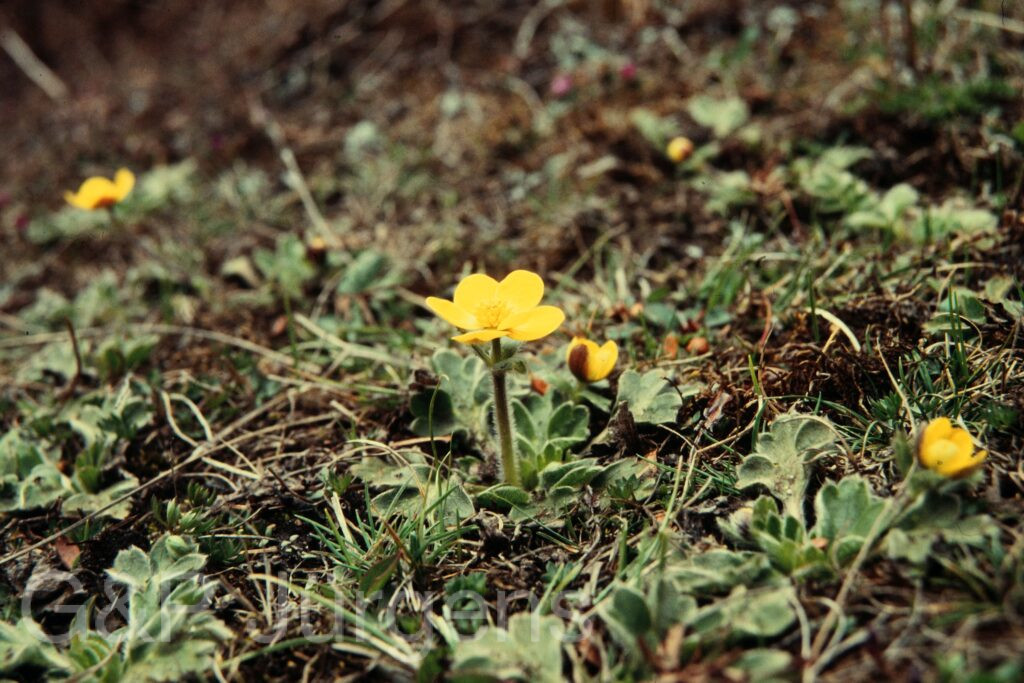
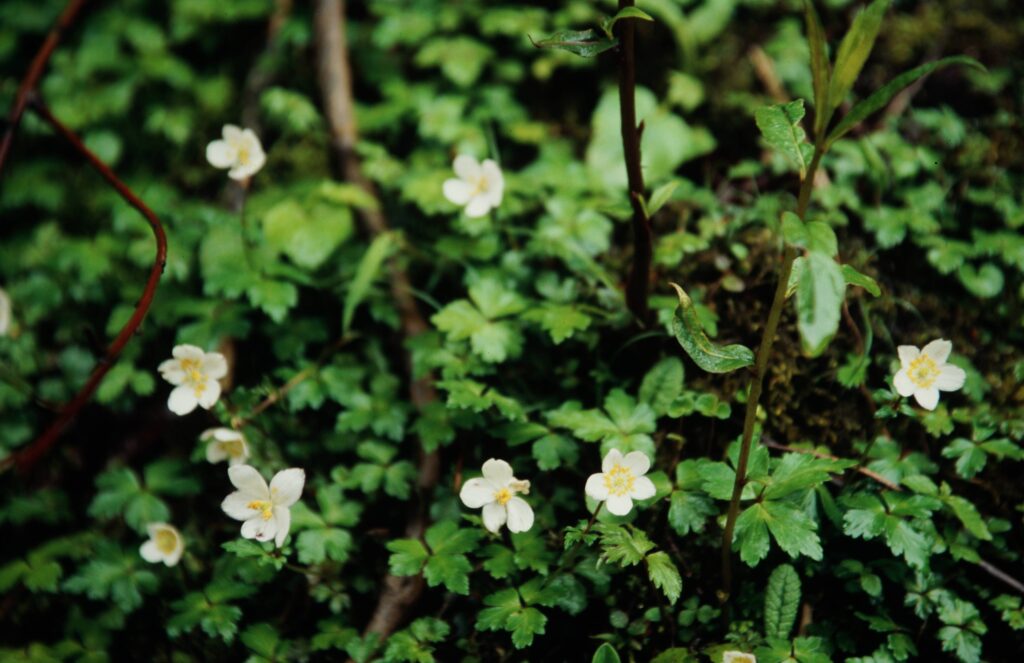
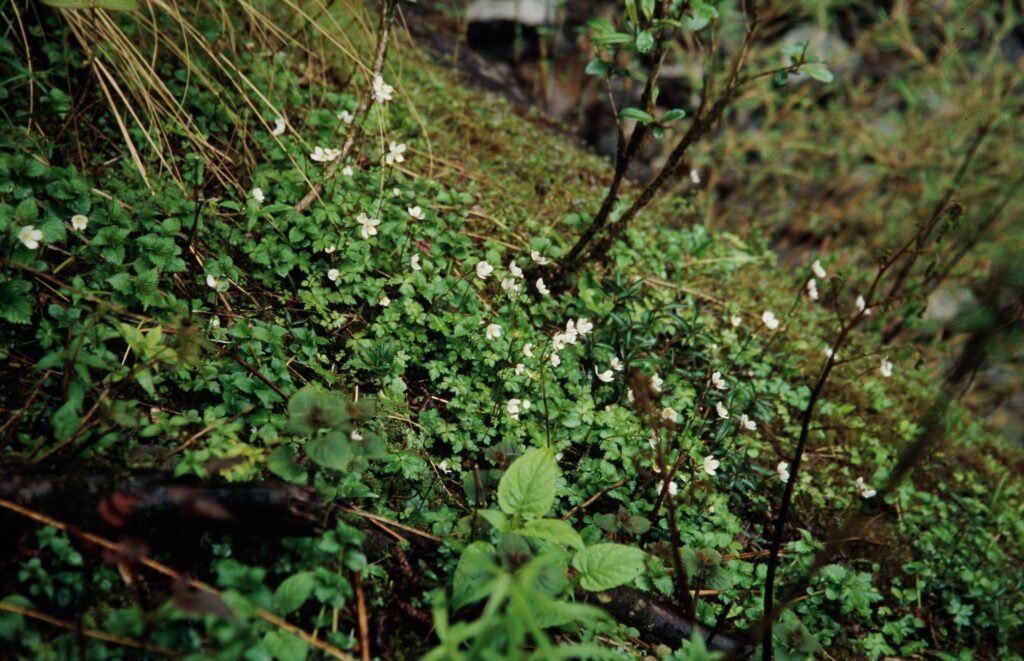
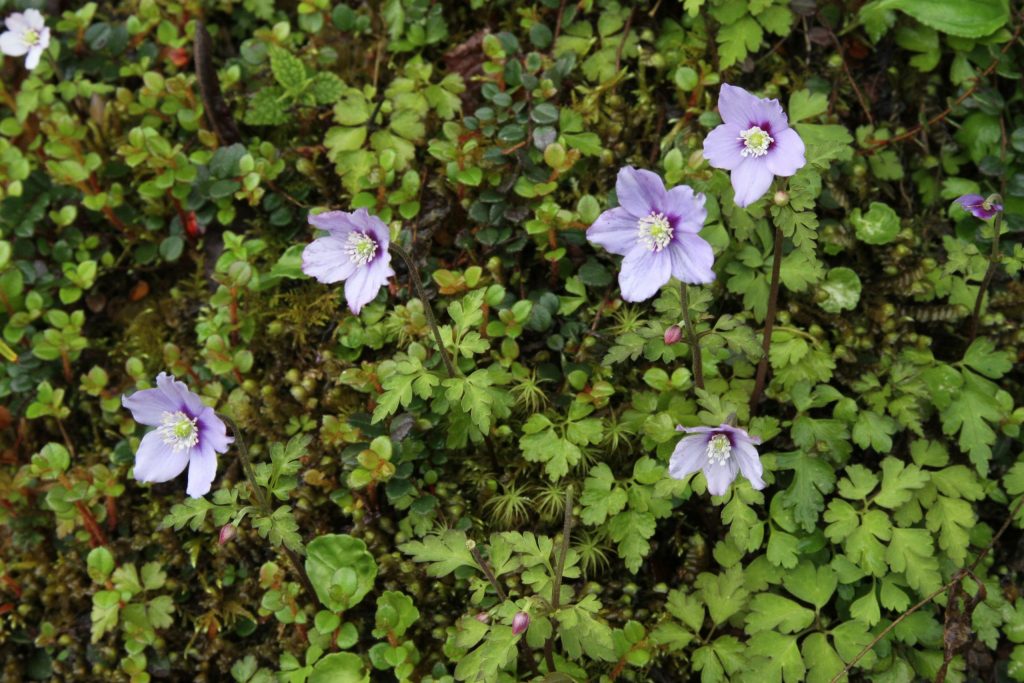
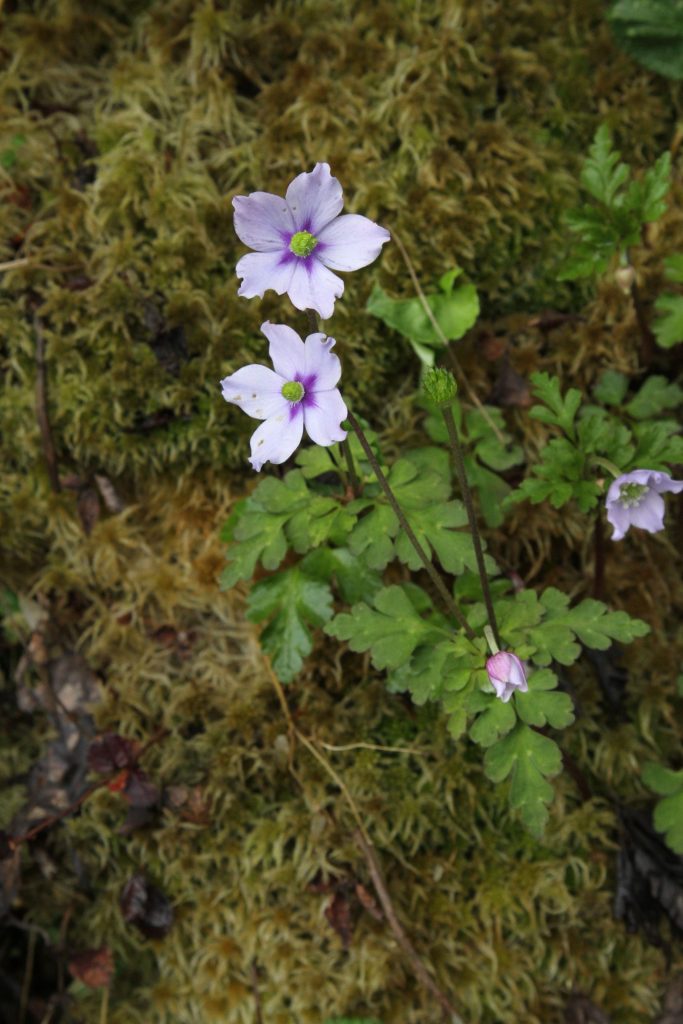
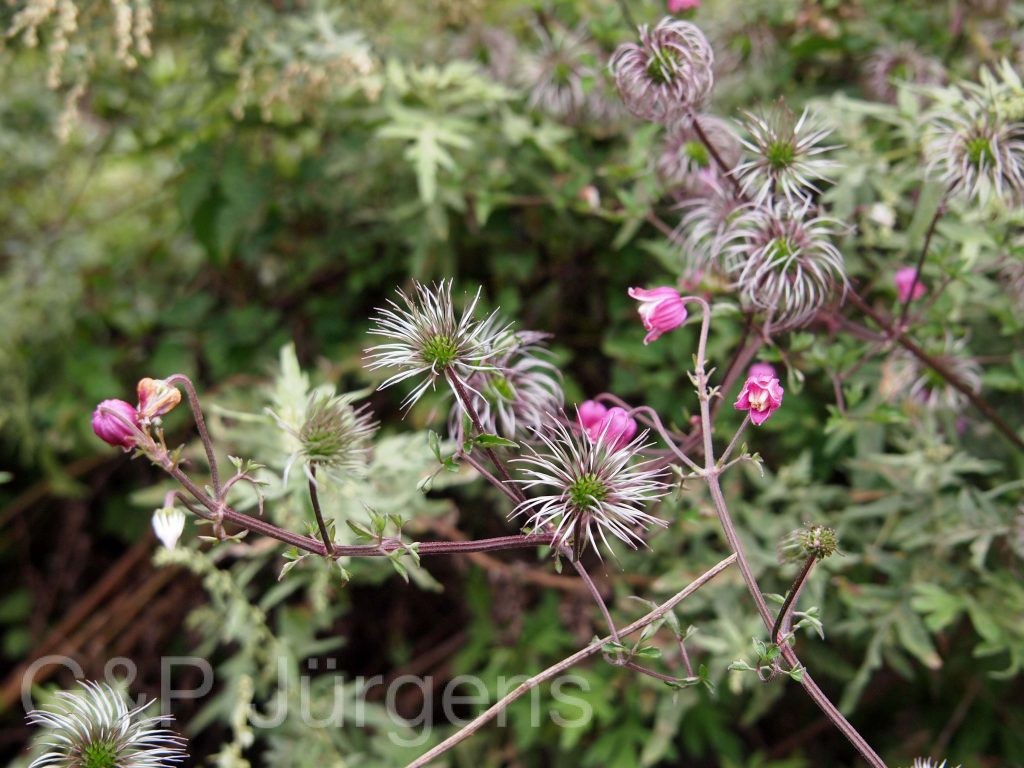
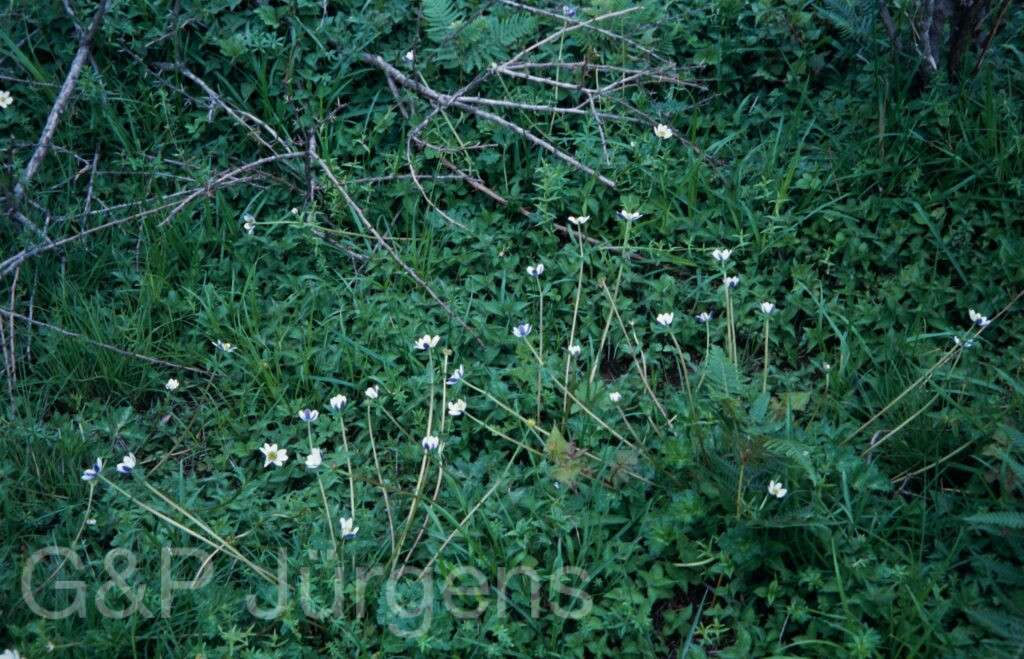
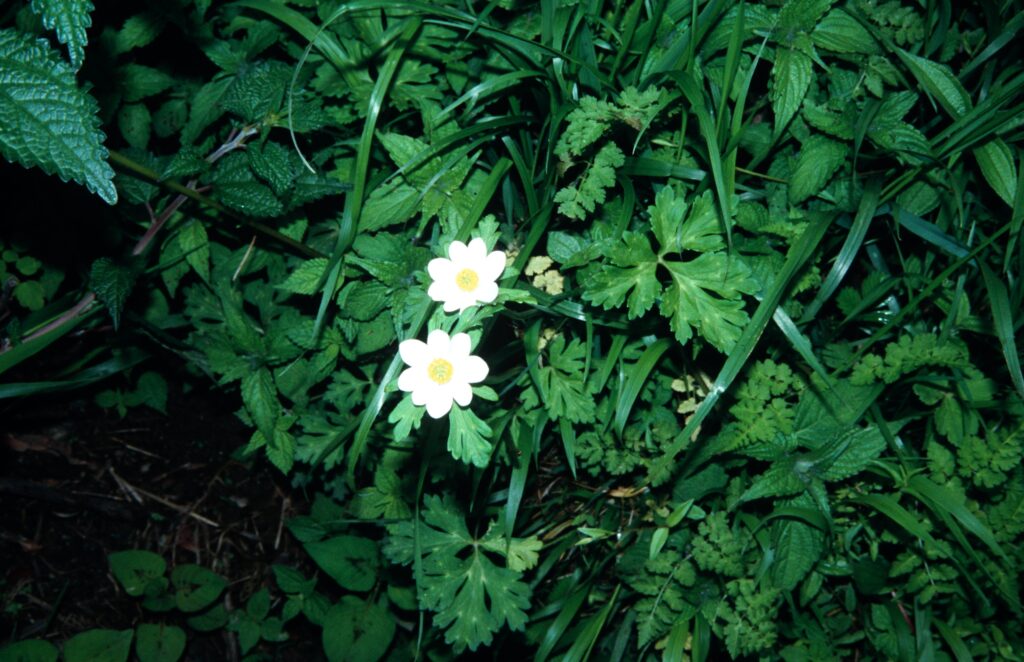
Anemonastrum elongatum is a perennial herb of the temperate and subalpine Himalaya and adjacent Sino-Himalayan ranges, distributed from Nepal and India eastward through China and southward to Myanmar, with peripheral records in Sri Lanka and beyond (gbif_countries: NP, IN, CN, CA, LK, MM, ZZ); GBIF documents some 113 occurrences. It favours moist forest margins, shaded banks, grassy slopes and streamsides, ranging from warm-temperate woodland into the lower subalpine zone. The illustrated collections span a broad elevational gradient, from Laprak in Gorkha at about 1900 m to Nasem Pati in Helambu near 3550 m, both flowering in May at the onset of the monsoon.

The plant arises from a stout, ascending rhizome and produces erect, hairy stems bearing long-petiolate basal leaves that are palmately three- to five-lobed, the lobes coarsely toothed and clothed in appressed hairs. An involucre of similar but shorter-stalked leaves subtends the inflorescence, which is an elongate, few- to several-flowered cyme borne on slender, villous peduncles. The flowers lack true petals; the showy perianth consists of white to faintly tinged sepals surrounding numerous yellow stamens and a central cluster of carpels. The fruit is an aggregate of compressed, laterally winged achenes tipped with a short persistent style.

Long placed in a broadly circumscribed Anemone, the species is now referred to the segregate genus Anemonastrum, reflecting molecular and morphological recognition of natural lineages within tribe Anemoneae. Its elongating fruiting axis, evoked by the epithet, distinguishes it from allied taxa. Widespread and locally common, it is of no conservation concern, and its broad ecological amplitude makes it a characteristic component of Himalayan herb communities.

Author: (D.Don) Holub · Sources: POWO (Kew), GBIF, Flora of Nepal, Flora of China, Annotated Checklist of the Flowering Plants of Nepal, Tamura's monograph of Ranunculaceae
(D.Don) Mosyakin

Bhutan2014 516
Bhutan Yatong-La 3200m, May
Nepal 99 82 ergebnis
Bhutan Bhulbhule 3150m, June

Description

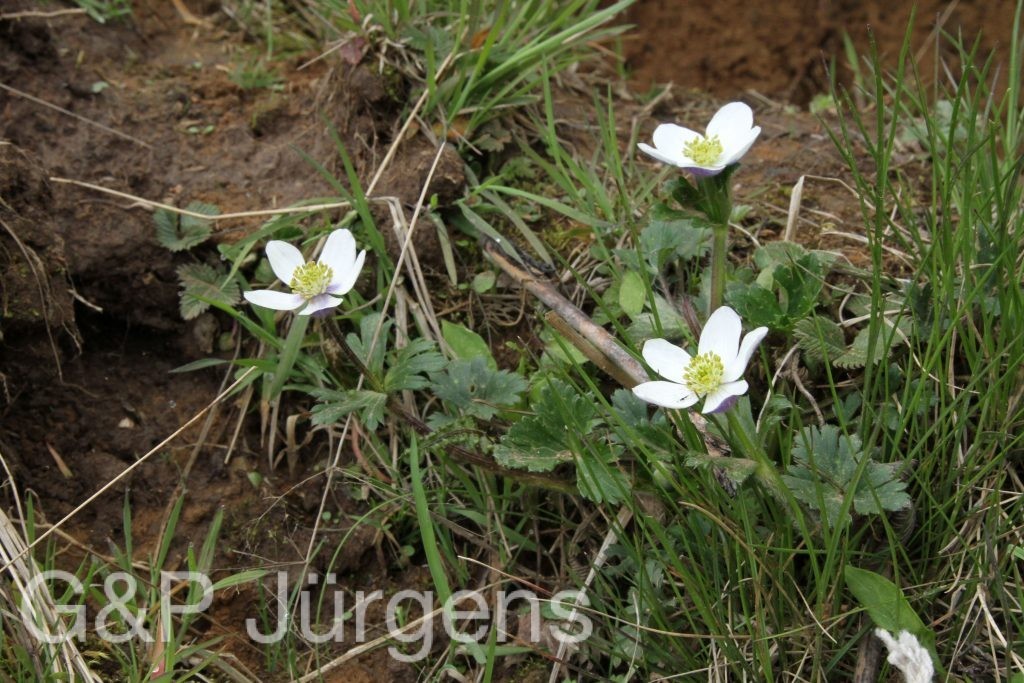
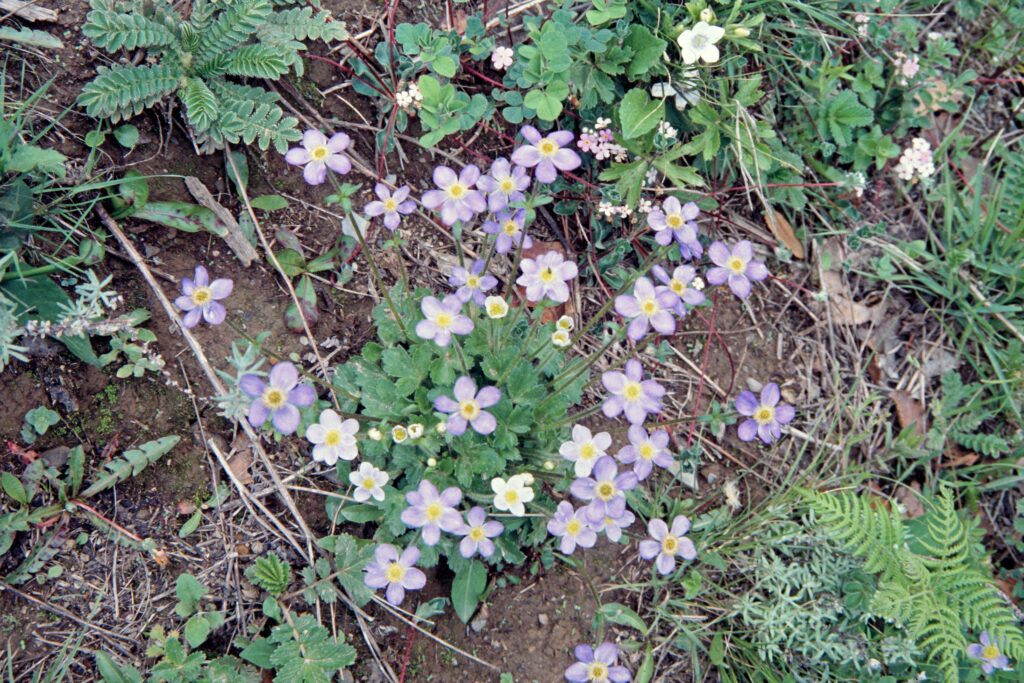
Anemonastrum obtusilobum, long known as Anemone obtusiloba, is a widespread Himalayan and Central Asian alpine herb recorded from China, India, Nepal, Pakistan, Bhutan, Myanmar, Afghanistan, Kazakhstan and Kyrgyzstan, with a substantial 825 occurrences in GBIF. It is a plant of open alpine and subalpine meadows, grassy slopes, forest clearings and stony turf, typically between 2500 and 4500 m. The localities cited, Yatong-La at 3200 m in May and Bhulbhule at 3150 m in June in Bhutan, are characteristic of the moist, herb-rich montane grassland where it carpets slopes in spring and early summer.

The species is a tufted perennial herb from a stout, often branched rootstock clothed with the fibrous remains of old leaf bases. The basal leaves are long-petiolate and palmately three-lobed, the lobes broad and obtusely toothed (hence obtusilobum), softly hairy and somewhat fleshy. The flowering scape bears an involucre of leaf-like bracts and one to several flowers; each flower lacks petals but has five to eight petaloid sepals that are white, cream, yellow or violet-blue, surrounding numerous yellow stamens and a cluster of free carpels. The fruit is a head of compressed, glabrous achenes each tipped with a short style.

The segregate genus Anemonastrum was resurrected on molecular grounds from the broadly circumscribed Anemone, grouping the herbaceous, palmately lobed-leaved species with basal involucres; A. obtusilobum is a polymorphic species varying greatly in flower colour and stature across its range, prompting recognition of several varieties. Its insect-pollinated flowers and dry achenes, dispersed by wind and animals, suit the open alpine environment. The species is common and of least conservation concern, though it remains a useful indicator of intact Himalayan alpine meadow communities.

Author: (D.Don) Mosyakin · Sources: POWO (Kew), GBIF, Flora of China, Flora of Bhutan, Annotated Checklist of the Flowering Plants of Nepal

(D.Don) Holub

Bh09 32 G59
Bhutan above Paro 3200m, June
Garh 07 464 ergebnis
India Garhwal Khiar Kutti 3900m, June

Description

Anemonastrum polyanthes (formerly Anemone polyanthes) is a robust alpine herb distributed across the Himalaya and into western China, with GBIF holding around 362 occurrences from India, China, Nepal, Pakistan, Bhutan, Afghanistan and Myanmar. It grows in subalpine and alpine meadows, open slopes, forest clearings and grazed pastures, typically between 3000 and 4300 m, flowering with the onset of the summer monsoon. The cited collections from above Paro in Bhutan at 3200 m and from Khiar Kutti in Garhwal, India, at 3900 m, both in June, capture its broad altitudinal spread across damp, herb-rich high-meadow turf.

It is a perennial arising from a stout rootstock, with all principal leaves basal, long-petiolate and palmately three- to five-partite, the segments deeply cut and toothed, hairy on both surfaces. The flowering stem bears a whorl of leaf-like, sessile involucral bracts subtending an umbel-like cyme of several flowers, as the epithet polyanthes implies. Each flower lacks petals; the five to eight petaloid sepals are white, sometimes flushed pinkish or bluish outside, surrounding numerous yellow stamens and a domed cluster of carpels. The fruits are flattened, glabrous, ovate achenes with a short hooked beak, aggregated into a rounded head.

The segregate genus Anemonastrum, raised from Anemone on molecular and morphological grounds, accommodates this group of umbellate-flowered, multi-flowered montane species. Like other Ranunculaceae it contains acrid protoanemonin, deterring grazing livestock so that it often persists conspicuously in over-grazed alpine pasture. Widespread and frequently common throughout the Himalayan arc, it is of Least Concern and serves as a prominent component of summer-flowering high-altitude meadow communities.

Author: (D.Don) Holub · Sources: POWO (Kew), GBIF, Flora of Bhutan, Flora of Pakistan, Annotated Checklist of the Flowering Plants of Nepal, Hand-Mazzetti and Tamura treatments of Anemone

(Hook.f. & Thomson) Mosyakin

Sikkim2011 131
Sikkim Tanghu 4000m, June
Sikkim2011 129
Sikkim Tanghu 4000m, June
Bhutan2014 985 scaled
Bhutan Chele-La 4000m, May
Bhutan2014 983
Bhutan Chele-La 4000m, May
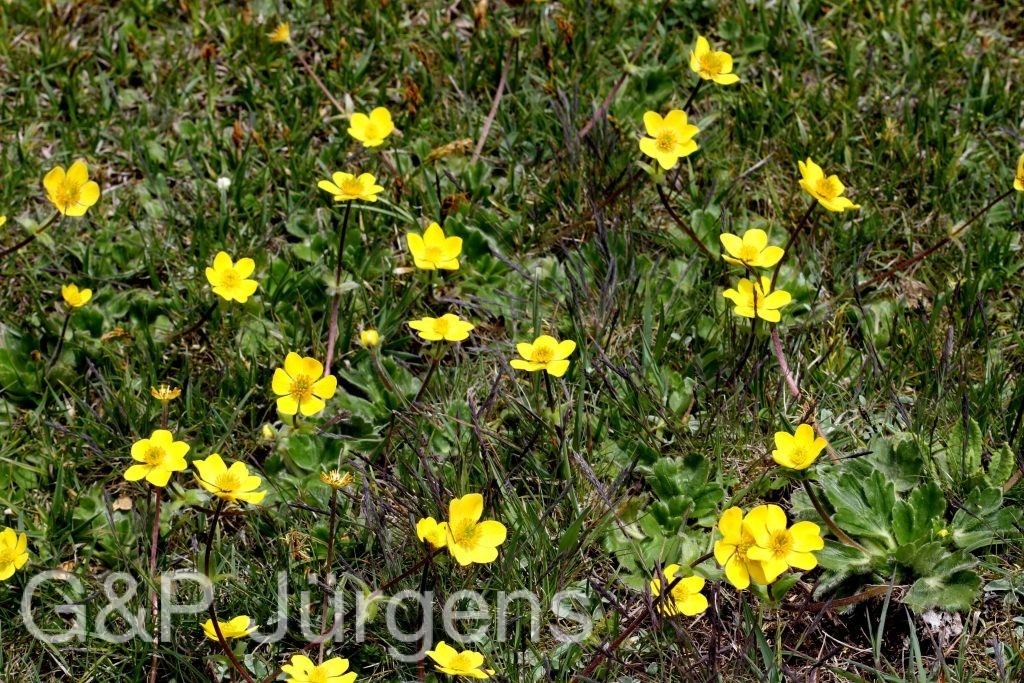
Nepal 97 210 P428
Nepal Thudam 3690m April

Description

Anemonastrum trullifolium is a Himalayan alpine herb ranging through China, India, Nepal and Bhutan, with 317 occurrences in GBIF (additional records from Britain, Myanmar, Norway and Sweden reflect cultivated or determinavit material). It grows in alpine meadows, open slopes and the margins of dwarf-shrub heath, typically between 3500 and 4500 m. Field collections span Sikkim's Tanghu at about 4000 m in June, Chele-La in Bhutan at 4000 m in May, and Thudam in Nepal at 3690 m in April, indicating an early-season flowerer that tracks receding snow on moist subalpine to alpine turf.

The plant is a rhizomatous perennial 10-30 cm tall, forming a tuft from a short, often hairy rootstock. The long-petiolate basal leaves have a trullate (trowel-shaped) to rhombic-ovate lamina, often three-lobed or coarsely toothed and silky-pilose beneath, the epithet trullifolium referring to this leaf outline. The scape bears an involucre of leaf-like bracts subtending a few-flowered umbel; the flowers lack true petals, the showy perianth comprising 5-6 white to bluish, sometimes externally tinged tepals, surrounding numerous stamens and a head of carpels. The fruiting head is a cluster of flattened, glabrous to pubescent achenes with a short hooked beak.

The species was transferred from Anemone to the segregate genus Anemonastrum following molecular phylogenetic studies that resolved the windflowers into several lineages; the basionym Anemone trullifolia (under which it is widely listed) reflects this history. Pollination is by generalist alpine insects, and the achenes are wind- and gravity-dispersed. Locally common across its range, it has no specific conservation concern.

Author: (Hook.f. & Thomson) Mosyakin · Sources: POWO (Kew), GBIF, Flora of China, Flora of Bhutan, Annotated Checklist of the Flowering Plants of Nepal, Mosyakin revision of Anemonastrum

(Hook. & Thomson) Holub

Bhutan2014 325 scaled
Bhutan Tumching-La 2700m, May
Bhutan2014 330 scaled
Bhutan Tumching-La 2700m, May

Description

Anemonoides griffithii is a slender, woodland-floor perennial of the temperate eastern Himalaya, distributed through Sikkim, the Darjeeling district of West Bengal, Bhutan and adjacent southern Tibet (Xizang); GBIF, which records the species under the name Anemonoides griffithii, holds only a sparse occurrence dataset (a single georeferenced point from China), reflecting how thinly this shade-dwelling herb is documented despite a genuinely wider range. It favours the cool, humus-rich understorey of mixed conifer and broad-leaved forest and damp shrubberies, where it flowers in late spring as the canopy leafs out. The accompanying images, gathered at Tamrong (2650 m) in West Bengal and at the Tumching-La pass (2700 m) in Bhutan, both in May, place the plant squarely in its characteristic mid-montane band between roughly 2500 and 3500 m, in the moist, mossy conditions typical of the monsoon-fed Himalayan flank.

The plant arises from a short, creeping rhizome and is a delicate herb seldom exceeding 15-25 cm. The basal leaves are long-petiolate and ternately to palmately divided, with deeply incised, toothed segments and a thin, soft texture. The flowering stem bears a whorl of three stalked involucral leaves resembling reduced basal leaves, above which is borne a solitary terminal flower. There are no true petals; the showy perianth consists of five to several petaloid sepals, white often flushed pink or purple beneath, surrounding numerous stamens and a head of carpels. The fruit is an aggregate of small, ovoid, pubescent achenes tipped by a short style, dispersed as the involucre withers.

The species belongs to Anemonoides, a segregate genus split from the broadly circumscribed Anemone to accommodate the rhizomatous, woodland anemones of the A. nemorosa alliance, and many references still treat it under Anemone griffithii. Within the Himalaya it is one of several closely allied spring-flowering forest anemones, distinguished by leaf dissection and perianth colour. As a low-growing, monsoon-region understorey herb it has not been formally assessed for conservation status, but its dependence on intact temperate forest makes it locally sensitive to logging and grazing pressure across its restricted eastern-Himalayan range.

Author: (Hook. & Thomson) Holub · Sources: POWO (Kew), GBIF, Flora of Bhutan Vol. 1, Flora of China Vol. 6, Flora of Nepal, Tamura's Ranunculaceae treatment in The Families and Genera of Vascular Plants

(Baker) Falc. ex Munz.

Description

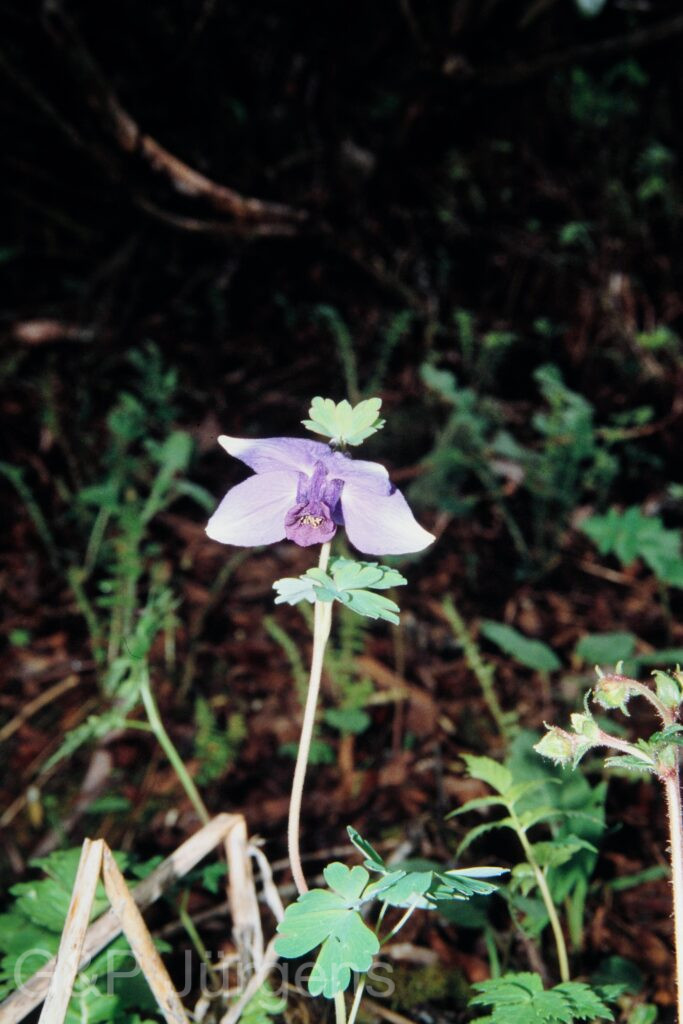
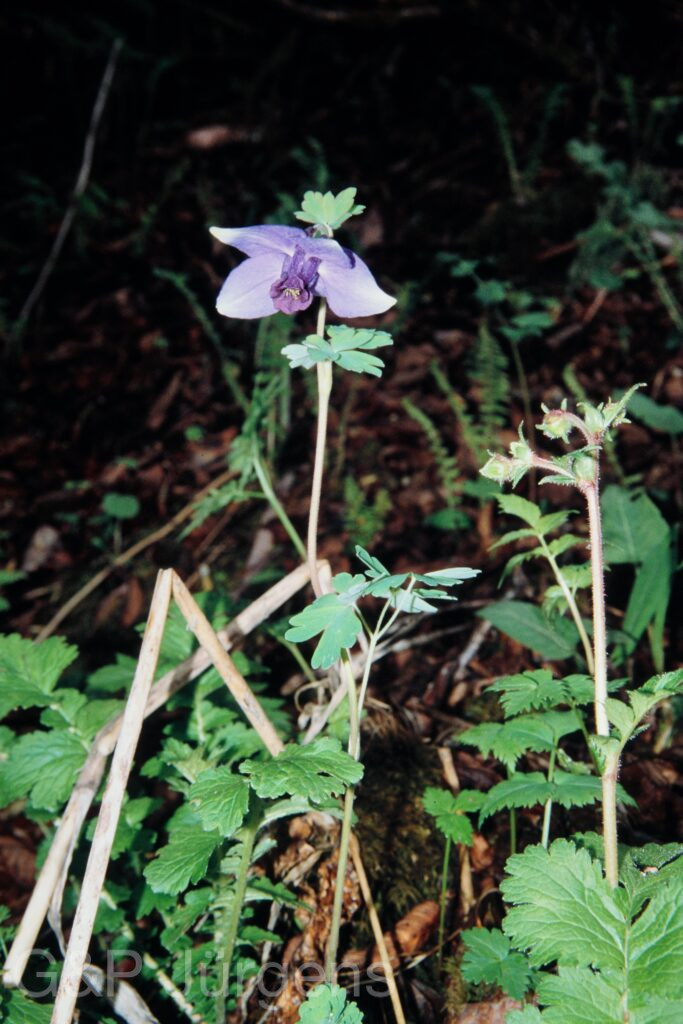
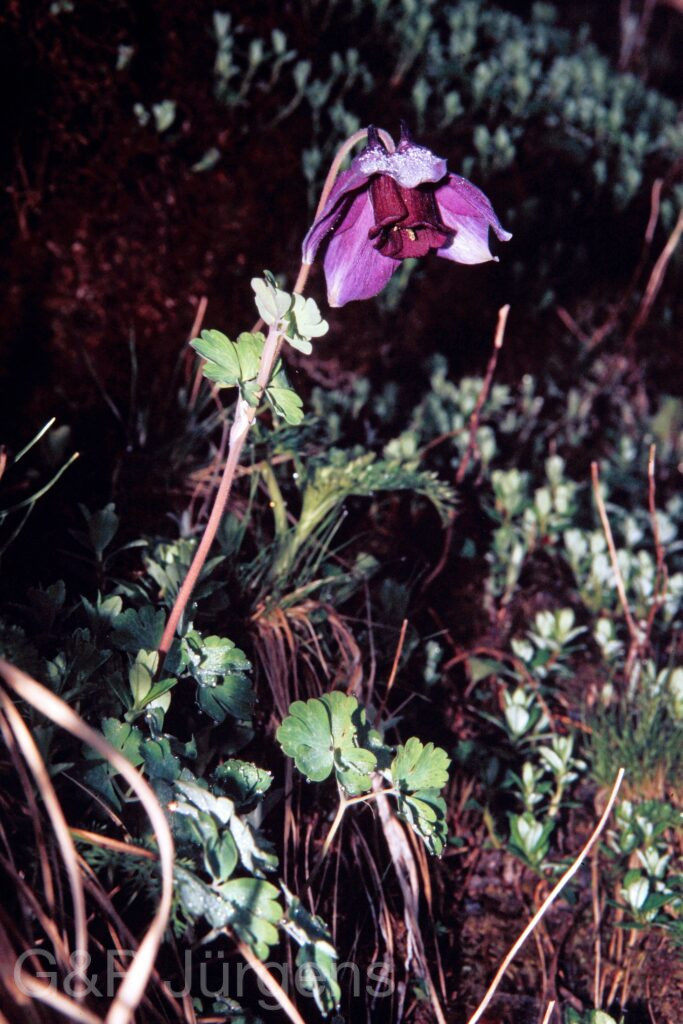
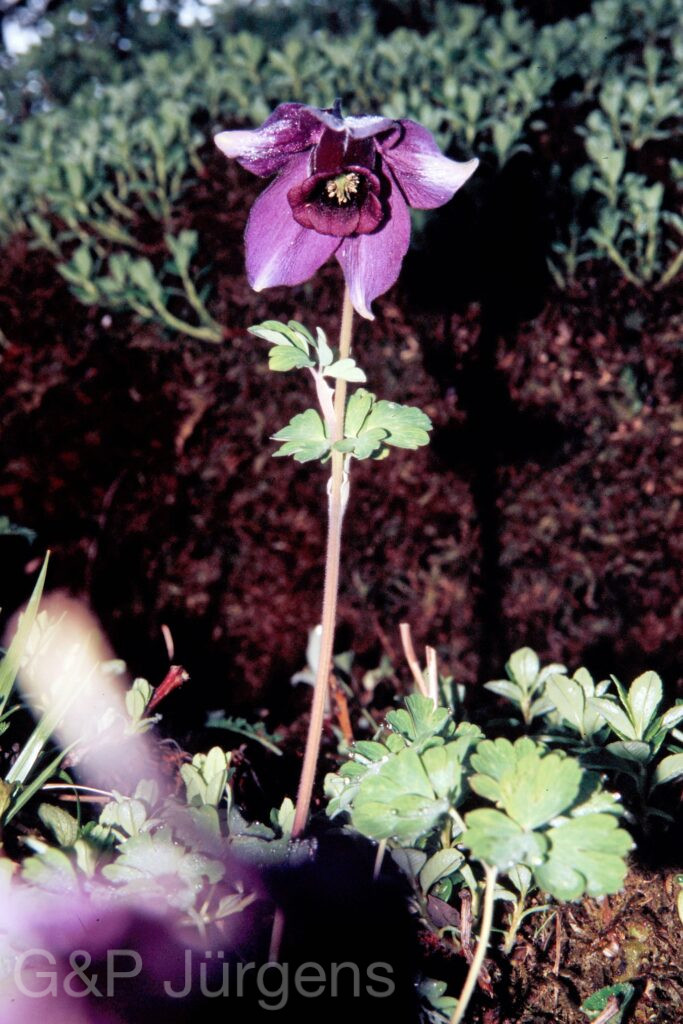
Aquilegia nivalis is a dwarf alpine columbine of the western Himalaya, with GBIF recording around 105 occurrences from Pakistan, India and Nepal. It is restricted to the high alpine zone, growing in moist rocky meadows, screes, glacial moraine and snowbed turf, broadly between 3300 and 4500 m. The photographed plants come from West Nepal south of Tara Lake (3300 m, June) and from Garhwal in India at Meggu Kichatti (3400 m, June), flowering soon after snowmelt on cool, well-drained, gravelly substrates near the upper limit of vascular vegetation.

The plant is a compact perennial arising from a stout rootstock, forming a low tuft of long-petioled, ternately divided basal leaves with rounded, lobed, somewhat glaucous segments. The flowering stem is short and often single-flowered, nodding the large solitary flower well above the foliage. The flower is dark purple to blackish-violet, with five petaloid sepals and five tubular petals each prolonged backward into a short, stout, incurved spur far shorter than in lowland columbines. Numerous stamens surround the carpels, the inner stamens reduced to membranous staminodes. The fruit is a cluster of erect, beaked follicles releasing small black seeds.

Aquilegia (Ranunculaceae) is a model genus for the study of rapid adaptive radiation, in which spur length and flower colour track pollinator shifts; the very short spur and dark, nodding flower of A. nivalis reflect adaptation to a harsh, short alpine season. GBIF treats the name as accepted. Its narrow western-Himalayan range and high-elevation specialism make it a notable endemic, potentially sensitive to climatic warming and snowpack change.

Author: (Baker) Falc. ex Munz. · Sources: POWO (Kew), GBIF, Flora of Pakistan, Flora of British India, Munz monograph of Aquilegia

Royle

Nepal 99 65 ergebnis
West-Nepal Nyor Gaad 2700m, June
Garh 07 245 ergebnis
India Garhwal Barron Chatti 2450m, June

Description

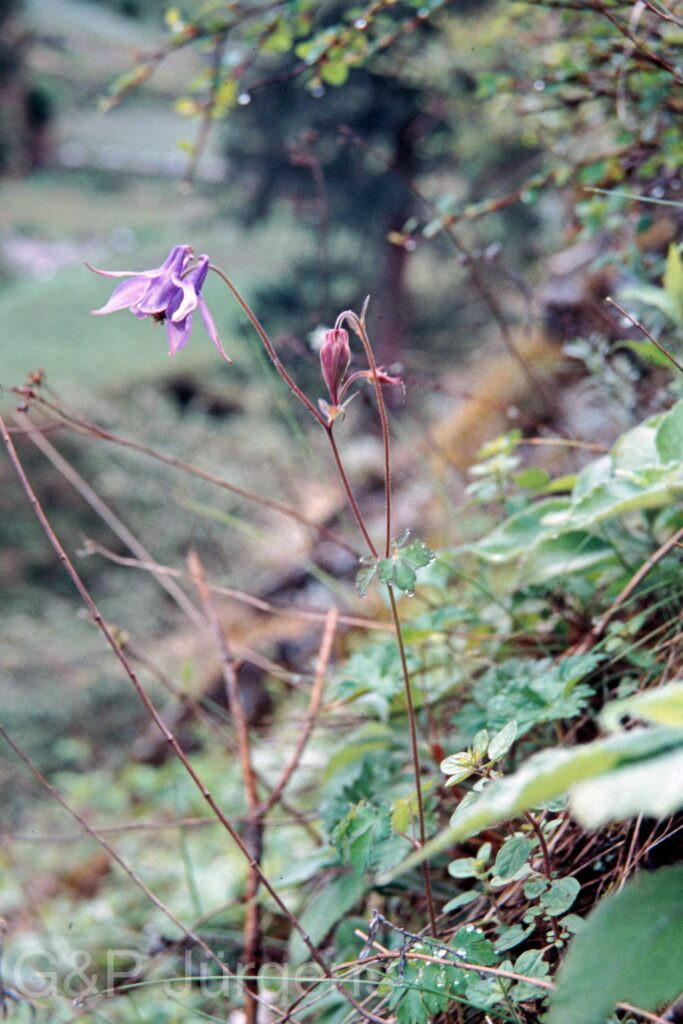
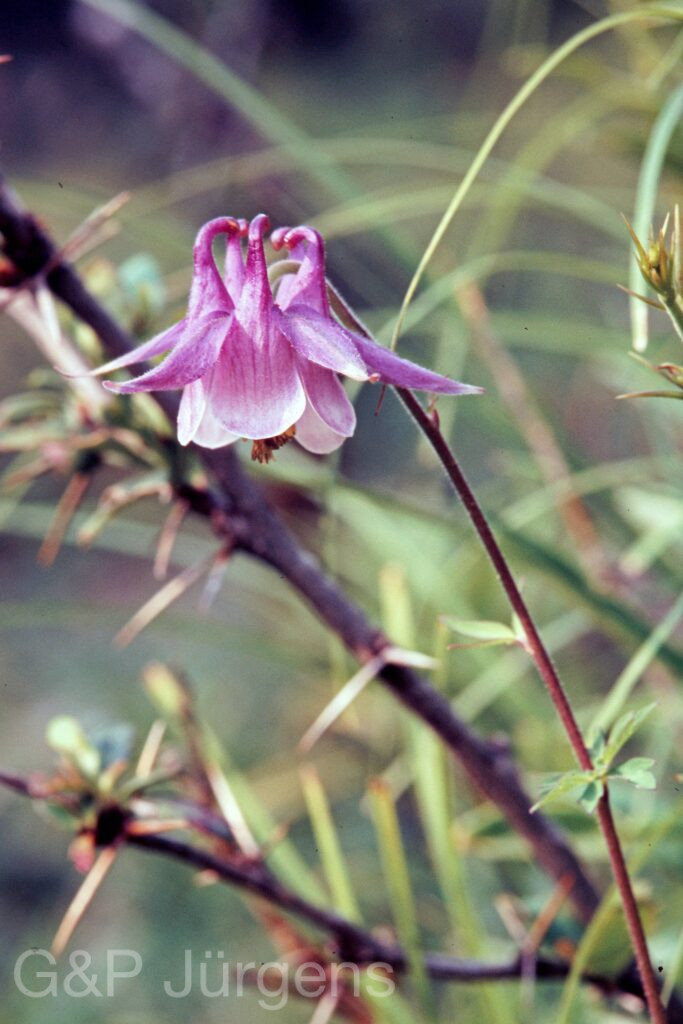
Aquilegia pubiflora is a columbine of the western and central Himalaya, recorded from Afghanistan, Pakistan, India, Nepal and adjacent China. It grows in shady forest, scrub, grassy slopes, stream banks and rocky places in the temperate montane belt, generally between about 2000 and 3600 m. The photographed plants come from Nyor Gaad in West Nepal at around 2700 m and from Barron Chatti in Indian Garhwal at about 2450 m, both flowering in June. With around 240 georeferenced occurrences it is a moderately well-documented and characteristic Himalayan member of its genus along forest margins and in semi-open habitats of the inner valleys.

It is an erect perennial herb up to about 1 m, arising from a stout rootstock, the stems branched above and finely pubescent. The leaves are mostly basal and biternate, the leaflets obovate and lobed, glaucous and softly hairy especially beneath. The nodding to half-nodding flowers are borne on slender pedicels; each has five petaloid sepals and five petals, the petals prolonged backward into prominent hooked or incurved nectar spurs that are the diagnostic feature of Aquilegia. The flowers are pale to deep purple, lilac or whitish, finely pubescent on the outside, as the epithet pubiflora indicates. The numerous stamens are exserted, the inner ones forming membranous staminodes, and the carpels are five and free, ripening into erect, pubescent, many-seeded follicles.

Aquilegia pubiflora belongs to the Asian assemblage of the genus and is distinguished by its softly hairy, spurred flowers and biternate foliage; it intergrades with related Himalayan columbines and has been treated under varying circumscriptions. Like other columbines it is pollinated by long-tongued insects attracted to the nectar spurs. As a widespread temperate herb it is of least conservation concern.

Author: Royle · Sources: POWO (Kew), GBIF, Flora of China, Flora Iranica, Munz monograph of Aquilegia

Hook.f. & Thomson

BhutanPG2011 448
Bhutan Ludlow-Sherriff-Trail Warrtlang-La, 4500m June
Sikkim2003 105 P143
Sikkim below Dzongri 3850m 08.2003
Nepal 2001 312 ergebnis ergebnis
Nepal (Gorkha) Kharka 3100m, May

Description

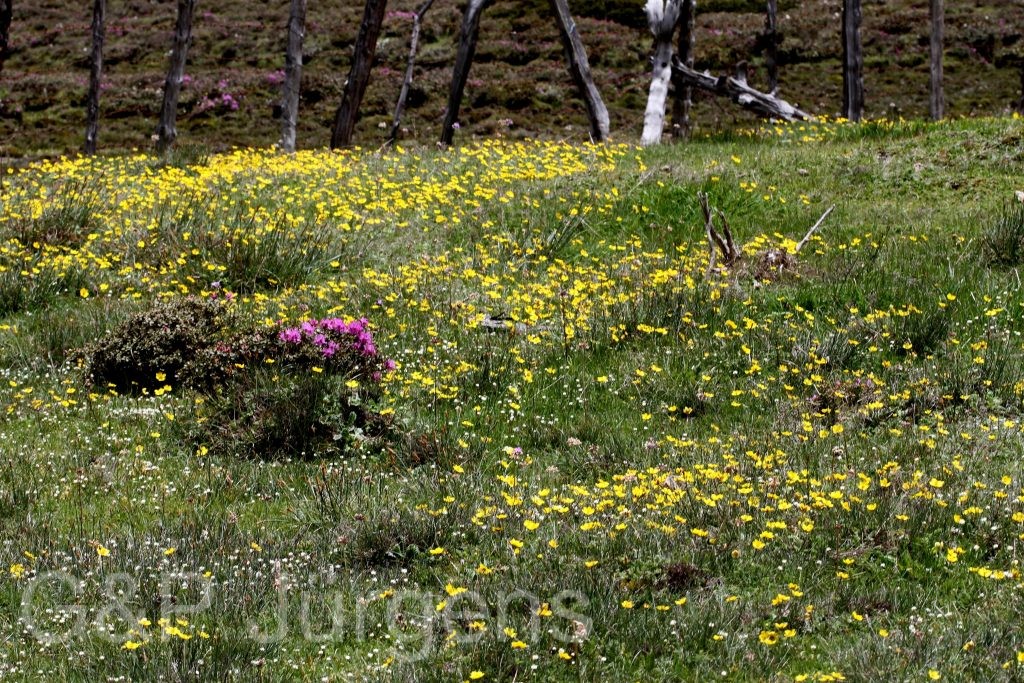
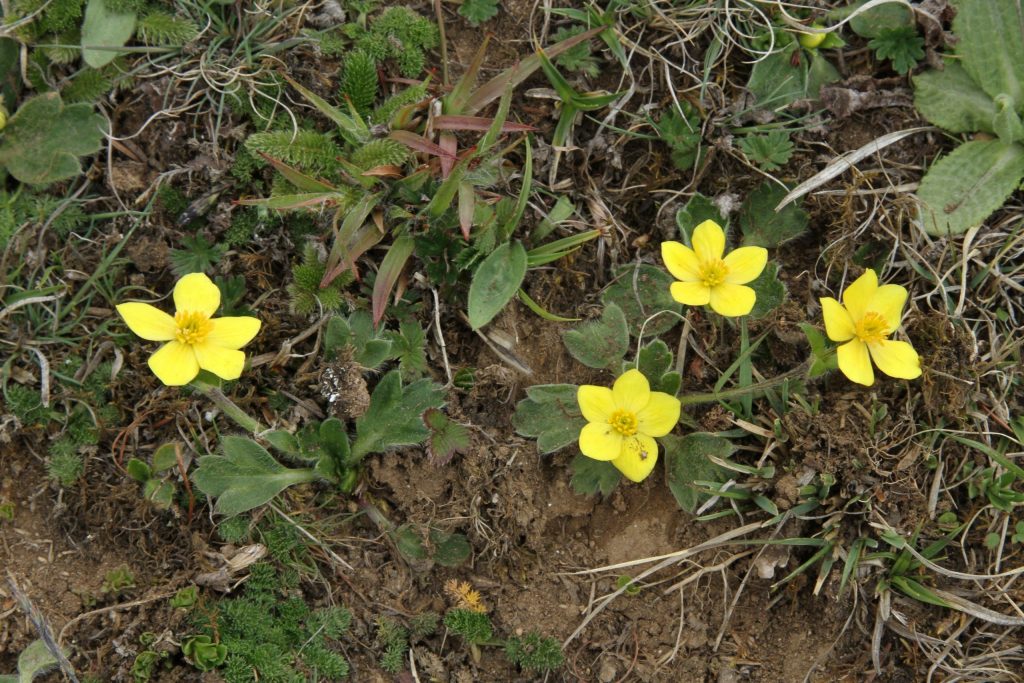
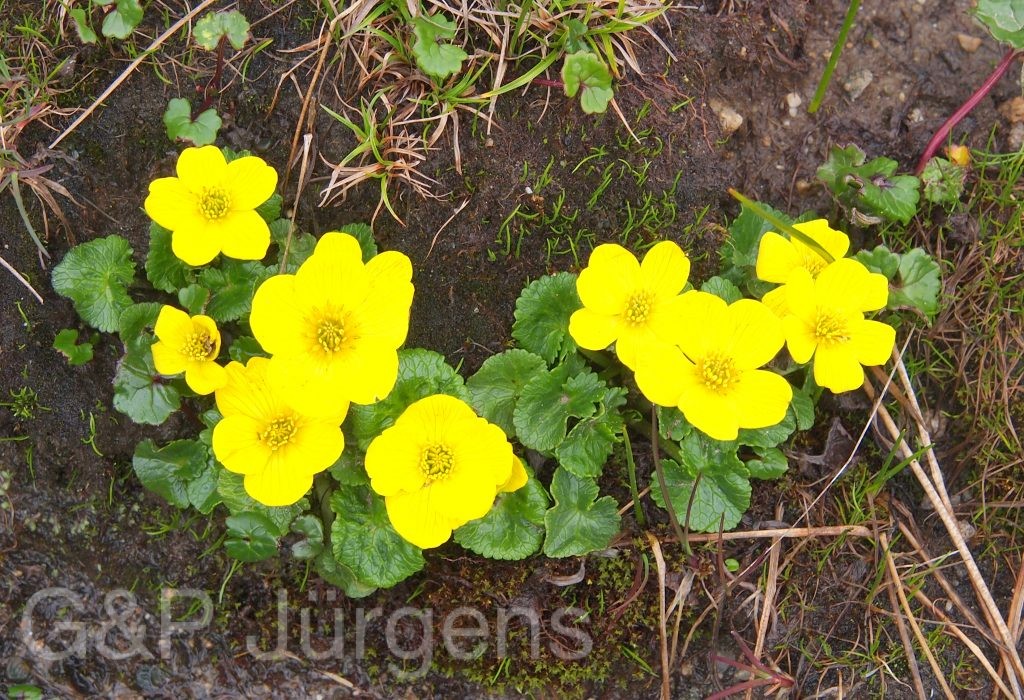
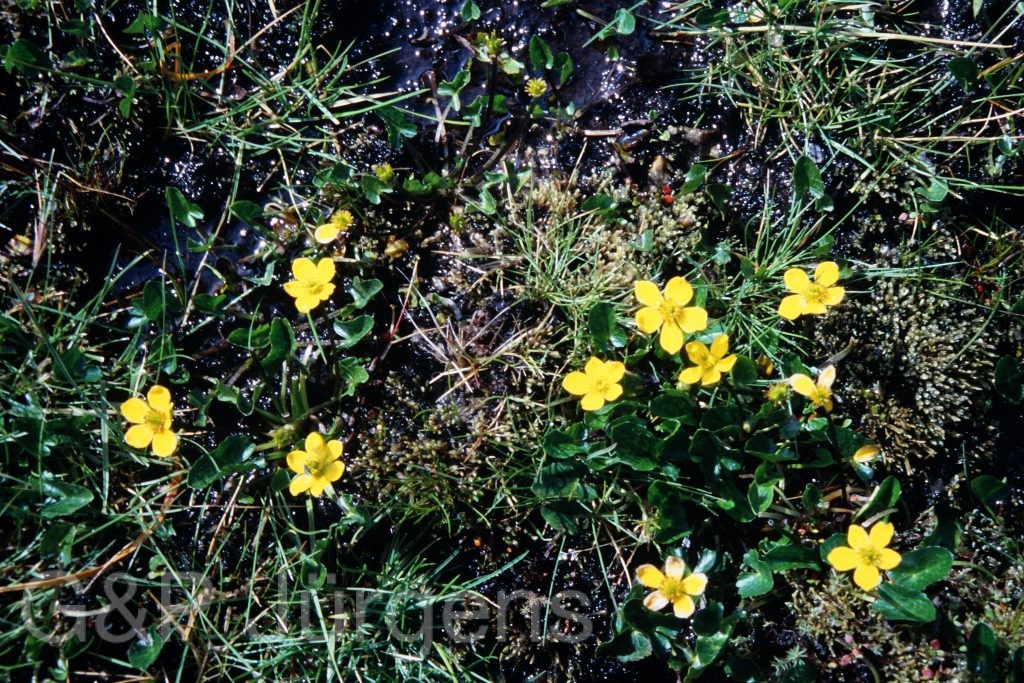
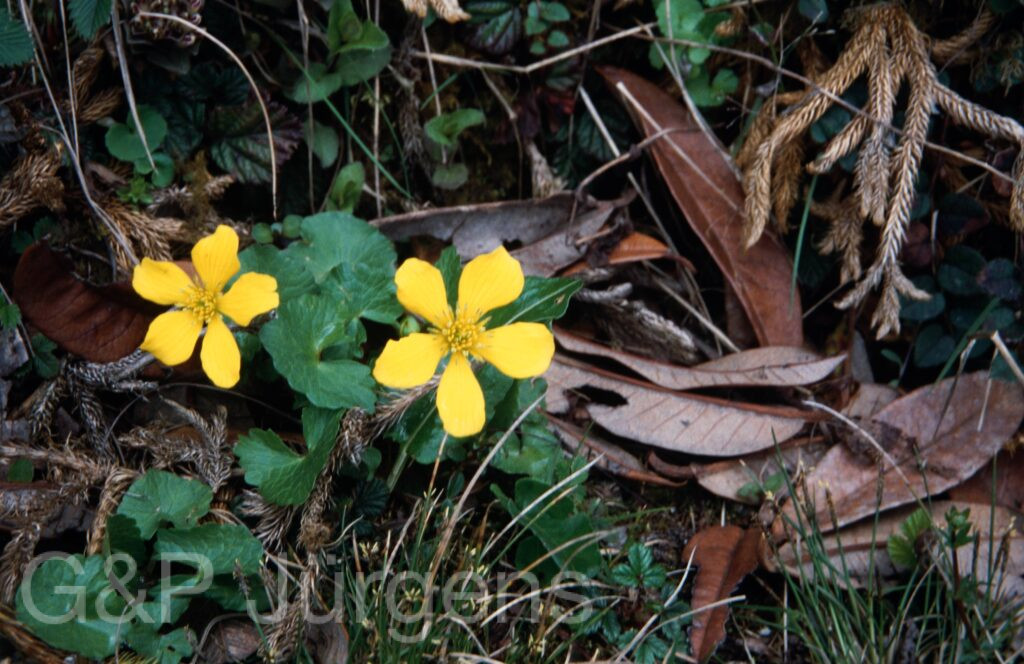
Caltha scaposa is a high-alpine marsh marigold of the Sino-Himalayan region, with records from China, India, Nepal, Bhutan and Myanmar and disjunct documentation in Korea and Mongolia; GBIF aggregates over 1,000 occurrences. It is a plant of wet alpine turf, snowmelt flushes, streamsides and moist gravelly meadows, typically between roughly 3,100 and 4,500 m. The collections illustrated span this gradient, from Warrtlang-La on the Ludlow-Sherriff trail in Bhutan at about 4,500 m in June, to the slopes below Dzongri in Sikkim near 3,850 m, and a comparatively low Gorkha station in Nepal at 3,100 m in May, where it flowers as the snow recedes.

It is a small, glabrous, somewhat fleshy perennial herb arising from a short, fibrous-rooted rhizome. The leaves are largely basal and long-petiolate, with cordate to reniform-orbicular blades bearing crenate margins and a deep cordate sinus. The flowering stem is scapose, as the epithet indicates, usually leafless and bearing a solitary terminal flower. The showy perianth consists of five to several petaloid, golden-yellow sepals, true petals being absent; the numerous stamens surround a cluster of free, sessile carpels. The fruit is an aggregate of spreading, beaked follicles dehiscing along the ventral suture.

Within Caltha, the scapose habit and solitary flower distinguish C. scaposa from the leafy-stemmed, multiflowered C. palustris group. As an obligate wetland species of the alpine zone, it indicates permanently moist soils and is pollinated chiefly by flies and early-season insects. Though locally common across a wide range and not presently considered threatened, its dependence on snowmelt hydrology makes populations sensitive to glacial retreat and altered precipitation in a warming Himalaya.

Author: Hook.f. & Thomson · Sources: POWO (Kew), GBIF, Flora of China, Flora of Bhutan, Annotated Checklist of the Flowering Plants of Nepal, Tamura's monograph of Ranunculaceae
DC.

Garw 2005 251 ergebnis
India Garhwal Sitel 1850m, September

Description

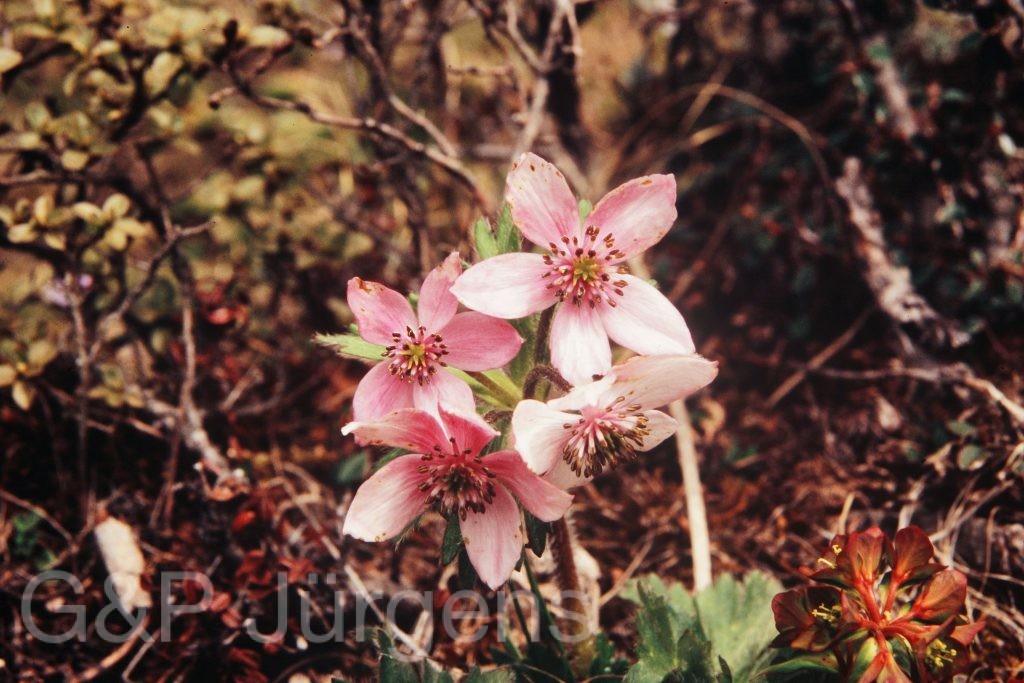
Clematis acuminata is a woody climber of the Himalaya and adjacent uplands, recorded by GBIF from China, India, Nepal, Myanmar, Thailand and Bhutan, with around 173 occurrences spread along the southern ranges. It grows in temperate and warm-temperate forest, scrambling through shrubbery, over forest margins and along open hillsides and ravines, typically on well-drained slopes. The photographed plant was found in the Indian Garhwal Himalaya at Sitel around 1850 m, flowering in September as the monsoon wanes; the species generally occupies the 1500-3000 m belt where it climbs vigorously into the canopy of small trees and thickets.

The plant is a perennial liana with slender, ribbed, climbing stems that ascend by means of clasping, twining petioles. The leaves are opposite and pinnately or ternately compound, the leaflets ovate to lanceolate and conspicuously long-acuminate, giving the epithet, with entire or sparingly toothed margins. The flowers are borne in axillary cymes and lack true petals, the showy parts being four spreading, often pale to creamy or pinkish sepals surrounding numerous stamens. The fruit is a head of achenes, each tipped with a long, persistent, plumose style that aids wind dispersal.

Clematis belongs to the Ranunculaceae and is unusual in the family for its lianescent habit and petaloid sepals. The feathery styled achenes are a hallmark of the genus, ensuring effective anemochory across mountainous terrain. Like many relatives, the herbage contains acrid protoanemonin and is locally used in folk medicine. Clematis acuminata is moderately widespread but nowhere abundant; it is not formally assessed, and its forest-margin populations persist where montane woodland and scrub remain intact.

Author: DC. · Sources: POWO (Kew), GBIF, Flora of China, Flora of Bhutan, Clematis monograph (Grey-Wilson)

Hook.f. & Thomson

Bhutan2012 133
Bhutan Haar-Valley, 3100m September

Description

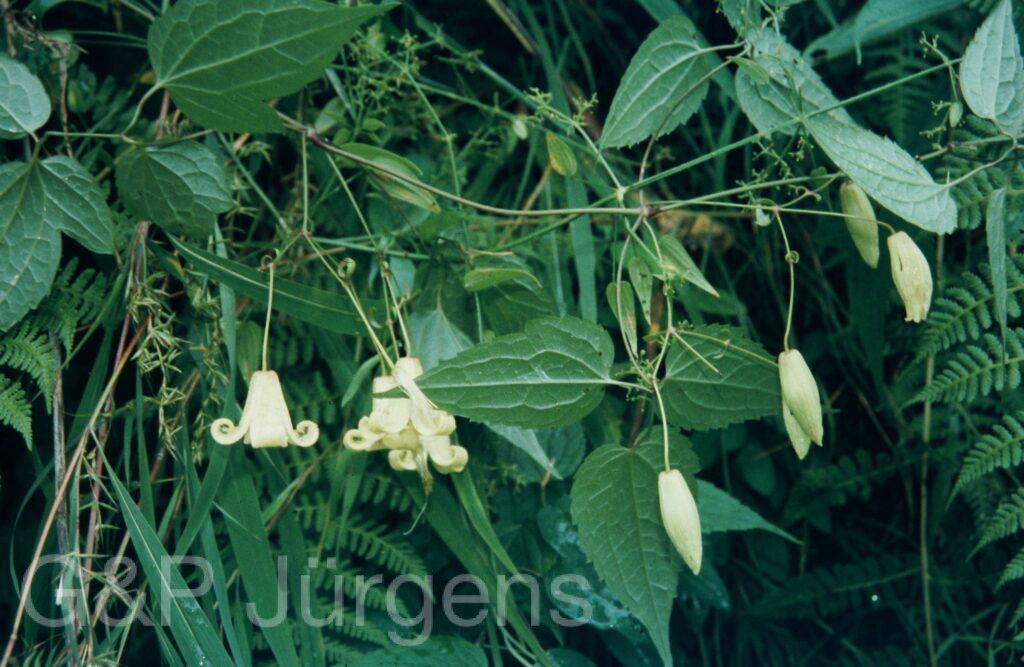
Clematis acutangula is an eastern Himalayan climber distributed through Bhutan, northern India, southern China and northern Myanmar, a comparatively restricted range reflected in the small number of GBIF records, about 61. It is a plant of temperate forest margins, scrub and thickets in the wetter montane ranges, scrambling over shrubs and into the lower canopy. The Bhutanese material photographed in the Haa (Haar) Valley at 3100 m in September documents the species in its upper-montane habitat, flowering at the close of the monsoon when many late-season Himalayan clematis come into bloom.

It is a woody to herbaceous climber whose stems are distinctly angular and sharply ridged, the feature from which the epithet acutangula derives. The leaves are opposite and compound, typically pinnate to biternate with ovate to lanceolate, toothed leaflets, the plant climbing by means of twining petioles and rachides. The flowers are nodding and campanulate, with four thick, recurved-tipped, petaloid sepals coloured yellowish to greenish-yellow, often tinged or dotted with purple; true petals are absent and the numerous stamens are enclosed within the bell. The fruit is a head of compressed achenes each bearing a long, persistent, plumose style that aids wind dispersal.

The species belongs to the autumn-flowering, yellow- to nodding-flowered assemblage of Asian Clematis allied to sect. Meclatis/Tubulosae groups, distinguished within the eastern Himalayan flora by its strongly angled stems and bell-shaped flowers. Its limited distribution and dependence on intact temperate forest scrub make it a characteristic but local element of the Bhutan-Sikkim montane flora; it is not formally assessed for conservation but its narrow range warrants attention.

Author: Hook.f. & Thomson · Sources: POWO (Kew), GBIF, Flora of Bhutan, Flora of China, Grey-Wilson's Clematis the Genus (monograph), Flora of British India