
(Baker) Falc. ex Munz.
Description
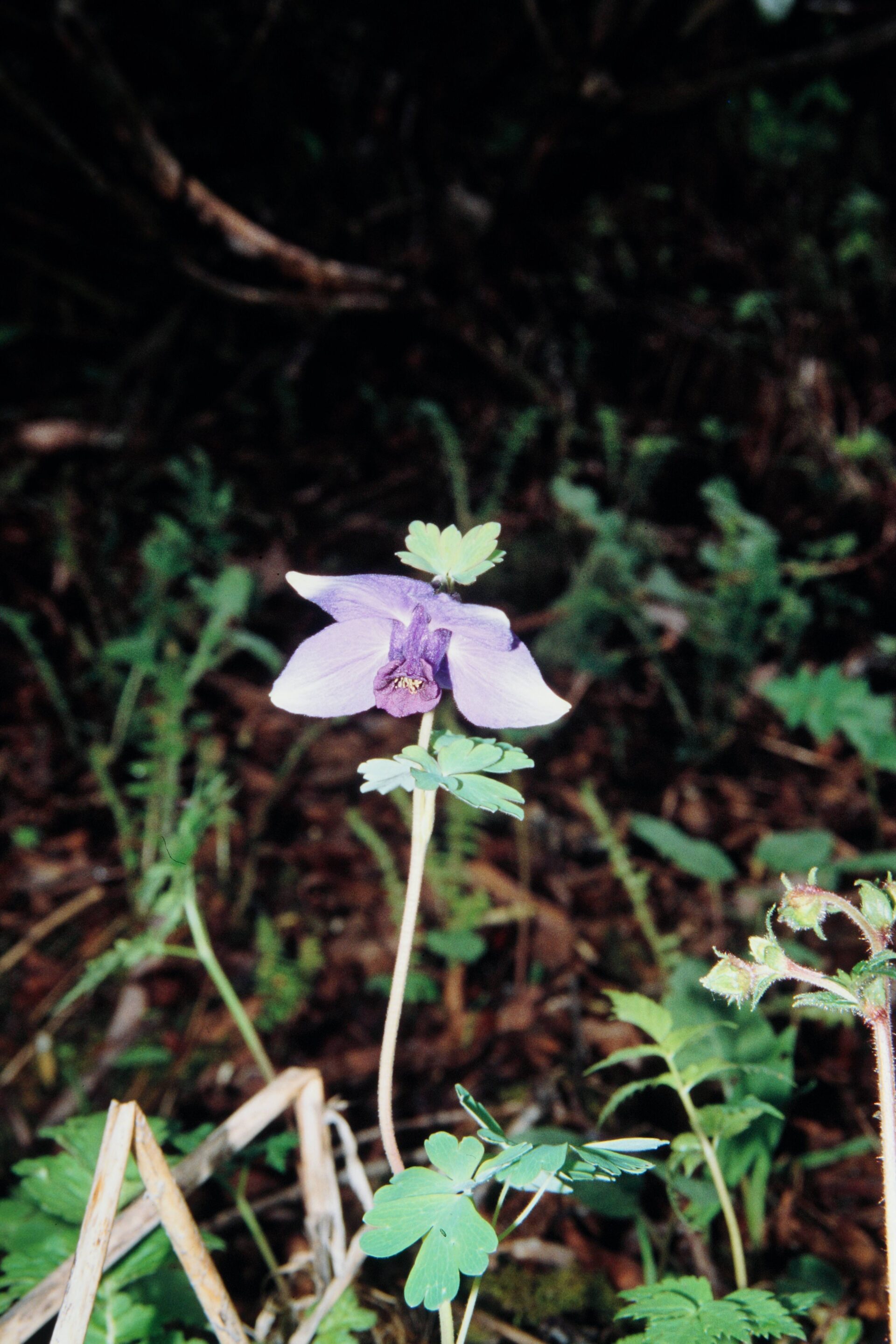
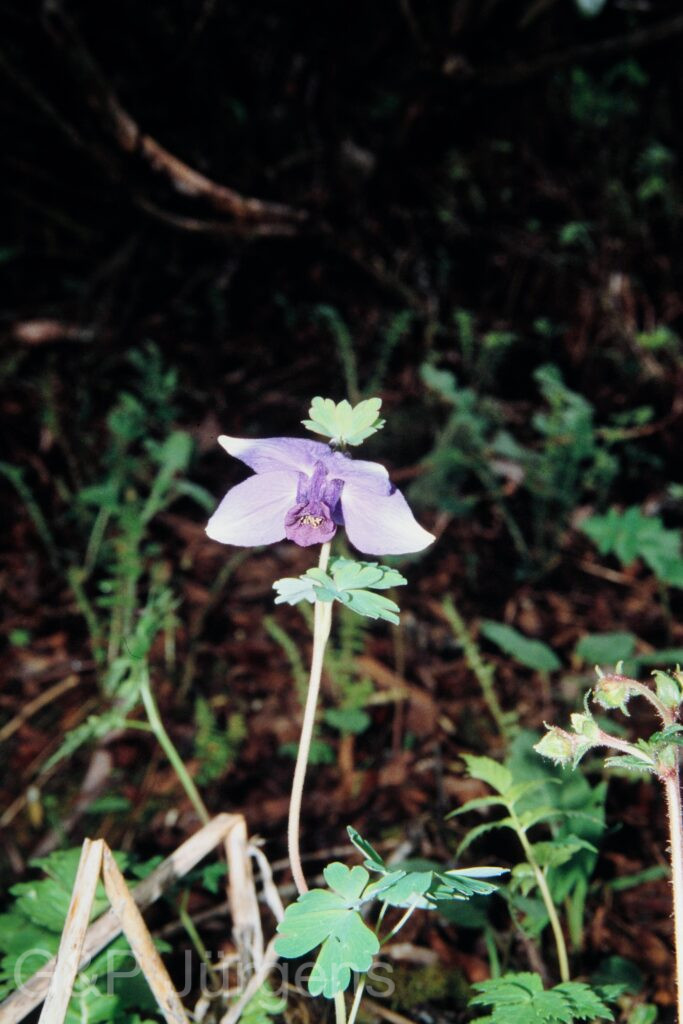
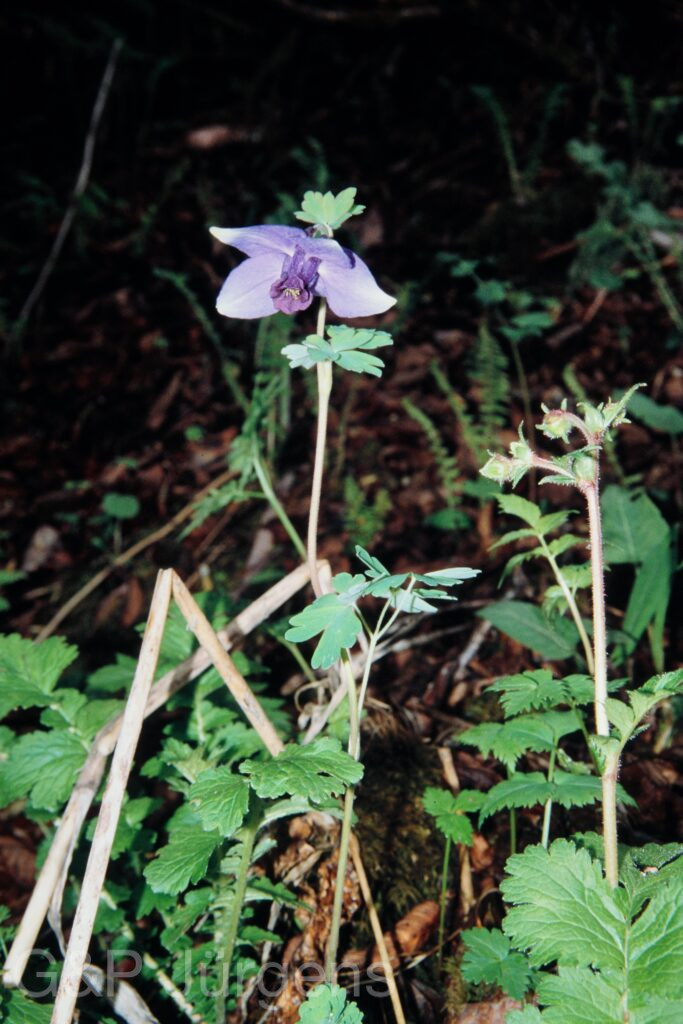
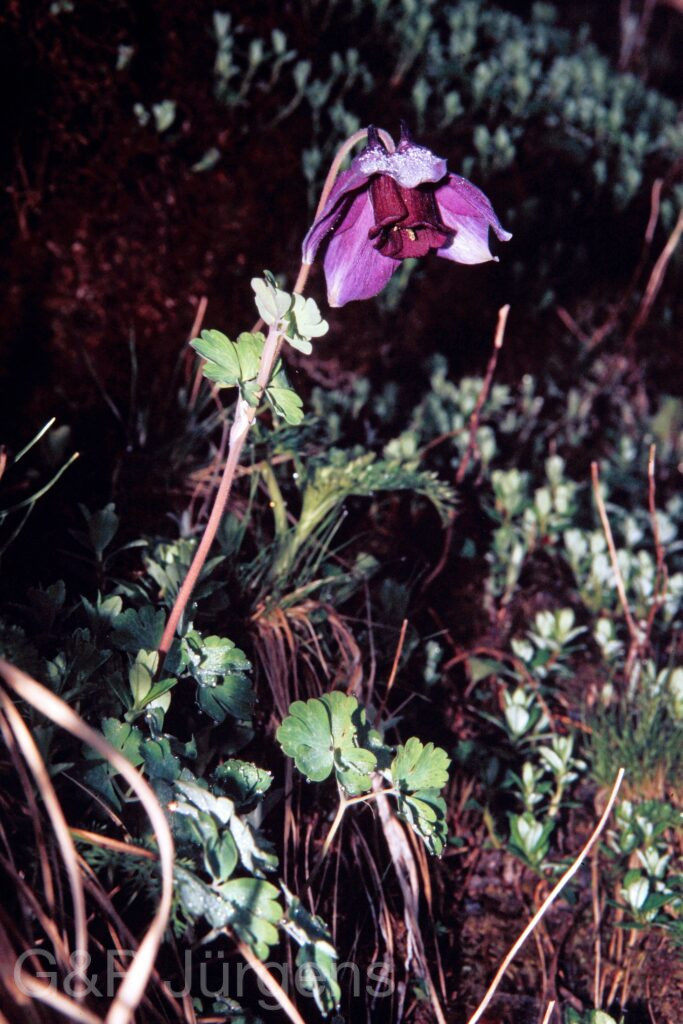
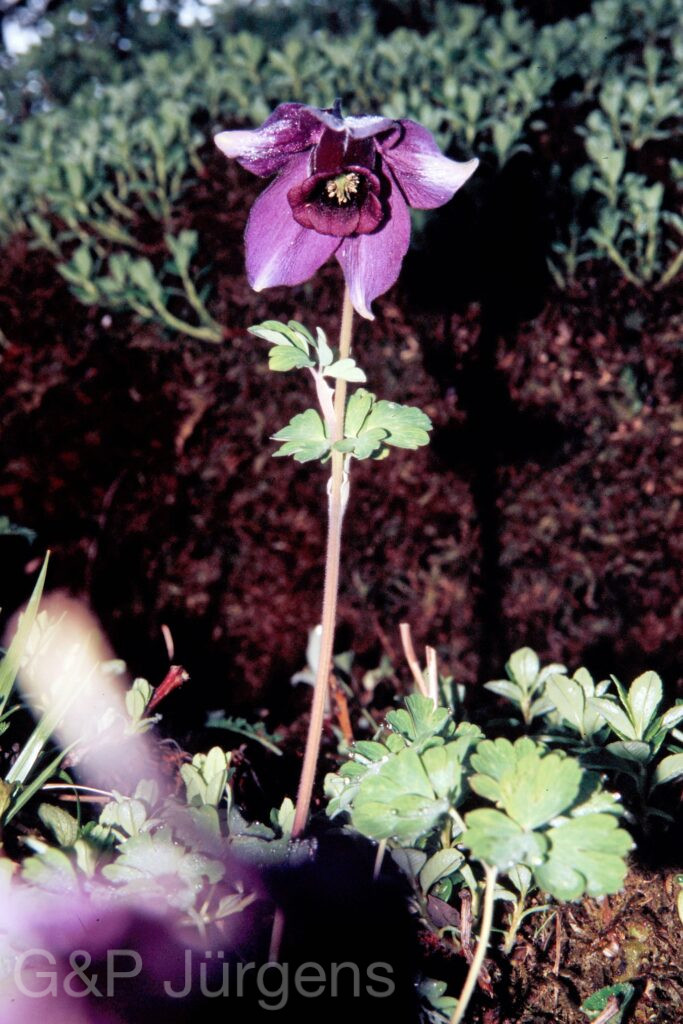
Aquilegia nivalis is a dwarf alpine columbine of the western Himalaya, with GBIF recording around 105 occurrences from Pakistan, India and Nepal. It is restricted to the high alpine zone, growing in moist rocky meadows, screes, glacial moraine and snowbed turf, broadly between 3300 and 4500 m. The photographed plants come from West Nepal south of Tara Lake (3300 m, June) and from Garhwal in India at Meggu Kichatti (3400 m, June), flowering soon after snowmelt on cool, well-drained, gravelly substrates near the upper limit of vascular vegetation.
The plant is a compact perennial arising from a stout rootstock, forming a low tuft of long-petioled, ternately divided basal leaves with rounded, lobed, somewhat glaucous segments. The flowering stem is short and often single-flowered, nodding the large solitary flower well above the foliage. The flower is dark purple to blackish-violet, with five petaloid sepals and five tubular petals each prolonged backward into a short, stout, incurved spur far shorter than in lowland columbines. Numerous stamens surround the carpels, the inner stamens reduced to membranous staminodes. The fruit is a cluster of erect, beaked follicles releasing small black seeds.
Aquilegia (Ranunculaceae) is a model genus for the study of rapid adaptive radiation, in which spur length and flower colour track pollinator shifts; the very short spur and dark, nodding flower of A. nivalis reflect adaptation to a harsh, short alpine season. GBIF treats the name as accepted. Its narrow western-Himalayan range and high-elevation specialism make it a notable endemic, potentially sensitive to climatic warming and snowpack change.
Author: (Baker) Falc. ex Munz. · Sources: POWO (Kew), GBIF, Flora of Pakistan, Flora of British India, Munz monograph of Aquilegia