
Hook.f. & Thomson
Description
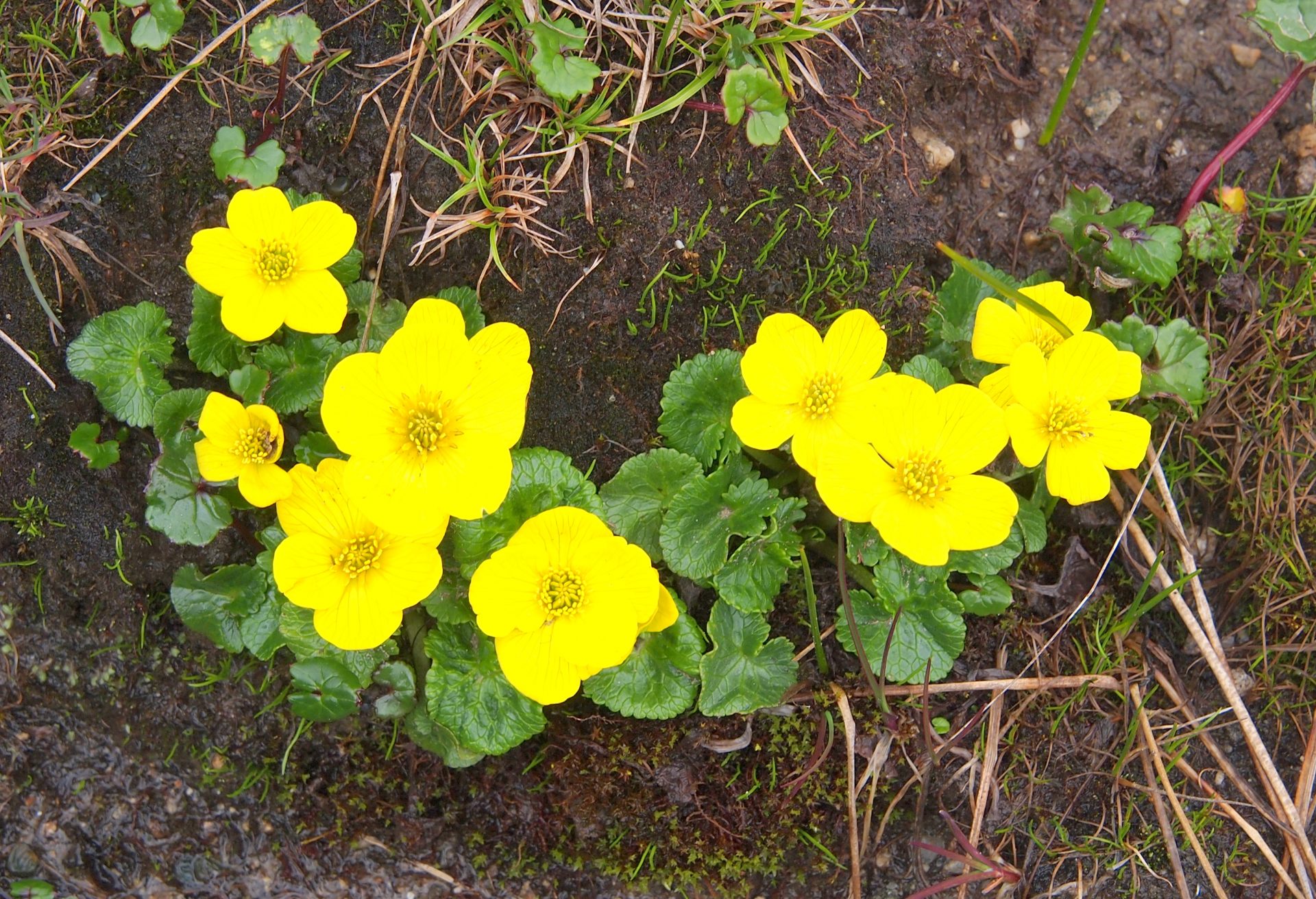
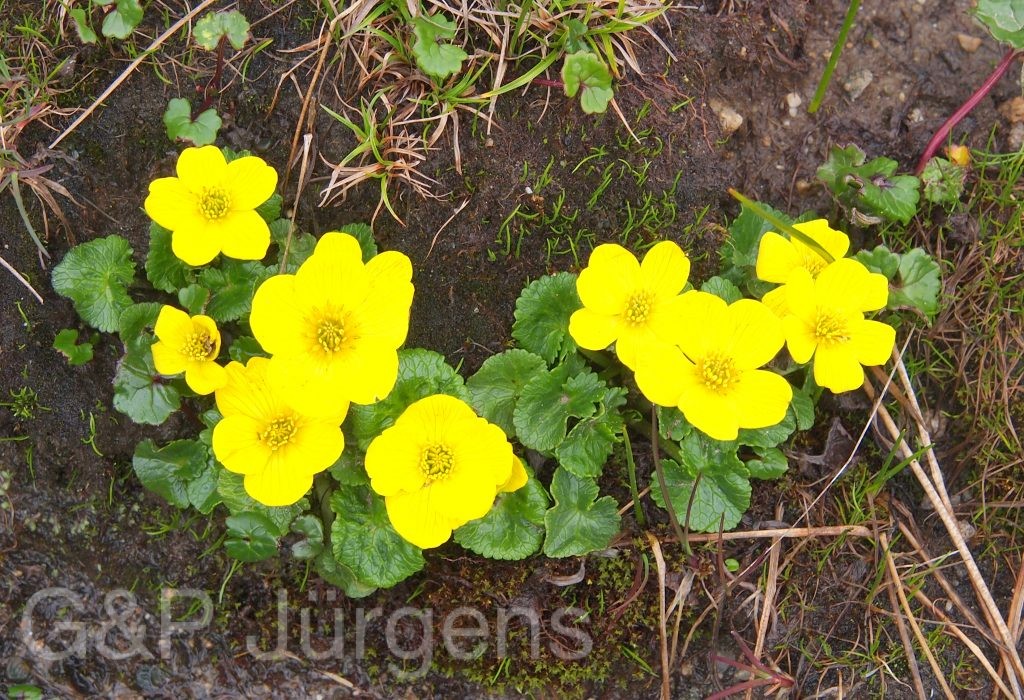
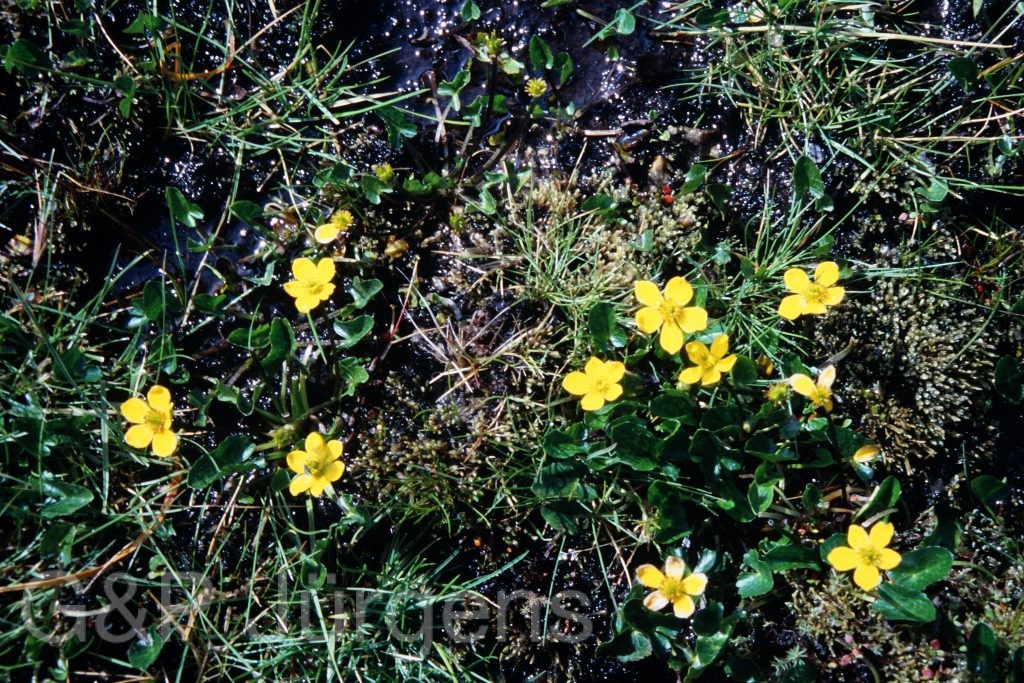
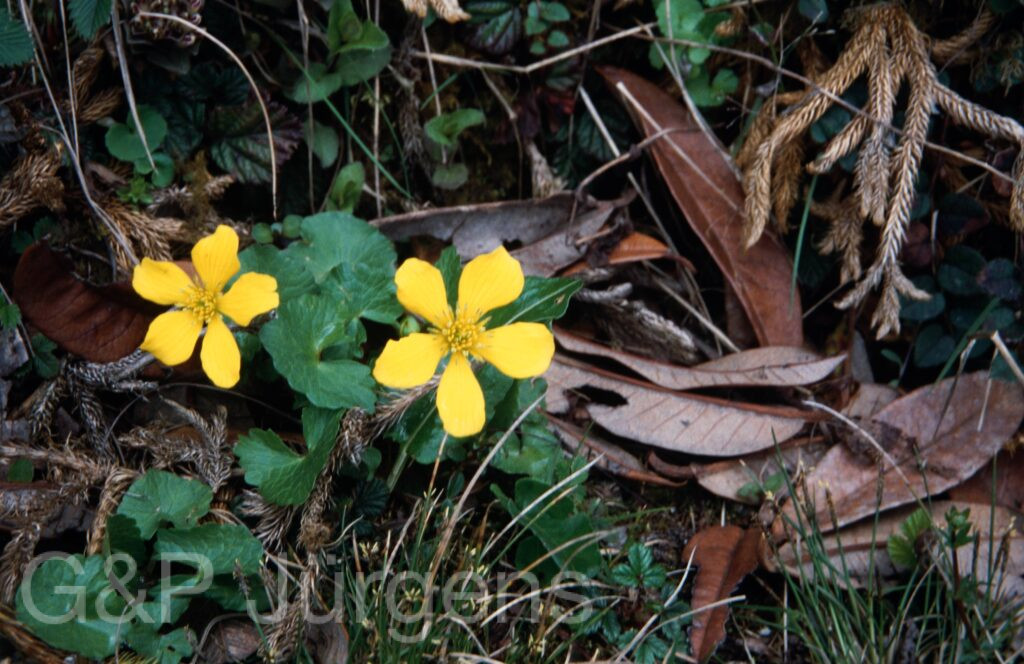
Caltha scaposa is a high-alpine marsh marigold of the Sino-Himalayan region, with records from China, India, Nepal, Bhutan and Myanmar and disjunct documentation in Korea and Mongolia; GBIF aggregates over 1,000 occurrences. It is a plant of wet alpine turf, snowmelt flushes, streamsides and moist gravelly meadows, typically between roughly 3,100 and 4,500 m. The collections illustrated span this gradient, from Warrtlang-La on the Ludlow-Sherriff trail in Bhutan at about 4,500 m in June, to the slopes below Dzongri in Sikkim near 3,850 m, and a comparatively low Gorkha station in Nepal at 3,100 m in May, where it flowers as the snow recedes.
It is a small, glabrous, somewhat fleshy perennial herb arising from a short, fibrous-rooted rhizome. The leaves are largely basal and long-petiolate, with cordate to reniform-orbicular blades bearing crenate margins and a deep cordate sinus. The flowering stem is scapose, as the epithet indicates, usually leafless and bearing a solitary terminal flower. The showy perianth consists of five to several petaloid, golden-yellow sepals, true petals being absent; the numerous stamens surround a cluster of free, sessile carpels. The fruit is an aggregate of spreading, beaked follicles dehiscing along the ventral suture.
Within Caltha, the scapose habit and solitary flower distinguish C. scaposa from the leafy-stemmed, multiflowered C. palustris group. As an obligate wetland species of the alpine zone, it indicates permanently moist soils and is pollinated chiefly by flies and early-season insects. Though locally common across a wide range and not presently considered threatened, its dependence on snowmelt hydrology makes populations sensitive to glacial retreat and altered precipitation in a warming Himalaya.
Author: Hook.f. & Thomson · Sources: POWO (Kew), GBIF, Flora of China, Flora of Bhutan, Annotated Checklist of the Flowering Plants of Nepal, Tamura's monograph of Ranunculaceae