
Buch.-Ham. ex D. Don
Description
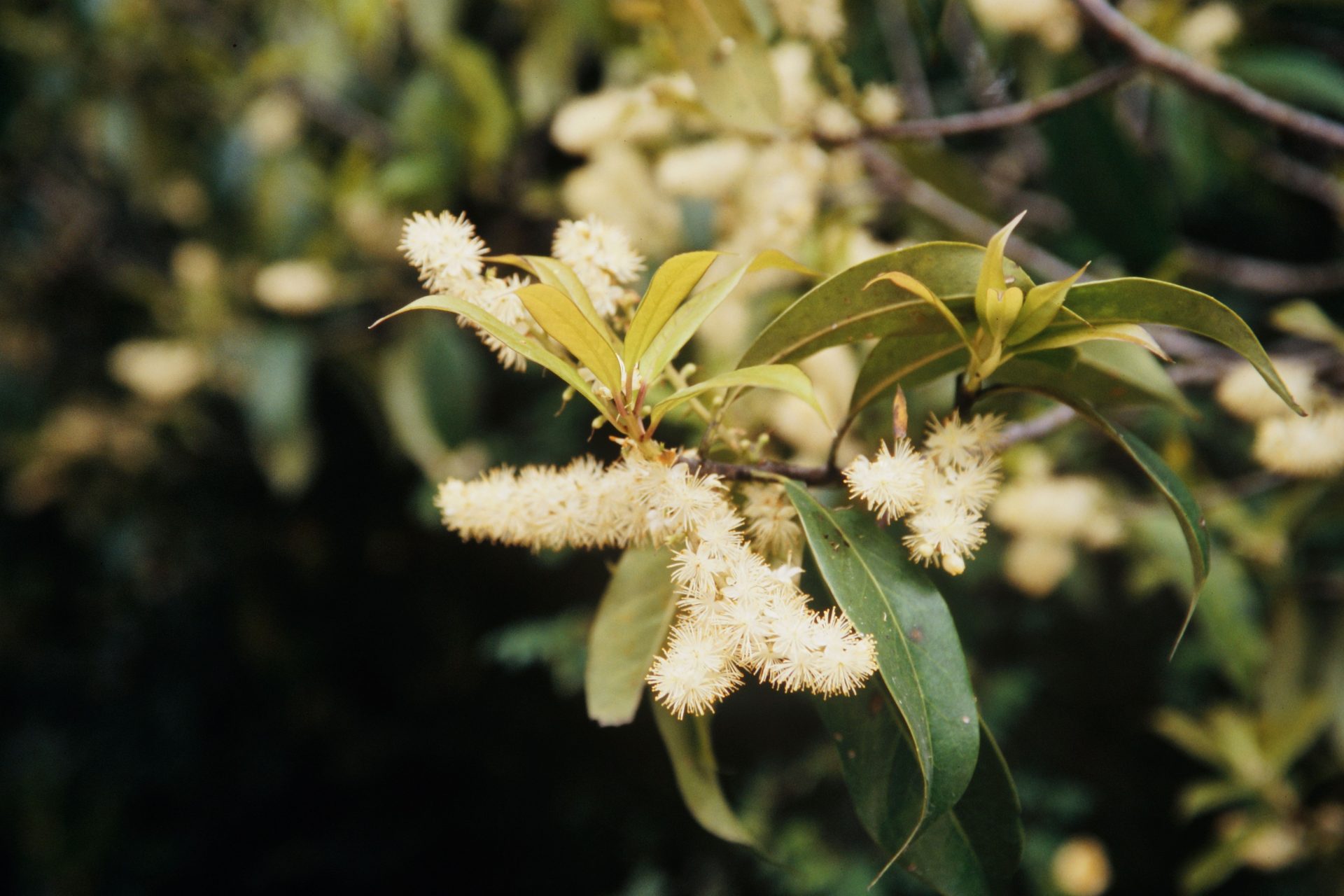
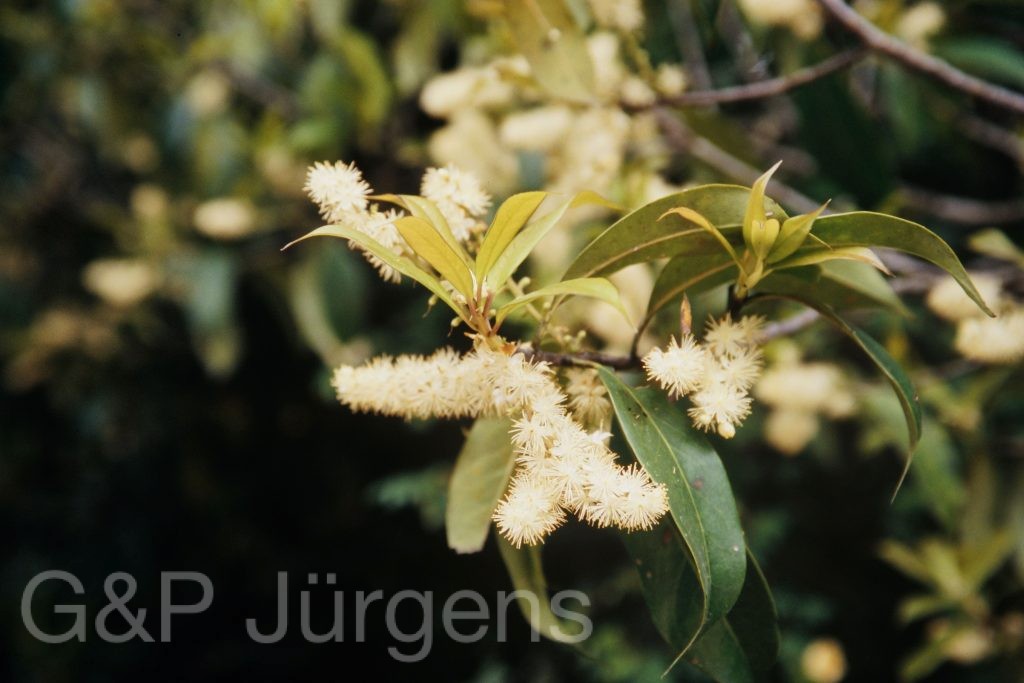
Symplocos sumuntia is a broadly distributed East Asian and Himalayan tree, recorded from Nepal, north-east India, Bhutan and Bangladesh eastward through China, Taiwan, Japan and Korea to Indochina and Myanmar, with thousands of catalogued occurrences spanning this wide range. It is a constituent of broadleaved evergreen and mixed montane forests, occurring on slopes, ridges and forest margins from the warm subtropical lowlands to the cool temperate belt, broadly between about 800 and 2,800 m. The tree photographed at Phobjika in central Bhutan at 2,650 m in April was recorded in flower, the white blossom opening in spring before or with the new foliage.
It is an evergreen shrub or small to medium tree with smooth grey bark and slender, often glabrous twigs. The leaves are alternate, simple, coriaceous, narrowly elliptic to lanceolate, acuminate, with finely serrate to subentire margins and an entire to undulate texture. The flowers are small, white and fragrant, borne in short axillary racemes or panicles; the corolla is five-lobed, the numerous stamens united at the base into fascicles adnate to the corolla, a hallmark of the family. The fruit is an ovoid to ellipsoidal drupe crowned by the persistent calyx, ripening blue-black to purple.
Symplocos, the sole genus of Symplocaceae, is taxonomically complex, and S. sumuntia (Buch.-Ham. ex D. Don) has historically encompassed numerous regional variants and synonyms. The leaves and bark are valued locally as a source of mordant (aluminium-accumulating tissues used in dyeing) and in traditional medicine. As a widespread forest species it is not of conservation concern, though it depends on the integrity of subtropical montane forest.
Author: Buch.-Ham. ex D. Don · Sources: POWO (Kew), Flora of China Vol. 15, Flora of Bhutan Vol. 2, GBIF, Nooteboom: Revision of Symplocaceae (1975)