
Hook.f. ex Engl.
Description
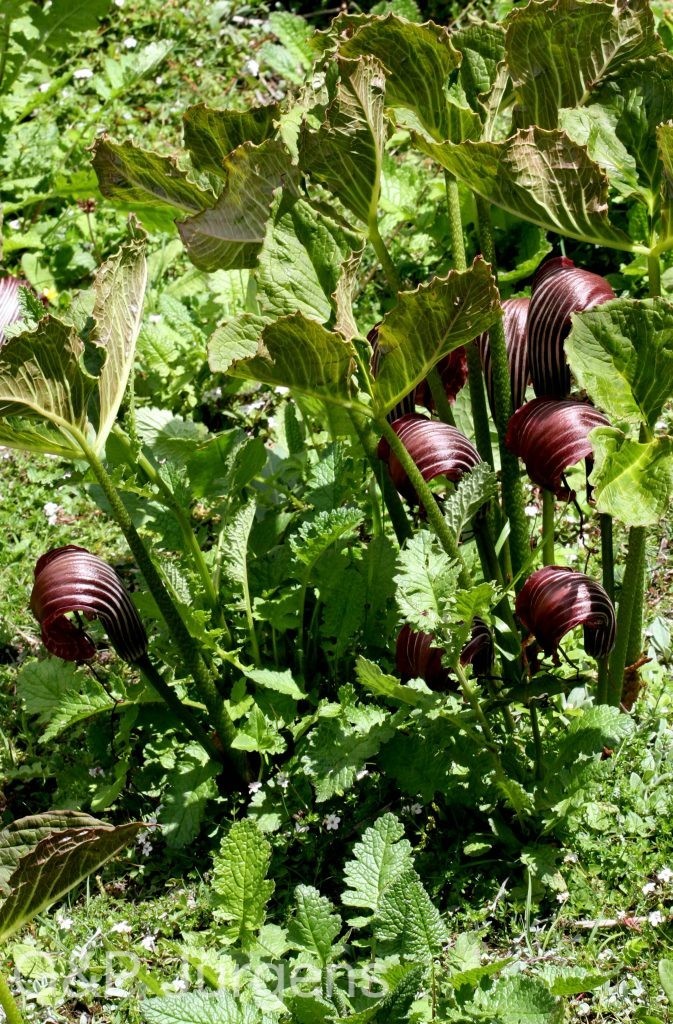
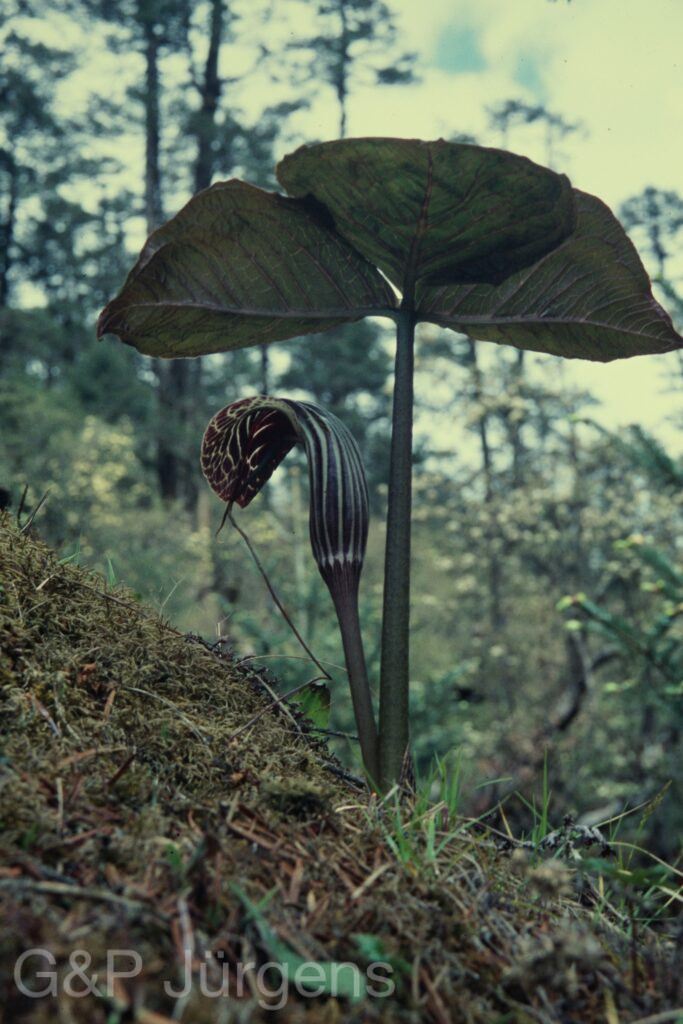
Arisaema utile is a tuberous geophyte of the Himalaya and adjacent ranges, recorded by GBIF in some 84 occurrences from China (Tibet), India, Pakistan, Nepal, Bhutan and Myanmar. It is a plant of the subalpine to lower alpine zone, occupying shrubberies, Rhododendron and conifer forest margins, moist meadows and stony slopes broadly between 3000 and 4300 m. The illustrated plants were found in Sikkim at Yungthang (3350 m, June) and Lachung (3200 m), where the species emerges and flowers shortly after snowmelt on cool, humus-rich ground at the upper limit of woody vegetation.
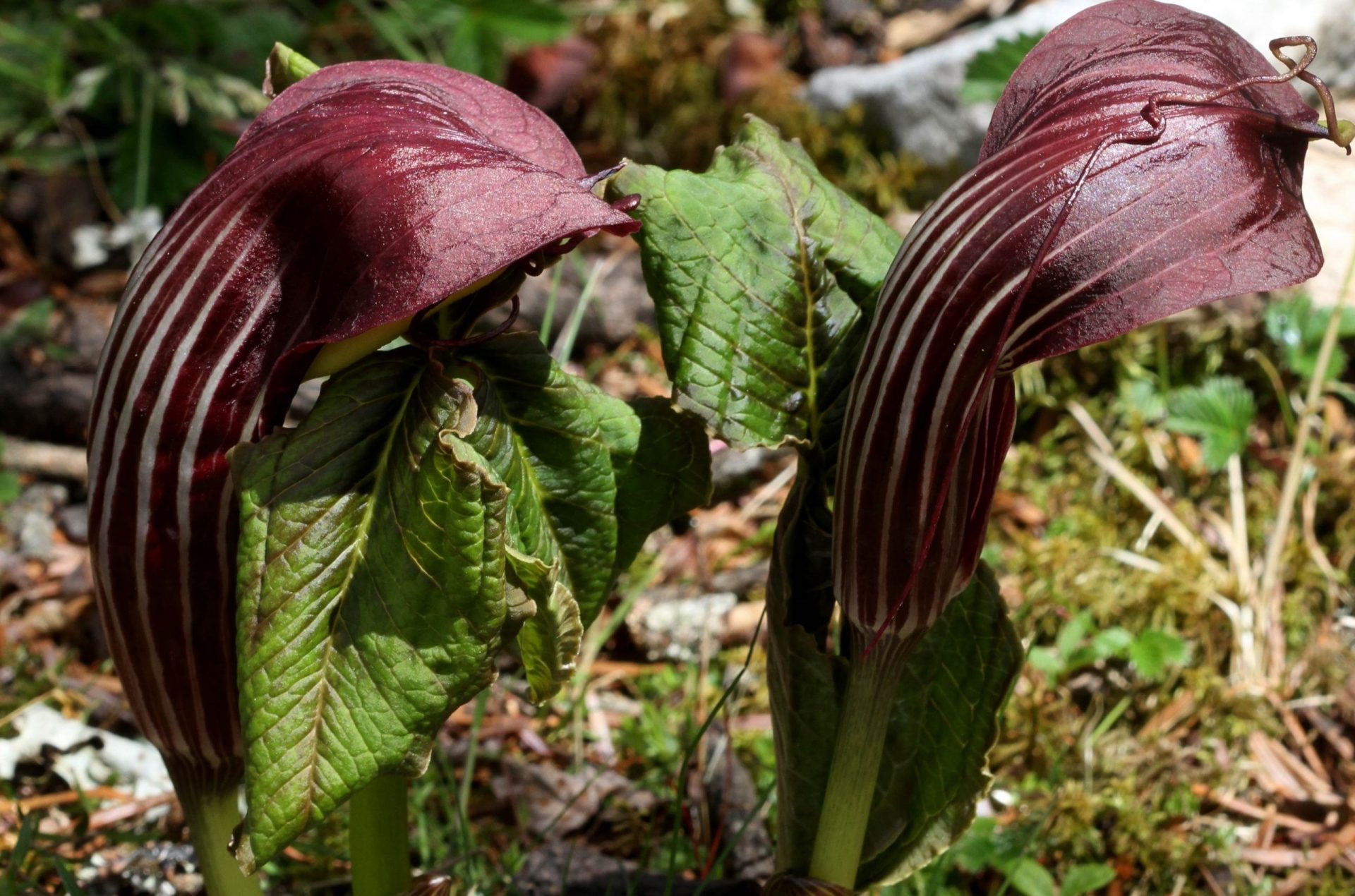
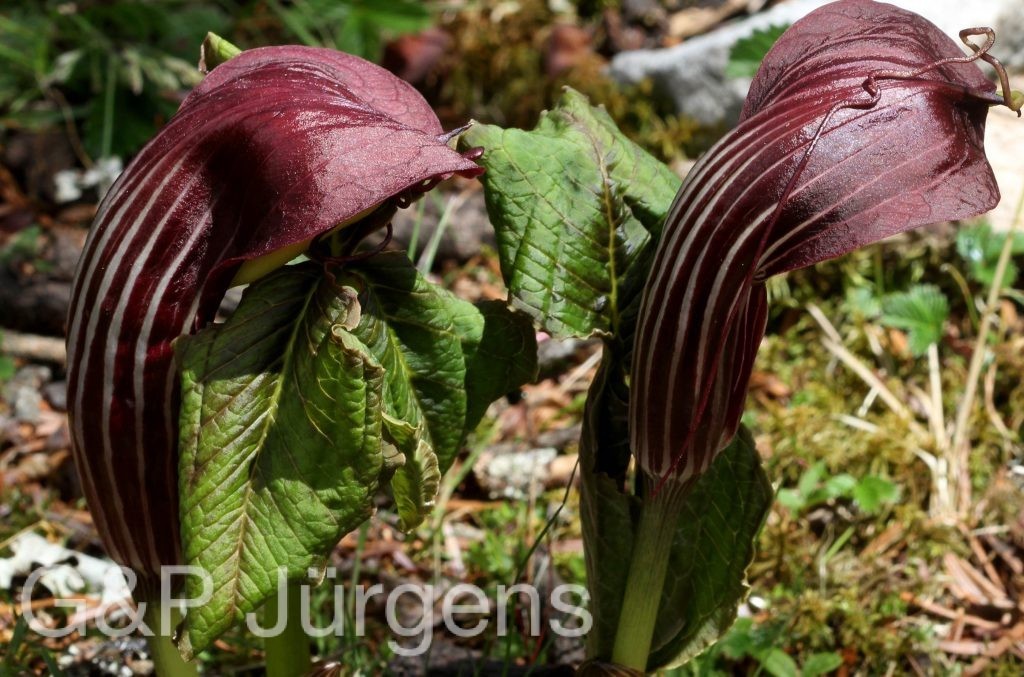
The plant arises from a depressed-globose tuber and typically bears a single trifoliolate leaf, the three leaflets broadly elliptic and often glaucous beneath, the whole sometimes purple-flushed. The inflorescence is a spadix subtended by a spathe whose tube is striped green and dark purple and whose limb is hooded and acuminate, frequently produced into a long filiform tip. The spadix appendix is slender and tail-like, exserted from the spathe mouth. As in the genus, the plant is paradioecious, individual tubers bearing male or female flowers according to size and vigour; pollinated female spadices ripen into a cylindrical infructescence of bright red berries.
Arisaema (Araceae, tribe Areae) is a large genus centred on the Sino-Himalayan region, and A. utile belongs to a Himalayan group characterised by a long-tailed spathe and trifoliolate leaf. GBIF treats the name as accepted. Sex expression shifts with resource status, an adaptation to harsh montane conditions; although collected for traditional use, the species remains locally frequent within its altitudinal band.
Author: Hook.f. ex Engl. · Sources: POWO (Kew), GBIF, Flora of China, Flora of Bhutan, Gusman monograph The Genus Arisaema