
Mart.
Description
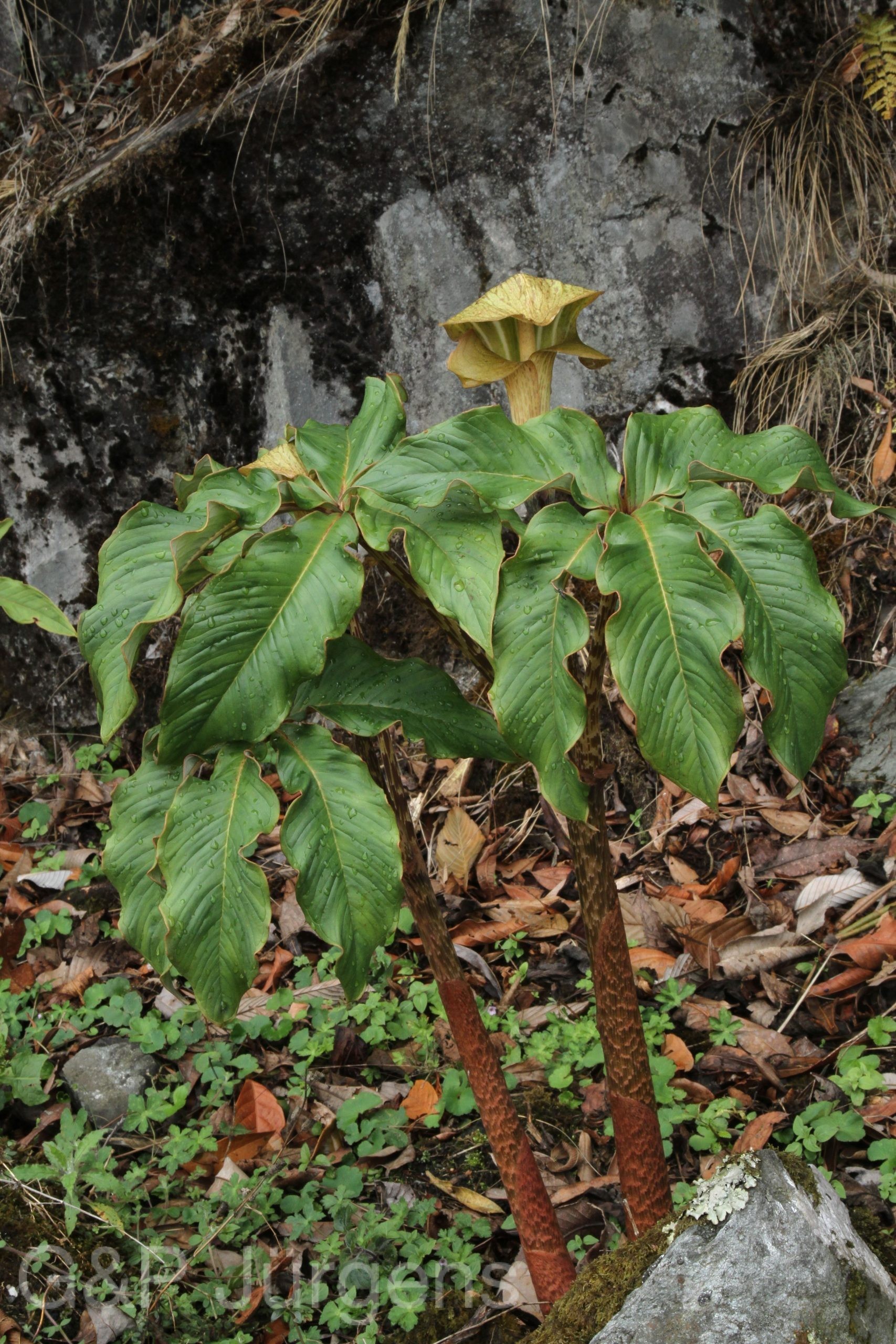
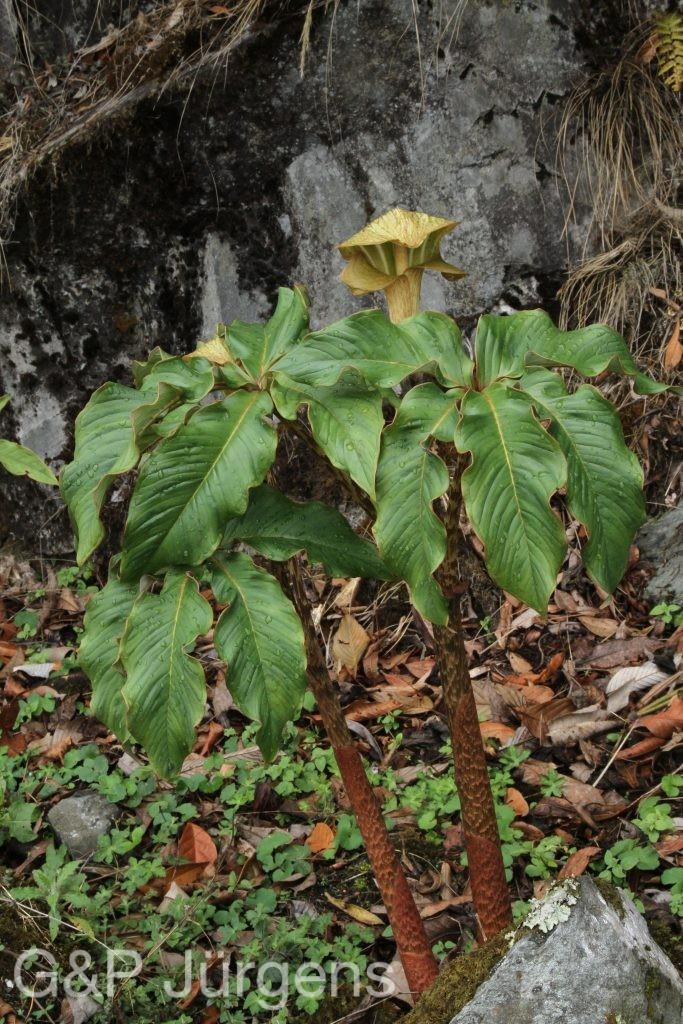
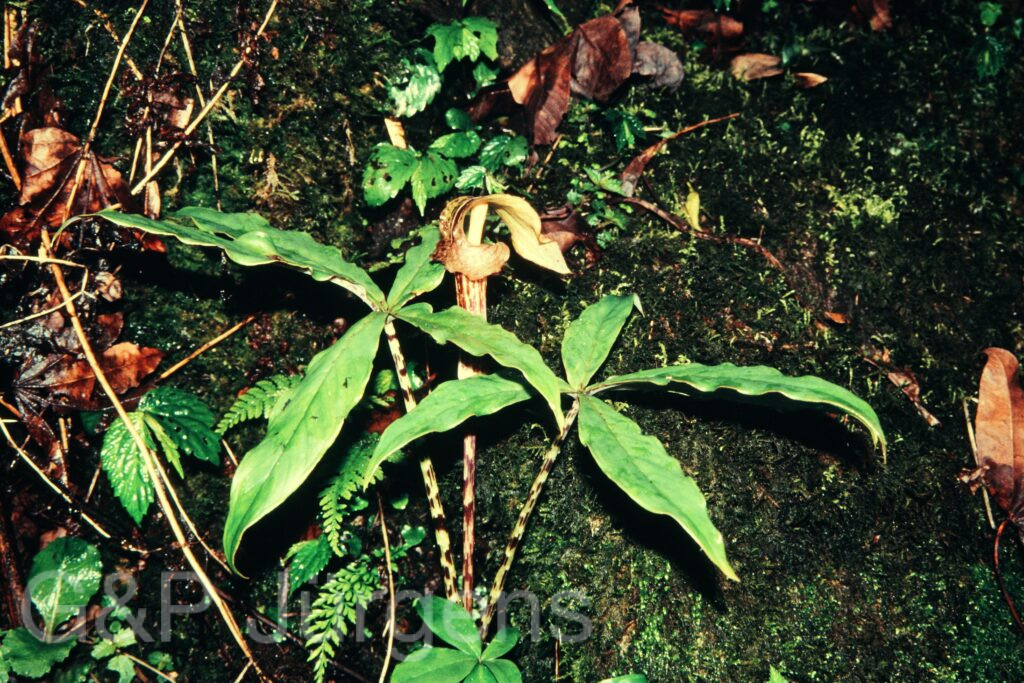
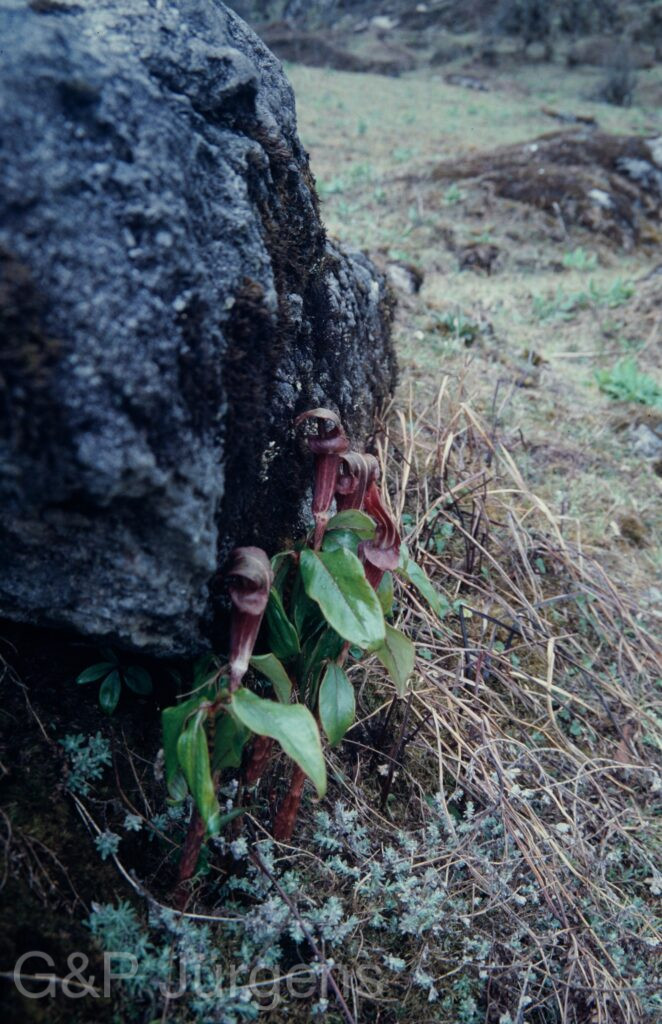
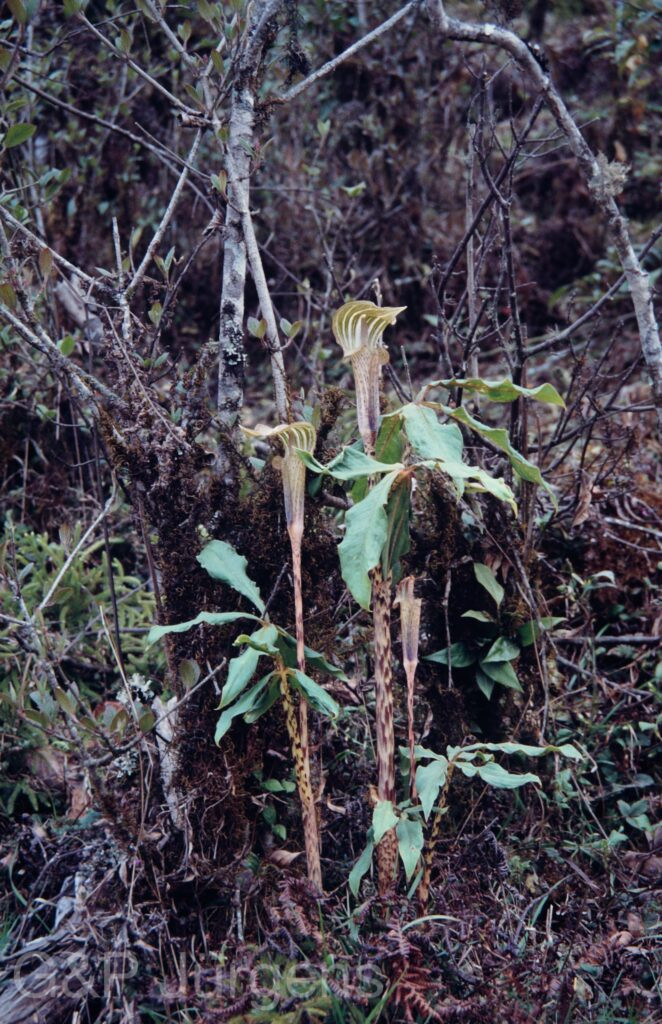
Arisaema nepenthoides is a Himalayan cobra lily distributed from Nepal eastward through Sikkim, Bhutan and north-east India to Myanmar and south-western China, with about 322 GBIF occurrences reflecting its montane range. It is a herb of cool temperate to subalpine forest, growing in moist broad-leaved and conifer-Rhododendron forest, shady banks and forest margins, broadly from 1,900 to 3,600 m. The localities recorded for the photographed plants span this range, from Trashigang in eastern Bhutan at 1,300 m and Banyang in Nepal at 1,900 m to Tashigaon at 3,100 m and Milka Danda at 3,200 m, flowering between March and May as the snows recede.
It is a tuberous perennial arising from a depressed corm, producing a stout, conspicuously mottled pseudostem patterned with brownish-purple and pale markings reminiscent of a snake's skin. Usually two leaves are produced, each pedately divided into several elliptic to oblanceolate leaflets. The inflorescence is a spadix enclosed in a spathe whose tube is greenish and prominently striped, opening into a hooded, incurved limb that recalls the pitcher of a Nepenthes, hence the epithet nepenthoides. The species is dioecious, with the sexes distinguished by the spadix appendage; pollinated female plants develop a dense head of orange-red berries, each with few seeds.
Arisaema is a large genus centred on the Sino-Himalayan region, and A. nepenthoides belongs to a group recognised by its mottled pseudostem and distinctive hooded spathe. Like many relatives it shows sequential gender change, individuals functioning as male when small and as female once the tuber attains sufficient size, an adaptation to resource availability. Pollination is effected by fungus gnats and small flies attracted into the spathe chamber. The conspicuous spathe makes it a sought-after ornamental, but it remains widespread and locally common across the eastern Himalaya and is not considered threatened.
Author: Mart. · Sources: POWO (Kew), GBIF, Flora of China, Flora of Bhutan, The Genus Arisaema (Gusman & Gusman), Araceae of the Himalaya