
Buchet
Description
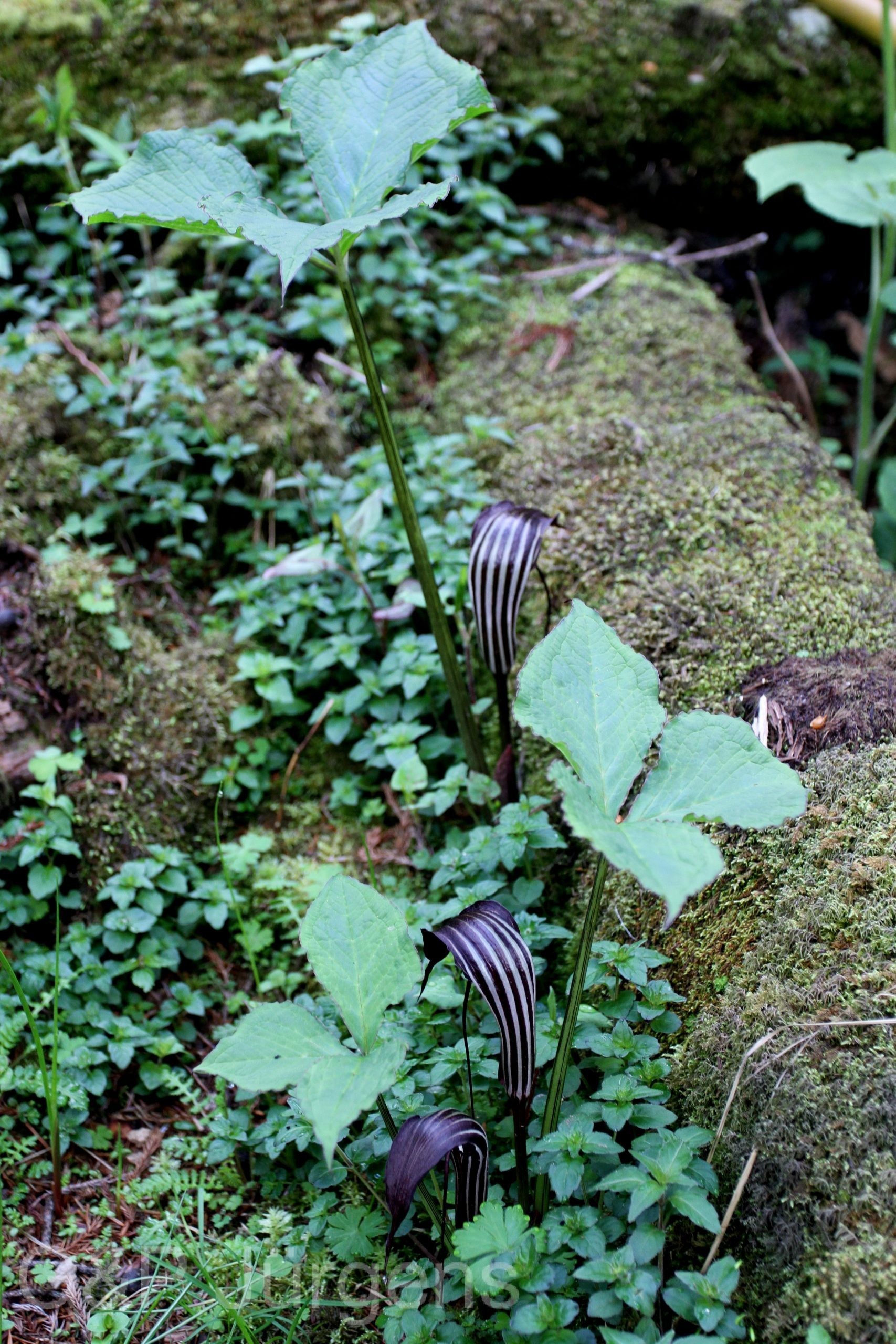
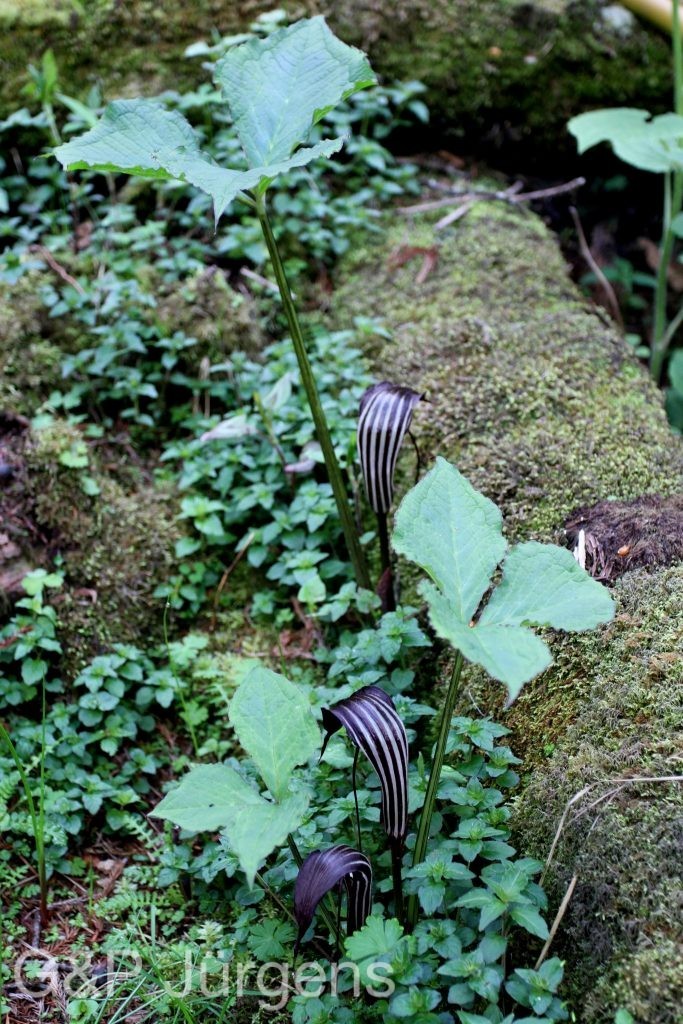
Arisaema elephas is a tuberous perennial aroid of the eastern Himalaya and the Sino-Himalayan mountains, recorded from China, India, Bhutan and Myanmar, with around 426 occurrences in GBIF. It grows in moist subalpine and alpine habitats, in open coniferous and Rhododendron forest, scrub, grassy slopes and meadow margins, generally between about 2700 and 4300 m. The photographed plant was collected in Bhutan at Tsochenchen at 3550 m in June, an elevation and cool, humid montane setting characteristic of the species, which emerges and flowers early in the growing season after snowmelt.
The plant arises from a depressed-globose tuber and typically produces a single leaf divided into three leaflets, the lateral leaflets often markedly asymmetric, with entire to undulate margins. The inflorescence is a spathe enclosing the spadix; the spathe tube is greenish and the limb dark purple to blackish, and the spadix is prolonged into a long, slender, downward-curving appendix that recalls an elephant's trunk, hence the epithet elephas. As in most Arisaema the plants are often functionally dioecious, sex expression shifting with tuber size and vigour. The fruit is a dense club-shaped infructescence of red berries.
Arisaema is a large genus centred on the Himalaya and East Asia, notable for its sequential hermaphroditism (size-dependent sex change) and for pollination by fungus gnats and other small flies attracted into the spathe chamber. Arisaema elephas is a distinctive and well-marked species of the A. elephas group, recognised by its long pendent spadix appendix. It is widespread within its montane range and not currently considered threatened, though alpine populations are sensitive to grazing and habitat disturbance.
Author: Buchet · Sources: POWO (Kew), GBIF, Flora of China, Flora of Bhutan, The Genus Arisaema (Gusman & Gusman)