Tag:

Nepal

Flowers of Nepal — 1313 wild plant species documented from the Nepalese Himalaya, from subtropical foothills to high alpine meadows above 4,000 m. Nepal’s dramatic elevation gradient makes it one of the richest botanical regions on Earth, home to rhododendrons, primulas, gentians and the famed blue poppies (Meconopsis). Every entry gives a botanical description, native distribution, habitat and flowering season, alongside the original field photograph and the location where it was taken.

Herb.

Nepal 1994 323 ergebnis
Ost-Nepal Chainpur 1300m May 
Nepal 2001 60 ergebnis ergebnis
East-Nepal Mulkharka 1920m, April

Description

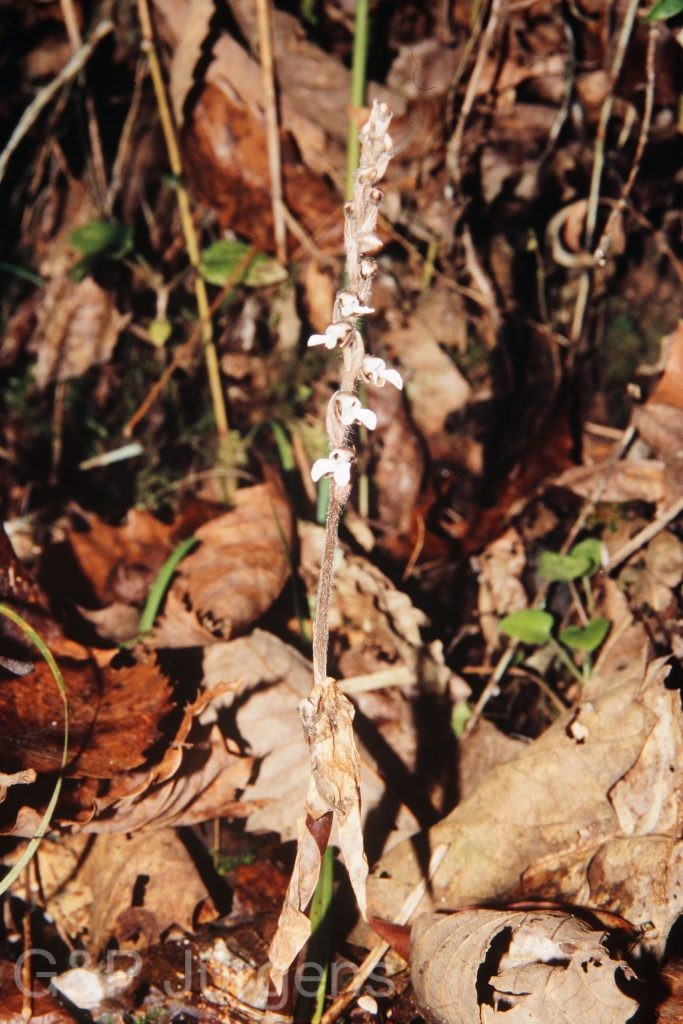
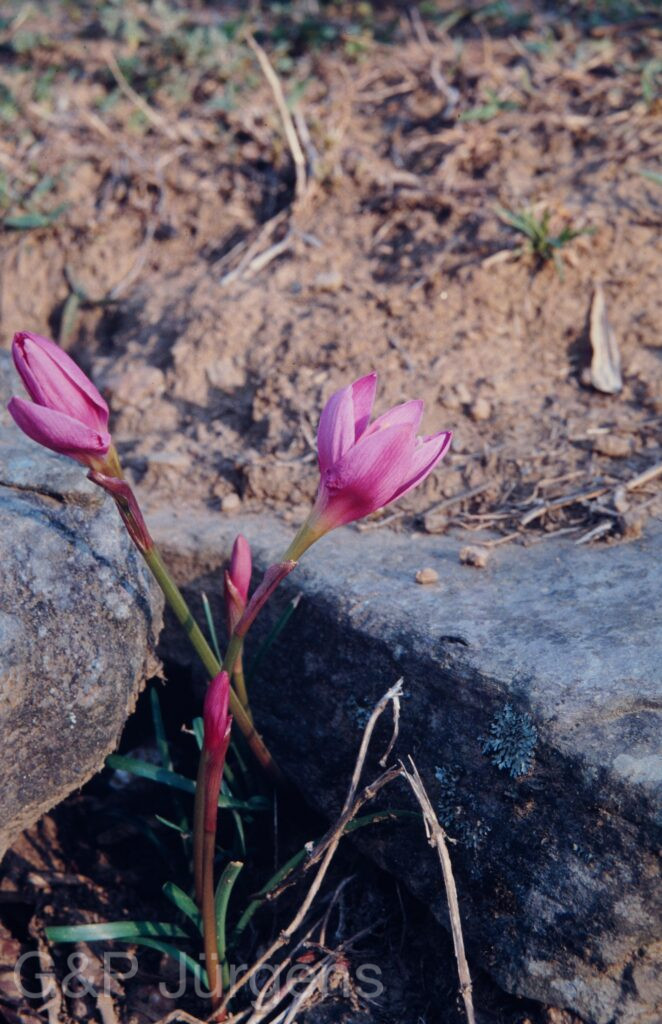
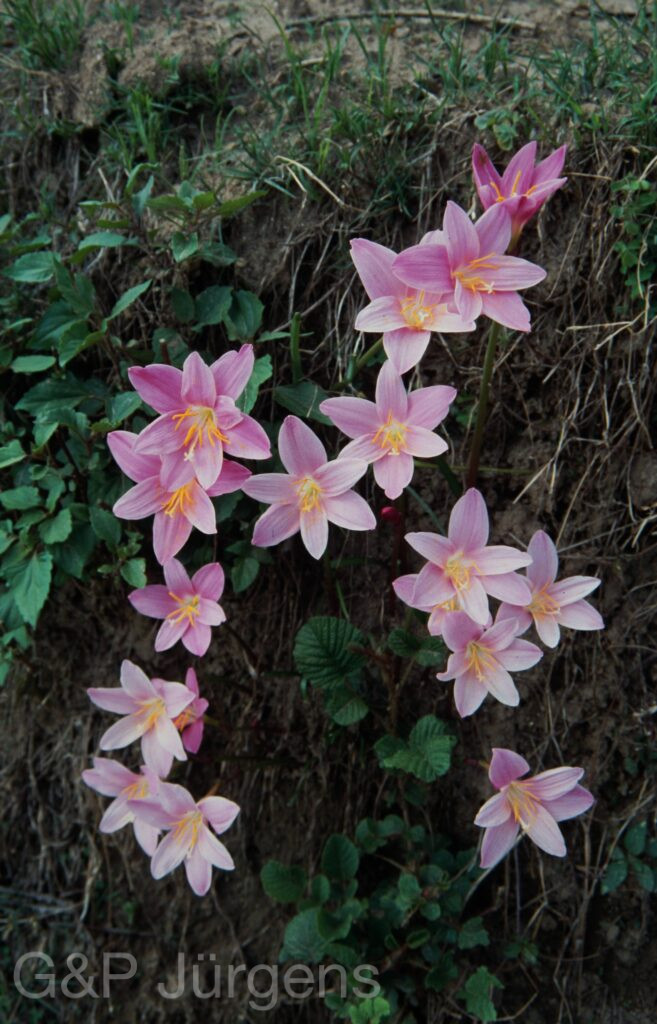
Zephyranthes carinata, the rosepink rain lily, is native to Mexico and Central America but is now pantropically naturalised, GBIF recording some 1370 occurrences across the Americas, southern Africa, South and East Asia and Australasia. In the Himalaya it is a widespread garden escape, recorded across Nepal and northern India where it colonises grassy banks, roadsides, lawns and disturbed moist ground at low to middle elevations. The eastern Nepalese populations at Chainpur (1300 m, May) and Mulkharka (1920 m, April) show its spread into hill cultivation, where it flowers gregariously after the first rains.

It is a small bulbous geophyte with a tunicated, ovoid bulb bearing a few narrowly linear, somewhat keeled basal leaves (the epithet carinata referring to the carinate blade). The solitary flowers are borne on a hollow scape, each subtended by a tubular spathaceous bract. The perianth is funnel-shaped and erect, rose-pink to rose-purple fading paler, of six subequal tepals fused below into a short tube; within are six stamens in two series and an inferior trilocular ovary with a slender, shortly trifid style. The fruit is a depressed-globose loculicidal capsule with numerous flattened black seeds, though much spread is clonal through bulb offsets.

Zephyranthes belongs to tribe Hippeastreae of Amaryllidaceae, characterised by solitary, scapose, rain-triggered flowers. Z. carinata has long been confused with Z. grandiflora, the names variously applied in horticulture; current treatments accept Z. carinata as correct for the common pink rain lily. A hardy, free-flowering ornamental of no conservation concern, its readiness to naturalise makes it a minor weed of lawns and grasslands across its adopted Asian range.

Author: Herb. · Sources: POWO (Kew), GBIF, Flora of China Vol. 24, Flora of Pakistan, Annotated Checklist of the Flowering Plants of Nepal, Meerow and Snijman revision of Amaryllidaceae genera
Lindl.

Bhutan2012 1024
Bhutan Trithangebe 900m, October
Bhutan2012 1025
Bhutan Trithangebe 900m, October

Description

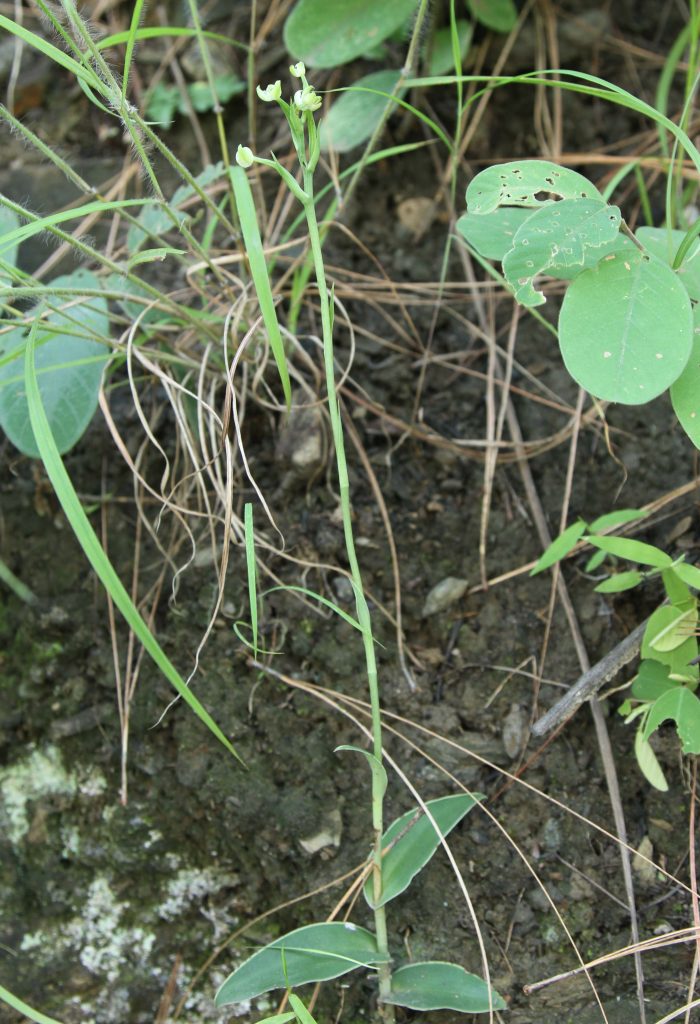
Zeuxine goodyeroides is a terrestrial orchid of shaded forest floors in the eastern Himalaya and adjoining mountains of China (including Yunnan and Tibet), India, Nepal, Bhutan, Myanmar and Sri Lanka, with around 56 documented occurrences indicating a scattered but wide distribution. It grows in leaf litter and humus-rich soils of subtropical to lower-temperate broad-leaved and mixed forest, generally between about 800 and 2000 m. The photographed plant was recorded at Trithangebe in Bhutan at 900 m, flowering in October, when the post-monsoon humidity favours the development of these inconspicuous ground orchids.

The species is a small herb arising from a creeping, fleshy rhizome that roots at the nodes, the erect stem bearing several spirally arranged leaves toward the base. The leaves are ovate-lanceolate, somewhat fleshy, often with a pale midrib, recalling the genus Goodyera to which the epithet alludes. The inflorescence is a slender, pubescent terminal raceme of numerous small, non-resupinate-appearing white to greenish flowers; the sepals are pubescent dorsally, the petals adhere to the dorsal sepal forming a hood, and the diagnostic labellum is saccate at the base with two basal glands and bears a transversely dilated, bilobed epichile. The fruit is a small dehiscent capsule with dust-like seeds.

Zeuxine belongs to subtribe Goodyerinae of the Orchidaceae (here spelled Orchideaceae as supplied), the jewel-orchid alliance, distinguished by the spurless, basally pouched labellum bearing internal glands. Easily overlooked owing to its small stature, it depends like most terrestrial Goodyerinae on mycorrhizal associations in undisturbed forest humus. It is not formally assessed but is sensitive to forest-floor disturbance.

Author: Lindl. · Sources: POWO (Kew), GBIF, Flora of Bhutan, Flora of China, The Genera Orchidacearum (Pridgeon et al.)

King & Pantl.

Bh2008 542 G820
Bhutan Punaka 1500m April

Description

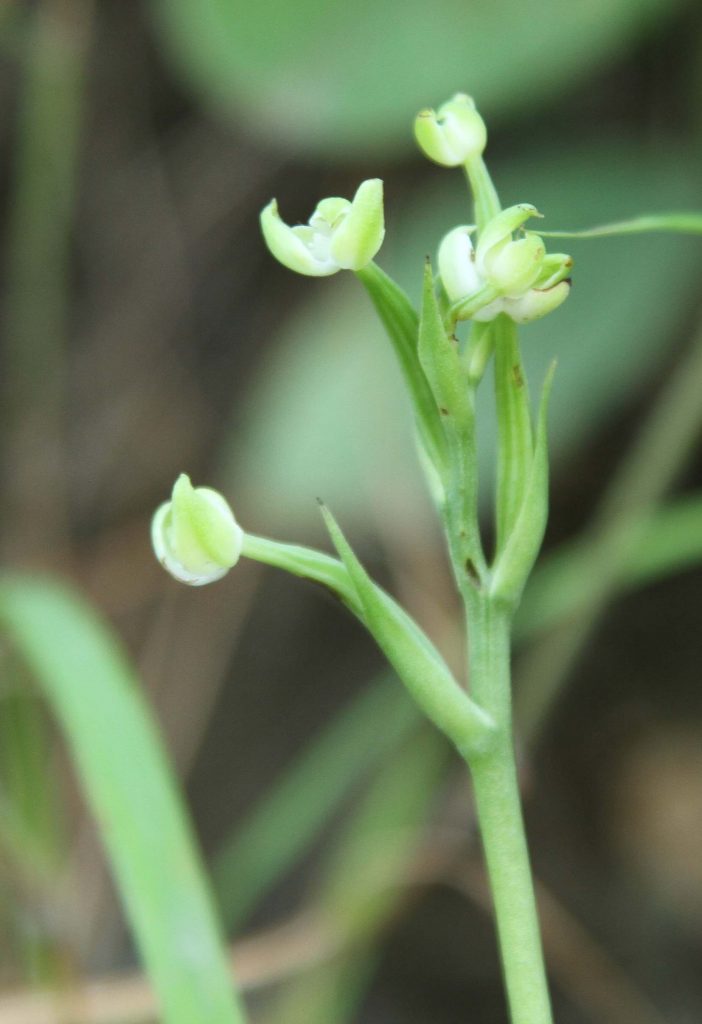
Zeuxine reflexa is a small terrestrial orchid of the eastern Himalaya and adjacent regions, recorded from northern India, Nepal, Bhutan and Taiwan, the modest tally of 22 GBIF occurrences reflecting both its inconspicuous habit and its localised distribution. It grows in shaded, humus-rich situations on the floor of broad-leaved and subtropical forest, on mossy banks and in leaf litter, principally at lower to middle elevations around 1000-2000 m. The photographed plant was found near Punakha in Bhutan at 1500 m in April, the spring flowering period for this warm-temperate to subtropical forest-floor species.

It is a small herb with a fleshy, creeping, ascending rhizome rooting at the lower nodes and a short erect leafy stem. The few leaves are clustered toward the stem base, ovate to lanceolate, somewhat asymmetric and shortly petiolate with sheathing bases. The inflorescence is a slender, pubescent, few- to several-flowered terminal raceme of small flowers. The flowers are dull greenish to brownish with a contrasting white or pale lip; the dorsal sepal and petals are connivent into a hood, the lateral sepals often spreading or reflexed, and the saccate lip bears a pair of basal calli and a bilobed, frequently transversely broadened apical limb diagnostic of the genus.

Zeuxine is a genus of inconspicuous jewel-orchid relatives within subtribe Goodyerinae, distinguished from Goodyera and Anoectochilus chiefly by lip structure. Its dull, partly closed flowers suggest pollination by small insects or a degree of self-pollination, an effective strategy in the dim forest understorey. Owing to its small size and scattered records its true status is poorly documented, but it is not currently regarded as threatened; like all orchids it falls under CITES Appendix II, and its dependence on intact forest litter makes it sensitive to habitat clearance.

Author: King & Pantl. · Sources: POWO (Kew), GBIF, Flora of Bhutan, Pearce & Cribb: The Orchids of Bhutan, Pridgeon et al.: Genera Orchidacearum