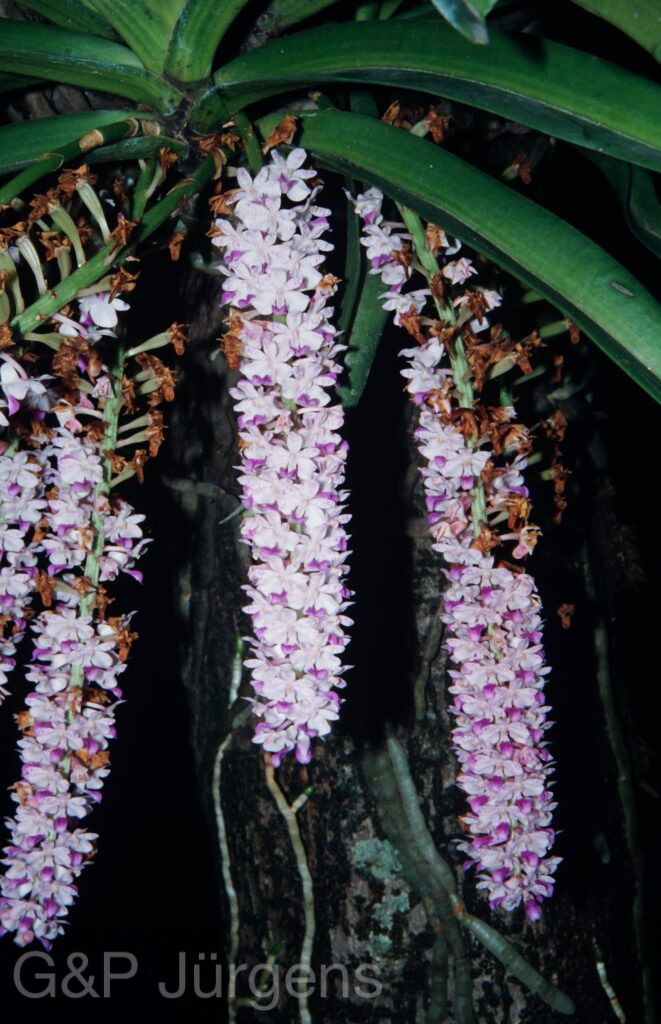
Orchideaceae

(L.) Blume

Nepal 99 1024 ergebnis ergebnis
Nepal Kathmandu 1300m, July
Nepal 99 1025 ergebnis ergebnis
Nepal Kathmandu 1300m, July

Description

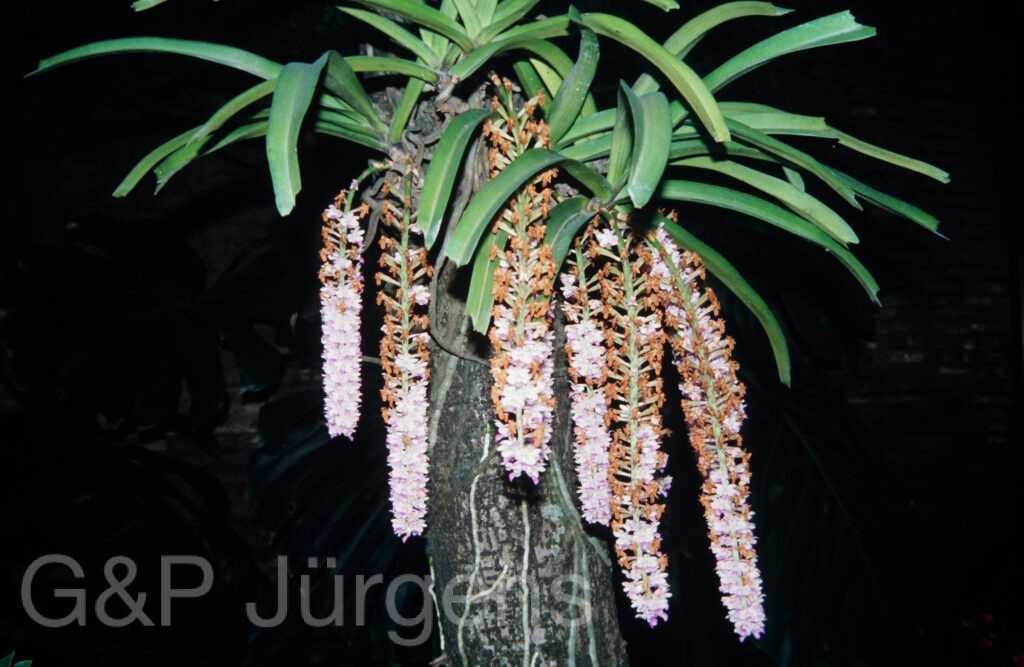
Rhynchostylis retusa (L.) Blume, the foxtail orchid, is an epiphyte widely distributed across tropical and subtropical Asia, with GBIF (617 occurrences) recording it from India, Nepal, Bhutan, China, Myanmar, Thailand, Laos, Vietnam, Cambodia, Sri Lanka, Bangladesh, Indonesia and the Philippines, plus many cultivated records. It grows on the trunks and branches of broadleaved trees in humid lowland and submontane forest, along forest edges and on roadside trees, flowering during the warm, wet summer. The photographed plant from the Kathmandu valley in Nepal at 1300 m in July reflects its typical occurrence in the warm-temperate to subtropical foothill belt of the Himalaya, where it flowers with the monsoon.

The species is a monopodial epiphyte with a short, stout stem clad in the persistent bases of distichous, fleshy, strap-shaped leaves that are channelled and conspicuously praemorse (retuse to unequally bilobed) at the apex, giving the epithet. Numerous thick, greyish aerial roots clasp the host bark. The inflorescence is a dense, pendent, cylindrical raceme of many small fragrant flowers, each white spotted and suffused with rose-purple or violet, with a spurred, entire to obscurely lobed labellum and a small column. The fruit is a pendent dehiscent capsule shedding dust-like wind-dispersed seeds.

Within the vandaceous alliance Rhynchostylis is a small genus of showy, scented epiphytes much esteemed in horticulture, and R. retusa holds particular cultural significance, being the state flower (kopou phul) of Assam. Like all orchids it is protected under CITES Appendix II. While still locally common, wild populations are reduced by habitat loss and unsustainable collection for the ornamental trade.

Author: (L.) Blume · Sources: POWO (Kew), GBIF, Flora of Nepal, The Orchids of the Himalaya (King & Pantling), Genera Orchidacearum (vandaceous orchids), CITES Appendix II
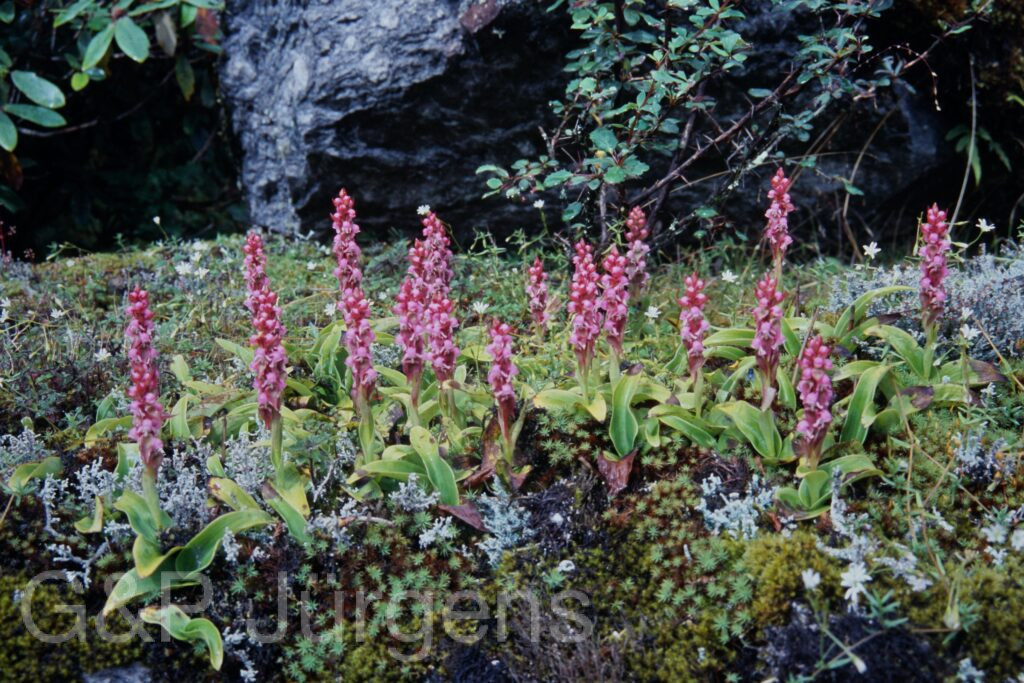
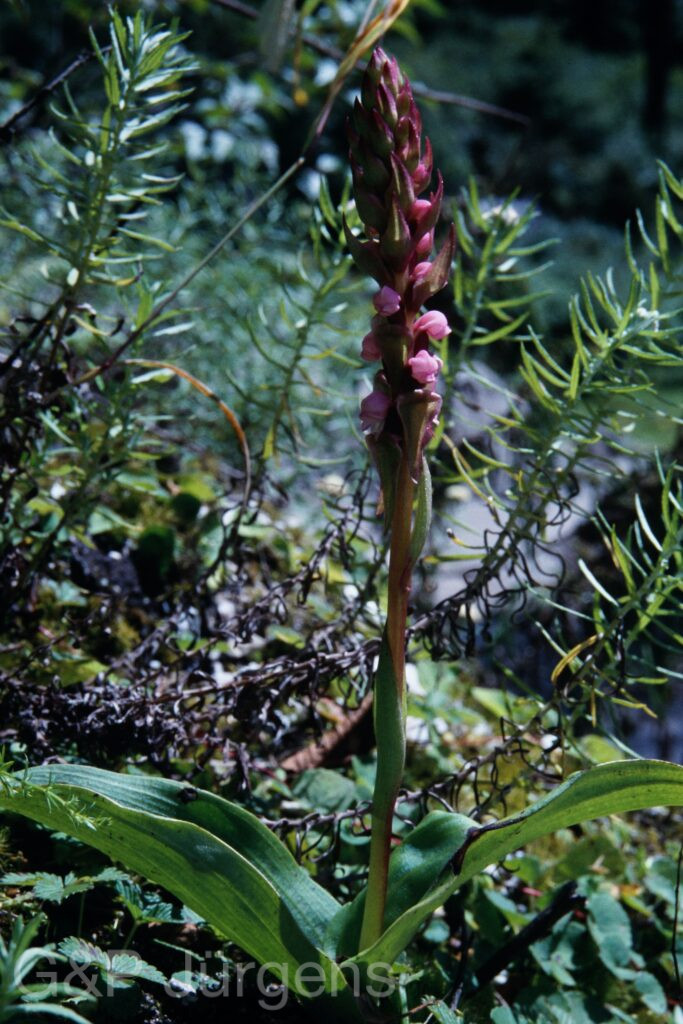
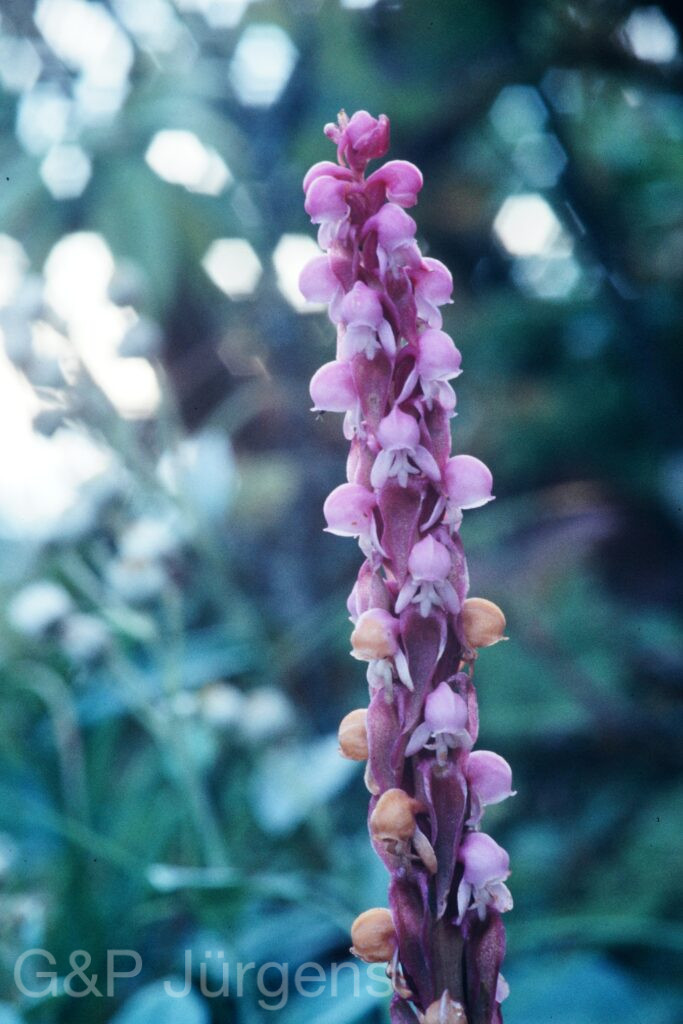
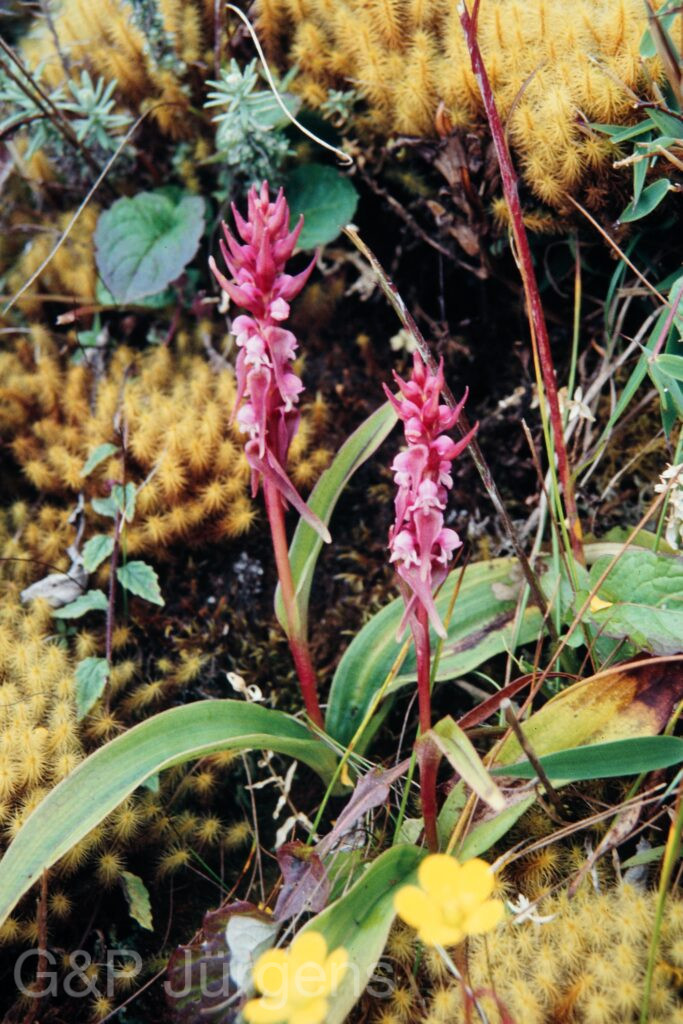
D.Don

Sikkim2003 363 P512
Sikkim Lachen Tista Tal 3450m August
Sikkim2003 364 P511
Sikkim Lachen Tista Tal 3450m August
Nepal 95 100 P178 ergebnis
Nepal Barphak 2450m October
Nepal 95 135 P228 ergebnis
Nepal Barphak 2450m October

Description

Satyrium nepalense D.Don is a terrestrial orchid of remarkably wide distribution, ranging across the Himalaya and southern Asia from Pakistan, India, Nepal, Bhutan, Sri Lanka and southern China to Myanmar, and extending through tropical and southern Africa; GBIF records nearly 1921 occurrences, reflecting its broad ecological tolerance. It grows in open grassy slopes, meadows, scrub and forest clearings from the submontane belt to high alpine pastures, broadly between about 1500 and 3700 m. The cited material from Lachen in Sikkim at 3450 m in August and Barphak in central Nepal at 2450 m in October illustrates its long flowering season across a wide altitudinal range.

The species is a terrestric herb arising from paired ovoid, tomentose tubers, with an erect leafy stem bearing a few ovate to lanceolate sheathing leaves. The inflorescence is a dense cylindrical raceme of many small, pink to rose-purple, fragrant flowers; each flower is non-resupinate, with the lip uppermost and produced into two slender, parallel spurs at its base, a diagnostic feature of the genus. The fruit is a small dehiscent capsule releasing abundant dust-like seeds.

Satyrium (Orchidaceae, subtribe Satyriinae) is a chiefly African genus with an outlying Asian representation, of which S. nepalense is the most widespread; its twin-spurred, non-resupinate flowers and moth pollination are characteristic. Valued in traditional medicine for its tubers, the species is locally collected, and although still common it warrants monitoring where harvesting pressure is intense.

Author: D.Don · Sources: POWO (Kew), GBIF, Flora of Bhutan, Flora of China, Orchids of Sikkim Himalaya, Pridgeon et al. Genera Orchidacearum

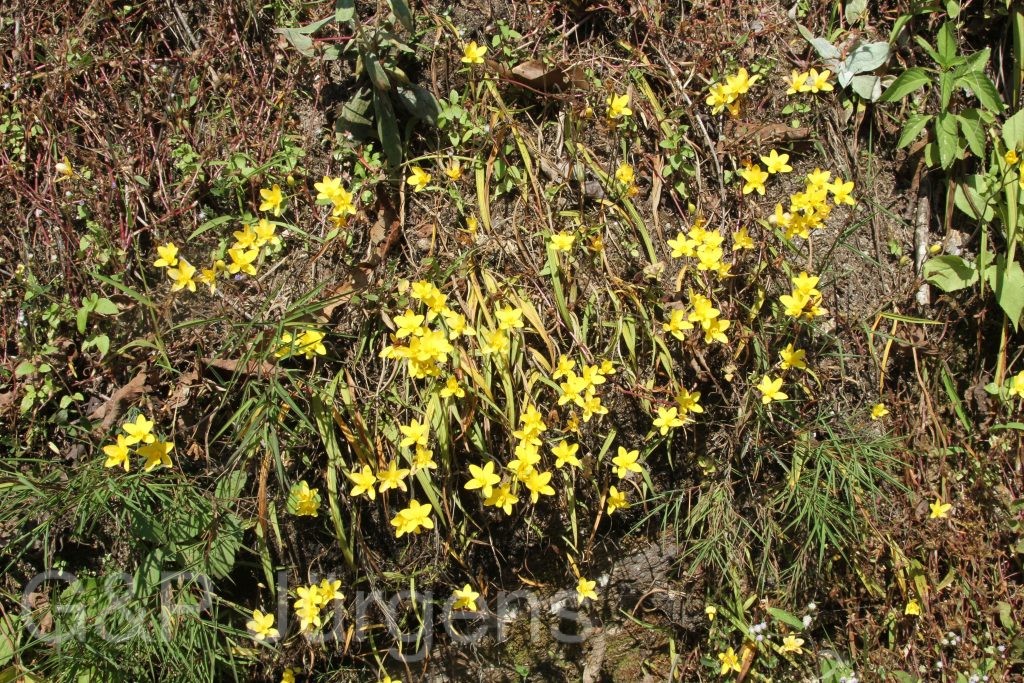
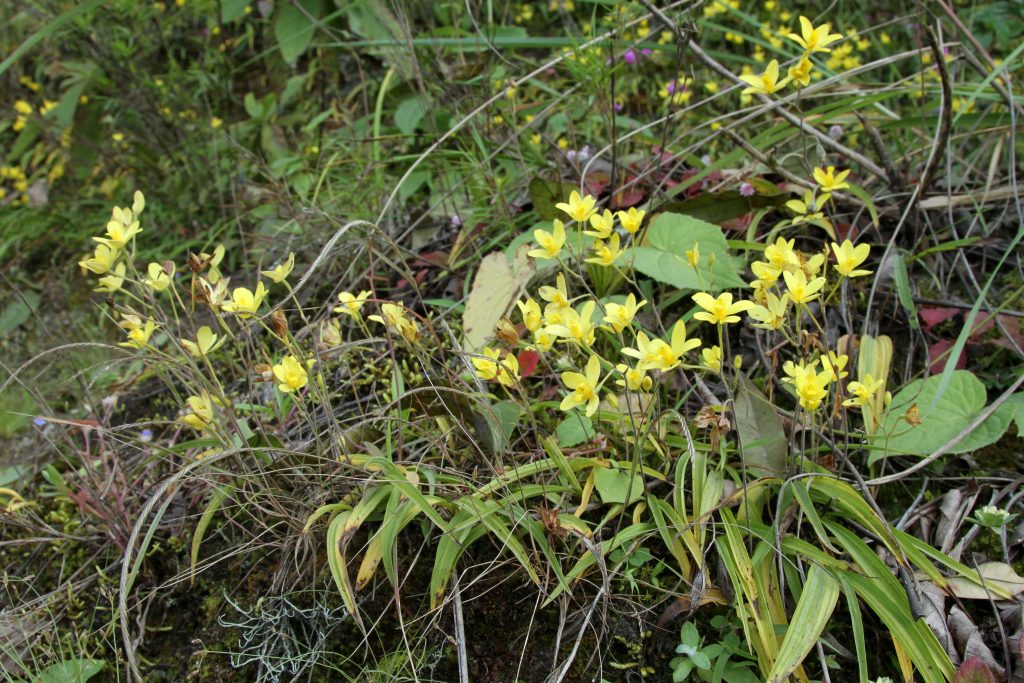
(D.Don) Lindl.

Bhutan2015 77
Bhutan Wangdi Galegphug 1500m, October
Bhutan2012 641
Bhutan Tserang 1600m, September
Bhutan2012 642
Bhutan Tserang 1600m, September

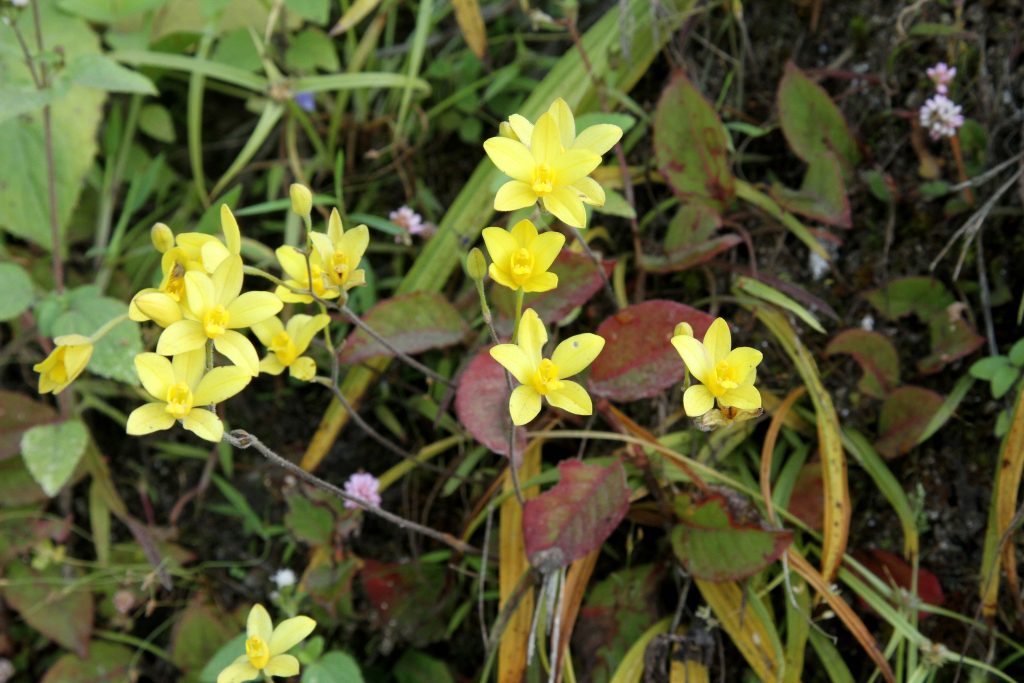
Description

Spathoglottis ixioides is a small terrestrial orchid of the Himalaya, recorded from Nepal, India, Bhutan and China, a relatively narrowly distributed species with 146 occurrences in GBIF. It grows on open grassy banks, mossy rock ledges, humus-rich slopes and forest margins, generally between 1500 and 3500 m. The Bhutanese localities given, Wangdi Galegphug at about 1500 m in October and Tserang at 1600 m in September, reflect the warm-temperate to subtropical montane grassland and bank habitats where it flowers in the post-monsoon autumn, often among grasses on damp, partly shaded ground.

The species is a dwarf, deciduous, terrestrial herb growing from a small subterranean pseudobulb or corm-like tuber. From this arise a few narrowly lanceolate, plicate (longitudinally pleated) leaves that taper to a slender base. The slender erect inflorescence carries one to a few comparatively large flowers; the floral segments are bright yellow, with spreading ovate-lanceolate sepals and petals and a distinctly three-lobed labellum bearing raised keels or calli on the disc and small lateral lobes flanking the column. The fruit is a small ellipsoid dehiscent capsule releasing numerous dust-like seeds.

Spathoglottis (subtribe Collabiinae, tribe Collabieae of the Epidendroideae) is chiefly a tropical Asian and Pacific genus, and S. ixioides is among its most cold-tolerant, high-altitude members, the yellow flowers and reduced deciduous habit distinguishing it within the genus. Like most terrestrial orchids it depends on mycorrhizal fungi for germination of its minute seeds and is pollinated by bees. Although locally frequent in suitable habitat, its restricted range, specialised ecology and the broad pressures of habitat disturbance and orchid collection warrant monitoring, and all orchids are listed under CITES Appendix II.

Author: (D.Don) Lindl. · Sources: POWO (Kew), GBIF, Flora of Bhutan, Orchids of Bhutan, Genera Orchidacearum (Pridgeon et al.)

(Pers.) Ames

Bhutan2014 92
Bhutan Trashigang 1450m, May
Bh2008 471 G732
Bhutan Tsang-Chu, 1800m April
Nepal1992 92 P126 ergebnis
Nepal Amjilassa 2300m March 

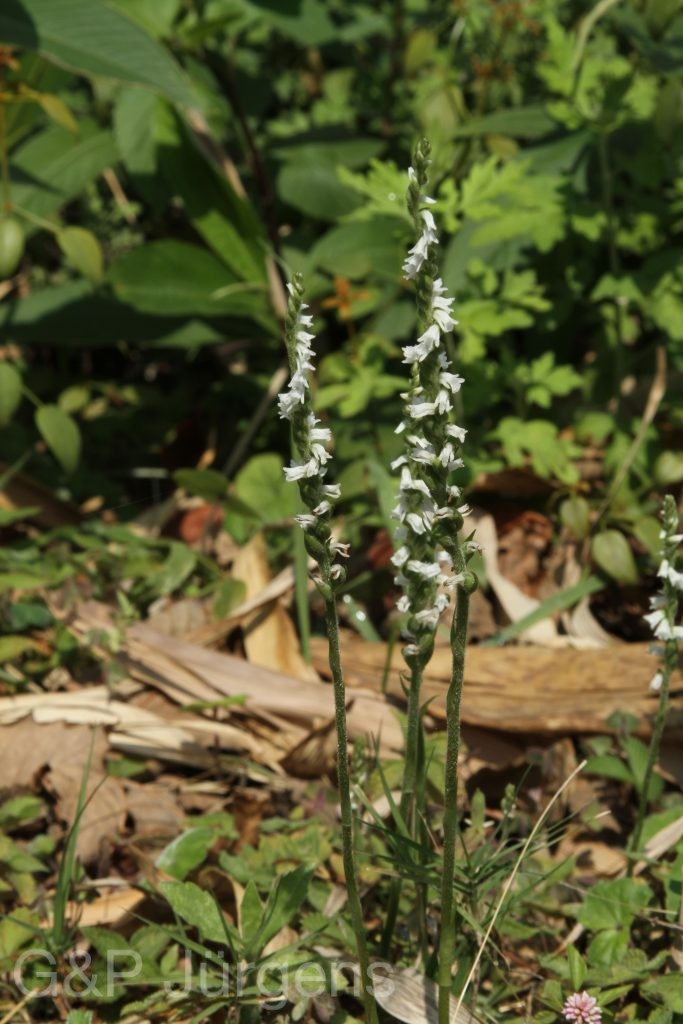
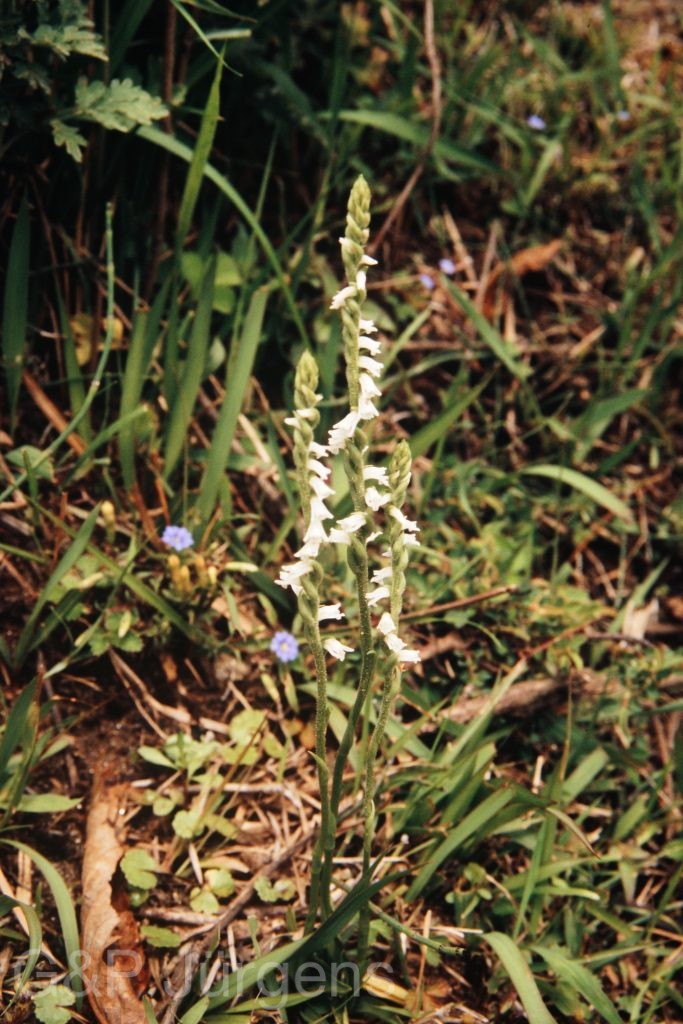
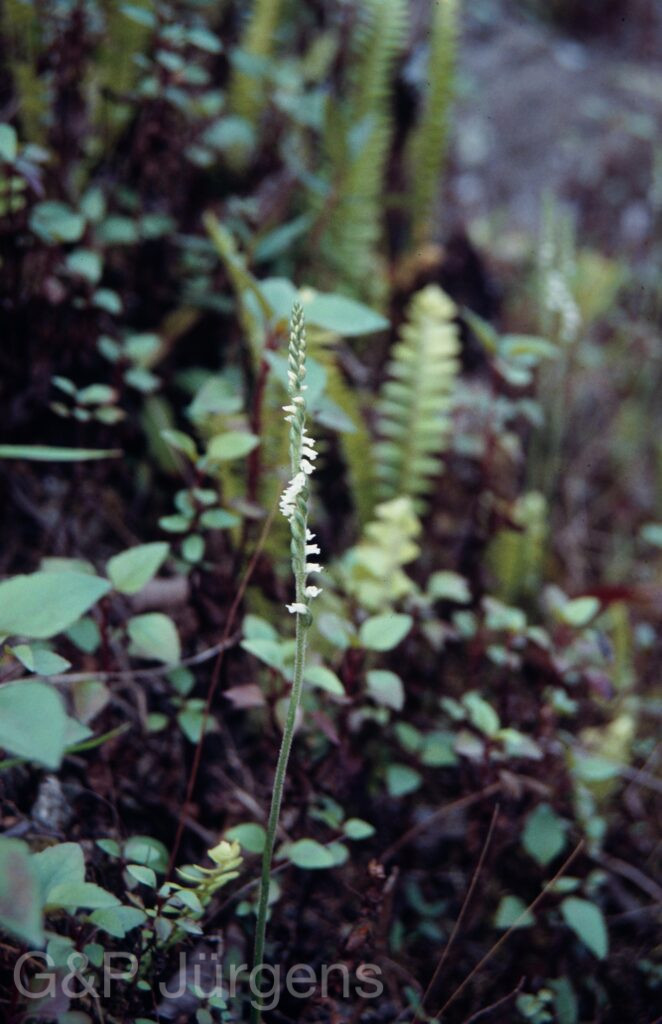
Description

Spiranthes sinensis, the Chinese ladies'-tresses, is one of the most widespread terrestrial orchids of the Old World, documented in GBIF by some 7880 occurrences spanning eastern Asia from China, Japan, Korea and Russia through India, Nepal, Bhutan and Southeast Asia to Australia, New Caledonia and Sri Lanka. It occupies open, moist grassland, marshy meadows, streambanks, paddy margins and grassy slopes from near sea level to about 3000 m. The photographed Himalayan plants from Trashigang in Bhutan at 1450 m in May, the Tsang-Chu at 1800 m in April and Amjilassa in eastern Nepal at 2300 m in March illustrate its tolerance of a wide elevational and seasonal range in damp, sunny situations.

It is a slender terrestrial orchid with fleshy, fasciculate, tuberous roots and a tuft of linear to oblanceolate basal leaves. The erect, finely pubescent inflorescence bears numerous small flowers arranged in a characteristic single spiral around the axis. The flowers are typically pink to rose-purple with a white, recurved, crisped-margined labellum bearing a yellowish, papillose central callus; the dorsal sepal and petals converge to form a hood over the short column. The fruit is a small, erect, ellipsoid capsule releasing dust-like seeds.

A member of subtribe Spiranthinae of the Orchidaceae (here under the input spelling Orchideaceae), S. sinensis forms a taxonomically complex, polyploid-rich aggregate from which several segregates such as S. australis and S. hongkongensis have been recognised. Like most orchids it depends on mycorrhizal fungi for germination and is pollinated chiefly by bees. Despite local declines from wetland drainage, its enormous range and weedy persistence in disturbed grassland make it of Least Concern, though it is protected under CITES Appendix II as for all orchids.

Author: (Pers.) Ames · Sources: POWO (Kew), GBIF, Flora of China, Flora of Bhutan, Annotated Checklist of the Flowering Plants of Nepal, Pridgeon et al. Genera Orchidacearum

Griff.

Bhutan2014 121
Bhutan Trashigang 1550m, May
Bhutan2014 122
Bhutan Trashigang 1550m, May

Description

Vanda bicolor is a comparatively rare epiphytic orchid of the eastern Himalaya, known from Bhutan, north-east India, Nepal and adjacent southern China, with GBIF recording only about 35 occurrences that underline its localised distribution. It grows on the trunks and larger limbs of trees in warm-temperate to subtropical broad-leaved forest, generally at lower-montane elevations between roughly 1000 and 1800 m, in humid, partially shaded conditions. The illustrated plant from Trashigang in eastern Bhutan at 1550 m, flowering in May, is typical of the foothill forests where the species reaches its centre of abundance.

A monopodial epiphyte, it forms a stout, erect to ascending stem clothed in two ranks of strap-shaped (ligulate), leathery, channelled leaves with unequally bilobed, praemorse tips, and produces thick aerial roots. The inflorescence is a short, few- to several-flowered axillary raceme of large, fleshy, fragrant flowers. As the epithet indicates, the flowers are bicoloured: sepals and petals are broad, somewhat clawed and tessellated or flushed brownish over a paler ground, contrasting with the small, trilobed, spurred labellum. The fruit is an elongate, ribbed dehiscent capsule containing copious minute seeds.

Vanda comprises strap-leaved monopodial orchids of tropical Asia, within which V. bicolor is set apart by its flower colouration and labellum structure. Like all Vanda it is listed on CITES Appendix II, and its naturally restricted range, low population density and desirability to collectors make it vulnerable to habitat loss and illegal trade, warranting careful local protection.

Author: Griff. · Sources: POWO (Kew), GBIF, Flora of Bhutan, Orchids of Bhutan, Genera Orchidacearum (Pridgeon et al.)

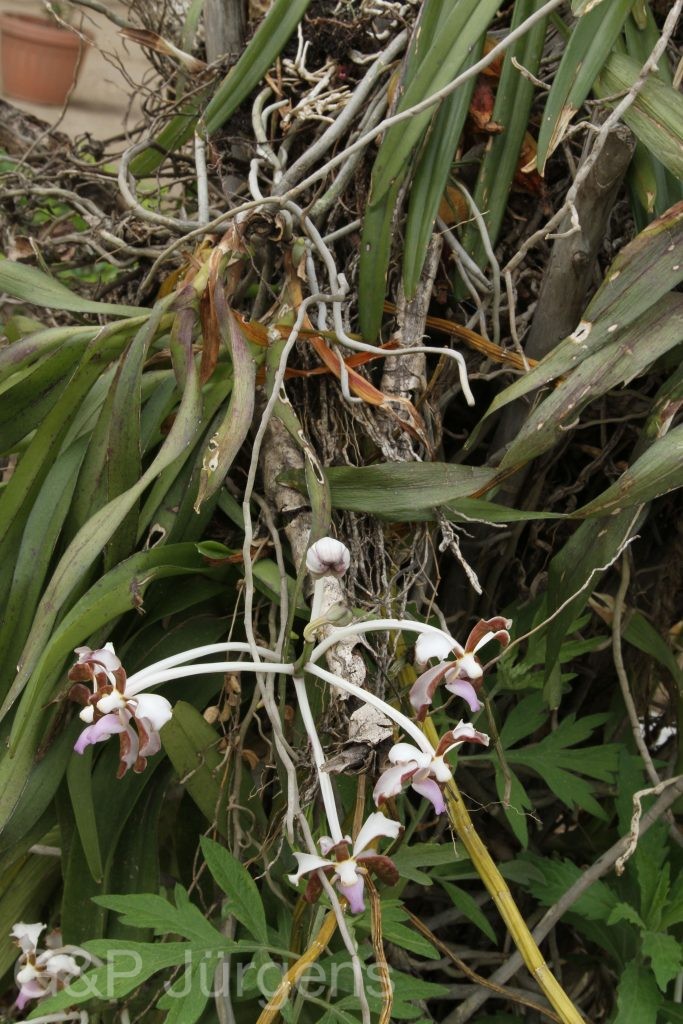
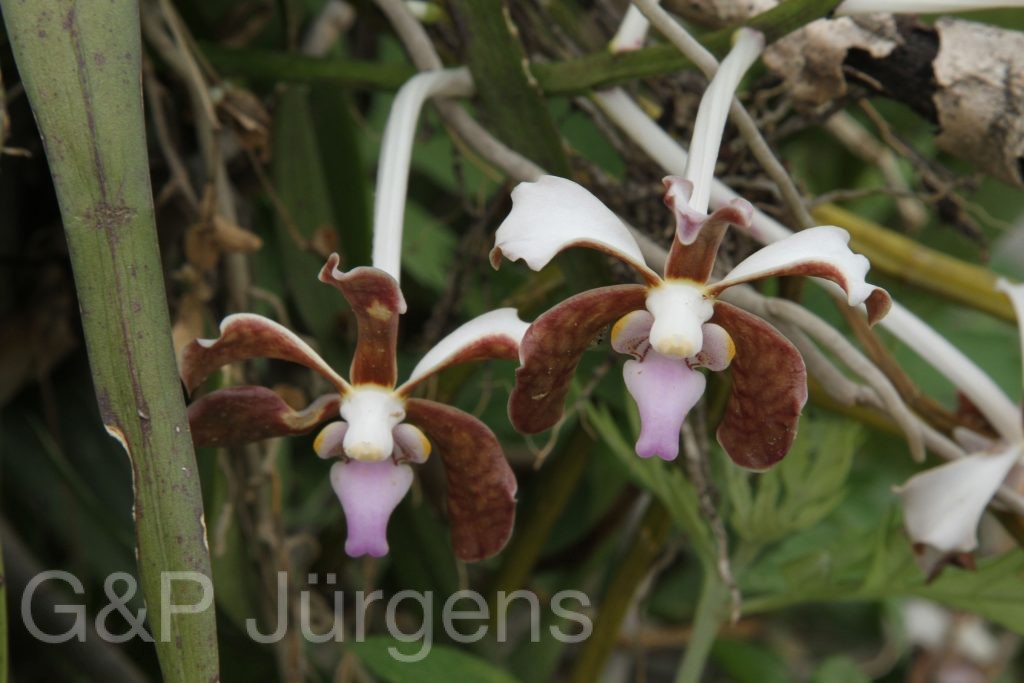
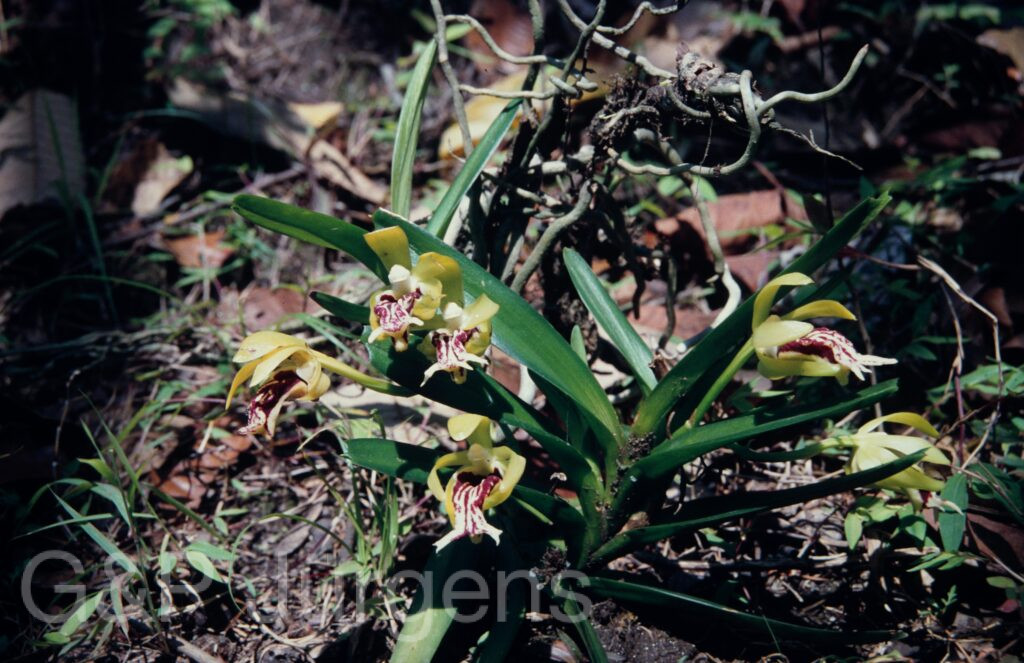
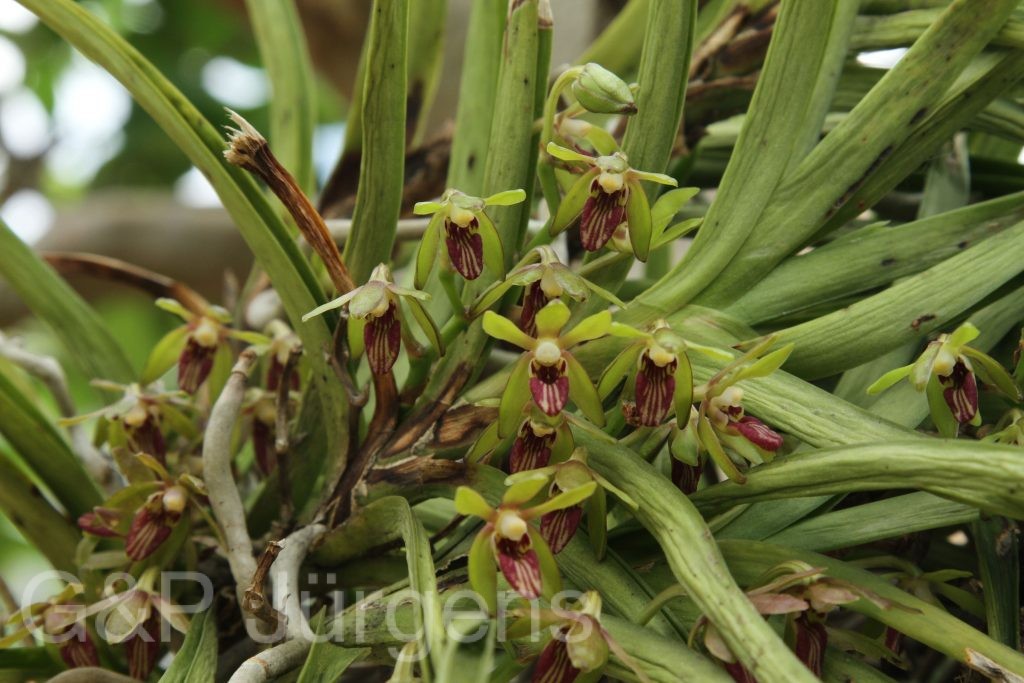
Vanda cristata

by GP Jürgens

Wall. ex Lindl.

Nepal 1994 224 ergebnis
Ost-Nepal Mewa-Khola 1900m April 

Description

Vanda cristata is an epiphytic orchid distributed along the Himalaya from northern India through Nepal and Bhutan into southwestern China, with cultivated and naturalised records reflected in the GBIF dataset (136 occurrences across NP, IN, BT, CN and horticultural reports from CR, DE, TH and US). It inhabits humid, broad-leaved and mixed evergreen forest belts, growing as a twig and trunk epiphyte in dappled light, typically at montane elevations between roughly 1200 and 2200 m. The plant photographed in eastern Nepal in the Mewa Khola valley at about 1900 m in April illustrates its characteristic flowering during the pre-monsoon dry season, when cooler nights and high atmospheric humidity prevail.

The species is a compact, monopodial epiphyte with a short, erect stem clothed in the persistent imbricate bases of distichous leaves. The leaves are linear-ligulate, coriaceous, channelled above and unequally bilobed at the apex. Few-flowered racemes arise laterally from the leaf axils, bearing one to several long-lasting, waxy, fragrant flowers. The sepals and petals are yellowish-green, oblong and somewhat reflexed, while the three-lobed labellum is the diagnostic feature: the small lateral lobes flank a prominent fleshy mid-lobe marked with crimson to maroon longitudinal striations, narrowing to a sharply forked or bristled apex. The short column bears a terminal anther with waxy pollinia.

Within Vanda, V. cristata belongs to a group of small-statured, cool-growing Himalayan species and is sometimes placed in the segregate genus Trudelia, a treatment not adopted by POWO. Pollination is by bees attracted to the patterned labellum, and the long flowering period favours outcrossing. As with most showy Vanda species it is subject to horticultural collection pressure, and although not formally assessed as threatened it is protected under CITES Appendix II governing international trade in wild-collected orchids.

Author: Wall. ex Lindl. · Sources: POWO (Kew), GBIF, Flora of Nepal, Flora of Bhutan, Flora of China, The Genus Vanda (Motes)

Lindl.

Bhutan2014 269
Bhutan Trithangebe near a farmhouse 700m, May

Description

Vanda griffithii is an epiphytic orchid of the eastern Himalaya, documented in GBIF from Bhutan, India and Nepal across a modest 19 occurrences, reflecting both its localised distribution and the under-collection of canopy epiphytes. It inhabits warm to cool broad-leaved forest, growing on tree trunks and branches at low to mid elevations, roughly 700-1800 m. The photographed plant was recorded in Bhutan at Trithangebe, perched near a farmhouse at about 700 m in May, illustrating its tolerance of disturbed and semi-cultivated settings where suitable phorophytes persist.

It is a monopodial epiphyte with a short to elongate stem clothed in distichous, ligulate, leathery leaves that are channelled and obliquely praemorse (toothed) at the apex, with stout aerial roots anchoring the plant. The inflorescence is a short axillary raceme of a few fleshy, long-lived flowers; the sepals and petals are subequal, spreading, typically greenish-yellow to brownish and often barred or tessellated, while the small three-lobed labellum bears a saccate or shortly spurred base characteristic of the genus. The column is short and footless, with a beaked anther cap and waxy pollinia, and fertilised flowers develop into an elongate, ribbed capsule releasing dust-like seeds.

Vanda (Orchidaceae, subtribe Aeridinae) is a horticulturally celebrated genus of monopodial epiphytes, and like all orchids it is listed on CITES Appendix II, regulating international trade. Reproduction depends on specific pollinators and mycorrhizal fungi for seed germination. Its narrow Himalayan range and reliance on intact forest canopy render it vulnerable to deforestation and over-collection for the ornamental trade.

Author: Lindl. · Sources: POWO (Kew), GBIF, Flora of Bhutan, The Orchids of Bhutan, CITES Appendix II listing, Genera Orchidacearum

Lindl.

Bhutan2012 1024
Bhutan Trithangebe 900m, October
Bhutan2012 1025
Bhutan Trithangebe 900m, October

Description

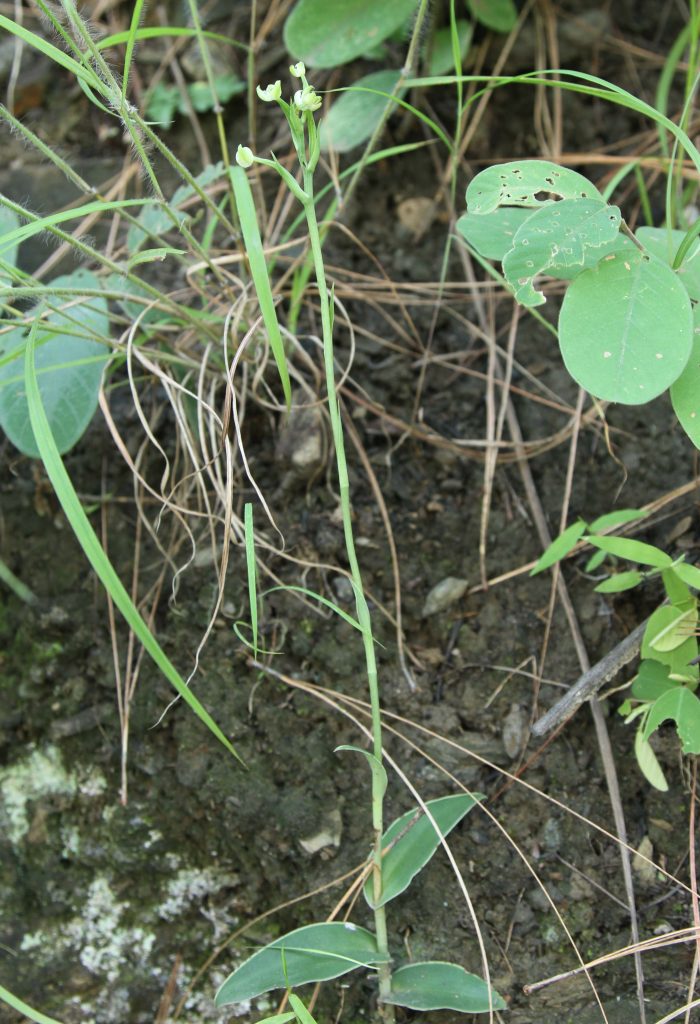
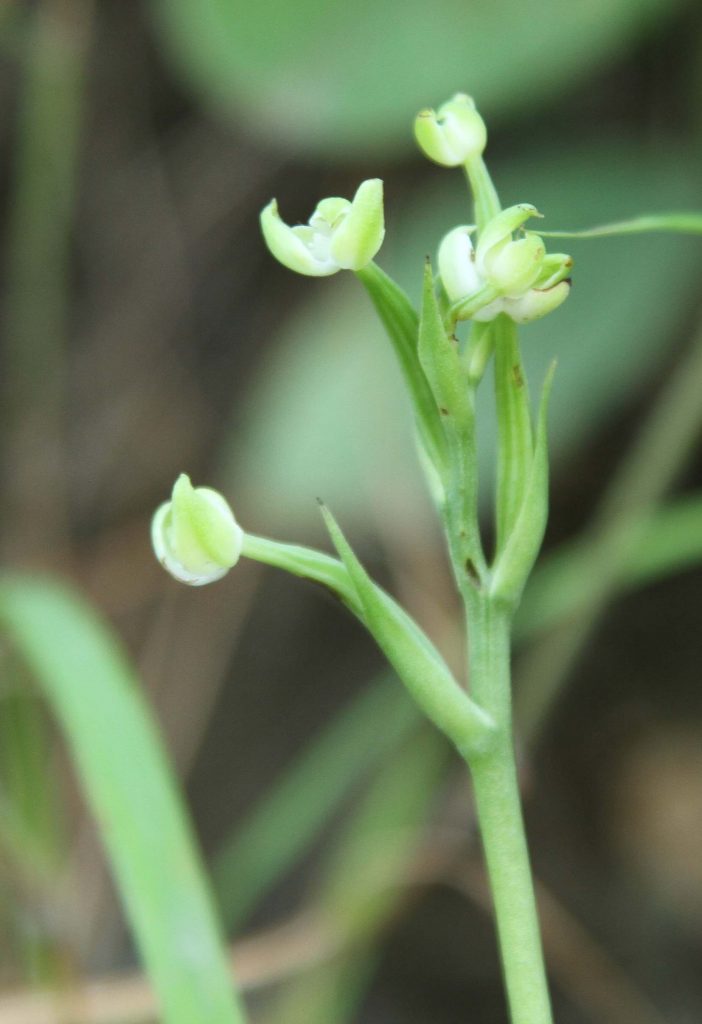
Zeuxine goodyeroides is a terrestrial orchid of shaded forest floors in the eastern Himalaya and adjoining mountains of China (including Yunnan and Tibet), India, Nepal, Bhutan, Myanmar and Sri Lanka, with around 56 documented occurrences indicating a scattered but wide distribution. It grows in leaf litter and humus-rich soils of subtropical to lower-temperate broad-leaved and mixed forest, generally between about 800 and 2000 m. The photographed plant was recorded at Trithangebe in Bhutan at 900 m, flowering in October, when the post-monsoon humidity favours the development of these inconspicuous ground orchids.

The species is a small herb arising from a creeping, fleshy rhizome that roots at the nodes, the erect stem bearing several spirally arranged leaves toward the base. The leaves are ovate-lanceolate, somewhat fleshy, often with a pale midrib, recalling the genus Goodyera to which the epithet alludes. The inflorescence is a slender, pubescent terminal raceme of numerous small, non-resupinate-appearing white to greenish flowers; the sepals are pubescent dorsally, the petals adhere to the dorsal sepal forming a hood, and the diagnostic labellum is saccate at the base with two basal glands and bears a transversely dilated, bilobed epichile. The fruit is a small dehiscent capsule with dust-like seeds.

Zeuxine belongs to subtribe Goodyerinae of the Orchidaceae (here spelled Orchideaceae as supplied), the jewel-orchid alliance, distinguished by the spurless, basally pouched labellum bearing internal glands. Easily overlooked owing to its small stature, it depends like most terrestrial Goodyerinae on mycorrhizal associations in undisturbed forest humus. It is not formally assessed but is sensitive to forest-floor disturbance.

Author: Lindl. · Sources: POWO (Kew), GBIF, Flora of Bhutan, Flora of China, The Genera Orchidacearum (Pridgeon et al.)

King & Pantl.

Bh2008 542 G820
Bhutan Punaka 1500m April

Description

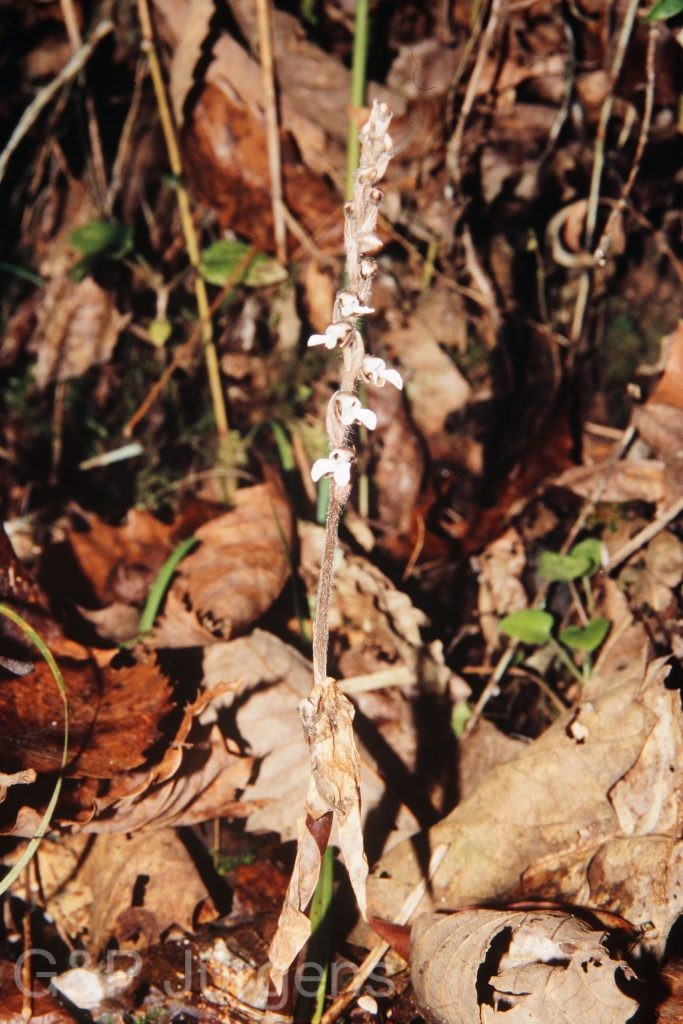
Zeuxine reflexa is a small terrestrial orchid of the eastern Himalaya and adjacent regions, recorded from northern India, Nepal, Bhutan and Taiwan, the modest tally of 22 GBIF occurrences reflecting both its inconspicuous habit and its localised distribution. It grows in shaded, humus-rich situations on the floor of broad-leaved and subtropical forest, on mossy banks and in leaf litter, principally at lower to middle elevations around 1000-2000 m. The photographed plant was found near Punakha in Bhutan at 1500 m in April, the spring flowering period for this warm-temperate to subtropical forest-floor species.

It is a small herb with a fleshy, creeping, ascending rhizome rooting at the lower nodes and a short erect leafy stem. The few leaves are clustered toward the stem base, ovate to lanceolate, somewhat asymmetric and shortly petiolate with sheathing bases. The inflorescence is a slender, pubescent, few- to several-flowered terminal raceme of small flowers. The flowers are dull greenish to brownish with a contrasting white or pale lip; the dorsal sepal and petals are connivent into a hood, the lateral sepals often spreading or reflexed, and the saccate lip bears a pair of basal calli and a bilobed, frequently transversely broadened apical limb diagnostic of the genus.

Zeuxine is a genus of inconspicuous jewel-orchid relatives within subtribe Goodyerinae, distinguished from Goodyera and Anoectochilus chiefly by lip structure. Its dull, partly closed flowers suggest pollination by small insects or a degree of self-pollination, an effective strategy in the dim forest understorey. Owing to its small size and scattered records its true status is poorly documented, but it is not currently regarded as threatened; like all orchids it falls under CITES Appendix II, and its dependence on intact forest litter makes it sensitive to habitat clearance.

Author: King & Pantl. · Sources: POWO (Kew), GBIF, Flora of Bhutan, Pearce & Cribb: The Orchids of Bhutan, Pridgeon et al.: Genera Orchidacearum