
(D.Don) Lindl.
Description
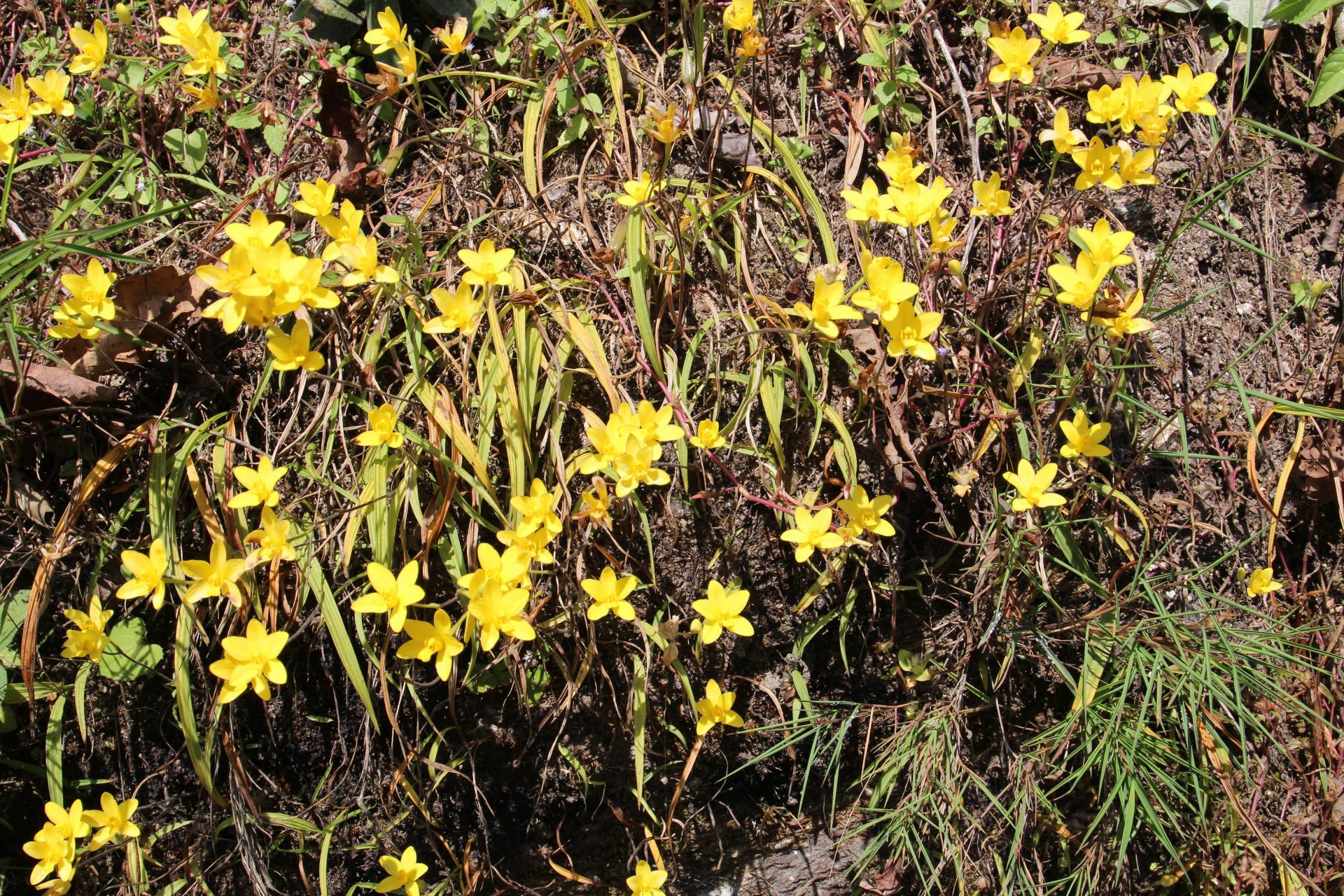
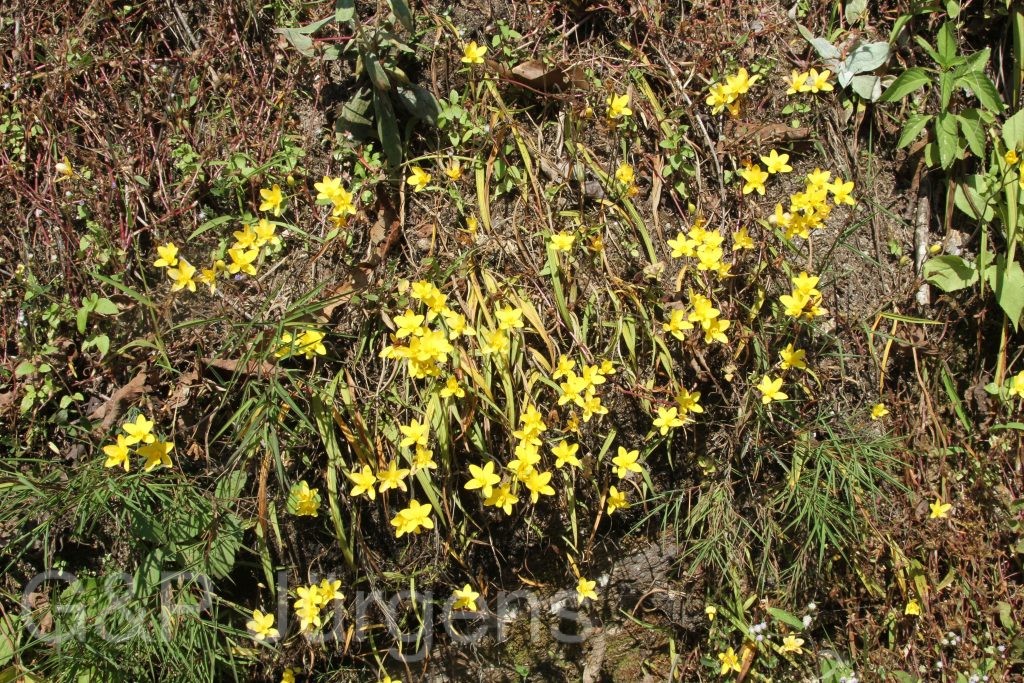
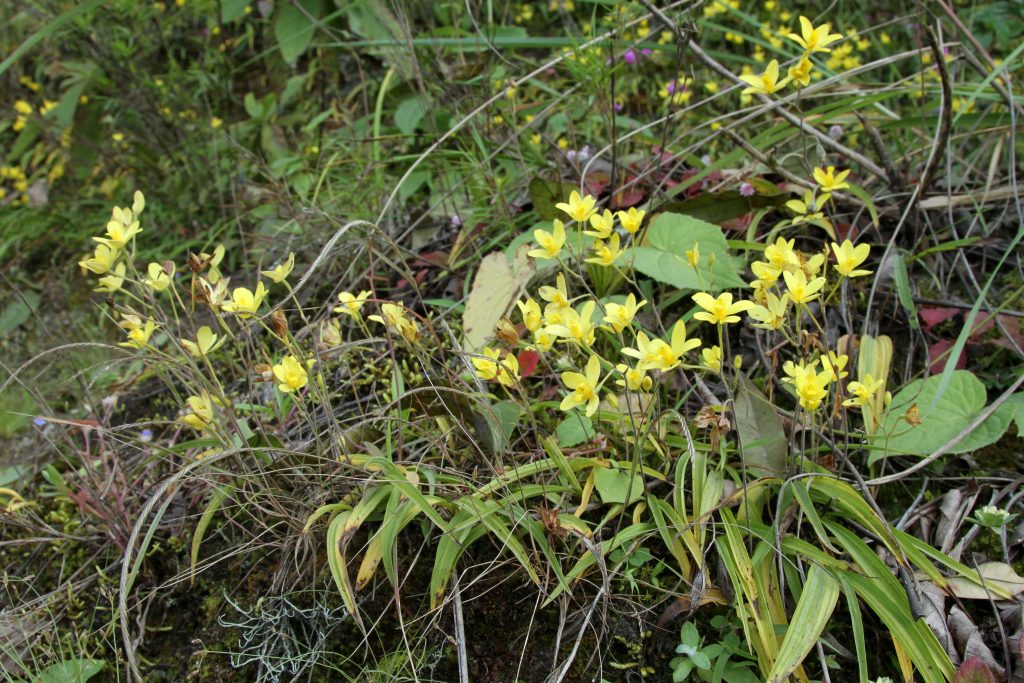
Spathoglottis ixioides is a small terrestrial orchid of the Himalaya, recorded from Nepal, India, Bhutan and China, a relatively narrowly distributed species with 146 occurrences in GBIF. It grows on open grassy banks, mossy rock ledges, humus-rich slopes and forest margins, generally between 1500 and 3500 m. The Bhutanese localities given, Wangdi Galegphug at about 1500 m in October and Tserang at 1600 m in September, reflect the warm-temperate to subtropical montane grassland and bank habitats where it flowers in the post-monsoon autumn, often among grasses on damp, partly shaded ground.
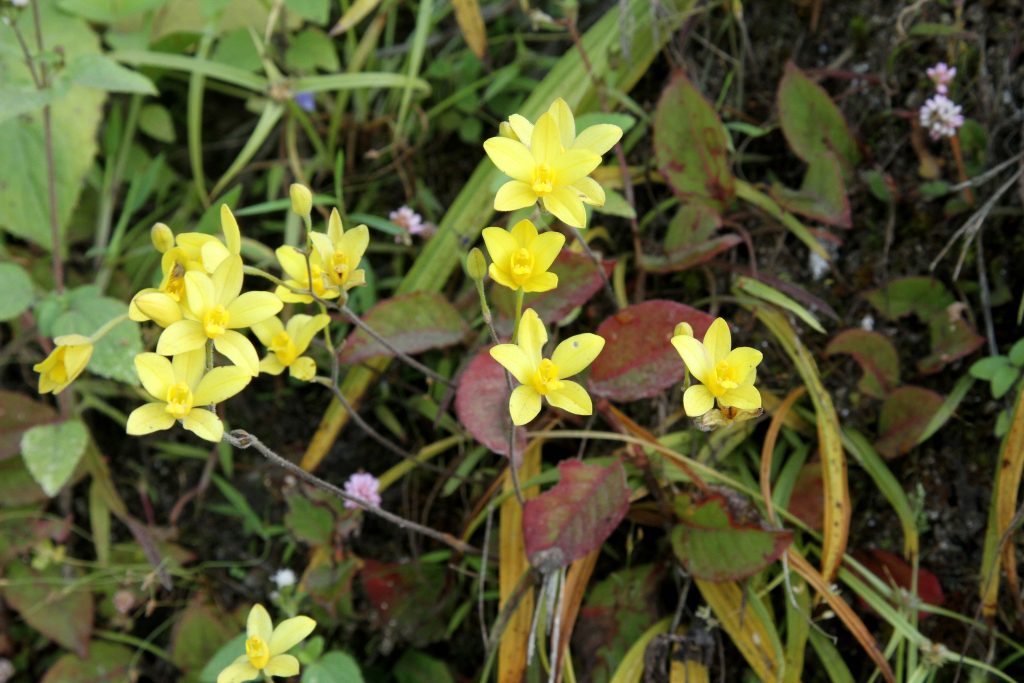
The species is a dwarf, deciduous, terrestrial herb growing from a small subterranean pseudobulb or corm-like tuber. From this arise a few narrowly lanceolate, plicate (longitudinally pleated) leaves that taper to a slender base. The slender erect inflorescence carries one to a few comparatively large flowers; the floral segments are bright yellow, with spreading ovate-lanceolate sepals and petals and a distinctly three-lobed labellum bearing raised keels or calli on the disc and small lateral lobes flanking the column. The fruit is a small ellipsoid dehiscent capsule releasing numerous dust-like seeds.
Spathoglottis (subtribe Collabiinae, tribe Collabieae of the Epidendroideae) is chiefly a tropical Asian and Pacific genus, and S. ixioides is among its most cold-tolerant, high-altitude members, the yellow flowers and reduced deciduous habit distinguishing it within the genus. Like most terrestrial orchids it depends on mycorrhizal fungi for germination of its minute seeds and is pollinated by bees. Although locally frequent in suitable habitat, its restricted range, specialised ecology and the broad pressures of habitat disturbance and orchid collection warrant monitoring, and all orchids are listed under CITES Appendix II.
Author: (D.Don) Lindl. · Sources: POWO (Kew), GBIF, Flora of Bhutan, Orchids of Bhutan, Genera Orchidacearum (Pridgeon et al.)