Tag:

Spring

W. Becker

Bhutan2014 959
Bhutan Haa 2640m, May
Bh2008 558 G843
Bhutan Paro 3000m, May

Description

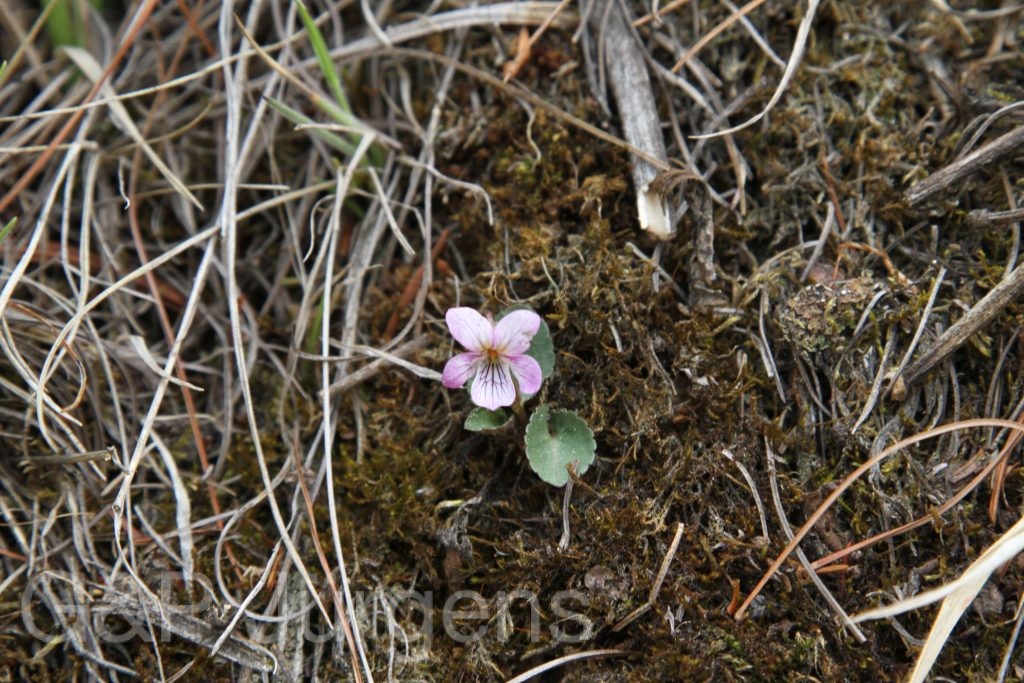
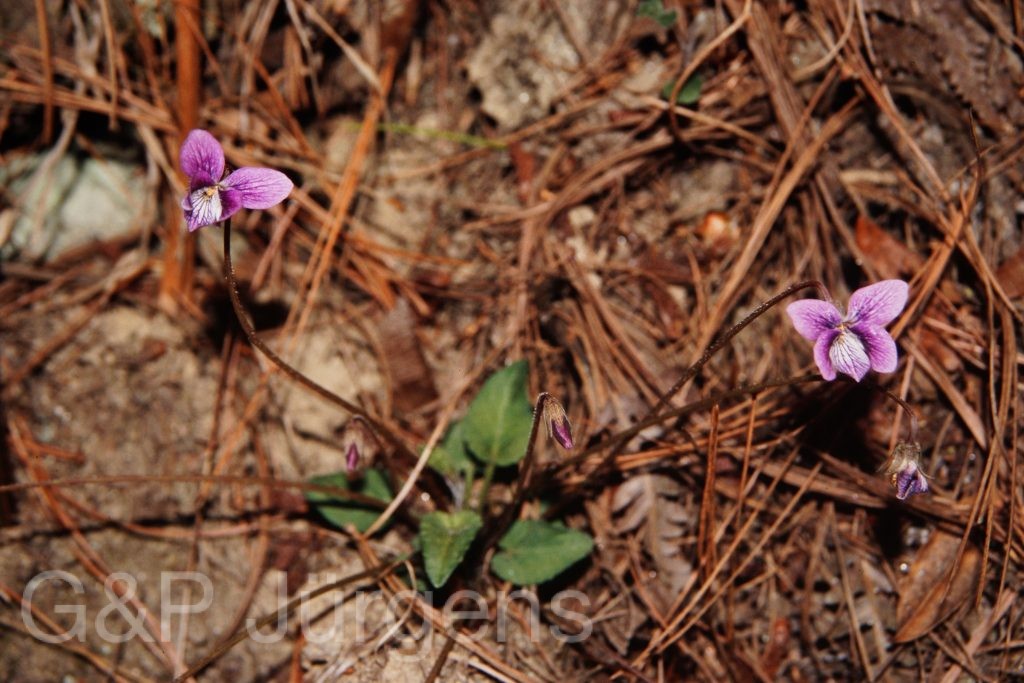
Viola yunnanfuensis is an acaulescent violet of the Eastern Himalaya and southwestern China, documented by GBIF (144 occurrences) from China, Bhutan, India and Taiwan (CN, BT, IN, TW). It grows in the temperate to upper-temperate zone on grassy banks, open forest margins, meadows and disturbed slopes, favouring moist but well-lit ground. The two cited Bhutanese collections, from Haa at about 2640 m and Paro at around 3000 m, both flowering in May, span the typical montane range of roughly 2000-3300 m and reflect its association with the spring flush following snowmelt and early monsoon rains.

The plant is a small, stemless perennial herb forming a basal rosette from a short rhizome and slender roots. The leaves are long-petioled, the blade ovate-cordate to oblong-cordate with a crenate margin and often a sparsely pubescent surface; conspicuous stipules are adnate to the petiole, fimbriate or laciniate. The solitary flowers are borne on slender axillary peduncles bearing two bracteoles; the corolla is zygomorphic, of five unequal petals in shades of violet to purple, the lowest spurred and the laterals often bearded. As in many violets, later-season cleistogamous flowers ensure seed set. The fruit is a small, loculicidal, three-valved capsule that ejects the seeds elastically.

Viola yunnanfuensis belongs to Viola section Viola (the stemless, fibrous-rooted spring violets), a taxonomically intricate group in which Sino-Himalayan species form a diverse and often poorly delimited complex. The combination of obligate spring (chasmogamous) and summer cleistogamous flowering is a hallmark of the section, promoting both outcrossing and reliable reproduction. Widespread and tolerant of moderate disturbance, the species is not considered threatened.

Author: W. Becker · Sources: POWO (Kew), GBIF, Flora of China, Flora of Bhutan, Violaceae of the Sino-Himalaya, W. Becker Violae Asiaticae
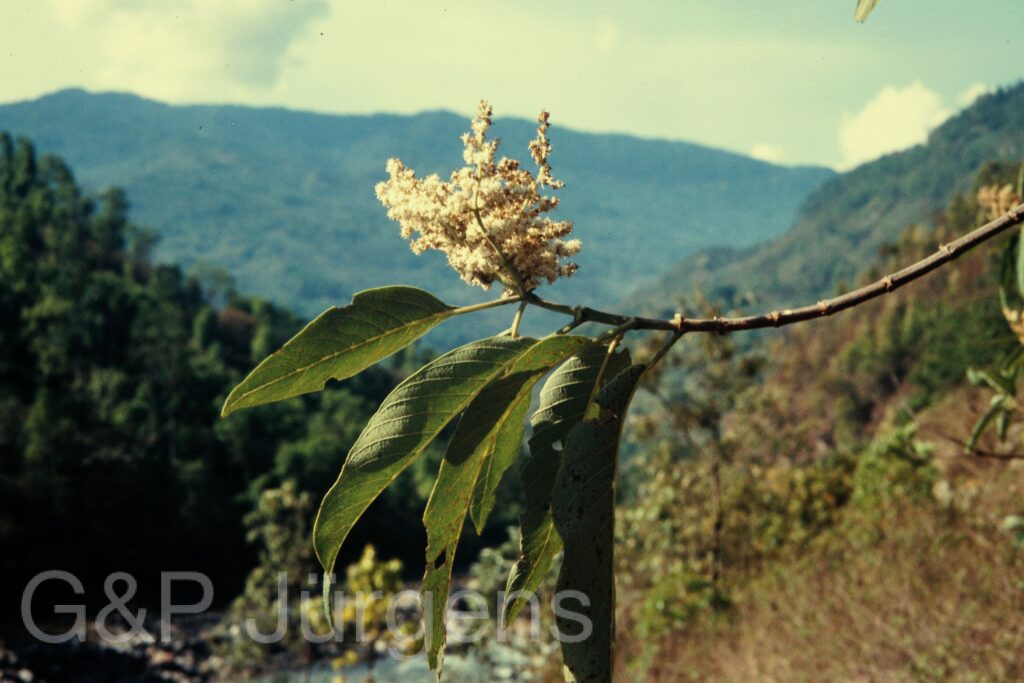
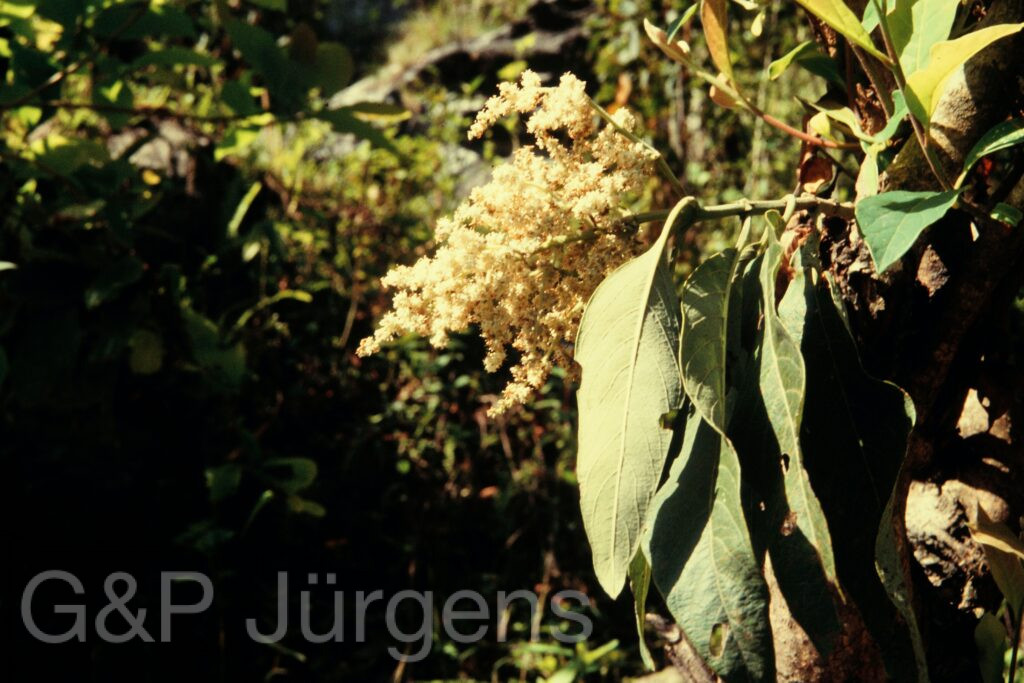
Wendlandia heynei

by GP Jürgens

(Schult.) Santapau & Merchant

Nepal 97 42 P62
Nepal Mewa-Khola 1050m April
Nepal 97 43 P63
Nepal Mewa-Khola 1050m April
Sikkim 2006 273 ergebnis
India West-Bengal, Lingza 1300m, May

Description

Wendlandia heynei is a shrub or small tree of the Indian subcontinent and its Himalayan foothills, recorded from India, Nepal, Bhutan and Pakistan. GBIF holds some 179 occurrences, the bulk across peninsular and north-eastern India and the lower Himalaya. It is a plant of warm-temperate to subtropical broad-leaved forest, forest margins, ravines and secondary scrub on hill slopes, typically from the plains up to roughly 1500 m. The populations imaged in eastern Nepal at Mewa-Khola (1050 m, April) and in the Darjeeling region of Indian West Bengal at Lingza (1300 m, May) illustrate its place in the moist hill forests of the eastern Himalayan tract, flowering as the pre-monsoon season advances.

The plant is evergreen to semi-deciduous, with terete, often puberulous young branchlets. The leaves are opposite or sometimes ternate, elliptic to oblong-lanceolate, entire and acuminate, with interpetiolar stipules typical of the Rubiaceae. The small flowers are crowded in large, much-branched terminal panicles or thyrses that give the tree a frothy, plumose appearance. Each flower has a short-lobed calyx, a white, funnel- to salver-shaped corolla with a slender tube and five spreading lobes, and five included or shortly exserted stamens; the ovary is inferior and bilocular. The fruit is a minute, globose, septicidal capsule containing numerous small angular seeds.

Wendlandia (tribe Wendlandieae) is a genus of around ninety species centred on tropical and subtropical Asia, distinguished by its dense paniculate inflorescences and small capsular fruits. The epithet honours Heyne, and the species has accumulated several synonyms reflecting its wide variability across the subcontinent. As a common, adaptable component of disturbed and secondary hill forest it is not of conservation concern; locally its wood and bark have minor uses.

Author: (Schult.) Santapau & Merchant · Sources: POWO (Kew), GBIF, Flora of British India, Flora of Bhutan, Annotated Checklist of the Flowering Plants of Nepal, revision of the genus Wendlandia (Cowan)

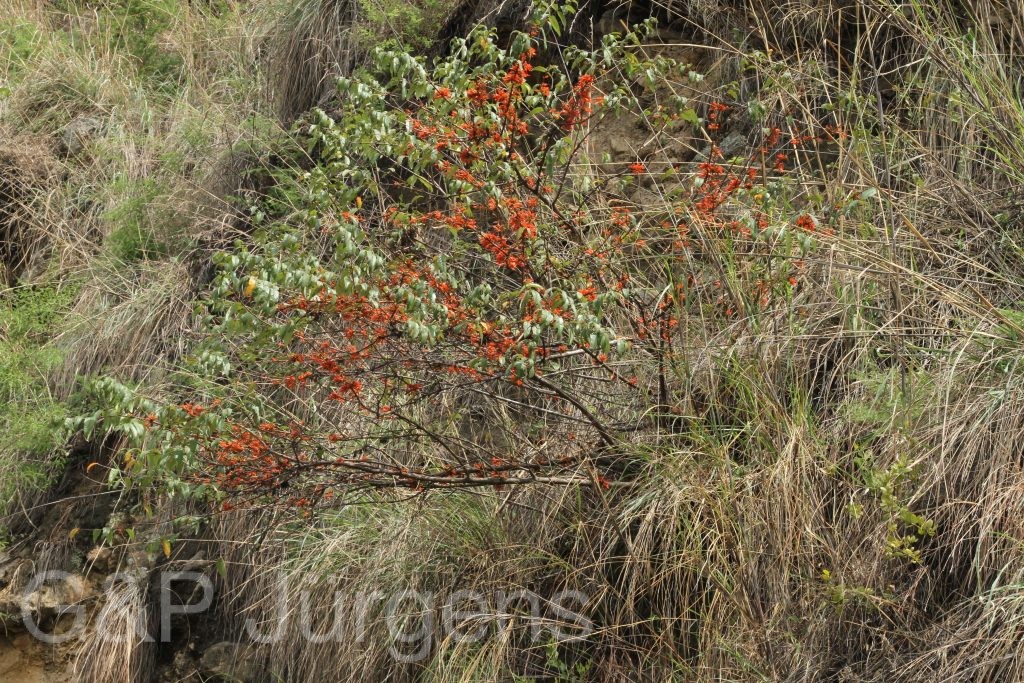
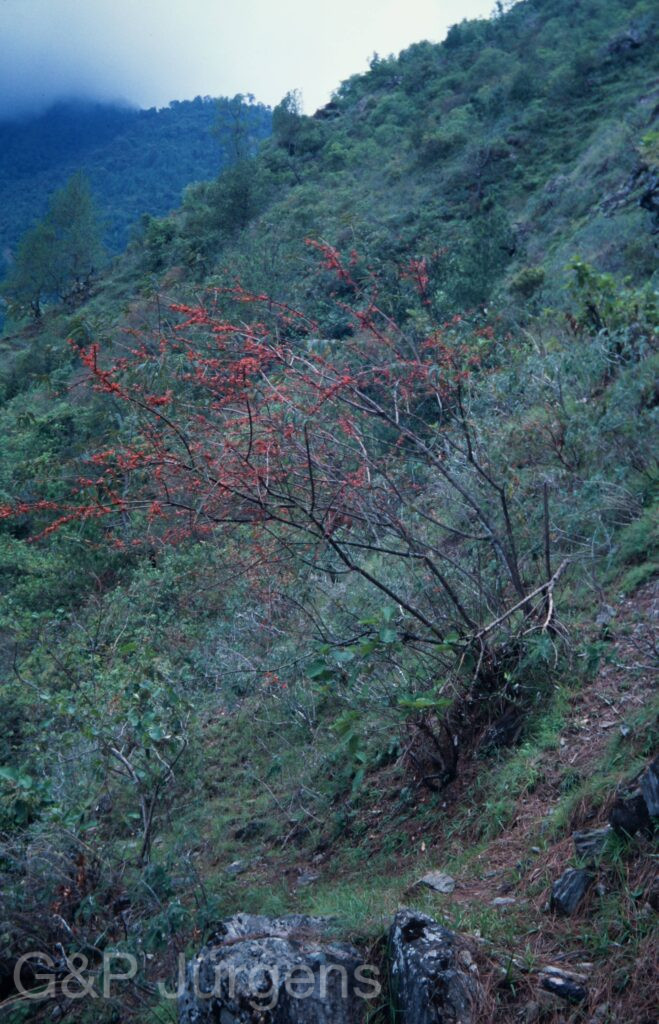
Kurz

Bhutan2014 147
Bhutan Trashigang 1470m, May
Nepal 2001 461 ergebnis ergebnis
Nepal (Gorkha) Gunda 1700m, May

Description

Woodfordia fruticosa is a widespread Old World shrub ranging from the Indian subcontinent through China and Southeast Asia to Madagascar and tropical Africa, with GBIF documenting around 1657 occurrences across India, China, Madagascar, Nepal, Indonesia, Sri Lanka, Myanmar, Pakistan, Bhutan, Bangladesh and Thailand. It is a plant of warm, seasonally dry habitats, characteristically colonising open hill slopes, rocky outcrops, scrub, forest margins and disturbed ground from the lowlands into the lower hills. The plants recorded at Trashigang in Bhutan at about 1470 m and at Gunda in Gorkha, Nepal at about 1700 m, both in May, illustrate its presence in the subtropical mid-hill zone, where it flushes with bright flowers at the onset of the warm season.

It is a much-branched deciduous shrub with long, often arching or pendulous branches and grey-brown bark. The leaves are opposite or subopposite, sessile to subsessile, lanceolate to oblong-lanceolate, entire-margined, dull green above and densely whitish- or rusty-tomentose and gland-dotted beneath. The flowers are clustered in short axillary cymes and are conspicuously bright red to orange-red; each has a tubular, slightly curved, ribbed calyx (hypanthium) with short triangular lobes, minute or vestigial petals, and numerous long-exserted stamens, giving the inflorescence a brush-like appearance. The fruit is a small ellipsoid capsule enclosed within the persistent calyx tube, releasing numerous tiny seeds.

The tubular red flowers and copious nectar of W. fruticosa make it strongly ornithophilous, attracting sunbirds and other nectar-feeding birds that act as pollinators, while it is also valued by beekeepers. Dried flowers (known as dhataki) are widely used in traditional medicine and notably as a natural fermentation agent in Ayurvedic preparations, owing to abundant tannins and polyphenols. The sole or near-sole member of its genus, the species is robust, fast-colonising and locally abundant, and is not of conservation concern.

Author: Kurz · Sources: POWO (Kew), GBIF, Flora of China Vol. 13, Flora of Bhutan Vol. 2, Flora of Nepal, Graham Revision of the Lythraceae of the Indian Subcontinent

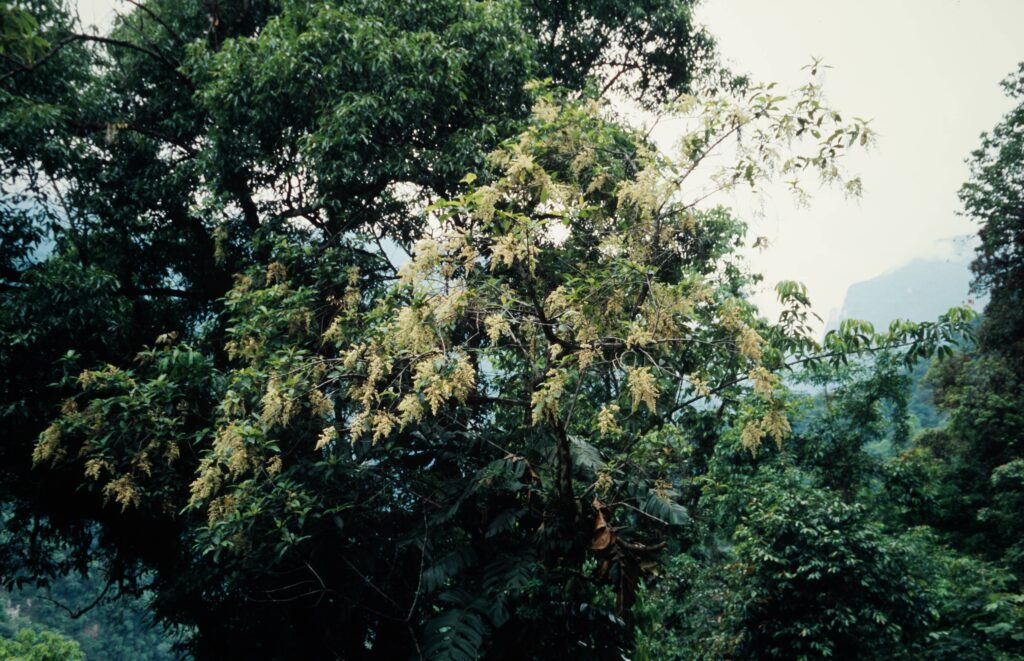
(Dennst.) Mabb.

Bhutan2014 261
Bhutan Trithangebe 700m, May
Nepal 97 564 P1097
Nepal Sabha-Khola 550m May

Description

Wrightia arborea is a small deciduous tree of the Indian subcontinent and Southeast Asia, distributed across India, Thailand, China, Sri Lanka, Myanmar, Nepal, Bhutan and much of the surrounding region, with about 709 georeferenced occurrences in GBIF. It grows in dry to moist deciduous forest, woodland and scrub, mainly in the warm subtropical lowlands and foothills. The trees illustrated were photographed at Trithangebe in Bhutan (700 m) and along the Sabha-Khola in Nepal (550 m) in May; across its range it typically occurs below about 1200 m on a variety of well-drained soils.

The species is a small tree exuding milky latex, with opposite, simple, elliptic to ovate leaves that are softly hairy, acuminate and pinnately veined. The flowers are borne in terminal cymes and are showy and fragrant, with a salverform white to creamy or pale yellow corolla ageing to pink or dull orange; a conspicuous fringed corona of scales surrounds the throat, a diagnostic feature of the genus. The fruit consists of two slender, elongate follicles that are united or cohering at the tip and split to release numerous flattened seeds, each bearing an apical tuft of silky hairs (coma) for wind dispersal.

Wrightia (Apocynaceae, subfamily Apocynoideae) is a genus of latex-bearing trees and shrubs notable for the ornate coronal scales of its flowers. W. arborea yields a fine, close-grained pale wood traditionally prized for carving and turnery, and various parts have been used in folk medicine and as a source of dye. Adaptable and widely distributed, the species is common across its range and is not considered to be of conservation concern, though local populations depend on the persistence of deciduous forest and woodland habitat.

Author: (Dennst.) Mabb. · Sources: POWO (Kew), GBIF, Flora of China, Flora of British India, Flora of Bhutan, Ngan Revision of the Genus Wrightia

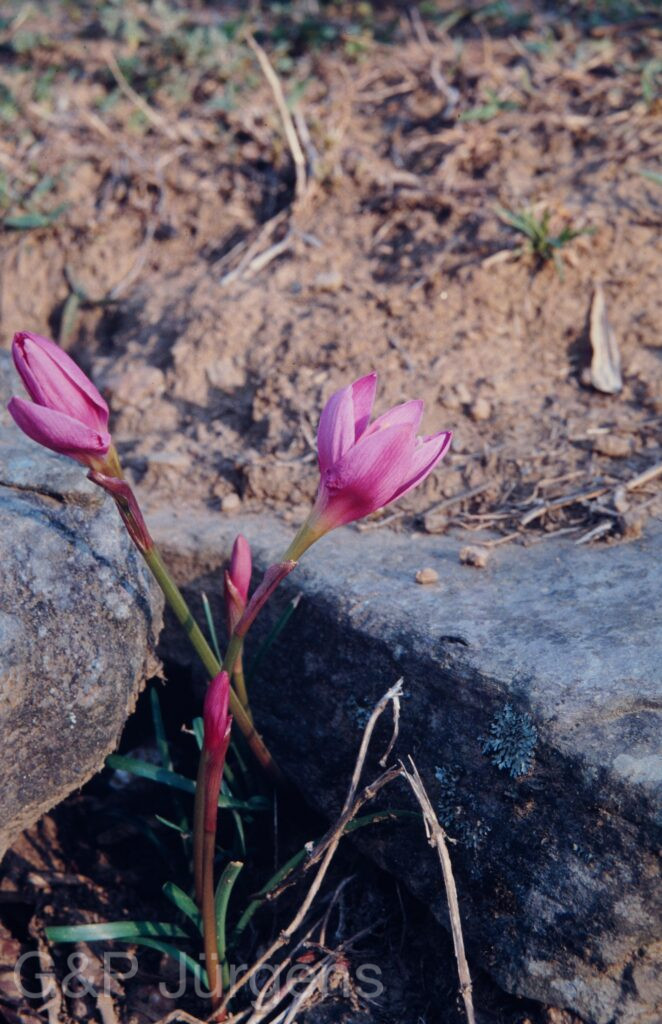
Herb.

Nepal 1994 323 ergebnis
Ost-Nepal Chainpur 1300m May 
Nepal 2001 60 ergebnis ergebnis
East-Nepal Mulkharka 1920m, April

Description

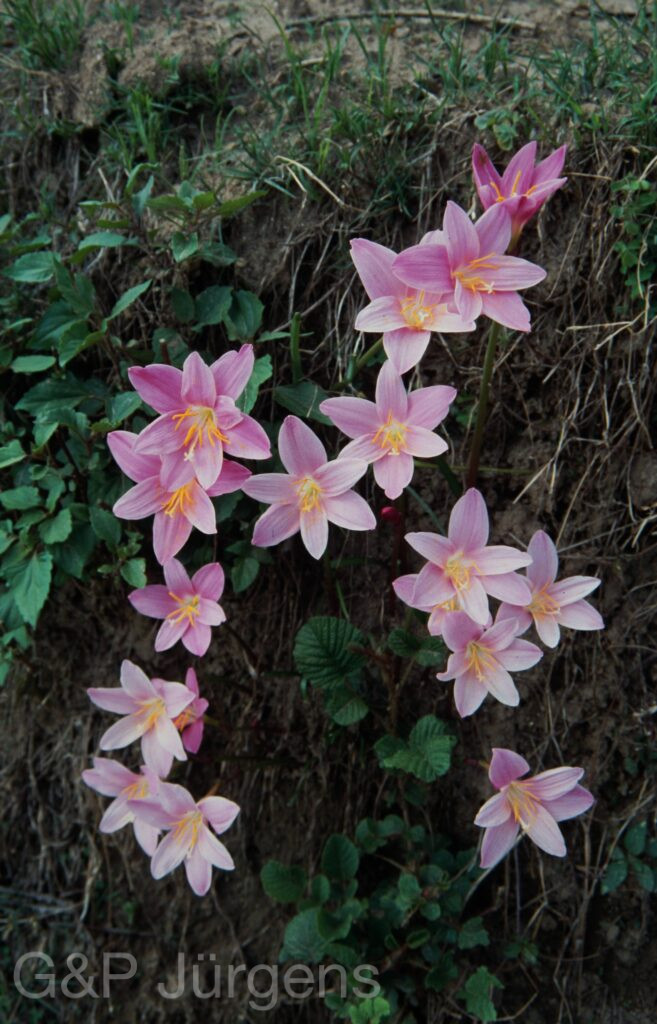
Zephyranthes carinata, the rosepink rain lily, is native to Mexico and Central America but is now pantropically naturalised, GBIF recording some 1370 occurrences across the Americas, southern Africa, South and East Asia and Australasia. In the Himalaya it is a widespread garden escape, recorded across Nepal and northern India where it colonises grassy banks, roadsides, lawns and disturbed moist ground at low to middle elevations. The eastern Nepalese populations at Chainpur (1300 m, May) and Mulkharka (1920 m, April) show its spread into hill cultivation, where it flowers gregariously after the first rains.

It is a small bulbous geophyte with a tunicated, ovoid bulb bearing a few narrowly linear, somewhat keeled basal leaves (the epithet carinata referring to the carinate blade). The solitary flowers are borne on a hollow scape, each subtended by a tubular spathaceous bract. The perianth is funnel-shaped and erect, rose-pink to rose-purple fading paler, of six subequal tepals fused below into a short tube; within are six stamens in two series and an inferior trilocular ovary with a slender, shortly trifid style. The fruit is a depressed-globose loculicidal capsule with numerous flattened black seeds, though much spread is clonal through bulb offsets.

Zephyranthes belongs to tribe Hippeastreae of Amaryllidaceae, characterised by solitary, scapose, rain-triggered flowers. Z. carinata has long been confused with Z. grandiflora, the names variously applied in horticulture; current treatments accept Z. carinata as correct for the common pink rain lily. A hardy, free-flowering ornamental of no conservation concern, its readiness to naturalise makes it a minor weed of lawns and grasslands across its adopted Asian range.

Author: Herb. · Sources: POWO (Kew), GBIF, Flora of China Vol. 24, Flora of Pakistan, Annotated Checklist of the Flowering Plants of Nepal, Meerow and Snijman revision of Amaryllidaceae genera

King & Pantl.

Bh2008 542 G820
Bhutan Punaka 1500m April

Description

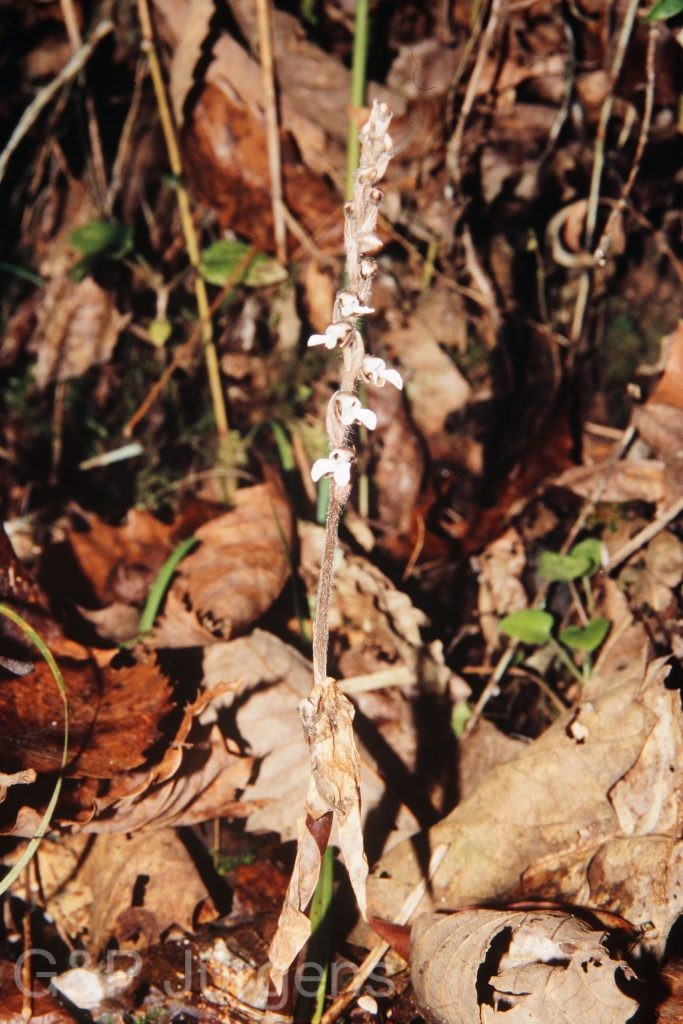
Zeuxine reflexa is a small terrestrial orchid of the eastern Himalaya and adjacent regions, recorded from northern India, Nepal, Bhutan and Taiwan, the modest tally of 22 GBIF occurrences reflecting both its inconspicuous habit and its localised distribution. It grows in shaded, humus-rich situations on the floor of broad-leaved and subtropical forest, on mossy banks and in leaf litter, principally at lower to middle elevations around 1000-2000 m. The photographed plant was found near Punakha in Bhutan at 1500 m in April, the spring flowering period for this warm-temperate to subtropical forest-floor species.

It is a small herb with a fleshy, creeping, ascending rhizome rooting at the lower nodes and a short erect leafy stem. The few leaves are clustered toward the stem base, ovate to lanceolate, somewhat asymmetric and shortly petiolate with sheathing bases. The inflorescence is a slender, pubescent, few- to several-flowered terminal raceme of small flowers. The flowers are dull greenish to brownish with a contrasting white or pale lip; the dorsal sepal and petals are connivent into a hood, the lateral sepals often spreading or reflexed, and the saccate lip bears a pair of basal calli and a bilobed, frequently transversely broadened apical limb diagnostic of the genus.

Zeuxine is a genus of inconspicuous jewel-orchid relatives within subtribe Goodyerinae, distinguished from Goodyera and Anoectochilus chiefly by lip structure. Its dull, partly closed flowers suggest pollination by small insects or a degree of self-pollination, an effective strategy in the dim forest understorey. Owing to its small size and scattered records its true status is poorly documented, but it is not currently regarded as threatened; like all orchids it falls under CITES Appendix II, and its dependence on intact forest litter makes it sensitive to habitat clearance.

Author: King & Pantl. · Sources: POWO (Kew), GBIF, Flora of Bhutan, Pearce & Cribb: The Orchids of Bhutan, Pridgeon et al.: Genera Orchidacearum