Author

GP Jürgens

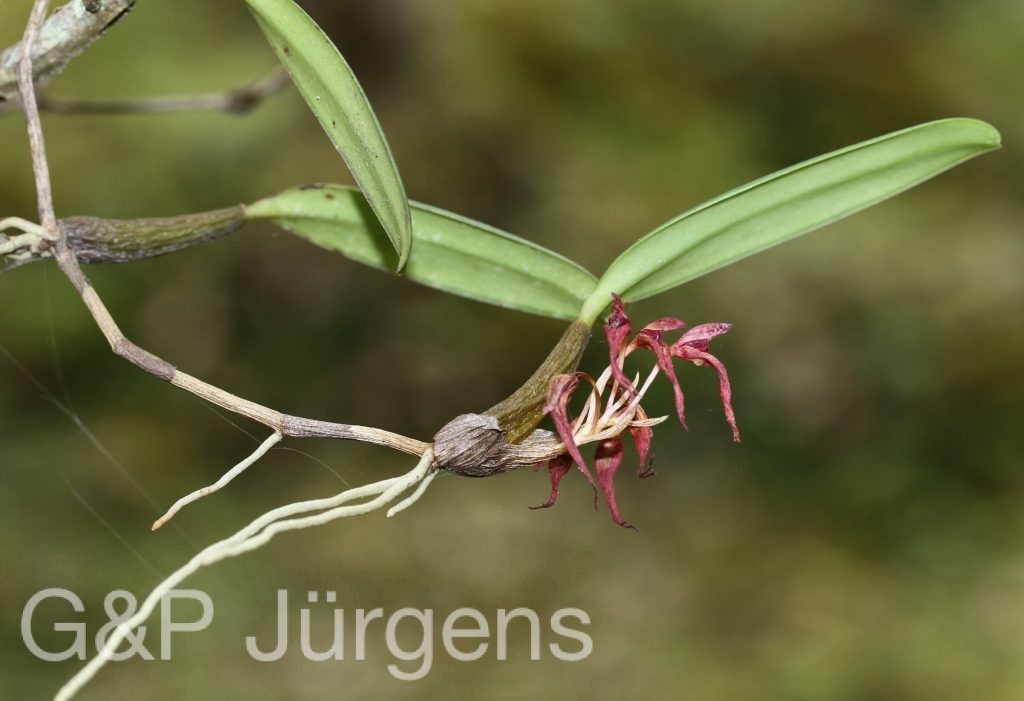
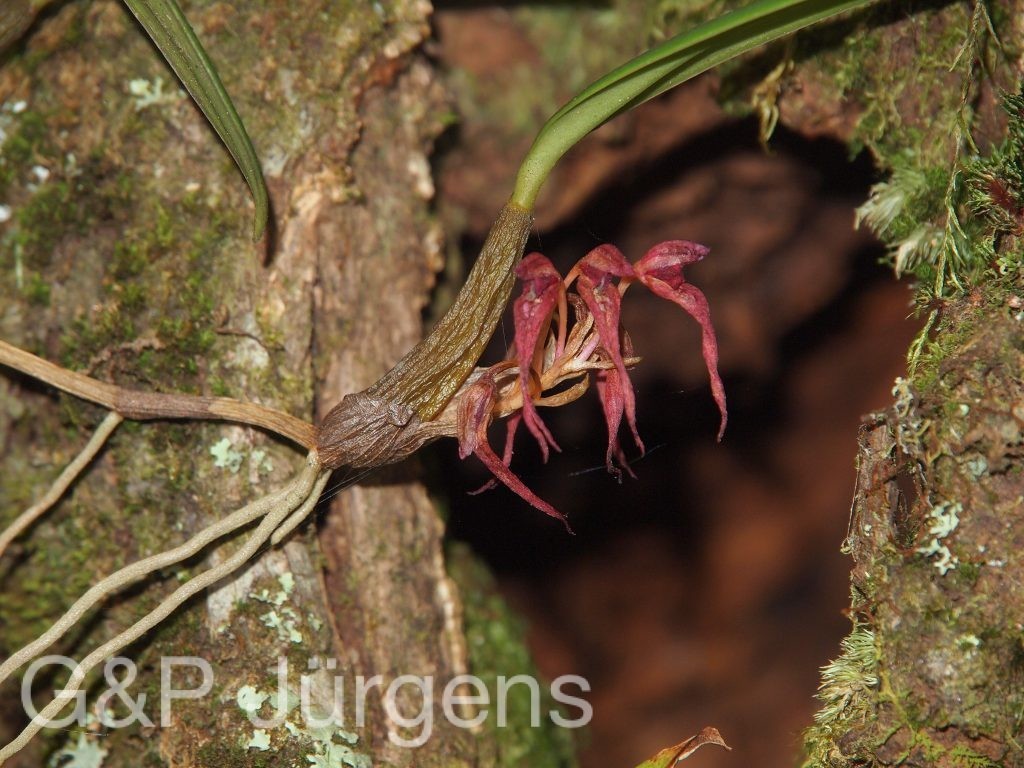
Lindl.

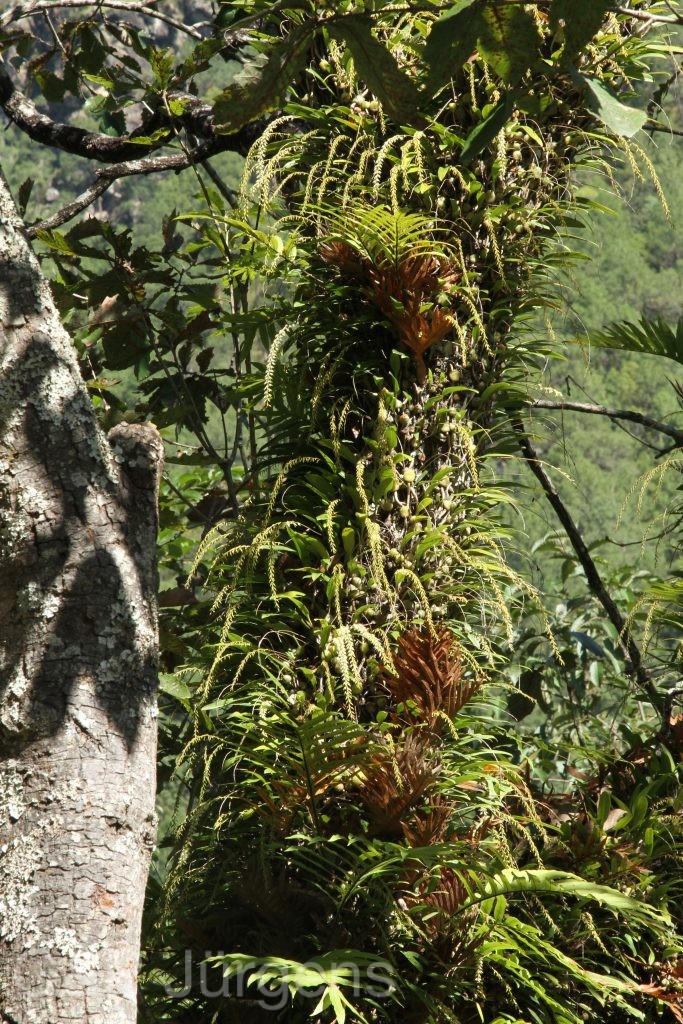
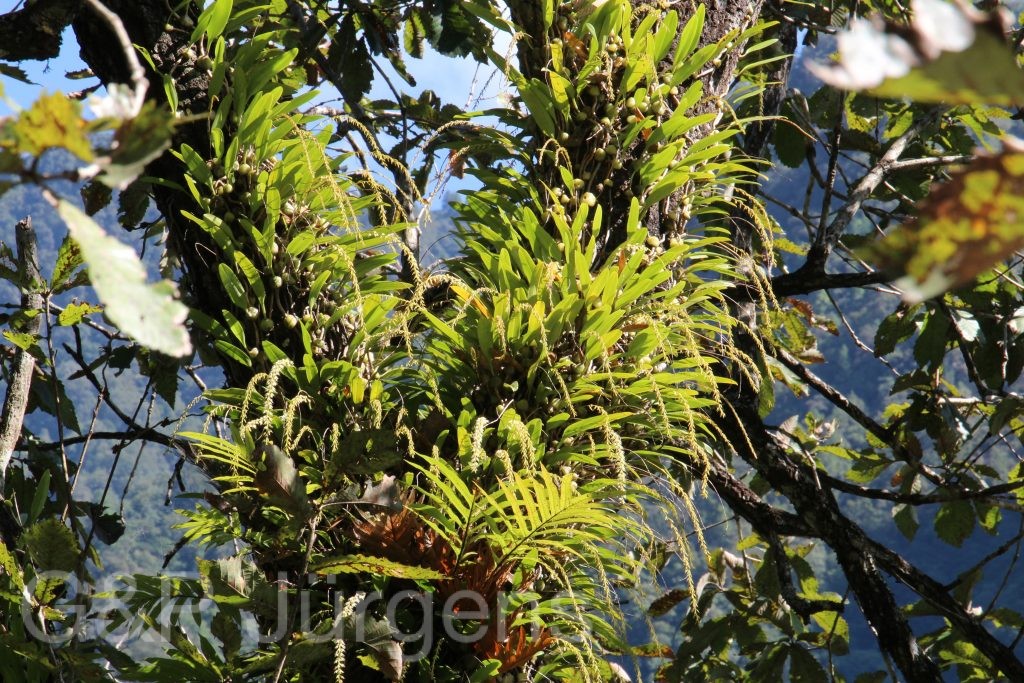
Bh09 392 G619
Bhutan Mo-Chu, 1500m June

Description

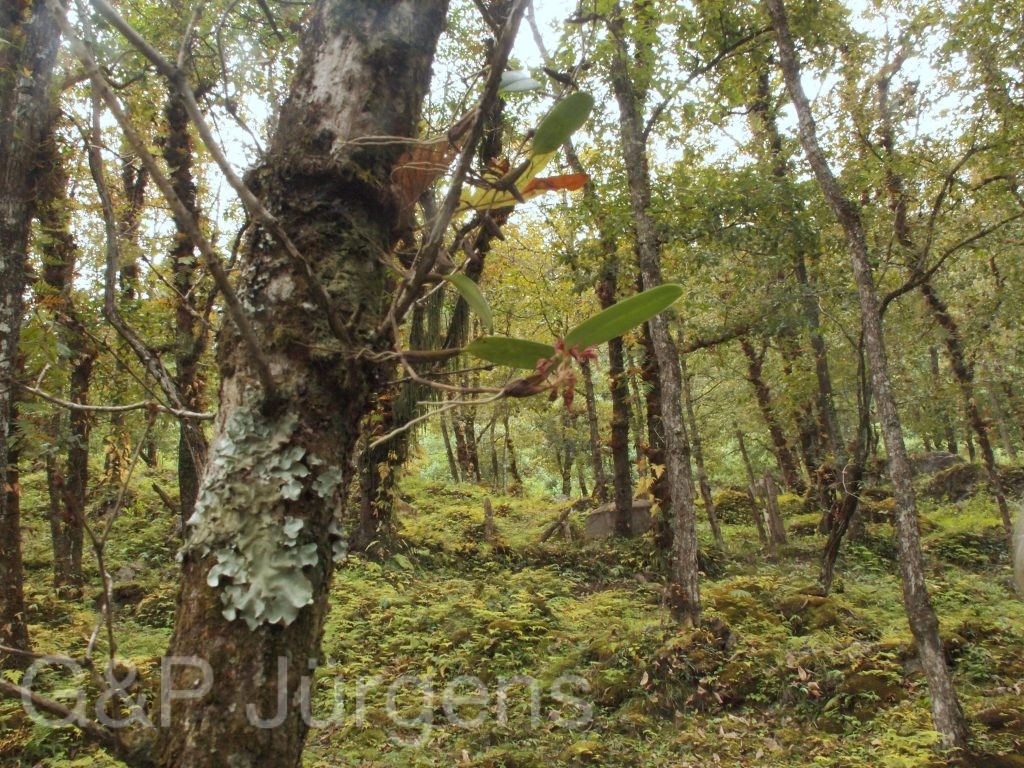
Bulbophyllum affine is an epiphytic orchid widely distributed across East and Southeast Asia, from Nepal and northeast India (Sikkim, Assam) through Bhutan, Myanmar, and southern China to Taiwan, Vietnam, and Thailand. It inhabits humid broadleaved and mixed forests at 500–2,500 m elevation, growing on mossy trunks and branches, occasionally on rocks (lithophytic).

The plant produces ovoid to conical pseudobulbs 2–4 cm tall, set 3–8 cm apart on a stout, creeping rhizome. Each pseudobulb bears a single, leathery, elliptic to oblong leaf 8–15 cm long. The inflorescence is a nodding, densely many-flowered raceme 5–15 cm long, emerging from the base of the pseudobulb. The flowers are small, 5–8 mm across, yellowish-green to pale brown, densely arranged in a cylindrical spike. Sepals are lanceolate and acuminate; the lip is small, fleshy, and recurved, mobile on a thin strap connecting it to the column foot — a characteristic feature of Bulbophyllum enabling pollination by small flies.

Bulbophyllum is the largest genus in the Orchidaceae, comprising over 2,200 described species. B. affine belongs to section Cirrhopetalum and is distinguished from similar congeners by its densely flowered, cylindrical raceme and the prominent column stelidia.

Author: Lindl. · Sources: POWO (Kew), Flora of Bhutan Vol. 3, GBIF, Seidenfaden: Orchid Genera in Thailand XIV: Bulbophyllum (1979)
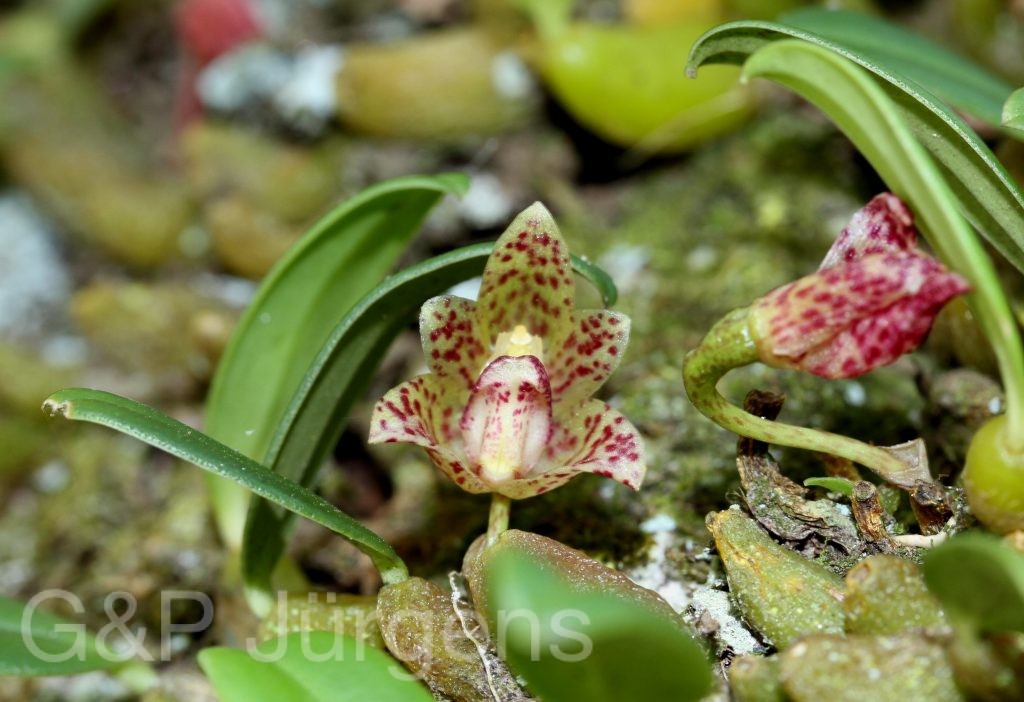
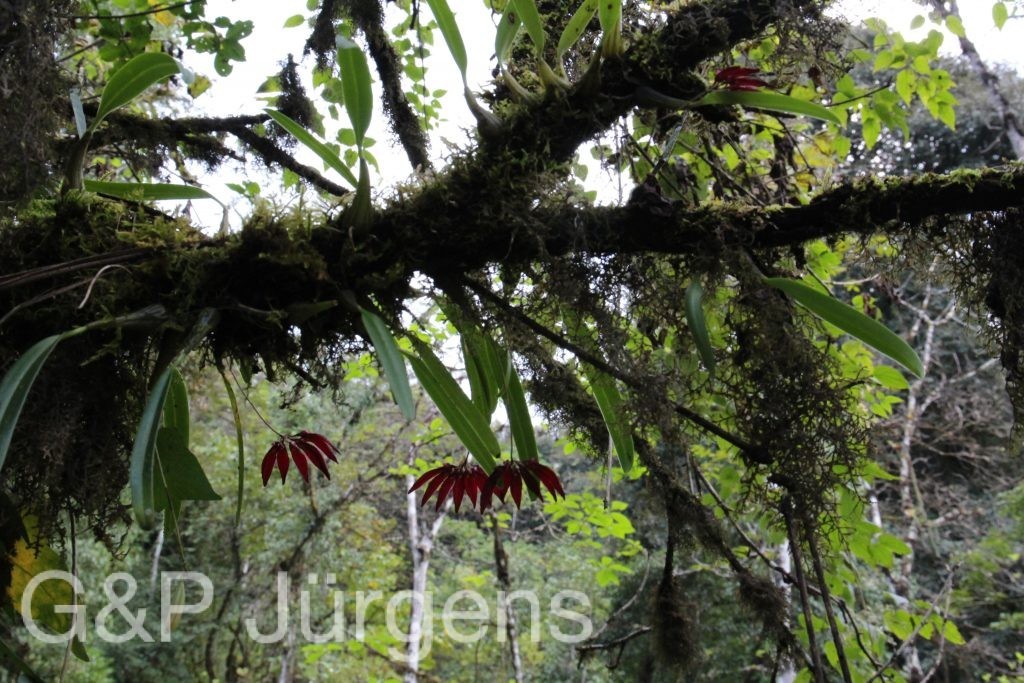
Rchb.f.

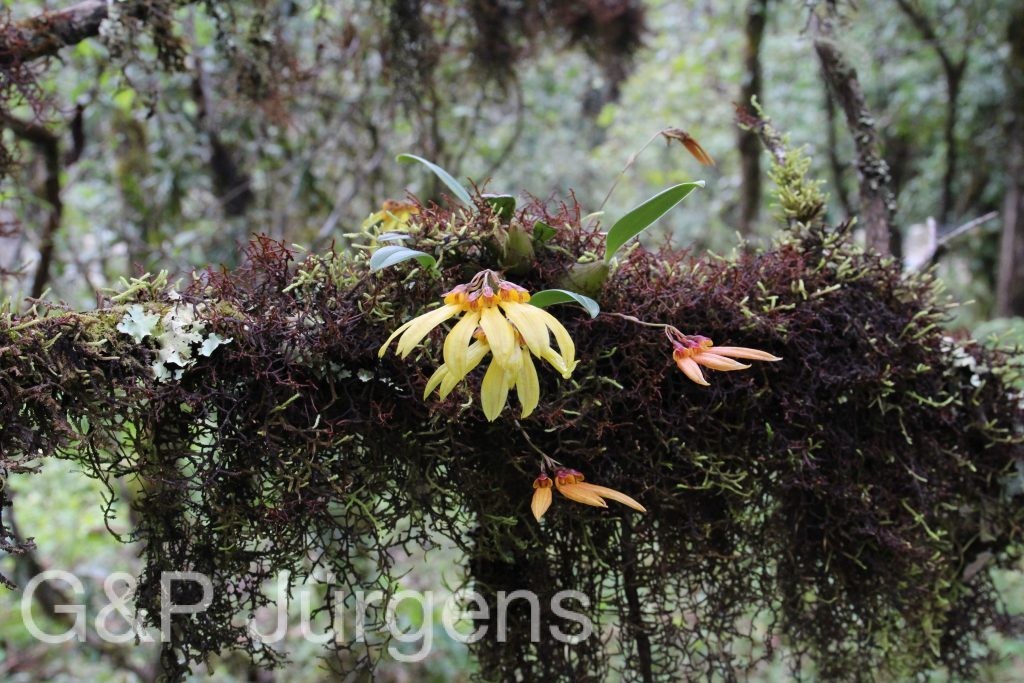
Bhutan2012 444
Bhutan Wangdi 2500m, September
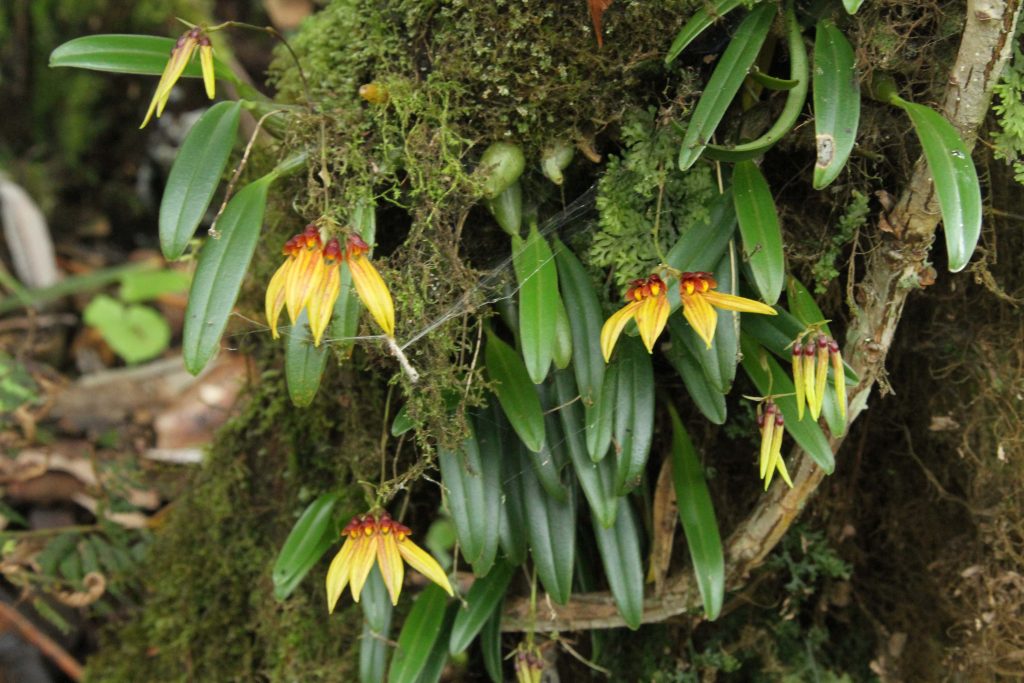
Bhutan2012 1171 Kopie
Bhutan Tashiyangtse 2000m, October

Description

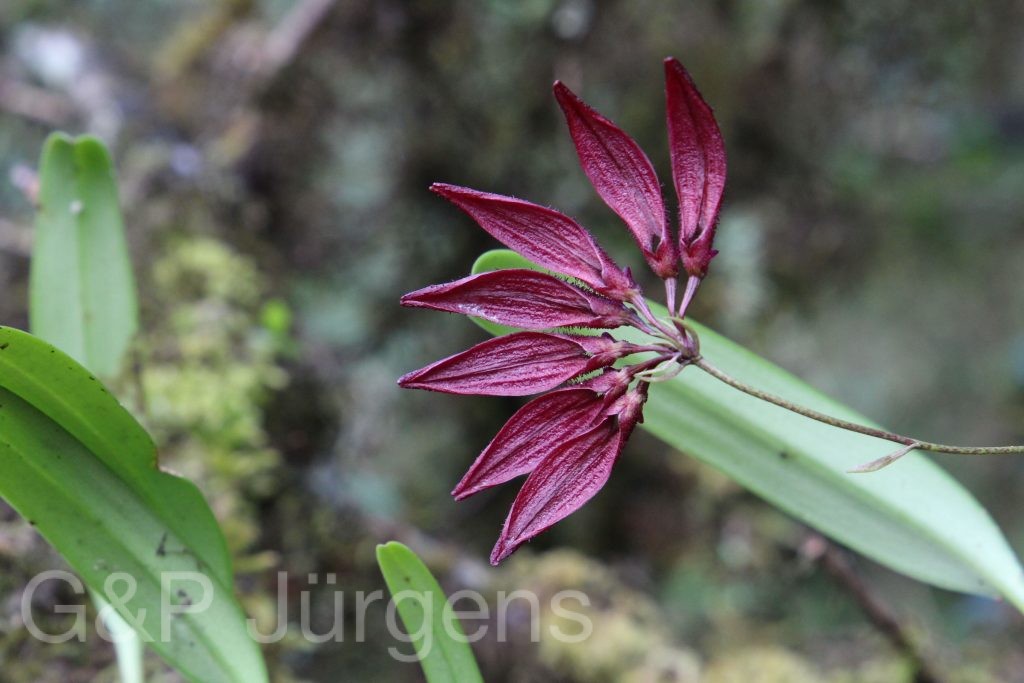
Bulbophyllum griffithii is an epiphytic orchid distributed from the eastern Himalayas (Nepal, northeast India, Bhutan) through southwest China (Yunnan) to Taiwan. The species is named after William Griffith (1810–1845), the pioneering British botanist who collected extensively in Bhutan and northeast India. It occurs in cool, humid montane forests at elevations of 1,500–2,800 m, favouring mossy tree trunks in the cloud forest zone.

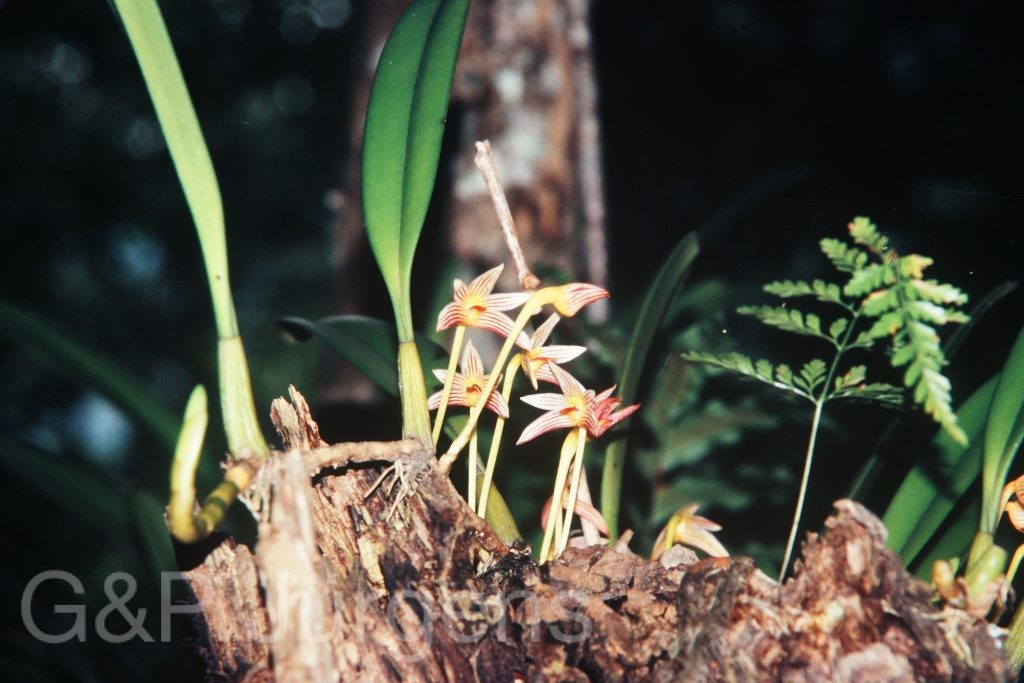
The pseudobulbs are ovoid to subglobose, 1.5–3 cm tall, widely spaced on a stout rhizome. Each bears a single, coriaceous, oblong-elliptic leaf 8–15 cm long. The inflorescence is an umbel-like, subglobose cluster of 5–12 flowers, carried on a slender peduncle 10–20 cm tall — a floral arrangement typical of section Cirrhopetalum. The flowers are about 2 cm across, pale yellow to greenish with purple-red stripes and spots. The dorsal sepal is erect, the lateral sepals elongated and twisted, and the lip is small, curved, and dark purple. Flowering occurs from August to October.

Within the complex taxonomy of Bulbophyllum section Cirrhopetalum, B. griffithii is recognised by its umbellate inflorescence with relatively few, medium-sized flowers and its distinctive striped pattern. GBIF records confirm a limited distribution centred on the eastern Himalayas and East Asia.

Author: Rchb.f. · Sources: POWO (Kew), Flora of Bhutan Vol. 3, GBIF, Pearce & Cribb: The Orchids of Bhutan (2002)

Lindl.

Bhutan2015 573
Bhutan Mo-Chu 1550m, October
Bhutan2015 574
Bhutan Mo-Chu 1550m, October

Description

Bulbophyllum hirtum is an epiphytic orchid distributed across the eastern Himalayas and Southeast Asia, from Nepal and northeast India through Bhutan, Myanmar, southwest China, Thailand, and Vietnam. It grows in warm to temperate broadleaved forests at 500–2,000 m elevation, on moss-covered tree trunks and larger branches, occasionally on rocks near streams.

The plant has ovoid, somewhat compressed pseudobulbs 1.5–2.5 cm tall, spaced 2–5 cm apart on a creeping rhizome. Each pseudobulb bears a single, elliptic-oblong, coriaceous leaf 6–12 cm long. The inflorescence is a lax raceme 5–15 cm long, carrying 5–15 flowers. The specific epithet 'hirtum' (meaning hairy) refers to the distinctive pubescence on the floral parts: the flowers are small, 6–10 mm across, yellowish to brownish-green with conspicuous fine hairs on the sepals and petals. The lip is fleshy, recurved, and densely papillose, dark purple, hinged to the column foot. Flowering occurs from September to November.

Bulbophyllum hirtum is classified within Bulbophyllum section Brachystachya. The pubescent flower surfaces are thought to play a role in pollinator attraction by enhancing both visual texture and scent dispersal, as the genus is predominantly pollinated by small flies (Diptera).

Author: Lindl. · Sources: POWO (Kew), Flora of Bhutan Vol. 3, GBIF, Vermeulen: Orchid Monographs 7: Bulbophyllum (1993)

Rchb.f.

Bhutan2015 56
Bhutan Wangdi Phodrang 2000m, October
Bhutan2012 341 1
Bhutan Dochu-La 3100m, September

Description

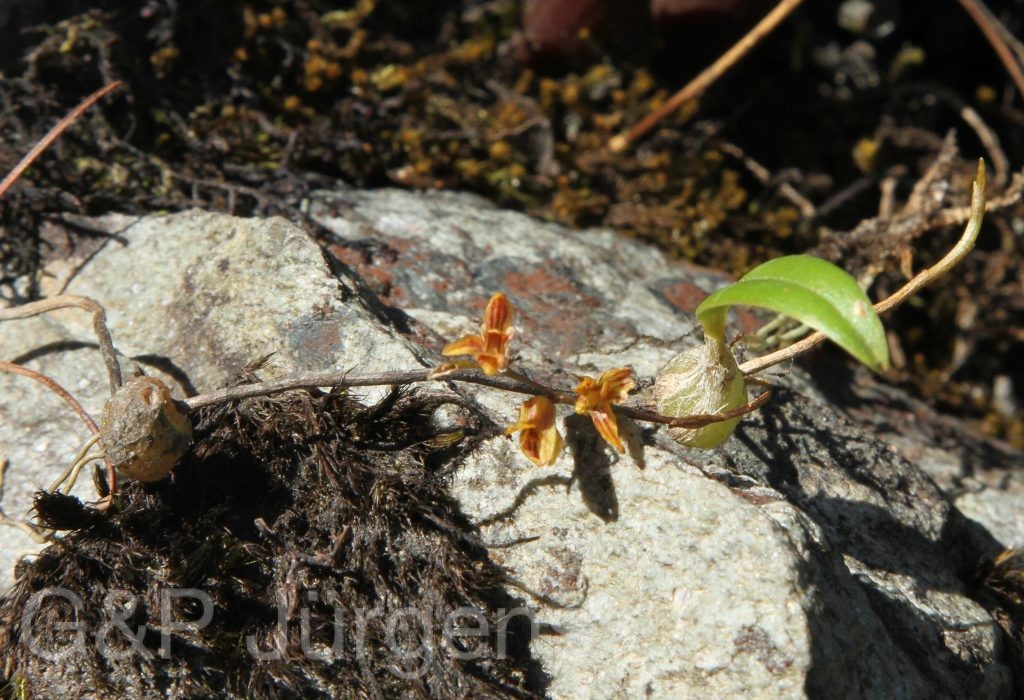
Bulbophyllum muscicola is a diminutive epiphytic orchid with a disjunct distribution from the eastern Himalayas (Nepal, northeast India, Bhutan) through Southeast Asia to New Guinea. The specific epithet 'muscicola' (moss-dweller) aptly describes its preferred microhabitat: the species grows embedded in moss mats on tree trunks and branches in cool, humid montane forests, typically at 1,200–3,100 m elevation.

This is one of the smallest Bulbophyllum species in the Himalayan flora. The pseudobulbs are minute, globose to ovoid, 3–8 mm tall, closely set on a threadlike, creeping rhizome. Each pseudobulb bears a single, fleshy, ovate leaf 1–3 cm long. The inflorescence is a solitary flower or a short, few-flowered raceme on a filiform peduncle 2–5 cm long. Flowers are tiny, 3–5 mm across, translucent yellow to orange, with the lateral sepals connate for most of their length. The lip is minute, fleshy, and mobile. Flowering occurs from September to November.

Due to its small size, B. muscicola is easily overlooked in the field and is probably under-recorded. Its occurrence at the Dochu-La pass in Bhutan at 3,100 m places it among the higher-altitude records for the genus in the eastern Himalayas.

Author: Rchb.f. · Sources: POWO (Kew), Flora of Bhutan Vol. 3, GBIF, Pearce & Cribb: The Orchids of Bhutan (2002)

Rchb.f.

Bhutan2015 44
Bhutan Wangdi Phodrang 2000m, October
Bhutan2015 53
Bhutan Wangdi Phodrang 2000m, October

Description

Bulbophyllum retusiusculum is a widespread epiphytic orchid ranging from the eastern Himalayas (Nepal, northeast India, Bhutan) through Myanmar, southern China, Taiwan, Vietnam, and Thailand. GBIF records document over 550 occurrences across this range. The species inhabits broadleaved and mixed forests at 800–2,500 m elevation, growing on tree trunks and branches in moderately humid conditions.

The pseudobulbs are narrowly ovoid to cylindrical, 1–2 cm tall, clustered on a short rhizome. Each bears a single, oblong-elliptic, leathery leaf 4–10 cm long with a slightly retuse (shallowly notched) apex — the feature reflected in the specific epithet 'retusiusculum'. The inflorescence is an erect to arching, densely many-flowered raceme 5–15 cm long. The flowers are minute, 3–4 mm across, arranged in a dense, cylindrical spike, typically pale yellowish-green to cream. The dorsal sepal is concave, the lateral sepals spreading, and the lip is small, fleshy, and recurved. Flowering occurs from September to November.

B. retusiusculum belongs to Bulbophyllum section Brachystachya, characterised by densely flowered, spike-like racemes. The species shows moderate morphological variation across its extensive range, particularly in flower colour and pseudobulb spacing.

Author: Rchb.f. · Sources: POWO (Kew), Flora of China Vol. 25, GBIF, Pearce & Cribb: The Orchids of Bhutan (2002)

Rchb.f.

Bhutan2012 1351
Bhutan Yankel 400m, October

Description

Bulbophyllum striatum is an epiphytic orchid confined to the eastern Himalayas and adjacent regions, with documented occurrences in northeast India (Sikkim, Assam, Meghalaya), Bhutan, Nepal, Bangladesh, and southwest China (Yunnan). It inhabits warm, humid subtropical and tropical forests at low to moderate elevations of 200–1,500 m — among the lower-altitude Bulbophyllum species in the Himalayan flora.

The pseudobulbs are ovoid, 2–3 cm tall, set at intervals on a stout, creeping rhizome. Each bears a single, oblong-lanceolate, coriaceous leaf 10–18 cm long. The inflorescence is an arching to pendent, laxly few-flowered raceme, 8–15 cm long, producing 3–8 flowers. The specific epithet 'striatum' (striped) refers to the conspicuous reddish-brown longitudinal striations on the sepals: flowers are 1.5–2 cm across, yellowish-green with prominent dark reddish-brown veining. The lip is dark purple, fleshy, curved, and mobile on the column foot. Flowering occurs from September to November.

The relatively low-altitude habitat of B. striatum at Yankel (400 m) in southern Bhutan reflects the warm, subtropical character of the Mo-Chu and lower Punatsangchu valleys, which harbour a distinct orchid flora adapted to high humidity and temperatures atypical for most of Bhutan.

Author: Rchb.f. · Sources: POWO (Kew), Flora of Bhutan Vol. 3, GBIF, Pearce & Cribb: The Orchids of Bhutan (2002)

J.J.Sm.

Bhutan2012 1178
Bhutan Tashiyangtse 2000m, October
Bhutan2012 1180
Bhutan Tashiyangtse 2000m, October
Bhutan2012 1181
Bhutan Tashiyangtse 2000m, October

Description

Bulbophyllum yoksunense is a rare epiphytic orchid with a restricted distribution in the eastern Himalayas. The species is named after Yuksom (also spelled Yoksum or Yoksun) in western Sikkim, India, where the type specimen was collected. Its known range includes Sikkim, Bhutan, eastern Nepal, and northern Myanmar. With only 17 documented occurrences in GBIF, it is among the less frequently recorded Bulbophyllum species in the region. It grows on mossy tree trunks in temperate broadleaved forests at 1,500–2,500 m elevation.

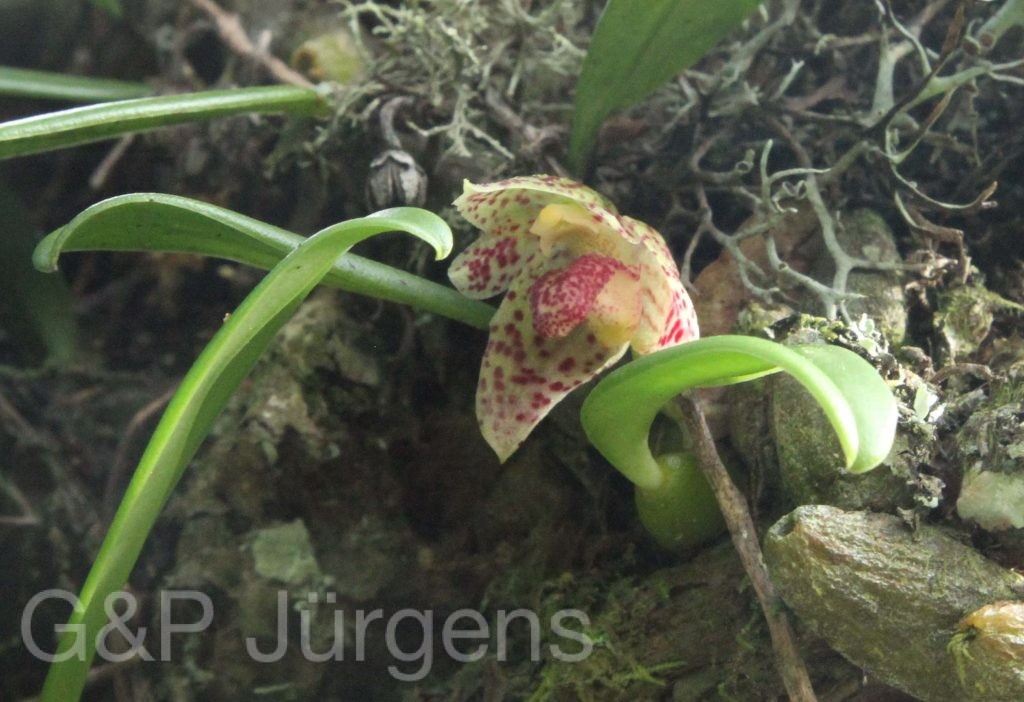
The pseudobulbs are ovoid, 1–2 cm tall, closely set on a creeping rhizome. Each bears a single, elliptic, coriaceous leaf 5–10 cm long. The inflorescence is a short, few-flowered raceme. Flowers are small, about 8–12 mm across, with distinctive coloration: the sepals are pale greenish-yellow with fine purple veining, and the lip is dark purple, fleshy, and slightly recurved. The lateral sepals are slightly longer than the dorsal sepal. Flowering in Bhutan occurs in October.

B. yoksunense is poorly known in cultivation and in the wild. Its apparent rarity may partly reflect under-collection in the remote eastern Himalayan forests of Bhutan and Sikkim. Further field survey is needed to clarify its true distribution and conservation status.

Author: J.J.Sm. · Sources: POWO (Kew), GBIF, Pearce & Cribb: The Orchids of Bhutan (2002), J.J. Smith: Orchidaceae Novae (1910)

Butea buteiformis

by GP Jürgens

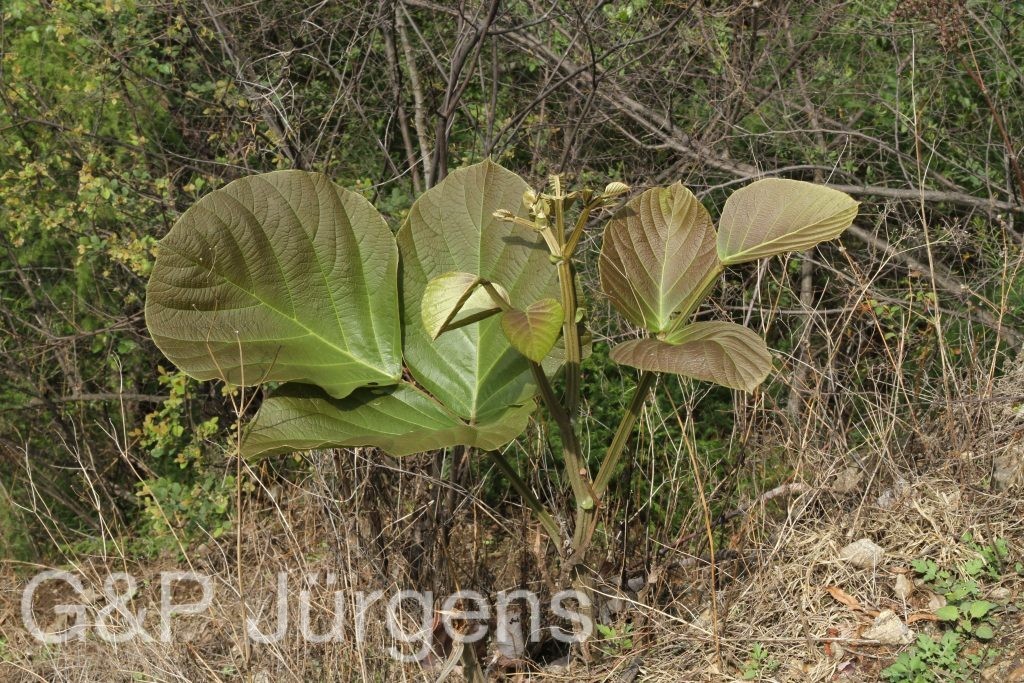
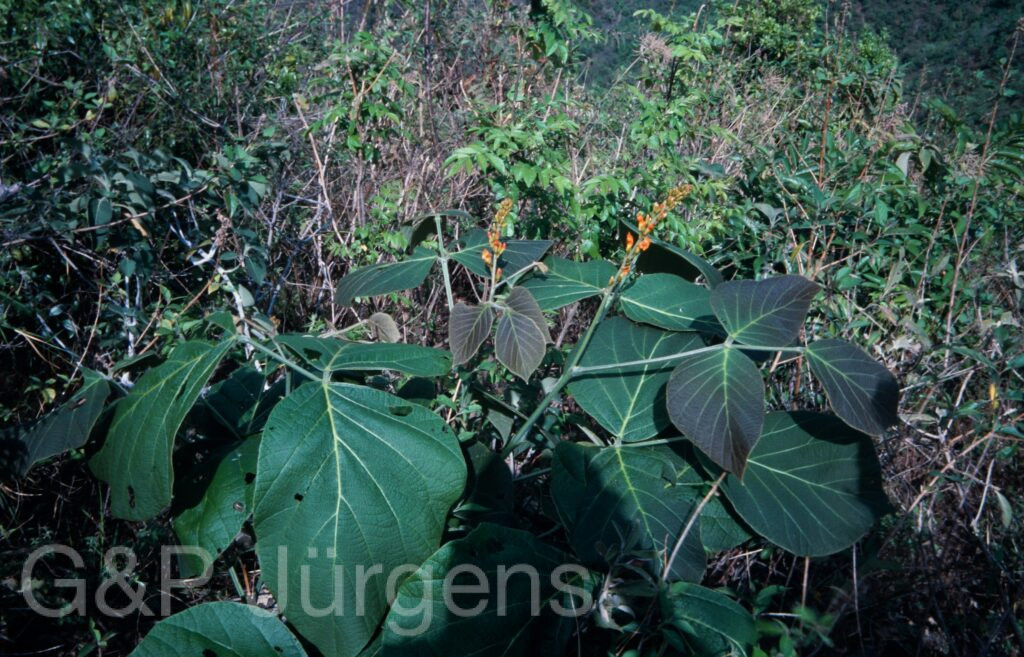
(Voigt) Grierson

Bhutan2014 146
Bhutan Trashigang 1900m, May
Nepal 2001 229 ergebnis ergebnis
Nepal (Gorkha) Tullikot 1750m, May

Description

Butea buteiformis is a small tree or scandent shrub of the subtropical and warm-temperate broad-leaved forests of the eastern and central Himalaya, ranging through Nepal, India, Bhutan, Bangladesh and Myanmar, with some 220 georeferenced collections documenting a continuous arc along the southern Himalayan front. It occupies forest margins, ravines and secondary thickets, typically between about 1000 and 2200 m. The photographed plants were recorded at Trashigang in eastern Bhutan at 1900 m and at Tullikot in the Gorkha district of central Nepal at 1750 m, both flowering in May, a season coinciding with the pre-monsoon flush in these mid-montane belts.

The species is a deciduous, often climbing legume with twining or trailing branches and stout, lenticellate stems. The leaves are pinnately trifoliolate, the leaflets broadly ovate to rhombic, coriaceous, with the lateral pair distinctly oblique and a prominent reticulate venation; young growth is silky-pubescent. The inflorescences are dense axillary or terminal racemes bearing showy papilionaceous flowers; the calyx is campanulate and silky-tomentose, and the corolla is bright orange to scarlet, the standard recurved and the keel strongly curved, as is characteristic of bird-pollinated Butea. The fruit is a flattened, indehiscent, samaroid pod, thickened and seed-bearing toward the apex.

Butea is a small palaeotropical genus allied to Spatholobus and Meizotropis within the tribe Phaseoleae; B. buteiformis is distinguished from the lowland B. monosperma by its montane habit, smaller stature and more slender, often climbing form. The vivid ornithophilous flowers are visited by sunbirds and other nectarivores. Though not assessed as threatened and locally frequent, populations face forest clearance along accessible mid-elevation slopes.

Author: (Voigt) Grierson · Sources: POWO (Kew), GBIF, Flora of Bhutan, Flora of Nepal, Legumes of the World (Lewis et al.)

Cajanus mollis

by GP Jürgens

(Benth.) Maesen

Bhutan2012 406
Bhutan Wangdi 2700m, September

Description

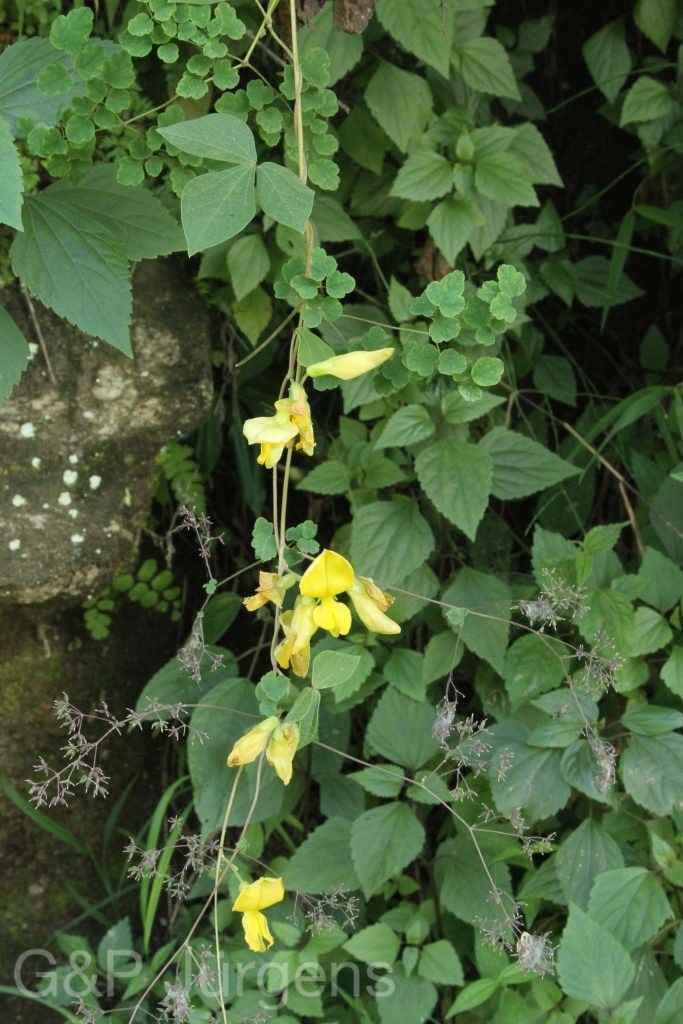
Cajanus mollis (Benth.) Maesen is a trailing or twining legume distributed through the Himalaya and southern and southeastern Asia; GBIF records (about 161 occurrences) span India, Nepal, Bhutan, southern China, Thailand, Indonesia, the Philippines and Pakistan. It grows in open scrub, grassland, forest margins, hedgerows and disturbed slopes at lower and middle elevations, scrambling over surrounding vegetation. The plant photographed near Wangdi in Bhutan at 2700 m in September, flowering and fruiting late in the warm season, sits at the upper part of its altitudinal range in the warm-temperate hill belt, where open, sunny, well-drained slopes suit its sprawling habit.

It is a perennial herb or subshrub with slender, prostrate to climbing stems clothed in soft spreading hairs. The leaves are pinnately trifoliolate, the leaflets obovate to elliptic and densely softly pubescent, gland-dotted beneath, and subtended by small stipules. The flowers are papilionaceous, borne in short axillary racemes; the corolla is yellow, the standard often reddish- or purplish-veined on the outer face, with the keel enclosing the diadelphous stamens. The calyx is campanulate and hairy. The fruit is a flattened, oblong, pubescent pod constricted between the seeds and bearing oblique depressions on the valves, dehiscing to release several small seeds.

The taxon, formerly placed in the segregate genus Atylosia, was transferred to Cajanus by Van der Maesen, who united Atylosia with Cajanus on morphological grounds; it is one of the wild relatives of the cultivated pigeonpea, Cajanus cajan, and is therefore of interest as a genetic resource for crop improvement and disease resistance. As a nitrogen-fixing legume it enriches soil on disturbed ground. Widespread and adaptable, it is of least conservation concern across its broad Asian range.

Author: (Benth.) Maesen · Sources: POWO (Kew), GBIF, Flora of China, Flora of Bhutan, Van der Maesen revision of Cajanus, Annotated Checklist of the Flowering Plants of Nepal

Lindl.

Bhutan2012 689
Bhutan Galephu 850m, September

Description

Calanthe biloba is a terrestrial orchid native to the eastern Himalayas and adjacent regions, occurring in northeast India (Sikkim, Assam, Meghalaya), Bhutan, Nepal, southwest China (Yunnan), and northern Vietnam. It grows in the understory of warm, humid broadleaved forests and along shaded stream banks at 500–1,500 m elevation, in well-drained, humus-rich soils.

The plant produces prominent, conical pseudobulbs partially enclosed by the persistent leaf bases. The leaves are large, 30–50 cm long, broadly elliptic to obovate, plicate (folded lengthwise), and deciduous in the dry season. The inflorescence is an erect, pubescent raceme 30–60 cm tall, bearing 10–20 flowers. Flowers are 2.5–3.5 cm across, white to pale yellow. The lip is conspicuously bilobed (as the specific epithet indicates), with two diverging apical lobes, and bears a yellow callus of raised lamellae. The spur is slender, 1.5–2 cm long. Flowering occurs from August to October.

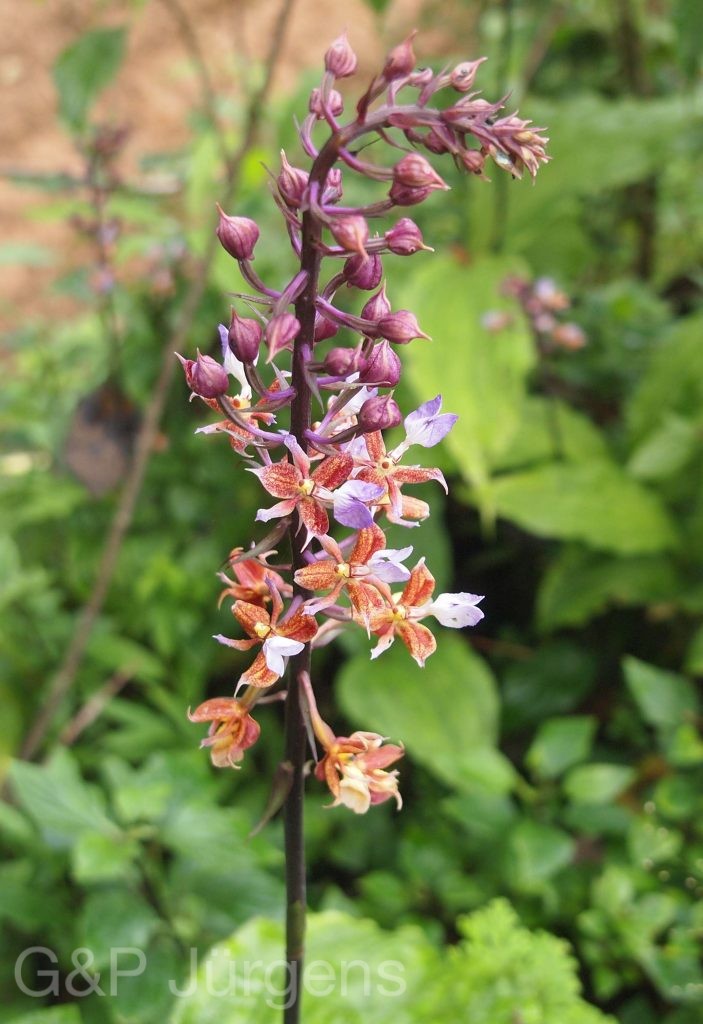
Calanthe biloba belongs to the deciduous group of Calanthe (subgenus Preptanthe), which shed their leaves before or during flowering. The relatively low elevation of the collecting locality at Galephu (850 m) reflects southern Bhutan's subtropical climate, where several thermophilic orchid species reach their northern distributional limit.

Author: Lindl. · Sources: POWO (Kew), Flora of Bhutan Vol. 3, GBIF, Pearce & Cribb: The Orchids of Bhutan (2002)