Author

GP Jürgens

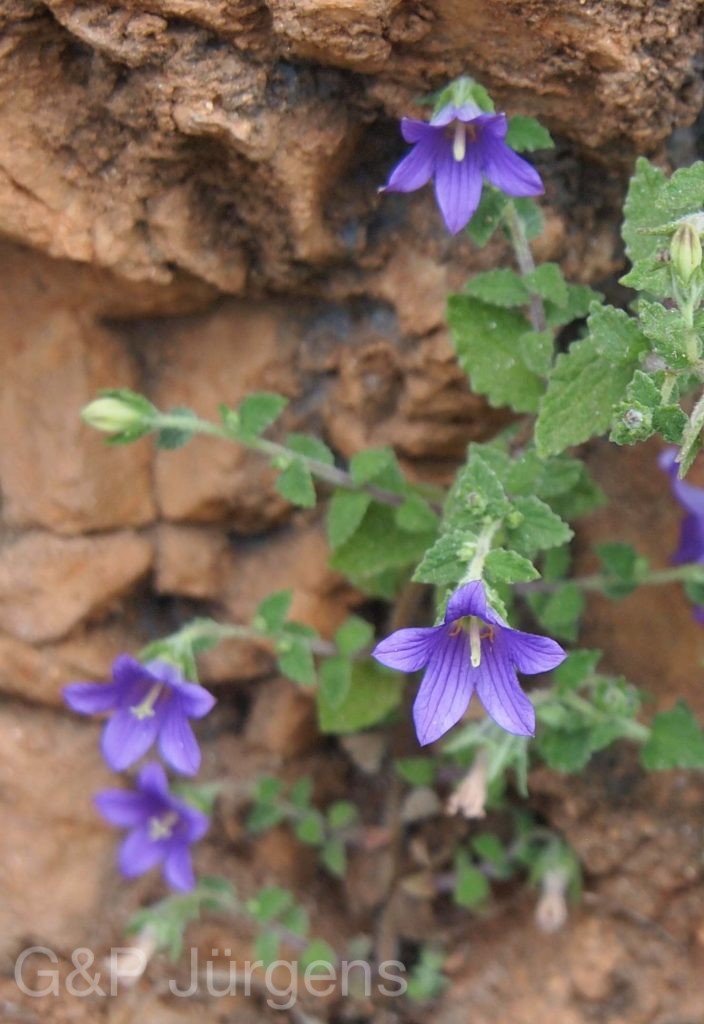
Wall. & DC.

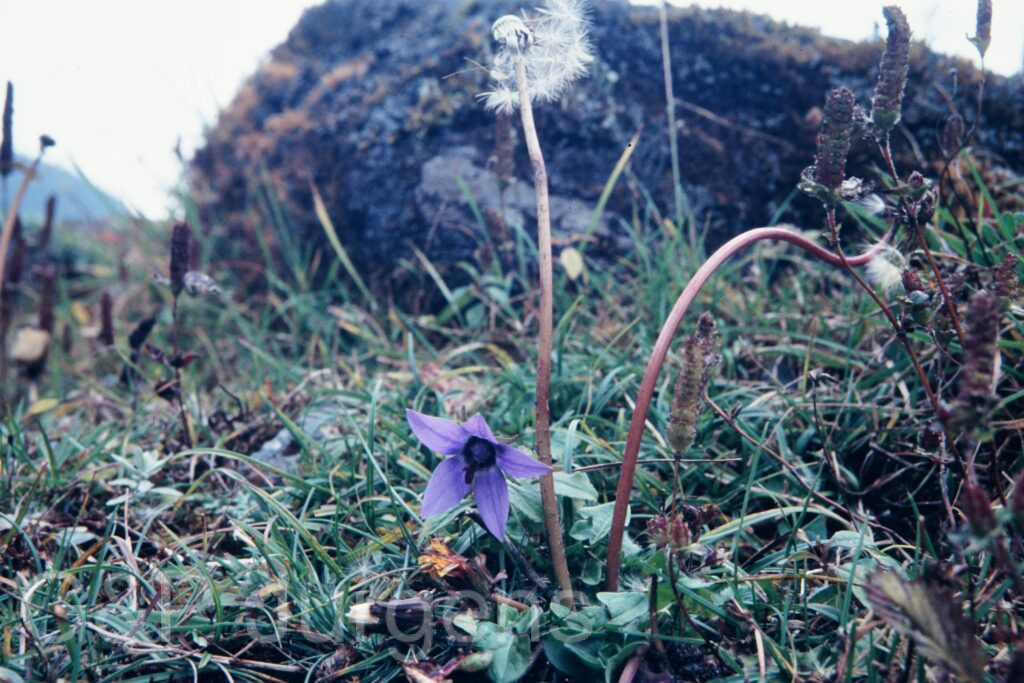
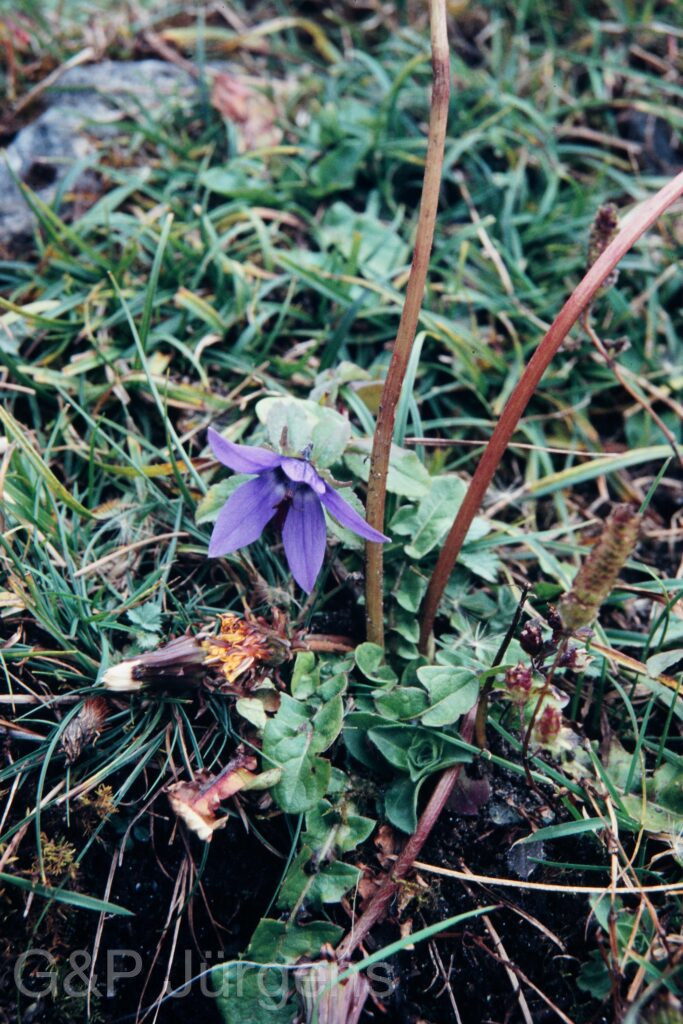
Bhutan2012 269
Bhutan Shele-La, 4100m September

Description

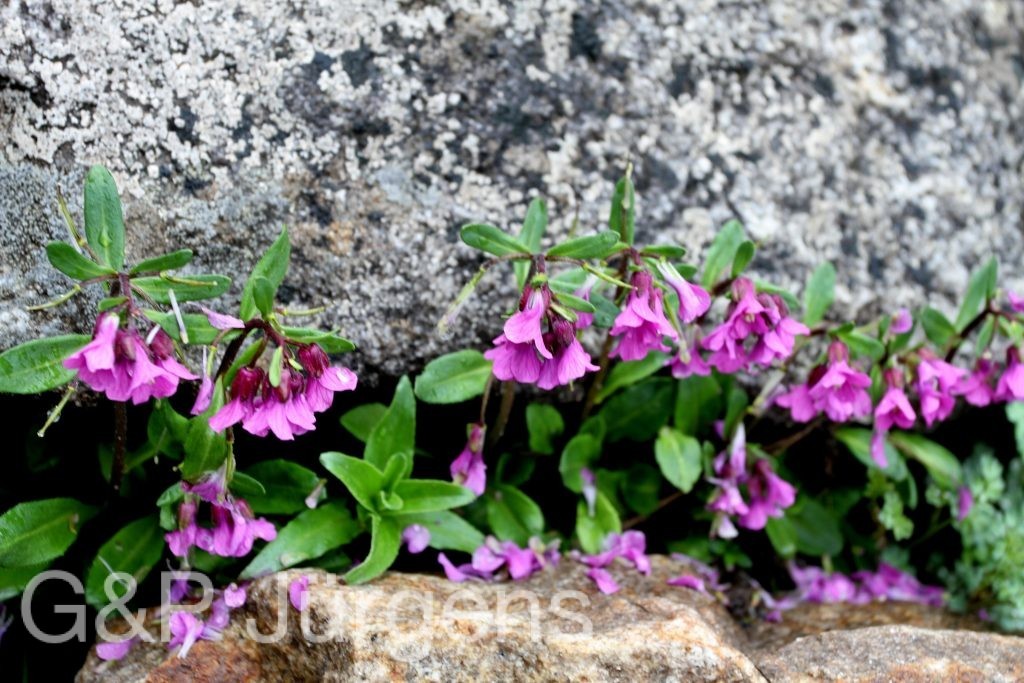
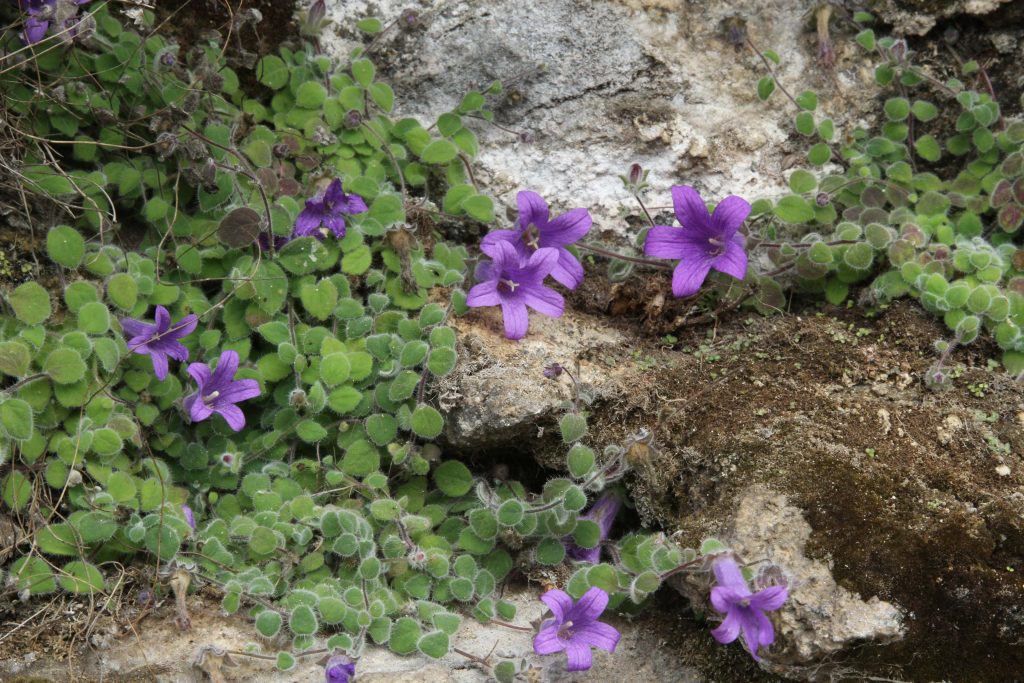
Campanula argyrotricha is a Himalayan bellflower ranging through India, Nepal, Bhutan, Pakistan and southern Tibet (China), with about 90 georeferenced records in GBIF. It is characteristic of the alpine zone, growing on open rocky slopes, screes, cliff ledges, moraine debris and short alpine meadows, generally between about 3500 and 4500 m. The plants illustrated were recorded at the Shele-La in Bhutan at around 4100 m in September, a typical late-season alpine setting where the species flowers as the monsoon recedes.

It is a low, tufted perennial herb whose epithet, meaning silvery-haired, refers to the conspicuous silvery-white indumentum clothing stems and foliage. From a slender rootstock arise several short, ascending or decumbent stems bearing small, ovate to oblong leaves with crenate to entire margins, often crowded near the base. The flowers are solitary or few, nodding to outward-facing, the broadly campanulate corolla blue to pale violet and divided to about the middle into spreading lobes; the calyx lobes are narrow and the whole exterior, including the reflexed appendages between the calyx teeth in related taxa, is silky-hairy. The fruit is a nodding capsule dehiscing by basal pores to shed numerous minute seeds.

Campanula in the Himalaya comprises numerous dwarf, hairy alpine species whose delimitation is often difficult, and C. argyrotricha is distinguished chiefly by its dense silvery vestiture and small nodding blue flowers. Such cushion-like, hairy alpines are well adapted to wind, drought and cold at high elevation. The species has not been formally assessed for conservation, but it appears locally frequent across a broad Himalayan range; like many high-altitude endemics it could be sensitive to grazing pressure and climate-driven upslope movement of vegetation zones.

Author: Wall. & DC. · Sources: POWO (Kew), GBIF, Flora of Bhutan, Flora of China, Annotated Checklist of the Flowering Plants of Nepal, Flora of Pakistan, Lammers Revision of Campanulaceae
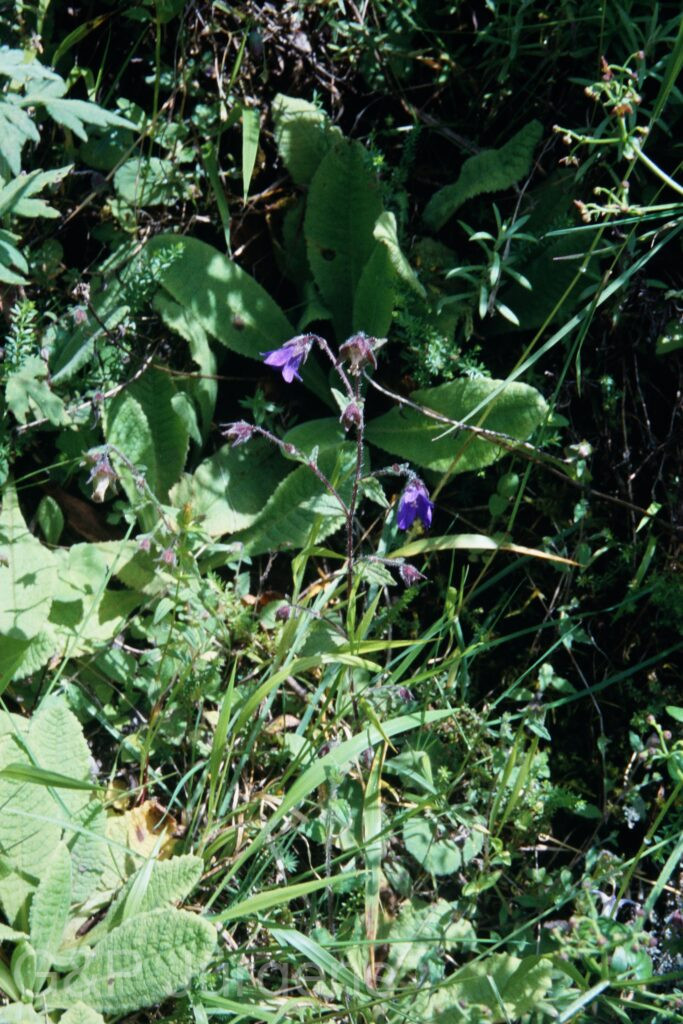
Wall.

Nepal 95 392 P693 ergebnis
Nepal Bahanjyang 3800m October
Nepal 95 393 P694 ergebnis
Nepal Bahanjyang 3800m October

Description

Campanula aristata Wall. is a slender alpine bellflower of the high Himalaya and Tibetan borderlands, ranging across China, India, Nepal, Pakistan and Bhutan, with about 557 occurrences in GBIF. It grows on open stony slopes, alpine turf, rock crevices and gravelly screes, characteristically at high elevations of roughly 3,000-5,000 m. The photographed plant comes from Bahanjyang in Nepal at 3,800 m, recorded in October, consistent with its occupation of the upper alpine zone where flowering and fruiting extend into the late season.

It is a small, slender, erect annual or short-lived perennial herb, typically only a few centimetres to about 20 cm tall, with a basal rosette of linear to oblanceolate leaves and narrow, sessile, entire cauline leaves. The flowers are solitary or few at the stem apex; the calyx is its most distinctive feature, with very long, narrow, awn-like (aristate) lobes that often equal or exceed the corolla, hence the epithet. The corolla is narrowly tubular to campanulate, pale blue to violet, with short erect lobes. The fruit is a capsule dehiscing by basal pores to shed numerous minute seeds.

Campanula (Campanulaceae) is a large, mainly Northern Hemisphere genus, with the Himalayan high-alpine species forming a distinctive group of dwarf, narrow-flowered herbs. C. aristata is readily recognised among them by its conspicuously elongate, bristle-like calyx lobes, an adaptation thought to aid in the wind-exposed alpine setting. Widespread across the Himalayan-Tibetan alpine belt and occupying abundant natural habitat, it is of no conservation concern.

Author: Wall. · Sources: POWO (Kew), GBIF, Flora of China, Flora of Pakistan, Annotated Checklist of the Flowering Plants of Nepal, Hooker Flora of British India, Campanulaceae revisionary studies

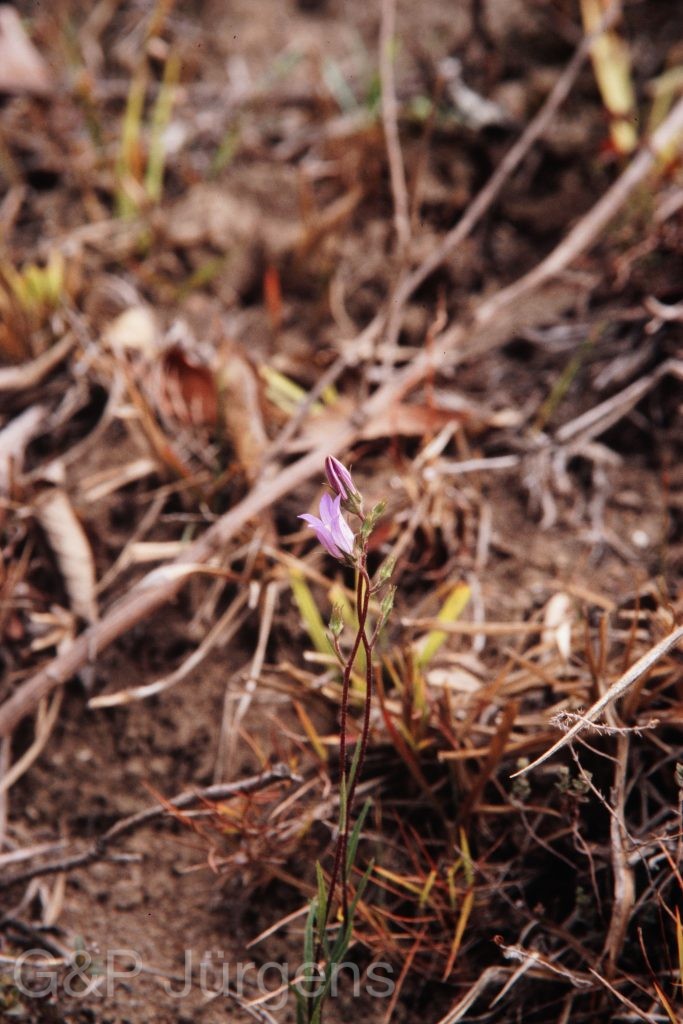
Wall.

Bhutan2012 188
Bhutan Haar-Valley, 3300m September
Bhutan2012 313
Bhutan Haar-Valley, 3300m September
Sikkim2003 381 P537
Sikkim Tista valley 3300m August

Description

Campanula pallida is a widespread Asian bellflower with an extensive GBIF record (over 68,000 occurrences) centred on China, India, Nepal, Pakistan, Bhutan and Afghanistan, with numerous further reports across the broader range from Myanmar and Thailand to scattered cultivated and recorded localities elsewhere. It is a plant of open, well-drained ground, frequenting grassy slopes, rocky banks, terrace margins, roadside cuttings and forest clearings in the temperate and subalpine zones, broadly between about 1500 and 3500 m. The plants illustrated from the Haa valley in Bhutan at 3300 m in September and the Tista valley in Sikkim at 3300 m in August reflect its long summer-to-autumn flowering across the eastern Himalaya.

The species is a perennial herb with slender, ascending to decumbent stems bearing scattered hairs and clear latex. The leaves are alternate, ovate to oblong-lanceolate, with a crenate to serrate margin, the lower leaves petiolate and the upper sessile. The flowers are nodding, borne singly or in a loose few-flowered inflorescence; the corolla is broadly campanulate, five-lobed and pale blue to lilac or sometimes whitish, with reflexed appendages between the calyx lobes. The five stamens have dilated filament bases, and the inferior ovary matures into a nodding capsule that dehisces by basal pores to shed numerous small seeds.

Campanula is a large and taxonomically difficult genus, and C. pallida belongs to a complex of variable Himalayan bellflowers in which flower size and indumentum vary geographically. The pendulous, protandrous flowers are pollinated principally by bees, and the pore-dehiscent capsule disperses seed by wind shaking. The species is abundant, ecologically tolerant and frequently associated with semi-disturbed ground, and it is of no conservation concern.

Author: Wall. · Sources: POWO (Kew), GBIF, Flora of China, Flora of Bhutan, Flora of Pakistan, Revision of the Asiatic Campanula (Kolakovsky)

Wall.

Bh2008 504 P773
Bhutan Chongsakha 1800m, May

Description

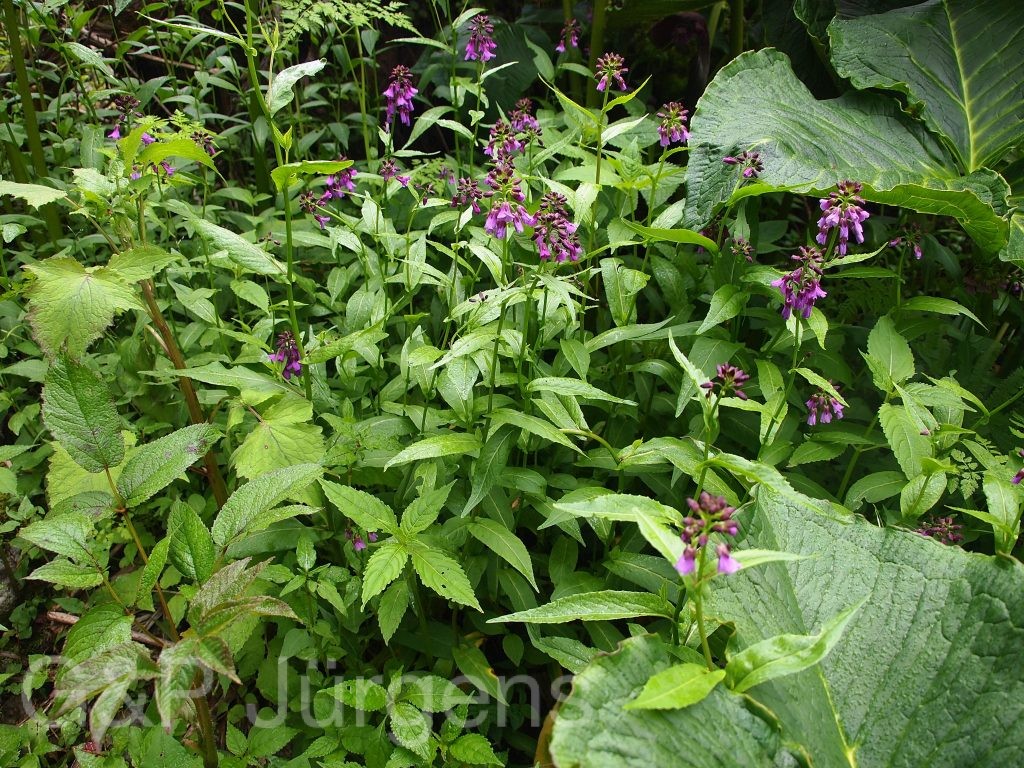
Campanula sylvatica Wall. is a Himalayan bellflower distributed along the temperate ranges from Pakistan and India through Nepal to Bhutan; the GBIF record of about 78 occurrences indicates a moderately frequent but regionally restricted endemic. As its epithet implies, it is a woodland and forest-margin herb of moist, shaded banks, clearings and grassy slopes in broad-leaved and mixed forest, broadly between 1500 and 3000 m. The photographed plant at Chongsakha in western Bhutan at about 1800 m, flowering in May, exemplifies its pre- to early-monsoon anthesis in the cool, humid mid-montane forest of the eastern Himalaya.

The species is an erect to ascending perennial or biennial herb with simple or sparingly branched, slender stems that are usually hispid or scabrid with stiff hairs. The leaves are alternate, ovate to lanceolate, toothed or crenate-serrate and shortly petiolate below, becoming sessile upward. The flowers are borne in a lax, leafy raceme or panicle, each nodding on a slender pedicel; the corolla is broadly campanulate, blue to violet-blue, divided to about a third into five spreading lobes, with a five-lobed calyx whose sinuses often bear reflexed appendages. The five stamens have dilated filament bases, and the inferior ovary ripens into a nodding capsule dehiscing by basal or lateral pores.

Campanula is a large, predominantly Holarctic genus, the Himalayan species forming a distinctive subtropical-to-temperate Asian element; C. sylvatica is recognised by its hispid stems and lax woodland inflorescence. It is taxonomically close to other Himalayan campanulas and has at times been confused in herbaria with allied forest taxa. As a fairly widespread endemic of relatively undisturbed forest, it is not formally assessed but may be locally affected by forest clearance; it has occasional value in rock and woodland gardens.

Author: Wall. · Sources: POWO (Kew), GBIF, Flora of Pakistan, Flora of Bhutan, Annotated Checklist of the Flowering Plants of Nepal, Lammers — World checklist and bibliography of Campanulaceae

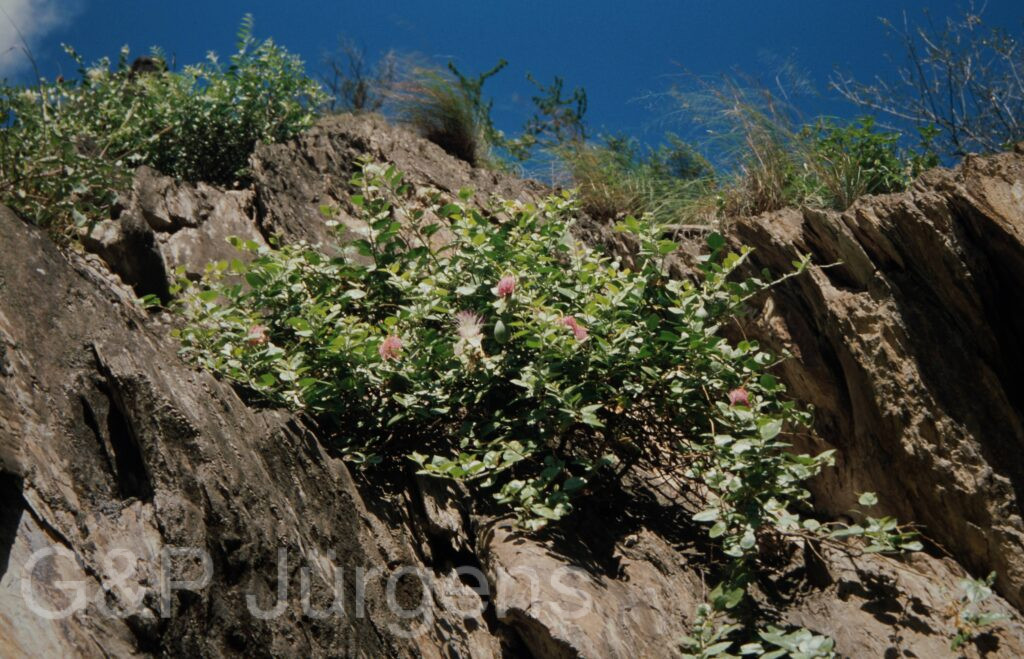
L.

Nepal 99 972 ergebnis
West-Nepal Dunai 2200m, July

Description

Capparis spinosa, the caper, is an exceptionally widespread sub-cosmopolitan plant of the warm-temperate, Mediterranean and arid subtropical zones, distributed from southern Europe, North Africa and the Middle East across Central Asia to the western Himalaya, Pakistan, India, China and Australia, with extensive naturalised and cultivated records worldwide; GBIF documents 22842 occurrences. It is a xerophyte of dry, sunny, stony habitats, colonising rocky outcrops, cliffs, walls, gravelly slopes and arid riverine flats. In the inner Himalaya it ascends the rain-shadowed valleys, as shown by the photographed plant from Dunai in West Nepal at 2200 m in July, growing in the dry trans-Himalayan terrain of the Dolpo region.

It is a spreading, often prostrate, deciduous shrub with trailing stems and a deep, woody perennial rootstock. The alternate leaves are simple, entire, fleshy, orbicular to obovate, and frequently subtended by a pair of recurved stipular spines, though spinescence is variable. The large, showy, short-lived flowers are solitary in the leaf axils, with four greenish sepals, four white to pinkish petals and a conspicuous brush of numerous long, purple-tinged stamens; the ovary is borne on a long gynophore. The fruit is an ellipsoid, fleshy, many-seeded berry that splits to reveal a pinkish pulp. The familiar capers of commerce are the pickled, unopened flower buds.

The species belongs to Capparis (Capparaceae), and is morphologically extremely variable across its vast range, having been split into numerous subspecies and varieties; here the family is given as in the source. Its flowers open at dusk and are pollinated by long-tongued bees and hawkmoths, while the fleshy berries are dispersed by birds and lizards. Drought-adapted, valued as a food and medicinal plant and cultivated commercially, it is abundant and of least conservation concern.

Author: L. · Sources: POWO (Kew), GBIF, Flora of China Vol. 7, Flora of Pakistan, Flora of Nepal, Capparis spinosa species complex revision (Inocencio, Rivera & al.)

Willd.

Sikkim2011 373
Sikkim Lada-La 3800m, June
Sikkim 2006 356 ergebnis
India West-Bengal, Tamrong 2750m, May

Description

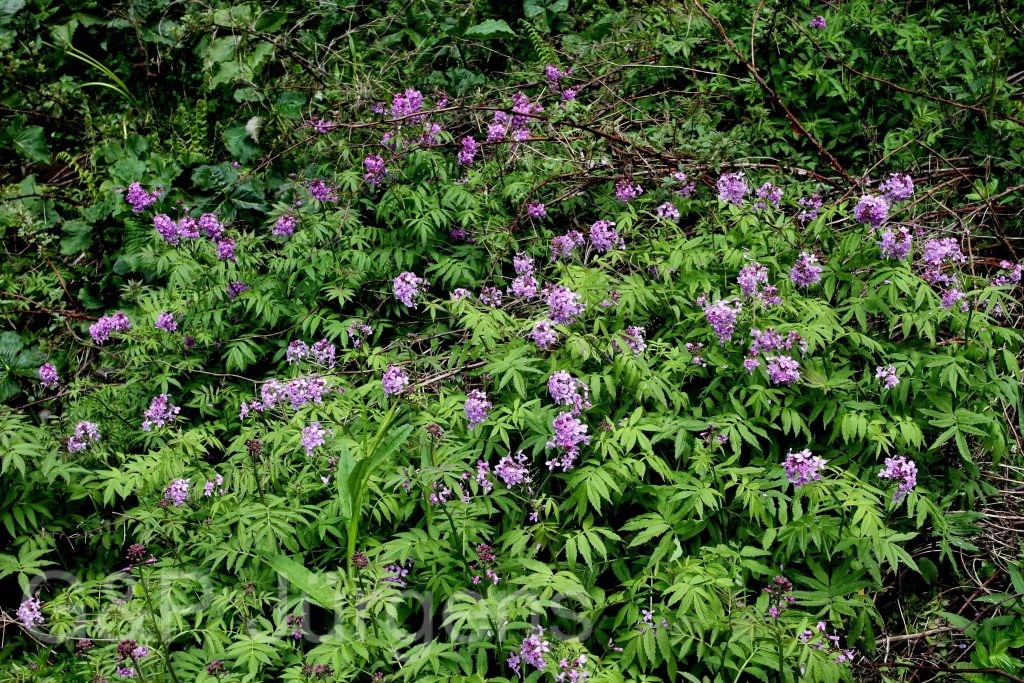
Cardamine macrophylla Willd. is a robust perennial crucifer with a broad distribution across temperate Asia, occurring in China, Russia, India, Nepal, Bhutan, Pakistan, Japan, Kazakhstan, Mongolia, Korea and elsewhere. In the Himalaya it is recorded from Sikkim at Lada-La near 3800 m, flowering in June, and from Tamrong in West Bengal at about 2750 m in May, spanning the temperate to subalpine zones. The species favours moist, shaded habitats: streamsides, wet meadows, forest margins, ravines and seepage slopes, generally between 2000 and 4000 m, on rich, humose soils. Its roughly 5068 GBIF records reflect a genuinely widespread and frequently collected species across its extensive range.

The plant arises from a creeping, scaly rhizome and produces erect, stout, leafy stems up to 70 cm or more. The leaves are pinnately compound with several pairs of large, lanceolate to ovate, serrate leaflets, the foliage notably ample for the genus, accounting for the epithet macrophylla. The flowers are borne in dense terminal corymbose racemes and are showy, with four spreading petals of pink, lilac to purplish hue and the usual tetradynamous stamens. The fruit is a long, linear, flattened silique that dehisces elastically to scatter the seeds in a single row.

Cardamine belongs to the tribe Cardamineae, a large and taxonomically complex genus in which polyploidy and hybridisation are widespread; C. macrophylla itself encompasses considerable morphological and cytological variation, with several infraspecific taxa and allied forms recognised across its range. Spreading both by seed and by rhizome, it can form extensive clonal stands in suitable wet ground. Widespread and ecologically tolerant, it is of no conservation concern, and the rhizome and young shoots are used locally as a wild vegetable.

Author: Willd. · Sources: POWO (Kew), GBIF, Flora of China, Flora of Nepal, Flora of Bhutan, Cardamine systematic revisions (Al-Shehbaz)

(D.Don) Wall.

Sikkim2011 380
Sikkim Lada-La 3800m, June
BhutanPG2011 602 01 1
Bhutan Ludlow-Sherriff-Trail Kem-La, 4300m July
Bh09 213 G356
Bhutan Ludlow-Sherriff-Trail Kem-La, 4300m July

Description

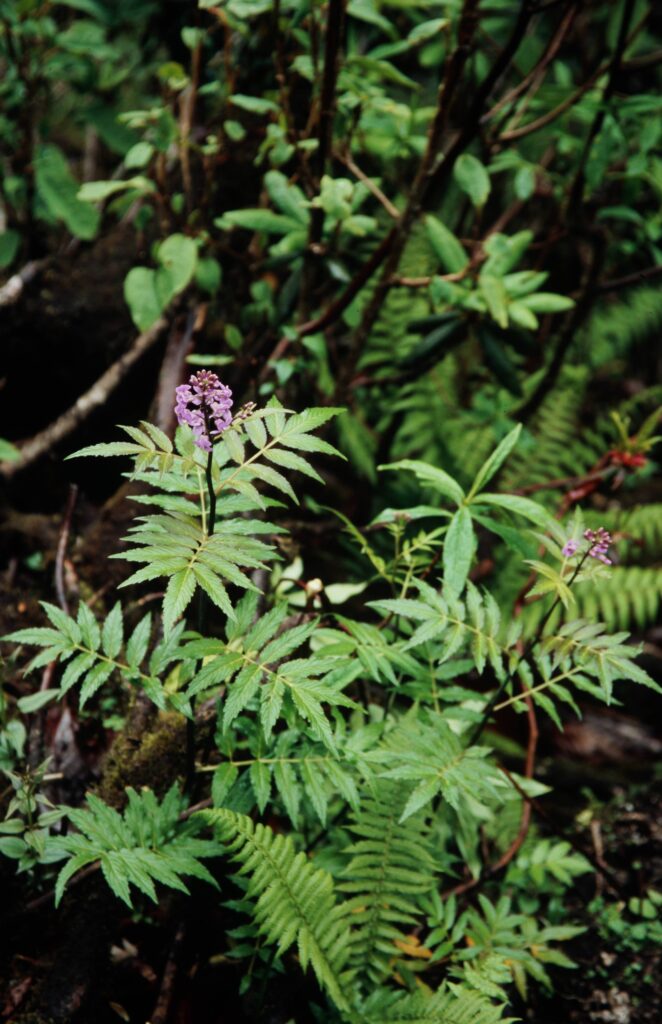
Cardamine violacea is a Sino-Himalayan crucifer recorded from Nepal, China (chiefly Xizang), Bhutan and India, with GBIF aggregating around 82 occurrences. It is a herb of high-altitude moist habitats, occupying alpine meadows, seepage slopes, stream banks and the margins of melting snow patches generally between about 3500 and 4500 m. The accompanying records illustrate this band well: material from the Lada-La in Sikkim at 3800 m flowering in June, and from the Kem-La on the Ludlow–Sherriff Trail in Bhutan at 4300 m in July, the later eastern flowering reflecting the persistence of snow cover at greater elevation. The plant favours cool, consistently damp ground rich in organic matter.

It is a slender perennial herb arising from a creeping rhizome, the stems erect to ascending and usually simple. The leaves are pinnately compound or lyrate, with a few pairs of lateral leaflets and a larger terminal segment, the margins entire to coarsely toothed; basal and cauline leaves grade in size up the stem. The inflorescence is a terminal corymb-like raceme that elongates in fruit. Flowers bear four sepals and four free, clawed petals coloured violet to purple, an unusual hue in a genus dominated by white-flowered species, with the typical tetradynamous androecium of six stamens. The fruit is a slender, linear, flattened silique that dehisces explosively to scatter the seeds.

The taxon was described as Arabis violacea by D.Don and transferred to Cardamine by Wallich; the cited Himalayan plants have at times been segregated as subsp. bhutanica. Cardamine is a large cosmopolitan genus, and its Himalayan alpine members form a difficult complex in which characters of leaf division and petal colour are critical for identification. As a specialist of snowmelt-fed alpine habitats, C. violacea is potentially vulnerable to reduced and earlier snowmelt, though its broad distribution and remote terrain limit immediate concern.

Author: (D.Don) Wall. · Sources: POWO (Kew), GBIF, Flora of China, Flora of Bhutan, Annotated Checklist of the Flowering Plants of Nepal, Jafri 'Brassicaceae' treatment

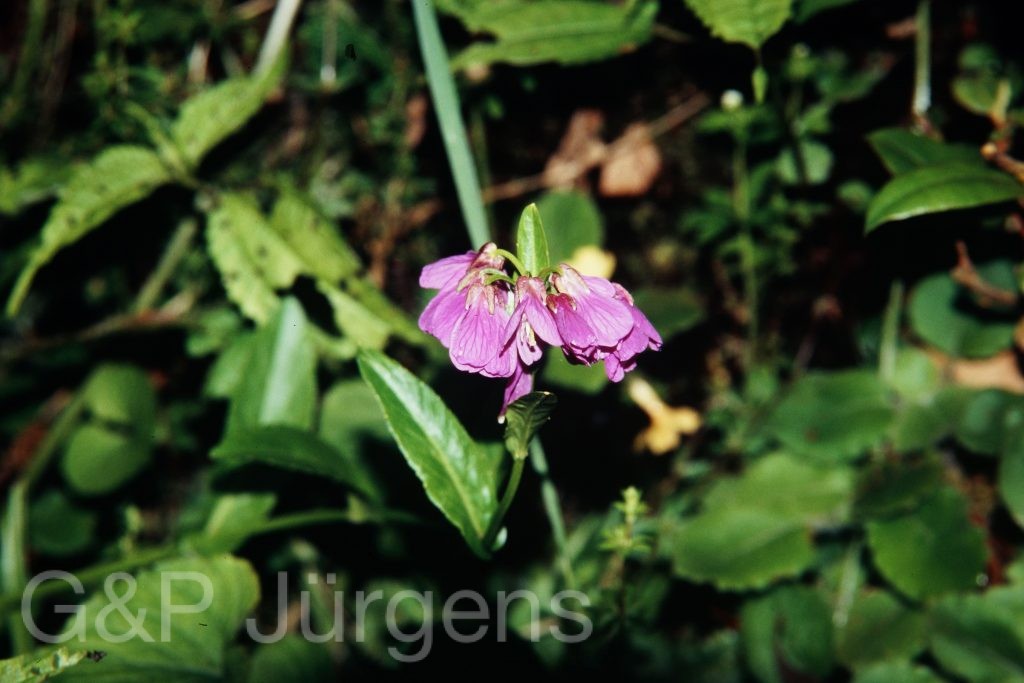
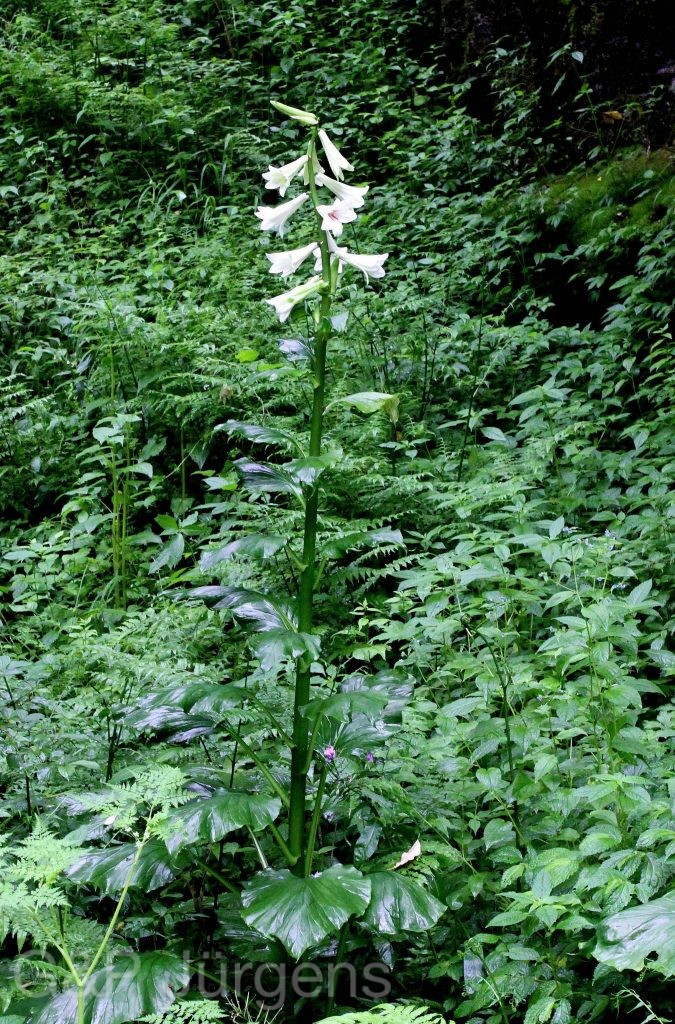
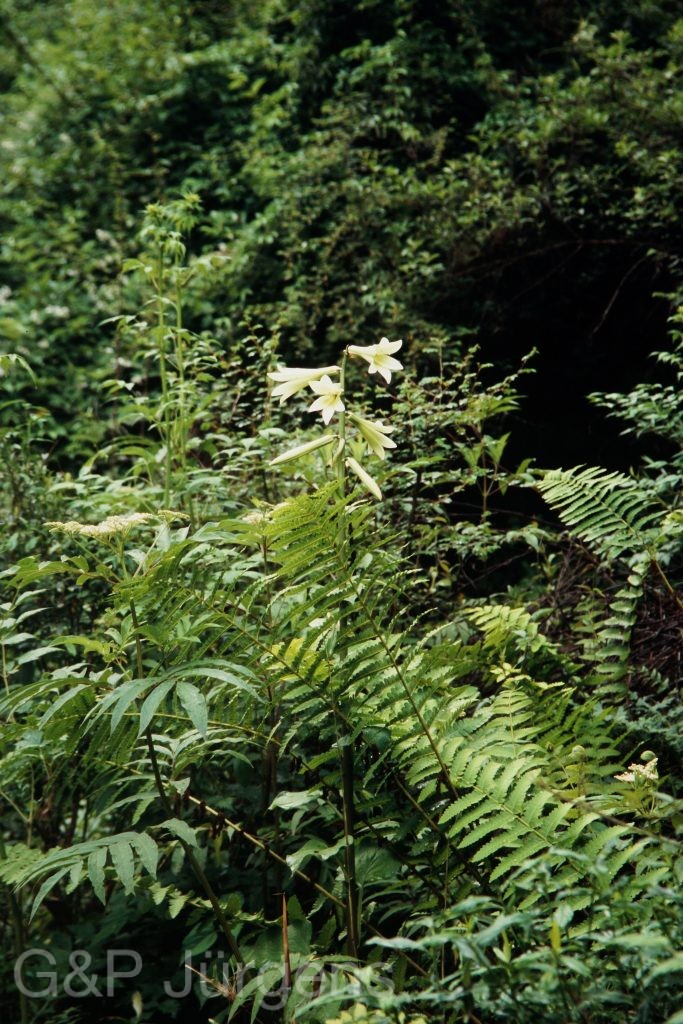
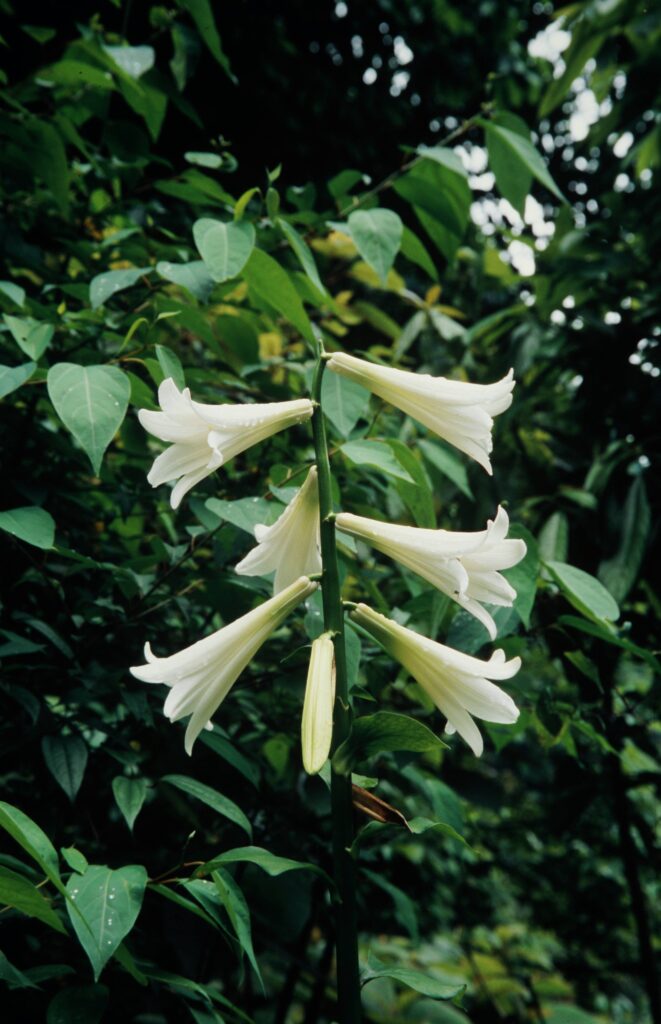
(Wall.) Makino

Sikkim2011 386 1
Sikkim 2011
Bh09 306 P503
Bhutan 2009
Sikkim 2006 470 ergebnis

Description

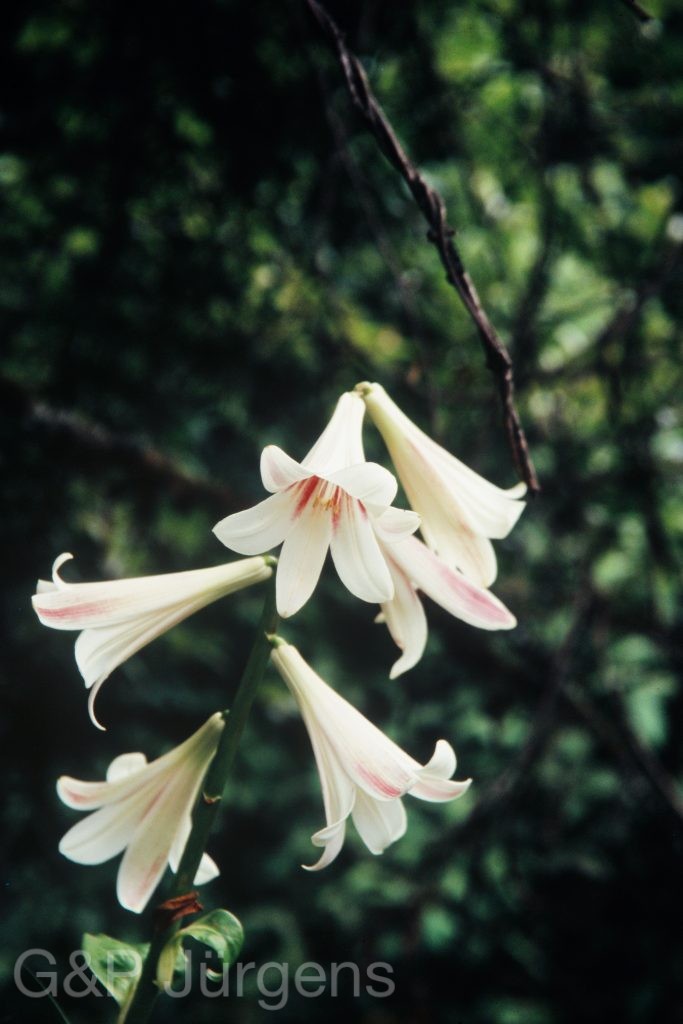
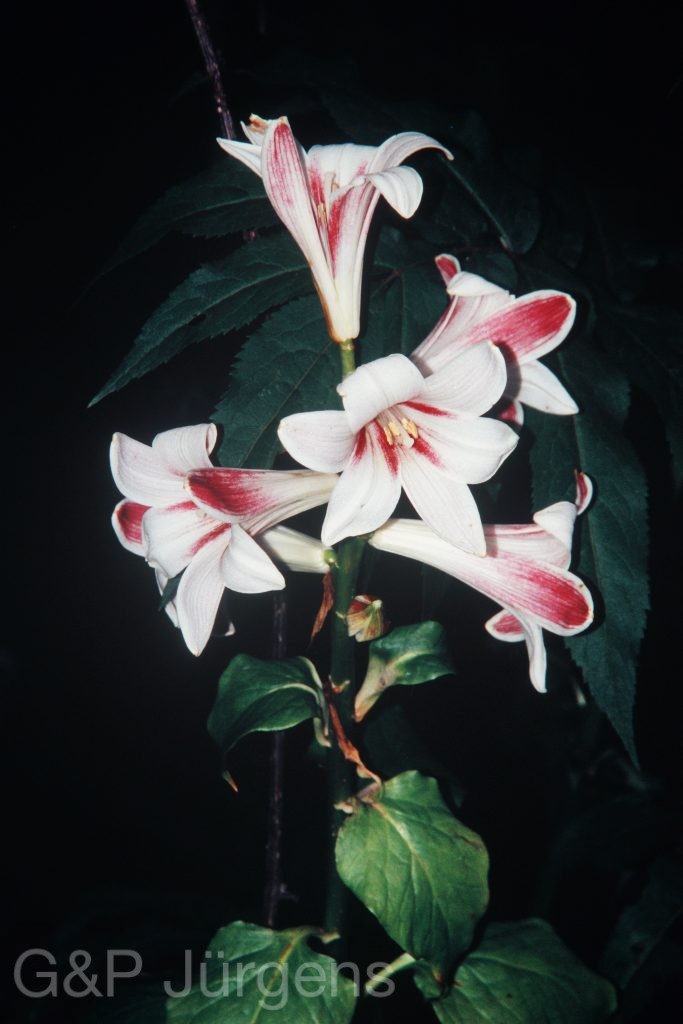
Cardiocrinum giganteum, the giant Himalayan lily, is a stately bulbous herb of the temperate Himalaya and south-western China, distributed from northern India and Nepal through Bhutan into Myanmar and China, with over 1380 occurrence records, many from cultivation across Europe, North America, New Zealand and Japan where it is a prized ornamental. It grows in moist, shaded broad-leaved and coniferous forest, ravines and forest margins, generally between about 2000 and 3600 m. The photographs derive from Sikkim (2011) and Bhutan (2009), within the rich mid-montane forests where the species attains its impressive stature.

The plant is among the largest of all lilies, the flowering stem rising 2-3.5 m from a large, monocarpic bulb. The leaves are broadly ovate to cordate, glossy, net-veined and conspicuously heart-shaped at the base, borne on long petioles and arranged in a basal rosette and up the stem. The inflorescence is a long terminal raceme of large, fragrant, pendulous trumpet-shaped flowers; the six tepals are white, flushed greenish outside and streaked reddish-purple within the throat. The fruit is a large, erect, oblong capsule with three valves shedding numerous flat, winged seeds.

Cardiocrinum (Liliaceae) is a small east Asian genus segregated from Lilium by its cordate leaves and monocarpic, bulb-replacing habit: the main bulb dies after flowering, leaving offset bulblets that perpetuate the clump over several years. The night-fragrant flowers attract moths and large bees, and the winged seeds are wind-dispersed. Widespread and locally common, it is of least conservation concern, though localised collection of bulbs occurs.

Author: (Wall.) Makino · Sources: POWO (Kew), GBIF, Flora of China, Flora of Bhutan, Annotated Checklist of the Flowering Plants of Nepal, Synge revision of Lilies (Cardiocrinum)

(Elwes) Stearn

Bh09 344 P559
Bhutan Jakar Wangdi 2500m, June
Bh09 346 G561
Bhutan Jakar Wangdi 2500m, June

Description

Cardiocrinum giganteum, the giant Himalayan lily, is a striking woodland geophyte of the eastern Himalaya and southwest China, with georeferenced records from China and naturalised or cultivated populations reported from Japan, Korea, Russia, Canada and Chile among its 173 occurrences. The variety yunnanense is the more eastern, often shorter-stemmed and darker-stemmed expression of the species. It thrives in cool, humid, deeply shaded broadleaved and conifer forest on humus-rich soils. The plant recorded at Jakar, Wangdi in Bhutan at 2500 m in June captures its early-summer flowering within the moist temperate forest belt it favours between about 1500 and 3000 m.

The plant grows from a large, scaled bulb that is monocarpic, flowering once after several years and then dying, leaving offset bulbils to continue the clone. The robust, hollow stem can reach two to three metres or more. The leaves are large, broadly ovate to cordate, glossy, net-veined and long-petiolate, arranged in a basal rosette and scattered up the stem. The inflorescence is a terminal raceme of up to twenty pendent, trumpet-shaped flowers; the perianth is white to creamy, streaked reddish-purple within the throat, and strongly fragrant. The fruit is a large erect, woody capsule splitting to release numerous flat, broadly winged seeds.

Cardiocrinum, segregated from Lilium chiefly by its cordate net-veined leaves and monocarpic habit, comprises a small genus of three species. The taxon is prized horticulturally, and its dependence on intact, humid forest understorey makes it sensitive to logging and habitat disturbance, though it remains locally frequent across its native range.

Author: (Elwes) Stearn · Sources: POWO (Kew), GBIF, Flora of China, Flora of Bhutan, The Genus Lilium and allies (Liliaceae) monograph, Flowers of the Himalaya (Polunin & Stainton)

Caryota urens

by GP Jürgens

L.

Bhutan2015 261
Bhutan Zhemgang 1000m, October

Description

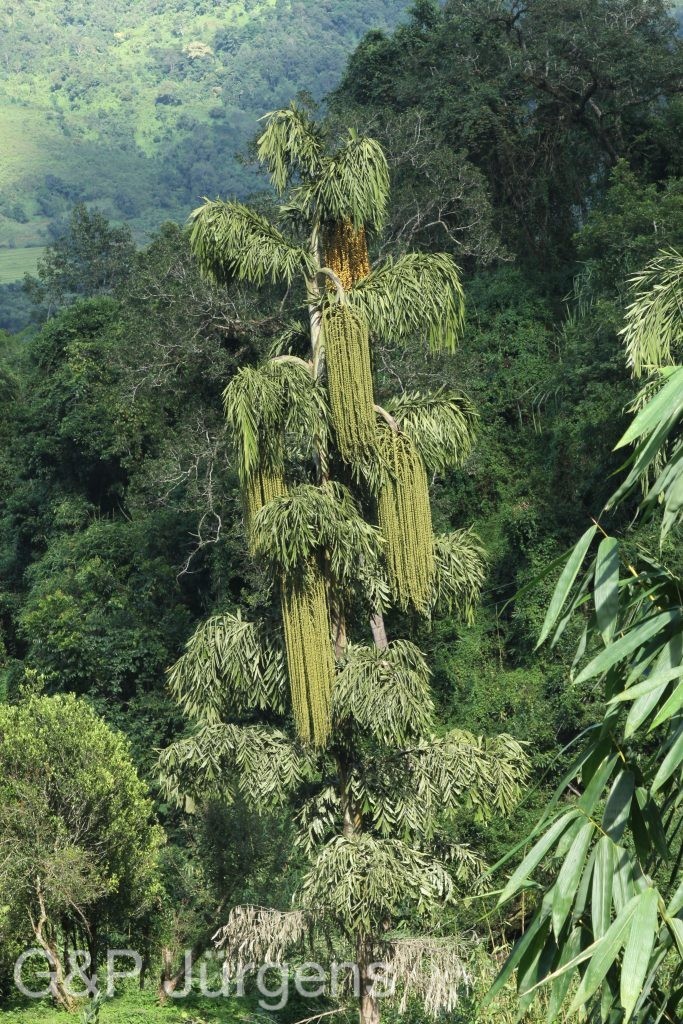
Caryota urens, the fishtail or jaggery palm, is a solitary tropical palm native to the Indian subcontinent, Sri Lanka, Myanmar and South-East Asia, with around 5517 occurrence records spanning both its native range and many countries where it is widely cultivated. It grows in moist tropical and subtropical forest, secondary woodland, river valleys and around villages, predominantly in the lowland to lower-montane zone. The photographed plant from Zhemgang in southern Bhutan at 1000 m, recorded in October, sits at the upper-elevation edge of its warm, humid habitat.

It is a tall, single-stemmed palm with a stout, ringed grey trunk reaching well over ten metres. The leaves are very large, bipinnate—unusual among palms—with the ultimate segments wedge-shaped and jaggedly toothed at the apex, resembling a fish's tail and giving the common name. The plant is monocarpic and hapaxanthic: after years of vegetative growth it flowers once, producing a sequence of massive pendulous inflorescences from the upper nodes downward, bearing cream to purplish unisexual flowers. The fruit is a globose red to purplish-black berry containing irritant calcium-oxalate raphides, whence the epithet urens ("stinging").

Despite the source labelling it Fabaceae, Caryota urens belongs to the palm family, Arecaceae, subfamily Coryphoideae, tribe Caryoteae. It is of considerable economic value: the sugary sap tapped from the inflorescences yields jaggery, palm wine and vinegar, while the trunk furnishes sago-like starch and the leaf sheaths a strong fibre (kittul). Widely planted and broadly distributed, it is not considered threatened.

Author: L. · Sources: POWO (Kew), GBIF, Flora of China (Arecaceae), Flora of Bhutan, Genera Palmarum (Dransfield et al.), Govaerts & Dransfield World Checklist of Palms