
(D.Don) Wall.
Description
Cardamine violacea is a Sino-Himalayan crucifer recorded from Nepal, China (chiefly Xizang), Bhutan and India, with GBIF aggregating around 82 occurrences. It is a herb of high-altitude moist habitats, occupying alpine meadows, seepage slopes, stream banks and the margins of melting snow patches generally between about 3500 and 4500 m. The accompanying records illustrate this band well: material from the Lada-La in Sikkim at 3800 m flowering in June, and from the Kem-La on the Ludlow–Sherriff Trail in Bhutan at 4300 m in July, the later eastern flowering reflecting the persistence of snow cover at greater elevation. The plant favours cool, consistently damp ground rich in organic matter.
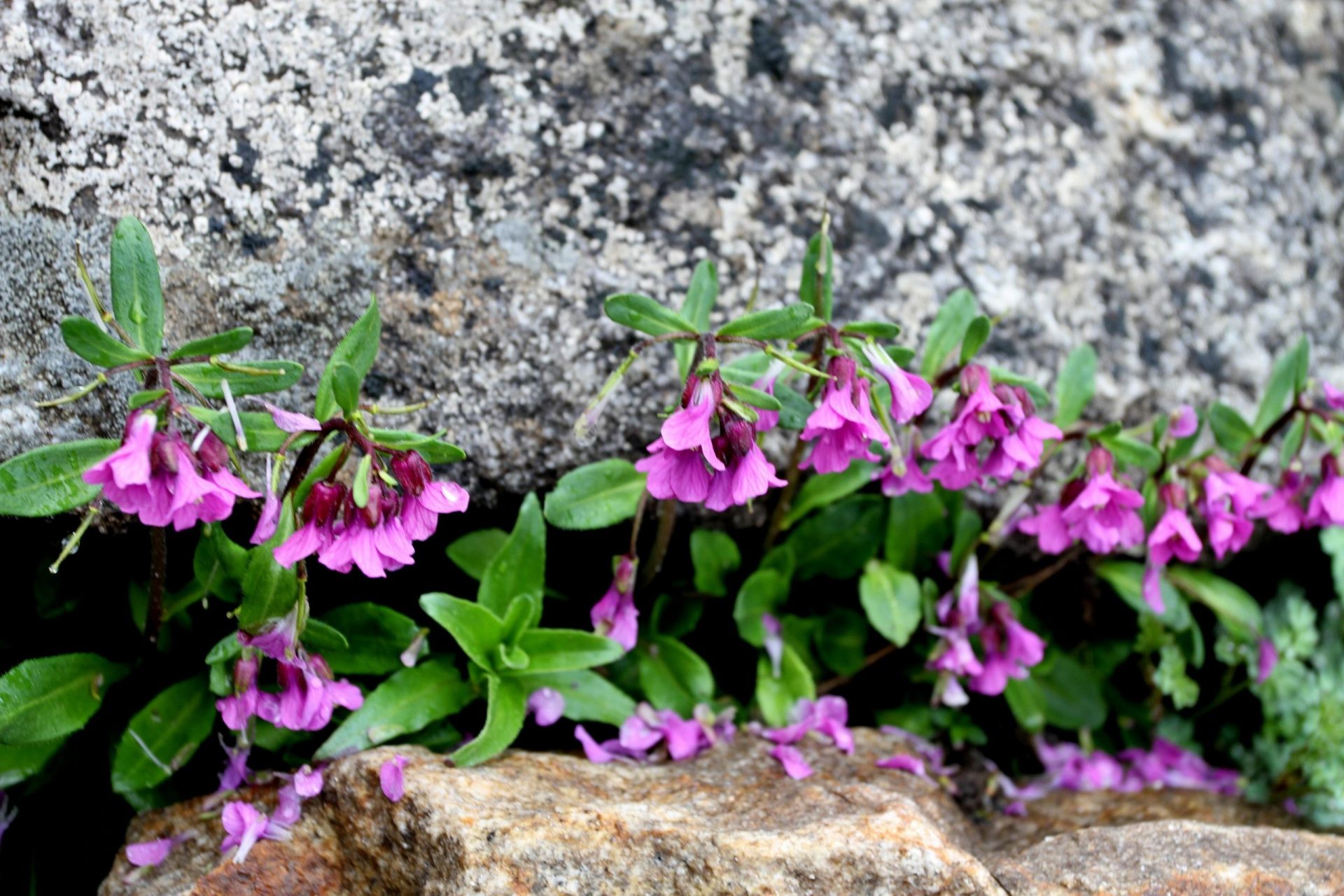
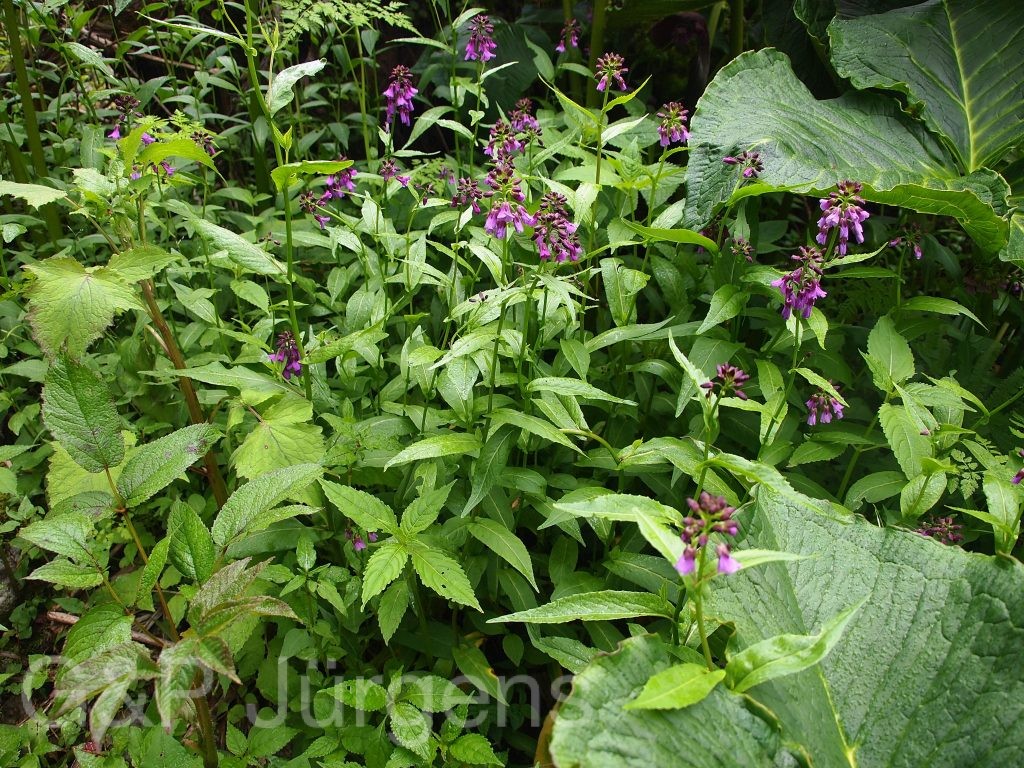
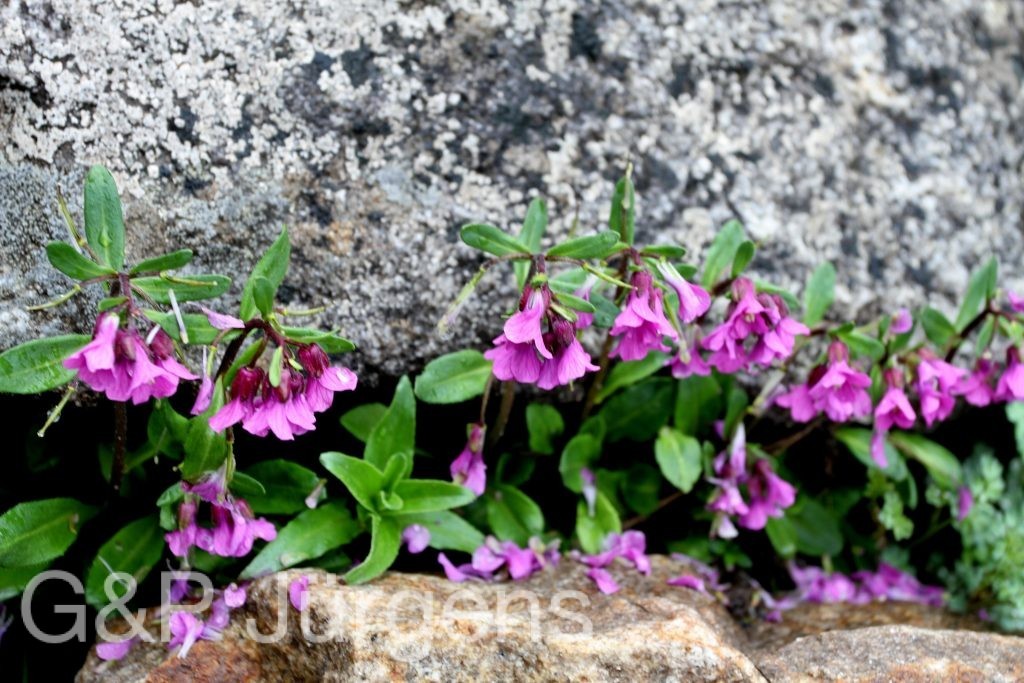
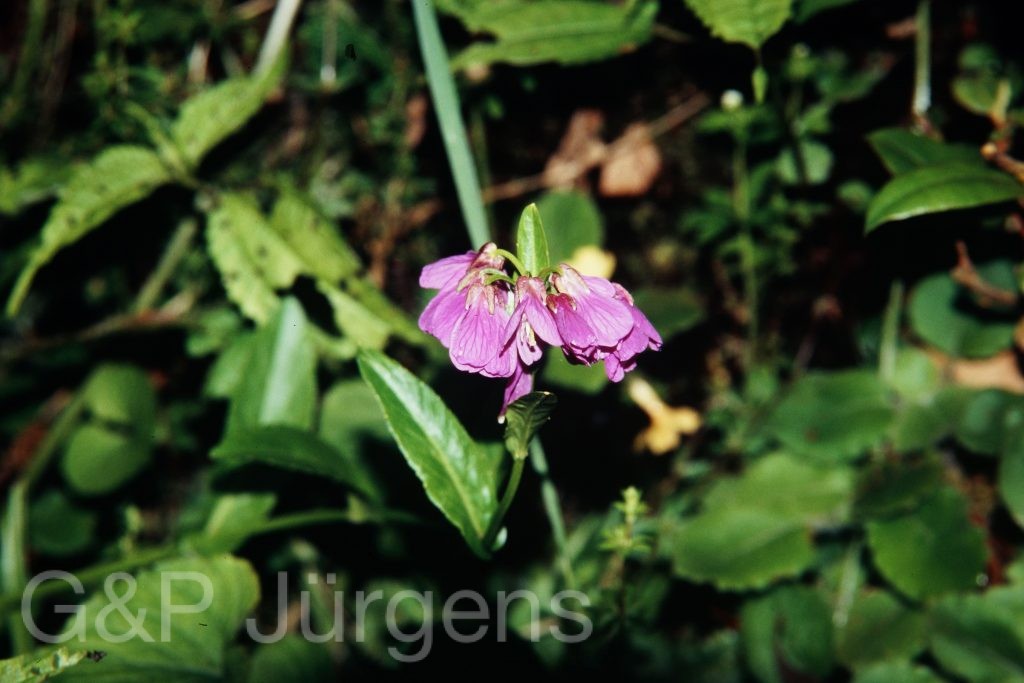
It is a slender perennial herb arising from a creeping rhizome, the stems erect to ascending and usually simple. The leaves are pinnately compound or lyrate, with a few pairs of lateral leaflets and a larger terminal segment, the margins entire to coarsely toothed; basal and cauline leaves grade in size up the stem. The inflorescence is a terminal corymb-like raceme that elongates in fruit. Flowers bear four sepals and four free, clawed petals coloured violet to purple, an unusual hue in a genus dominated by white-flowered species, with the typical tetradynamous androecium of six stamens. The fruit is a slender, linear, flattened silique that dehisces explosively to scatter the seeds.
The taxon was described as Arabis violacea by D.Don and transferred to Cardamine by Wallich; the cited Himalayan plants have at times been segregated as subsp. bhutanica. Cardamine is a large cosmopolitan genus, and its Himalayan alpine members form a difficult complex in which characters of leaf division and petal colour are critical for identification. As a specialist of snowmelt-fed alpine habitats, C. violacea is potentially vulnerable to reduced and earlier snowmelt, though its broad distribution and remote terrain limit immediate concern.
Author: (D.Don) Wall. · Sources: POWO (Kew), GBIF, Flora of China, Flora of Bhutan, Annotated Checklist of the Flowering Plants of Nepal, Jafri 'Brassicaceae' treatment