Author

GP Jürgens

(Wall.) D. Don

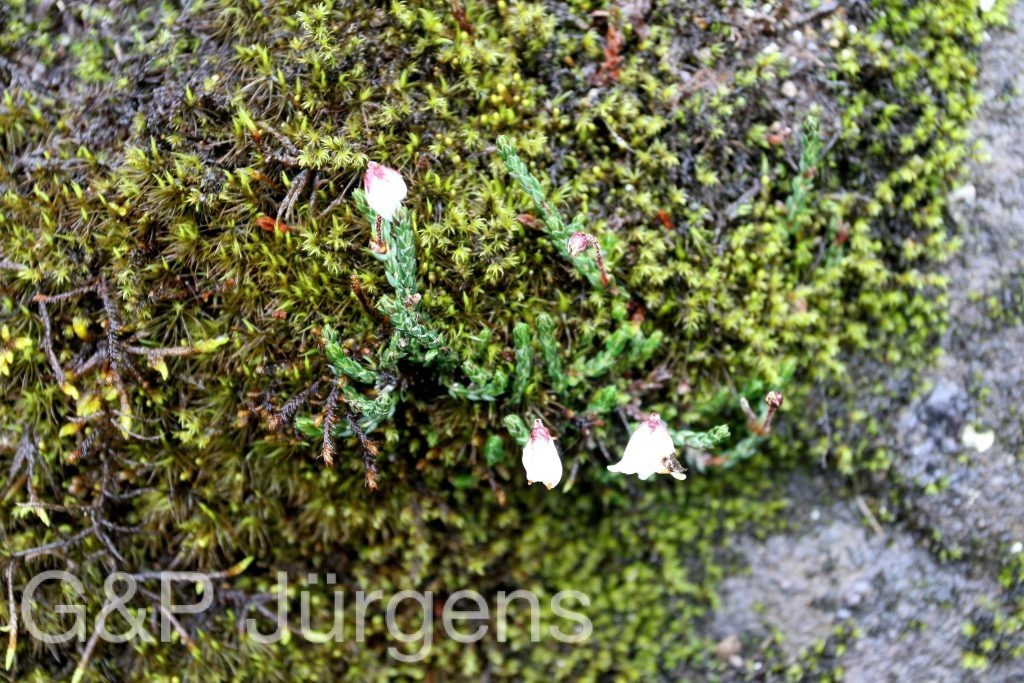
Sikkim2011 135
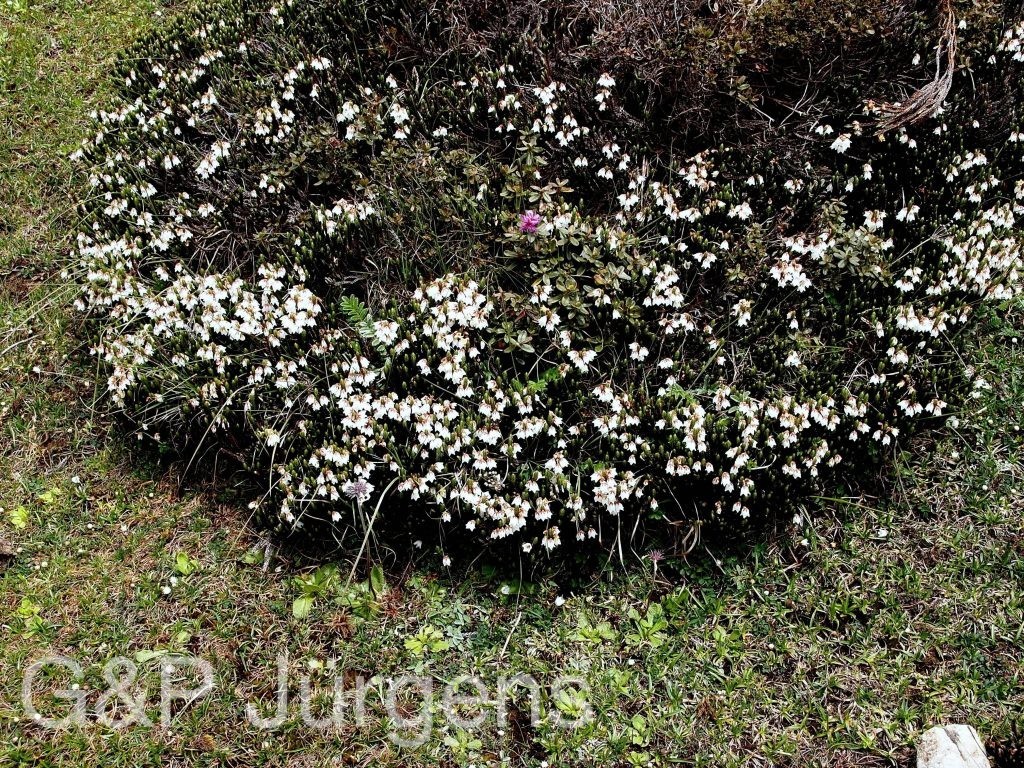
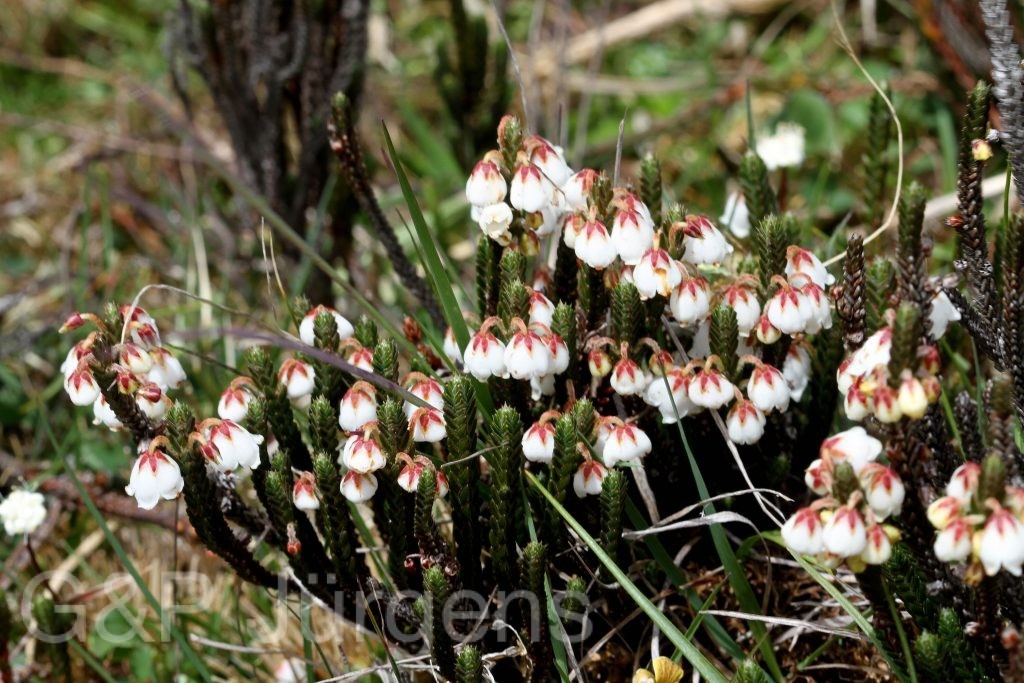
Sikkim Tanghu 4000m, June
Sikkim2011 137
Sikkim Tanghu 4000m, June

Description

Cassiope fastigiata (Wall.) D. Don is a dwarf evergreen shrublet of the high Himalaya, recorded by GBIF from Nepal, India, China, Bhutan, Pakistan and Bangladesh across some 762 occurrences. It is a characteristic component of the alpine and subalpine zone, forming low cushions and mats on open rocky slopes, moraines, peaty banks and the margins of Rhododendron scrub, typically between 3300 and 4500 m. The plant photographed at Sikkim Tanghu around 4000 m in June, at the onset of the monsoon flowering season, exemplifies its preference for cool, humid, well-drained sites kept moist by snowmelt.

The species forms erect to ascending, much-branched stems clothed in four neat ranks of small, imbricate, scale-like leaves pressed close to the stem in the manner typical of the genus. Each leaf is ovate-oblong and keeled, with a conspicuous narrow membranous white margin and a deep dorsal furrow, giving the shoots a four-angled, whipcord appearance. The solitary nodding flowers arise from the upper leaf axils on slender, often reddish pedicels; the corolla is broadly campanulate, white, five-lobed and about 7-9 mm long, subtended by a reddish calyx. Stamens are ten, with awned anthers, and the fruit is a small globose loculicidal capsule.

Within Ericaceae, Cassiope is placed in the subfamily Cassiopoideae and is distinguished from related heaths by its four-ranked imbricate leaves and campanulate flowers. Cassiope fastigiata is among the most widespread Himalayan species of the genus and is locally abundant, so it is not regarded as threatened, though as a slow-growing alpine specialist it is sensitive to grazing pressure and warming-induced upward shifts of vegetation. It is of biogeographic interest as part of a cold-adapted, largely circum-Himalayan element.

Author: (Wall.) D. Don · Sources: POWO (Kew), GBIF, Flora of Bhutan, Flora of China, Flora of Pakistan, Stevens monograph of Ericaceae
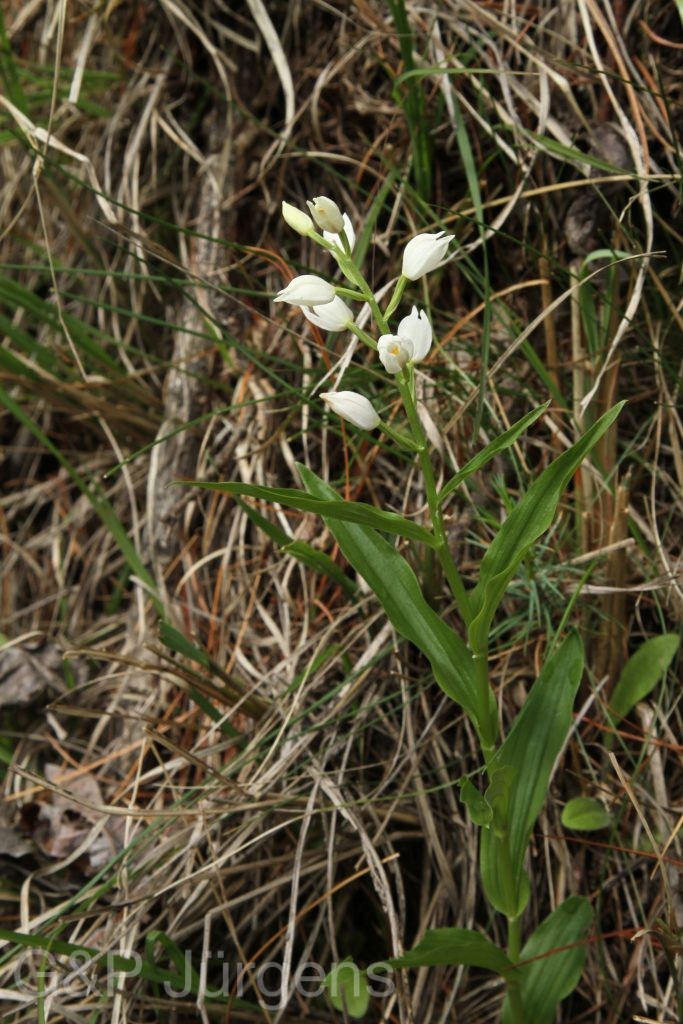
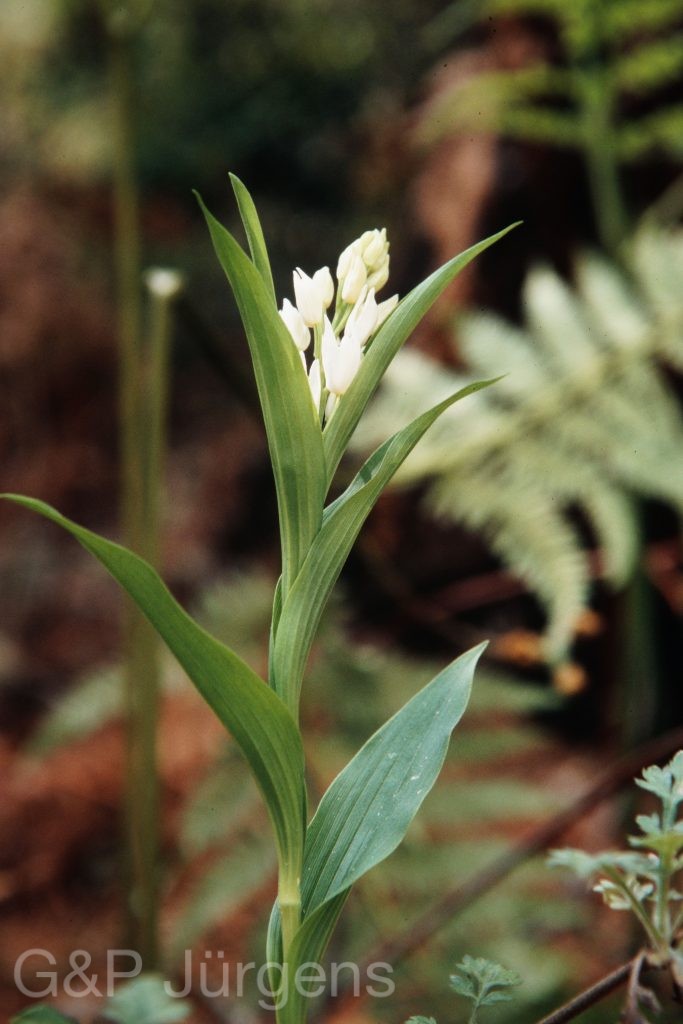
Hook.f. & Thomson

BhutanPG2011 401
Bhutan Warrtlang-La, 4500m June

Description

Cassiope selaginoides is a dwarf, mat-forming alpine shrub of the Himalaya and Sino-Himalayan ranges, documented in GBIF (about 854 occurrences) from China, India, Bhutan, Nepal and Myanmar. It is characteristic of high alpine slopes, rocky ridges, moorland and the upper margins of dwarf-shrub heath, typically growing between 3500 and 4800 m, often forming low cushions and carpets among rocks and moss. The photographed population on the Warrtlang-La in Bhutan at 4500 m in June represents this exposed, high-alpine habitat, where it flowers soon after snowmelt at the start of the brief growing season.

It is a small, prostrate to ascending evergreen shrub with slender, wiry, much-branched stems densely clothed in tiny, imbricate, scale-like leaves arranged in four ranks, giving the shoots a clubmoss-like (selaginoid) appearance from which the epithet derives. The small, nodding flowers are solitary on slender, reddish pedicels arising from the upper leaf axils; each has a persistent calyx and a white, broadly campanulate, five-lobed corolla, sometimes tinged pink, with eight to ten included stamens bearing awned anthers. The fruit is a small, dehiscent, subglobose capsule containing numerous minute seeds.

Cassiope, a small genus of subfamily Cassiopoideae within the Ericaceae, comprises arctic and high-alpine cushion shrubs of which the Himalayan species form a distinctive radiation alongside C. fastigiata and C. wardii. Like other ericaceous heath plants it associates with ericoid mycorrhizal fungi, enabling survival on acidic, nutrient-poor alpine soils. Widespread across the high Himalaya and locally abundant, it is of Least Concern, contributing to the structure and stabilisation of alpine heath communities above the tree line.

Author: Hook.f. & Thomson · Sources: POWO (Kew), GBIF, Flora of China, Flora of Bhutan, Annotated Checklist of the Flowering Plants of Nepal, Stevens revision of Cassiope and Ericaceae

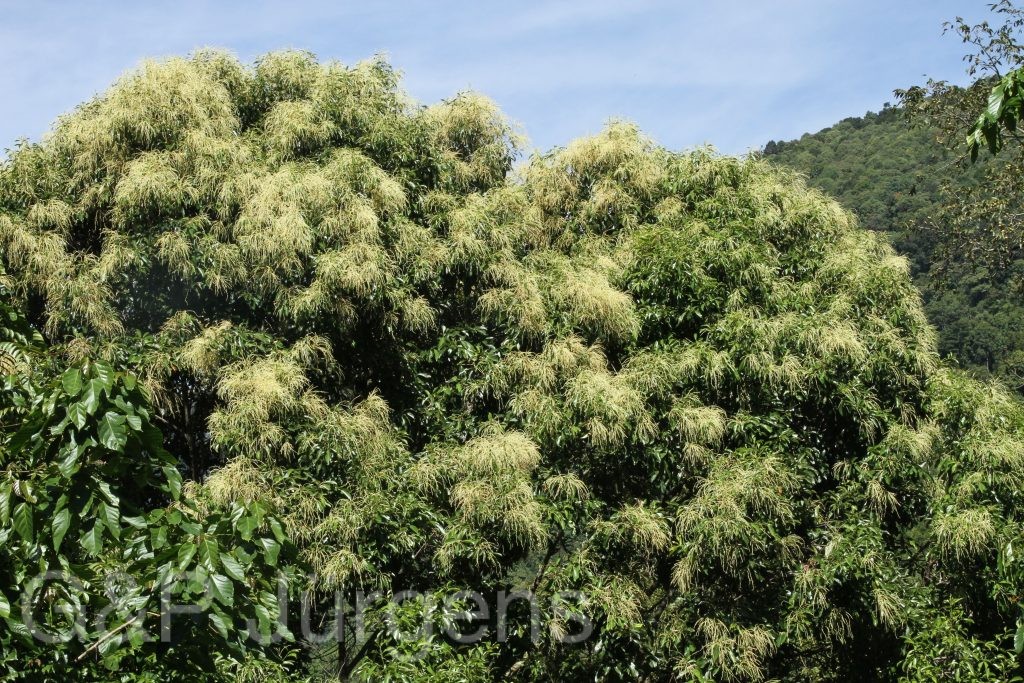
Castanopsis indica

by GP Jürgens

(Roxb. ex Lindl.) A.DC.

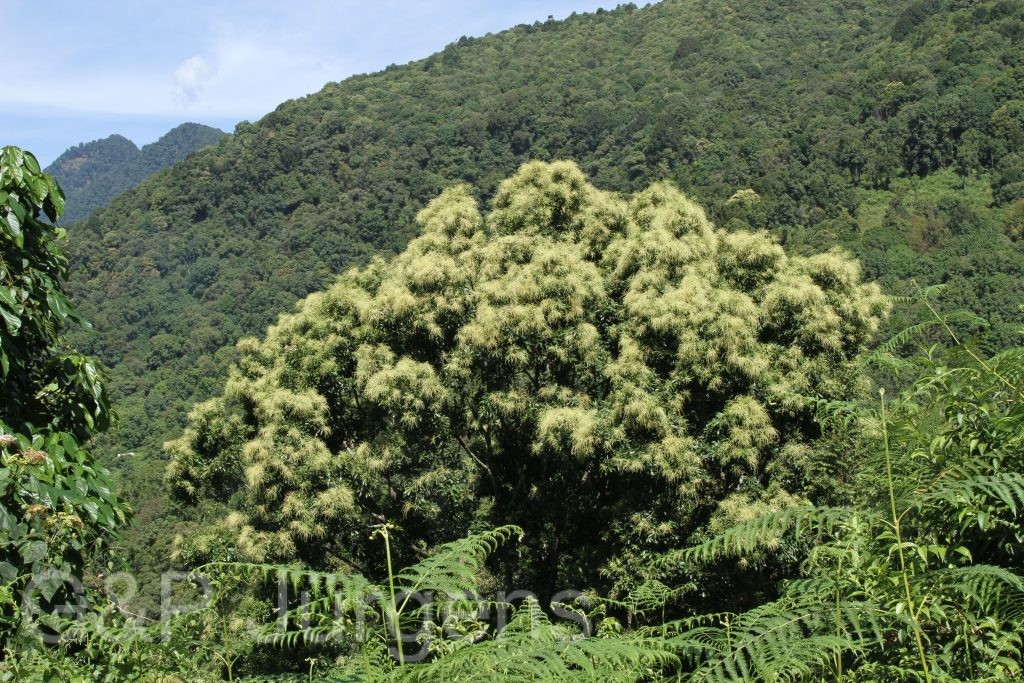
Bhutan2015 191
Bhutan Mo-Chu 1400m, October
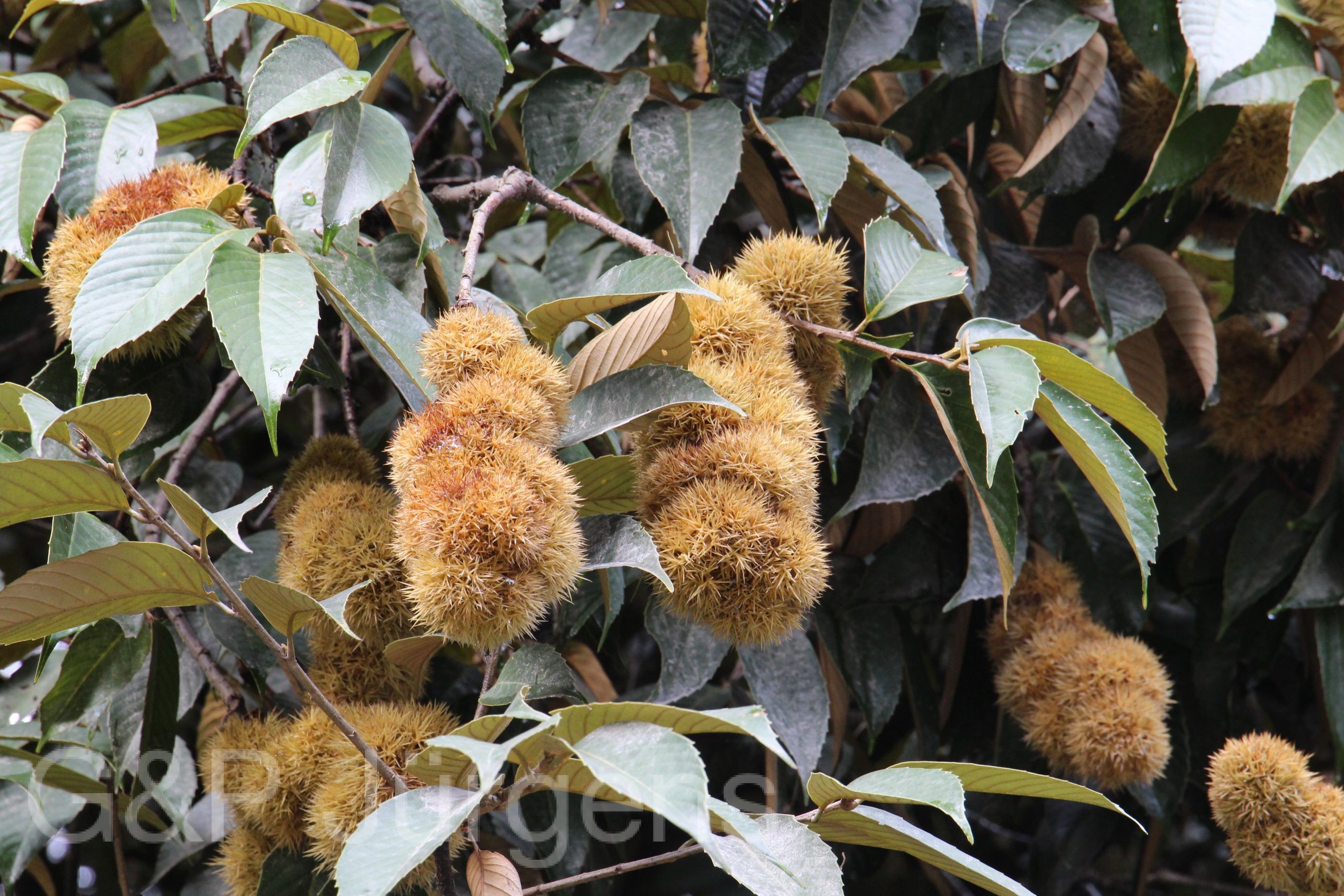
Bhutan2015 192
Bhutan Mo-Chu 1400m, October
Bhutan2015 649 scaled
Bhutan Mo-Chu 1400m, October

Description

Castanopsis indica is a large evergreen tree of the subtropical and lower temperate forests of the Himalaya and Southeast Asia, abundantly recorded with around 1680 GBIF occurrences across India, China, Myanmar, Vietnam, Laos, Thailand, Nepal, Bhutan and Bangladesh. The photographed tree was found along the Mo-Chu in Bhutan at 1400 m in October. The species is a dominant or co-dominant canopy element of mid-elevation broad-leaved forest, typically between 800 and 2000 m, often forming Castanopsis-Schima associations on humid, well-drained hill slopes.

It is a stout tree with a broad crown and greyish, somewhat fissured bark. The leaves are alternate, leathery, oblong to elliptic-lanceolate, with a coarsely serrate margin bearing spinose-tipped teeth, glabrous and dark green above. Like other chestnut relatives the flowers are unisexual, the males borne in erect catkin-like spikes and the females clustered at their base, producing a strong scent at anthesis. The fruit is a hard nut wholly enclosed in a globose cupule densely armed with branched, spiny processes; the cupules split irregularly to release the edible nuts.

The genus Castanopsis (chinquapins) belongs to the Fagaceae and is a keystone group in Asian evergreen oak forests. The nutritious nuts are eaten locally and dispersed by rodents and birds, while the timber is valued for construction and the trees provide important habitat structure. Although the species is widespread and not globally threatened, the Castanopsis-dominated forests it characterises are under pressure from logging, fuelwood collection and agricultural conversion.

Author: (Roxb. ex Lindl.) A.DC. · Sources: POWO (Kew), GBIF, Flora of China, Flora of Bhutan, Flora of Nepal, Camus – Les Chenes: Monographie du genre Castanopsis

A.DC.

Bhutan2014 87
Bhutan Trashigang 1400m, May
Bhutan2014 167
Bhutan Trashigang 1400m, May
Bhutan2014 165
Bhutan Trashigang 1400m, May

Description

Castanopsis tribuloides is an evergreen chinquapin widely distributed across the eastern Himalaya and Indo-Burma into southern China and Japan, recorded from Nepal, Bhutan, north-eastern India, Bangladesh, Myanmar, Thailand, Indochina and the Sino-Japanese region. GBIF aggregates some 766 occurrences, concentrated in the montane forests of the eastern Himalaya and South-East Asia. It is a canopy or sub-canopy tree of subtropical and warm-temperate evergreen broad-leaved forest, often in mixed oak-laurel associations on hill slopes, typically between about 1000 and 2500 m. The tree photographed near Trashigang in eastern Bhutan (1400 m, May) reflects its place in the moist mid-elevation forests of the eastern Himalayan belt, flowering in the pre-monsoon season.

The species is a medium-sized tree with greyish bark and slender twigs. The leaves are simple, alternate, coriaceous, lanceolate to oblong-lanceolate, entire or finely serrate toward the apex, glabrous and glossy above and often thinly scaly or coppery beneath when young. The flowers are unisexual, borne in erect catkin-like spikes, the staminate inflorescences slender and the pistillate flowers in few-flowered clusters. The diagnostic fruit is a small nut enclosed in a globose cupule densely covered with slender, spreading, often branched spines, recalling a Tribulus burr and giving the epithet; the spiny involucres are borne in dense infructescences and dehisce to release the nut.

Castanopsis is a large genus of Asian Fagaceae distinguished from Castanea and Lithocarpus by its evergreen habit and persistently spiny cupules. C. tribuloides, described by Alphonse de Candolle, is variable in leaf form and cupule spininess, and is closely allied to other Himalayan chinquapins with which it can intergrade. As a widespread, often common forest dominant it is not threatened, while being ecologically valuable as wildlife mast and locally used for timber and fuelwood.

Author: A.DC. · Sources: POWO (Kew), GBIF, Flora of China, Flora of Bhutan, Flora of Thailand, Annotated Checklist of the Flowering Plants of Nepal, monograph of Asian Fagaceae (Camus)

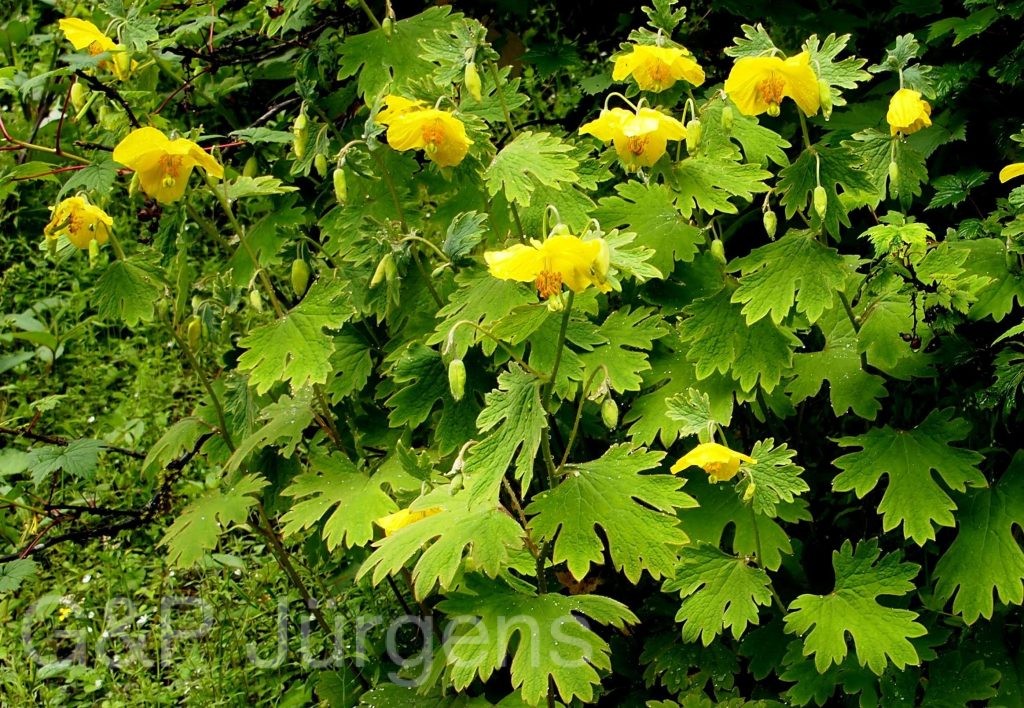
Hook.f.

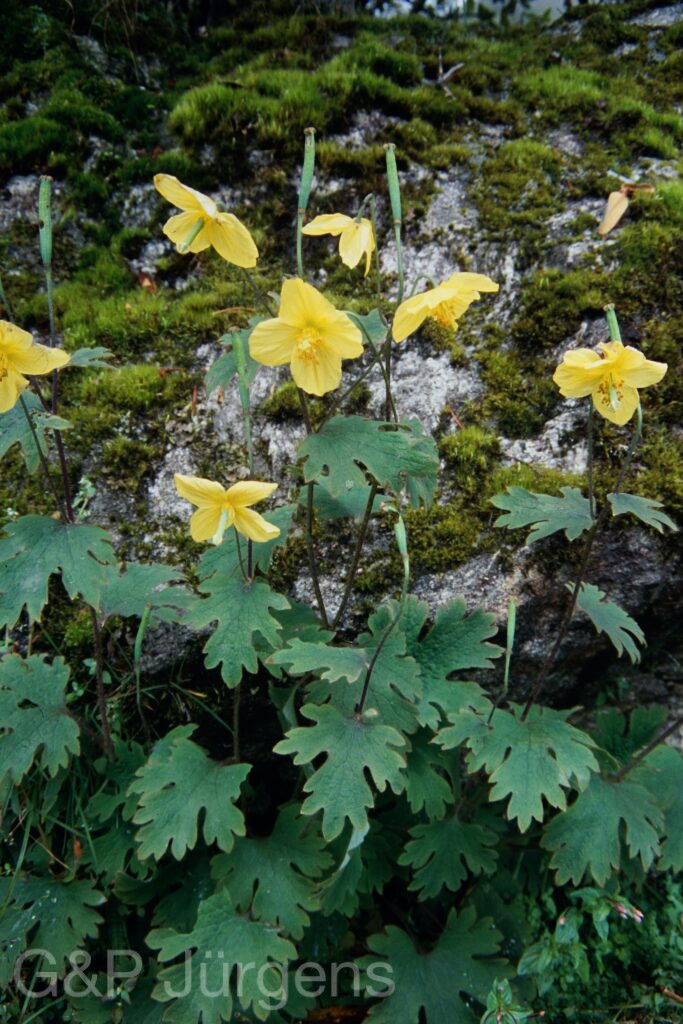
BhutanPG2011 681 01 01
Bhutan Luksor, 3000m July
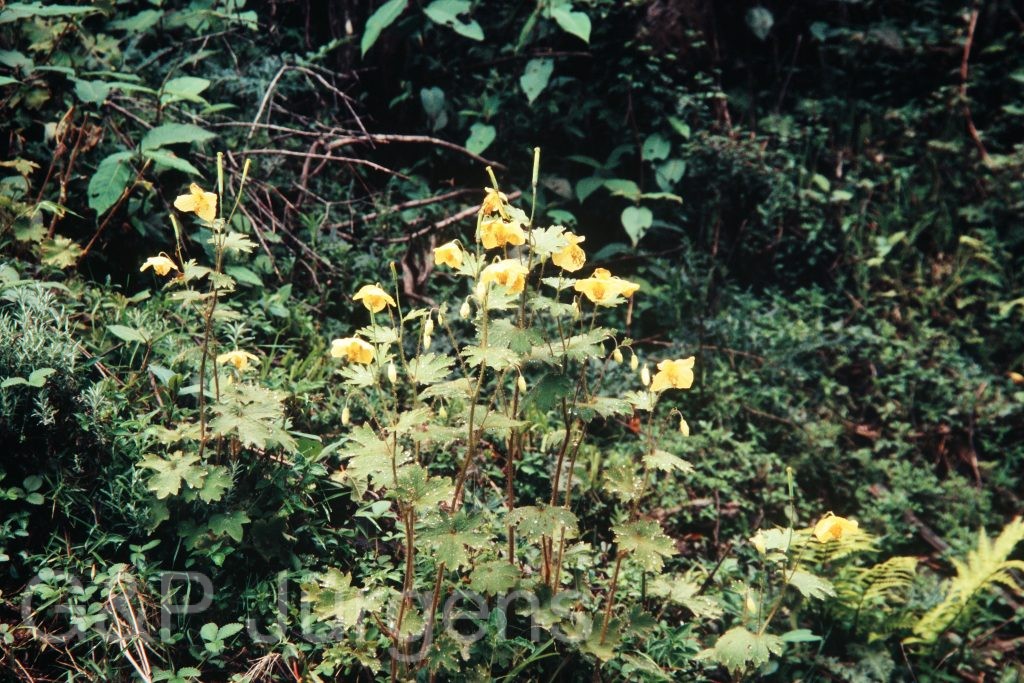
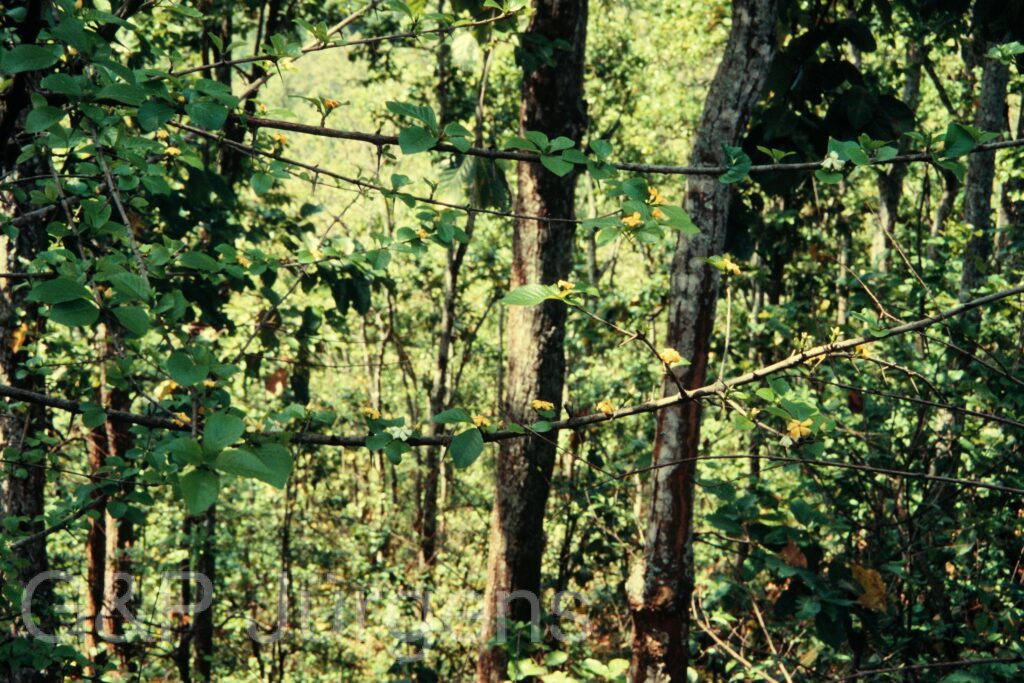
Bh09 293 G482
Bhutan Tongsa 2400m, June
Sikkim2003 152 G203
Sikkim Dzongri 4000m 08.2003

Description

Cathcartia villosa is an eastern Himalayan poppywort distributed through India, Nepal, Bhutan and southern Tibet (China), the GBIF dataset holding about 110 records (codes for Canada and Great Britain reflect cultivated and herbarium material). It grows in cool, humid montane and subalpine settings: shaded forest margins, mossy rocks, ravine sides and damp banks, broadly between about 2400 and 4000 m. The collections illustrated span this gradient, from Tongsa in Bhutan at around 2400 m and Luksor at 3000 m to Dzongri in Sikkim near 4000 m, recorded between June and August.

It is a softly villous perennial herb clothed throughout in long, spreading yellowish-brown hairs. The leaves are mostly basal, long-petiolate, the blade rounded and palmately lobed to crenate, the whole densely hairy and yielding a coloured latex when broken, as is typical of the poppy family. One or a few nodding, golden-yellow flowers are borne on slender hairy scapes; each has two caducous sepals, four broad spreading petals, numerous stamens and a superior ovary. The fruit is an elongate, hairy capsule dehiscing by valves to shed many small seeds.

Long treated within Meconopsis, this plant is now widely referred to the segregate genus Cathcartia, a Sino-Himalayan group of yellow-flowered, villous poppyworts distinguished from true Meconopsis by molecular and morphological evidence; older sources and the source URL still use the name Meconopsis villosa. It is valued in temperate gardens as an elegant woodland perennial. The species is locally frequent across its range and is not formally assessed as threatened, but it depends on cool, moist forest-edge habitats susceptible to deforestation and to climatic warming.

Author: Hook.f. · Sources: POWO (Kew), GBIF, Flora of Bhutan, Flora of China, Annotated Checklist of the Flowering Plants of Nepal, Grey-Wilson The Genus Meconopsis

(Link) Tirveng.

Nepal 97 542 G1061
Nepal Dhoban 740m April

Description

Catunaregam longispina is a spiny shrub or small tree of tropical and subtropical Asia, distributed from India and Nepal through Bhutan, Myanmar, Thailand, Cambodia and Vietnam. GBIF records about 165 occurrences across this range, concentrated in the Indian subcontinent and mainland South-East Asia. It is a plant of dry deciduous and mixed forest, thorn scrub, open hillsides and disturbed ground at low elevations, typically in the warm subtropical foothill and plains zone. The population imaged at Dhoban in Nepal (740 m, April) is characteristic of its habitat in the warm, seasonally dry hill country of the lower Himalayan foreland, flowering in spring before the monsoon.

The plant is a much-branched, often armed shrub bearing stout, straight, axillary thorns from which the epithet derives. The leaves are opposite or fascicled on short shoots, obovate to elliptic, entire, often clustered at the nodes, with interpetiolar stipules. The flowers are solitary or few at the shoot tips, fragrant, with a campanulate calyx and a salver- to funnel-shaped corolla that opens white or cream and frequently ages to yellow, the five lobes spreading and contorted in bud. Five stamens are inserted in the corolla throat and the ovary is inferior. The fruit is a leathery to woody, globose berry crowned by the persistent calyx and containing numerous seeds embedded in pulp.

Catunaregam (tribe Gardenieae) was segregated from the broadly defined Randia, and this species, transferred by Tirvengadum, has circulated under several synonyms in the Randia/Xeromphis complex; care is needed in distinguishing it from related thorny gardenioid shrubs. As a widespread and adaptable species of secondary and dry forest it is not of conservation concern, and its fruit and bark have local ethnobotanical uses, including as a fish poison and in folk medicine.

Author: (Link) Tirveng. · Sources: POWO (Kew), GBIF, Flora of British India, Flora of Bhutan, Flora of Thailand, Annotated Checklist of the Flowering Plants of Nepal, revision of Catunaregam and allied Gardenieae (Tirvengadum)

(Sm.) Dandy

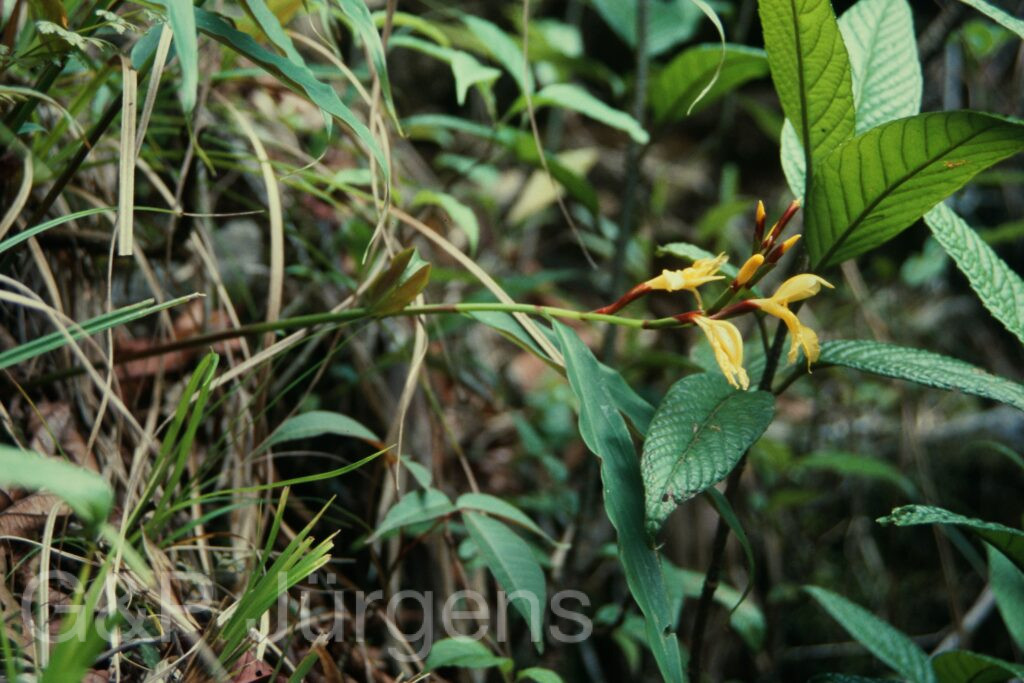
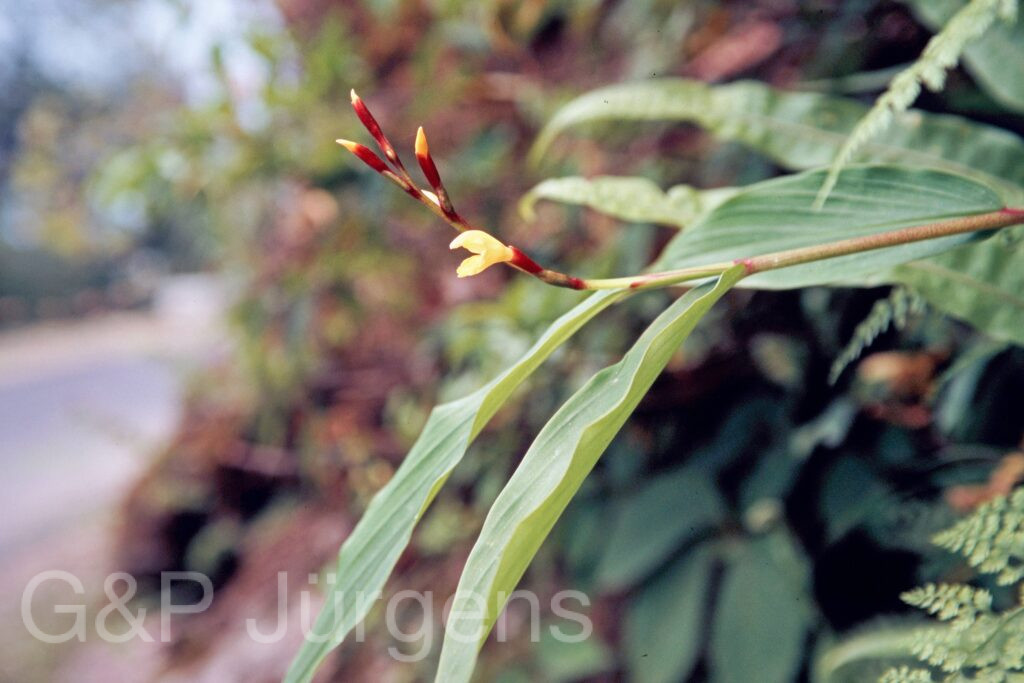
Sikkim2004 336 P598
Sikkim/India Choka 3000m May
Garh 07 92 ergebnis
India Garhwal Trijugi Narayan 2500m, June
Sikkim 2006 210 ergebnis
India West-Bengal, Samadan 2300m, May

Description

Cautleya gracilis is a slender ginger widely distributed through the Sino-Himalayan region, documented by GBIF from China, India, Nepal, Bhutan, Myanmar and adjacent Southeast Asia, with well over 650 occurrences making it the best-recorded species of its genus. It is frequently epiphytic or lithophytic, growing on mossy tree trunks, dripping cliffs and humid bank ledges in temperate broadleaved and mixed forest. The illustrated gatherings span Sikkim at Choka around 3000 m, Garhwal near Trijugi Narayan at 2500 m, and West Bengal at Samadan near 2300 m, flowering from May to June; the species generally favours the 1500-3000 m belt under monsoon humidity.

The plant grows from a short, fibrous-rooted rhizome producing a graceful leafy shoot to about 30-60 cm. The distichous leaves are lanceolate to oblong-lanceolate, acuminate, narrowed to a sheathing base, glabrous and often glaucous beneath. The inflorescence is a terminal, lax spike of few to several yellow flowers subtended by green or reddish bracts; each flower bears a slender corolla tube, a hooded dorsal lobe, prominent lateral staminodes and a bilobed labellum, with a single fertile stamen typical of the family. The fruit is a capsule splitting to reveal arillate seeds.

Cautleya is a small genus of perhaps two to three species centred on the Himalaya and southern China, closely allied to Roscoea but distinguished by its often epiphytic habit and capsular fruit. The yellow flowers are visited by long-tongued bees and the seeds dispersed when capsules open. Widespread and locally common, C. gracilis is of least concern, though epiphytic populations depend on intact, humid forest canopies vulnerable to logging and desiccation.

Author: (Sm.) Dandy · Sources: POWO (Kew), GBIF, Flora of China, Flora of Bhutan, Zingiberaceae of the Indian Subcontinent (Sabu)

(Sm.) Baker

Sikkim2003 56 P75
Sikkim above Yoksam 2650m 08.2003

Description

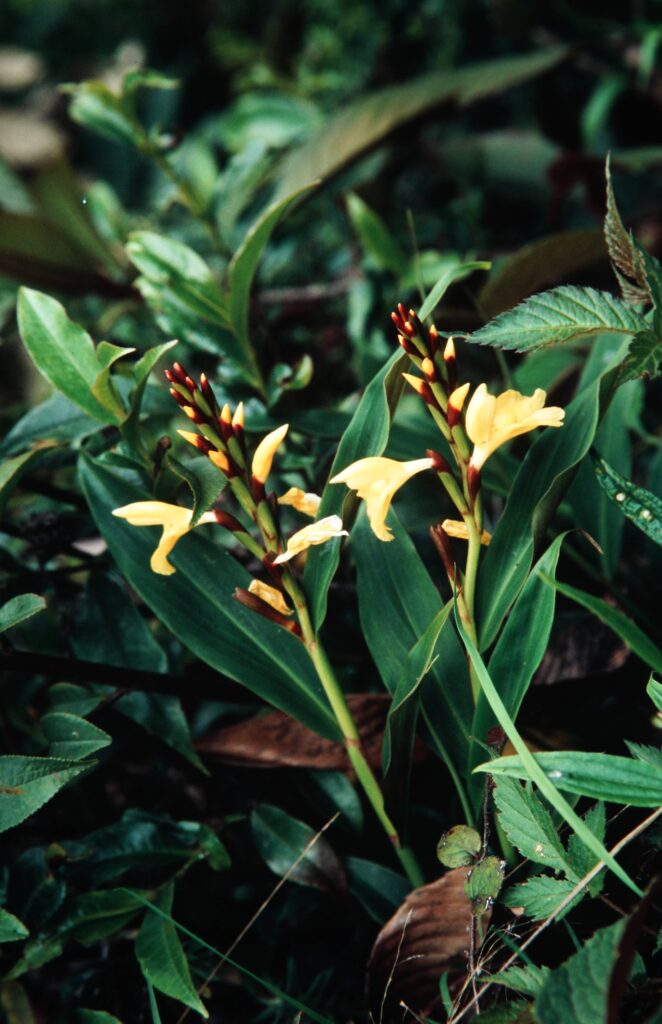
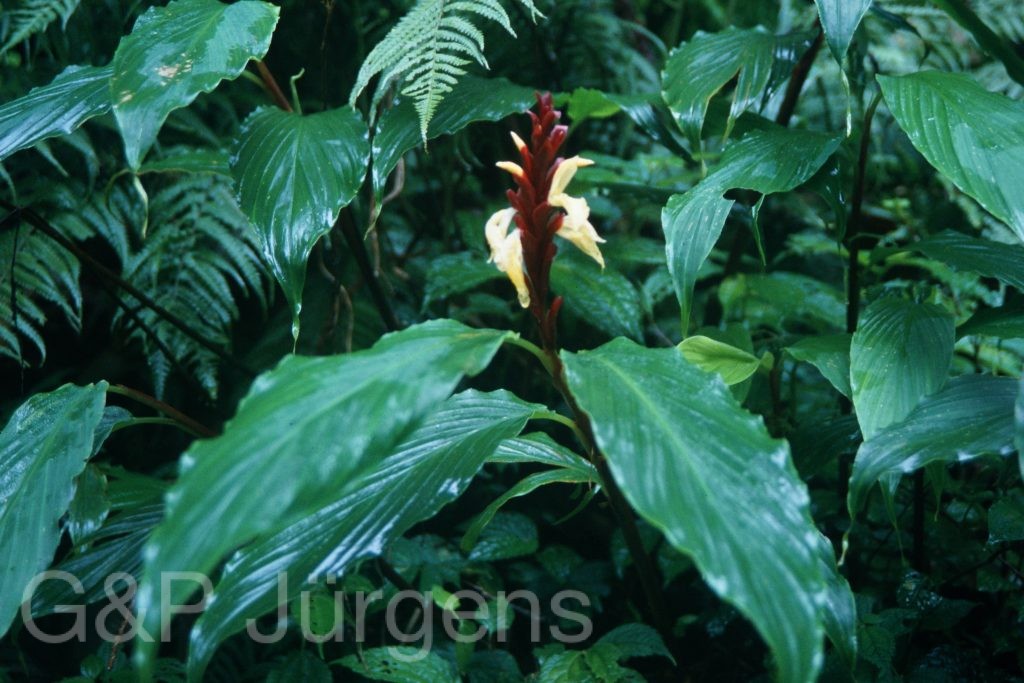
Cautleya spicata is a robust Himalayan ginger distributed through India, Nepal, China and Bhutan, with GBIF recording some 226 occurrences along the southern slopes of the range and into Myanmar. It grows in moist, shaded temperate forest, on humus-rich banks, mossy boulders and stream gullies, occasionally epiphytic but more often terrestrial in deep leaf litter. The photographed plant was found in Sikkim above Yoksam at about 2650 m in August, at the height of the monsoon flowering season; the species characteristically occupies the cool, humid 1800-3000 m belt of the eastern and central Himalaya.

The plant arises from a stout, horizontal rhizome to form leafy shoots reaching about 60-100 cm, taller and more substantial than its slender relative C. gracilis. The distichous leaves are oblong-lanceolate, acuminate and sheathing at the base, green above and often paler beneath. The inflorescence is an erect terminal spike with conspicuous, persistent red or maroon bracts subtending the bright yellow flowers; each flower has a slender corolla tube, a hooded dorsal segment, petaloid lateral staminodes, a deflexed bilobed labellum, and a single fertile stamen. The fruit is a capsule bearing arillate seeds.

Cautleya spicata is closely related to C. gracilis within a small Himalayan genus allied to Roscoea, distinguished by its larger stature, conspicuous coloured bracts and predominantly terrestrial habit. The contrasting red bracts and yellow flowers signal to long-tongued bee pollinators. It is widely cultivated as a hardy ornamental ginger, contributing extralimital GBIF records. Locally frequent and not threatened, it nonetheless depends on intact, humid montane forest for its core populations.

Author: (Sm.) Baker · Sources: POWO (Kew), GBIF, Flora of China, Flora of Bhutan, Zingiberaceae of the Indian Subcontinent (Sabu)

Druce

Bh09 399 G632
Bhutan Punaka, 1400m June
Nepal 99 29 ergebnis
West-Nepal Chere 2850m June

Description

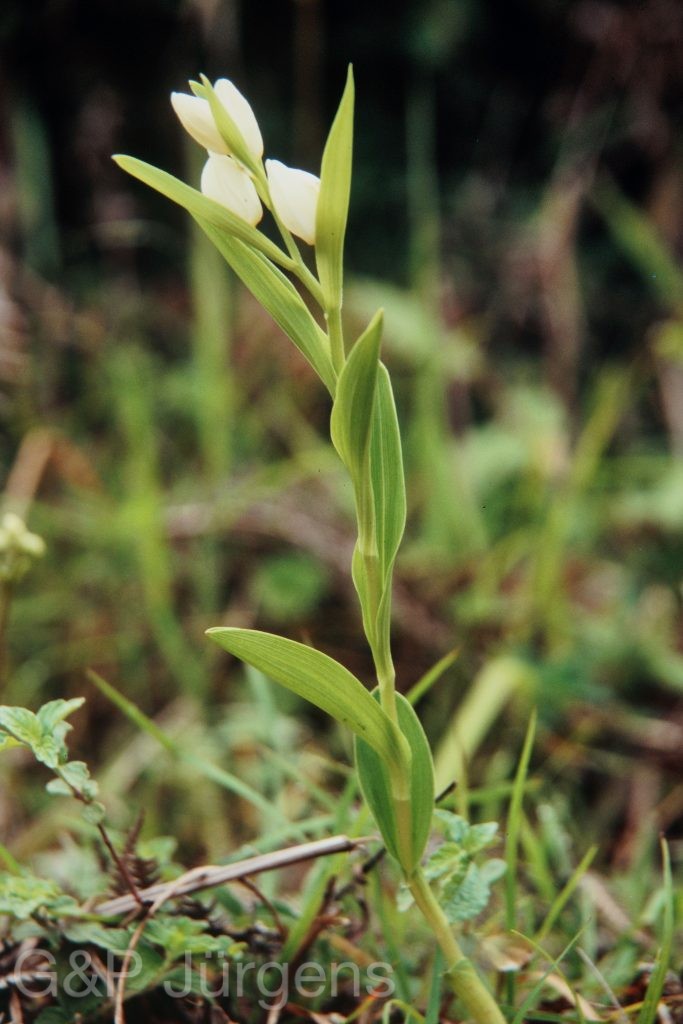
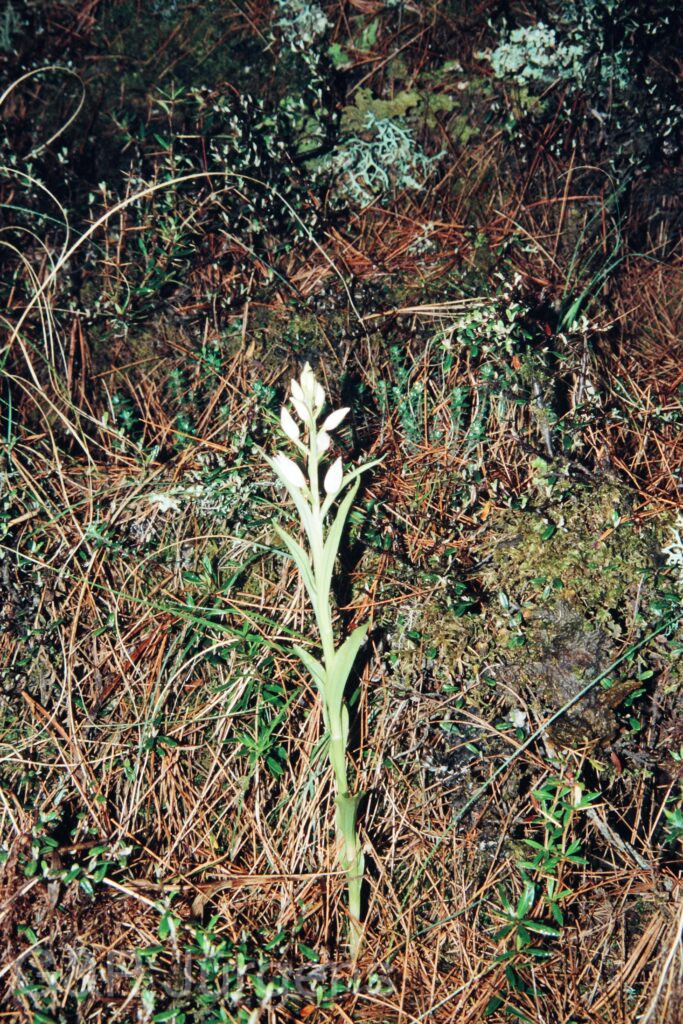
Cephalanthera damasonium, the white helleborine, is a terrestrial orchid with a vast distribution spanning Europe, western Asia, and the Himalayas. While primarily a European species — GBIF records over 116,000 occurrences, predominantly from France, Germany, Switzerland, and Britain — it extends eastward through Turkey, Iran, and the Caucasus into the western and central Himalayas, reaching Bhutan and western Nepal. In the Himalayas, it grows in broadleaved and pine forests on calcareous or base-rich soils at 1,200–3,000 m elevation.

The plant is a rhizomatous, mycoheterotrophic perennial, partially dependent on soil fungi (Cephalanthera species form associations with ectomycorrhizal fungi, particularly Thelephoraceae). Stems are erect, 15–50 cm tall, bearing 3–6 ovate to lanceolate, plicate leaves that decrease in size upward. The inflorescence is a terminal raceme of 3–12 flowers. Flowers are 15–20 mm long, creamy white to ivory, and remain partially closed (a feature related to their autogamous pollination strategy). The lip is short, with a yellowish-orange blotch on the inner surface bearing several raised ridges. Flowering in the Himalayas occurs from May to July.

The Himalayan populations of C. damasonium represent the eastern limit of this predominantly Eurasian species. Their occurrence in Bhutan is biogeographically noteworthy, extending the species' known range far beyond its European centre of diversity.

Author: Druce · Sources: POWO (Kew), GBIF, Flora of Bhutan Vol. 3, Delforge: Orchids of Europe, North Africa and the Middle East (2006)

(L.) Fritsch

Bhutan2014 398
Bhutan Jakar 2400m, May
Bh2008 556 P840
Bhutan Paro 1950m April

Description

Cephalanthera longifolia (L.) Fritsch is a terrestrial orchid with one of the widest ranges in its genus, extending from western Europe and North Africa across temperate Asia to the Himalaya. GBIF records it from France, Switzerland, Austria, Germany, Spain, Italy, Sweden, Britain, Greece, China and many other countries, with over 141000 occurrences reflecting its abundance in the western part of its range. It grows in dappled shade in deciduous and coniferous woodland, scrub and grassy banks, often on calcareous soils, from near sea level to about 2500 m. In the eastern Himalaya it reaches the montane forests of Bhutan, recorded at Jakar around 2400 m in May and at Paro near 1950 m in April.

The plant arises from a short rhizome with fleshy roots and produces an erect, leafy stem. The leaves are numerous, narrowly lanceolate to linear-lanceolate, sheathing at the base, longer than the internodes and noticeably keeled. The lax terminal raceme bears several pure white flowers that scarcely open, remaining narrowly campanulate; the sepals and petals are lanceolate and acute, and the labellum is shorter, divided into a basal hypochile with a small spur-like sac and an apical epichile marked with orange-yellow ridges that guide pollinators. The ovary is twisted and glabrous, ripening into an erect capsule.

Cephalanthera belongs to subtribe Limodorinae of tribe Neottieae and, like its relatives, is partially mycoheterotrophic, drawing carbon from ectomycorrhizal fungi associated with forest trees. Cephalanthera longifolia is globally secure given its enormous range, but it is locally scarce and legally protected in parts of northern Europe where suitable woodland is fragmented. Its trans-Palaearctic distribution makes it a notable example of a widespread orchid reaching its eastern limit in the Himalayan forests.

Author: (L.) Fritsch · Sources: POWO (Kew), GBIF, Flora Europaea, Flora of Bhutan, Flora of China, Delforge monograph of Orchids of Europe