
(Wall.) D. Don
Description
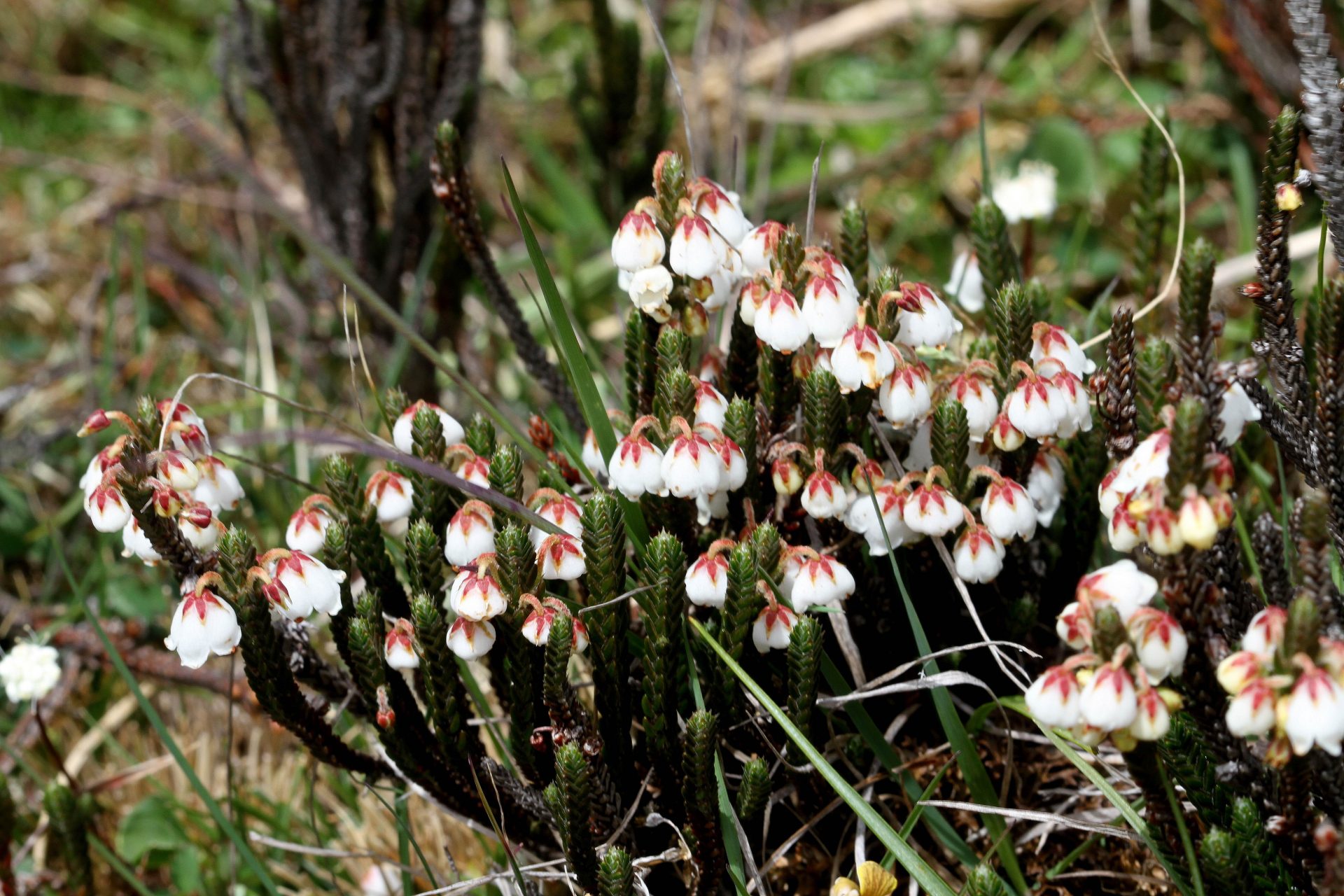
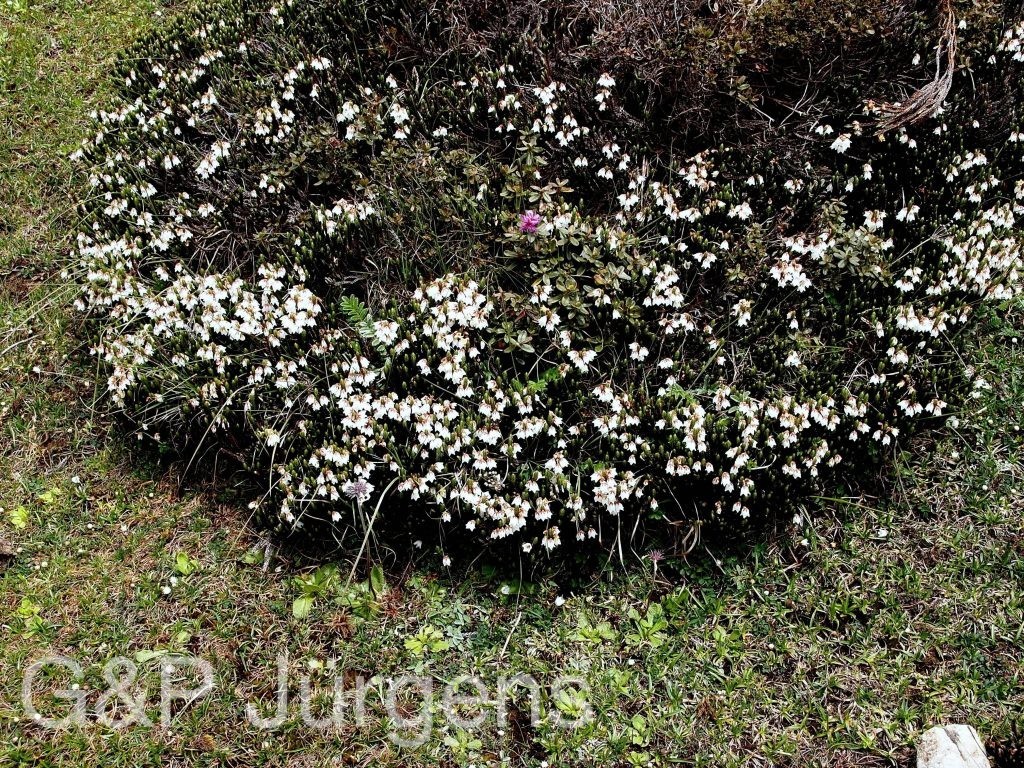
Cassiope fastigiata (Wall.) D. Don is a dwarf evergreen shrublet of the high Himalaya, recorded by GBIF from Nepal, India, China, Bhutan, Pakistan and Bangladesh across some 762 occurrences. It is a characteristic component of the alpine and subalpine zone, forming low cushions and mats on open rocky slopes, moraines, peaty banks and the margins of Rhododendron scrub, typically between 3300 and 4500 m. The plant photographed at Sikkim Tanghu around 4000 m in June, at the onset of the monsoon flowering season, exemplifies its preference for cool, humid, well-drained sites kept moist by snowmelt.
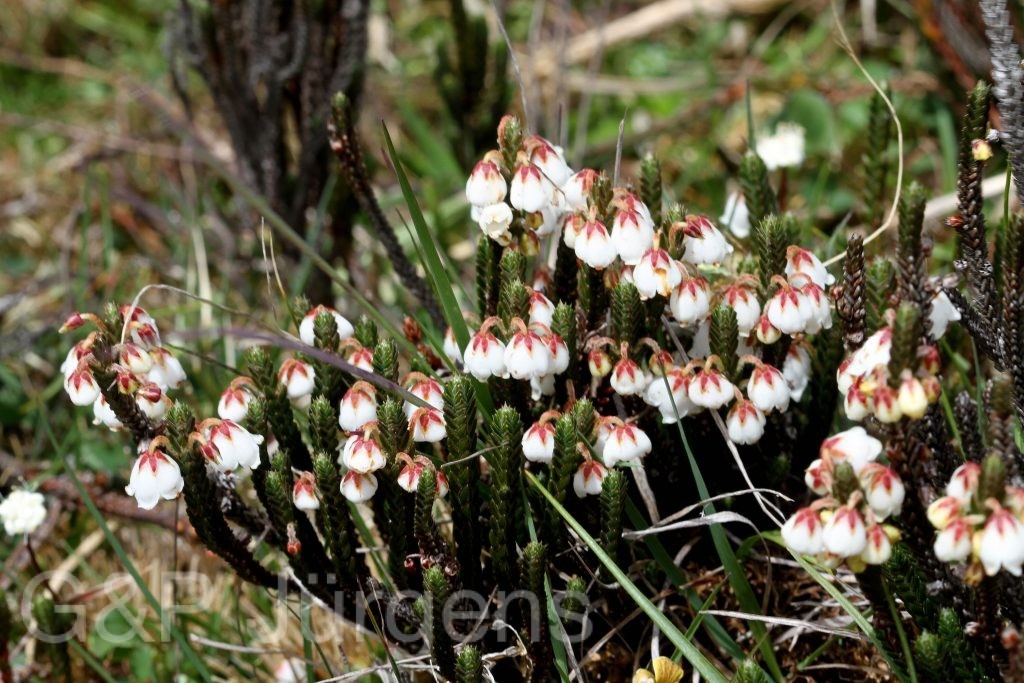
The species forms erect to ascending, much-branched stems clothed in four neat ranks of small, imbricate, scale-like leaves pressed close to the stem in the manner typical of the genus. Each leaf is ovate-oblong and keeled, with a conspicuous narrow membranous white margin and a deep dorsal furrow, giving the shoots a four-angled, whipcord appearance. The solitary nodding flowers arise from the upper leaf axils on slender, often reddish pedicels; the corolla is broadly campanulate, white, five-lobed and about 7-9 mm long, subtended by a reddish calyx. Stamens are ten, with awned anthers, and the fruit is a small globose loculicidal capsule.
Within Ericaceae, Cassiope is placed in the subfamily Cassiopoideae and is distinguished from related heaths by its four-ranked imbricate leaves and campanulate flowers. Cassiope fastigiata is among the most widespread Himalayan species of the genus and is locally abundant, so it is not regarded as threatened, though as a slow-growing alpine specialist it is sensitive to grazing pressure and warming-induced upward shifts of vegetation. It is of biogeographic interest as part of a cold-adapted, largely circum-Himalayan element.
Author: (Wall.) D. Don · Sources: POWO (Kew), GBIF, Flora of Bhutan, Flora of China, Flora of Pakistan, Stevens monograph of Ericaceae