
Hook.f. & Thomson
Description
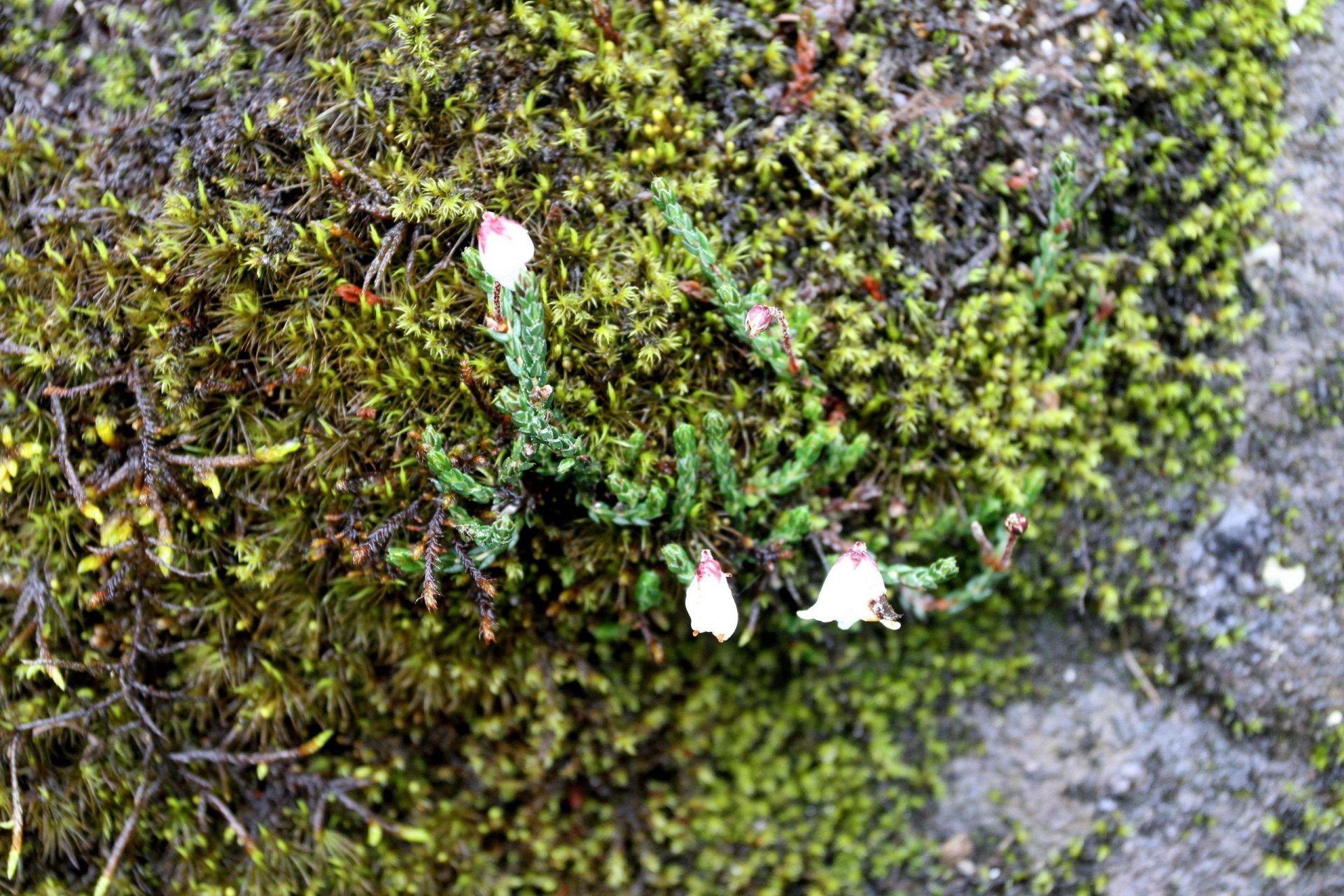
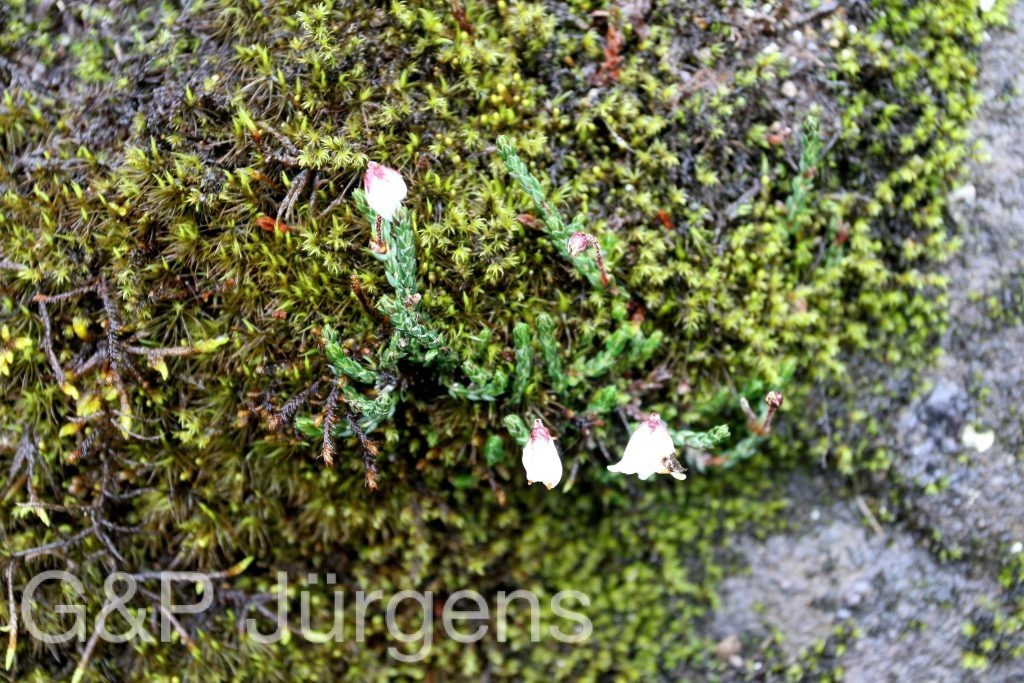
Cassiope selaginoides is a dwarf, mat-forming alpine shrub of the Himalaya and Sino-Himalayan ranges, documented in GBIF (about 854 occurrences) from China, India, Bhutan, Nepal and Myanmar. It is characteristic of high alpine slopes, rocky ridges, moorland and the upper margins of dwarf-shrub heath, typically growing between 3500 and 4800 m, often forming low cushions and carpets among rocks and moss. The photographed population on the Warrtlang-La in Bhutan at 4500 m in June represents this exposed, high-alpine habitat, where it flowers soon after snowmelt at the start of the brief growing season.
It is a small, prostrate to ascending evergreen shrub with slender, wiry, much-branched stems densely clothed in tiny, imbricate, scale-like leaves arranged in four ranks, giving the shoots a clubmoss-like (selaginoid) appearance from which the epithet derives. The small, nodding flowers are solitary on slender, reddish pedicels arising from the upper leaf axils; each has a persistent calyx and a white, broadly campanulate, five-lobed corolla, sometimes tinged pink, with eight to ten included stamens bearing awned anthers. The fruit is a small, dehiscent, subglobose capsule containing numerous minute seeds.
Cassiope, a small genus of subfamily Cassiopoideae within the Ericaceae, comprises arctic and high-alpine cushion shrubs of which the Himalayan species form a distinctive radiation alongside C. fastigiata and C. wardii. Like other ericaceous heath plants it associates with ericoid mycorrhizal fungi, enabling survival on acidic, nutrient-poor alpine soils. Widespread across the high Himalaya and locally abundant, it is of Least Concern, contributing to the structure and stabilisation of alpine heath communities above the tree line.
Author: Hook.f. & Thomson · Sources: POWO (Kew), GBIF, Flora of China, Flora of Bhutan, Annotated Checklist of the Flowering Plants of Nepal, Stevens revision of Cassiope and Ericaceae