
L.
Description
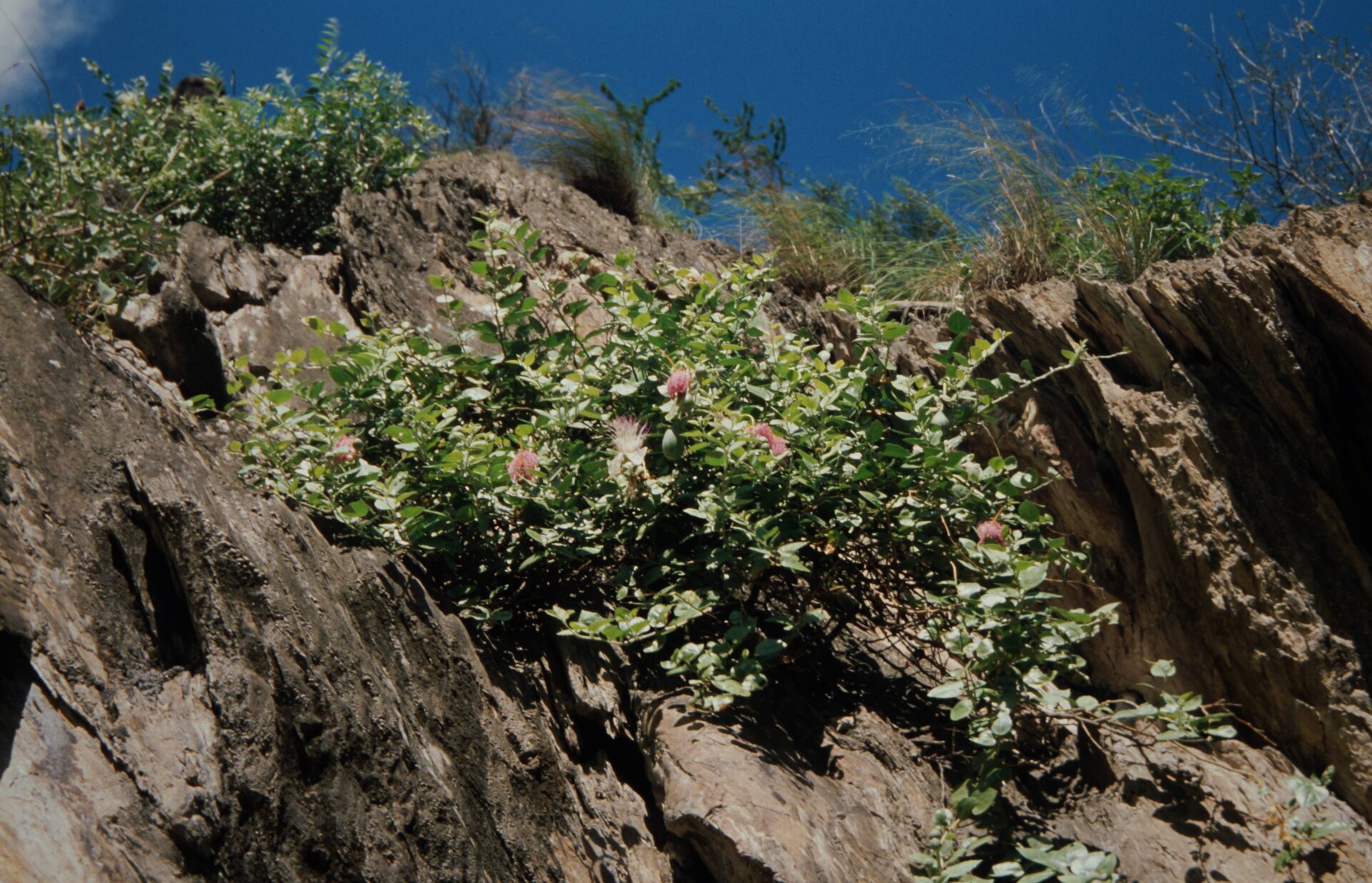
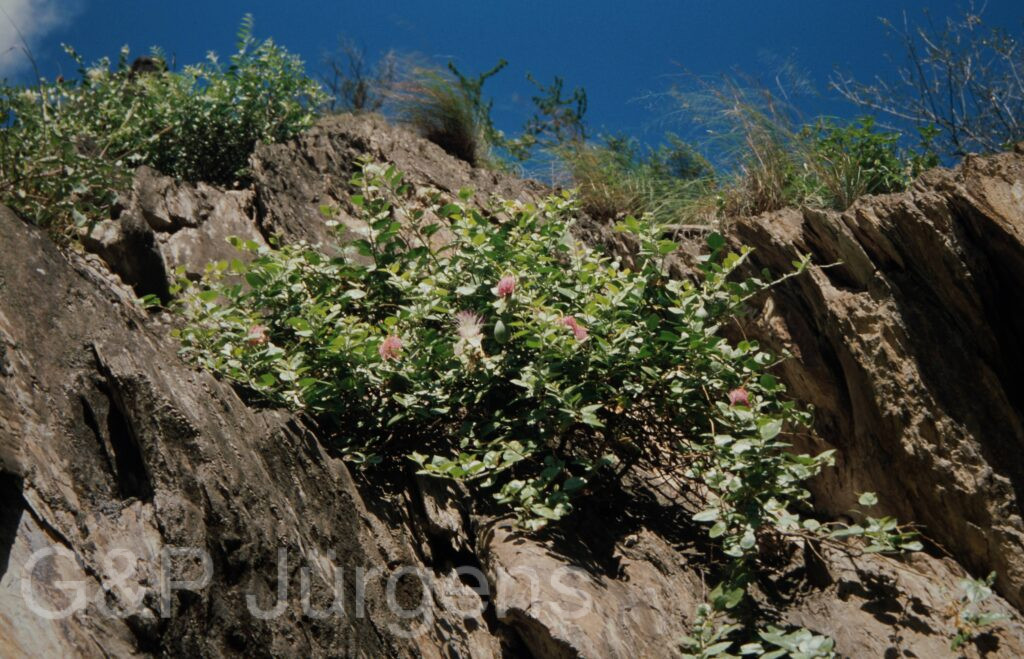
Capparis spinosa, the caper, is an exceptionally widespread sub-cosmopolitan plant of the warm-temperate, Mediterranean and arid subtropical zones, distributed from southern Europe, North Africa and the Middle East across Central Asia to the western Himalaya, Pakistan, India, China and Australia, with extensive naturalised and cultivated records worldwide; GBIF documents 22842 occurrences. It is a xerophyte of dry, sunny, stony habitats, colonising rocky outcrops, cliffs, walls, gravelly slopes and arid riverine flats. In the inner Himalaya it ascends the rain-shadowed valleys, as shown by the photographed plant from Dunai in West Nepal at 2200 m in July, growing in the dry trans-Himalayan terrain of the Dolpo region.
It is a spreading, often prostrate, deciduous shrub with trailing stems and a deep, woody perennial rootstock. The alternate leaves are simple, entire, fleshy, orbicular to obovate, and frequently subtended by a pair of recurved stipular spines, though spinescence is variable. The large, showy, short-lived flowers are solitary in the leaf axils, with four greenish sepals, four white to pinkish petals and a conspicuous brush of numerous long, purple-tinged stamens; the ovary is borne on a long gynophore. The fruit is an ellipsoid, fleshy, many-seeded berry that splits to reveal a pinkish pulp. The familiar capers of commerce are the pickled, unopened flower buds.
The species belongs to Capparis (Capparaceae), and is morphologically extremely variable across its vast range, having been split into numerous subspecies and varieties; here the family is given as in the source. Its flowers open at dusk and are pollinated by long-tongued bees and hawkmoths, while the fleshy berries are dispersed by birds and lizards. Drought-adapted, valued as a food and medicinal plant and cultivated commercially, it is abundant and of least conservation concern.
Author: L. · Sources: POWO (Kew), GBIF, Flora of China Vol. 7, Flora of Pakistan, Flora of Nepal, Capparis spinosa species complex revision (Inocencio, Rivera & al.)