Ericaceae

Hook. f.

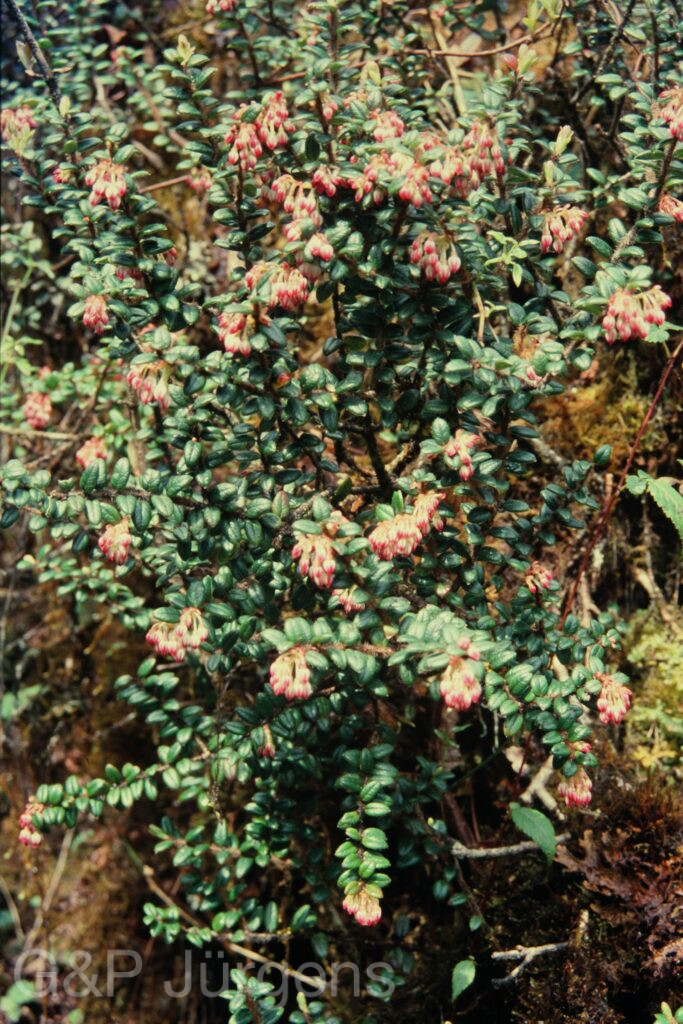
Bhutan2014 43
Bhutan Trashigang 1300m, May
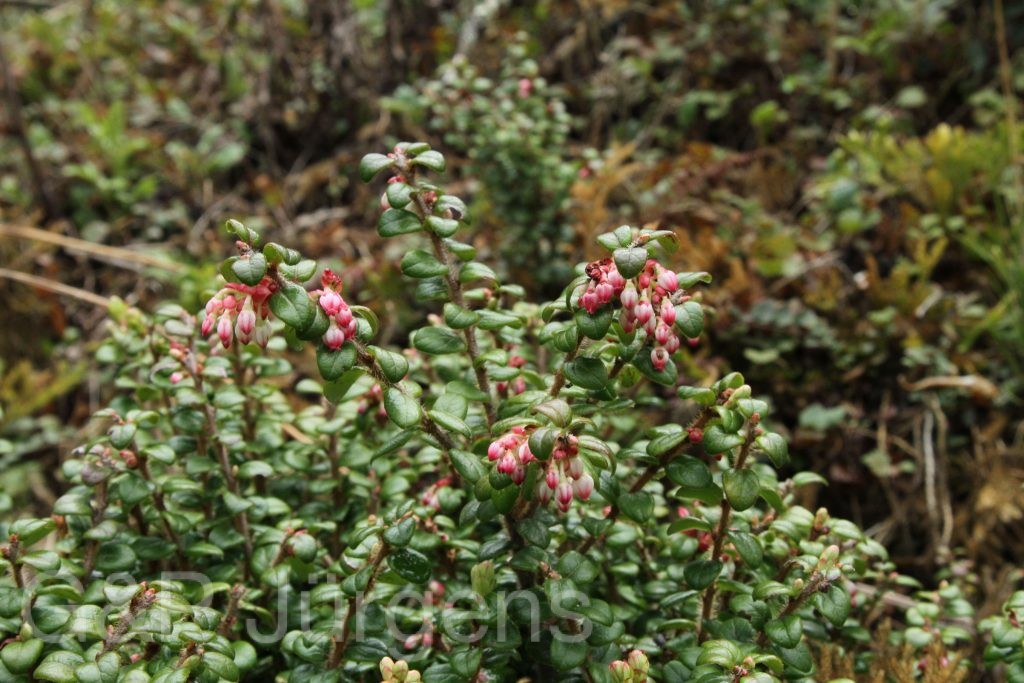
Bhutan2014 391
Bhutan Tumching-La 3000m, May
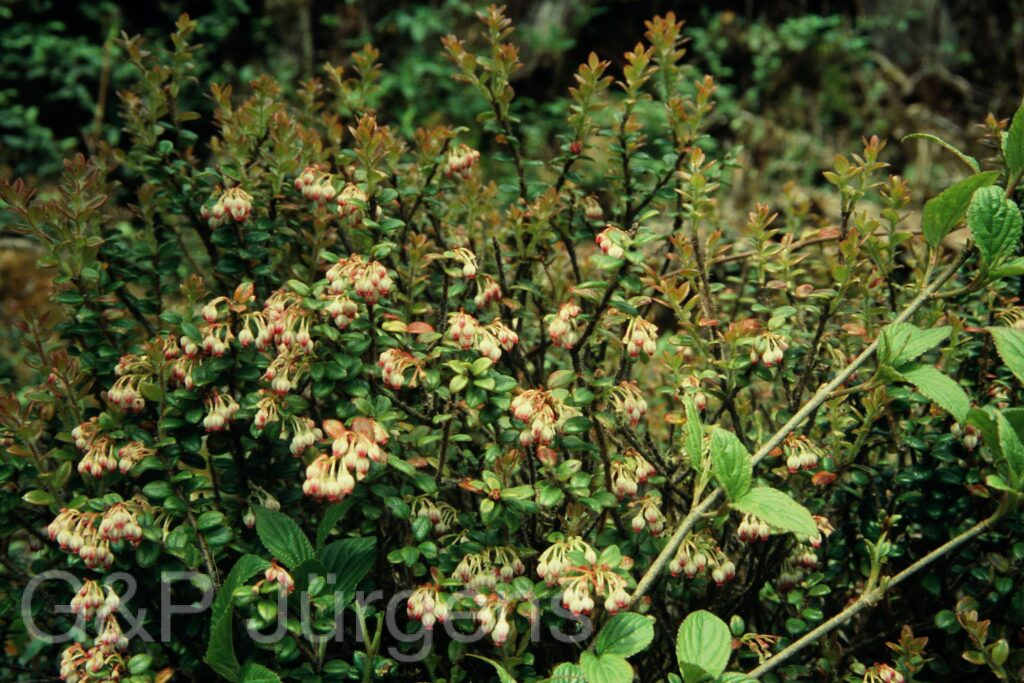
Bh2008 146 P243
Bhutan Chendebji, 2450m April

Description

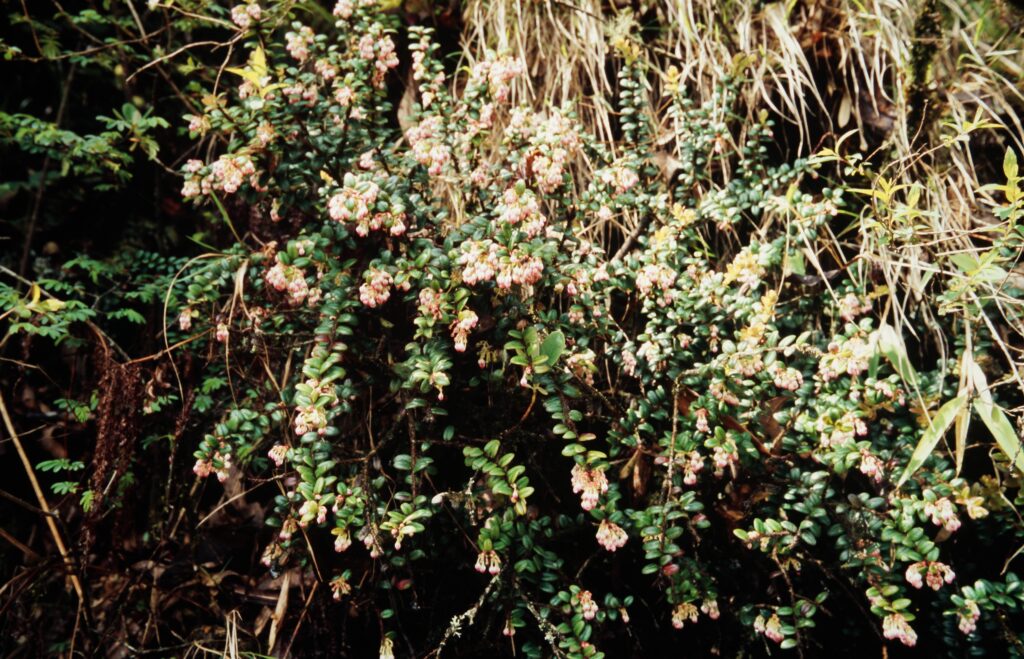
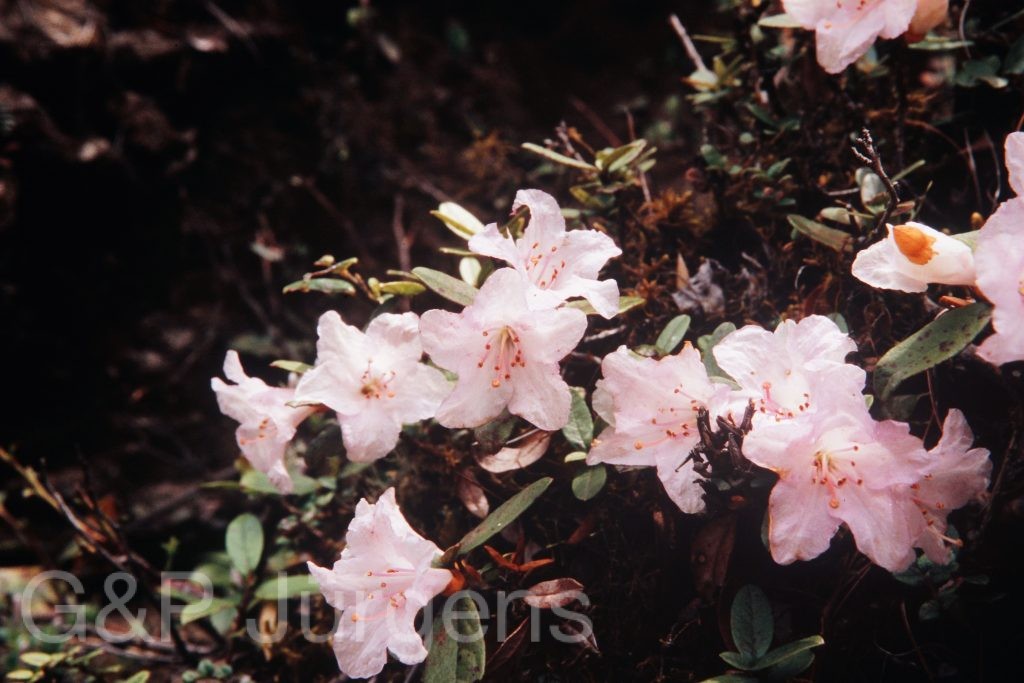
Rhododendron vaccinioides Hook. f. is a small epiphytic rhododendron of the eastern Himalaya and adjacent montane Asia, ranging from Nepal and India through Bhutan to southern China, Myanmar and Vietnam, with around 245 GBIF occurrences. It grows characteristically as an epiphyte on mossy trunks and branches, and occasionally on rocks, in humid broadleaved and mixed evergreen forest, across a wide altitudinal span. The three Bhutan gatherings cited, from Trashigang at 1300 m and Chendebji at 2450 m flowering in April and May, and Tumching-La at 3000 m, illustrate its broad range from warm subtropical to cool temperate cloud forest where atmospheric moisture is high.

The species is a dwarf, much-branched epiphytic shrub with slender twigs clothed in scales and bearing small, obovate, leathery leaves whose lower surface is densely lepidote, resembling the foliage of Vaccinium as the epithet implies. The flowers are small, solitary or few together at the branch tips, with a short tubular to campanulate, white to pale pink corolla, the lobes spreading; the ovary and style are scaly. The fruit is a small lepidote capsule splitting septicidally to release numerous minute seeds adapted to wind dispersal in the canopy.

Rhododendron vaccinioides belongs to subgenus Rhododendron, section Vireya-allied scaly rhododendrons, an epiphytic lineage radiating through the wet forests of Asia. Its diminutive epiphytic habit is unusual among Himalayan rhododendrons. Widespread and locally frequent, it is of least conservation concern, though dependent on intact humid forest canopy.

Author: Hook. f. · Sources: POWO (Kew), GBIF, Flora of Bhutan, Flora of China, The Genus Rhododendron (Royal Botanic Garden Edinburgh), Cullen monograph of lepidote Rhododendron
Hook. f.

Bhutan2014 988
Bhutan Chele-La 3900m, May
Bhutan2014 989
Bhutan Chele-La 3900m, May

Bh2008 575 P864 1
Bhutan Shele-La 3800m, May
Bh2008 573 P861 1
Bhutan Shele-La 3800m, May

Description

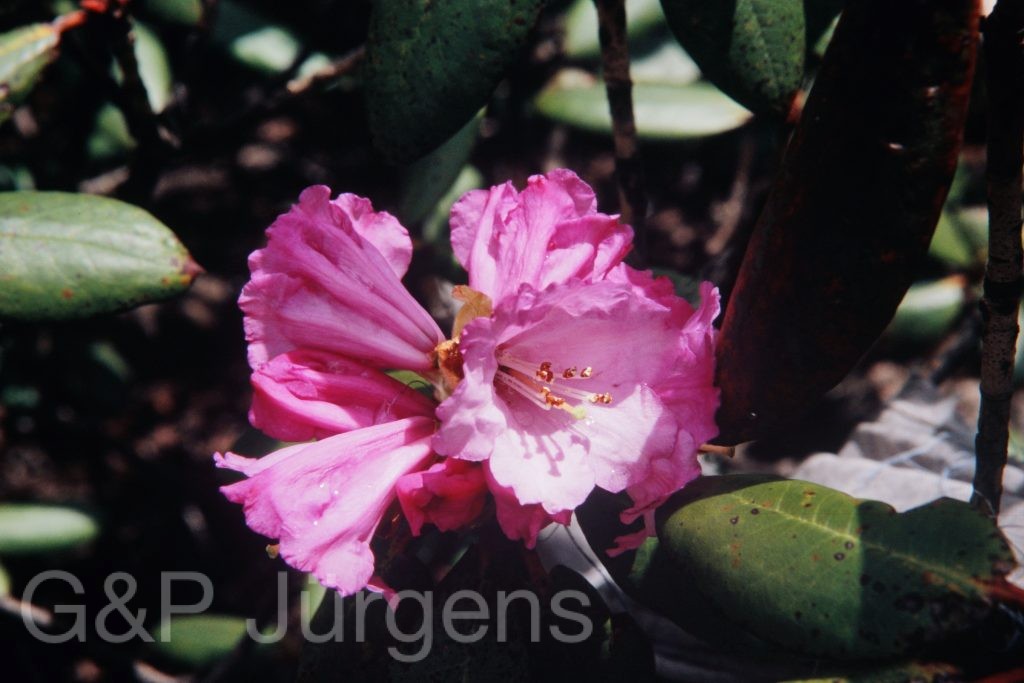
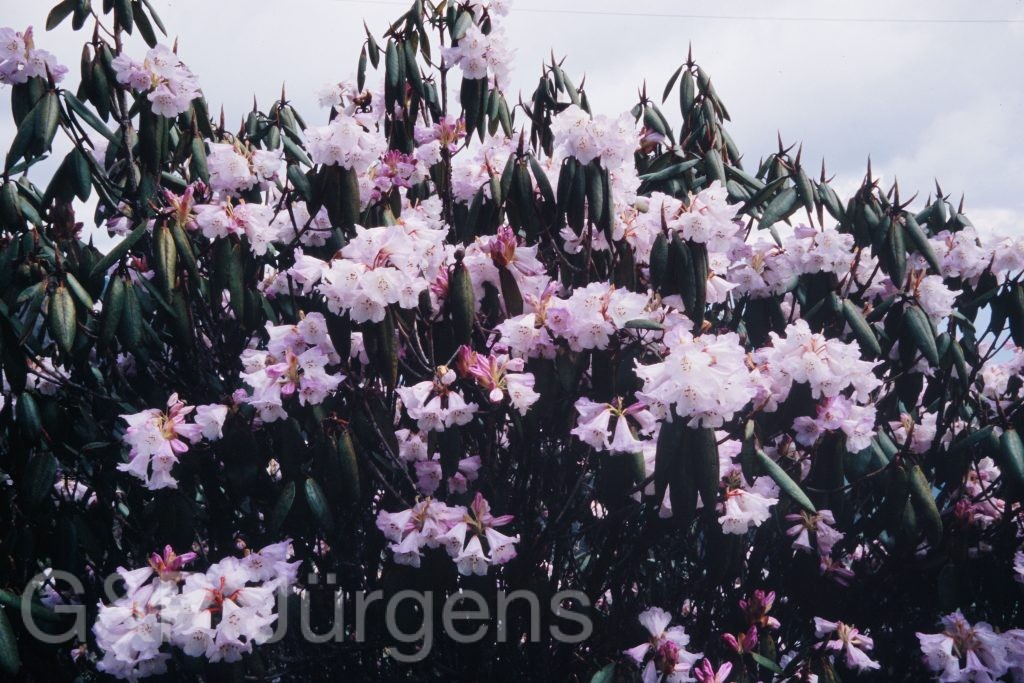
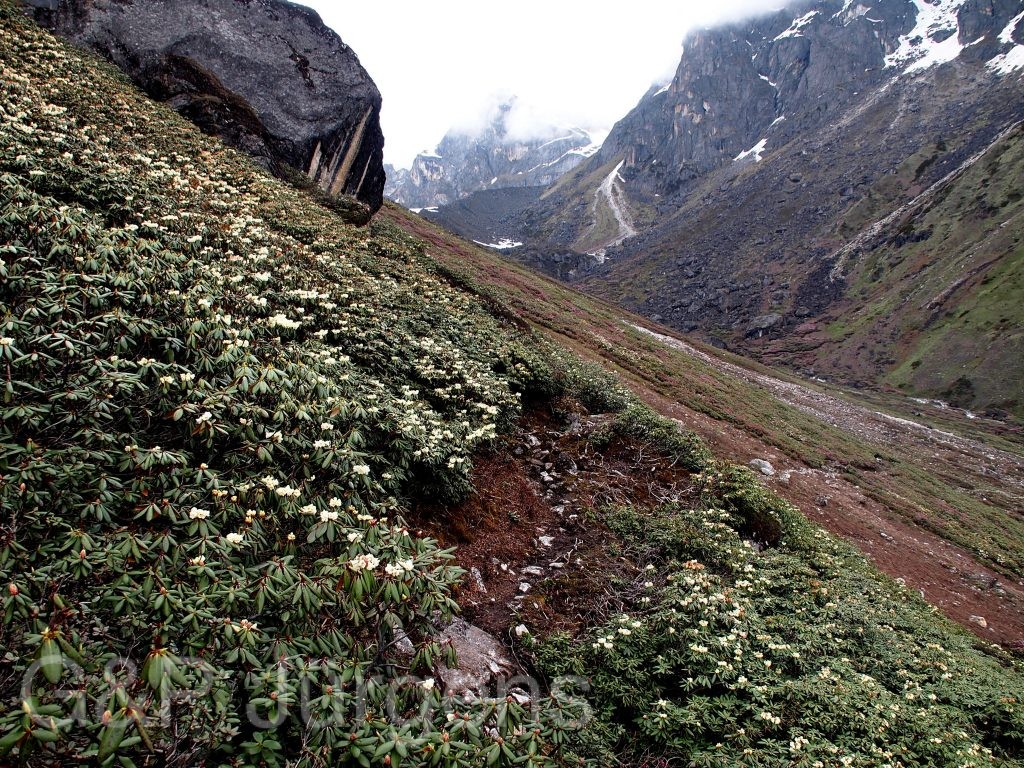
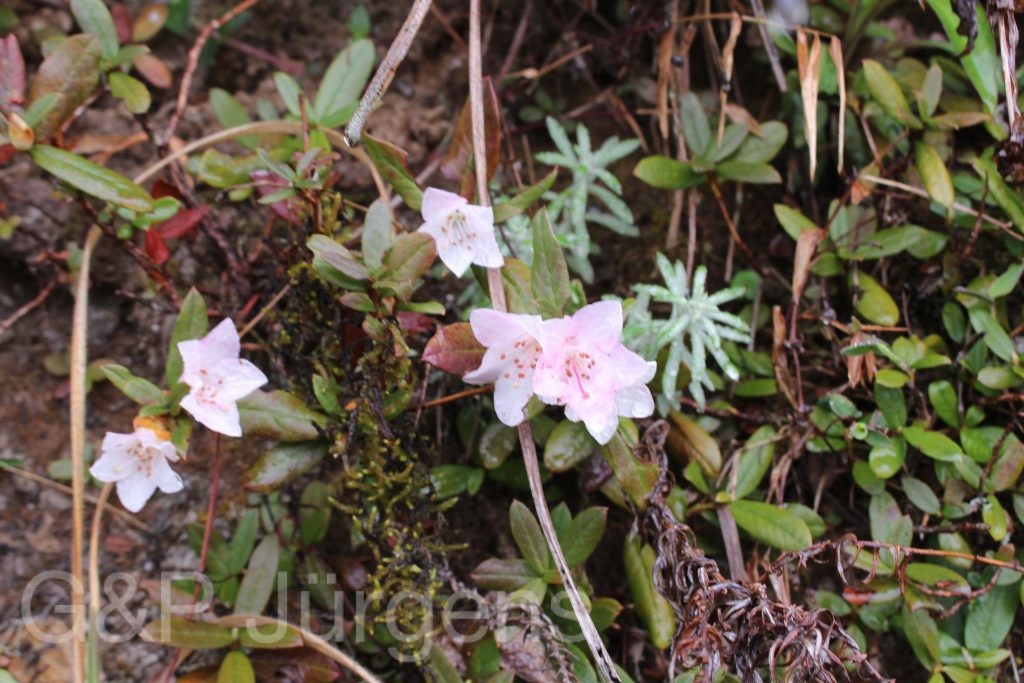
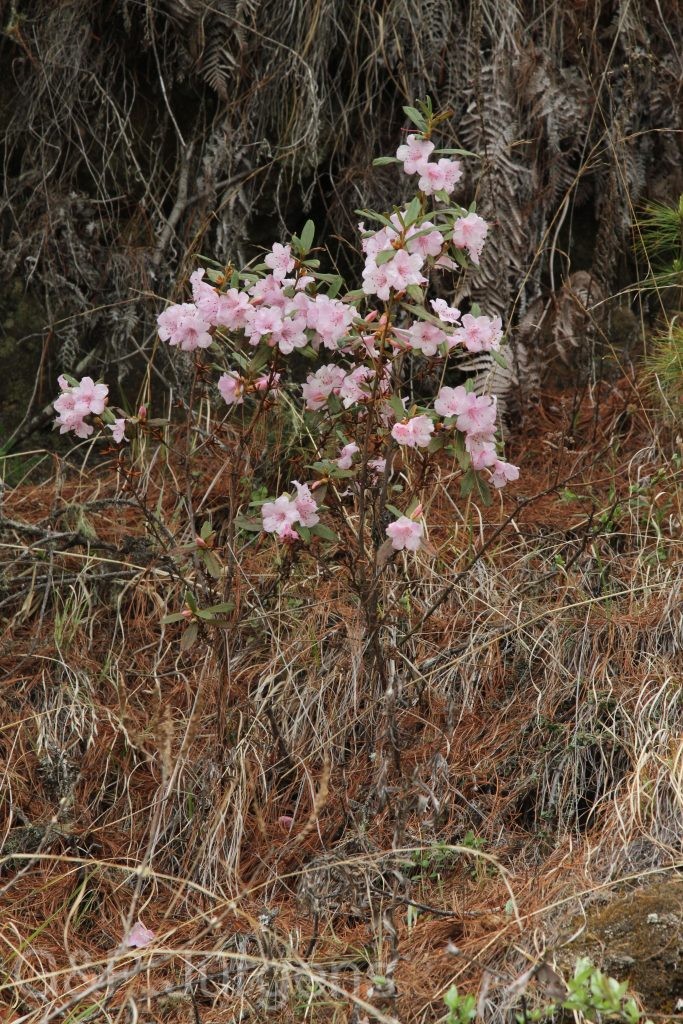
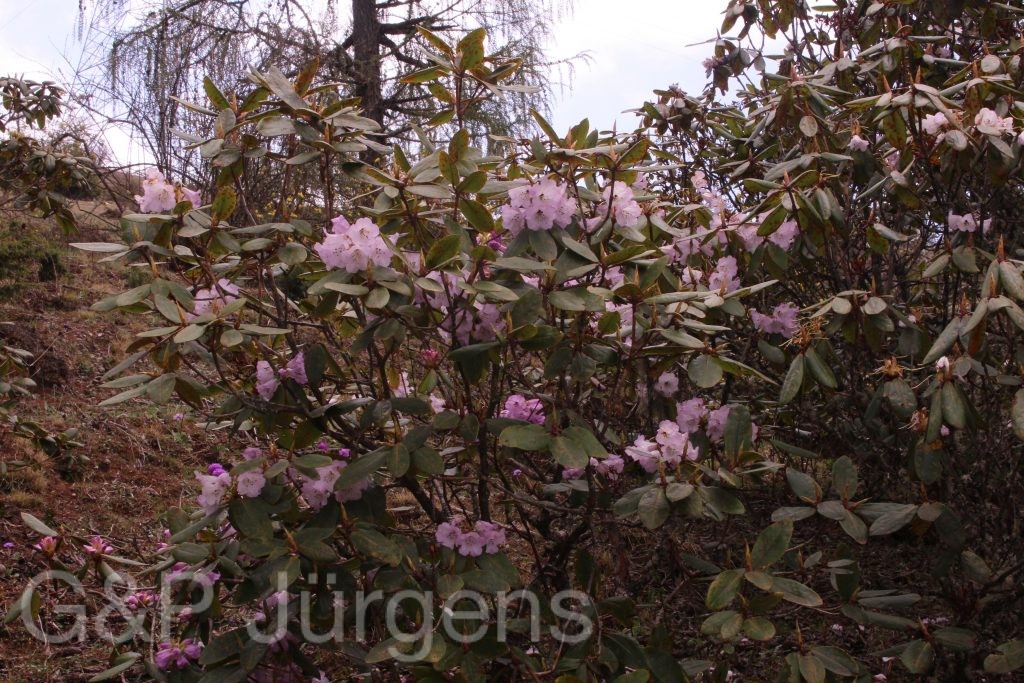
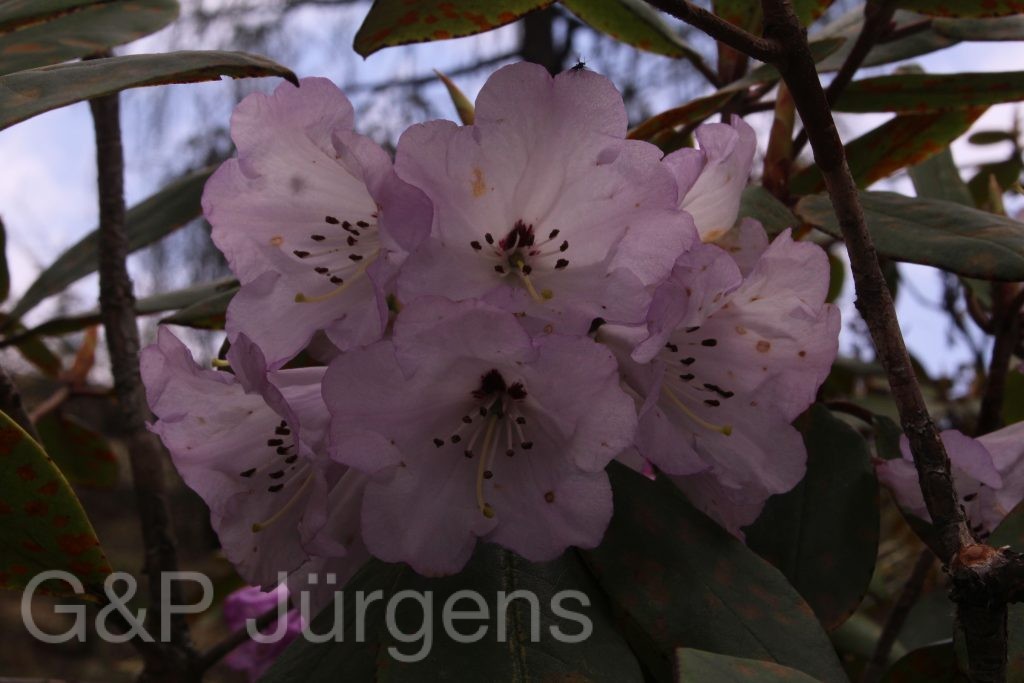
An evergreen rhododendron of the eastern Himalaya, native to China, Bhutan, Nepal and India, with about 353 GBIF occurrences (extra-range entries reflect cultivation in botanic gardens). It is a shrub to small tree of the upper subalpine and lower alpine zone, forming part of rhododendron-fir and dwarf rhododendron scrub, on cool, moist, humus-rich slopes generally between about 3300 and 4300 m. The depicted plants were photographed in May on the Bhutanese passes of Chele-La at around 3900 m and Shele-La at about 3800 m, exposed high-elevation habitats where it flowers as the snow recedes.

The species forms a rounded shrub with smooth, peeling bark and stout branchlets. The leaves are coriaceous, elliptic to oblong-elliptic, dark green and glabrous above, and beneath bear a distinctive thin, patchy, fawn to brownish indumentum of dendroid hairs that often wears away to leave scattered remnants. The flowers are borne in compact terminal trusses; each has a campanulate corolla of pale lilac to rose-pink, often with crimson basal blotches and spotting, the limb shallowly seven- to eight-lobed, with numerous stamens and a glabrous ovary topped by a slender style. The fruit is a curved, woody, septicidal capsule releasing many small winged seeds.

Though GBIF flags the name as a synonym, R. wallichii is widely accepted at species rank and placed in subsection Campanulata, allied to R. campanulatum, from which it is separated by its thinner, more fugacious leaf indumentum. Ecologically it is a major component of high Himalayan rhododendron heath, providing spring nectar and structural cover. Locally abundant within its range, it faces no immediate threat but is sensitive to grazing pressure, fire and the warming of its narrow alpine belt.

Author: Hook. f. · Sources: POWO (Kew), GBIF, Flora of Bhutan, Flora of China, Royal Botanic Garden Edinburgh revision of Rhododendron

Hook. f.

Sikkim2011 290
Sikkim Lada-La 3950m, June
Bh2008 257 G404
Bhutan Tumching-La, 3750m April
Bh2008 591 P884
Bhutan Tumching-La, 3750m April
Bh2008 592 P885
Bhutan Chele-La, 3850m April
Sikkim2004 224 P383
Sikkim/India Singalila 4000m May

Description

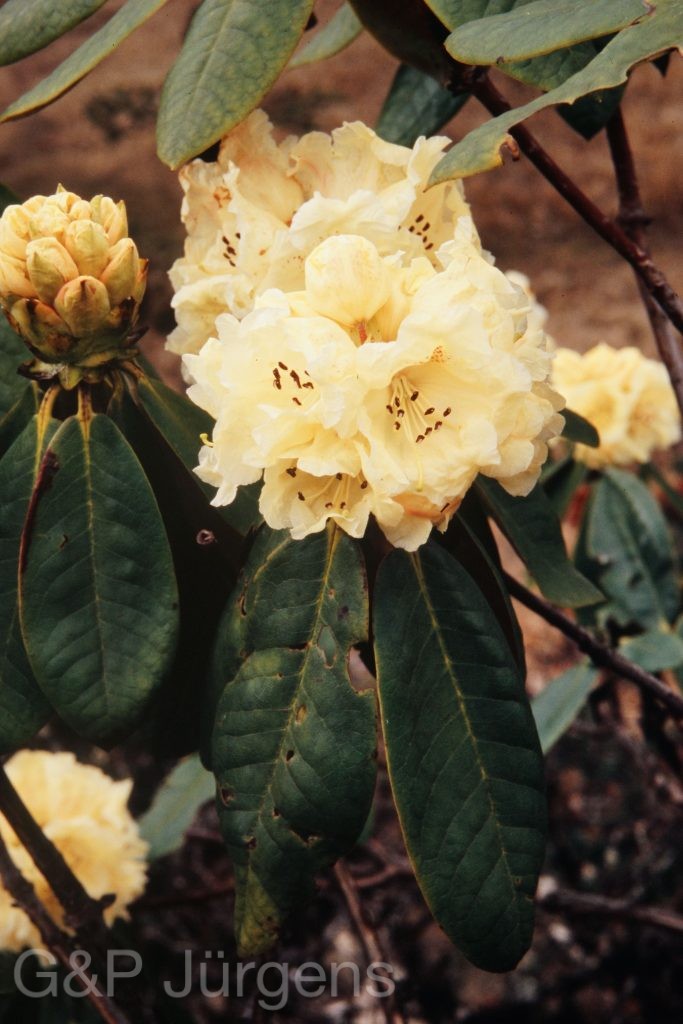
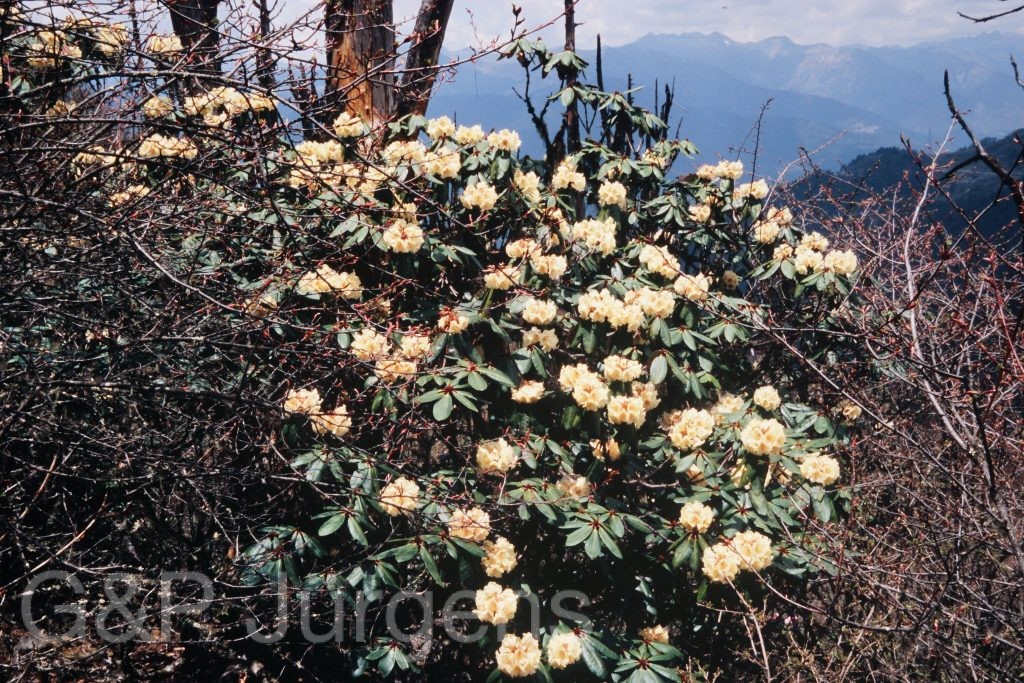
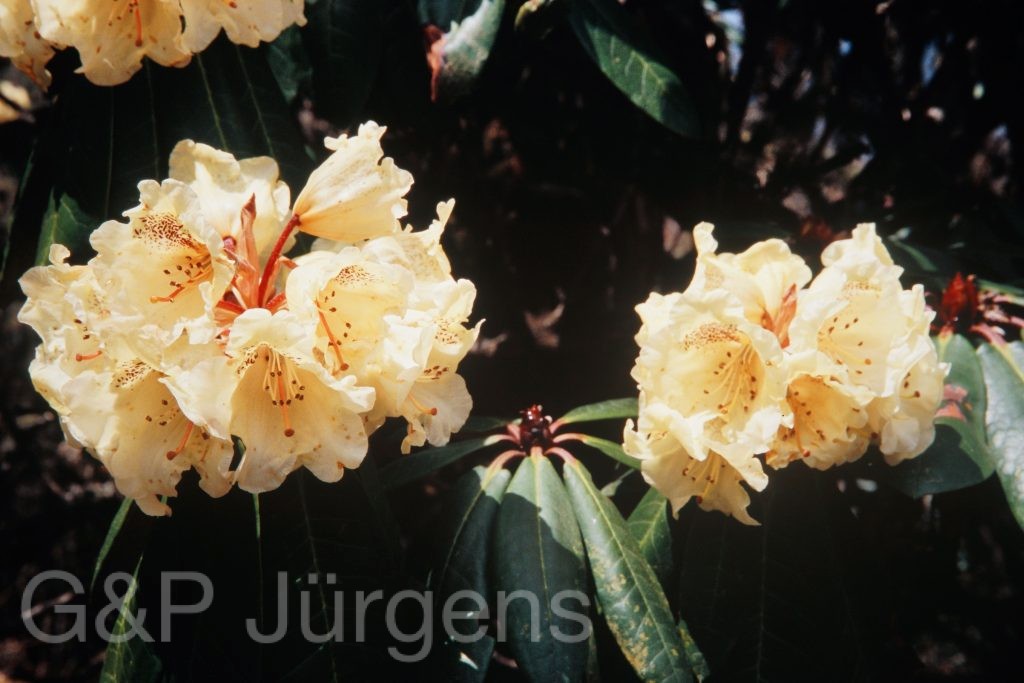
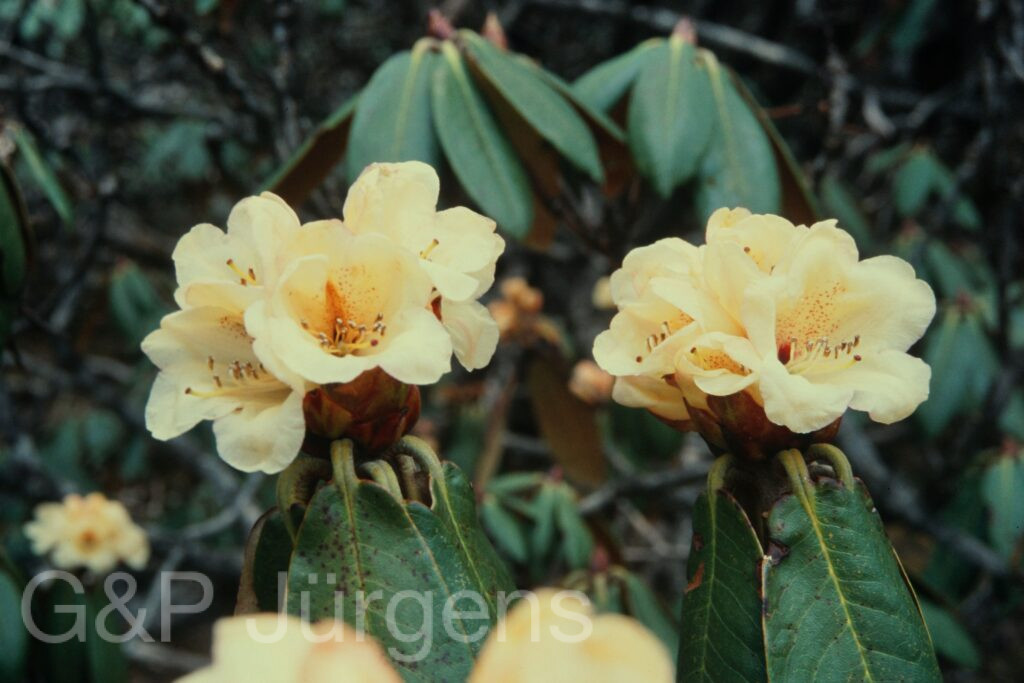
Rhododendron wightii is an Eastern Himalayan shrub or small tree ranging from eastern Nepal through Sikkim and northern West Bengal into Bhutan and adjoining southern Tibet (China), with GBIF recording 251 occurrences over IN, NP, CN and BT alongside cultivated records from Britain and elsewhere. It is a constituent of the upper temperate to subalpine zone, growing in rhododendron thickets, at the forest limit and among open hillsides between about 3300 and 4300 m. The photographed populations span Sikkim (Lada-La 3950 m, June; Singalila 4000 m, May) and Bhutan (Tumching-La 3750 m and Chele-La 3850 m, April), documenting its spring to early-summer flowering.

It is an evergreen shrub to small tree with stout branches. The leaves are leathery, elliptic to obovate, dark green and glabrous above, and conspicuously coated beneath with a dense, suede-like, fawn to rust-coloured indumentum of agglutinate hairs that is diagnostic. The flowers are grouped in lax, one-sided terminal trusses; each campanulate corolla is pale yellow to creamy-yellow, often marked with a crimson basal blotch, and has five lobes. The androecium of ten stamens surrounds a superior ovary topped by a long style, and the fruit is a curved, woody, septicidal capsule releasing numerous small seeds.

Within the genus, R. wightii belongs to subgenus Hymenanthes (the elepidote rhododendrons), allied to the Taliensia group and characterised by its yellow flowers and thick leaf indumentum. Named for the botanist Robert Wight, it is valued in horticulture for hardiness and foliage. Its dwarf-rhododendron habitat is locally extensive, but high-altitude shrublands face pressure from grazing, burning and a warming climate.

Author: Hook. f. · Sources: POWO (Kew), GBIF, Flora of Bhutan, The Genus Rhododendron (Cullen & Chamberlain, Edinburgh), Hooker's Rhododendrons of the Sikkim-Himalaya

Hook. f. & Thomson ex C.B. Clarke

Bh2008 392 G607
Bhutan Gogona 3250m, May
Vaccinium nummularia
Sikkim West-Bengal, Bersay 2700m April

Description

Vaccinium nummularia is an eastern Himalayan blueberry relative distributed through Nepal, northern India, Bhutan, south-central China and Myanmar, with around two hundred and ten GBIF records (a few cultivated or herbarium entries from Britain and the United States reflecting its horticultural interest). It is a characteristic epiphyte or terrestrial shrub of moist temperate forest, growing on mossy tree trunks, banks and cliff faces in the cloud-forest belt. The illustrated plants from Gogona in Bhutan at 3250 m in May and from Bersay in the Sikkim/West Bengal hills at 2700 m in April typify its mid- to upper-temperate, high-humidity habitat.

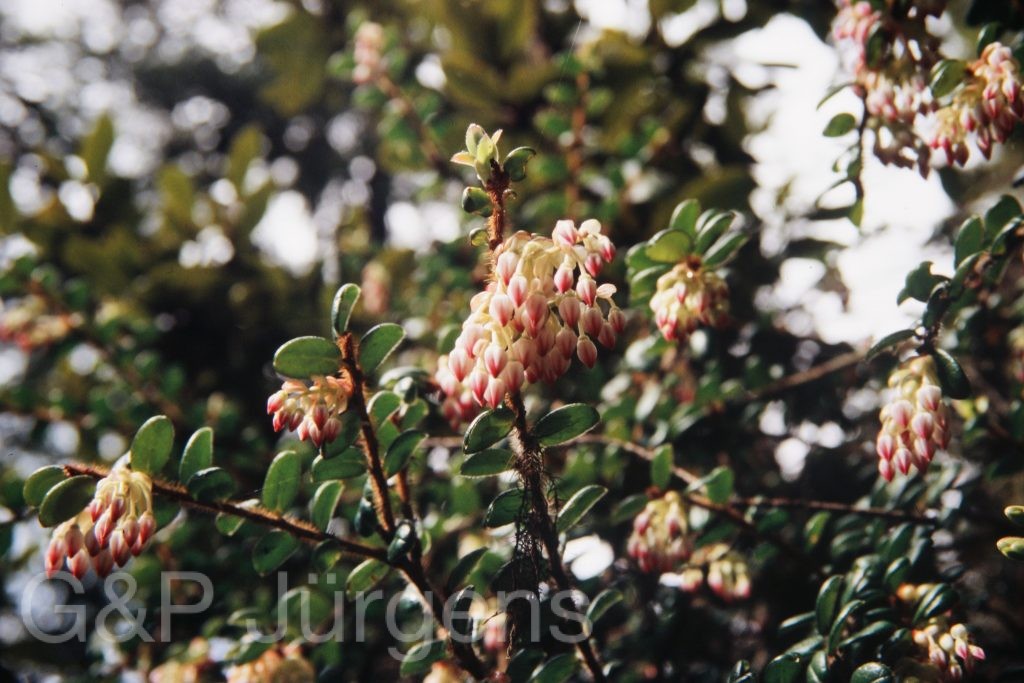
The species is a low, much-branched evergreen shrub whose young stems and leaf undersides are conspicuously clad in stiff, brown, bristly hairs (setae). The leaves are small, ovate to orbicular, coriaceous and nearly sessile, distichously arranged, with finely serrulate, setose margins, the rounded outline giving rise to the epithet nummularia ('coin-like'). The flowers are borne in short axillary racemes; the corolla is urceolate (urn-shaped), red to pink and waxy, with a small five-lobed limb, and the calyx, ovary and pedicels are likewise setose. The fruit is a globose, purplish-black, edible berry.

Vaccinium nummularia is an accepted species within Vaccinium (Ericaceae, subfamily Vaccinioideae), allied to the setose-leaved Himalayan epiphytic blueberries. Its epiphytic habit, leathery setose leaves and bird-dispersed berries are adaptations to the humid, mossy cloud-forest canopy, and it is cultivated by specialist growers for its handsome bristly foliage and red urn-shaped flowers. The species is locally common and not assessed as threatened, but it depends on intact, humid temperate forest.

Author: Hook. f. & Thomson ex C.B. Clarke · Sources: POWO (Kew), GBIF, Flora of China, Flora of Bhutan, Sleumer revision of Asian Vaccinium (Ericaceae monograph)

(Griff.) Hook. f. ex C.B. Clarke

Bhutan2014 576
Bhutan Bhutan 2950m, May
Sikkim2004 71 G163
Sikkim West-Bengal, Bersay 2700m April
Sikkim 2006 20 ergebnis
India West-Bengal Tonglu 3100m, May

Description

Vaccinium retusum is an evergreen Himalayan shrub distributed through Nepal, India, Bhutan and into adjacent China and northern Indochina (NP, IN, BT, VN, CN, MM, LA, with cultivated and other records), amounting to some 254 occurrences. It is a plant of cool, humid temperate forest, growing as a shrub or small tree among Rhododendron, oak and conifer woodland, on mossy banks and forest margins, and frequently as an epiphyte or hemi-epiphyte on the limbs of larger trees. The cited gatherings span 2700 to 3100 m in Bhutan, Sikkim and the Darjeeling hills of West Bengal (Bersay, Tonglu), flowering in the April-May spring, an elevation and season typical of its occurrence in the mist-laden middle-montane belt.

The plant is a glabrous, much-branched shrub with reddish young shoots. The leaves are leathery and evergreen, elliptic to obovate with a characteristically retuse or emarginate apex from which the epithet derives, the margins entire or finely toothed and the venation reticulate beneath. The flowers are borne in short axillary racemes; the corolla is urceolate (urn-shaped) and white to pinkish, with a five-toothed limb, enclosing the included stamens whose anthers bear terminal tubules. The fruit is a globose, many-seeded berry, ripening dark purple-black and crowned by the persistent calyx.

Vaccinium (the blueberry and bilberry genus, tribe Vaccinieae of the Ericaceae) is richly developed in the Sino-Himalayan region, where many species are epiphytic. The urceolate corolla and inferior, berried ovary are diagnostic, and the flowers are pollinated by bees attracted to nectar. The fleshy berries are dispersed by birds, accounting for the establishment of epiphytic seedlings high in the forest canopy. Widespread and locally common, V. retusum is not considered threatened, though it depends on the persistence of intact temperate broadleaf forest.

Author: (Griff.) Hook. f. ex C.B. Clarke · Sources: POWO (Kew), GBIF, Flora of Bhutan, Flora of China, The Genus Vaccinium (Sleumer monograph of Asian Vaccinieae)

(Roxb.) Sleumer

Nepal 97 77 P127
Nepal above Meta-Khola 1850m April
Nepal 97 90 P151
Nepal above Meta-Khola 1850m April

Description

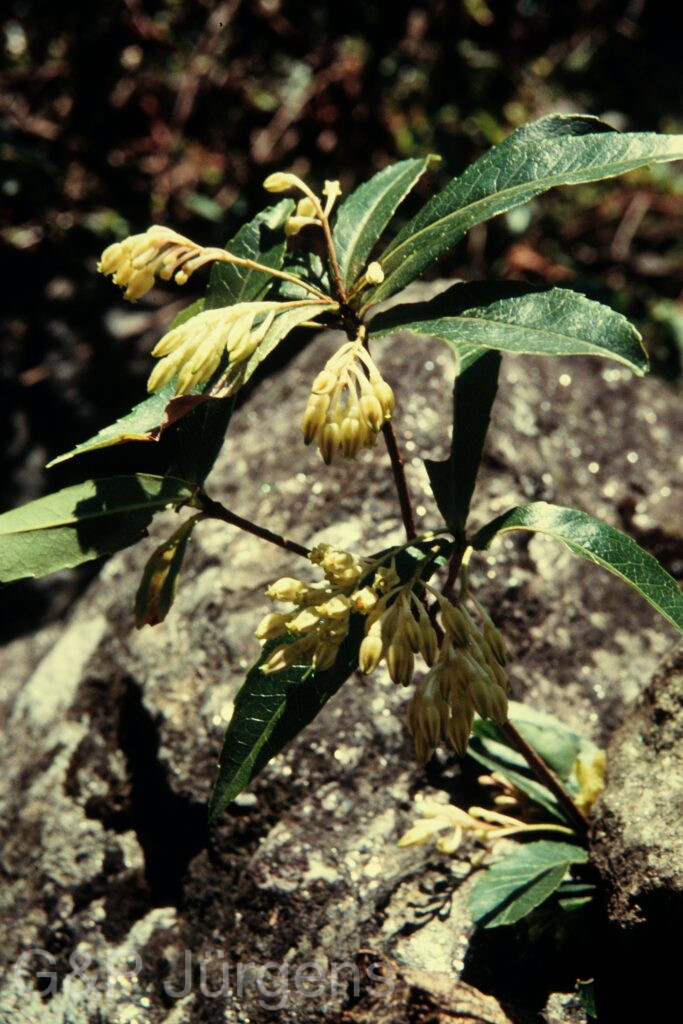
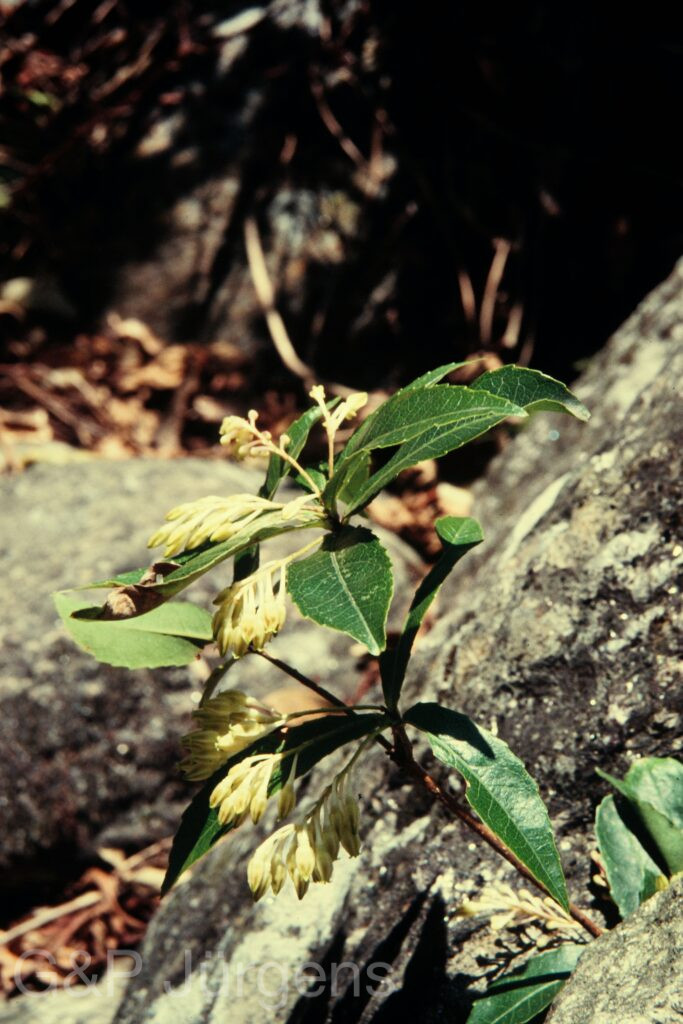
Vaccinium vacciniaceum is a shrub of the eastern Himalaya and adjoining ranges, recorded by GBIF from India, Nepal, Bhutan, China, Myanmar and Bangladesh across about 187 occurrences. It is characteristically epiphytic or lithophytic, growing on the trunks and branches of forest trees and on mossy rocks in humid temperate and subtropical broad-leaved and evergreen forest, typically between roughly 1500 and 2700 m. The plant photographed above the Meta-Khola in Nepal at about 1850 m, in April, reflects this moist mid-montane forest habitat where high humidity and abundant epiphytic moss support its growth.

The plant is a small, much-branched evergreen shrub, often pendent or scrambling when epiphytic, with a somewhat woody, swollen base. The leaves are alternate, leathery, elliptic to ovate-lanceolate, with an acuminate apex, an entire or finely serrulate margin, and prominent venation. The flowers are borne in short axillary racemes and are urceolate (urn-shaped), the corolla white to pale pink with five short recurved lobes, subtended by small bracts; the stamens have awned anthers opening by terminal pores, as is typical of the genus. The fruit is a small globose berry, ripening dark and fleshy, attractive to birds that disperse the numerous tiny seeds.

The species, transferred to Vaccinium by Sleumer in his comprehensive treatment of Asian Ericaceae, belongs to the largely epiphytic Sino-Himalayan element of the genus. Its epiphytic habit and dependence on humid, moss-rich forest tie it closely to intact, well-shaded montane woodland, and the fleshy berries indicate ornithochorous dispersal. Although not formally assessed as threatened, epiphytic Vaccinium are sensitive to forest clearance and to declines in the canopy humidity on which their establishment depends.

Author: (Roxb.) Sleumer · Sources: POWO (Kew), GBIF, Flora of China, Flora of Bhutan, Sleumer revision of Asian Vaccinium (Ericaceae), Annotated Checklist of the Flowering Plants of Nepal