
(Griff.) Hook. f. ex C.B. Clarke
Description
Vaccinium retusum is an evergreen Himalayan shrub distributed through Nepal, India, Bhutan and into adjacent China and northern Indochina (NP, IN, BT, VN, CN, MM, LA, with cultivated and other records), amounting to some 254 occurrences. It is a plant of cool, humid temperate forest, growing as a shrub or small tree among Rhododendron, oak and conifer woodland, on mossy banks and forest margins, and frequently as an epiphyte or hemi-epiphyte on the limbs of larger trees. The cited gatherings span 2700 to 3100 m in Bhutan, Sikkim and the Darjeeling hills of West Bengal (Bersay, Tonglu), flowering in the April-May spring, an elevation and season typical of its occurrence in the mist-laden middle-montane belt.
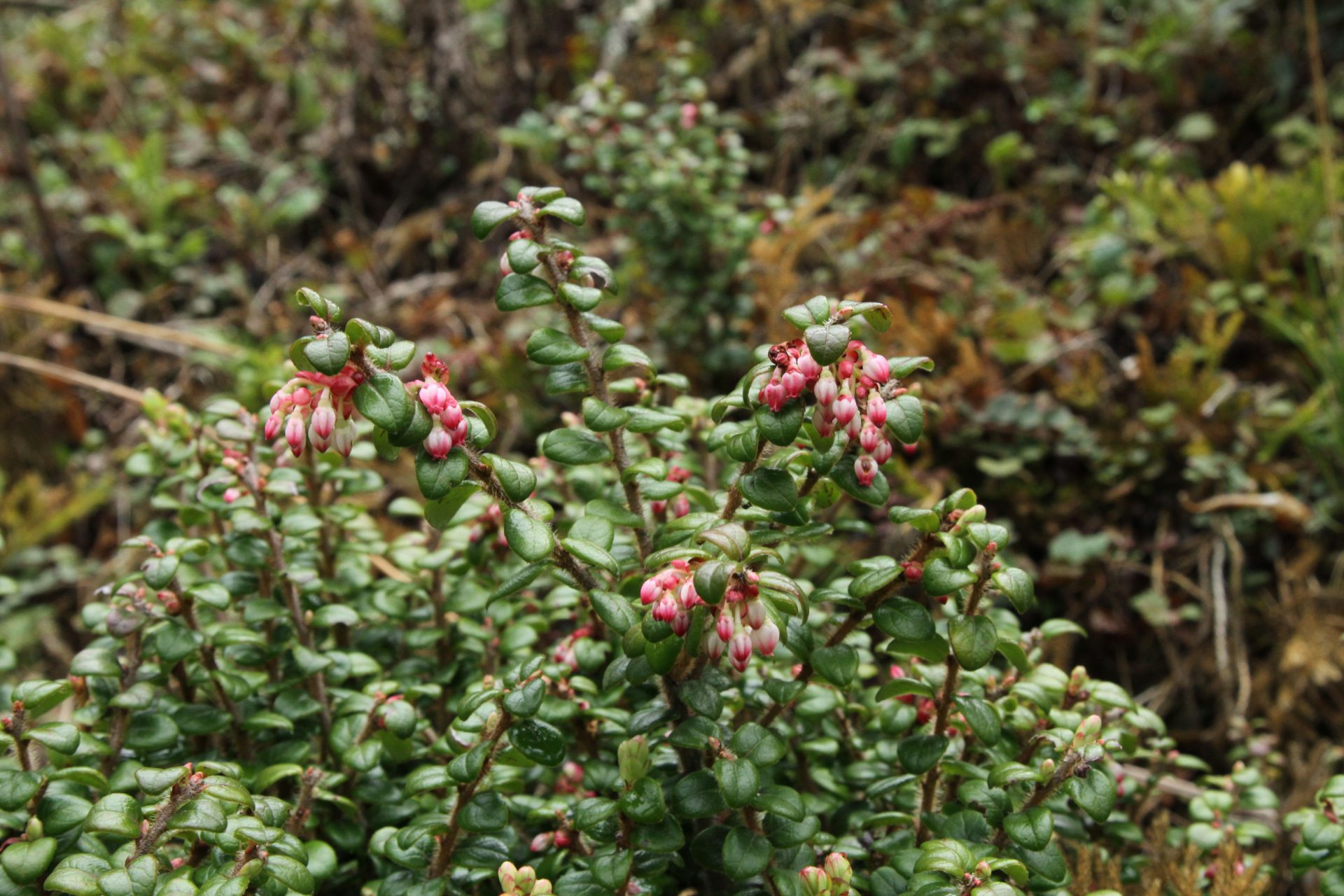
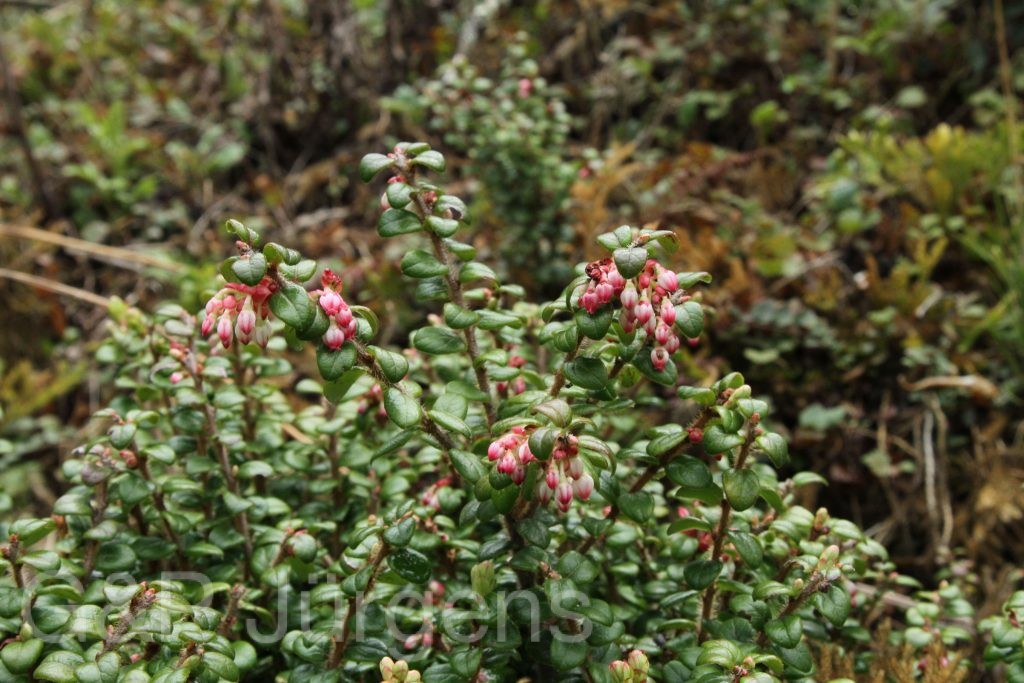
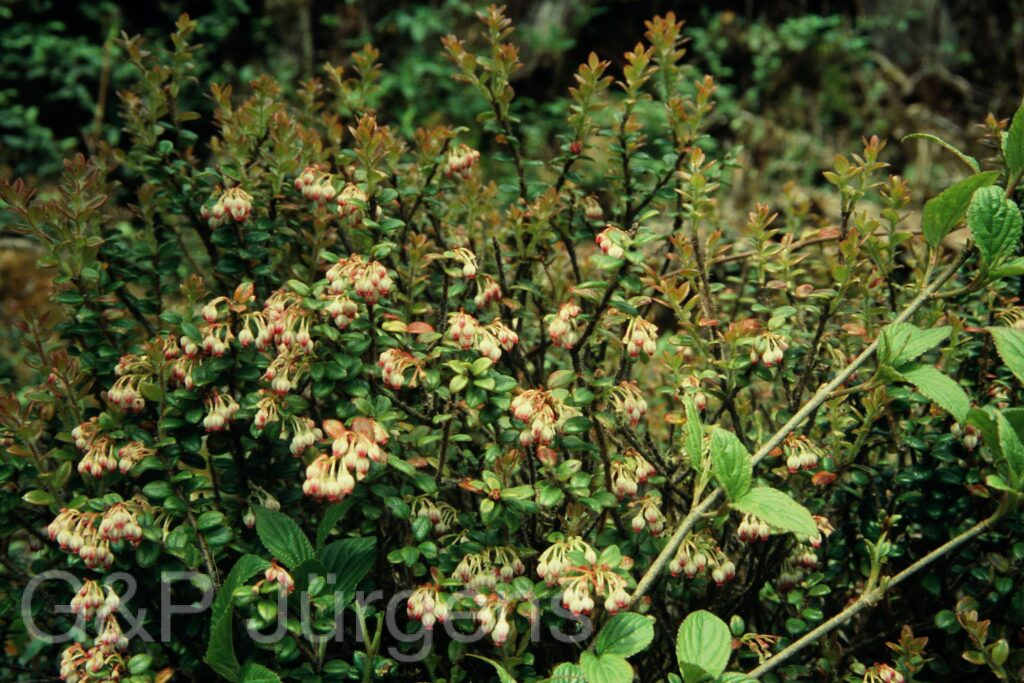
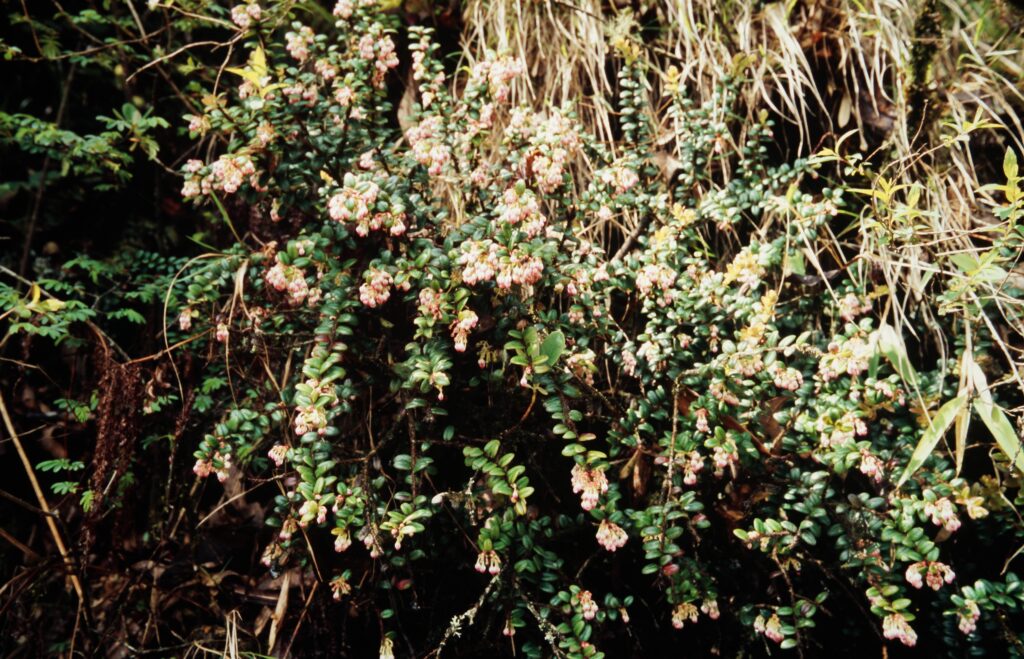
The plant is a glabrous, much-branched shrub with reddish young shoots. The leaves are leathery and evergreen, elliptic to obovate with a characteristically retuse or emarginate apex from which the epithet derives, the margins entire or finely toothed and the venation reticulate beneath. The flowers are borne in short axillary racemes; the corolla is urceolate (urn-shaped) and white to pinkish, with a five-toothed limb, enclosing the included stamens whose anthers bear terminal tubules. The fruit is a globose, many-seeded berry, ripening dark purple-black and crowned by the persistent calyx.
Vaccinium (the blueberry and bilberry genus, tribe Vaccinieae of the Ericaceae) is richly developed in the Sino-Himalayan region, where many species are epiphytic. The urceolate corolla and inferior, berried ovary are diagnostic, and the flowers are pollinated by bees attracted to nectar. The fleshy berries are dispersed by birds, accounting for the establishment of epiphytic seedlings high in the forest canopy. Widespread and locally common, V. retusum is not considered threatened, though it depends on the persistence of intact temperate broadleaf forest.
Author: (Griff.) Hook. f. ex C.B. Clarke · Sources: POWO (Kew), GBIF, Flora of Bhutan, Flora of China, The Genus Vaccinium (Sleumer monograph of Asian Vaccinieae)