
D. Don
Description
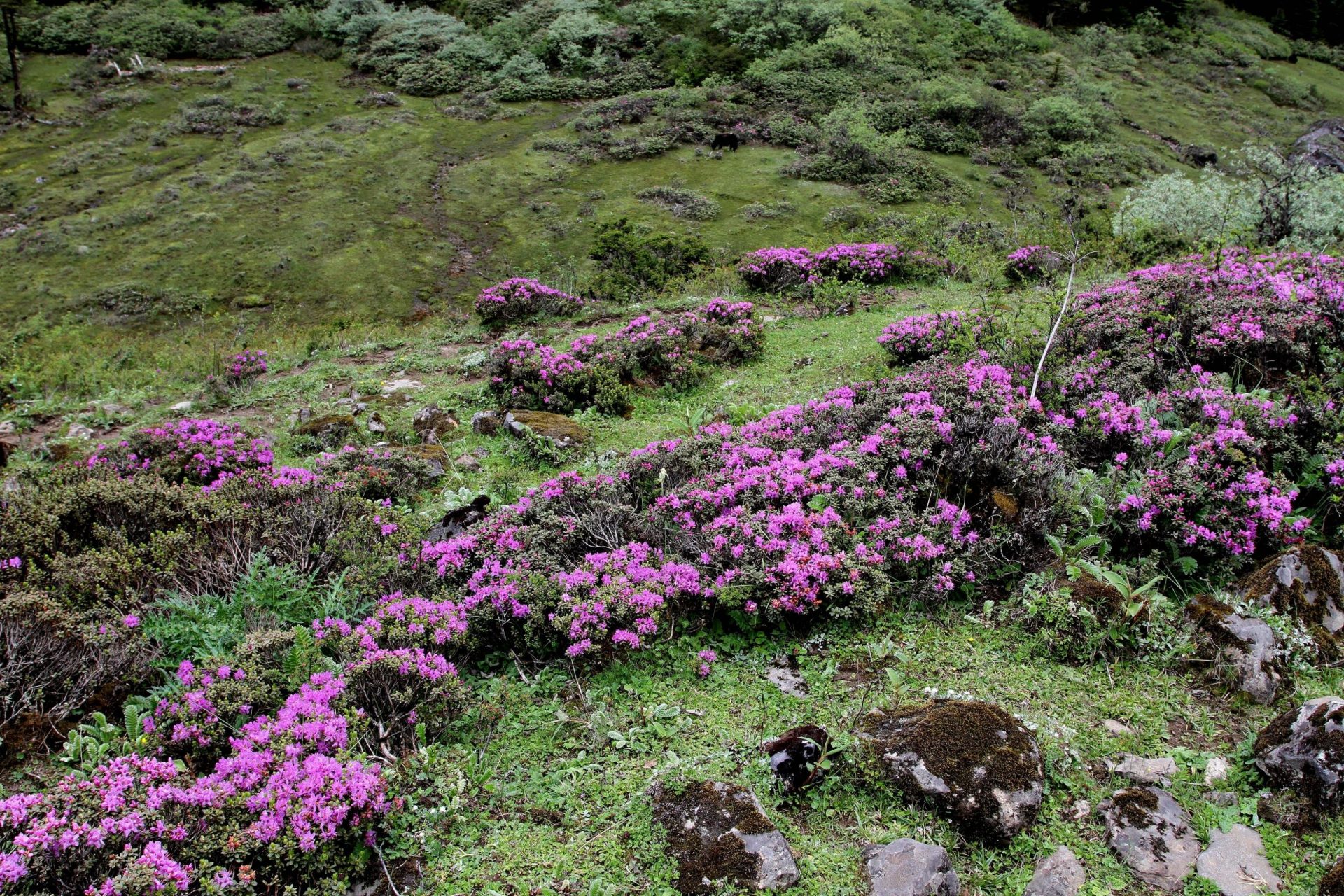
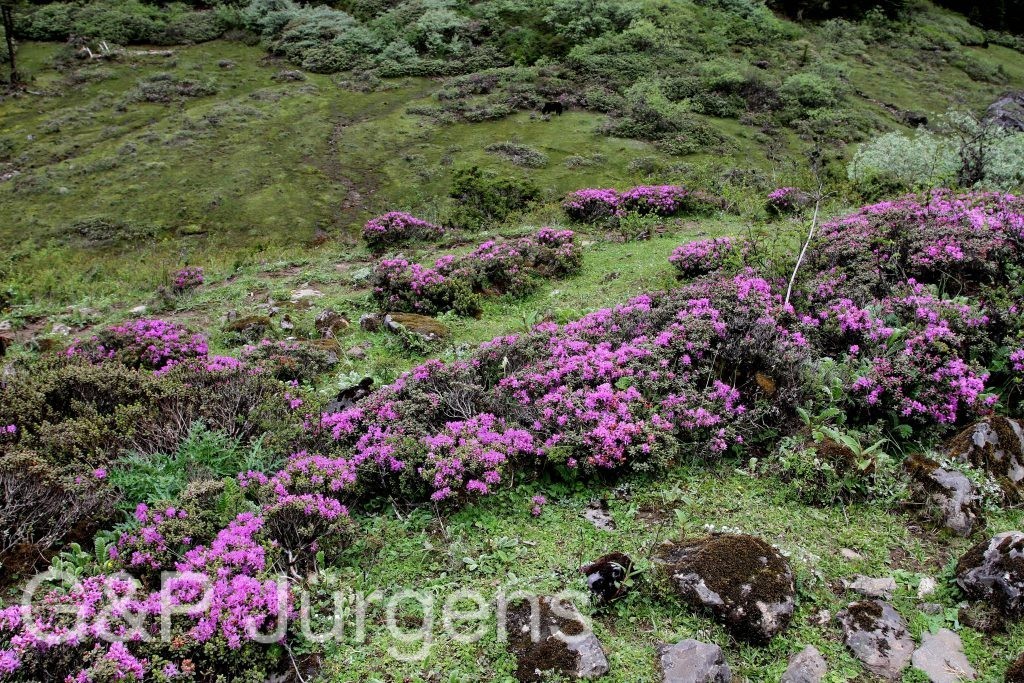
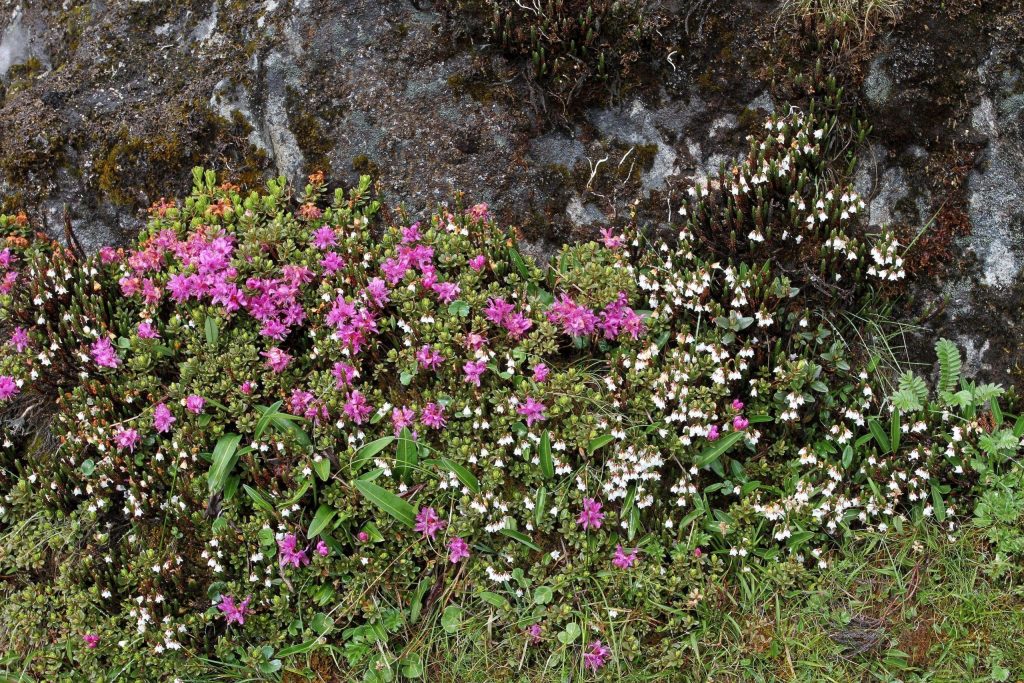
Rhododendron setosum is a high-alpine dwarf shrub distributed through the eastern and central Himalaya, recorded from Nepal, India (Sikkim), Bhutan, and southern Tibet (China), with 507 georeferenced occurrences confirming a continuous arc along the main range. It is a characteristic plant of the upper alpine zone, forming low cushions and open mats on exposed ridges, moraines and the margins of dwarf-rhododendron heath, frequently above the treeline between about 3500 and 5000 m. It was photographed at Tsochenchen, Bhutan, at 3800 m in June and on the Chele-La pass at 3950 m, where it grows alongside Cassiope fastigiata in cold, peaty acidic substrates exposed to strong insolation and wind.
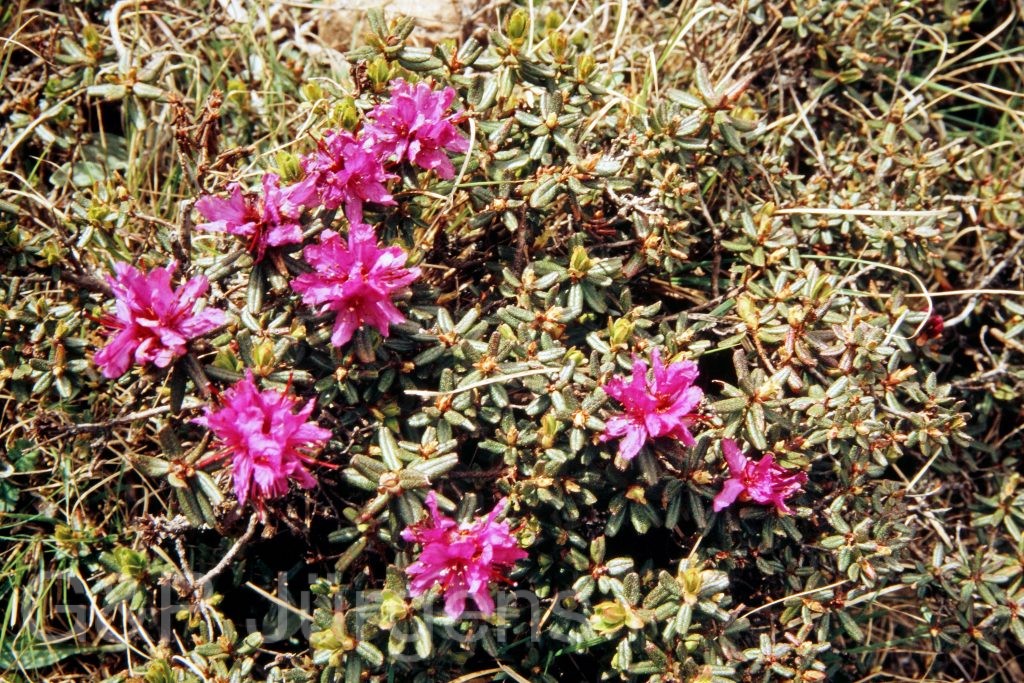
It is a much-branched, prostrate to ascending evergreen shrublet rarely exceeding 30 cm, the young shoots densely setose with stiff bristly hairs and gland-tipped trichomes that give the plant a strongly aromatic resinous scent. The small leaves are elliptic to oblong, leathery, glandular-scaly (lepidote) on both surfaces and bristly-margined, crowded toward the branch tips. The flowers, borne in small terminal clusters, are broadly campanulate to funnel-shaped and a vivid pink-purple to magenta, with a setose, glandular calyx and exserted stamens. The fruit is a small ovoid septicidal capsule.
The species belongs to Rhododendron subgenus Rhododendron, section Pogonanthum, a group of aromatic small-leaved lepidote rhododendrons centred on the Sino-Himalaya. Its glandular indumentum and powerful scent are diagnostic within this section. Ecologically it is a pioneer of disturbed alpine ground and a component of dwarf-shrub heath, tolerant of frost and intense radiation. Though locally abundant and not threatened, populations are sensitive to grazing and warming-driven shifts of the treeline.
Author: D. Don · Sources: POWO (Kew), GBIF, Flora of Bhutan, Flora of China, The Genus Rhododendron (Cullen & Chamberlain monograph)