Zingiberacaea

Royle

Nepal 99 25 ergebnis
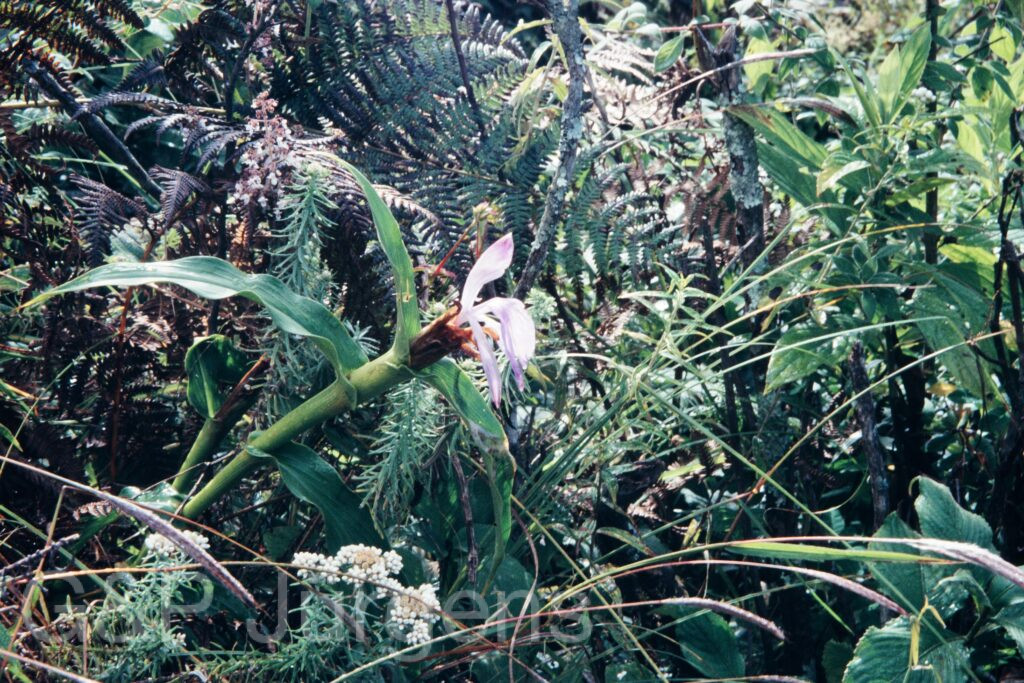
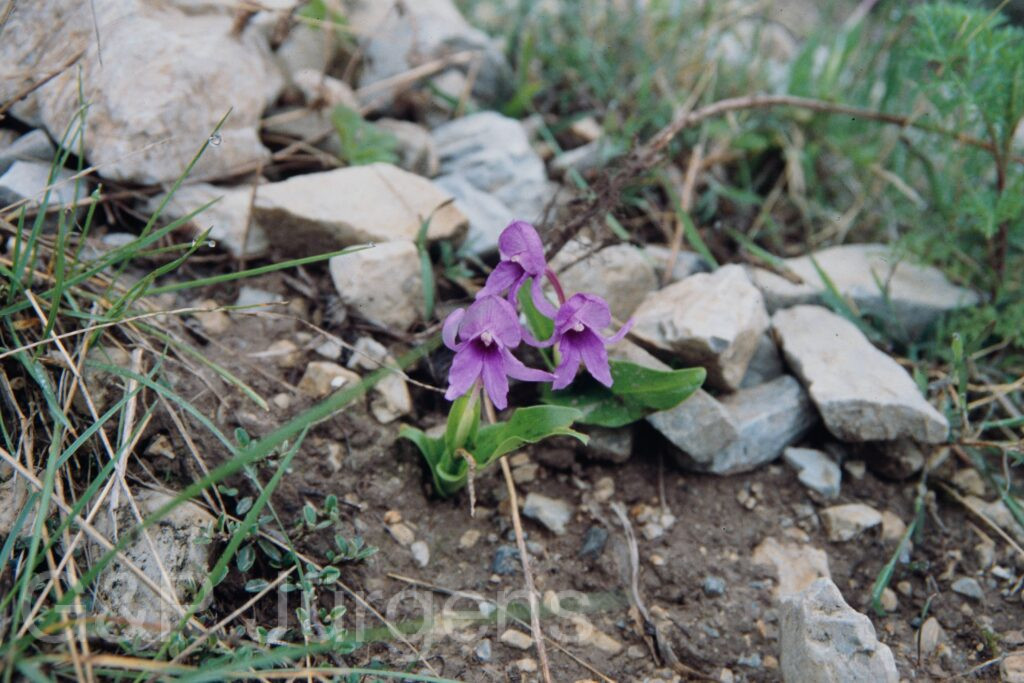
West-Nepal Chere 2850m June

Description

Roscoea alpina is a diminutive, hardy ginger relative widely distributed along the Himalayan arc from Pakistan and Kashmir eastward through India, Nepal and Bhutan into southwestern China (Xizang, Yunnan and Sichuan), with outlying records reaching Myanmar. With well over three hundred occurrences in GBIF and a long horticultural history, it is among the most familiar of the alpine Roscoeas; many of the country records from Europe, North America and Korea reflect cultivated and naturalised material rather than native populations. It grows on open grassy slopes, forest clearings, banks and alpine pastures, generally between about 2400 and 4000 m. The plant photographed at Chere in West Nepal at 2850 m, flowering in June, is characteristic of these summer-moist meadow habitats, where the species emerges with the onset of the monsoon and dies back to a tuberous rootstock as the soil dries.

The plant is a small herbaceous perennial arising from a cluster of fleshy, fascicled root tubers. The short pseudostem is formed by overlapping leaf sheaths and bears a few narrowly lanceolate to linear leaves. Unlike most of its relatives, R. alpina typically produces a single flower at a time, opening successively. The flower is rose-pink to purple, with a long slender perianth tube; the dorsal corolla lobe arches as a hood over the floral parts, the lateral lobes are narrow, and the prominent two-lobed labellum, formed from staminodes, is reflexed and notched, serving as a landing platform for bee pollinators. A single fertile stamen and an inferior ovary complete the flower, the latter maturing into an elongate, several-seeded capsule.

Roscoea is a remarkable temperate offshoot of the otherwise tropical Zingiberaceae, having adapted to seasonal montane climates through its tuberous, deciduous habit and monsoon-synchronised phenology; the genus shows a striking Sino-Himalayan distributional disjunction. R. alpina sits among the small-flowered, solitary-flowered species and is one of the most cold-tolerant, accounting for its popularity in alpine and rock gardens. The family is here spelled "Zingiberacaea" following the source; the accepted form is Zingiberaceae. Though not globally threatened owing to its broad range, local populations are vulnerable to overgrazing and habitat conversion, and the species remains a model for studying the evolution of montane life in a predominantly lowland tropical lineage.

Author: Royle · Sources: POWO (Kew), GBIF, Flora of China Vol. 24, Flora of Bhutan Vol. 3 Part 1, Flora of Nepal, Flora of Pakistan, The Genus Roscoea (Jill Cowley, Kew)
K.Schum.

Sikkim2003 49 W68
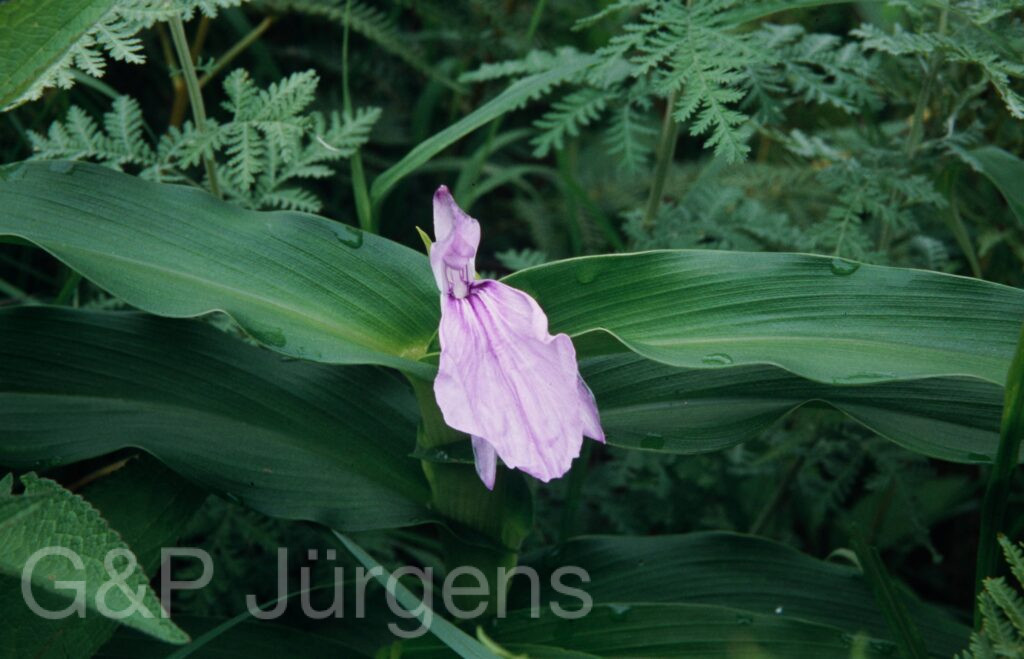
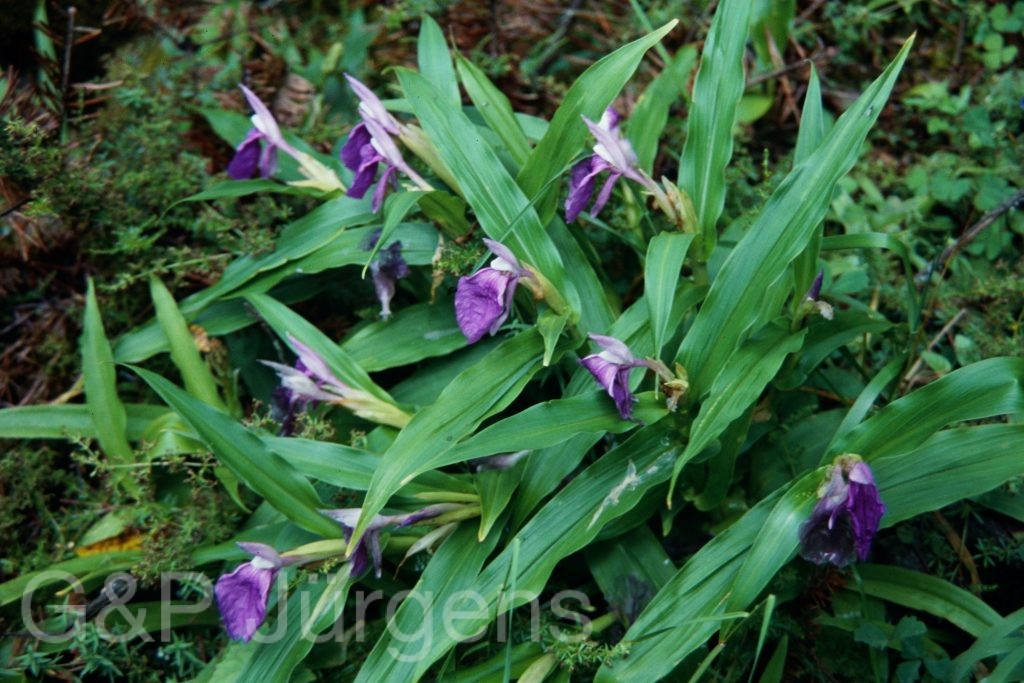
Sikkim above Yoksam 2200m 08.2003
Nepal 99 909 ergebnis
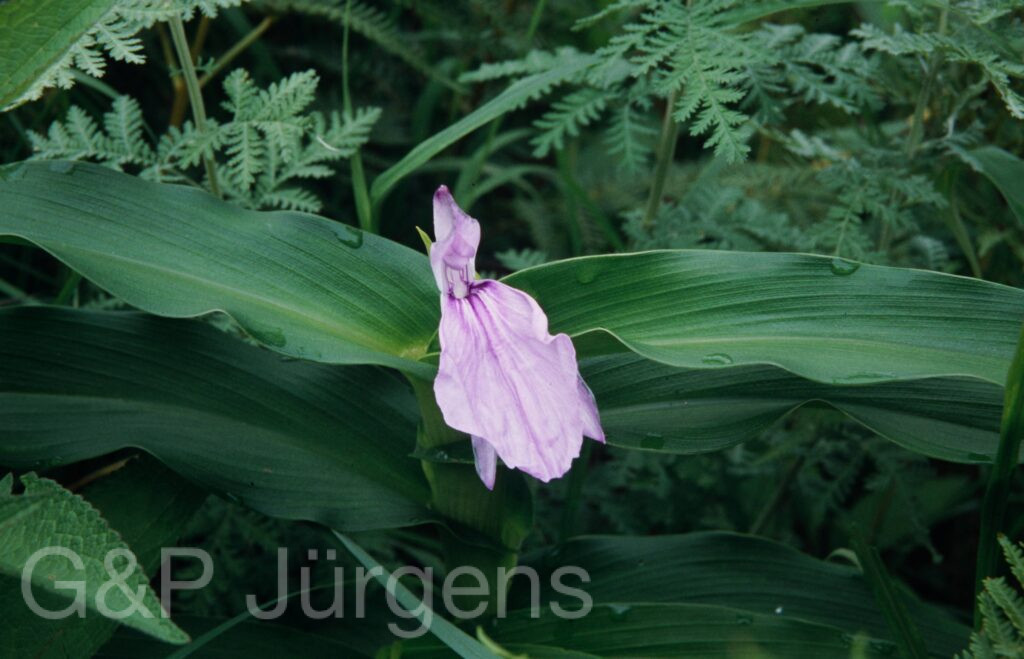
West-Nepal Hanke 2700m, July

Description

Roscoea auriculata is an eastern Himalayan terrestrial ginger recorded from India, China, Nepal and Bhutan across some 126 GBIF occurrences. The photographed plants were found above Yoksam in Sikkim at 2200 m in August and at Hanke in West Nepal at 2700 m in July, locations typical of its range in moist temperate forest glades, grassy banks and open slopes between roughly 2000 and 3000 m. Unlike most members of the predominantly tropical Zingiberaceae, Roscoea is adapted to cool montane conditions, dying back to a tuberous rootstock to overwinter and emerging with the summer monsoon.

The plant is an erect perennial herb arising from clustered fleshy, tuberous roots. The leaves are few, lanceolate and arranged distichously, their sheaths forming a false stem (pseudostem); the diagnostic feature signalled by the epithet is the conspicuously auriculate leaf-sheath base. The flowers are large, showy and orchid-like, deep violet to purple, emerging successively from a terminal cluster; each has a hooded dorsal corolla lobe, two erect lateral staminode-like structures and a broad, often bilobed reflexed labellum, with a single fertile stamen.

Note that the input family is given as "Zingiberacaea", an evident misspelling of Zingiberaceae, in which Roscoea is correctly placed. The genus is celebrated for its convergence on an orchid-like floral form, an adaptation for pollination by long-tongued bees, and is much prized in cultivation for hardy temperate gardens. R. auriculata has a relatively restricted eastern Himalayan distribution; though not formally threatened, it is locally collected and sensitive to habitat disturbance.

Author: K.Schum. · Sources: POWO (Kew), GBIF, Flora of Bhutan, Flora of Nepal, Flora of China, Cowley – The Genus Roscoea (Royal Botanic Gardens Kew monograph)

Sm.

Nepal 95 114 P202 ergebnis
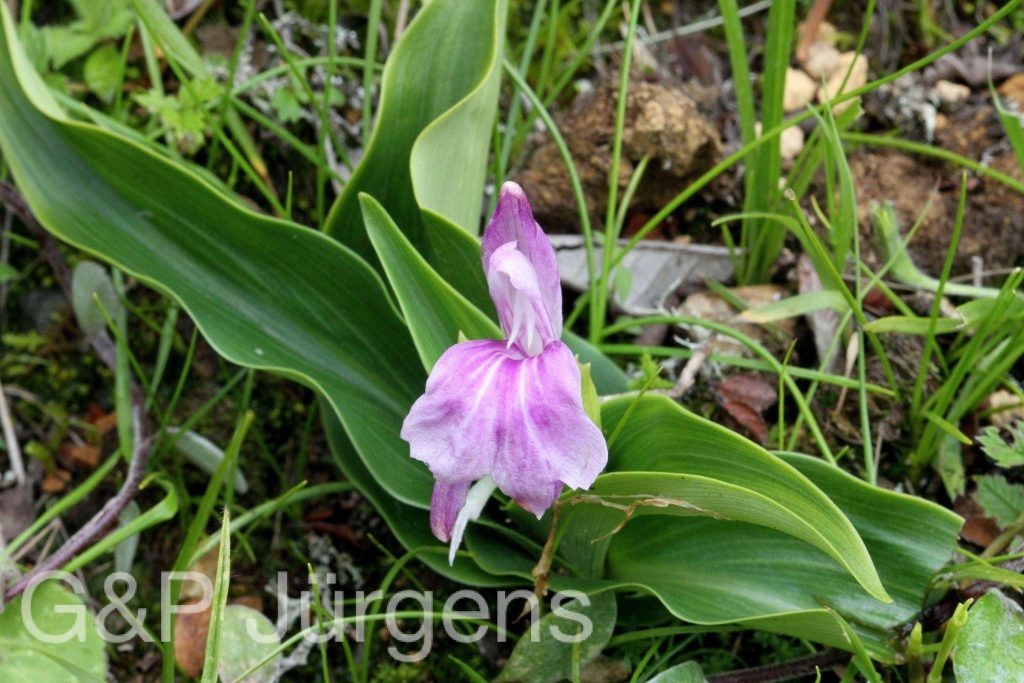
Nepal south of Rupien La 3200m October
Nepal 99 909 ergebnis
Nepal Sepka 2760 m, JUly

Description

Roscoea purpurea is a tuberous-rooted ginger of the Himalaya, ranging through Nepal, northern India, Bhutan and adjacent China, with peripheral records (KR, MY, US, ZZ) reflecting horticultural cultivation, as it is widely grown as a hardy ornamental. Of nearly 400 georeferenced records, the densest concentration falls in the central and eastern Nepalese hills. It grows on open grassy slopes, in forest clearings, on banks and among shrubs in the upper temperate and subalpine belt. The photographed plants from south of the Rupien La at 3200 m in October and from Sepka at 2760 m in July illustrate its broad altitudinal span and its summer-to-autumn flowering, timed to the monsoon when the rootstock is in active growth.

It is a deciduous perennial herb arising from a cluster of fleshy, fascicled root tubers and a short rhizome. The pseudostem is formed by the overlapping leaf sheaths and bears several lanceolate to oblong, distichous leaves that are smooth and often with a sheathing, ligulate base. The showy flowers emerge from the leaf axils or a short terminal spike; each is enclosed by a green bract and has a slender corolla tube. The perianth is strongly zygomorphic, typically purple to lilac, with a hooded dorsal corolla lobe, narrow lateral lobes, and a large, conspicuously bilobed, deflexed labellum that serves as the pollinator platform. A single fertile stamen with a spurred connective and an inferior ovary produce an elongate capsule.

Roscoea is remarkable within the otherwise tropical Zingiberaceae for its adaptation to cold, seasonally dry montane climates, the genus disjunct between the Himalaya and the mountains of south-west China. R. purpurea is the type-associated and most variable Himalayan species, encompassing several named colour and form variants, and is pollinated chiefly by long-tongued bees and, in some populations, by long-proboscid flies. It remains locally common and is not considered threatened.

Author: Sm. · Sources: POWO (Kew), GBIF, Flora of China Vol. 24, Flora of Bhutan Vol. 3, Flora of Nepal, Cowley's The Genus Roscoea (Kew)

Batalin

BhutanPG2011 32
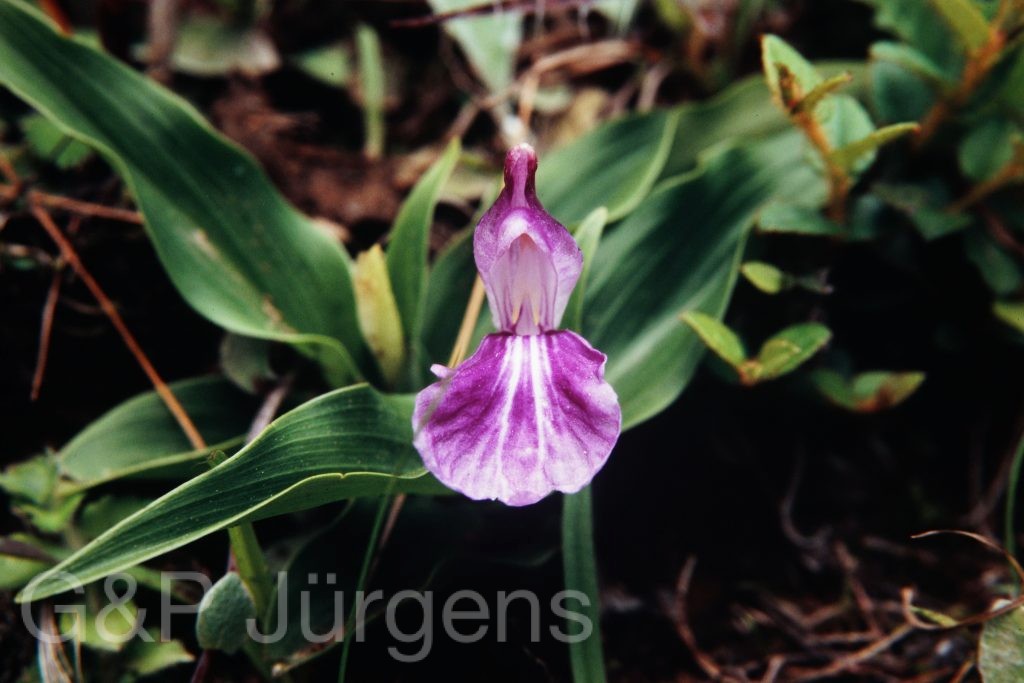
Bhutan Pele-La, 2800m June
Bh09 248 G414
Bhutan Tibetica, 3100m June

Description

Roscoea tibetica is a small, hardy terrestrial ginger of the eastern Himalaya and adjacent China, recorded from China, Bhutan, Myanmar and Nepal across about 309 occurrences. Unusually among the largely tropical Zingiberacaea, it is a montane plant of cool grassy slopes, open forest, meadows and stream banks, growing between roughly 2500 and 4000 m. The illustrated plants come from Bhutan, at Pele-La (2800 m) and a locality recorded as Tibetica (3100 m), both flowering in June soon after the start of the growing season, when the genus emerges from dormant rootstocks.

The plant is among the smallest of its genus, usually only 5-15 cm tall, arising from a cluster of fleshy, fasciculate tuberous roots. The few leaves are lanceolate to oblong, sheathing at the base and often only partly expanded at flowering. The flowers, one or few in succession, are borne low among the leaf sheaths and are strongly zygomorphic and orchid-like; the corolla is pale to deep violet or purple, comprising a hooded dorsal lobe, two lateral staminodial petaloid structures and a large, often reflexed and notched labellum. A single fertile stamen and an inferior ovary characterise the family; the fruit is a capsule.

The Sino-Himalayan genus Roscoea is remarkable for its temperate, high-altitude ecology, an adaptation involving dormant tuberous roots that survive cold winters. The orchid-like flowers are pollinated chiefly by long-tongued bees and, in some species, hawkmoths. Widely distributed and locally frequent, R. tibetica is not regarded as threatened, though it is valued as a hardy ornamental and a model for studies of pollination and montane radiation.

Author: Batalin · Sources: POWO (Kew), GBIF, Flora of China, Flora of Bhutan, The Genus Roscoea (Cowley, Kew monograph), Annotated Checklist of the Flowering Plants of Nepal

  • 1
  • 2