
Batalin
Description
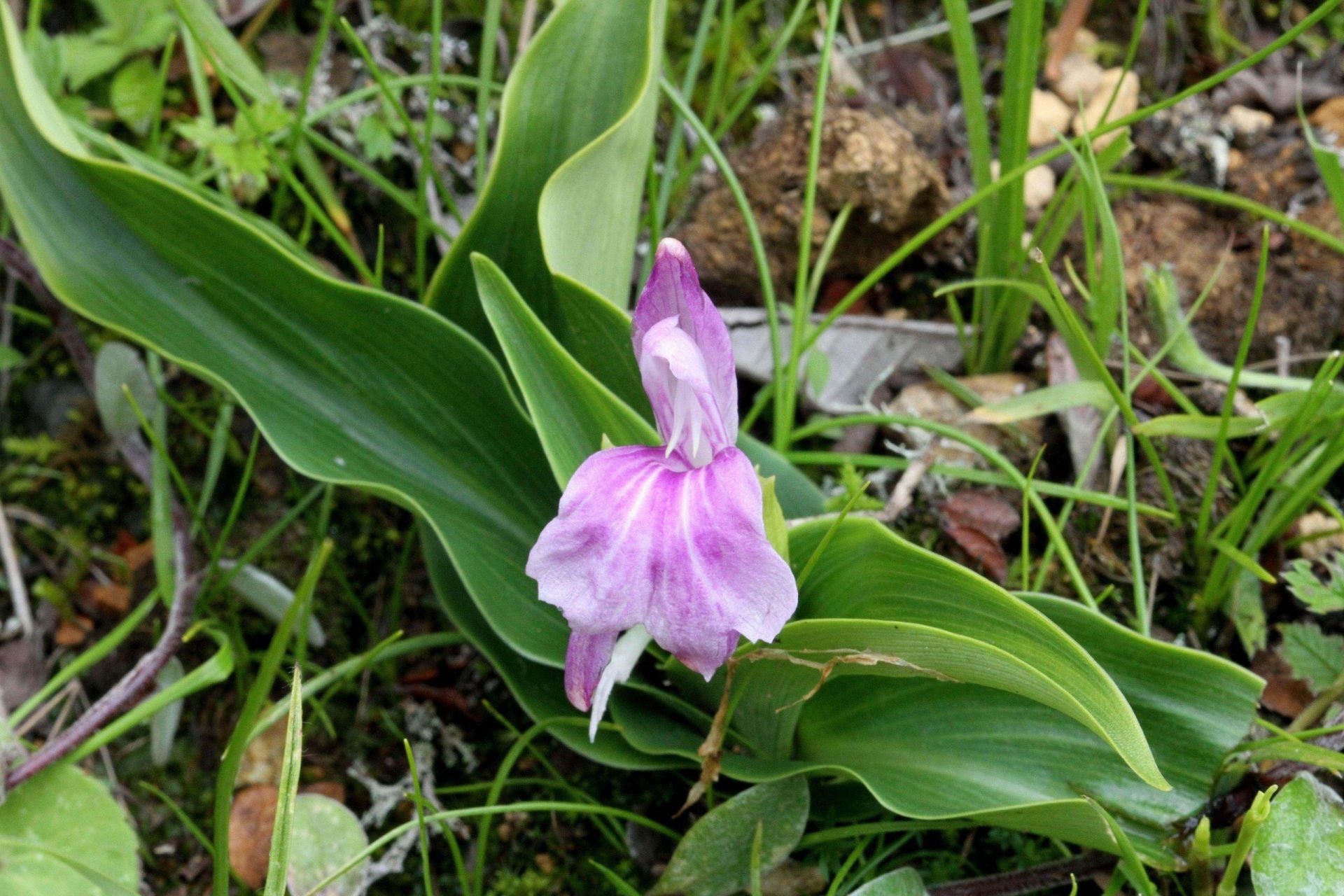
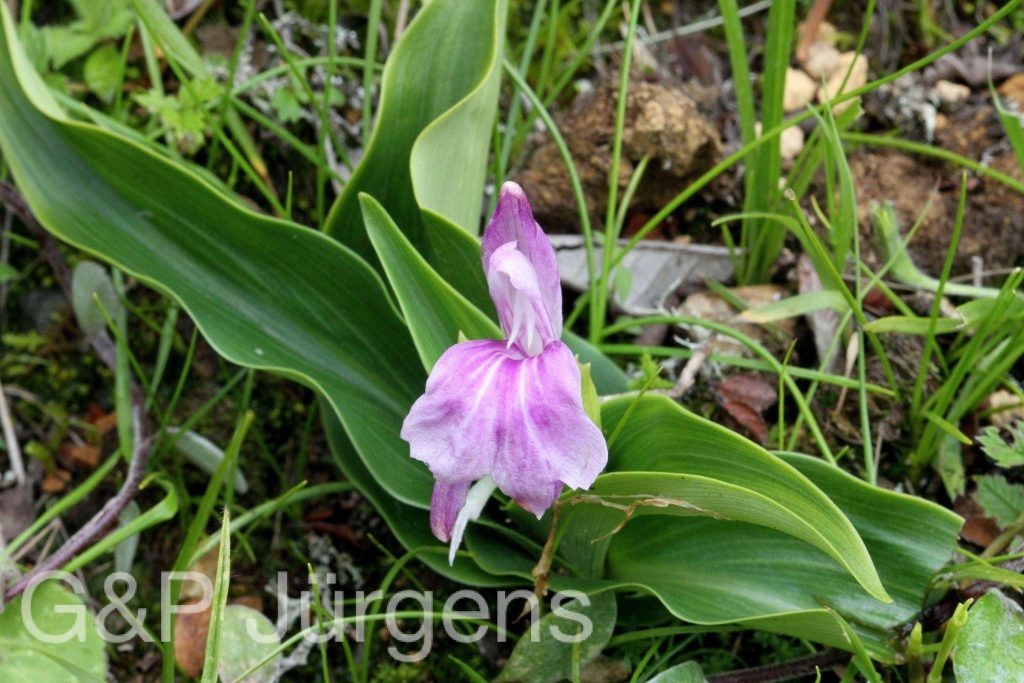
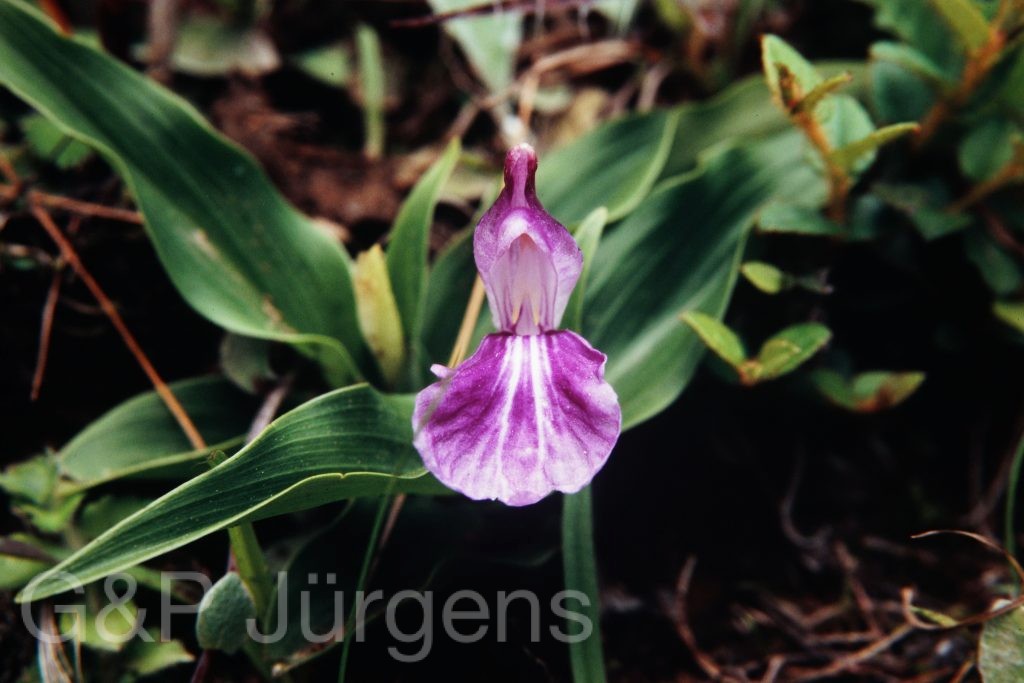
Roscoea tibetica is a small, hardy terrestrial ginger of the eastern Himalaya and adjacent China, recorded from China, Bhutan, Myanmar and Nepal across about 309 occurrences. Unusually among the largely tropical Zingiberacaea, it is a montane plant of cool grassy slopes, open forest, meadows and stream banks, growing between roughly 2500 and 4000 m. The illustrated plants come from Bhutan, at Pele-La (2800 m) and a locality recorded as Tibetica (3100 m), both flowering in June soon after the start of the growing season, when the genus emerges from dormant rootstocks.
The plant is among the smallest of its genus, usually only 5-15 cm tall, arising from a cluster of fleshy, fasciculate tuberous roots. The few leaves are lanceolate to oblong, sheathing at the base and often only partly expanded at flowering. The flowers, one or few in succession, are borne low among the leaf sheaths and are strongly zygomorphic and orchid-like; the corolla is pale to deep violet or purple, comprising a hooded dorsal lobe, two lateral staminodial petaloid structures and a large, often reflexed and notched labellum. A single fertile stamen and an inferior ovary characterise the family; the fruit is a capsule.
The Sino-Himalayan genus Roscoea is remarkable for its temperate, high-altitude ecology, an adaptation involving dormant tuberous roots that survive cold winters. The orchid-like flowers are pollinated chiefly by long-tongued bees and, in some species, hawkmoths. Widely distributed and locally frequent, R. tibetica is not regarded as threatened, though it is valued as a hardy ornamental and a model for studies of pollination and montane radiation.
Author: Batalin · Sources: POWO (Kew), GBIF, Flora of China, Flora of Bhutan, The Genus Roscoea (Cowley, Kew monograph), Annotated Checklist of the Flowering Plants of Nepal