Author

GP Jürgens

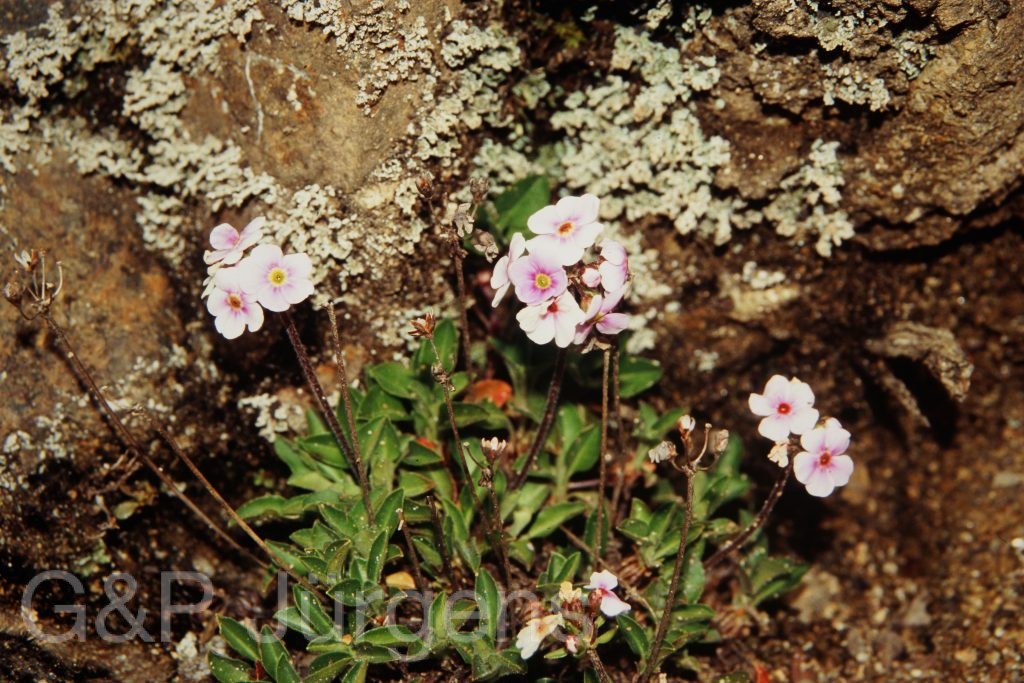
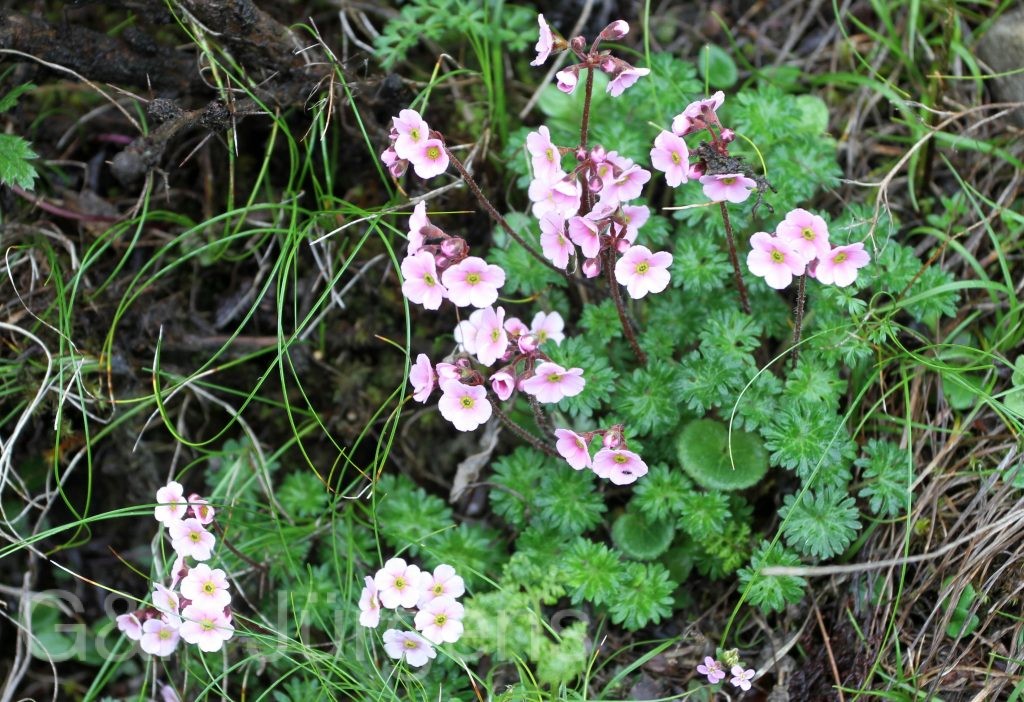
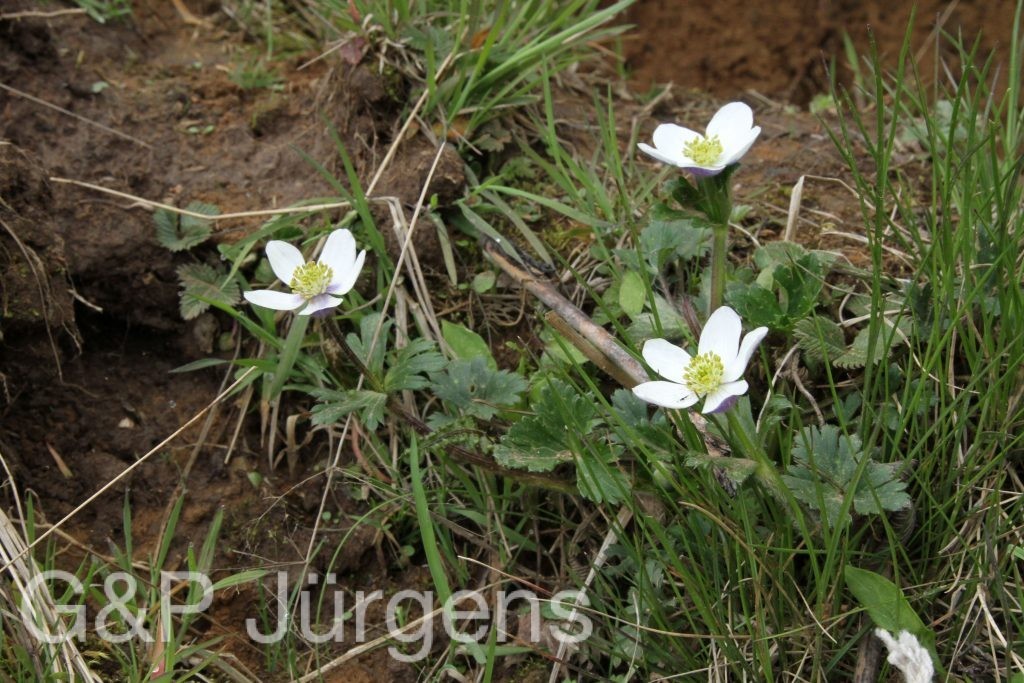
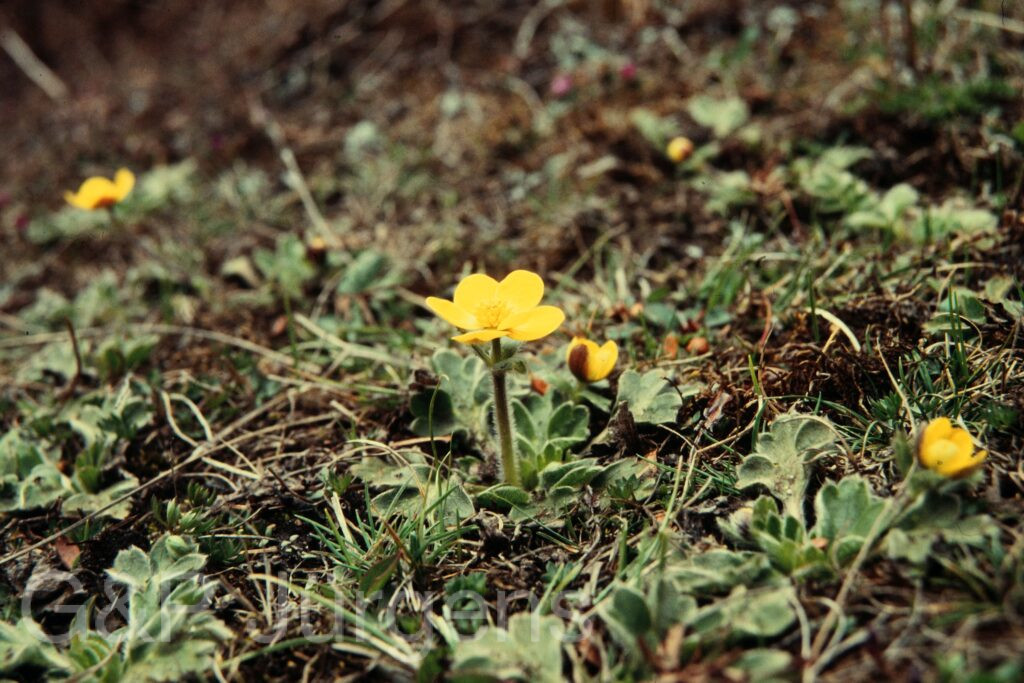
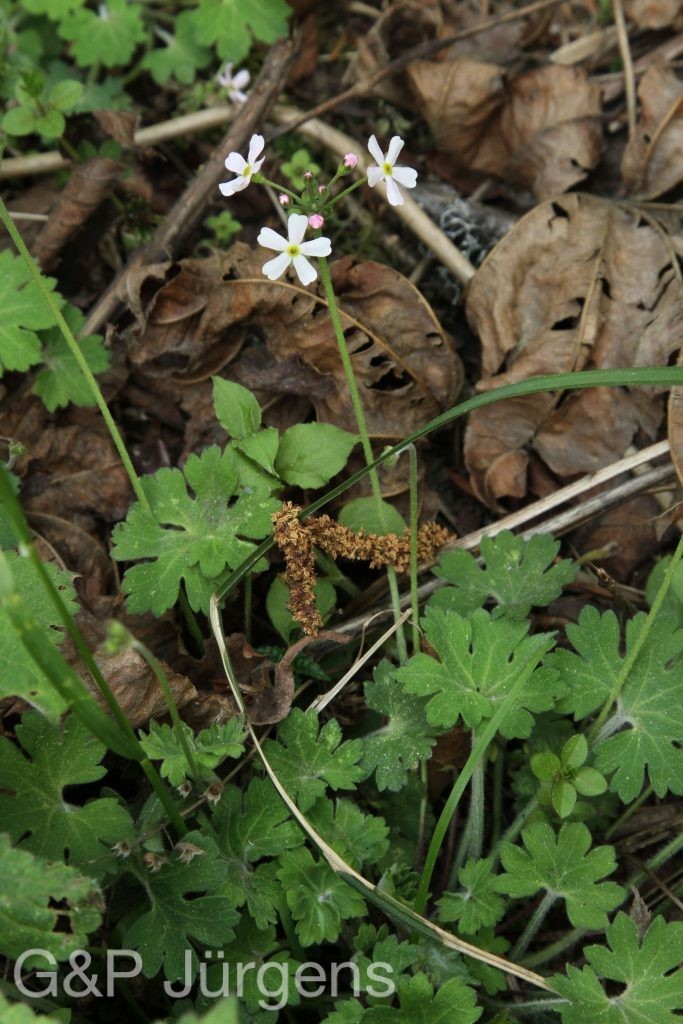
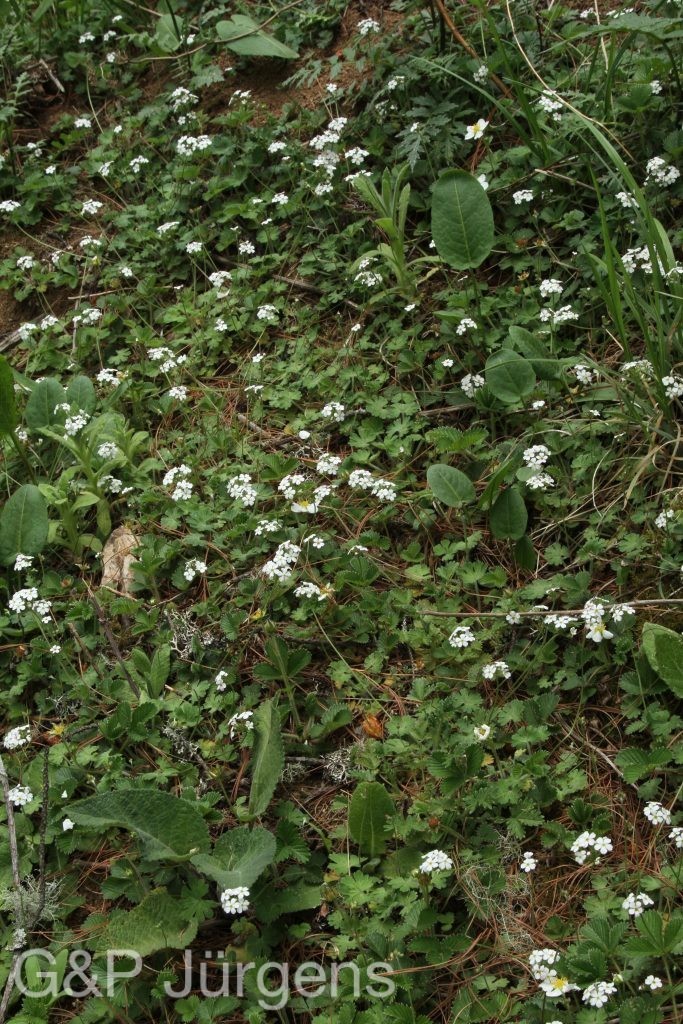
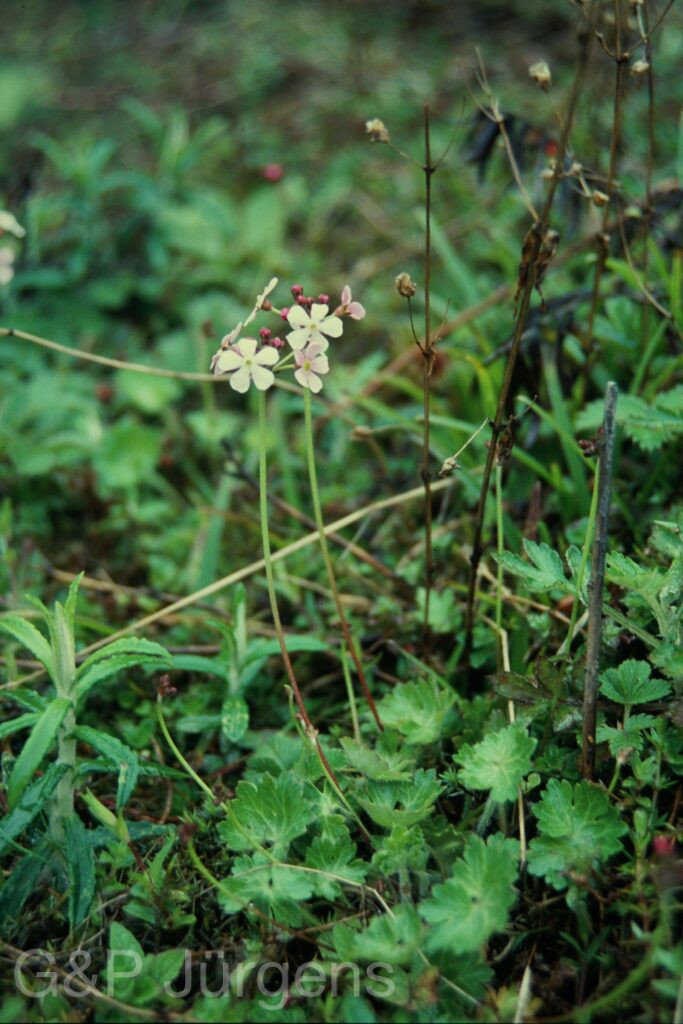
Wall.

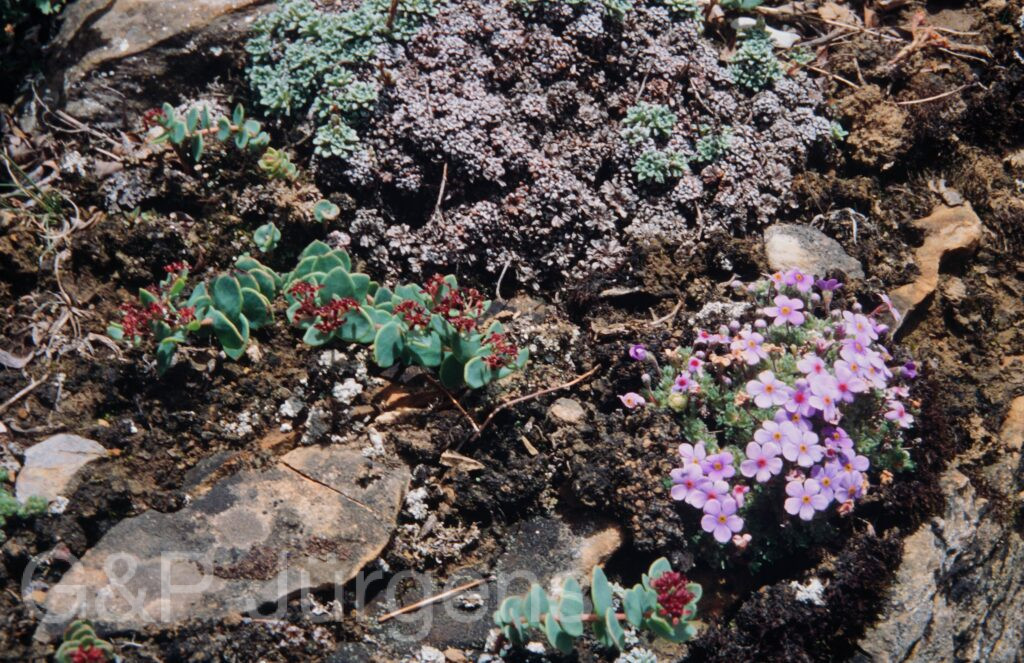
Bhutan2014 822
Bhutan Chele-La 3100m, May
Bhutan2014 1019
Bhutan Chele-La 3100m, May
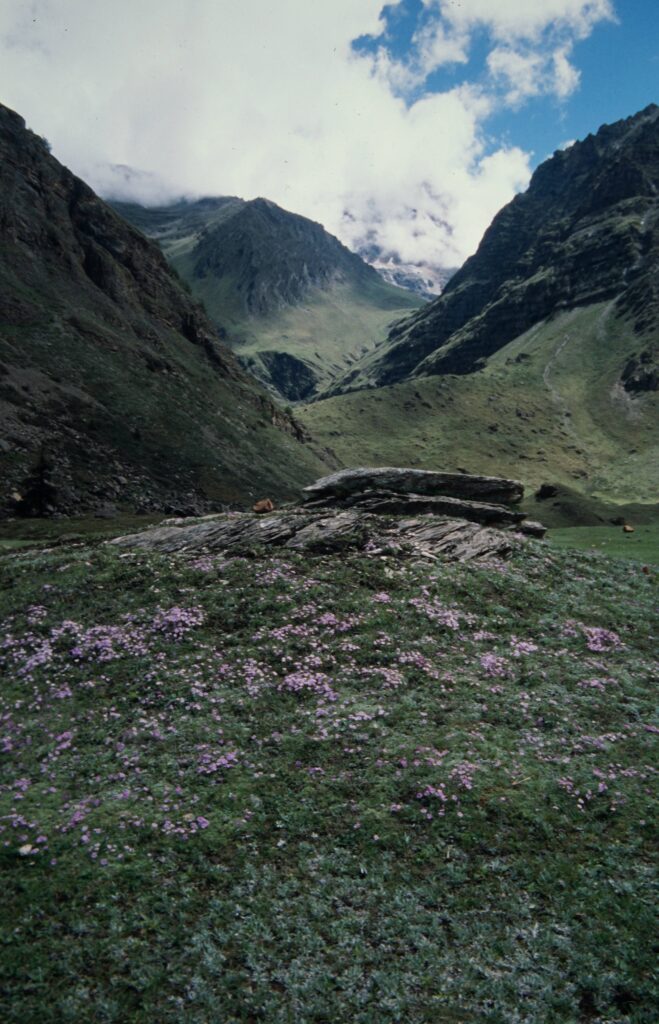
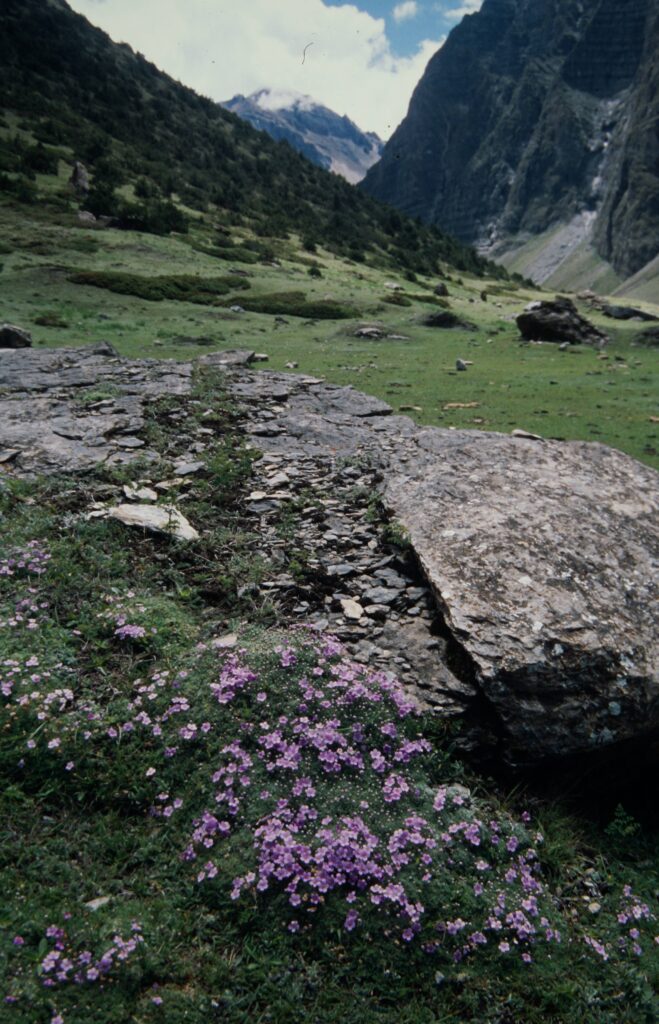
Sikkim2004 376 P653
Sikkim/India Lachung 2800m May

Description

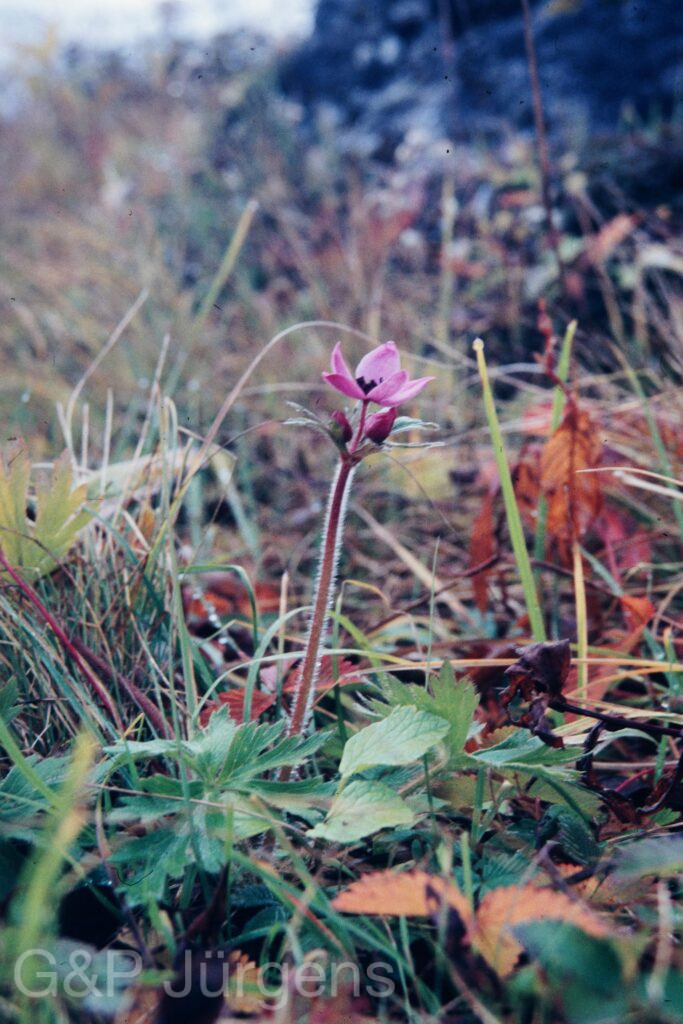
Androsace geranifolia is a Himalayan rock-jasmine of the temperate to subalpine zone, ranging through the central and eastern Himalaya from Nepal through Sikkim and India into Bhutan. GBIF currently holds no georeferenced occurrences and treats the name as doubtful at present, so its distribution is best inferred from herbarium and floristic records, which place it in moist, shaded forest, mossy banks, rock ledges and stream gullies between roughly 2500 and 3500 m. The documented sites at Chele-La in Bhutan at 3100 m and at Lachung in Sikkim, India, at 2800 m, both flowering in May, illustrate its preference for cool, humid, partly shaded montane habitats in spring.

It is a soft, herbaceous perennial, distinct among Himalayan Androsace in its conspicuously geranium-like foliage. The leaves are long-petiolate with orbicular to reniform, palmately lobed and toothed blades, forming a loose basal rosette or tuft rather than the tight cushion of many congeners. From the rosette arise slender, hairy scapes bearing an umbel of several small flowers subtended by leafy bracts. Each flower has a campanulate calyx and a salver-shaped white to pale pink corolla with five spreading lobes and a small yellow eye at the constricted throat. The fruit is a small, few- to several-seeded globose capsule.

Androsace is a large genus of Primulaceae centred on the mountains of central Asia, and A. geranifolia represents the broad-leaved, woodland-dwelling rather than cushion-forming element of the genus, allied to A. sarmentosa and A. rotundifolia. Its dissected foliage reflects adaptation to shaded forest understorey rather than the exposed screes typical of the section. As a narrowly distributed, seldom-collected Himalayan endemic, its conservation status remains formally unassessed and warrants further field documentation.

Author: Wall. · Sources: POWO (Kew), GBIF, Flora of Bhutan, Annotated Checklist of the Flowering Plants of Nepal, Smith & Lowe revision of Androsace, Flora of British India
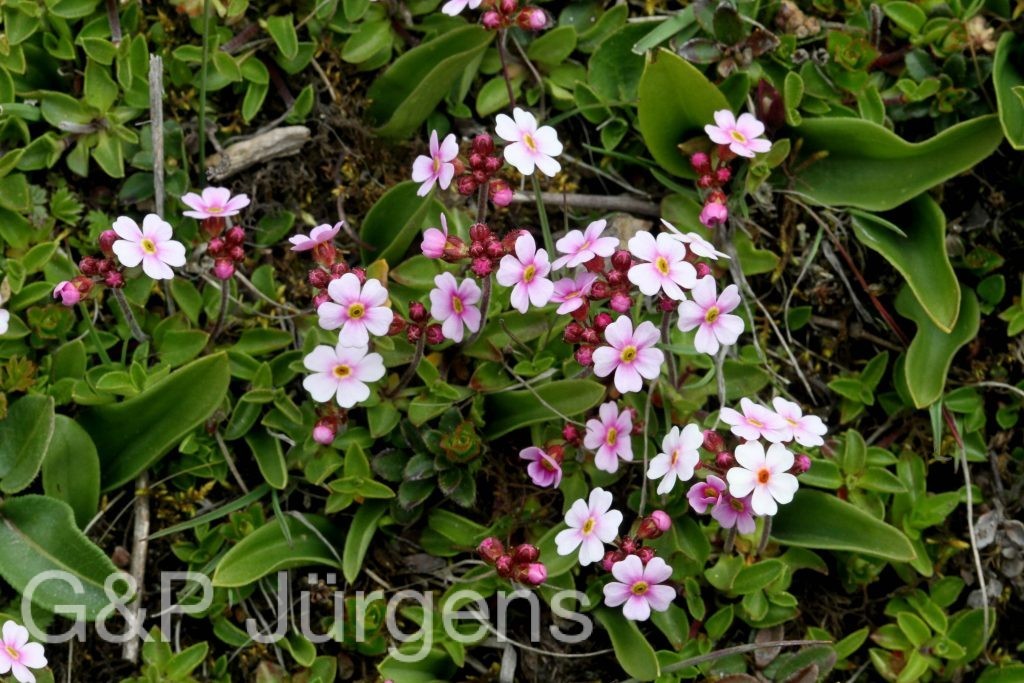
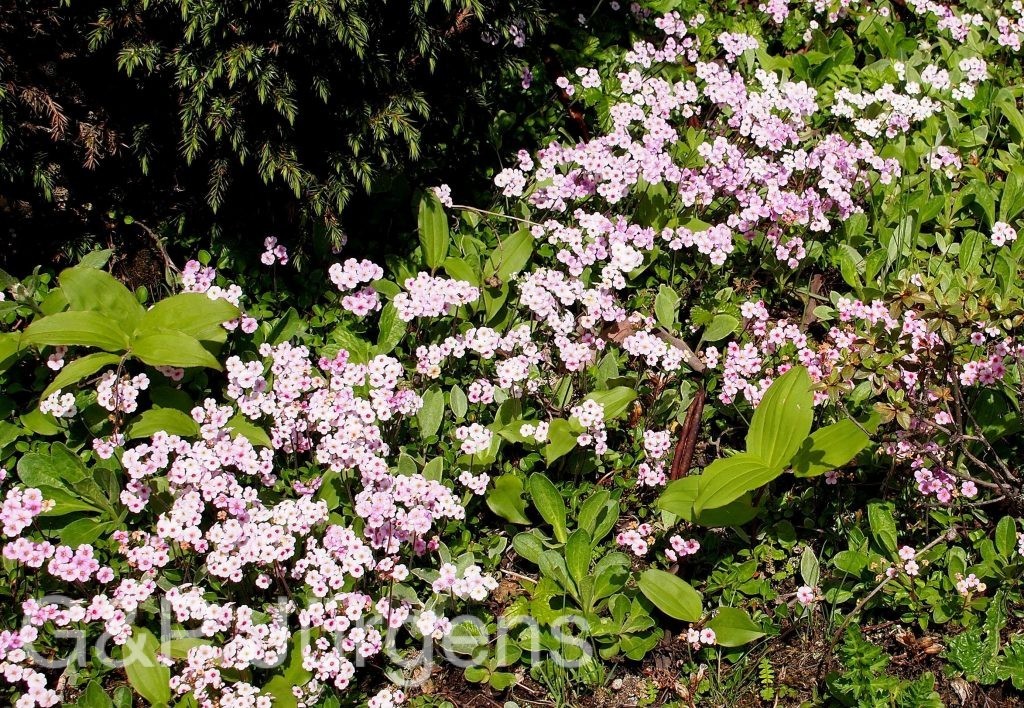
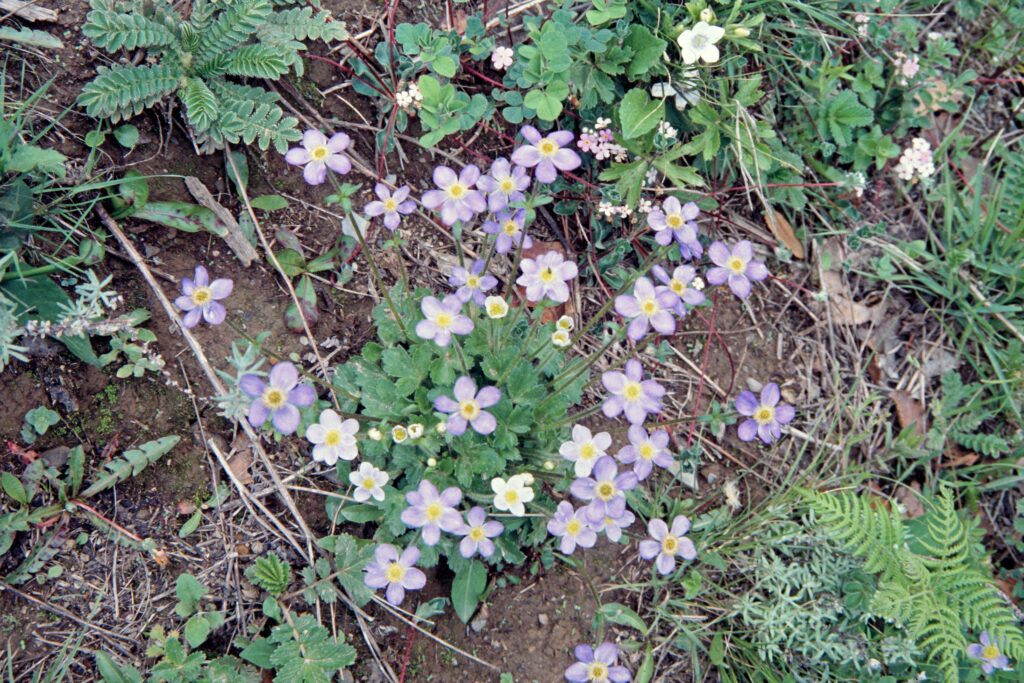
Klatt

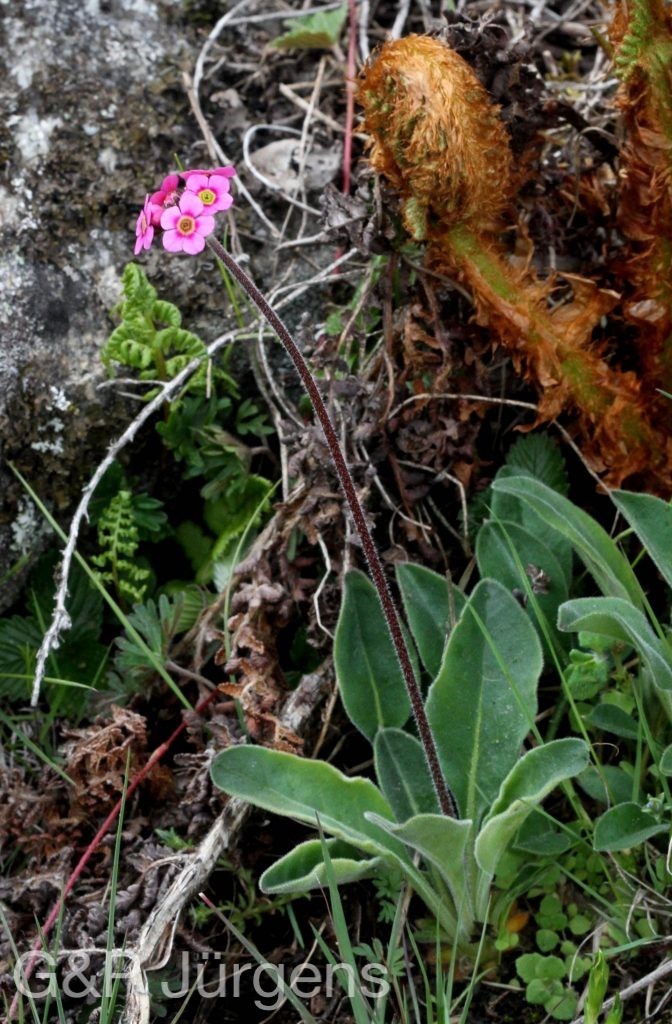
Sikkim2011 54
Sikkim Vista-valley 3800m, June
BhutanPG2011 784 01 01
Bhutan Chele-La, 3800m June
Bh09 175 G200
Bhutan Labana, 4000m June

Description

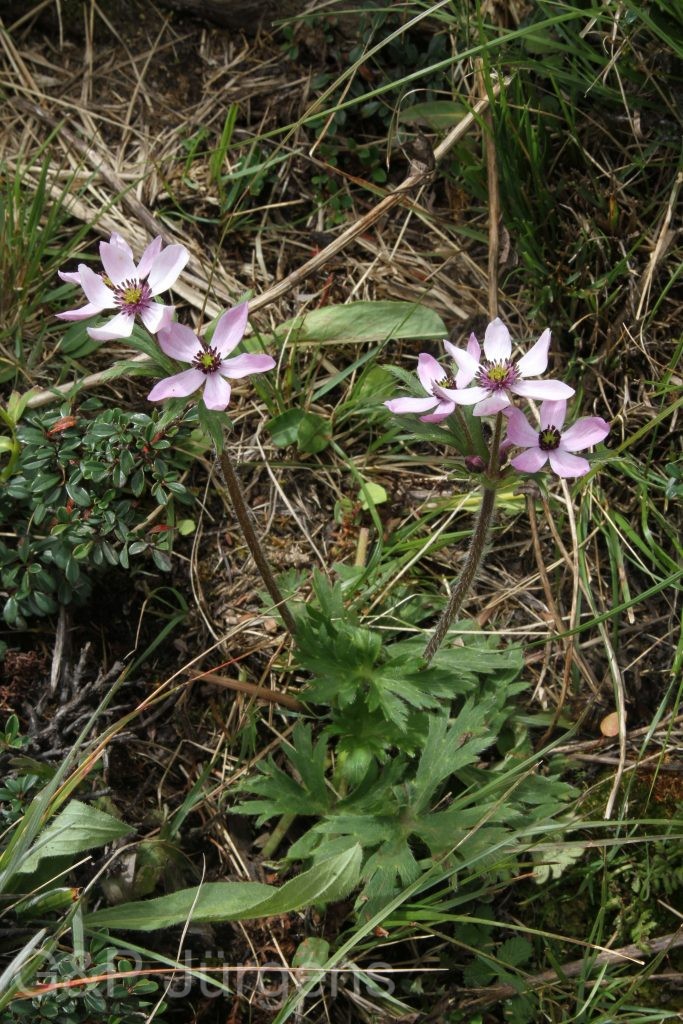
Androsace hookeriana is an eastern Himalayan rock-jasmine recorded in GBIF from Nepal, China, Bhutan and India across 120 occurrences. It grows in moist alpine meadows, grassy slopes, seepage flushes and among rocks, generally between 3500 and 4300 m. The cited collections span Sikkim's Vista valley at about 3800 m, Chele-La in Bhutan at 3800 m, and Labana in Bhutan at 4000 m, all flowering in June, indicating an early-summer alpine species that exploits damp, freshly snow-freed turf. Named for the botanist J. D. Hooker, it is a characteristic component of high eastern Himalayan herbfields.

It is a small rosette-forming perennial, the basal leaves spathulate to oblanceolate, narrowed to the base, with a sparse to dense covering of fine hairs. From the rosette rises a slender, hairy scape a few centimetres to about 15 cm tall, bearing a terminal umbel of several flowers subtended by an involucre of narrow bracts; the pedicels are hairy. Each flower has a campanulate, hairy calyx divided to about the middle and a salverform white to pale pink corolla with a yellow or pinkish eye and five rounded lobes. The fruit is a small, valvate capsule containing a few angular seeds.

As a member of Androsace (Primulaceae), the species belongs to a genus of predominantly arctic-alpine herbs richly diversified across the Himalaya and Tibetan Plateau. Its scapose, umbellate habit aligns it with the meadow-dwelling rosette species rather than the tight cushion-formers of higher scree. Pollination is by small dipterans and other insects drawn to the eye-ring, and seeds are dispersed by gravity and wind. It is locally frequent and of no recognised conservation concern.

Author: Klatt · Sources: POWO (Kew), GBIF, Flora of China, Flora of Bhutan, Annotated Checklist of the Flowering Plants of Nepal, Smith and Lowe Monograph of Androsace

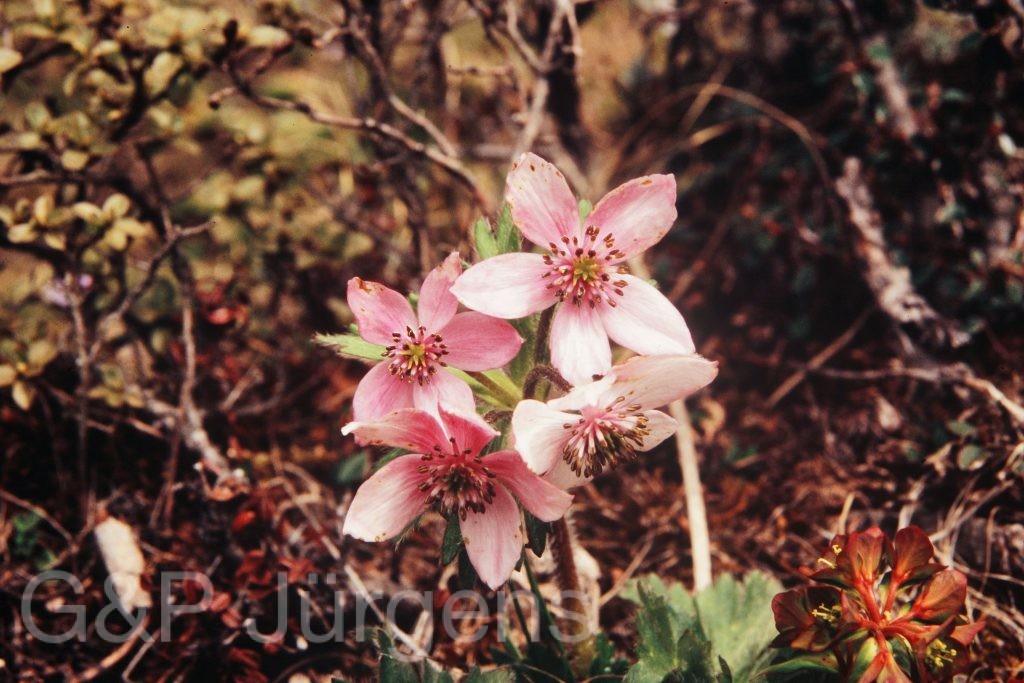
Watt

Nepal 99 781 ergebnis
Nepal Paga La Phidi 3400m, July
see also: Rhodiola upleuroides

Description

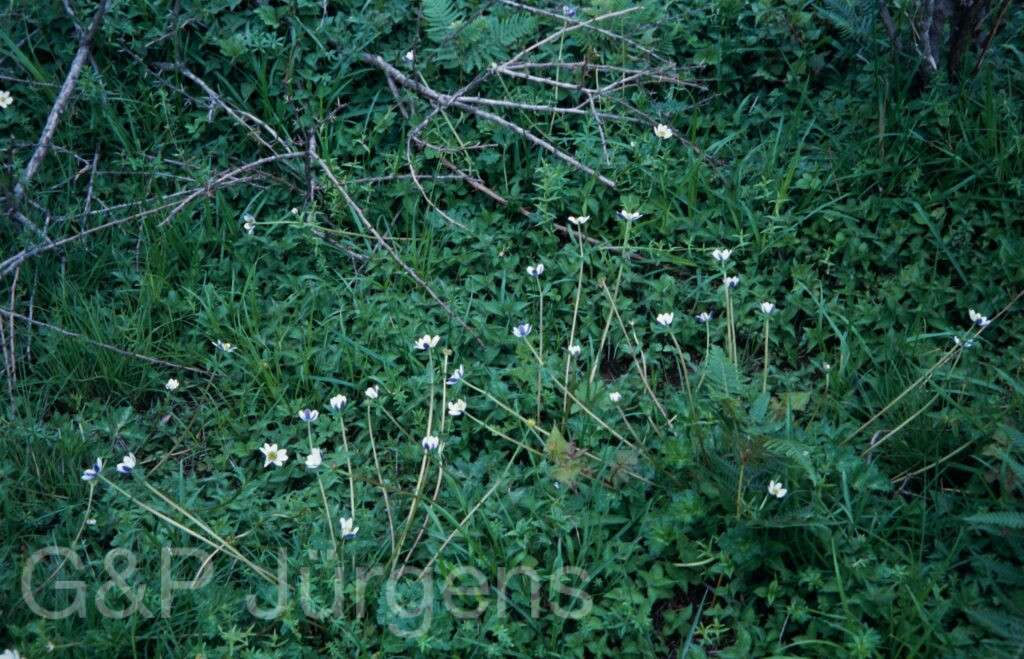
Androsace mucronifolia Watt is a cushion-forming alpine of the western and central Himalaya, distributed across Pakistan, India, China, Afghanistan and Nepal (gbif_countries: PK, IN, CN, AF, NP) with 153 occurrences in GBIF. It is a plant of dry, open, stony alpine slopes, rock crevices, gravelly ridges and exposed turf, generally in the drier inner ranges, occurring up to around 4500 m. The image data from Paga La Phidi in Nepal at 3400 m, flowering in July (noted alongside Rhodiola upleuroides), place it in the high-summer alpine zone where compact perennials exploit brief favourable conditions.

It is a low, mat- or cushion-forming perennial composed of dense leaf rosettes. The leaves are small, imbricate and characteristically mucronate, the firm cuspidate tips giving rise to the epithet mucronifolia, with margins often ciliate. From the rosettes arise short scapes bearing solitary flowers or small few-flowered umbels subtended by an involucre of bracts. The flowers have a campanulate five-lobed calyx and a salverform corolla with a short tube and five spreading lobes, white to pale pink with a contrasting yellow to reddish throat (the annulus). The fruit is a small globose capsule dehiscing by valves to release few seeds.

Androsace (Primulaceae, closely allied to Primula) comprises many high-altitude cushion species whose tight growth form is an adaptation to cold, wind and desiccation, trapping warmth and moisture at the rosette surface. The species belongs to the perennial cushion group centred on the western Himalaya and Central Asian mountains. Widespread across several countries and tolerant of harsh exposed sites, it is not considered threatened.

Author: Watt · Sources: POWO (Kew), GBIF, Flora of Pakistan (Primulaceae), Annotated checklist of the flowering plants of Nepal, Smith & Lowe monograph The Genus Androsace

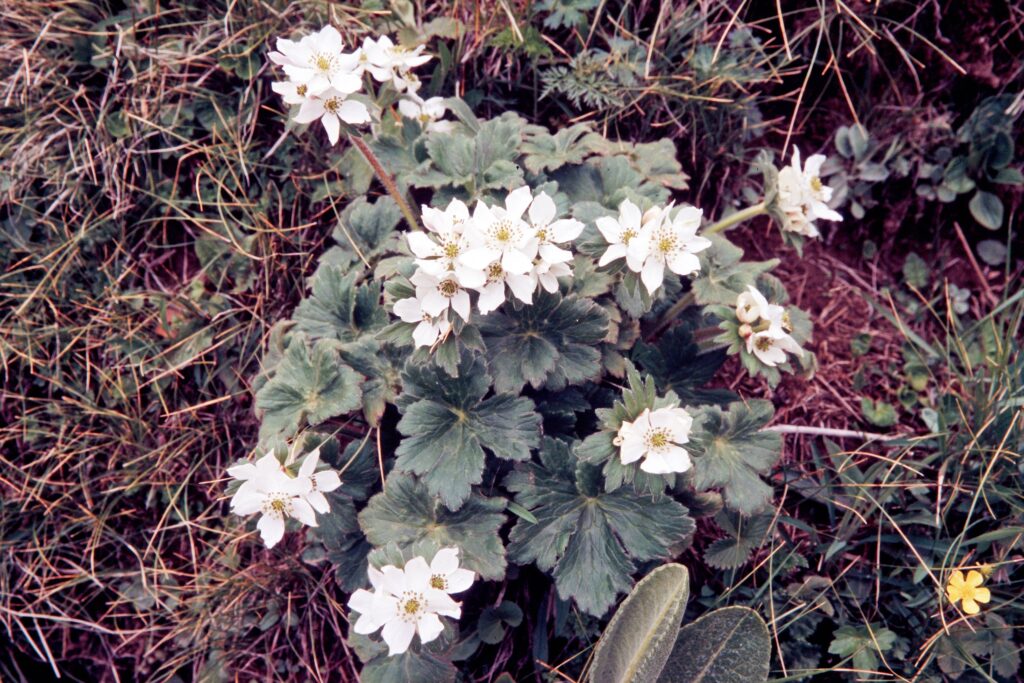
Hand.-Mazz.

BhutanPG2011 362
Bhutan Jule-Tso, 4400m June

Description

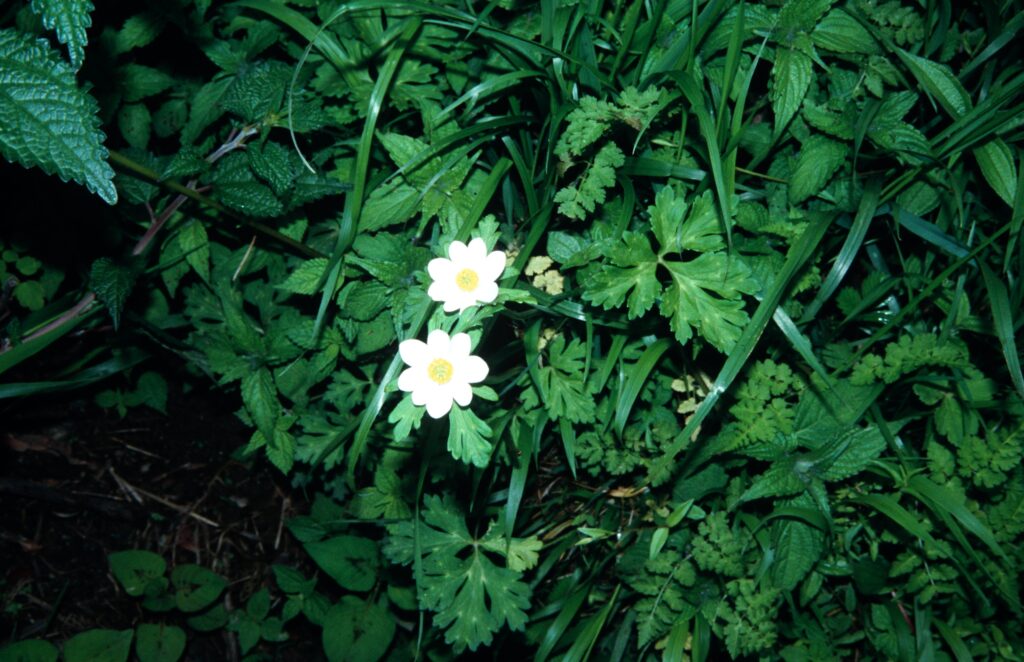
Androsace rhizomatosa is a high-alpine cushion plant of the eastern Himalaya, known in GBIF from a single Bhutanese record, an emphatic indication of its rarity and very restricted distribution. It is a plant of exposed alpine screes, rocky ridges, gravelly flushes and turf at the upper limits of vegetation. The collection at Jule-Tso in Bhutan at about 4400 m in June is consistent with the cold, windswept, well-drained high-alpine habitat the species occupies, flowering in early summer as the snow retreats from these stony slopes well above the treeline.

The species is a small perennial herb of the genus that, as its epithet rhizomatosa indicates, spreads by slender rhizomes or stolons to form loose mats or low cushions of leaf rosettes rather than tight hemispherical domes. The leaves are small, narrow and crowded into basal rosettes, often grey-green and clothed with fine hairs that reduce desiccation and ultraviolet damage. The flowers are borne singly or in small few-flowered umbels on short scapes; each has a salver-shaped corolla with five spreading lobes, white to pale pink with a contrasting yellow or pinkish eye at the constricted throat, and the stamens inserted within the corolla tube. The fruit is a small few-seeded capsule.

Androsace (Primulaceae) is a large Holarctic genus richly developed in the Himalaya and Tibetan Plateau, where rosette- and cushion-forming species are repeatedly adapted to cold, arid, high-irradiance alpine conditions; A. rhizomatosa belongs to the rhizomatous, mat-forming element rather than the dense-cushion section. Its compact growth conserves heat and moisture, and pollination is by alpine insects. Given that it is documented from essentially a single locality and confined to a fragile high-alpine niche, the species is of considerable conservation concern and merits dedicated field survey and assessment.

Author: Hand.-Mazz. · Sources: POWO (Kew), GBIF, Flora of Bhutan, Smith and Lowe Androsaces, Annotated Checklist of the Flowering Plants of Nepal

Franch.

Sikkim2011 59
Sikkim Vista-valley 3800m, June

Description

Androsace strigillosa is a Himalayan rock-jasmine recorded in GBIF from Nepal, China, India and Bhutan across 294 occurrences. It is a plant of open subalpine and alpine slopes, meadows, forest clearings and rocky banks, generally between 3000 and 4200 m. The photographed individual was found in Sikkim's Vista valley at about 3800 m in June, when the early summer brings flowering on moist, well-drained turf shortly after snow-melt. Within the genus it is one of the taller, more robust species, favouring herb-rich grassland rather than extreme scree.

It is a rosette-forming perennial with a basal cluster of oblong-lanceolate to spathulate leaves narrowed to a winged base, the lamina toothed toward the apex and clothed, as the epithet implies, in a strigillose (short, stiff, appressed-bristly) indumentum. From the rosette arises a stout, hairy scape 10-30 cm tall terminating in an umbel of numerous flowers subtended by an involucre of bracts. Each flower has a campanulate, hairy calyx and a salverform pink to rose-purple corolla with a constricted, often yellow-eyed throat and five spreading lobes. The fruit is a small, few- to several-seeded globose capsule dehiscing by valves.

Androsace (Primulaceae) is a large genus of the northern temperate and arctic-alpine zones, well represented in the Himalaya and Tibetan Plateau, where cushion and rosette forms dominate. As a comparatively large-leaved, scapose species, A. strigillosa illustrates the meadow-dwelling end of the genus's ecological range. Pollination is by small insects attracted to the contrasting eye-ring, and seeds are gravity- and wind-dispersed. It is locally common and of no conservation concern.

Author: Franch. · Sources: POWO (Kew), GBIF, Flora of China, Annotated Checklist of the Flowering Plants of Nepal, Smith and Lowe Monograph of Androsace

(Hook.f. & Thomson) Holub

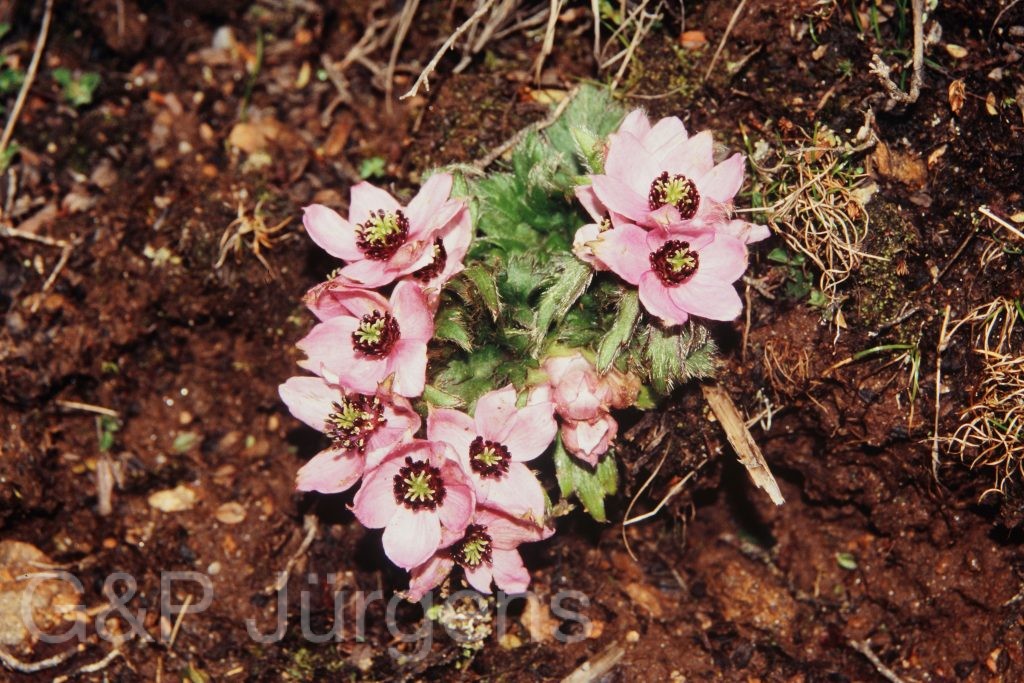
Bh09 114 G203
Bhutan Chele-La, 3500m June
Bh09 159 G282
Bhutan Chele-La, 4000m June
Nepal 95 173 P282 ergebnis
Nepal Rupien La 3850m October
Bhutan2012 273
Bhutan Dochu-La 3500m, September

Description

An alpine anemone of the Himalaya and the Tibetan Plateau, recorded from China, Myanmar, Nepal, Bhutan, India and Pakistan, with around 1600 GBIF occurrences. It is a plant of open alpine meadows, grassy slopes, rocky pastures and scrub margins, generally between about 3000 and 4500 m. The featured collections come from several high passes, including Bhutan's Chele-La at 3500 to 4000 m in June, the Dochu-La at 3500 m in September, and Nepal's Rupien La at 3850 m in October, illustrating a long flowering and fruiting season across windswept high-elevation habitats.

The species is a tufted perennial arising from a stout, often woody rootstock crowned with fibrous leaf remnants. The basal leaves are long-petiolate and palmately three- to five-divided, the segments further lobed and toothed and clothed, like the petioles, in spreading hairs. The scape bears a whorl of stalked, leaf-like involucral bracts beneath the inflorescence, which carries one to several flowers. Each flower lacks true petals; the showy perianth consists of five or more white, sometimes bluish- or pinkish-tinged tepals surrounding numerous stamens and a head of many free, hairy carpels. The fruit is an aggregate of compressed, beaked achenes adapted to wind and animal dispersal.

Formerly placed in Anemone, the species is now referred to the segregate genus Anemonastrum, accepted by POWO and GBIF, reflecting molecular and morphological re-circumscription of the windflowers; the basionym honours Hooker and Thomson. Ecologically it is a conspicuous element of summer-flowering alpine turf, offering pollen and nectar to high-altitude insects. Widespread and often locally abundant throughout the Himalaya, it is not of conservation concern, though its grassland habitats are subject to grazing and climatic shifts.

Author: (Hook.f. & Thomson) Holub · Sources: POWO (Kew), GBIF, Flora of Bhutan, Flora of China, Ziman et al. revision of Anemonastrum

(D.Don) Holub

Nepal 2001 432 ergebnis ergebnis
Nepal (Gorkha) Laprak 1900m, May

Description

Anemonastrum elongatum is a perennial herb of the temperate and subalpine Himalaya and adjacent Sino-Himalayan ranges, distributed from Nepal and India eastward through China and southward to Myanmar, with peripheral records in Sri Lanka and beyond (gbif_countries: NP, IN, CN, CA, LK, MM, ZZ); GBIF documents some 113 occurrences. It favours moist forest margins, shaded banks, grassy slopes and streamsides, ranging from warm-temperate woodland into the lower subalpine zone. The illustrated collections span a broad elevational gradient, from Laprak in Gorkha at about 1900 m to Nasem Pati in Helambu near 3550 m, both flowering in May at the onset of the monsoon.

The plant arises from a stout, ascending rhizome and produces erect, hairy stems bearing long-petiolate basal leaves that are palmately three- to five-lobed, the lobes coarsely toothed and clothed in appressed hairs. An involucre of similar but shorter-stalked leaves subtends the inflorescence, which is an elongate, few- to several-flowered cyme borne on slender, villous peduncles. The flowers lack true petals; the showy perianth consists of white to faintly tinged sepals surrounding numerous yellow stamens and a central cluster of carpels. The fruit is an aggregate of compressed, laterally winged achenes tipped with a short persistent style.

Long placed in a broadly circumscribed Anemone, the species is now referred to the segregate genus Anemonastrum, reflecting molecular and morphological recognition of natural lineages within tribe Anemoneae. Its elongating fruiting axis, evoked by the epithet, distinguishes it from allied taxa. Widespread and locally common, it is of no conservation concern, and its broad ecological amplitude makes it a characteristic component of Himalayan herb communities.

Author: (D.Don) Holub · Sources: POWO (Kew), GBIF, Flora of Nepal, Flora of China, Annotated Checklist of the Flowering Plants of Nepal, Tamura's monograph of Ranunculaceae

(D.Don) Mosyakin

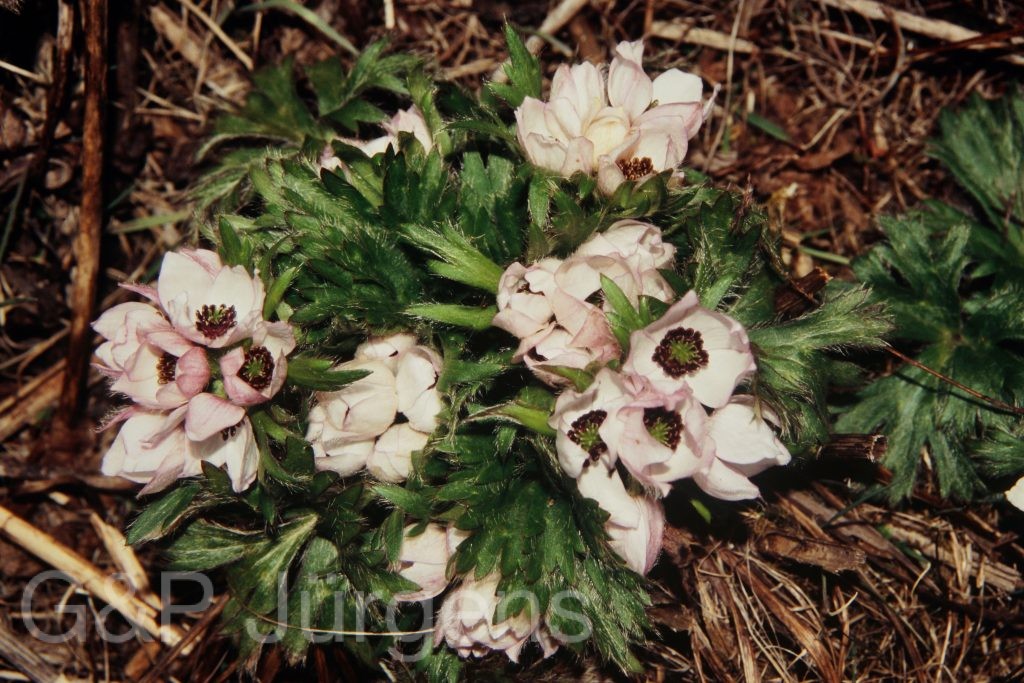
Bhutan2014 516
Bhutan Yatong-La 3200m, May
Nepal 99 82 ergebnis
Bhutan Bhulbhule 3150m, June

Description

Anemonastrum obtusilobum, long known as Anemone obtusiloba, is a widespread Himalayan and Central Asian alpine herb recorded from China, India, Nepal, Pakistan, Bhutan, Myanmar, Afghanistan, Kazakhstan and Kyrgyzstan, with a substantial 825 occurrences in GBIF. It is a plant of open alpine and subalpine meadows, grassy slopes, forest clearings and stony turf, typically between 2500 and 4500 m. The localities cited, Yatong-La at 3200 m in May and Bhulbhule at 3150 m in June in Bhutan, are characteristic of the moist, herb-rich montane grassland where it carpets slopes in spring and early summer.

The species is a tufted perennial herb from a stout, often branched rootstock clothed with the fibrous remains of old leaf bases. The basal leaves are long-petiolate and palmately three-lobed, the lobes broad and obtusely toothed (hence obtusilobum), softly hairy and somewhat fleshy. The flowering scape bears an involucre of leaf-like bracts and one to several flowers; each flower lacks petals but has five to eight petaloid sepals that are white, cream, yellow or violet-blue, surrounding numerous yellow stamens and a cluster of free carpels. The fruit is a head of compressed, glabrous achenes each tipped with a short style.

The segregate genus Anemonastrum was resurrected on molecular grounds from the broadly circumscribed Anemone, grouping the herbaceous, palmately lobed-leaved species with basal involucres; A. obtusilobum is a polymorphic species varying greatly in flower colour and stature across its range, prompting recognition of several varieties. Its insect-pollinated flowers and dry achenes, dispersed by wind and animals, suit the open alpine environment. The species is common and of least conservation concern, though it remains a useful indicator of intact Himalayan alpine meadow communities.

Author: (D.Don) Mosyakin · Sources: POWO (Kew), GBIF, Flora of China, Flora of Bhutan, Annotated Checklist of the Flowering Plants of Nepal

(D.Don) Holub

Bh09 32 G59
Bhutan above Paro 3200m, June
Garh 07 464 ergebnis
India Garhwal Khiar Kutti 3900m, June

Description

Anemonastrum polyanthes (formerly Anemone polyanthes) is a robust alpine herb distributed across the Himalaya and into western China, with GBIF holding around 362 occurrences from India, China, Nepal, Pakistan, Bhutan, Afghanistan and Myanmar. It grows in subalpine and alpine meadows, open slopes, forest clearings and grazed pastures, typically between 3000 and 4300 m, flowering with the onset of the summer monsoon. The cited collections from above Paro in Bhutan at 3200 m and from Khiar Kutti in Garhwal, India, at 3900 m, both in June, capture its broad altitudinal spread across damp, herb-rich high-meadow turf.

It is a perennial arising from a stout rootstock, with all principal leaves basal, long-petiolate and palmately three- to five-partite, the segments deeply cut and toothed, hairy on both surfaces. The flowering stem bears a whorl of leaf-like, sessile involucral bracts subtending an umbel-like cyme of several flowers, as the epithet polyanthes implies. Each flower lacks petals; the five to eight petaloid sepals are white, sometimes flushed pinkish or bluish outside, surrounding numerous yellow stamens and a domed cluster of carpels. The fruits are flattened, glabrous, ovate achenes with a short hooked beak, aggregated into a rounded head.

The segregate genus Anemonastrum, raised from Anemone on molecular and morphological grounds, accommodates this group of umbellate-flowered, multi-flowered montane species. Like other Ranunculaceae it contains acrid protoanemonin, deterring grazing livestock so that it often persists conspicuously in over-grazed alpine pasture. Widespread and frequently common throughout the Himalayan arc, it is of Least Concern and serves as a prominent component of summer-flowering high-altitude meadow communities.

Author: (D.Don) Holub · Sources: POWO (Kew), GBIF, Flora of Bhutan, Flora of Pakistan, Annotated Checklist of the Flowering Plants of Nepal, Hand-Mazzetti and Tamura treatments of Anemone

(Hook.f. & Thomson) Mosyakin

Sikkim2011 131
Sikkim Tanghu 4000m, June
Sikkim2011 129
Sikkim Tanghu 4000m, June
Bhutan2014 985 scaled
Bhutan Chele-La 4000m, May
Bhutan2014 983
Bhutan Chele-La 4000m, May
Nepal 97 210 P428
Nepal Thudam 3690m April

Description

Anemonastrum trullifolium is a Himalayan alpine herb ranging through China, India, Nepal and Bhutan, with 317 occurrences in GBIF (additional records from Britain, Myanmar, Norway and Sweden reflect cultivated or determinavit material). It grows in alpine meadows, open slopes and the margins of dwarf-shrub heath, typically between 3500 and 4500 m. Field collections span Sikkim's Tanghu at about 4000 m in June, Chele-La in Bhutan at 4000 m in May, and Thudam in Nepal at 3690 m in April, indicating an early-season flowerer that tracks receding snow on moist subalpine to alpine turf.

The plant is a rhizomatous perennial 10-30 cm tall, forming a tuft from a short, often hairy rootstock. The long-petiolate basal leaves have a trullate (trowel-shaped) to rhombic-ovate lamina, often three-lobed or coarsely toothed and silky-pilose beneath, the epithet trullifolium referring to this leaf outline. The scape bears an involucre of leaf-like bracts subtending a few-flowered umbel; the flowers lack true petals, the showy perianth comprising 5-6 white to bluish, sometimes externally tinged tepals, surrounding numerous stamens and a head of carpels. The fruiting head is a cluster of flattened, glabrous to pubescent achenes with a short hooked beak.

The species was transferred from Anemone to the segregate genus Anemonastrum following molecular phylogenetic studies that resolved the windflowers into several lineages; the basionym Anemone trullifolia (under which it is widely listed) reflects this history. Pollination is by generalist alpine insects, and the achenes are wind- and gravity-dispersed. Locally common across its range, it has no specific conservation concern.

Author: (Hook.f. & Thomson) Mosyakin · Sources: POWO (Kew), GBIF, Flora of China, Flora of Bhutan, Annotated Checklist of the Flowering Plants of Nepal, Mosyakin revision of Anemonastrum