Author

GP Jürgens

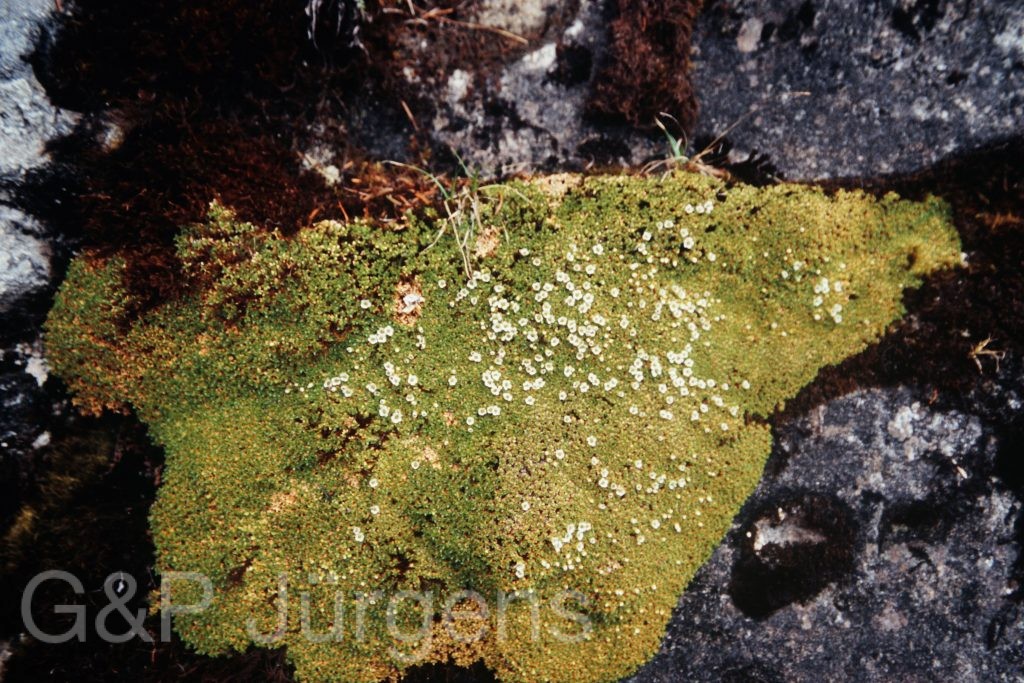
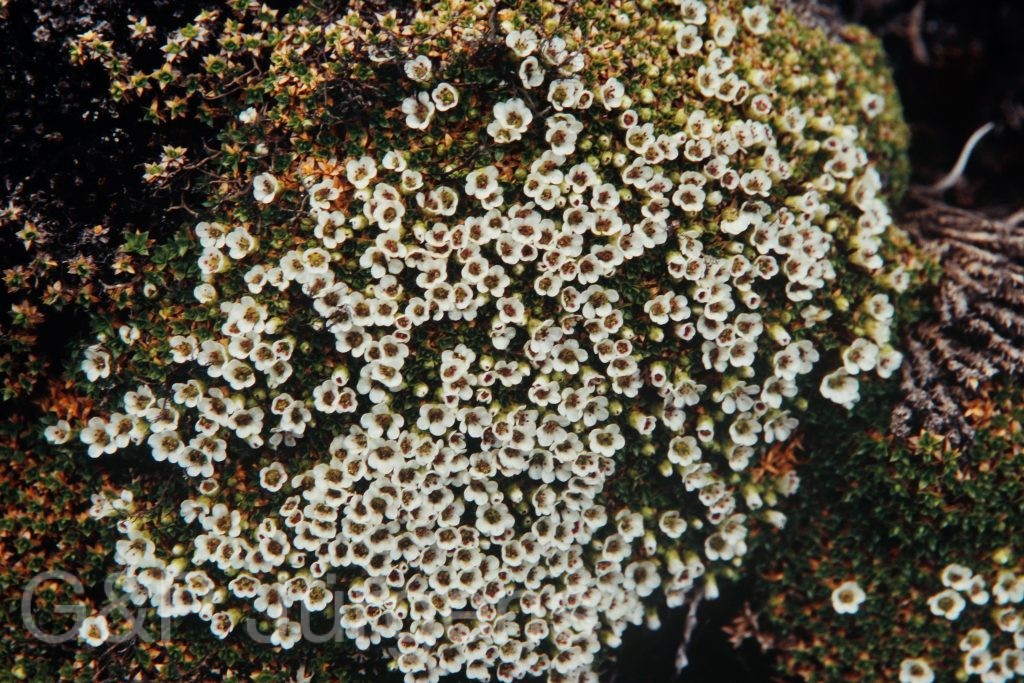
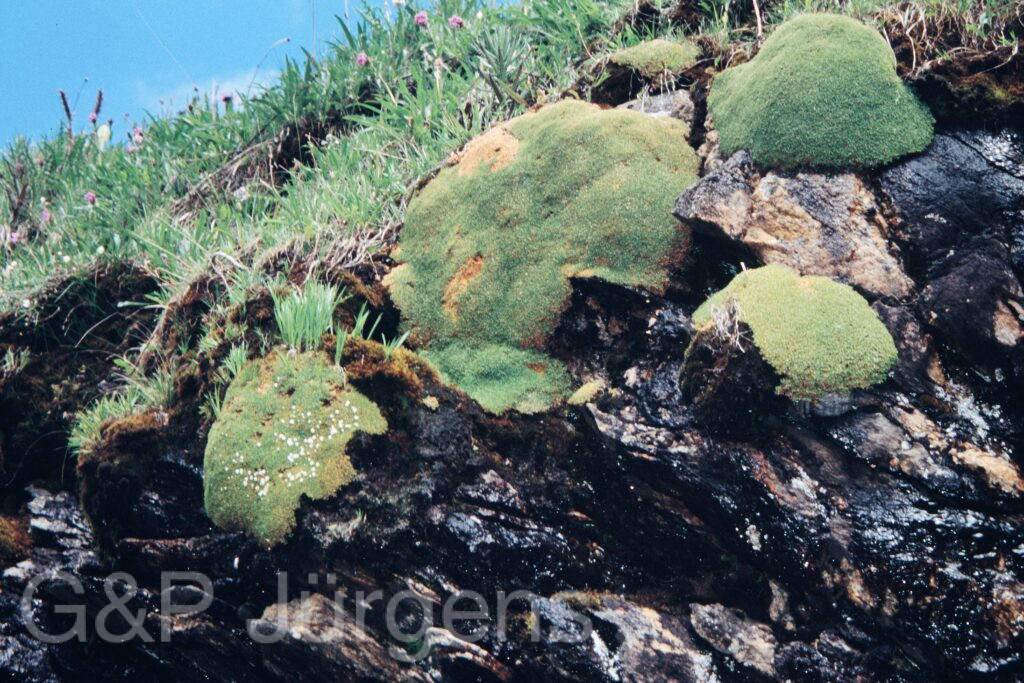
Wall.

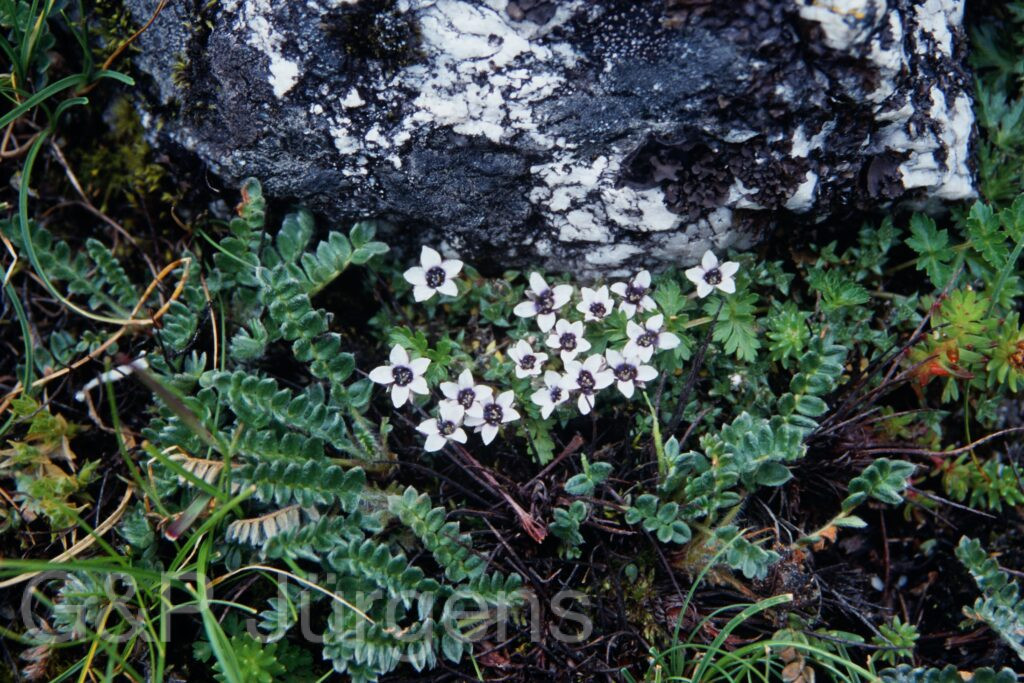
Bh09 18 P30
Bhutan Chele-La, 4000m June
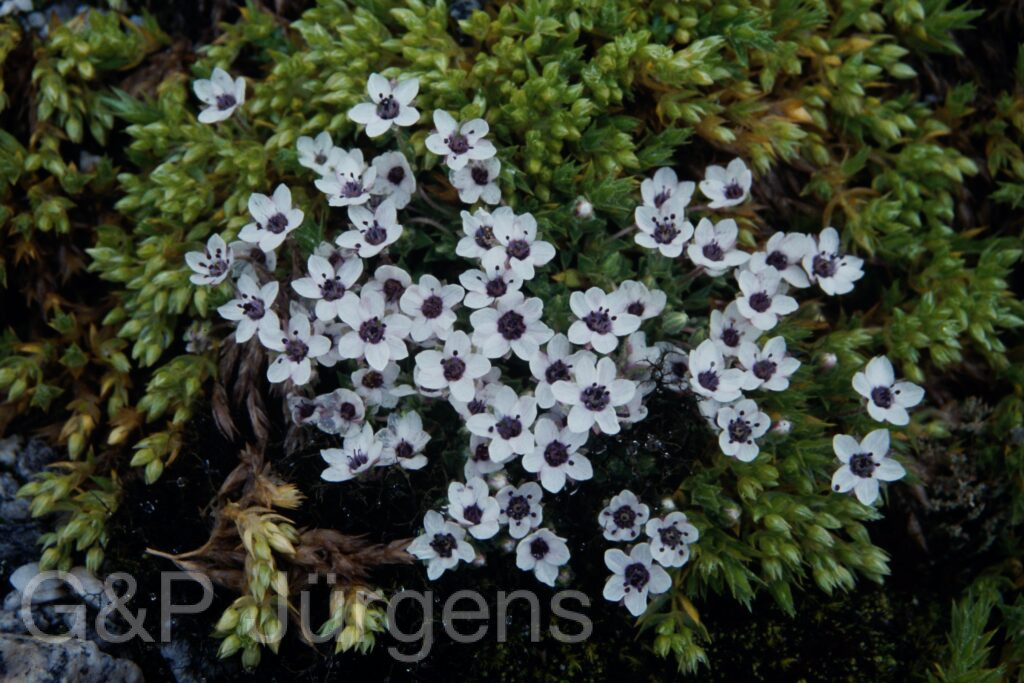
Bh09 19 P35
Bhutan Chele-La, 4000m June
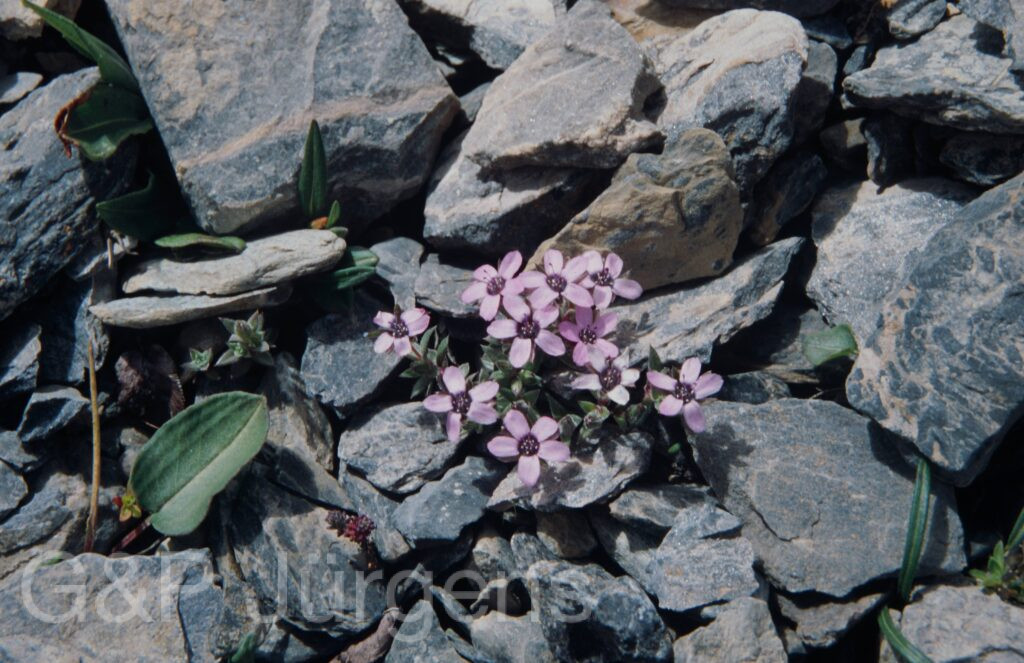
Nepal 99 512 ergebnis
West-Nepal Churta-Khola 3900m, June

Description

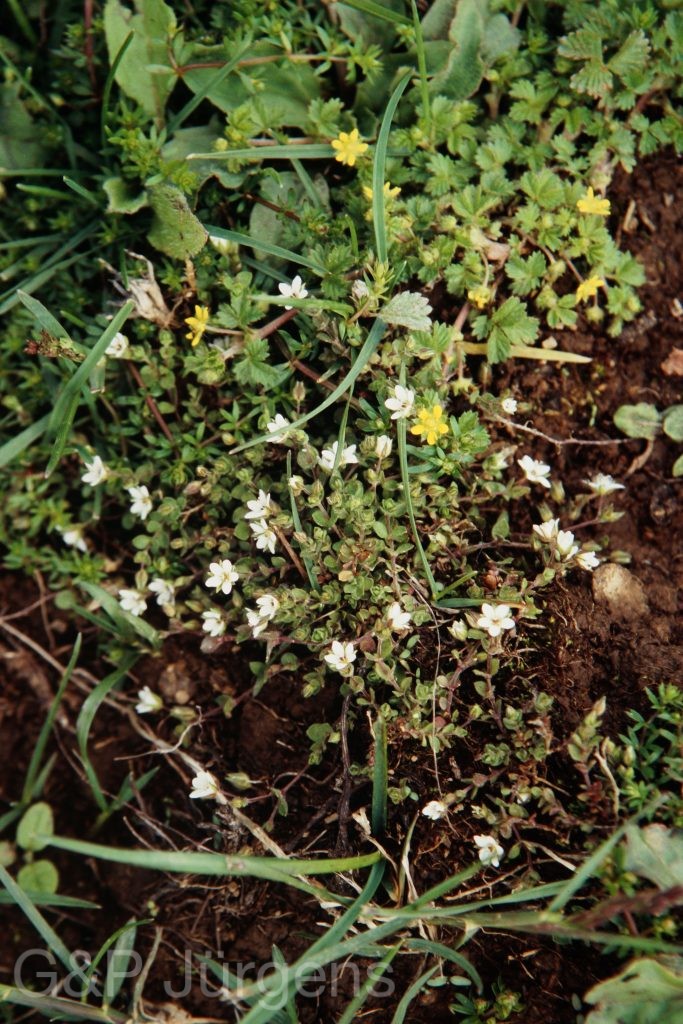
Arenaria densissima is a high-alpine cushion sandwort of the Sino-Himalaya, recorded from China (CN), Nepal (NP) and Bhutan (BT), with 159 GBIF occurrences reflecting its restricted upper-montane to alpine distribution. It is a plant of stony alpine turf, gravelly slopes, screes and exposed ridges, typically between about 3800 and 4800 m, where the dense cushion habit is an adaptation to cold, wind and intense radiation. The illustrated collections were made at Chele-La in Bhutan at around 4000 m and at the Churta-Khola in West-Nepal at about 3900 m, both in June at the start of the alpine flowering season.

It is a small, mat- or cushion-forming perennial herb with a woody, branched rootstock giving rise to densely crowded, congested shoots that form low compact tufts. The leaves are small, sessile, linear to subulate and rigid, closely imbricate and often spine-tipped, creating the dense mossy cushion alluded to by the epithet densissima. The flowers are small, solitary or few, sessile or shortly pedicellate among the leaves; they have five free, ovate sepals, five entire white petals, ten stamens and a superior ovary with styles. The fruit is a small capsule dehiscing by valves or teeth to release minute seeds.

Arenaria, in the family Caryophyllaceae, is a large genus well represented in the high mountains of Asia, where the cushion growth-form has evolved repeatedly as a convergent response to the alpine environment. Species such as A. densissima are characteristic of the Himalayan high-alpine cushion-plant communities and are of biogeographic and ecological interest as pioneers stabilising substrate and providing microhabitats in the cold desert and alpine zones.

Author: Wall. · Sources: POWO (Kew), GBIF, Flora of China, Flora of Nepal, Flora of Bhutan, Monograph of the genus Arenaria (McNeill)
Majumdar

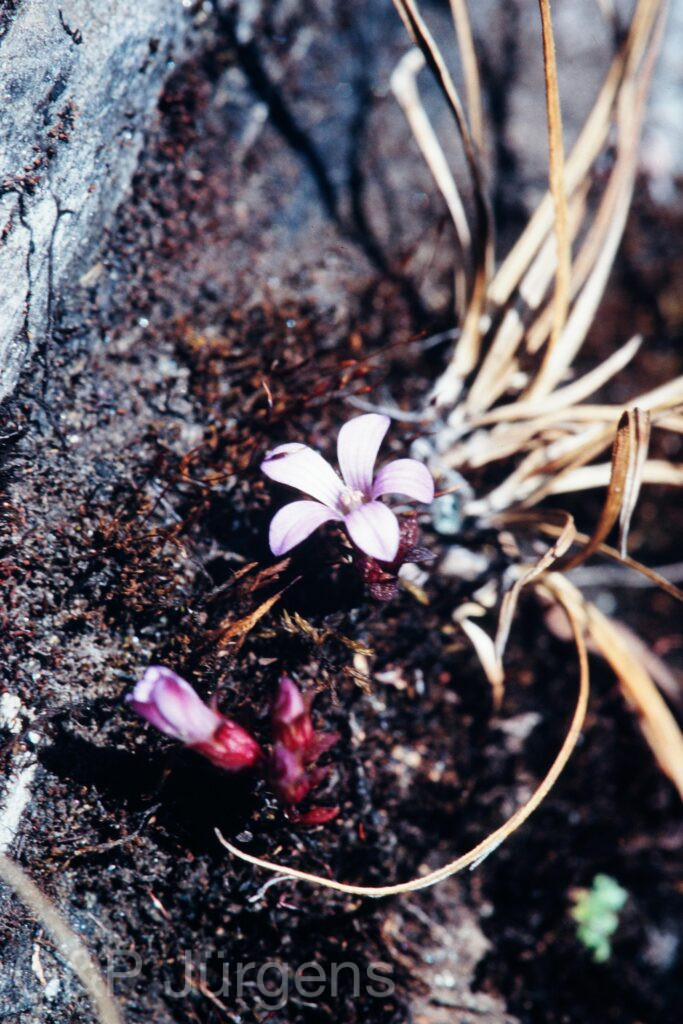
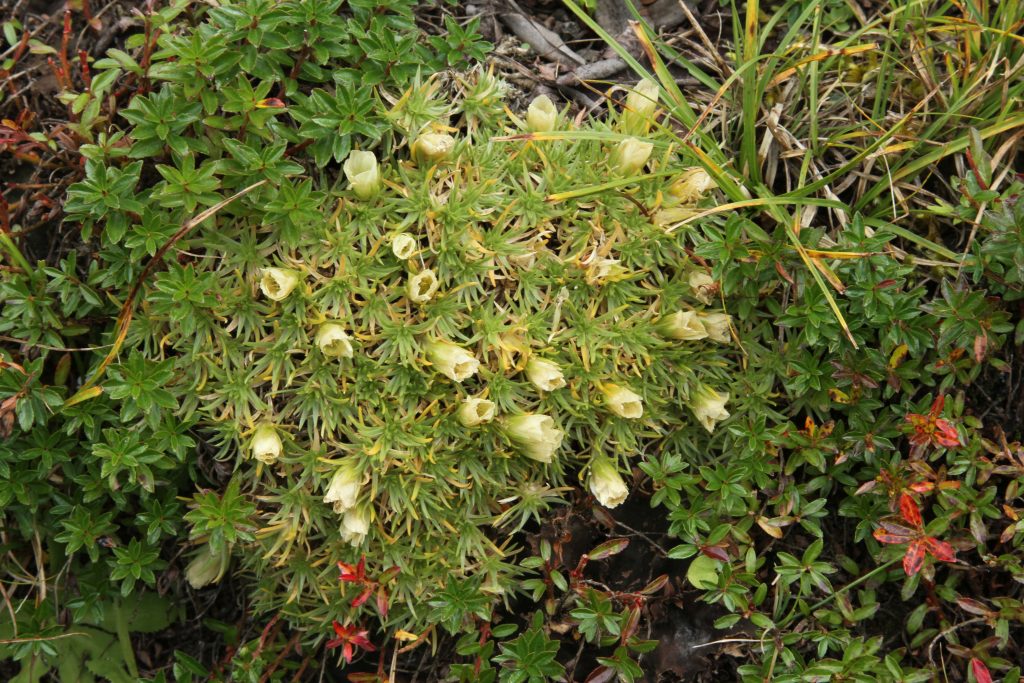
Bhutan2012 301
Bhutan Shale-La, 4100m September

Description

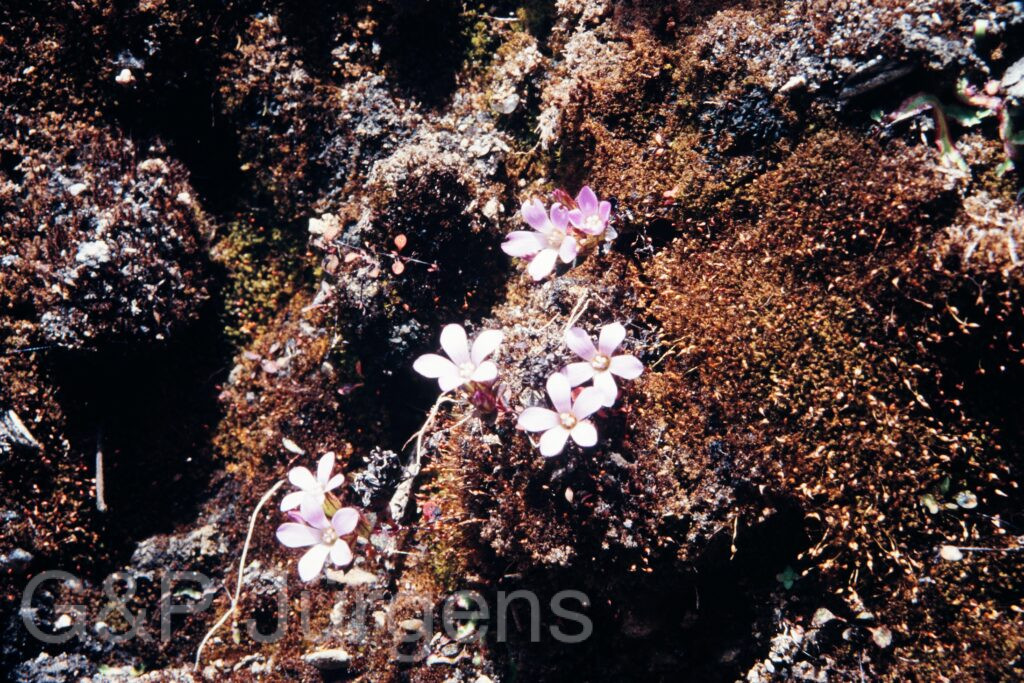
Arenaria edgeworthiana is a Himalayan sandwort recorded from Nepal, China, Bhutan and India, with around 96 georeferenced occurrences in GBIF. In the GBIF backbone the name is treated as a synonym; here Arenaria edgeworthiana is taken as the accepted name for the taxon. It occupies open, well-drained alpine habitats, including stony slopes, rock crevices, gravelly flats and short turf above the treeline, generally between roughly 3500 and 4500 m. The illustrated material was gathered at Shale-La in Bhutan at about 4100 m in September, a typical high-alpine station where this small mat-forming herb grows among scattered cushion plants on exposed ridges.

The plant is a low, tufted or cushion-forming perennial with slender, much-branched stems arising from a woody base. The leaves are small, opposite, sessile and narrowly linear to subulate, often somewhat rigid and crowded, giving the shoots a moss-like or imbricate appearance. The flowers are solitary or few in lax cymes, white, with five free sepals and five entire petals; the stamens are typically ten and the styles usually three, characters that place the plant securely within Arenaria sensu lato. The fruit is a small capsule dehiscing by valves and releasing several minute seeds.

The genus Arenaria has been repeatedly recircumscribed, with many Himalayan cushion species transferred among segregate genera such as Eremogone, which accounts for the synonymy reflected in databases. Plants of this group are well adapted to severe high-mountain conditions, their dense compact habit conserving heat and moisture. No formal conservation assessment applies, but like other restricted alpine endemics it depends on stable, undisturbed high-elevation habitat.

Author: Majumdar · Sources: POWO (Kew), GBIF, Flora of Bhutan, Flora of China, Annotated Checklist of the Flowering Plants of Nepal, McNeill revision of Arenaria

Diels

Nepal 95 384 P683 ergebnis
Nepal Bahanjyang 3800m, October
Nepal 95 385 P684 ergebnis
Nepal Bahanjyang 3800m, October

Description

Arenaria forrestii is a high-alpine cushion plant of the Sino-Himalayan region, recorded from China, Bhutan, India and Nepal across some 164 GBIF occurrences. The photographed plant was found at Bahanjyang in Nepal at about 3800 m in October, a typical setting for a species inhabiting open alpine turf, stony slopes, gravelly screes and rocky crevices, generally between 3500 and 4800 m. It forms low compact mats on exposed, well-drained substrates where the cushion habit conserves moisture and buffers against wind, frost and intense montane insolation.

The plant is a densely caespitose perennial forming tight cushions or mats from a branched, somewhat woody caudex and slender rhizomatous base. The leaves are small, sessile, linear to subulate, opposite, rigid and often imbricate, the older bases persisting. Flowering stems are short and few-flowered; the flowers are solitary or in small cymes, with five free, often dark-veined sepals and five white, entire petals exceeding the calyx. The fruit is a small ovoid capsule dehiscing by teeth and releasing several minute reniform seeds.

GBIF treats the recorded name as a synonym, with Arenaria forrestii as the accepted name. The species belongs to the speciose genus Arenaria (sandworts), well represented among Himalayan cushion-forming alpines that contribute to the distinctive scree and meadow communities of the high passes. Such cushion plants act as nurse structures, modifying their microhabitat and facilitating other alpine species. No conservation concern is recognised, populations being widespread though confined to specialised high-elevation habitats.

Author: Diels · Sources: POWO (Kew), GBIF, Flora of China, Flora of Nepal, Flora of Bhutan, McNeill – Monograph of Arenaria (Caryophyllaceae)

Edgew.

Sikkim2003 305 G431
Sikkim Saniti-Lake 4250m, August
Sikkim2003 306 G432
Sikkim Saniti-Lake 4250m, August
Nepal 99 789 ergebnis
West-Nepal Baga-La-Phedi 4400m, July

Description

Arenaria glanduligera is a cushion- or mat-forming sandwort of the high Himalaya, recorded by GBIF (about 240 occurrences) from Nepal, China, India and Bhutan. It is a true alpine of the upper alpine and subnival zones, growing on open stony slopes, gravelly flats, moraine and exposed ridges where snow lies late and the growing season is short. The photographed plants came from Sikkim near Saniti Lake at about 4250 m in August and from West Nepal at Baga-La-Phedi at around 4400 m in July, both well above the timberline and typical of its range, which extends to over 4500 m in the wettest, most exposed habitats of the inner ranges.

The plant is a low, densely tufted perennial forming compact mats from a branched, woody base. The stems are short, crowded and glandular-hairy, the indumentum giving rise to the epithet glanduligera. The leaves are opposite, small, narrowly lanceolate to subulate, acute and somewhat rigid, often ciliate on the margins. The flowers are solitary or few at the stem tips; each has five free, lanceolate sepals and five white, entire, obovate petals that exceed the sepals, with ten stamens and a superior ovary bearing three styles. The fruit is a small capsule dehiscing by valves to release numerous minute seeds, the inflorescence rendered slightly viscid by the glandular hairs.

GBIF treats the binomial as a synonym, with Arenaria glanduligera here regarded as the accepted name for the taxon. The species belongs to the large and taxonomically intricate genus Arenaria of the Caryophyllaceae, well represented in the Himalaya by a swarm of high-alpine cushion species adapted to cold, wind and intense radiation. It is locally frequent in suitable terrain and of no conservation concern.

Author: Edgew. · Sources: POWO (Kew), GBIF, Flora of China, Flora of Bhutan, Annotated Checklist of the Flowering Plants of Nepal, McNeill's revisional studies of Arenaria (Caryophyllaceae)

M.Bieb.

Bh09 185 P322
Bhutan Phajoding, 3600m June
Sikkim 2006 414 ergebnis
India West-Bengal, Kishong 2800m, May

Description

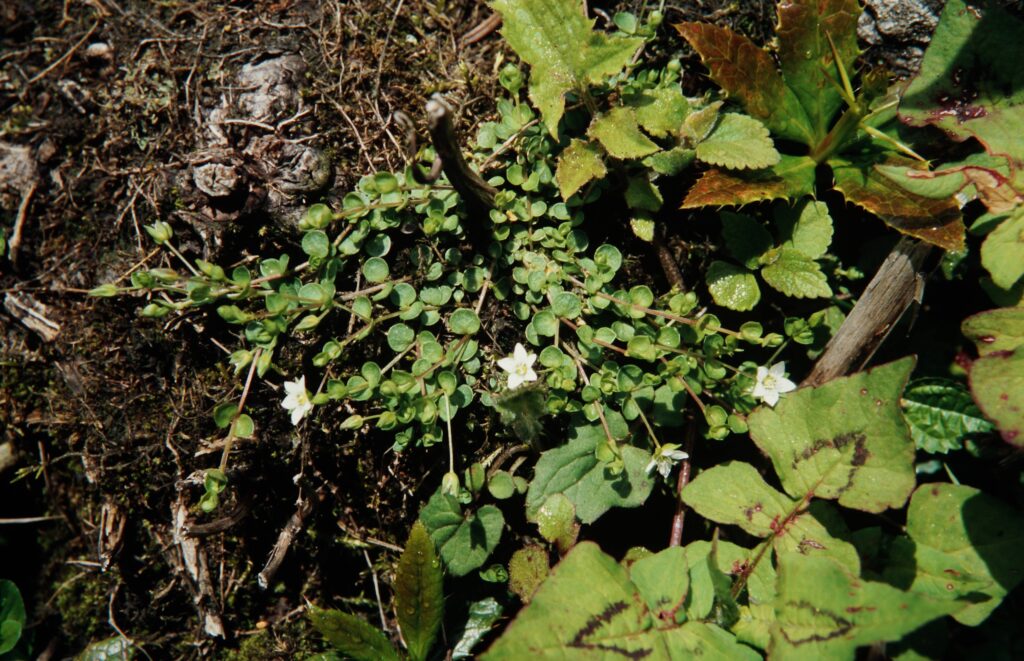
Arenaria rotundifolia is a small alpine sandwort with a wide Eurasian montane distribution, documented by 331 georeferenced records reaching from the Caucasus and Anatolia (TR, GE, AM) and the Balkans (GR, AL, BG, ME, RS) eastward through Iran (IR) and Central Asia (KZ, UZ, TJ, KG) to China (CN), Nepal (NP) and India (IN). It is a plant of moist, open alpine and subalpine ground, growing on rocky slopes, screes, streamsides, damp turf and shaded banks at high elevation. The plants recorded at Phajoding in Bhutan at 3600 m in June and at Kishong in West Bengal at 2800 m in May illustrate its presence in cool, moist Himalayan montane habitats toward the eastern edge of its range.

It is a small, slender, tufted to loosely mat-forming perennial herb with delicate, ascending to decumbent, often glandular-hairy stems. The leaves are opposite, distinctly small and rounded, ovate to suborbicular, shortly petiolate below and sessile above, giving rise to the epithet rotundifolia. The flowers are borne in few-flowered, lax cymes; each has five free, green sepals and five white, entire (not notched) petals, ten stamens and a superior ovary with three styles, in the usual arrangement of the genus. The fruit is a small capsule opening by teeth twice the number of the styles to release numerous minute, reniform seeds.

Arenaria (Caryophyllaceae) is a large, taxonomically difficult genus of mostly cushion- or mat-forming herbs of cold and rocky habitats, in which species circumscription has long been complicated by reticulate variation across its broad Holarctic range. A. rotundifolia, with its wide trans-Eurasian montane distribution, exemplifies this pattern. It is a frequent and widespread alpine herb of no conservation concern, valued chiefly as an indicator of moist, high-elevation rock and turf communities.

Author: M.Bieb. · Sources: POWO (Kew), GBIF, Flora of Bhutan, Flora of China, Flora Europaea, McNeill monographic studies of Arenaria (Caryophyllaceae)

(Soják) Soják

BhutanPG2011 515
Bhutan Ludlow-Sherriff-Trail Shashuna, 4000m June
BhutanPG2011 547
Bhutan Ludlow-Sherriff-Trail Shashuna, 4000m June

Description

Argentina aristata is a dwarf cushion-forming herb of the high alpine zone of the Himalaya, native to Nepal, Bhutan, China, India and Pakistan, with around 75 documented occurrences confined to elevations above the tree-line. It grows on stony alpine turf, gravelly slopes, fellfield and the crevices of moraine and rock outcrops, typically between about 3800 and 5000 m. The photographed plant was recorded along the historic Ludlow-Sherriff Trail at Shashuna in Bhutan at 4000 m, flowering in June, when the brief high-altitude growing season permits these tightly clustered alpines to bloom.

The species is a densely tufted, mat-forming perennial with a stout, branched, woody caudex clothed in the persistent remains of old leaves. The leaves are imparipinnate and crowded into rosettes, with small, deeply incised to pinnatifid leaflets that are silky-villous, the segments often ending in a fine bristle-like point, as the epithet aristata implies. The flowers are solitary or few on short scapes; they are typically pentamerous with an epicalyx, the petals golden-yellow and obovate, exceeding the sepals, surrounding numerous stamens and a head of carpels. The fruit is a cluster of small dry achenes.

Argentina is segregated from Potentilla in the broad sense, comprising the silverweeds and allied pinnate-leaved cinquefoils; this taxon was long known as Potentilla microphylla var. achilleifolia before transfer by Soják. Such cushion habit is a classic adaptation to the cold, windswept, desiccating conditions of the upper alpine zone. The species is restricted in range but locally frequent in suitable high-altitude habitat and is not considered threatened.

Author: (Soják) Soják · Sources: POWO (Kew), GBIF, Flora of Bhutan, Flora of China, Potentilla monograph (Soják)

C.B.Clarke

Nepal 99 958 ergebnis
West-Nepal Thuli Bheri 2150m, July
Nepal 99 959 ergebnis
West-Nepal Thuli Bheri 2150m, July
Nepal 99 960 ergebnis
West-Nepal Thuli Bheri 2150m, July

Description

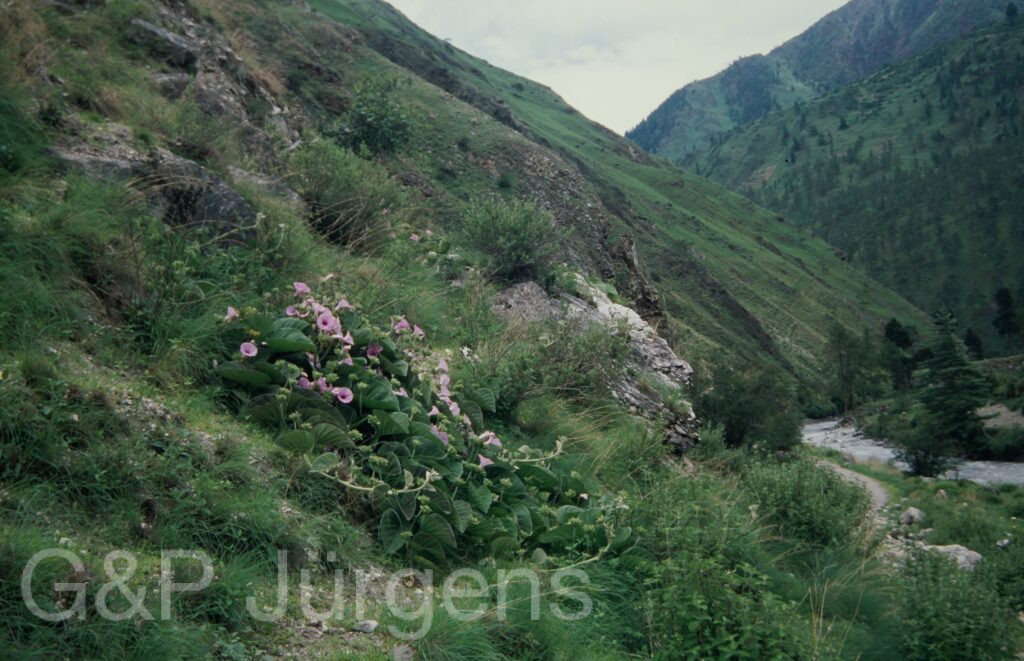
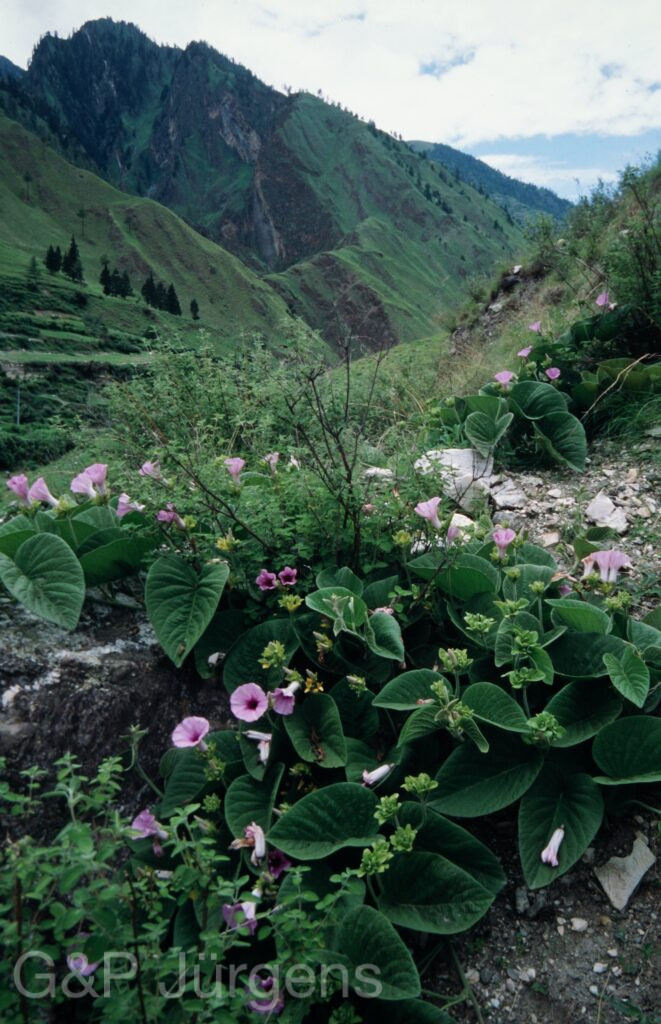
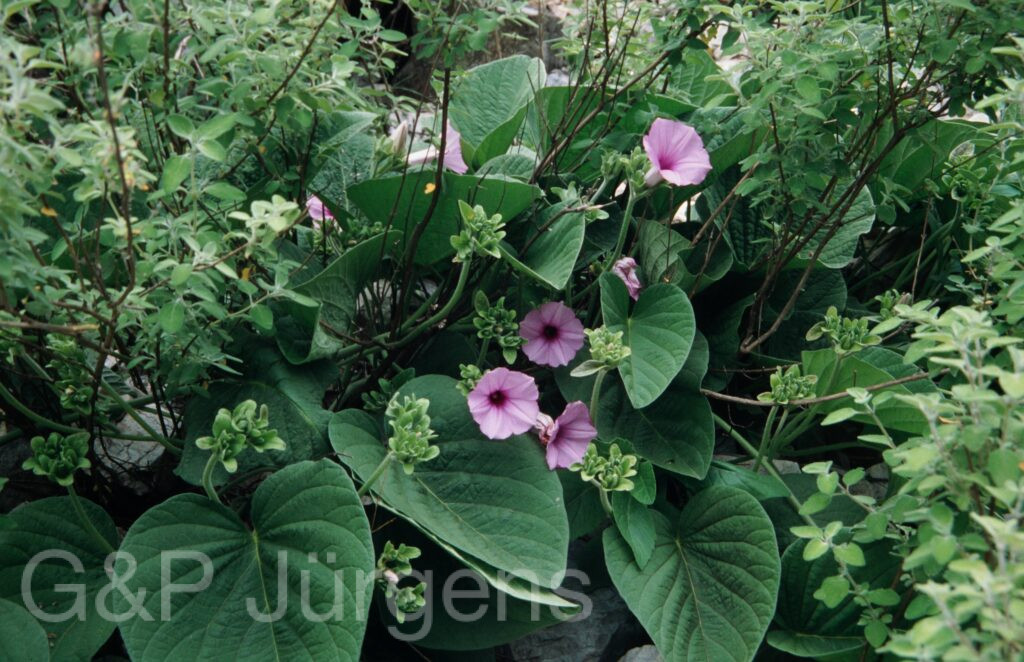
Argyreia hookeri C.B.Clarke is a woody climber of the morning-glory family native to the Himalaya and adjacent Indo-Malesian region. GBIF records indicate occurrences in Nepal, India, Bhutan, China, Myanmar, Thailand and Indonesia, marking a distribution that spans the Himalayan foothills into Southeast Asia. It grows in forest margins, thickets and along streamsides in subtropical to lower temperate forest, generally between about 1,000 and 2,300 m. The plant photographed in the Thuli Bheri valley of west Nepal at 2,150 m, flowering in July, reflects its monsoon-season anthesis in moist hill forest.

The species is a perennial twining liana with stems that are pubescent when young. The leaves are large, ovate to broadly cordate, entire, acuminate, and softly hairy beneath, borne on long petioles. The flowers are arranged in axillary, peduncled cymose clusters subtended by conspicuous bracts; the corolla is funnelform and showy, rose-pink to purple with a darker throat, the limb shallowly lobed. As in Argyreia, the fruit is an indehiscent berry enclosed by the enlarged, somewhat fleshy persistent sepals, containing a few hard seeds.

Argyreia is distinguished from the related Ipomoea chiefly by its baccate, non-capsular fruit. A. hookeri is one of numerous Himalayan species of the genus and is occasionally cultivated as an ornamental climber. The genus is noted for indole alkaloid content, and several species feature in ethnobotanical use. The species remains locally frequent across its wide range.

Author: C.B.Clarke · Sources: POWO (Kew), GBIF, Flora of China Vol. 16, Flora of Bhutan Vol. 2, Staples: Revision of Asiatic Convolvulaceae

Choisy

Bhutan2012 1233
Bhutan Tashigang 1900m, October

Description

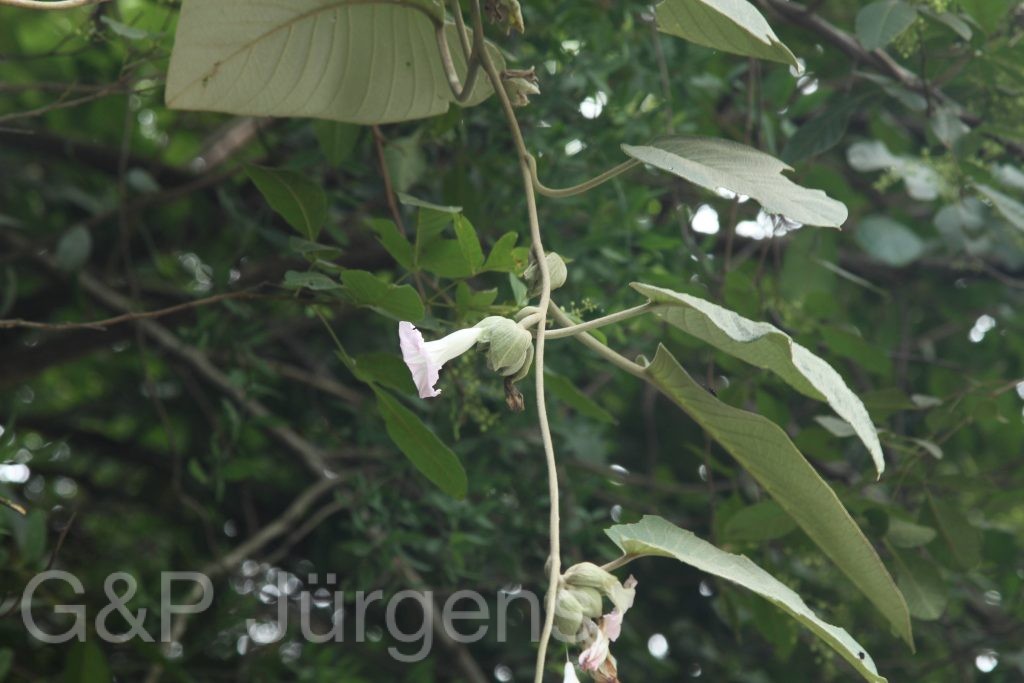
Argyreia wallichii is an Indo-Himalayan and Southeast Asian woody climber distributed through China, northeastern India, Bhutan, Thailand, Myanmar and Vietnam, with GBIF recording about 219 occurrences. It is a plant of warm subtropical to lower montane forest and its margins, the illustrated material coming from Tashigang in eastern Bhutan at 1900 m, flowering in October. It scrambles over shrubs, hedges and trees along forest edges, clearings, roadsides and stream banks on moist, fertile soils in the foothill and lower hill zone, behaving as a vigorous liana in disturbed and secondary vegetation.

The species is a large twining perennial vine with stout stems clothed, like the foliage, in dense silvery or rusty appressed hairs. The leaves are alternate, long-petiolate, broadly ovate to suborbicular with a deeply cordate base and acuminate apex, dark green above and conspicuously silvery-tomentose beneath. The showy flowers are borne in dense, head-like axillary cymes subtended by large, persistent, leafy bracts; the funnelform (infundibular) corolla is rosy-pink to purple with a darker throat, and the five stamens are inserted within the tube. The fruit is a small, berry-like indehiscent capsule, more or less enclosed by the enlarged, persistent and often coloured calyx, attractive to birds.

Argyreia (the woolly morning glories, allied to Ipomoea within Convolvulaceae) is a palaeotropical genus centred on Asia, distinguished by its frequently fleshy or berry-like fruits and persistent bracts. A. wallichii is widespread and locally common, not regarded as threatened, and is of ethnobotanical note in the region; like other members of the family it is pollinated chiefly by bees and larger insects visiting its open funnel-shaped corollas.

Author: Choisy · Sources: POWO (Kew), GBIF, Flora of China, Flora of Bhutan, Flora of British India (Hooker), Staples revision of Asian Argyreia (Convolvulaceae)

Arisaema concinnum

by GP Jürgens

Schott

Bhutan2014 461
Bhutan Tongsa 2000m, May
Bhutan2014 462
Bhutan Tongsa 2000m, May
Sikkim2004 118 P202
India West-Bengal, Utaray 2200m April

Description

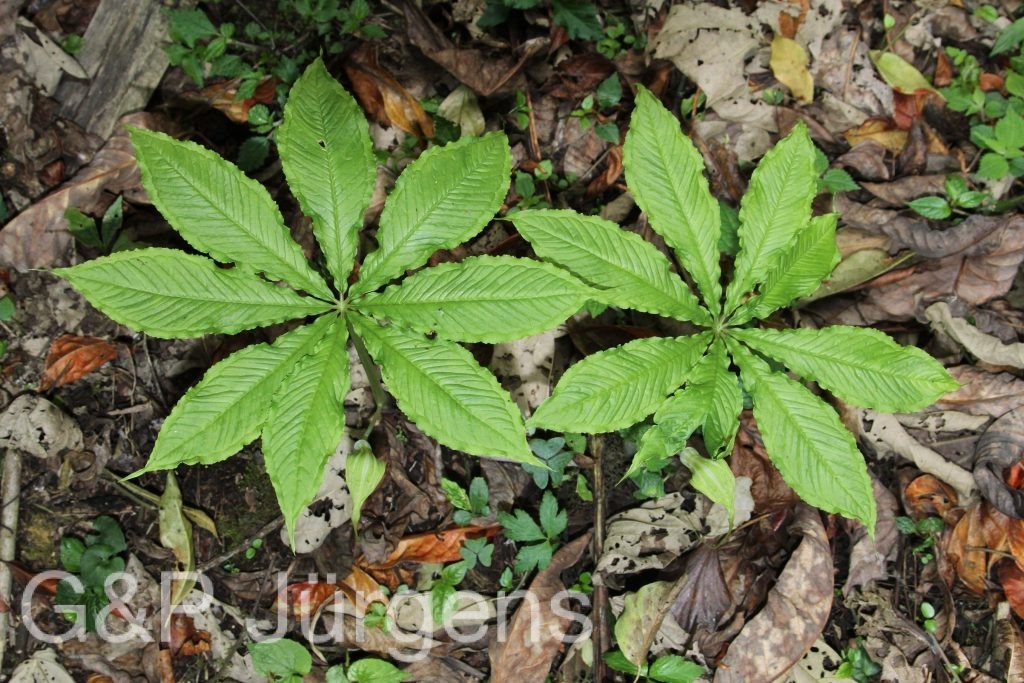
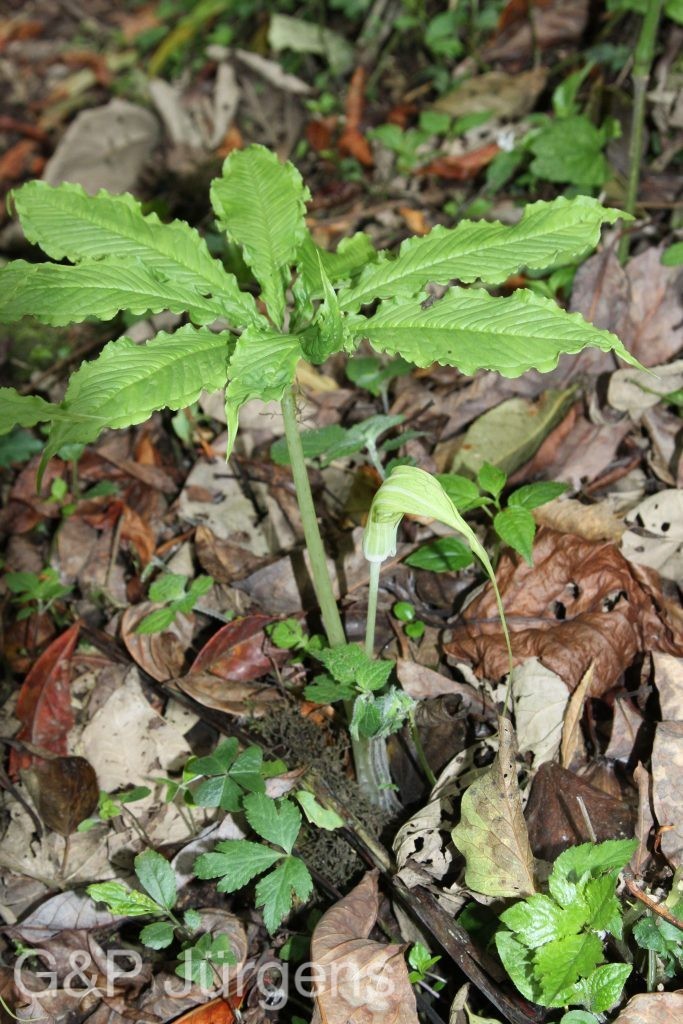
Arisaema concinnum Schott is a tuberous aroid of the temperate Himalaya, ranging through India, Nepal, China, Bhutan, Myanmar and Pakistan. It is recorded from Bhutan at Tongsa near 2000 m, flowering in May, and from Utaray in West Bengal at about 2200 m in April, within the warm to cool temperate forest belt. The species grows in moist, shaded broadleaved and mixed forest, on humus-rich slopes, in ravines and along streamsides, typically between 1800 and 3000 m, where deep leaf litter and consistent monsoonal moisture favour its growth. Its roughly 216 GBIF records reflect a fairly wide but localised montane distribution.

The plant arises from a depressed globose tuber, producing usually a single large radiate leaf divided into numerous (commonly 7–15) lanceolate, acuminate leaflets arranged in a spreading pedate fan. The inflorescence is the characteristic aroid spadix enclosed in a spathe; in this species the spathe tube is greenish and the limb is striped green and white and drawn out into a long, slender, tail-like apex, while the appendix of the spadix is slender and exserted. As in most Arisaema the plants are paradioecious, shifting sex with size and vigour. Pollinated female inflorescences develop a dense club of red berries, each containing few seeds.

Arisaema concinnum belongs to a large, taxonomically intricate genus centred on the Sino-Himalaya, where rapid diversification and sex-lability have produced many closely allied species. Pollination is effected by fungus gnats lured into the spathe, a system in which the female trap can be lethal to the visiting insect. Widespread across its range, the species is not considered threatened, though forest clearance and tuber collection may locally reduce populations.

Author: Schott · Sources: POWO (Kew), GBIF, Flora of China, Flora of Bhutan, Flora of Nepal, The Genus Arisaema (Gusman & Gusman)

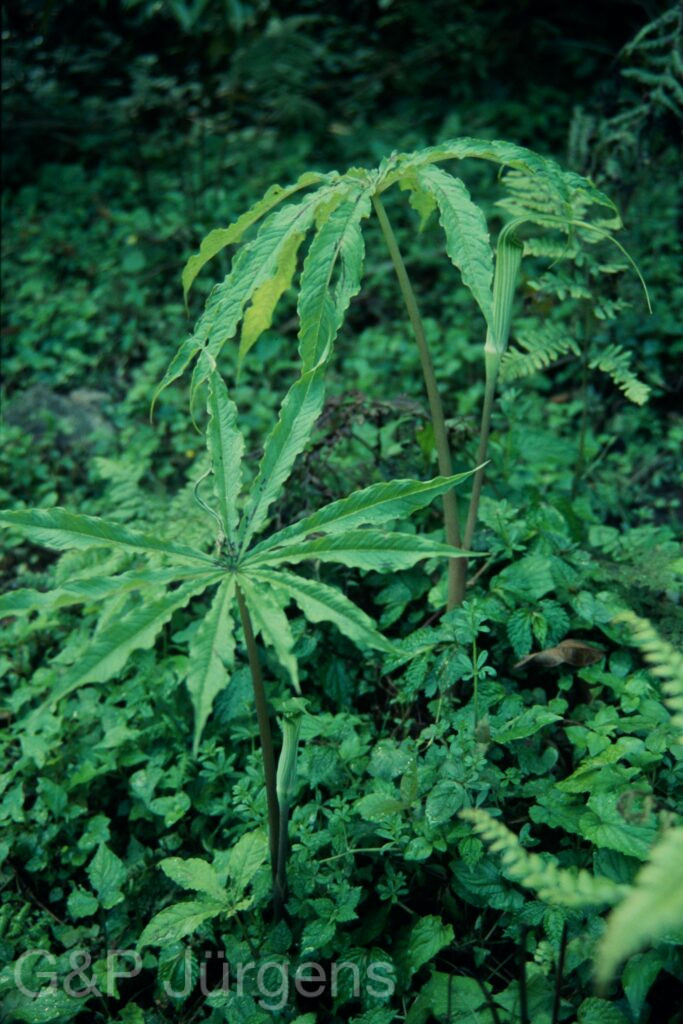
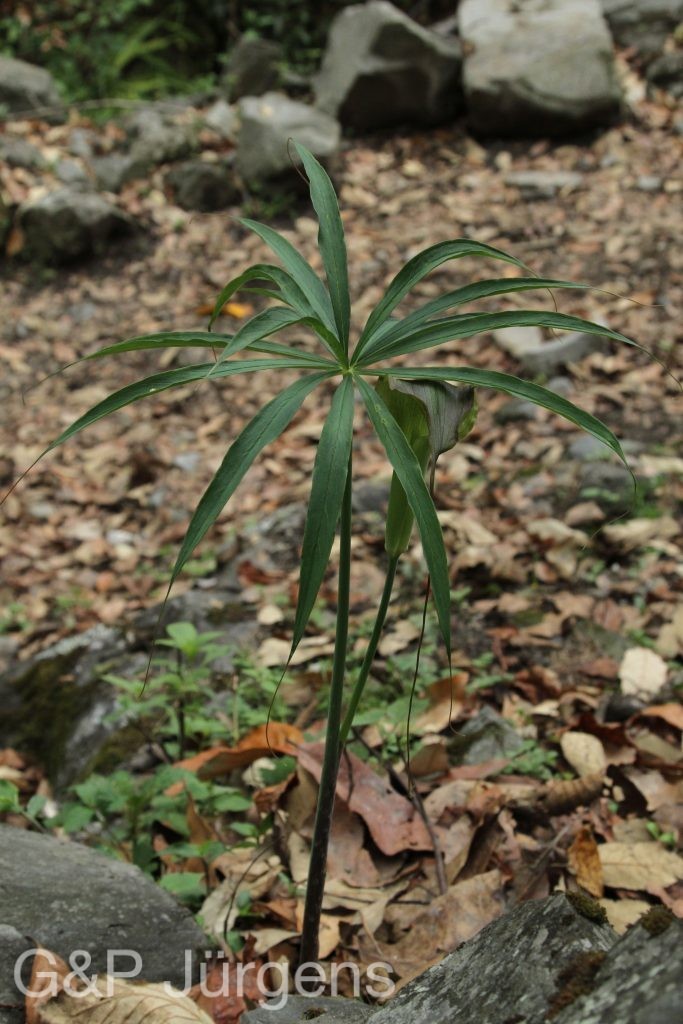
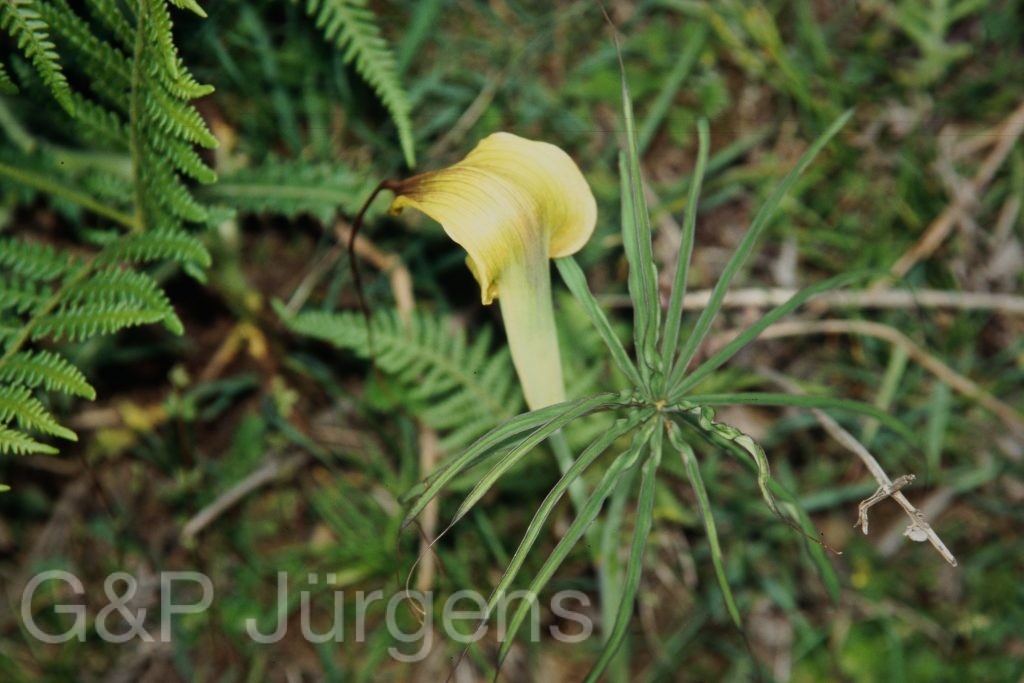
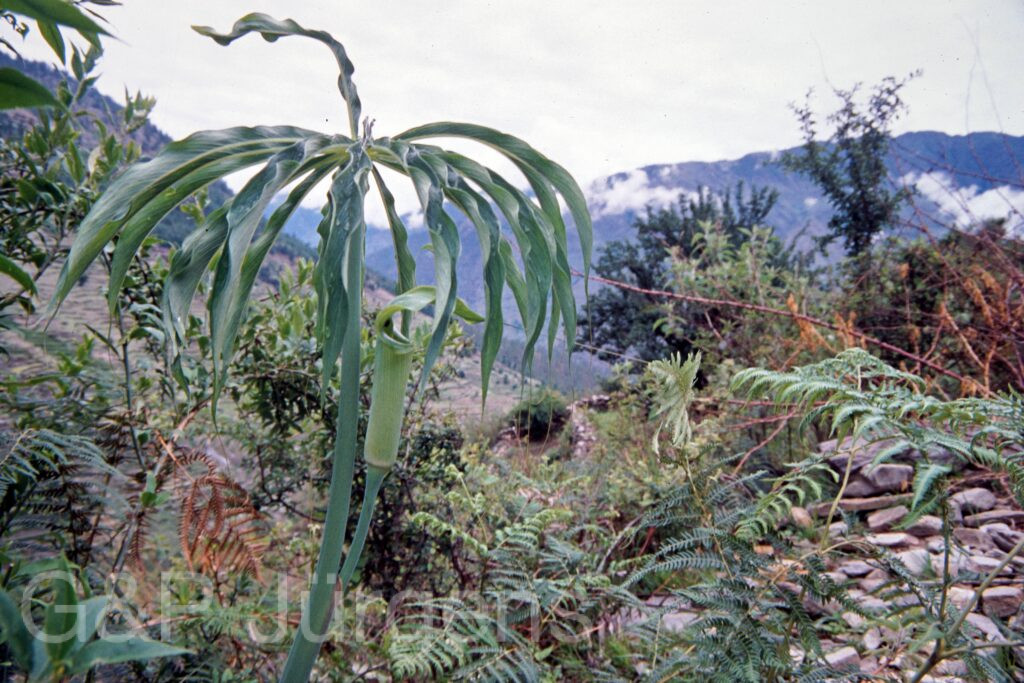
Schott

Bhutan2014 114
Bhutan Kadi 1600m, May
Bh09 254 P423
Bhutan Phobjika, 2900m June
Nepal 99 234 ergebnis
West-Nepal Gattalekh 2800m, June

Description

Arisaema consanguineum Schott is a widespread tuberous aroid of the Sino-Himalayan region, recorded from China, Taiwan, Thailand, Nepal, Bhutan, India, Myanmar, Vietnam, the Philippines, Laos and Japan, with cultivated records reaching Europe and North America; GBIF documents over 2000 occurrences. It grows in shaded forest, forest margins, bamboo thickets, scrub and grassy slopes, generally between about 1500 and 3300 m. The illustrated plants were recorded at Kadi (1600 m, May) and Phobjika (2900 m, June) in Bhutan and at Gattalekh in West Nepal (2800 m, June), spanning the warm-temperate to cool-temperate montane zone where this jack-in-the-pulpit emerges with the early monsoon.

The plant arises from a depressed-globose tuber, producing a stout pseudostem sheathed by the mottled petiole bases. There is usually a single radiate (pedately compound) leaf bearing numerous narrow, lanceolate leaflets that frequently terminate in long, threadlike drip-tips and are sometimes silvery-banded. The inflorescence is a spadix enclosed by a green to purplish, white-striped spathe whose limb arches forward; the spadix appendage is slender and elongate. Plants are typically dioecious, sex expression varying with tuber size. The fruit is a dense cylindrical infructescence of red berries borne on the persistent spadix.

A member of the species-rich genus Arisaema, this taxon belongs to the radiate-leaved Sino-Himalayan group and is prized in horticulture for its striking foliage. Sex change linked to plant vigour is an ecological hallmark of the genus, and the showy berries are bird-dispersed. The species is common and adaptable, not of conservation concern, though wild tubers are locally harvested for traditional medicine.

Author: Schott · Sources: POWO (Kew), GBIF, Flora of China, Flora of Bhutan, Annotated Checklist of the Flowering Plants of Nepal, Gusman & Gusman The Genus Arisaema