
C.B.Clarke
Description
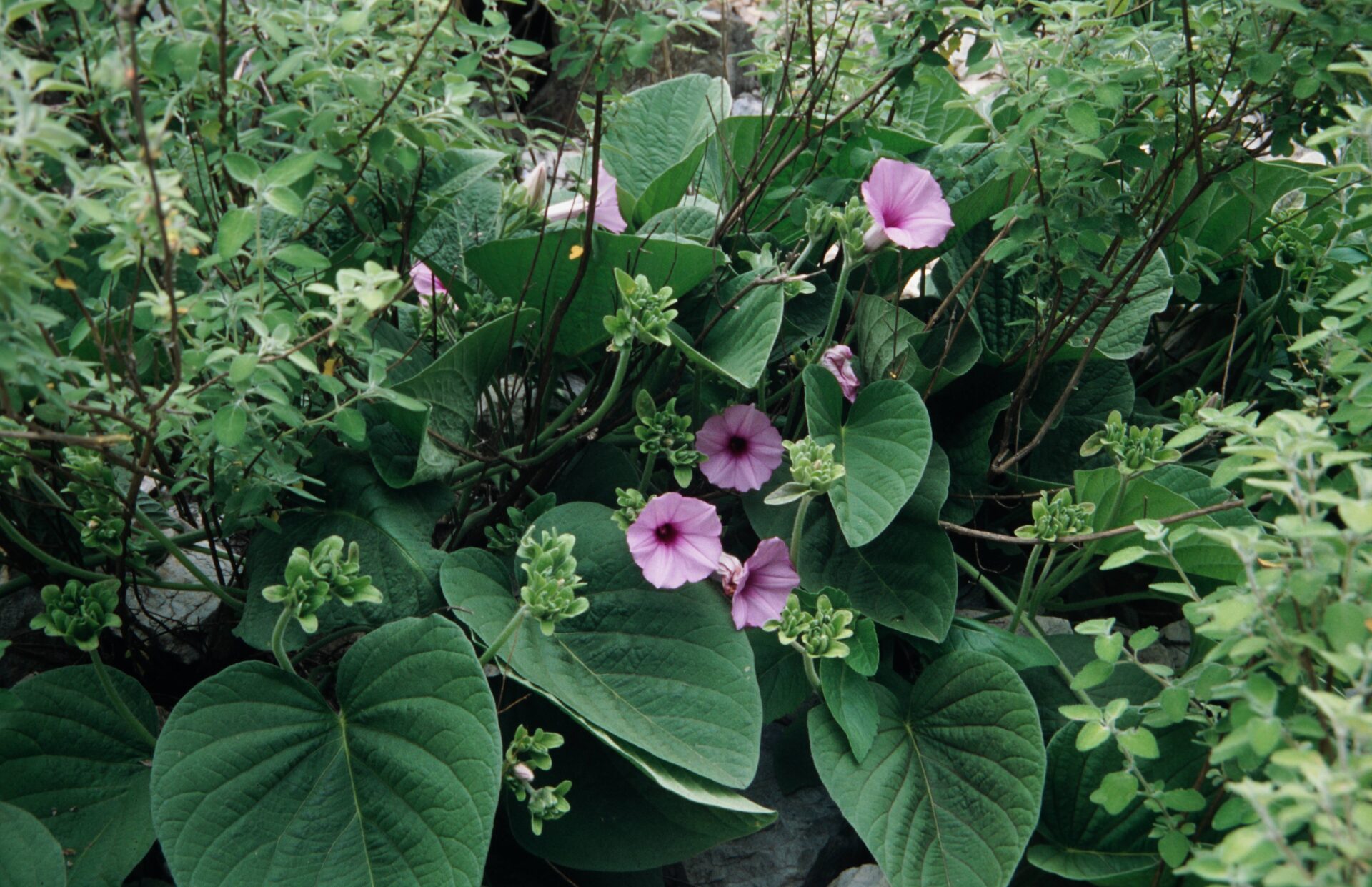
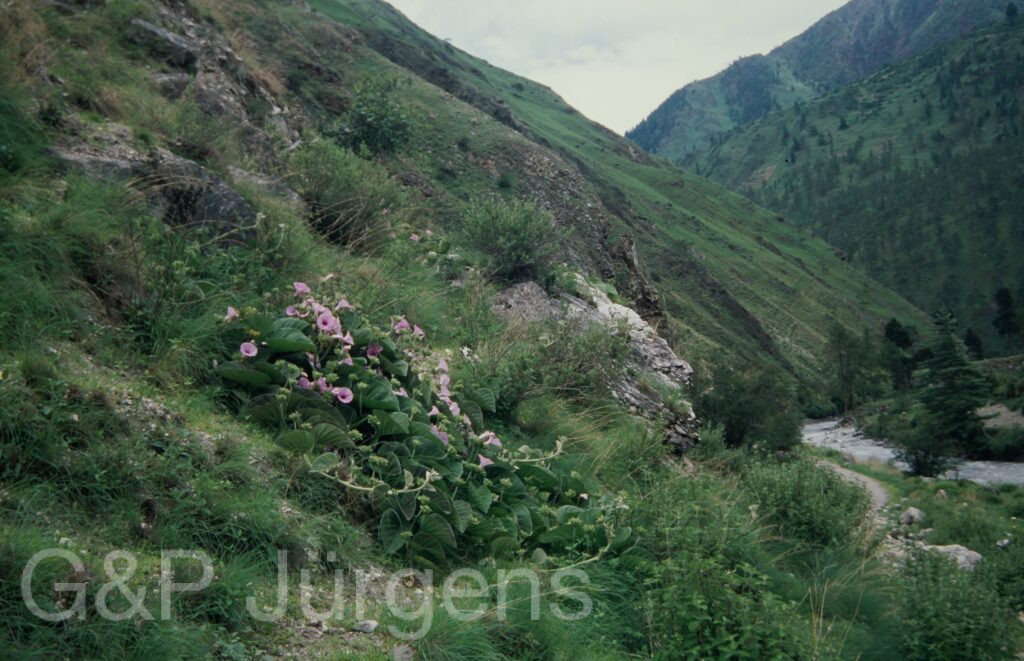
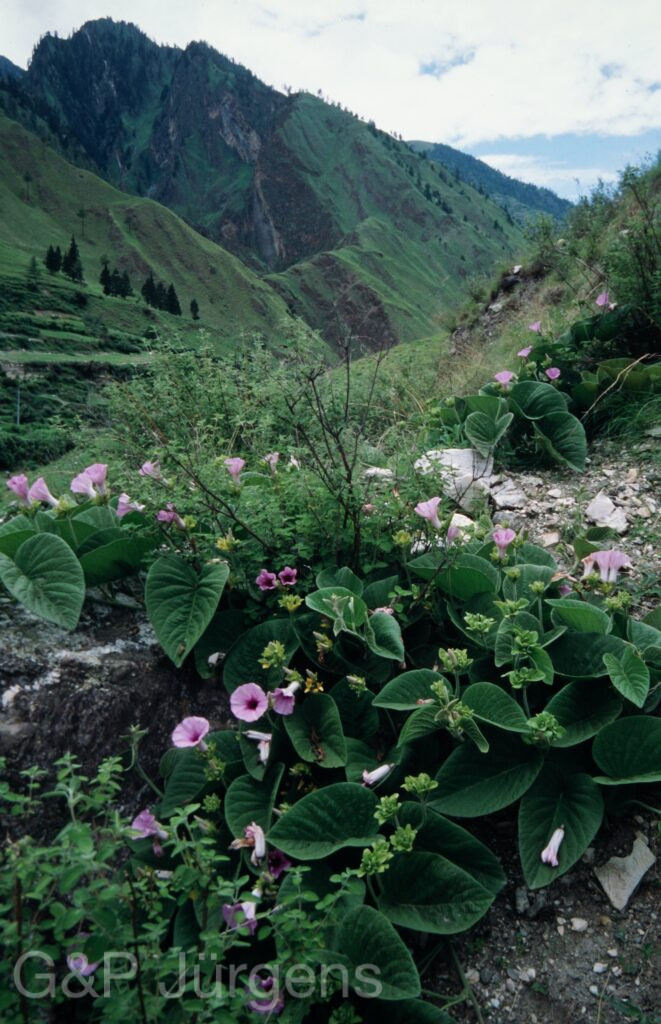
Argyreia hookeri C.B.Clarke is a woody climber of the morning-glory family native to the Himalaya and adjacent Indo-Malesian region. GBIF records indicate occurrences in Nepal, India, Bhutan, China, Myanmar, Thailand and Indonesia, marking a distribution that spans the Himalayan foothills into Southeast Asia. It grows in forest margins, thickets and along streamsides in subtropical to lower temperate forest, generally between about 1,000 and 2,300 m. The plant photographed in the Thuli Bheri valley of west Nepal at 2,150 m, flowering in July, reflects its monsoon-season anthesis in moist hill forest.
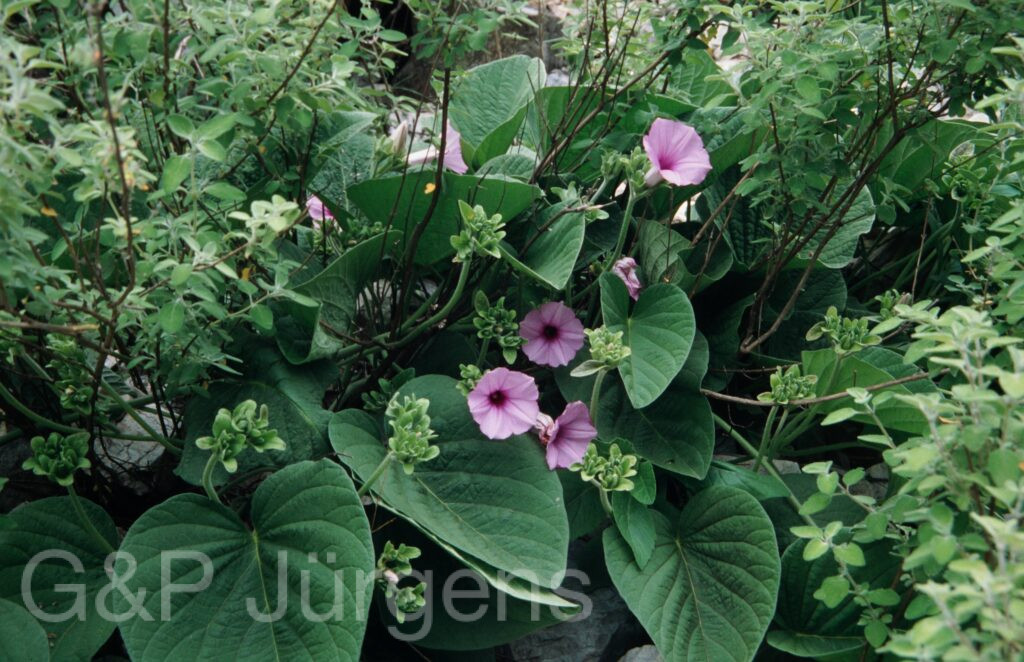
The species is a perennial twining liana with stems that are pubescent when young. The leaves are large, ovate to broadly cordate, entire, acuminate, and softly hairy beneath, borne on long petioles. The flowers are arranged in axillary, peduncled cymose clusters subtended by conspicuous bracts; the corolla is funnelform and showy, rose-pink to purple with a darker throat, the limb shallowly lobed. As in Argyreia, the fruit is an indehiscent berry enclosed by the enlarged, somewhat fleshy persistent sepals, containing a few hard seeds.
Argyreia is distinguished from the related Ipomoea chiefly by its baccate, non-capsular fruit. A. hookeri is one of numerous Himalayan species of the genus and is occasionally cultivated as an ornamental climber. The genus is noted for indole alkaloid content, and several species feature in ethnobotanical use. The species remains locally frequent across its wide range.
Author: C.B.Clarke · Sources: POWO (Kew), GBIF, Flora of China Vol. 16, Flora of Bhutan Vol. 2, Staples: Revision of Asiatic Convolvulaceae