
(L.) Roth
Description
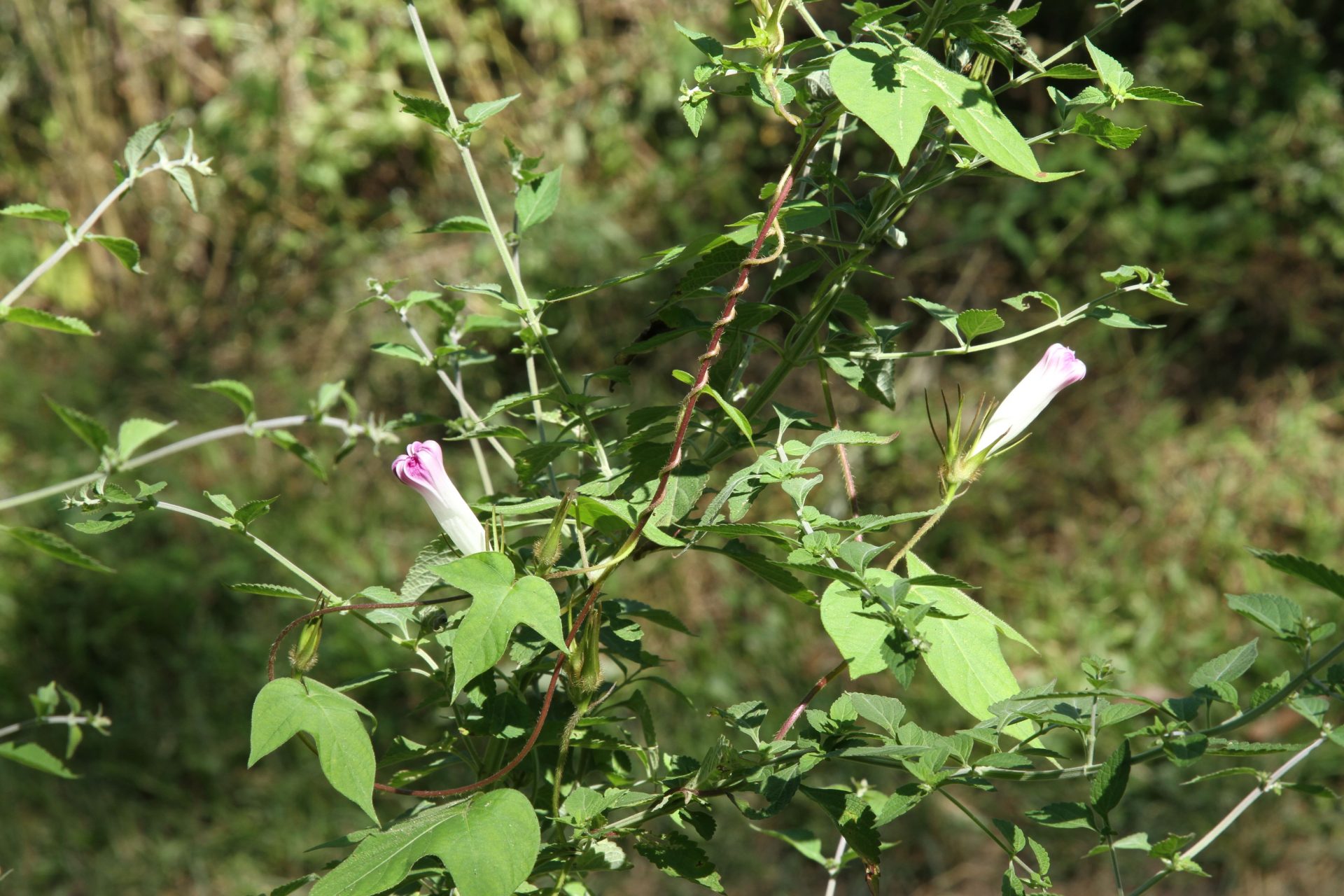
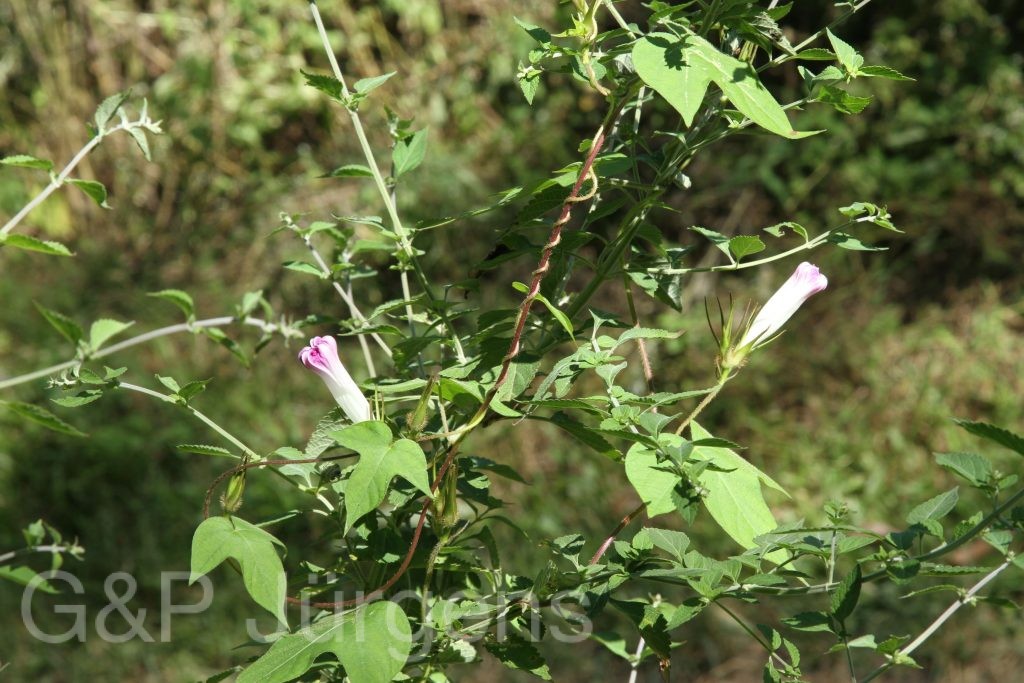
Ipomoea nil is a pantropical annual morning glory of uncertain native origin, most likely originating in tropical America but now cosmopolitan in warm regions worldwide. It occurs throughout South and Southeast Asia, East Asia, Africa, and the Americas, with over 13,000 occurrence records in GBIF spanning more than 70 countries. The species thrives in disturbed habitats, field margins, roadsides, waste ground, and forest edges from lowland areas up to approximately 2,500 m elevation. In Bhutan, it has been documented along the road between Zhemgang and Trongsa at 1,700 m, flowering in October during the late monsoon season.
Ipomoea nil is a twining or scrambling annual herb with stems 1–3 m long, retrorsely hispid with spreading, tawny hairs. Leaves are alternate, broadly ovate to orbicular in outline, 5–15 cm long, typically three-lobed (occasionally entire or five-lobed), with a cordate base and hispid indumentum on both surfaces. The inflorescence consists of one to three flowers on axillary peduncles. The calyx is deeply divided into five lanceolate, densely hispid sepals with long, spreading basal hairs — a key diagnostic character. The corolla is funnelform, 3–5 cm long, typically blue to purple, occasionally red, pink, or white, with a paler tube. Stamens are five, included. The fruit is a globose, trilocular capsule 8–10 mm in diameter, enclosed by the persistent calyx, containing four to six seeds that are dark brown to black and finely pubescent.
Ipomoea nil holds exceptional cultural significance in East Asia, particularly in Japan, where it has been cultivated since the Nara period (eighth century) and subjected to intensive selection that has produced hundreds of ornamental cultivars (asagao) with extraordinary floral diversity in form, colour, and patterning. It has also become a model organism in molecular genetics for the study of transposable elements controlling flower pigmentation. Taxonomically, I. nil belongs to Ipomoea section Pharbitis and is distinguished from the closely related I. purpurea by its densely hispid, long-awned calyx lobes.
Author: (L.) Roth · Sources: POWO (Kew), GBIF, Flora of China Vol. 16, Flora of Bhutan Vol. 2, Austin: Convolvulaceae of the Southeastern United States (1978)