
Choisy
Description
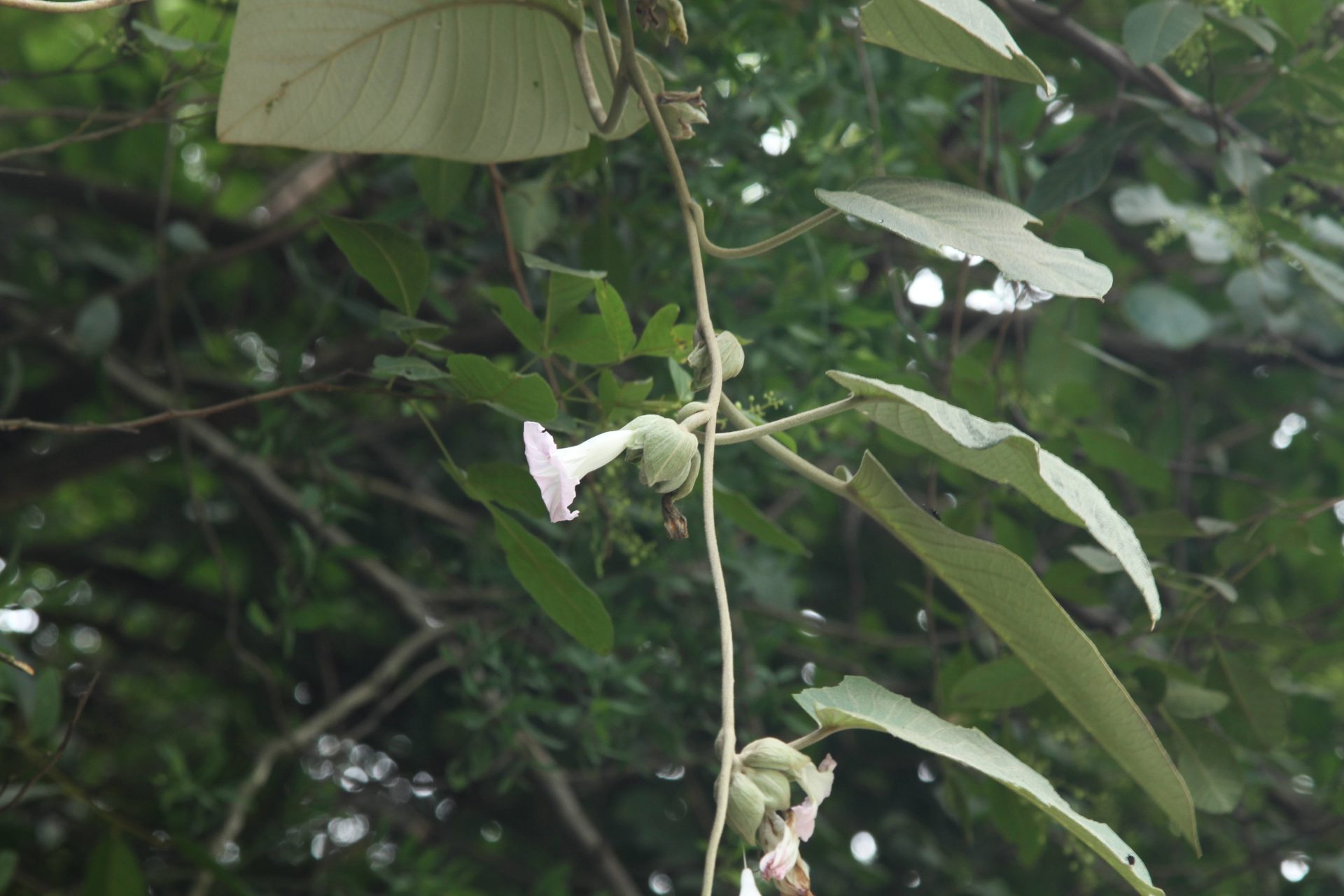
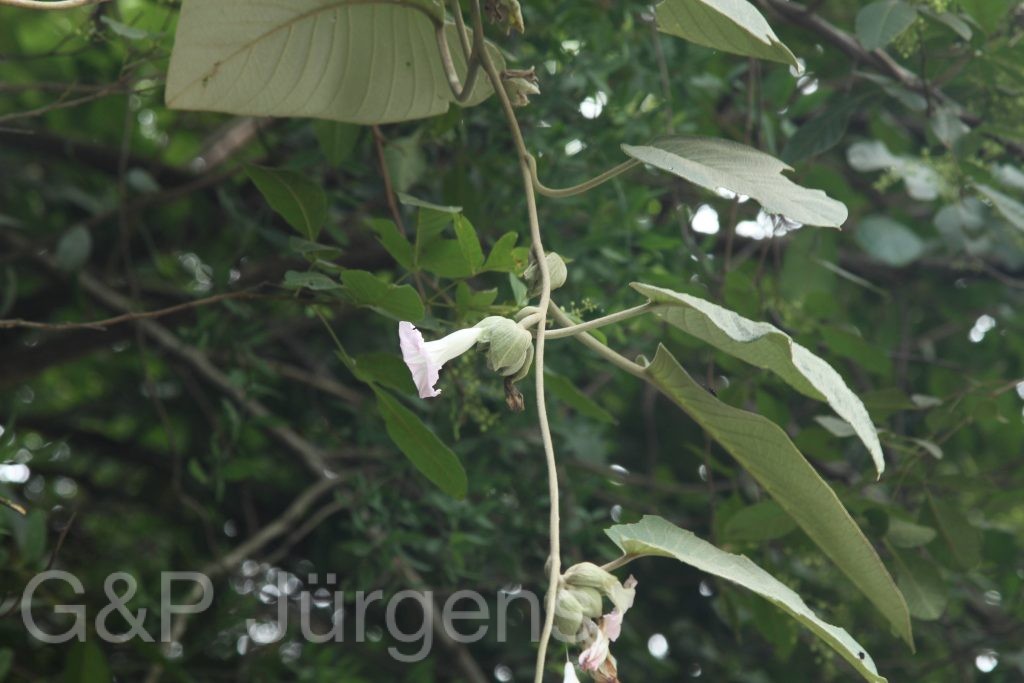
Argyreia wallichii is an Indo-Himalayan and Southeast Asian woody climber distributed through China, northeastern India, Bhutan, Thailand, Myanmar and Vietnam, with GBIF recording about 219 occurrences. It is a plant of warm subtropical to lower montane forest and its margins, the illustrated material coming from Tashigang in eastern Bhutan at 1900 m, flowering in October. It scrambles over shrubs, hedges and trees along forest edges, clearings, roadsides and stream banks on moist, fertile soils in the foothill and lower hill zone, behaving as a vigorous liana in disturbed and secondary vegetation.
The species is a large twining perennial vine with stout stems clothed, like the foliage, in dense silvery or rusty appressed hairs. The leaves are alternate, long-petiolate, broadly ovate to suborbicular with a deeply cordate base and acuminate apex, dark green above and conspicuously silvery-tomentose beneath. The showy flowers are borne in dense, head-like axillary cymes subtended by large, persistent, leafy bracts; the funnelform (infundibular) corolla is rosy-pink to purple with a darker throat, and the five stamens are inserted within the tube. The fruit is a small, berry-like indehiscent capsule, more or less enclosed by the enlarged, persistent and often coloured calyx, attractive to birds.
Argyreia (the woolly morning glories, allied to Ipomoea within Convolvulaceae) is a palaeotropical genus centred on Asia, distinguished by its frequently fleshy or berry-like fruits and persistent bracts. A. wallichii is widespread and locally common, not regarded as threatened, and is of ethnobotanical note in the region; like other members of the family it is pollinated chiefly by bees and larger insects visiting its open funnel-shaped corollas.
Author: Choisy · Sources: POWO (Kew), GBIF, Flora of China, Flora of Bhutan, Flora of British India (Hooker), Staples revision of Asian Argyreia (Convolvulaceae)