
(Roxb.) Sweet
Description
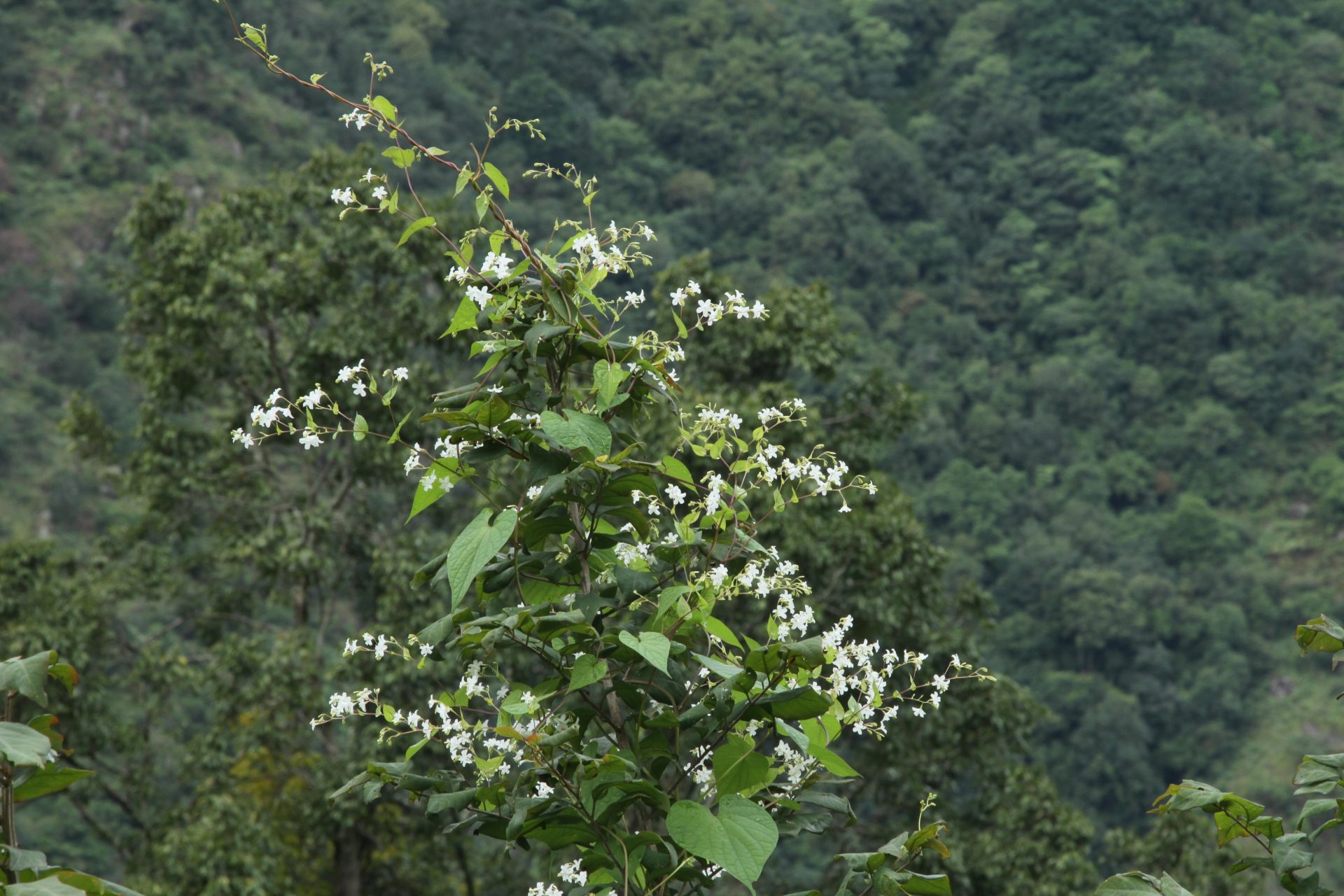
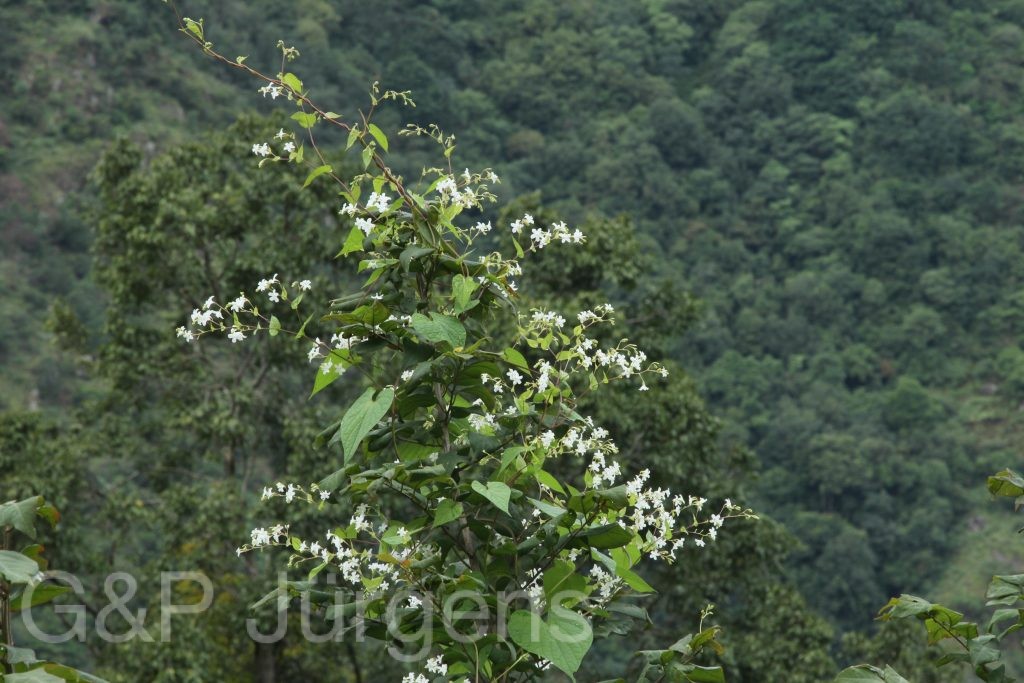
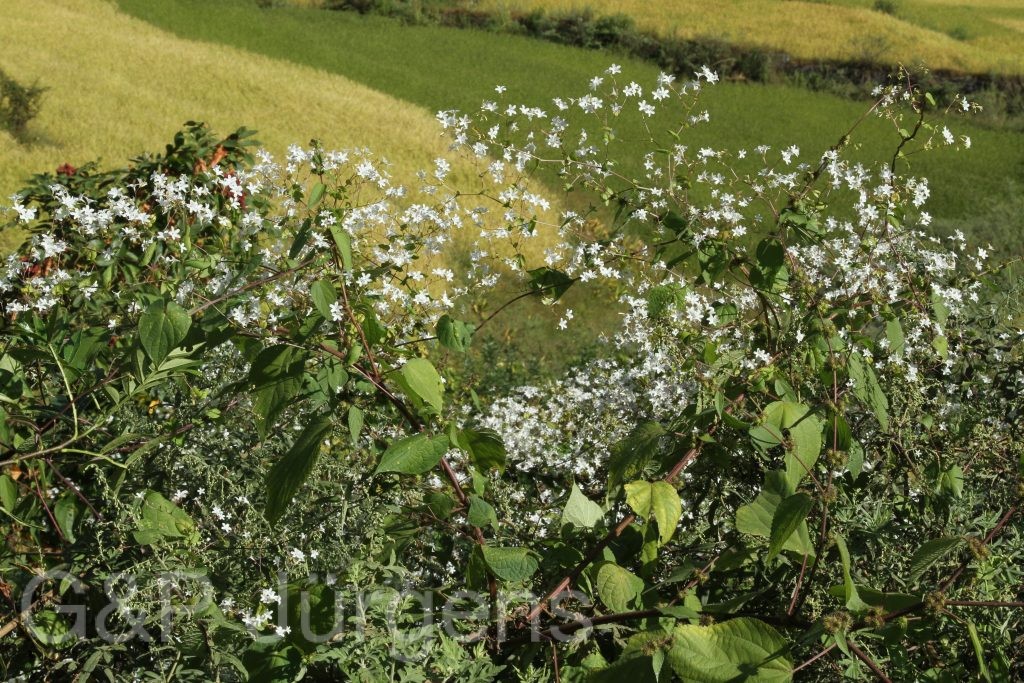
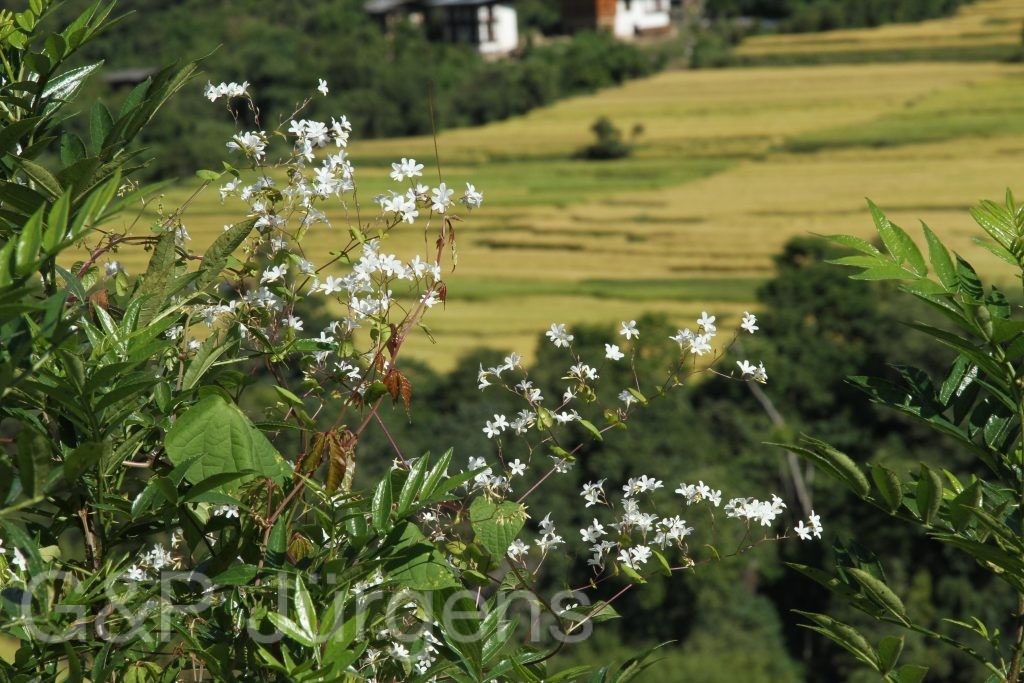
Dinetus racemosus is a twining climber of the morning-glory family widely distributed across the Himalaya, Indo-Burma and South-East Asia. GBIF records, numbering over 900, place it in India, Nepal, Bhutan and China through Myanmar, Thailand, Laos, Vietnam and Malaysia to Indonesia and Timor-Leste, with cultivated or naturalised records elsewhere. It occupies forest margins, thickets, hedgerows, scrubby roadsides and clearings in subtropical to warm-temperate zones, where it scrambles vigorously over shrubs and small trees. The photographed plant from the Mo Chu valley in Bhutan, at about 1500 m and flowering in October, illustrates its autumn-flowering habit in mid-elevation valley vegetation, where its conspicuous white inflorescences appear after the monsoon.
The species is a perennial, herbaceous to slightly woody, left-twining liana with slender, often pubescent stems. The leaves are alternate, long-petiolate, broadly ovate to ovate-cordate with a deeply cordate base and acuminate apex, the lamina entire and softly hairy. The flowers are borne in elongate, many-flowered, axillary and terminal racemes or panicles, a distinctive feature in a family more usually cymose. Each flower is small, with a five-lobed calyx and a white, broadly funnelform to subcampanulate, five-angled corolla. After flowering the calyx lobes enlarge markedly and become membranous, accrescent wings that surround the small, indehiscent, one- to few-seeded fruit, serving as a wind-dispersal organ.
Dinetus belongs to the tribe Poraneae of Convolvulaceae, a group characterised by racemose inflorescences and accrescent, wing-like fruiting sepals, and the species has long been known under the synonyms Porana racemosa and Porana grandiflora; modern treatments recognise the segregate genus Dinetus. The accrescent calyx wings are a clear adaptation to anemochory, dispersing the light fruits on the wind. The plant is common and ecologically resilient across its broad range and is of no conservation concern; it is locally appreciated as an ornamental for its profuse white autumn flowering and is occasionally used in traditional medicine.
Author: (Roxb.) Sweet · Sources: POWO (Kew), GBIF, Flora of China Vol. 16, Flora of Bhutan Vol. 2, Flora of Nepal, Flora of Pakistan, Staples' systematics of Convolvulaceae (Poraneae)