
L.
Description
Ipomoea quamoclit, the cypress vine, is a twining annual of Neotropical origin now pantropically naturalised, with over 11,650 GBIF occurrences spanning the Americas (USA, Mexico, Brazil, Colombia, Ecuador, Peru, Venezuela), Asia (India, China, Taiwan, Korea, Japan, Indonesia, Thailand, Nepal), Australia and Africa. In its adventive Asian range it occupies disturbed ground, hedgerows, field margins, riverbanks and village thickets, frequently escaping from cultivation as an ornamental. The collection from the Mewa Khola in eastern Nepal at about 1,800 m in April reflects its establishment in warm low- to mid-montane situations.
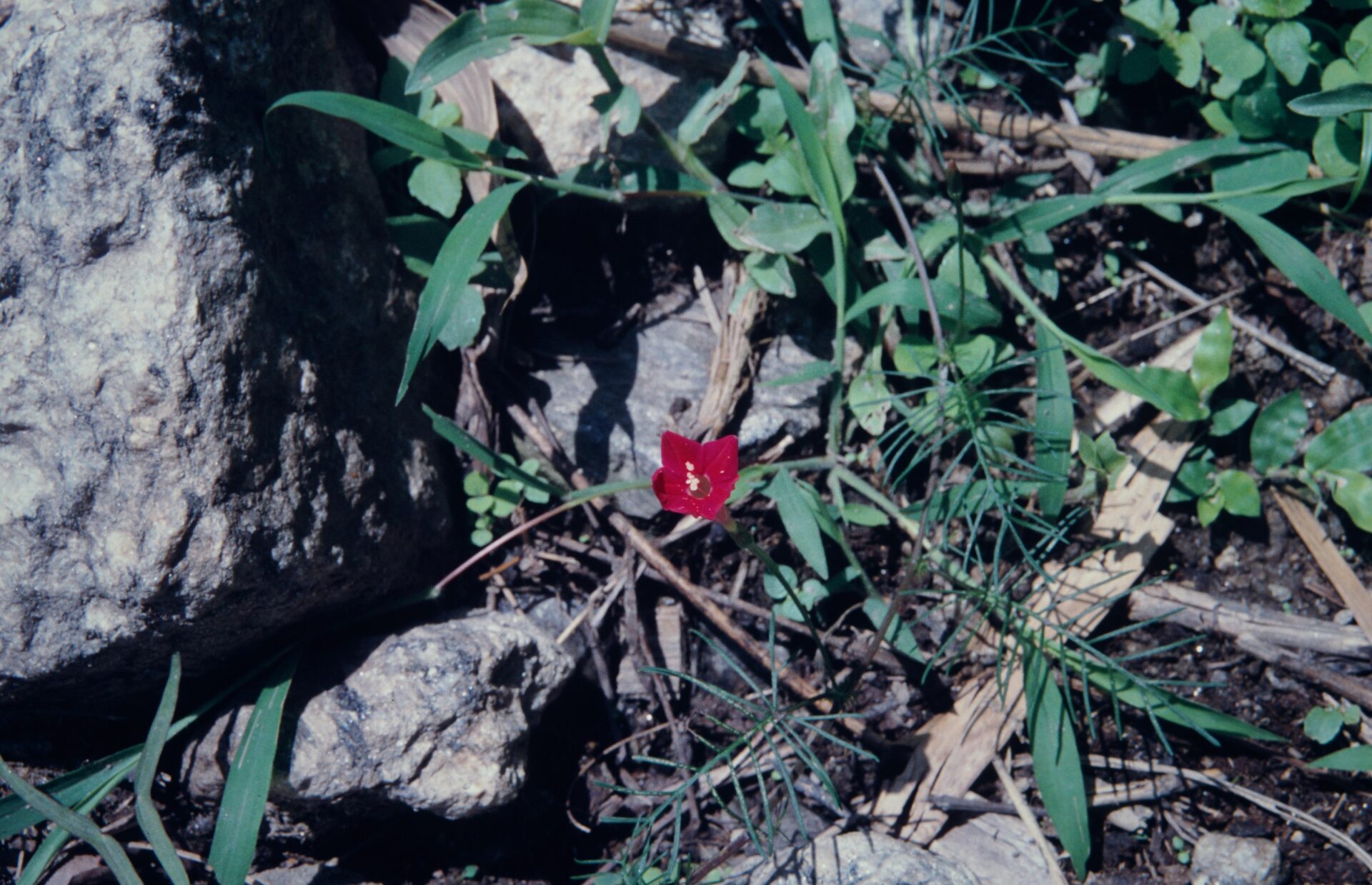
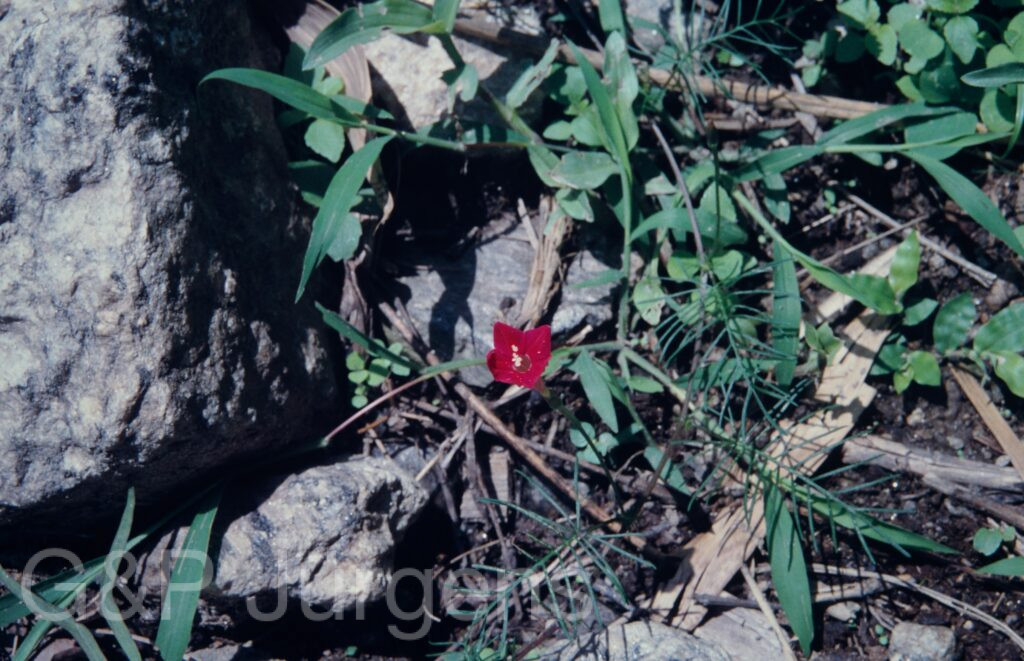
It is a slender, glabrous, herbaceous climber to several metres. Its most distinctive feature is the foliage: the leaves are alternate, ovate in outline but pinnately divided almost to the midrib into numerous fine, filiform, parallel segments, giving a delicate feathery appearance. The flowers are solitary or few in axillary cymes, with a long, slender corolla tube expanding into a flat, five-angled, salverform limb about 1.5–2 cm across, brilliant scarlet (rarely white), with exserted stamens and style. The fruit is a small ovoid capsule containing few blackish, ovoid seeds.
The species, sometimes segregated as Quamoclit pinnata, is firmly placed within an enlarged Ipomoea, and GBIF treats the name as accepted. Its salverform red corolla and long tube reflect specialisation for pollination by hummingbirds in its native America and by butterflies and sunbirds elsewhere. Widely grown and self-seeding, it is locally weedy but of no conservation concern.
Author: L. · Sources: POWO (Kew), Flora of China Vol. 16, Flora of Nepal, GBIF, Austin & Huáman: A Synopsis of Ipomoea in the Americas (1996)