
Edgew.
Description
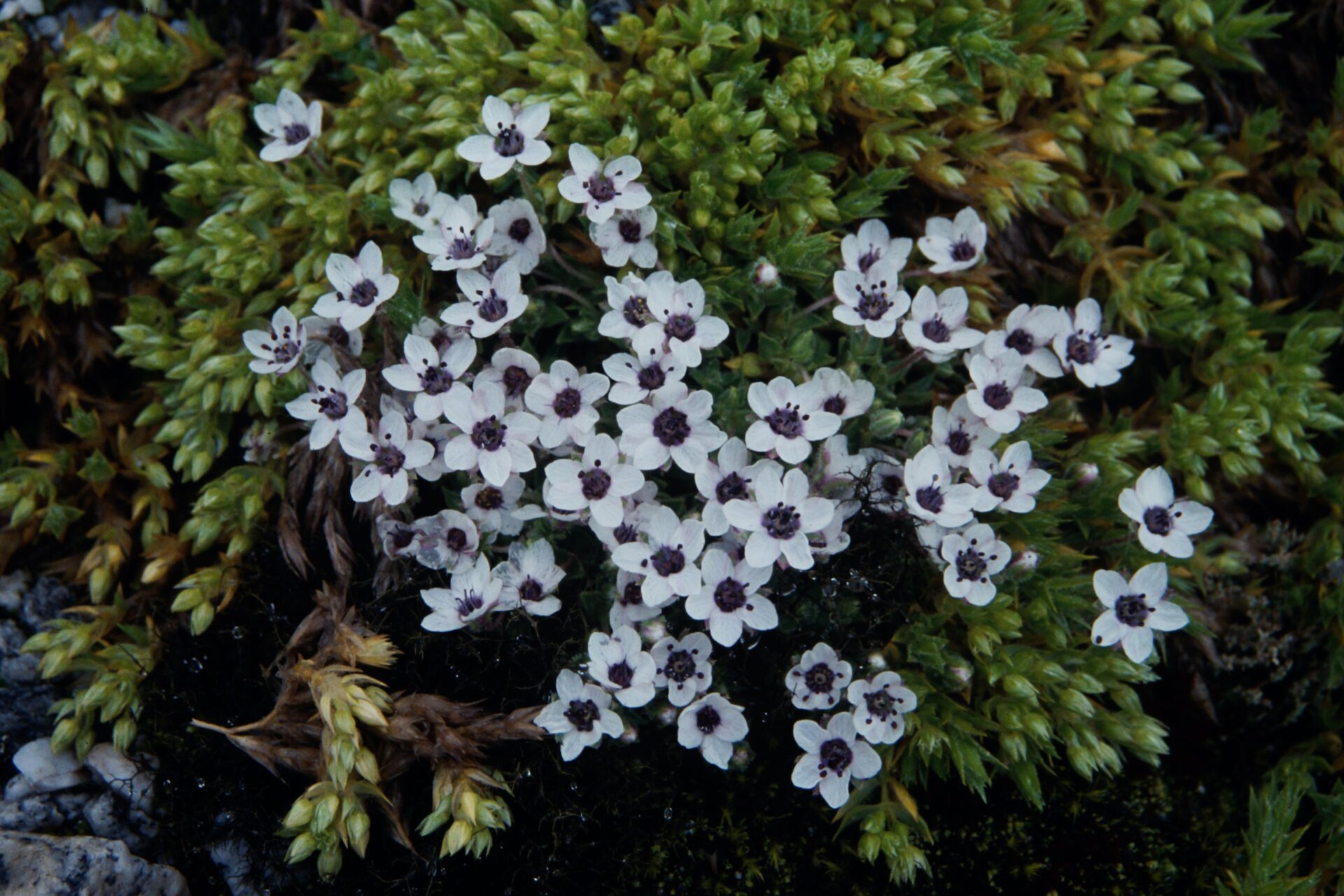
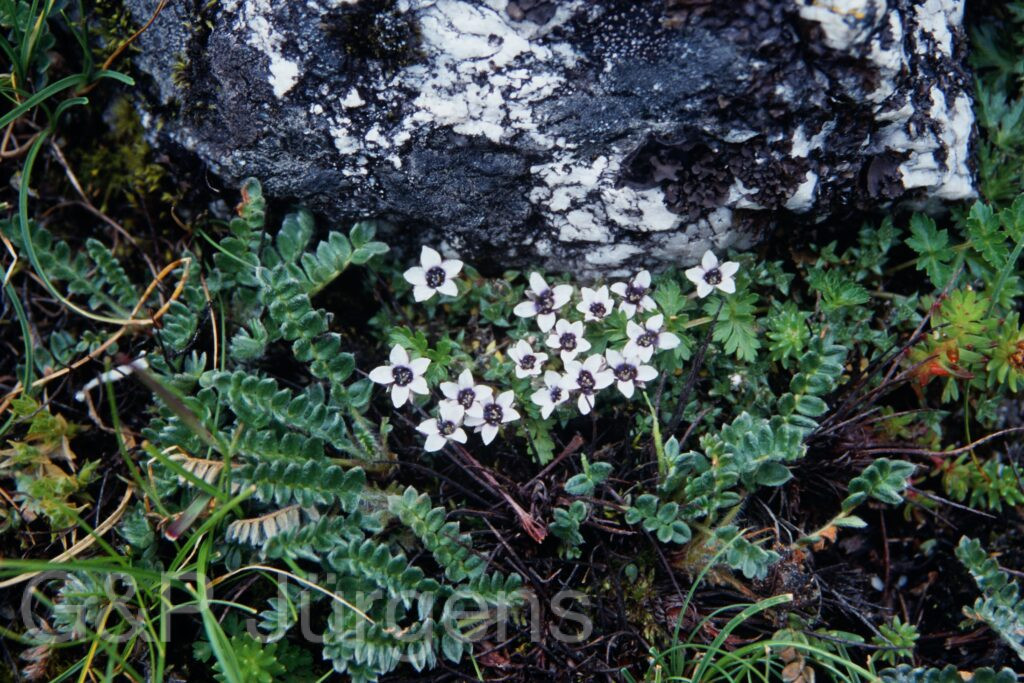
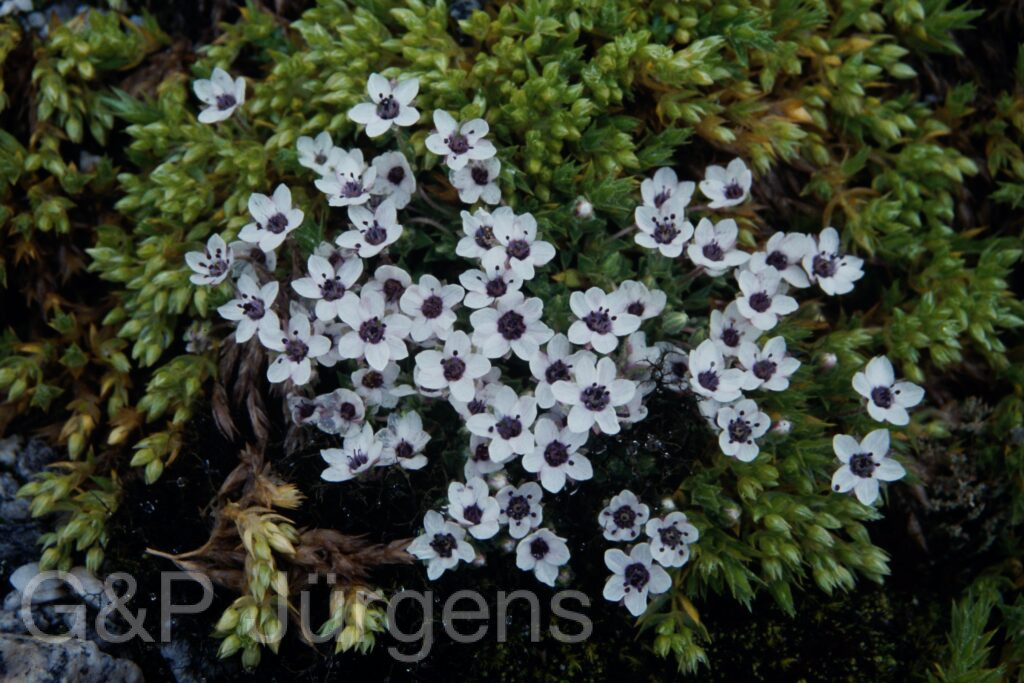
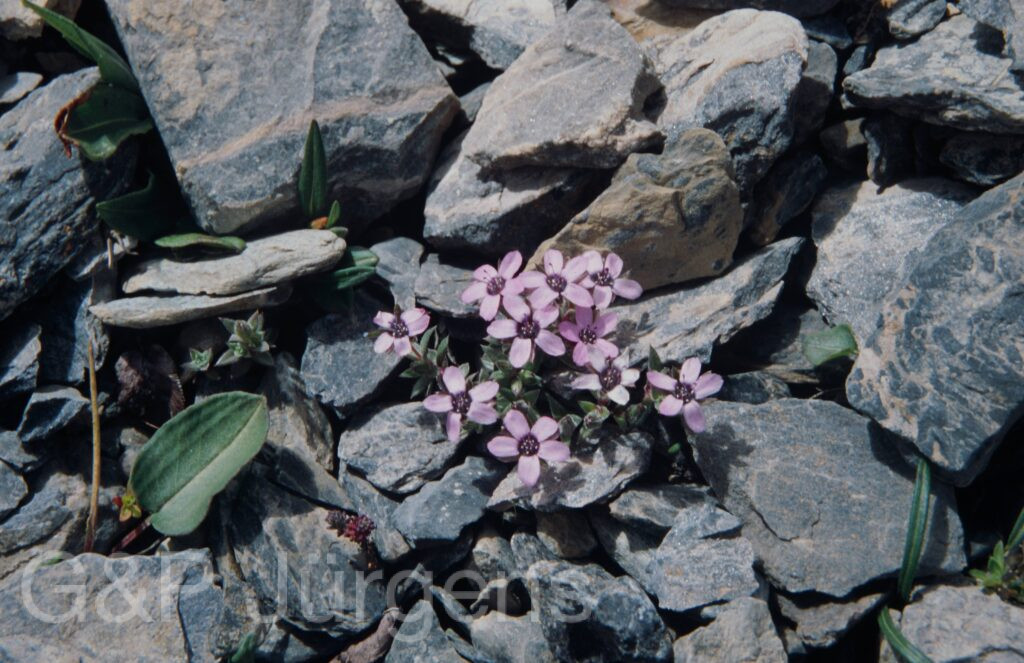
Arenaria glanduligera is a cushion- or mat-forming sandwort of the high Himalaya, recorded by GBIF (about 240 occurrences) from Nepal, China, India and Bhutan. It is a true alpine of the upper alpine and subnival zones, growing on open stony slopes, gravelly flats, moraine and exposed ridges where snow lies late and the growing season is short. The photographed plants came from Sikkim near Saniti Lake at about 4250 m in August and from West Nepal at Baga-La-Phedi at around 4400 m in July, both well above the timberline and typical of its range, which extends to over 4500 m in the wettest, most exposed habitats of the inner ranges.
The plant is a low, densely tufted perennial forming compact mats from a branched, woody base. The stems are short, crowded and glandular-hairy, the indumentum giving rise to the epithet glanduligera. The leaves are opposite, small, narrowly lanceolate to subulate, acute and somewhat rigid, often ciliate on the margins. The flowers are solitary or few at the stem tips; each has five free, lanceolate sepals and five white, entire, obovate petals that exceed the sepals, with ten stamens and a superior ovary bearing three styles. The fruit is a small capsule dehiscing by valves to release numerous minute seeds, the inflorescence rendered slightly viscid by the glandular hairs.
GBIF treats the binomial as a synonym, with Arenaria glanduligera here regarded as the accepted name for the taxon. The species belongs to the large and taxonomically intricate genus Arenaria of the Caryophyllaceae, well represented in the Himalaya by a swarm of high-alpine cushion species adapted to cold, wind and intense radiation. It is locally frequent in suitable terrain and of no conservation concern.
Author: Edgew. · Sources: POWO (Kew), GBIF, Flora of China, Flora of Bhutan, Annotated Checklist of the Flowering Plants of Nepal, McNeill's revisional studies of Arenaria (Caryophyllaceae)