
Edgew.
Description
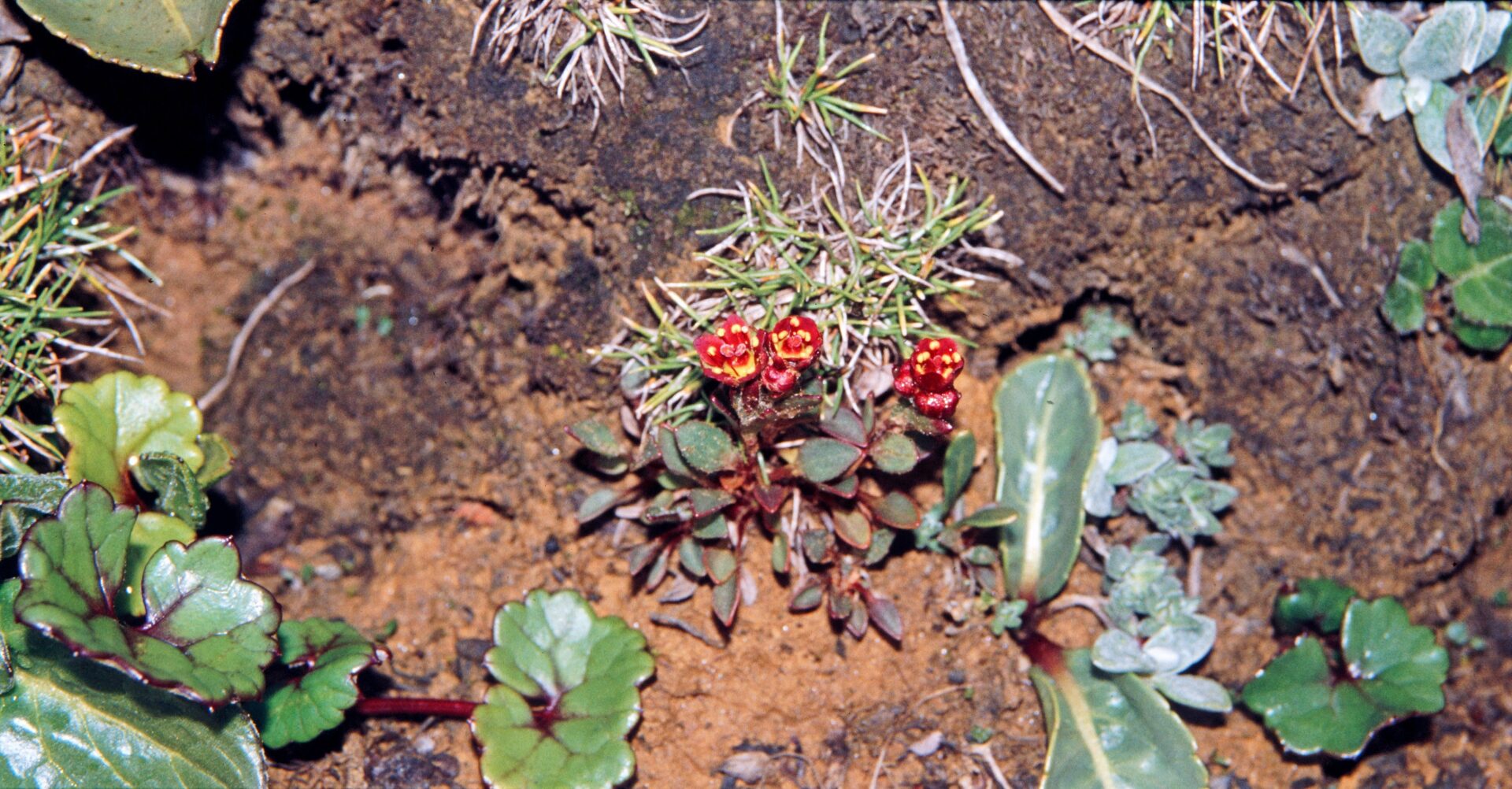
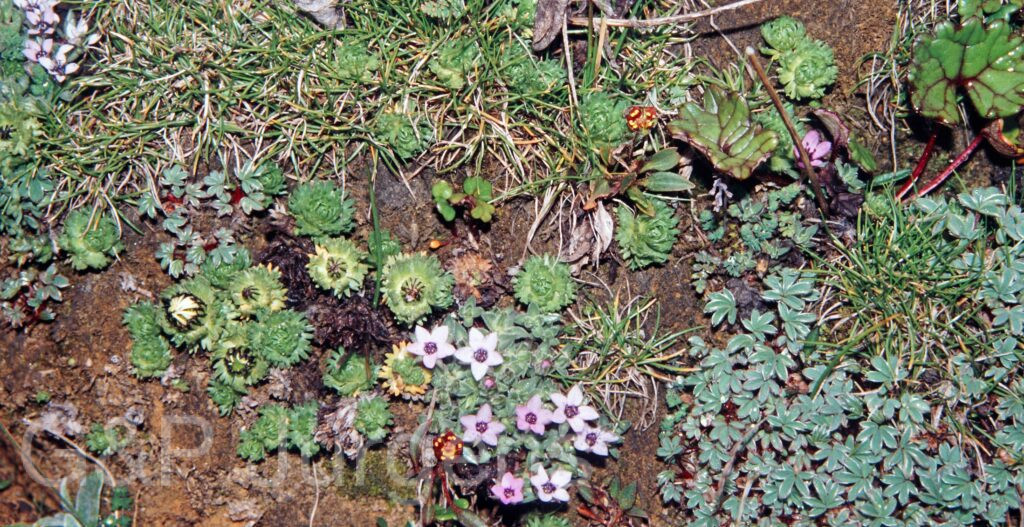
Arenaria melandryoides is a high-alpine cushion plant of the central and eastern Himalaya, recorded from China, Bhutan, India and Nepal across 35 GBIF occurrences. It is a specialist of the upper alpine and subnival belt, occupying open screes, gravelly slopes, moraines and rock crevices at very high elevations, typically above 4000 m. The population imaged on the Kagmara-La in West Nepal at 5000 m in July exemplifies its extreme montane habitat, where it flowers during the brief summer growing season amid sparse, frost-pruned vegetation on exposed, well-drained substrates.
The species is a low, tufted to cushion-forming perennial herb with a stout, woody rootstock and numerous short, densely leafy shoots forming compact mats. The leaves are small, sessile, linear-lanceolate and somewhat rigid, opposite and crowded, often ciliate. The flowers are solitary or few, borne on short pedicels; the calyx comprises five free, lanceolate sepals, and the five white petals are entire and slightly exceed the calyx. There are typically ten stamens and a superior ovary bearing three styles, ripening into a capsule that dehisces by valves to shed numerous small seeds adapted to wind and gravity dispersal on open ground.
The name Arenaria melandryoides is here treated as a synonym, with the accepted name being Arenaria melandryoides; the related epithet melandryiformis reflected in the source link points to ongoing nomenclatural revision within this taxonomically complex group. Arenaria sensu lato in the Himalaya has been repeatedly recircumscribed, with many species transferred among segregate genera. As a cushion-forming subnival specialist, the plant illustrates the convergent growth forms that buffer alpine Caryophyllaceae against cold, wind and short seasons.
Author: Edgew. · Sources: POWO (Kew), GBIF, Flora of China Vol. 6, Flora of Bhutan Vol. 1, Flora of Nepal, Flora of Pakistan, McNeill's revision of Arenaria