Author

GP Jürgens

(Van Heurck & Müll.Arg.) Monach.
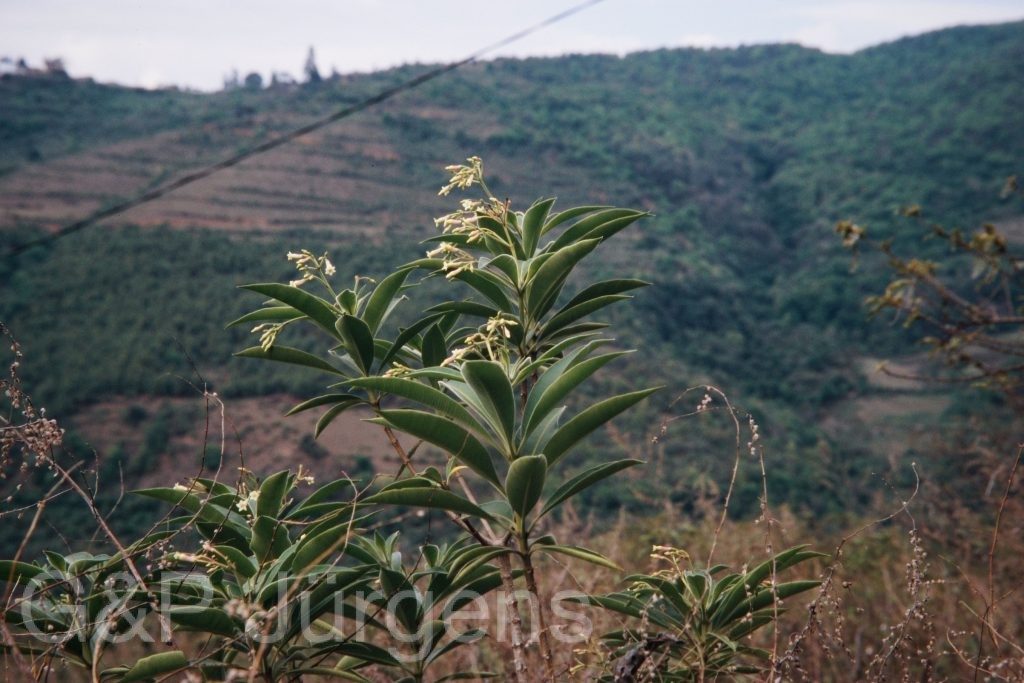
Bh2008 497 P766
Bhutan Samtengang, 2200m April

Description

Alstonia sebusi (the accepted spelling being Alstonia sebusii) is a tree of montane forests in the eastern Himalaya and adjacent Southeast Asia, recorded from Bhutan, India, China (Yunnan), Myanmar and Japan, with about 50 georeferenced occurrences in GBIF. It occurs in broadleaved evergreen and mixed montane forest, typically on slopes within the warm- to cool-temperate belt. The specimen illustrated was photographed at Samtengang in Bhutan at about 2200 m in April; across its range it generally favours humid, well-drained forest soils where it grows as a canopy or sub-canopy tree.

The species is a small to medium-sized evergreen tree exuding milky latex when cut, as is characteristic of the genus. The leaves are arranged in whorls of three to several at the nodes, simple, entire, leathery and elliptic to oblong, with numerous closely parallel lateral veins. The flowers are small, white to cream, borne in terminal cymose clusters, with a salverform corolla whose tube bears overlapping lobes; the gynoecium consists of two carpels. The fruit comprises a pair of slender, pendulous follicles that split to release numerous flattened seeds bearing tufts of hair at each end, adapted for wind dispersal.

Alstonia (Apocynaceae, subfamily Rauvolfioideae) is a pantropical genus of latex-bearing trees rich in indole alkaloids, several of which have medicinal and pharmacological interest. The whorled leaves and paired follicles with comose seeds are diagnostic. Like other Alstonia species it provides soft, light timber locally used for carving and utility purposes. No major conservation threat is documented, though the species is dependent on the continued integrity of mid-elevation montane forest, which faces pressure from logging and land conversion in parts of its range.

Author: (Van Heurck & Müll.Arg.) Monach. · Sources: POWO (Kew), GBIF, Flora of China, Flora of Bhutan, Flora of Bhutan and Sikkim, Sidiyasa Revision of the Genus Alstonia
Roxb.

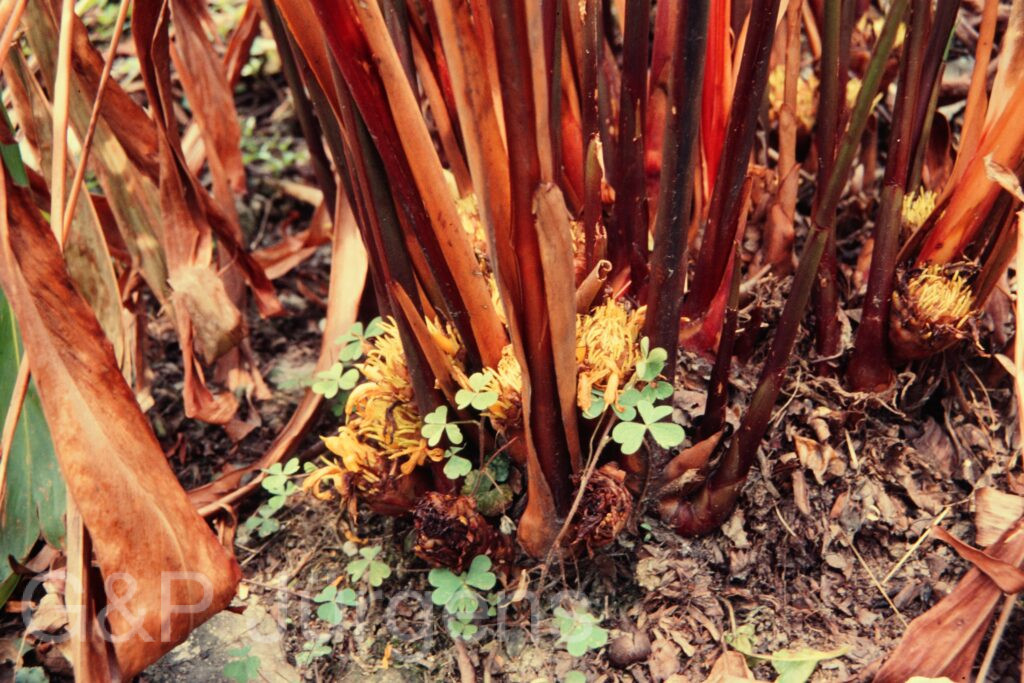
Nepal 97 57 P87
Nepal Mewa-Khola 1160m, April

Description

Amomum subulatum, the large or black cardamom, is native to the moist sub-Himalayan tracts of eastern Nepal, north-eastern India, Bhutan and adjacent China, the roughly 108 GBIF records reflecting both wild and extensively cultivated populations; records from the United States, Germany and Korea derive from cultivation and herbarium material. It grows in the shaded understorey of moist broad-leaved forest, along streams, ravines and damp shaded slopes, typically between about 600 and 2000 m, and is widely grown under forest shade as a cash crop. The photographed plant from the Mewa-Khola valley of Nepal at 1160 m in April is characteristic of its warm, humid lower-montane habitat.

It is a tall, tufted, rhizomatous perennial forming dense clumps of leafy pseudostems one to two metres high arising from a stout, creeping rhizome. The leaves are large, lanceolate, glabrous and distichous, with a long-acuminate (subulate) apex giving the species its name, and clasping sheaths. The inflorescence is a dense, head-like spike borne on a short scape at the base of the clump, the flowers with a yellowish, red-streaked labellum subtended by bracts. The fruit is a globose to ovoid, reddish-brown, ribbed and warty capsule containing numerous aromatic, blackish seeds.

Amomum belongs to the ginger family Zingiberaceae (here misspelled in the source) and is a major economic plant of the eastern Himalaya, the dried capsules forming the black cardamom of commerce, valued as a spice and in traditional medicine. Cultivation under natural forest canopy makes it an important agroforestry species. It is not of conservation concern, though wild genetic resources and the shade-forest systems that sustain its cultivation merit protection.

Author: Roxb. · Sources: POWO (Kew), GBIF, Flora of China, Flora of Bhutan, Annotated Checklist of the Flowering Plants of Nepal, Zingiberaceae of the Himalaya (taxonomic monograph)

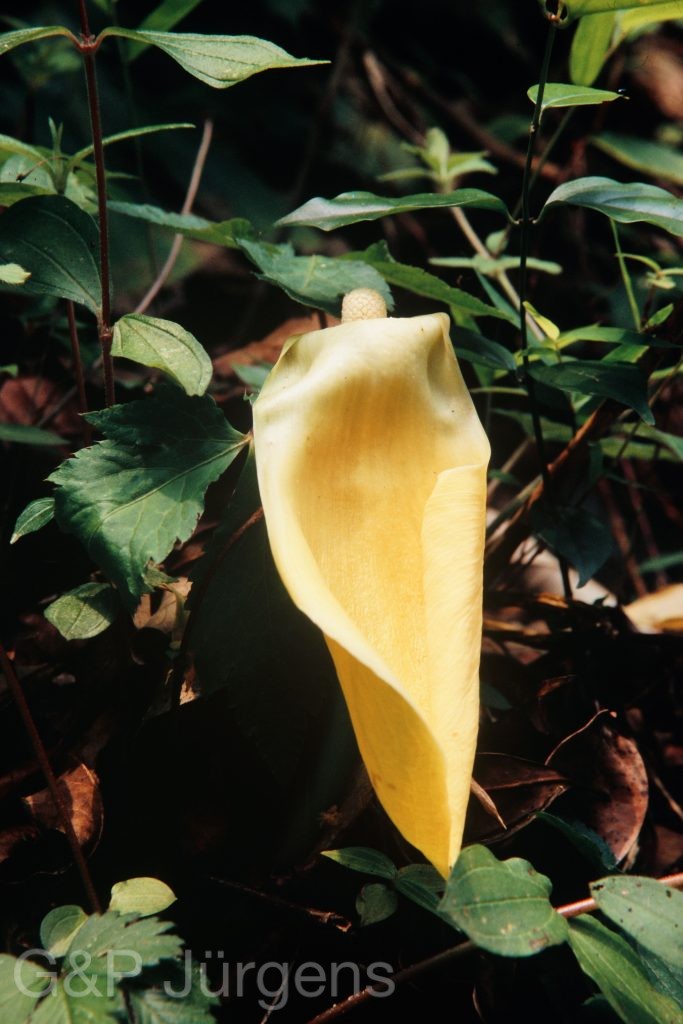
(Wall.) Bogner & Mayo

Bh2008 63 P103
Bhutan Punaka-Chu, 1500m April

Description

Amorphophallus napalensis is a tuberous aroid of the subtropical Himalaya and adjacent Southeast Asia, recorded from India, Nepal, Thailand, Bhutan, Myanmar and Bangladesh across some 80 GBIF occurrences. The photographed plant was found along the Punaka-Chu in Bhutan at about 1500 m in April. It grows in moist broad-leaved forest, on shaded slopes, ravines and forest floors, typically between roughly 500 and 1800 m, emerging with the pre-monsoon and monsoon rains from a dormant underground tuber.

The plant arises from a depressed-globose subterranean tuber and produces, in season, a single large solitary leaf with a long mottled petiole and a blade divided into numerous segments giving an umbrella-like, much-dissected appearance. The inflorescence, typical of the genus, is a spadix subtended by a spathe; the spadix bears a basal zone of female flowers below a zone of male flowers, topped by a sterile appendix. At anthesis the inflorescence emits a fetid odour and may generate heat (thermogenesis) to attract carrion-feeding flies and beetles, which effect pollination. The infructescence ripens into a cluster of fleshy berries.

Amorphophallus is a large palaeotropical genus notable for these protogynous, often malodorous inflorescences and their fly-and-beetle (sapromyophilous) pollination, with the berries subsequently dispersed by birds. The seasonal solitary leaf and dormant tuber adapt the species to the marked wet-dry rhythm of the monsoon forest. A. napalensis is widespread and not regarded as threatened, though, like many forest aroids, it depends on the maintenance of shaded, humid woodland habitat.

Author: (Wall.) Bogner & Mayo · Sources: POWO (Kew), GBIF, Flora of China, Flora of Bhutan, Flora of Nepal, Hetterscheid & Ittenbach – Revision of the Genus Amorphophallus

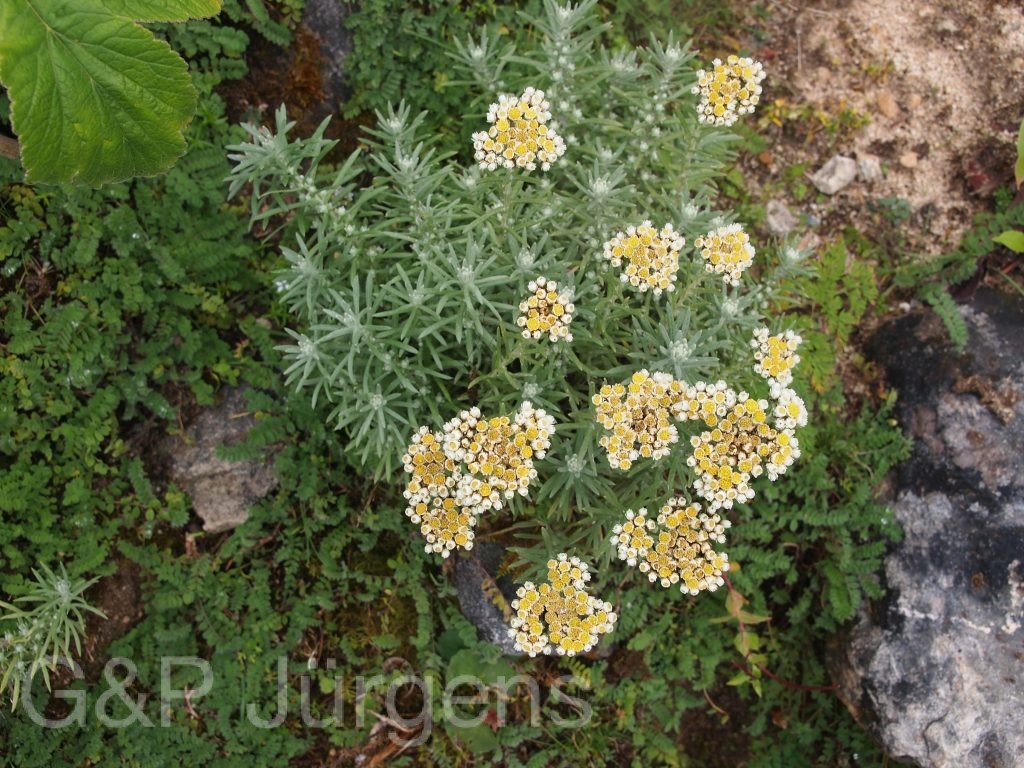
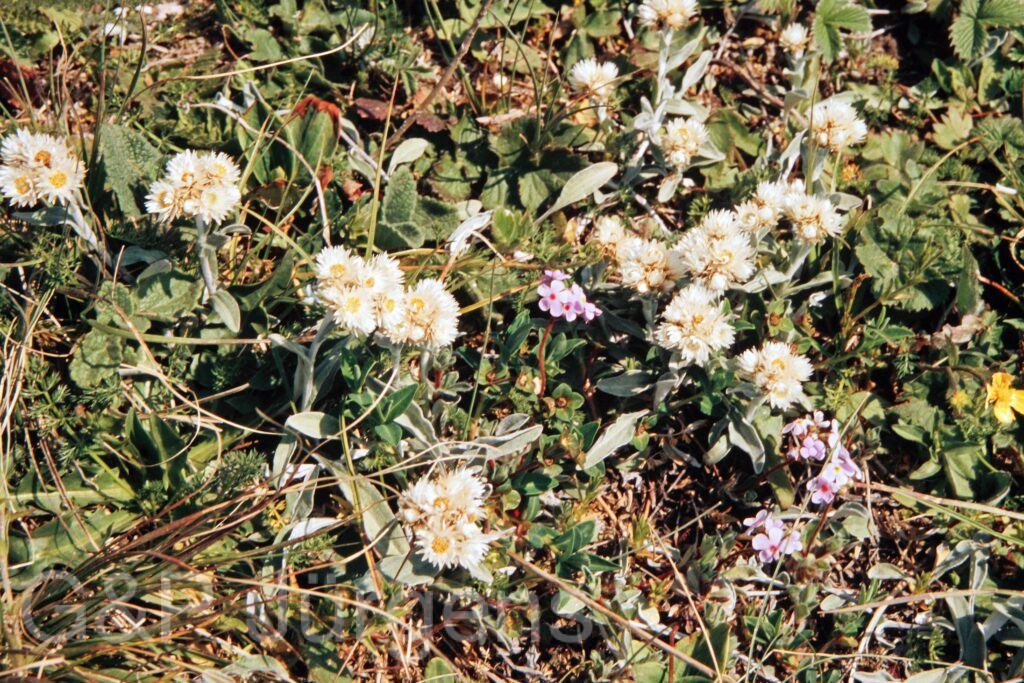
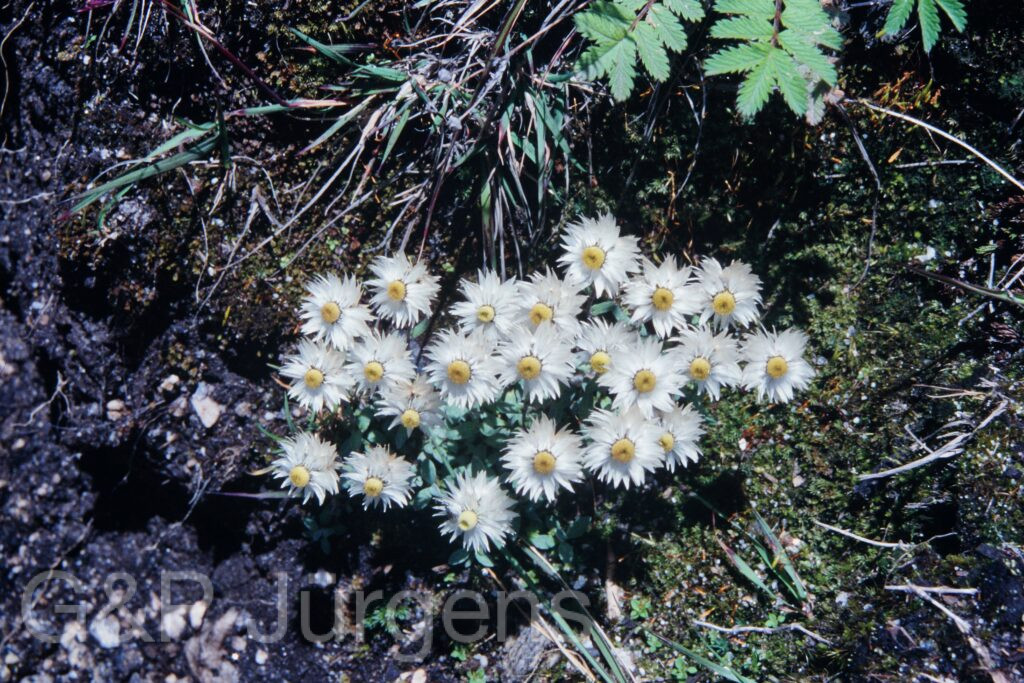
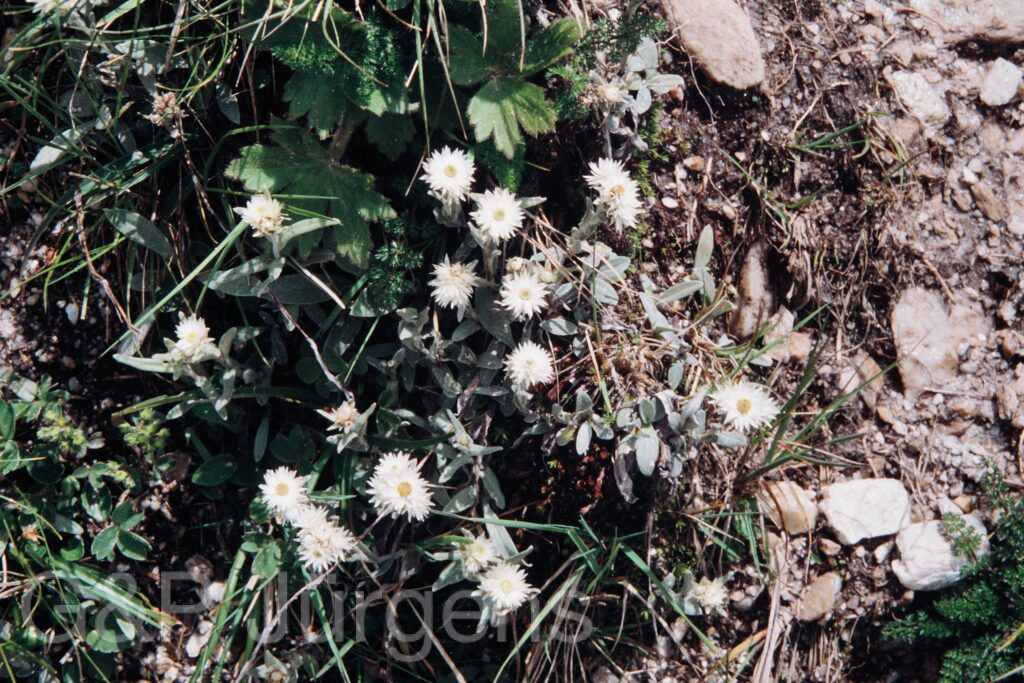
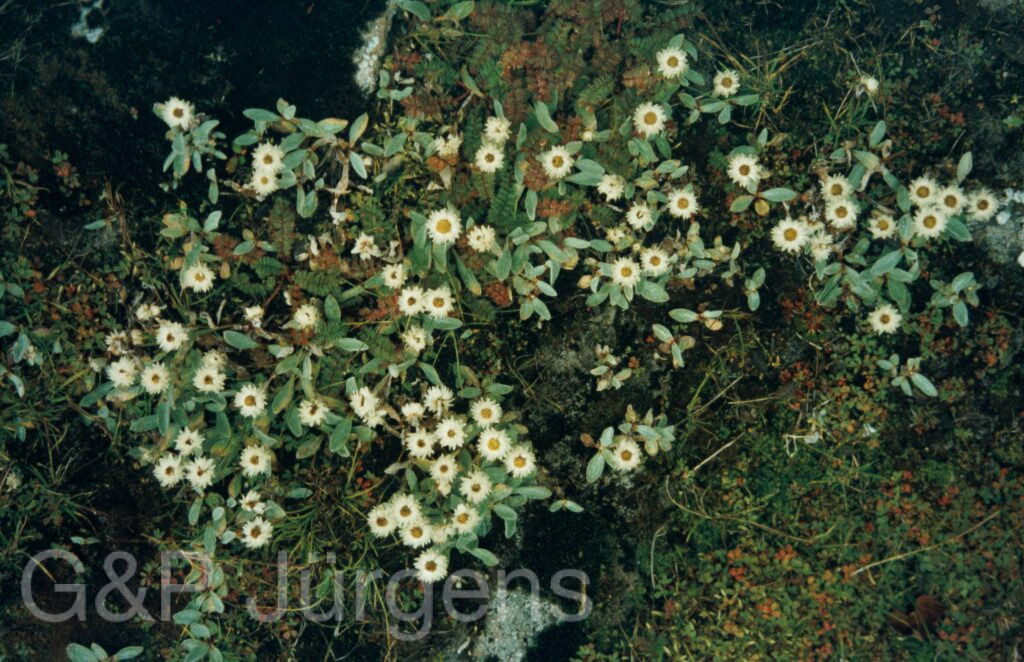
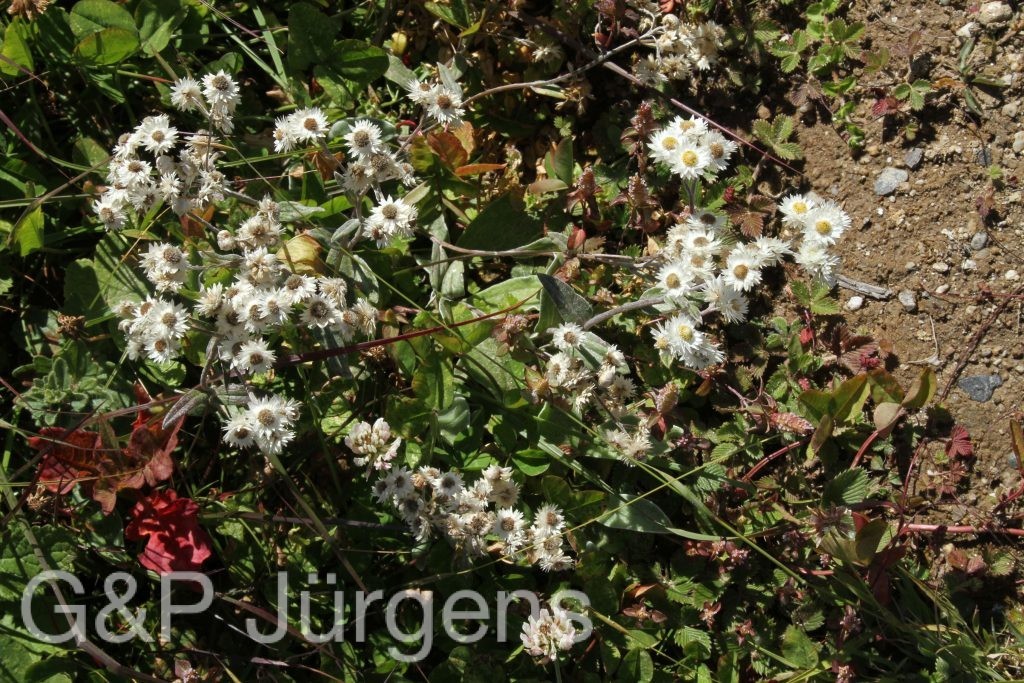
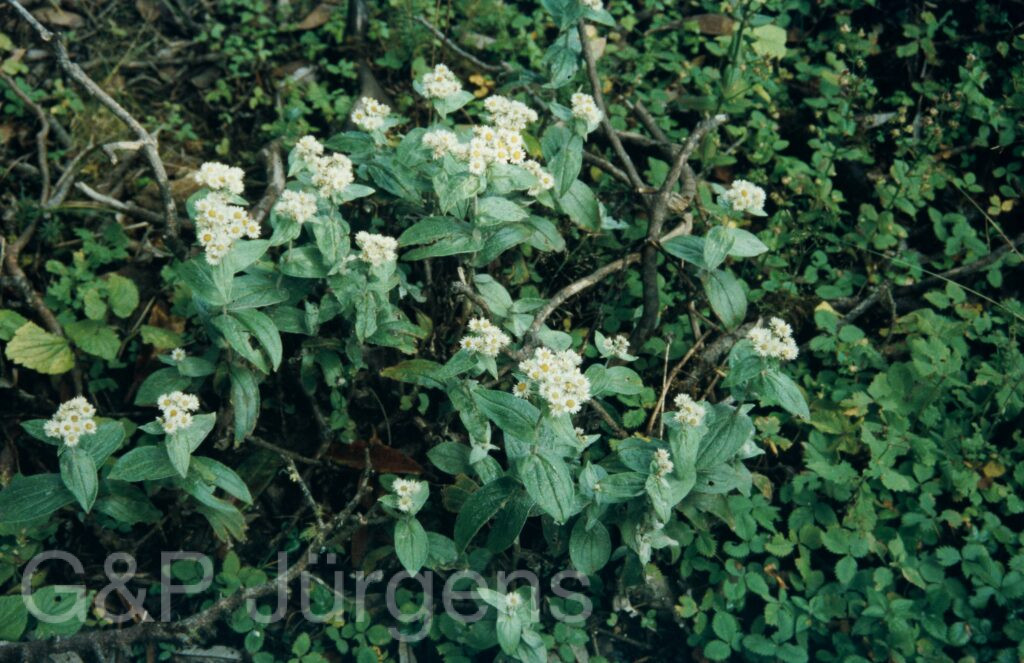
Anaphalis busua

by GP Jürgens

DC.

Bhutan2012 160
Bhutan Haar-Valley, 3200m September
Bhutan2012 160
Bhutan Haar-Valley, 3200m September
BhutanPG2011 833 01 01 1
Bhutan Chele-La, 3400m July

Description

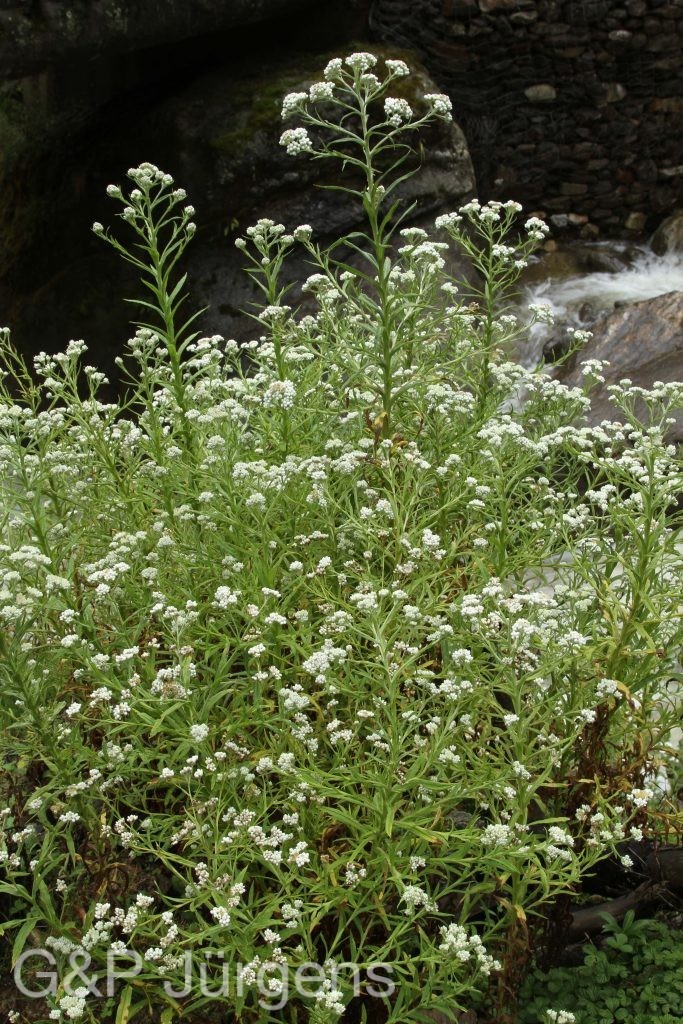
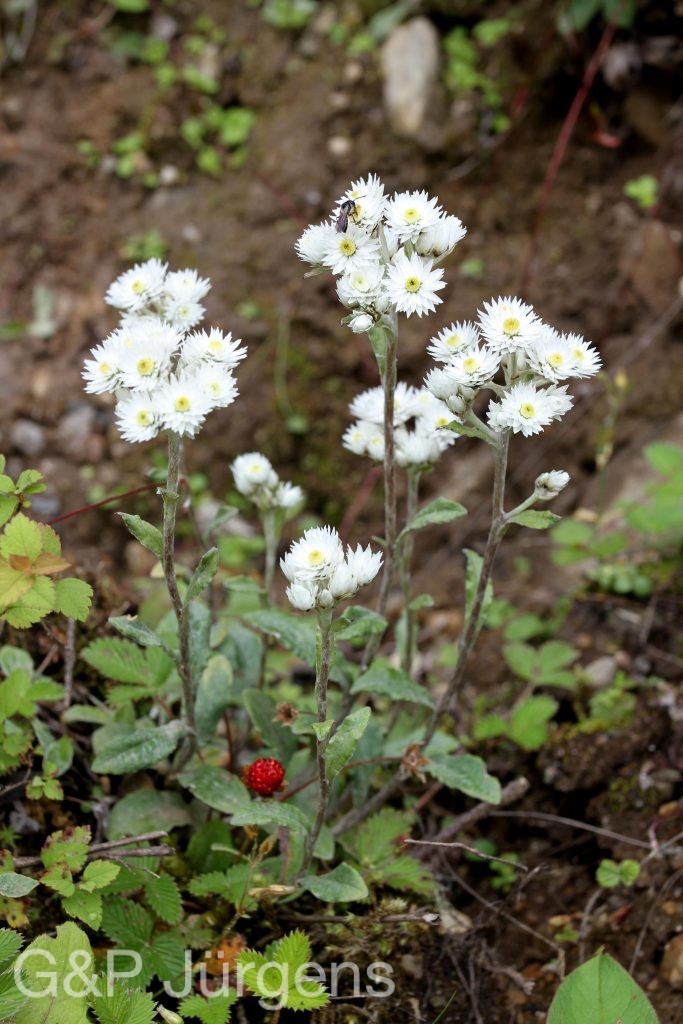
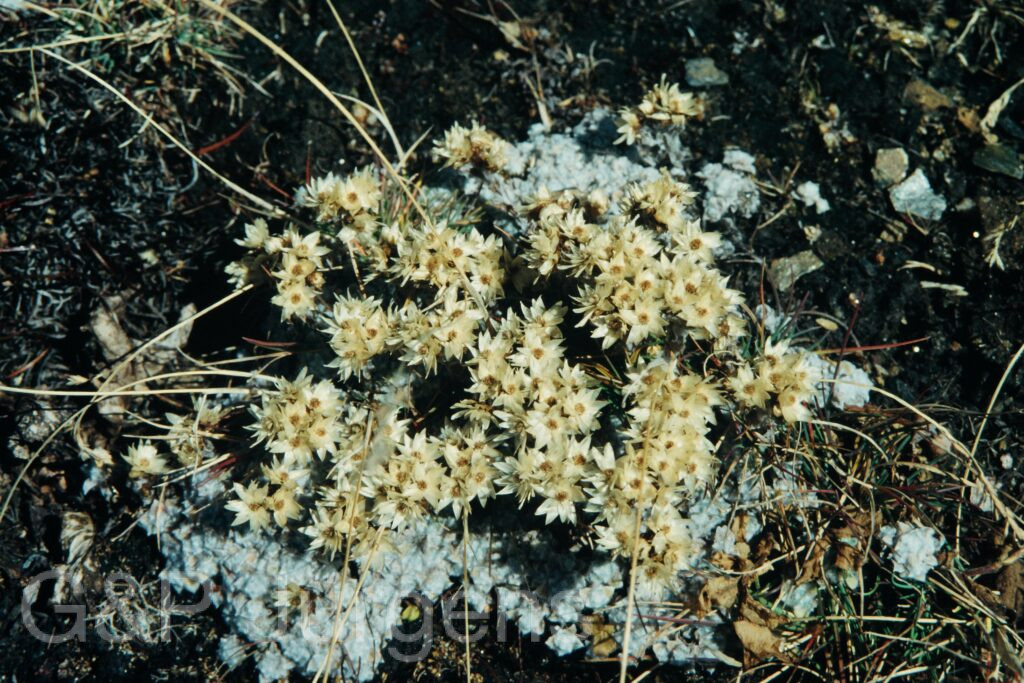
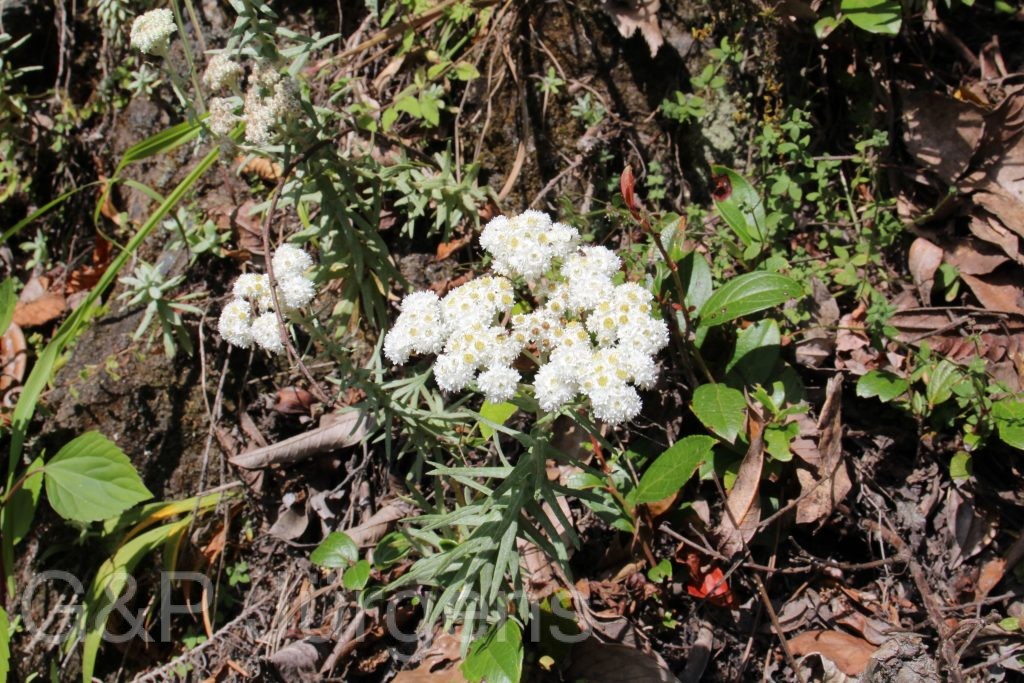
Anaphalis busua is a Himalayan everlasting widespread from Pakistan and India through Nepal, Bhutan and Myanmar into south-western China, with additional records from Sri Lanka; the 619 occurrences confirm a broad montane range, while points labelled Belgium represent cultivated or erroneous data. It occupies open grassy slopes, forest clearings, banks and disturbed ground from roughly 1500 to 3600 m. The documented Bhutanese material from the Haa Valley at about 3200 m in September and from the Chele-La at 3400 m in July illustrates its long flowering season across the temperate and lower subalpine zones of the eastern Himalaya.

The species is a perennial herb with a woody rootstock producing erect, white-woolly stems. The leaves are sessile, linear to oblong-lanceolate, somewhat decurrent, green and thinly arachnoid above and densely white-tomentose beneath, with revolute margins. The capitula are small and numerous, aggregated into dense terminal corymbs; each head is heterogamous and functionally dioecious, with the involucre of papery, pearly-white, radiating phyllaries that give the genus its everlasting quality. The florets are tubular and whitish, the outer female and filiform, the inner mostly functionally male. The cypselae are minute and oblong, crowned by a pappus of slender, barbellate, basally free bristles.

Anaphalis is a large genus of the Gnaphalieae especially diverse in the Sino-Himalayan region, distinguished from Helichrysum and Gnaphalium by its scarious involucres and predominantly dioecious heads. A. busua belongs to the broad-leaved Himalayan group and is taxonomically variable, with several related forms intergrading. The dry chaffy phyllaries persist long after flowering, favouring wind dispersal of the small achenes. The species is common and weedy in disturbed montane habitats and is of no conservation concern.

Author: DC. · Sources: POWO (Kew), GBIF, Flora of China Vol. 20-21, Flora of Bhutan, Flora of Nepal, Hilliard & Burtt Gnaphalieae studies

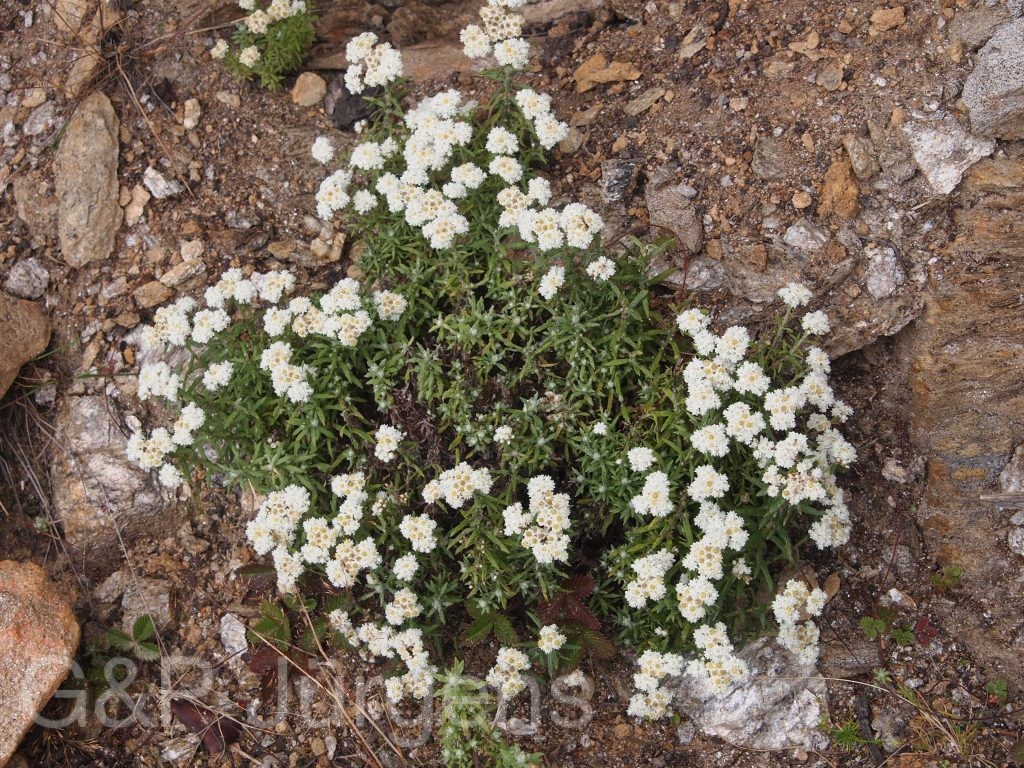
Anaphalis cavei

by GP Jürgens

Chatterjee

Nepal 95 418 W728 ergebnis
Nepal Jaisuli Kund 4200m, October

Description

Anaphalis cavei is a Himalayan high-alpine species recorded from Nepal, northern India, Bhutan and southwestern China, with around 91 occurrences concentrated along the main Himalayan axis. It is a plant of the upper alpine zone, the accompanying image documenting it at Jaisuli Kund in Nepal at about 4200 m in October, as the brief autumn growing season closes. It inhabits open stony slopes, alpine meadow turf, moraine and rocky ground near and above the treeline, growing in well-drained, often gravelly substrates exposed to intense insolation and cold, where its dense indumentum mitigates desiccation and ultraviolet stress.

It is a small, perennial, white-woolly herb forming low tufts or mats from a branched, somewhat woody caudex. The stems and leaves are densely covered in appressed lanate-tomentose hairs giving a silvery-grey aspect; the leaves are narrowly oblanceolate to spathulate, often with margins revolute and bases decurrent or semi-amplexicaul. The capitula are aggregated into a compact terminal corymb; each head is surrounded by several rows of dry, papery, pearly-white involucral bracts characteristic of the genus. The plants are functionally dioecious, with female and male florets borne predominantly on separate heads, and the cypselae are small, glabrous and crowned by a deciduous capillary pappus.

The species, described by Chatterjee, belongs to tribe Gnaphalieae, the genus Anaphalis being a taxonomically intricate group of "everlasting" daisies whose papery bracts persist long after flowering. Its restricted high-elevation range, dense wool and cushion-like habit are adaptations to the harsh alpine environment, and seed dispersal is anemochorous via the pappus. Owing to its narrow, remote montane distribution it has not been formally assessed, but it appears locally frequent within suitable alpine habitat.

Author: Chatterjee · Sources: POWO (Kew), GBIF, Flora of China, Annotated Checklist of the Flowering Plants of Nepal, Gnaphalieae monograph (Asteraceae)

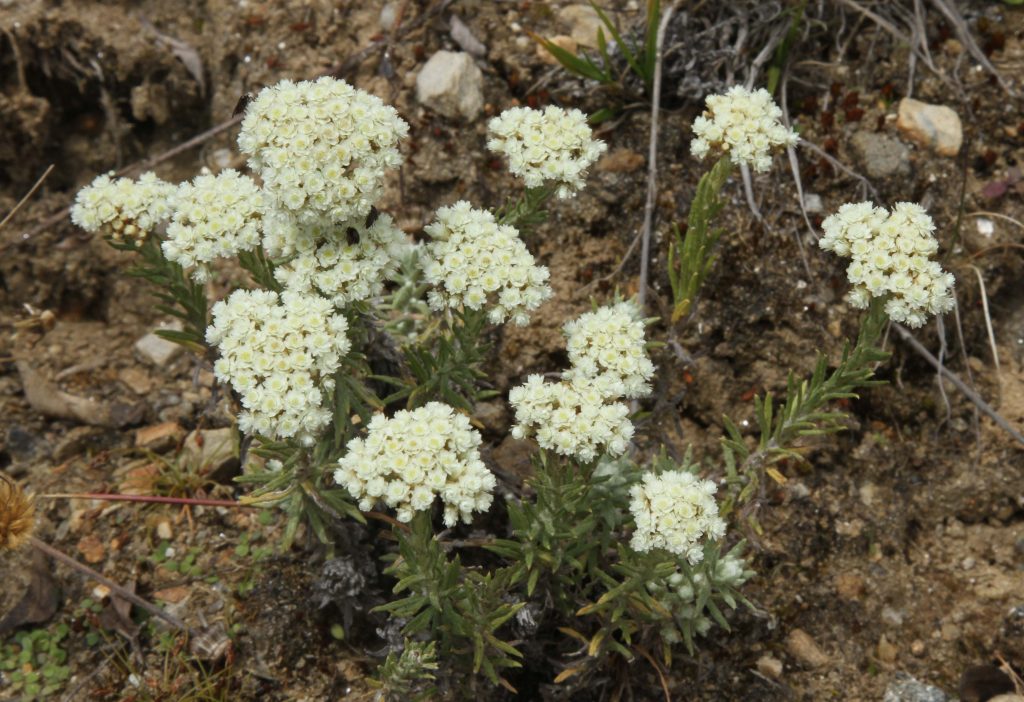
Hook.f.

Bhutan2015 325
Bhutan Trongsa 2000m, October
Bhutan2012 294
Bhutan Shele-La, 3900m September
Bhutan2012 892
Bhutan Tumching-La, 3700m October
Bhutan2012 893
Bhutan Tumching-La, 3700m October

Description

Anaphalis contorta is a widespread Asian everlasting distributed from Nepal, India and Bhutan through China to the Philippines, Taiwan, Pakistan, Bangladesh and Afghanistan, with GBIF recording over 1280 occurrences across this broad range. It is a plant of open, sunny, often dry and stony ground, favouring grassy slopes, banks, rocky pasture, trackside verges and forest margins from the temperate zone up into the subalpine. The cited Bhutanese localities span this breadth, from Trongsa at 2000 m in October to the Shele-La at 3900 m in September and the Tumching-La at 3700 m in October, demonstrating its occurrence from mid-montane forest country to high subalpine passes where it persists and flowers into the autumn.

It is a perennial herb forming tufts from a woody rootstock, the erect stems and the linear to narrowly lanceolate leaves clothed in dense white or greyish woolly tomentum, the leaf margins frequently revolute and somewhat contorted, a feature alluded to in the epithet. The capitula are small and numerous, aggregated into dense terminal corymbose clusters. Each head is surrounded by an involucre of dry, papery, persistent white phyllaries that constitute the showy part of the inflorescence, the plant being functionally dioecious with male and female heads on separate individuals. The minute tubular florets give rise to tiny cypselae bearing a pappus of slender barbellate bristles.

A member of tribe Gnaphalieae, Anaphalis comprises numerous Himalayan and East Asian species whose papery white "everlasting" bracts are an adaptation to exposed, drought-prone montane habitats and aid in attracting pollinators to the small florets. The dried inflorescences are long-lasting and locally gathered for decoration. Tolerant of poor soils and disturbance and very widely distributed, A. contorta is a secure species of no conservation concern.

Author: Hook.f. · Sources: POWO (Kew), GBIF, Flora of Bhutan, Flora of China, Annotated Checklist of the Flowering Plants of Nepal, Hilliard's revision of Anaphalis (Gnaphalieae)

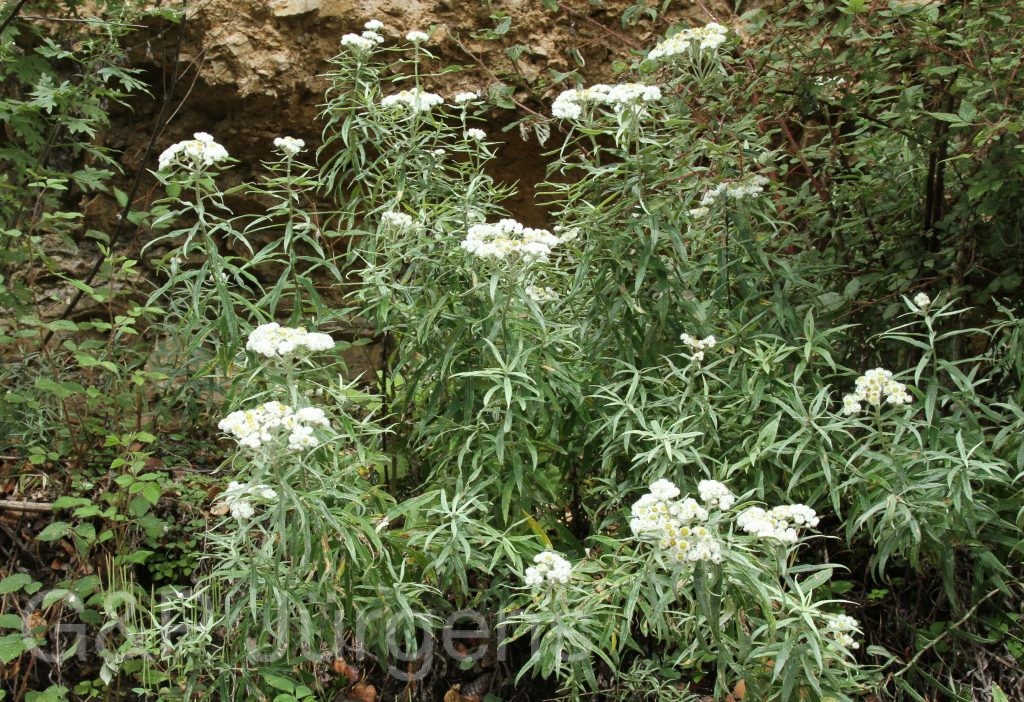
(L.) Benth. & Hook.f.

Bhutan2012 98
Bhutan Shele-La, 3600m September

Description

Among the most widely distributed of all Asteraceae, Anaphalis margaritacea spans a remarkable circumboreal and montane range, documented from North America (US, CA) and eastern Asia (CN, JP, TW) across the Himalaya (NP, IN) to a broad swathe of temperate Europe (GB, SE, DE, CZ, FR, AT, NL, CH, DK, NO, FI) and Russia, with more than 62,000 GBIF occurrences attesting to its abundance and partly naturalised status in the Old World. It favours open, well-drained sunny situations: grassy slopes, forest margins, roadsides, screes and subalpine meadows. In the eastern Himalaya it ascends well into the high mountains, as seen in the photographed population on the Shele-La in Bhutan at around 3600 m in September, where it flowers late in the season on stony alpine turf.

A perennial herb arising from a creeping rhizome, it forms erect, simple stems 20–60 cm tall, densely clothed throughout in white woolly-tomentose indumentum. The leaves are alternate, sessile, linear to linear-lanceolate, often somewhat decurrent, green and thinly arachnoid above and persistently white-tomentose beneath, with revolute margins. The inflorescence is a dense terminal corymb of numerous small capitula; each head is surrounded by several series of pearly-white, papery, radiating involucral bracts that give the plant its lasting ornamental quality. The florets are functionally unisexual, the species being largely dioecious, with tubular yellowish disc florets. The fruit is a small oblong cypsela bearing a pappus of slender barbellate bristles aiding wind dispersal.

The pearly everlasting is the type species of Anaphalis, a genus of the tribe Gnaphalieae centred on Asia, and its papery bracts retain form when dried, long valuing it in floristry. Ecologically it is a colonist of disturbed and pioneer ground, behaving as a weakly invasive naturalised plant in parts of Europe. Of least conservation concern given its vast range and ecological tolerance, it nonetheless provides a useful nectar source for late-season pollinators and larval food for certain lepidoptera.

Author: (L.) Benth. & Hook.f. · Sources: POWO (Kew), GBIF, Flora of China Vol. 20-21, Flora of Bhutan, Flora of Nepal, Anaphalis monograph (Hilliard & Burtt, Gnaphalieae)

(Spreng.) Hand.-Mazz.

Garh 07 207 ergebnis
India Garhwal Panwali 3300m, June

Description

Anaphalis nepalensis is a widespread Sino-Himalayan everlasting distributed across China, Taiwan, Nepal, India, Pakistan, Bhutan, Afghanistan and Myanmar, with over 3600 georeferenced records making it one of the better-documented Himalayan composites. It occupies open alpine and subalpine meadows, grassy slopes, rocky pastures and forest clearings, generally between about 3000 and 4500 m. The photographed plant from Panwali in the Garhwal Himalaya at 3300 m, flowering in June, typifies its grassy mid-alpine habitat where it forms low cushions or spreading patches in short turf.

It is a perennial, white-woolly herb arising from a creeping rhizome, with prostrate to ascending stems clothed in dense grey-white tomentum. The leaves are oblanceolate to spathulate, often crowded in a basal rosette and reducing upward, cottony on both surfaces. The capitula are arranged singly or in small terminal clusters and are dioecious or subdioecious; the conspicuous part is the spreading ring of dry, papery, pearly-white involucral bracts surrounding the small yellowish disc florets, an arrangement that gives the genus its "pearly everlasting" character. The achenes bear a pappus of fine barbellate bristles.

The persistent, scarious bracts retain their form long after flowering, an adaptation suiting the plant to harsh, exposed alpine conditions and aiding identification. Anaphalis nepalensis is a variable species with several recognised varieties differing in stature and leaf form, and it is sometimes confused with related Himalayan congeners. Common and ecologically adaptable, it is not of conservation concern and is occasionally grown as a rock-garden ornamental.

Author: (Spreng.) Hand.-Mazz. · Sources: POWO (Kew), GBIF, Flora of China, Annotated Checklist of the Flowering Plants of Nepal, Compositae monographs (Handel-Mazzetti)

(DC.) Hand.-Mazz.

Sikkim2003 187 P255
Sikkim Dzongri 4000m 08.2003
Nepal 99 274 ergebnis
West-Nepal Loccu 3800m, June
Garw 2005 150 ergebnis ergebnis
India Garhwal Kuari-Pass 3900m, September

Description

Anaphalis nepalensis var. monocephala is a high-alpine pearly everlasting of the Himalaya and adjacent China, recorded from Nepal, India, Bhutan, Pakistan, Taiwan and south-west China across 426 georeferenced occurrences. It occupies open alpine turf, screes, rocky slopes and gravelly moraine in the upper alpine zone. The cited collections at Dzongri in Sikkim (4000 m), Loccu in west Nepal (3800 m) and the Kuari Pass in Garhwal (3900 m) confirm its preference for elevations of roughly 3500-4800 m, where it flowers through the short summer and into early autumn. The variety is distinguished from typical A. nepalensis chiefly by its solitary or few terminal capitula on dwarf, cushion-forming stems.

It is a low, mat- or cushion-forming perennial herb with a branched woody caudex and short, white-woolly (lanate) stems and foliage. The leaves are spathulate to oblanceolate, crowded toward the base, densely grey-tomentose and frequently bearing a tuft of wool at the apex. The capitula are usually solitary (monocephalous), comparatively large, and surrounded by numerous papery, pearly-white, radiating involucral bracts that simulate ray florets; the true florets are small and yellowish, the plant being functionally dioecious. The fruit is a tiny cypsela crowned by a pappus of barbellate bristles.

The genus Anaphalis belongs to tribe Gnaphalieae (the cudweeds and everlastings), in which dry, persistent scarious bracts give the inflorescences their lasting quality. The white bracts and clustered florets attract small flies and bees, while the plumed cypselae are wind-dispersed. The variety is locally frequent in high Himalayan pastures and is not considered threatened, though sensitive to heavy grazing and trampling.

Author: (DC.) Hand.-Mazz. · Sources: POWO (Kew), GBIF, Flora of Bhutan, Flora of China, Flora of Nepal, Hilliard & Burtt Gnaphalieae studies

Sims ex C.B.Clarke

Bhutan2015 408
Bhutan Tumching-La 4000m, October
Garw 2005 296 ergebnis
India Garhwal Kunol 2900m, September

Description

Anaphalis triplinervis is a widespread Himalayan everlasting recorded natively from Nepal, India, China, Pakistan, Bhutan, Myanmar and Afghanistan, and widely grown in gardens (hence European and North American records); GBIF holds over 900 occurrences. It is a plant of open subalpine and alpine slopes, grassy meadows, forest clearings and stony banks, ranging from about 2000 to over 4000 m. The photographed material is from Tumching-La in Bhutan at 4000 m in October and from Kunol in Garhwal, India, at 2900 m in September, spanning the autumn flowering across the central and eastern Himalaya.

The species is a tufted perennial herb with creeping rhizomes and erect, white-woolly stems. The leaves are alternate, oblong to obovate-lanceolate, sessile and often somewhat decurrent, with the three prominent longitudinal nerves that give the epithet "triplinervis"; they are green and thinly cobwebby above and densely white-tomentose beneath. The capitula are small and crowded in dense terminal corymbs, each surrounded by spreading, papery, pearly-white involucral bracts that form the showy "flower"; the true florets are small and yellowish, the plants typically dioecious or functionally so. The fruit is a tiny cypsela with a pappus of barbellate bristles.

Anaphalis belongs to the tribe Gnaphalieae, the cudweeds, and A. triplinervis is among the most familiar Himalayan species, its persistent papery bracts making it a popular everlasting for drying. Abundant and ecologically tolerant of grazed and disturbed slopes, it is of no conservation concern.

Author: Sims ex C.B.Clarke · Sources: POWO (Kew), GBIF, Flora of Bhutan, Flora of China, Annotated Checklist of the Flowering Plants of Nepal, Revision of Asiatic Anaphalis (Gnaphalieae)