
(DC.) Hand.-Mazz.
Description
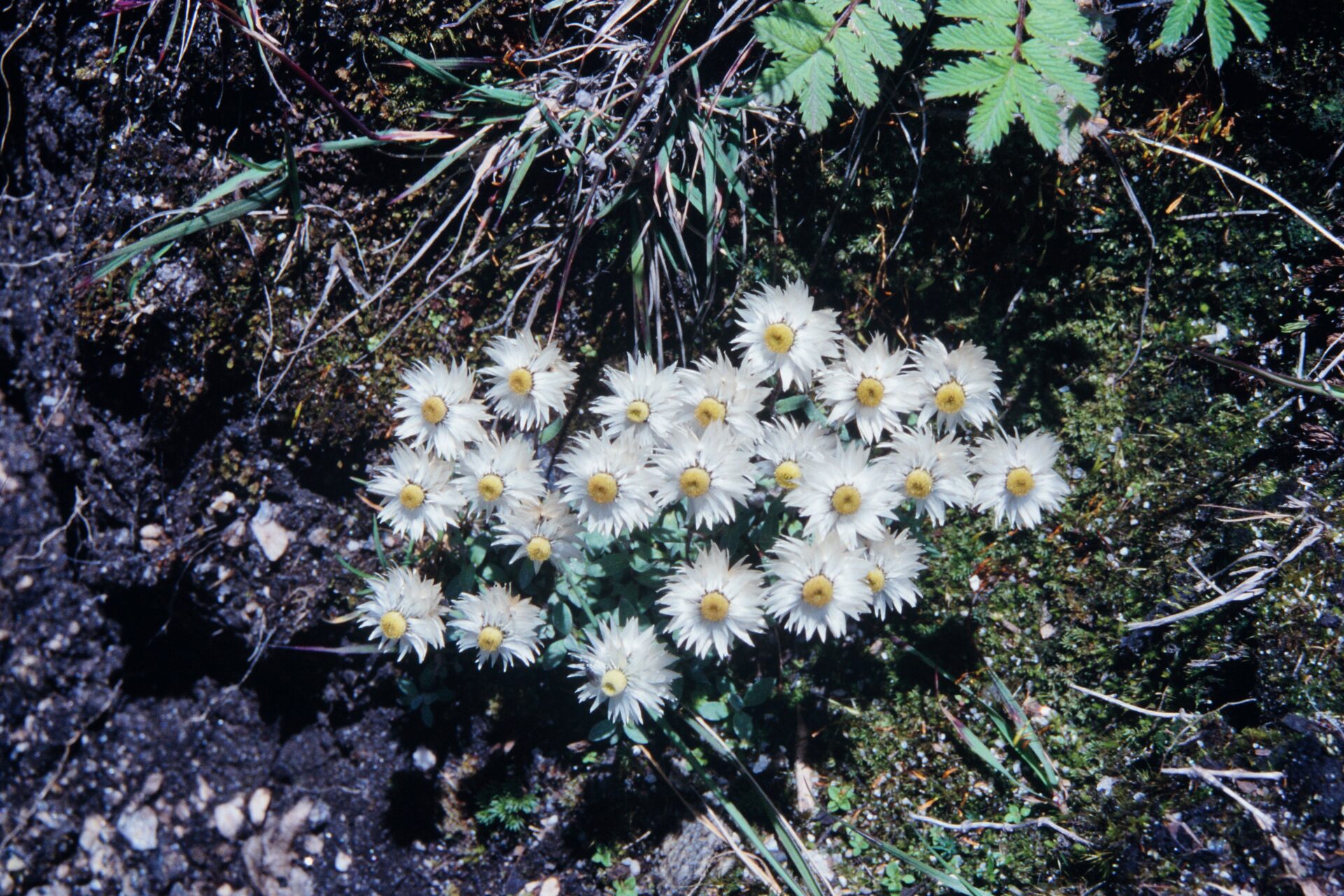
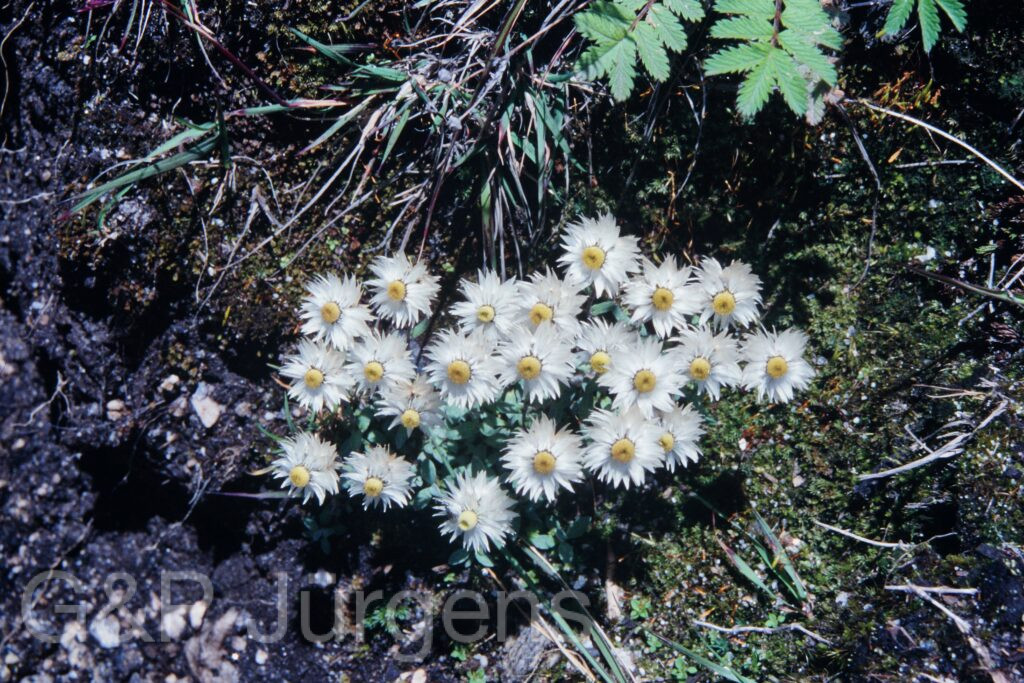
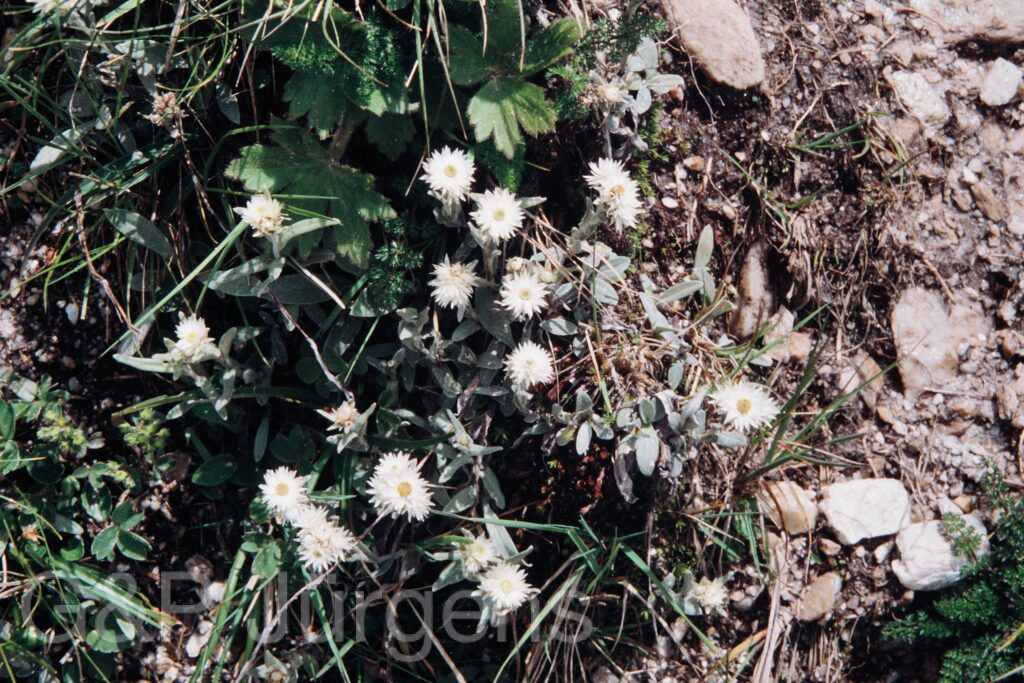
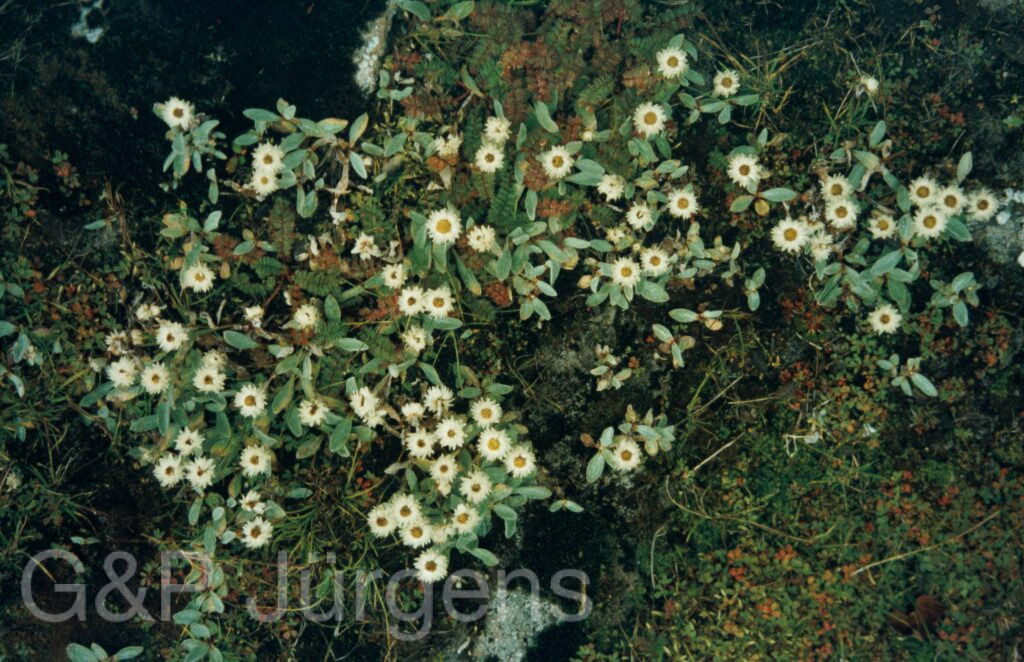
Anaphalis nepalensis var. monocephala is a high-alpine pearly everlasting of the Himalaya and adjacent China, recorded from Nepal, India, Bhutan, Pakistan, Taiwan and south-west China across 426 georeferenced occurrences. It occupies open alpine turf, screes, rocky slopes and gravelly moraine in the upper alpine zone. The cited collections at Dzongri in Sikkim (4000 m), Loccu in west Nepal (3800 m) and the Kuari Pass in Garhwal (3900 m) confirm its preference for elevations of roughly 3500-4800 m, where it flowers through the short summer and into early autumn. The variety is distinguished from typical A. nepalensis chiefly by its solitary or few terminal capitula on dwarf, cushion-forming stems.
It is a low, mat- or cushion-forming perennial herb with a branched woody caudex and short, white-woolly (lanate) stems and foliage. The leaves are spathulate to oblanceolate, crowded toward the base, densely grey-tomentose and frequently bearing a tuft of wool at the apex. The capitula are usually solitary (monocephalous), comparatively large, and surrounded by numerous papery, pearly-white, radiating involucral bracts that simulate ray florets; the true florets are small and yellowish, the plant being functionally dioecious. The fruit is a tiny cypsela crowned by a pappus of barbellate bristles.
The genus Anaphalis belongs to tribe Gnaphalieae (the cudweeds and everlastings), in which dry, persistent scarious bracts give the inflorescences their lasting quality. The white bracts and clustered florets attract small flies and bees, while the plumed cypselae are wind-dispersed. The variety is locally frequent in high Himalayan pastures and is not considered threatened, though sensitive to heavy grazing and trampling.
Author: (DC.) Hand.-Mazz. · Sources: POWO (Kew), GBIF, Flora of Bhutan, Flora of China, Flora of Nepal, Hilliard & Burtt Gnaphalieae studies