Author

GP Jürgens

Hook. f.

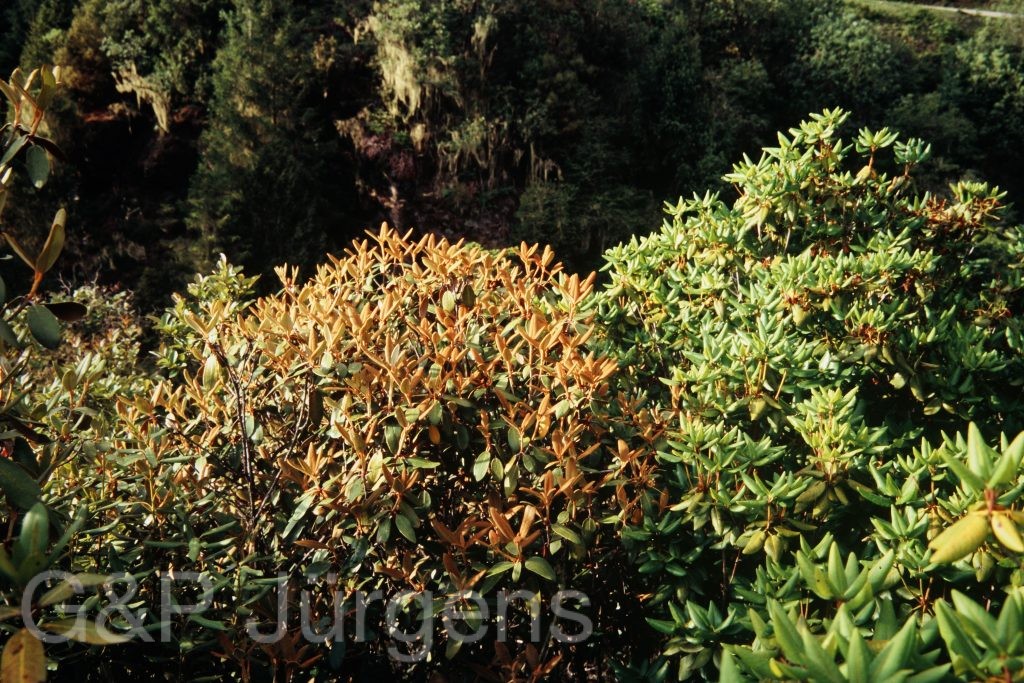
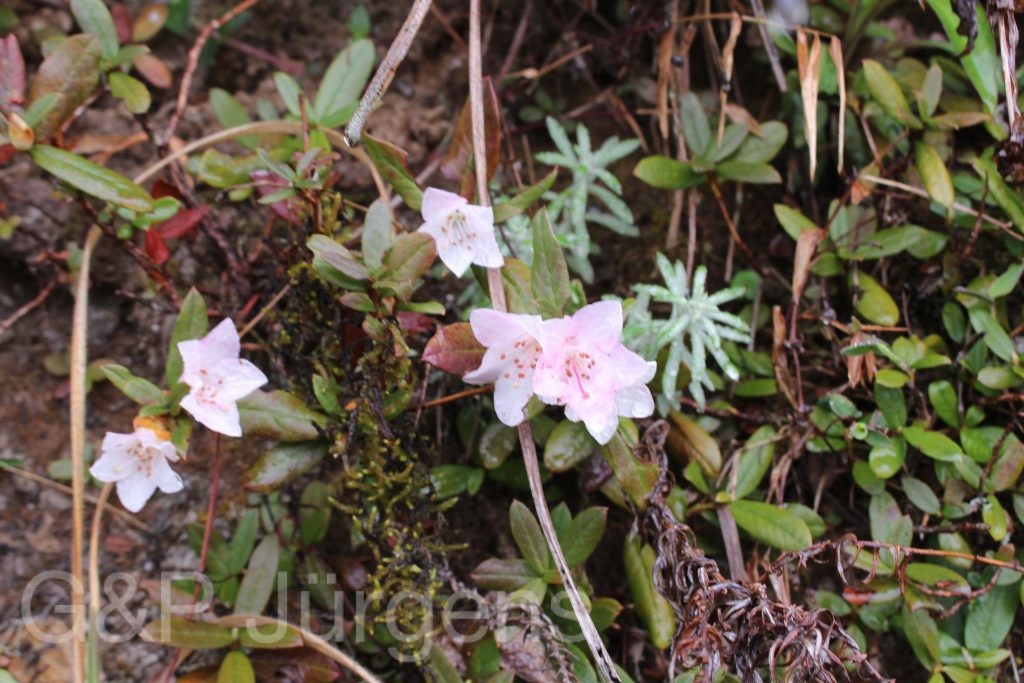
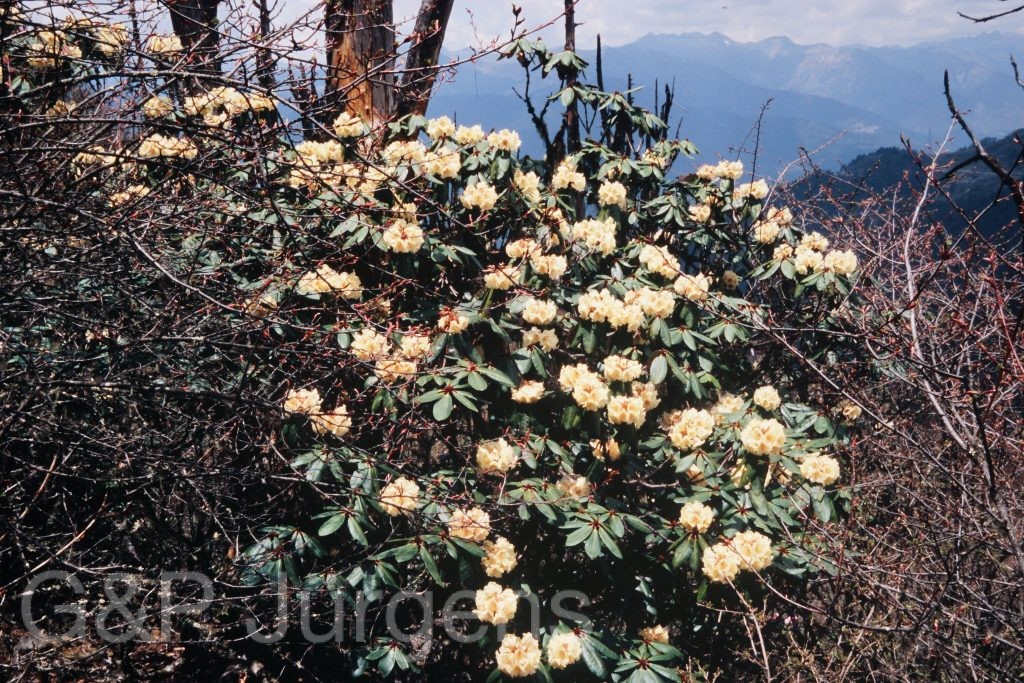
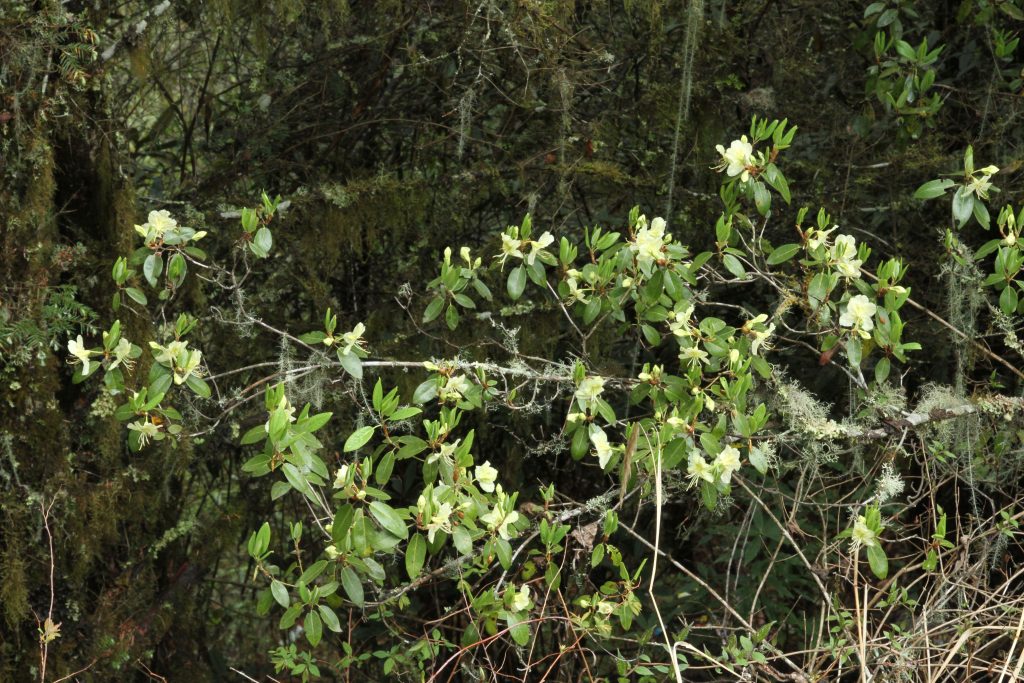
Bhutan2014 357
Bhutan Tumching-La 3100m, May
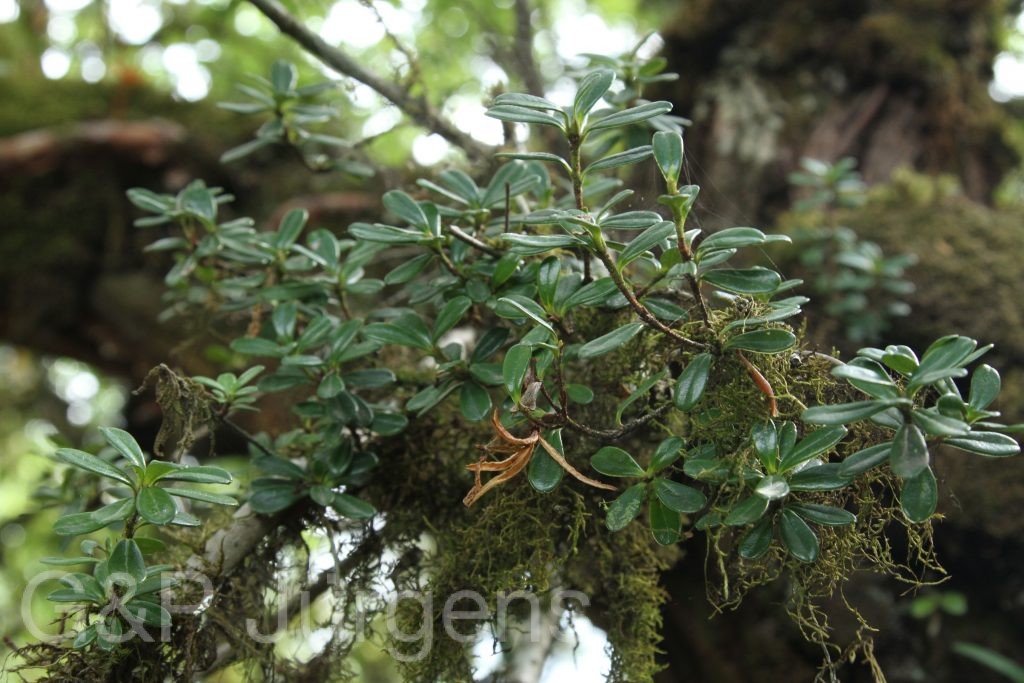
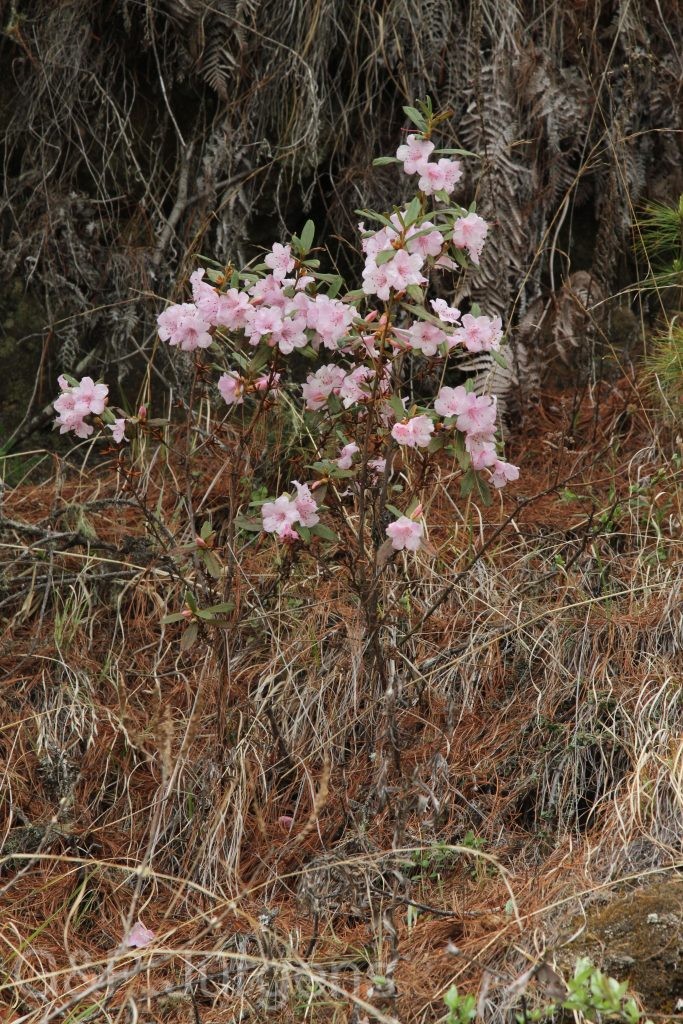
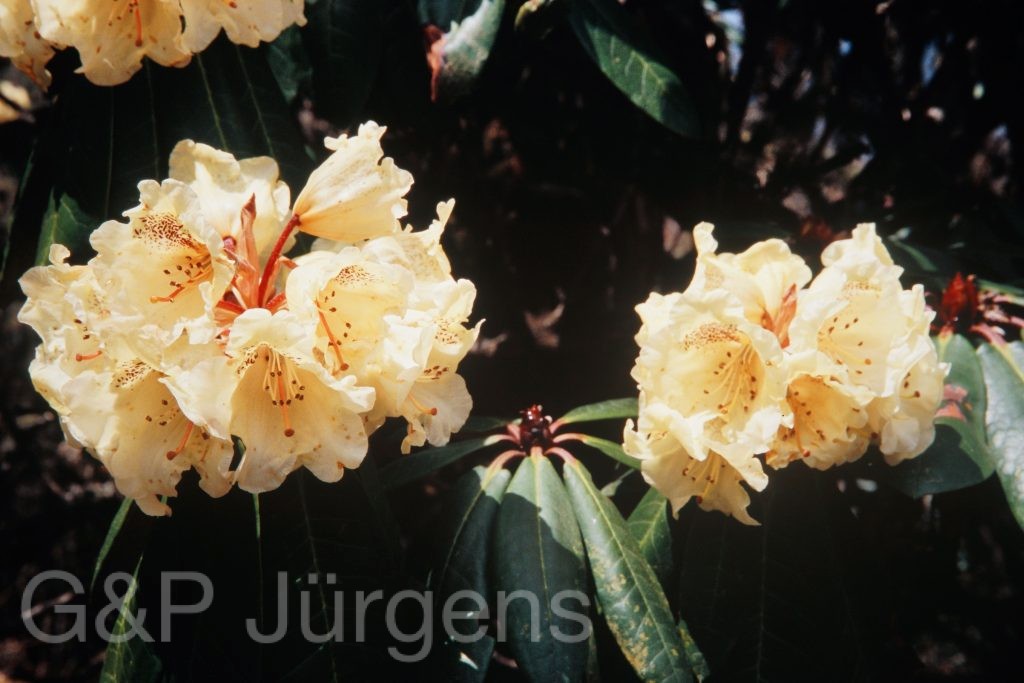
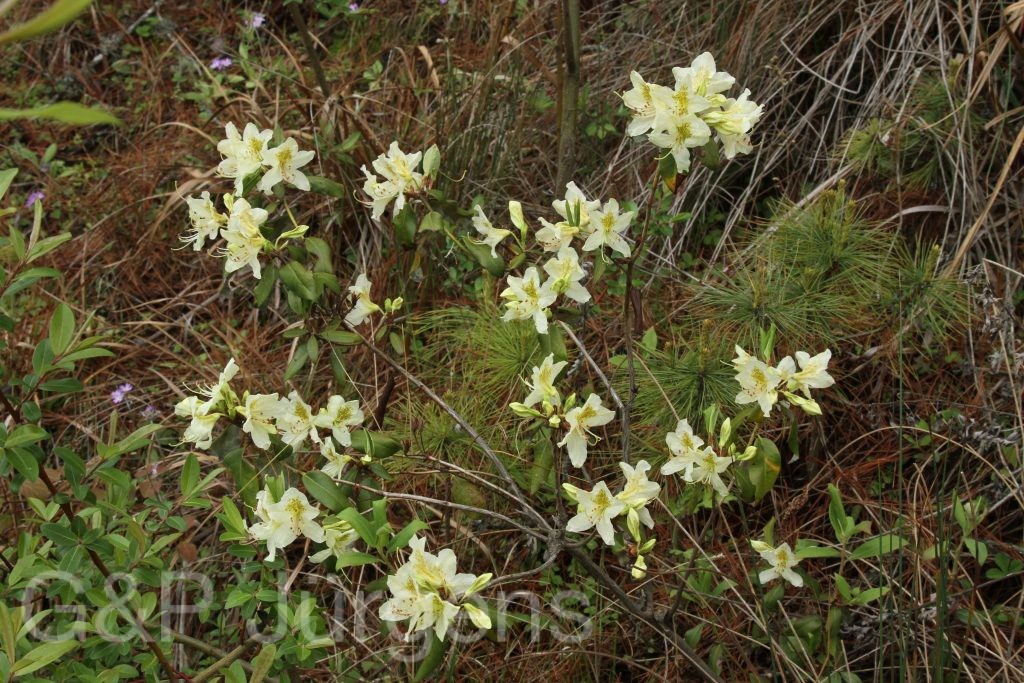
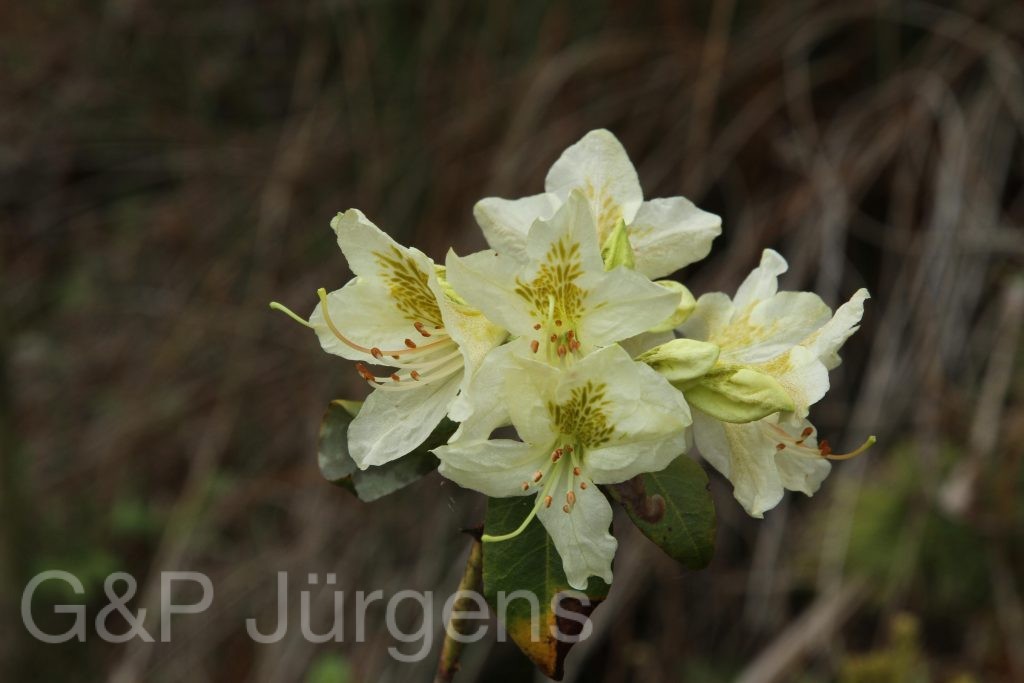
Bhutan2014 402
Bhutan Yatong-La 2900m, May
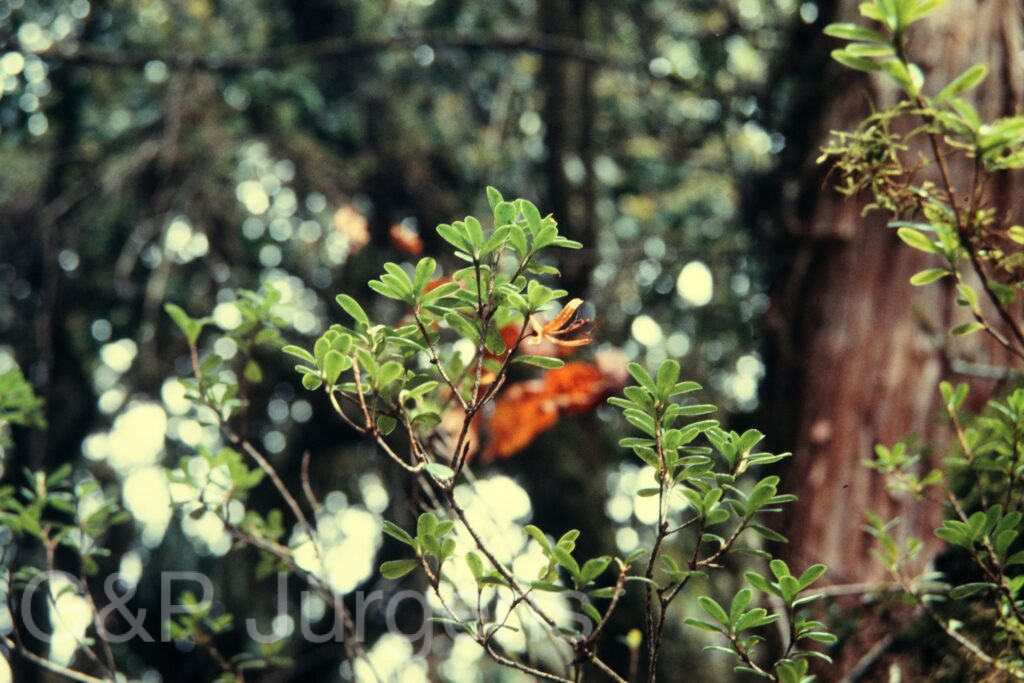
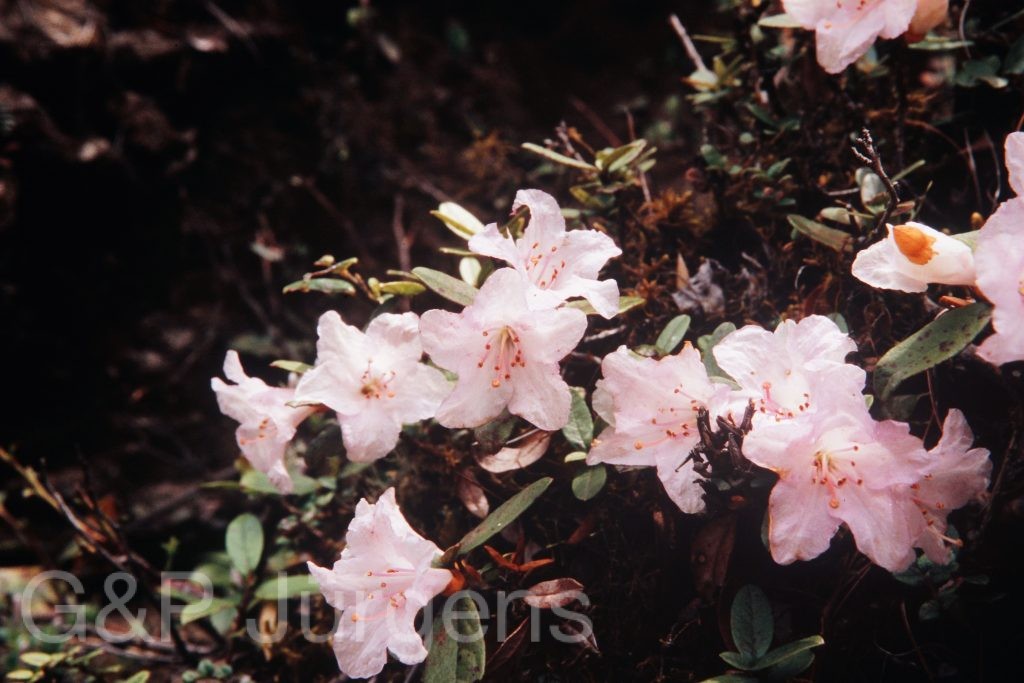
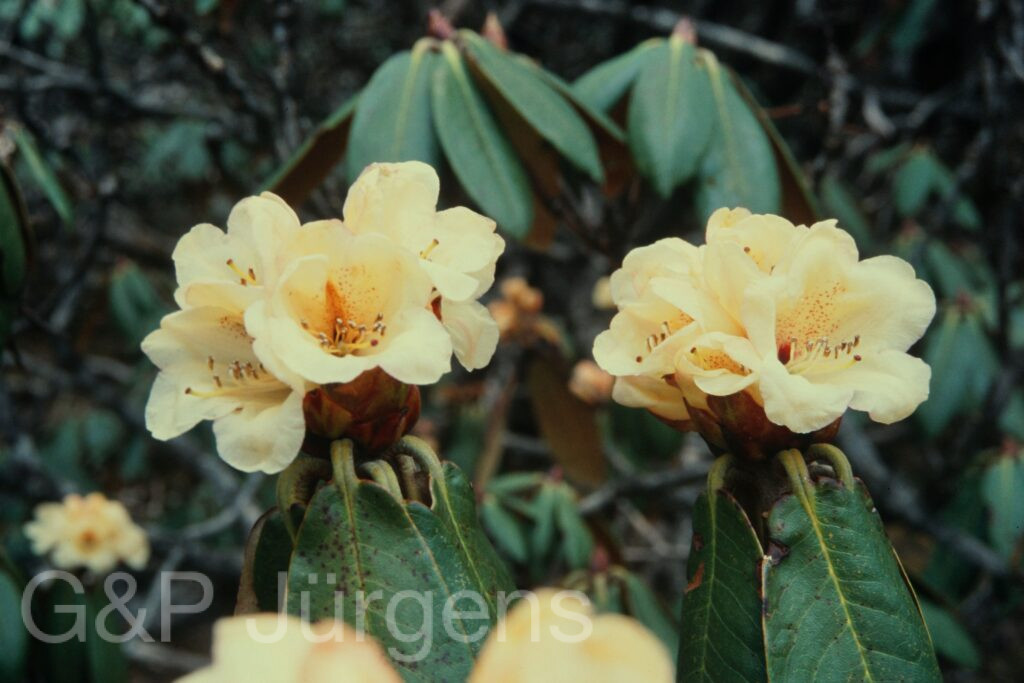
Bhutan2014 403
Bhutan Yatong-La 2900m, May

Description

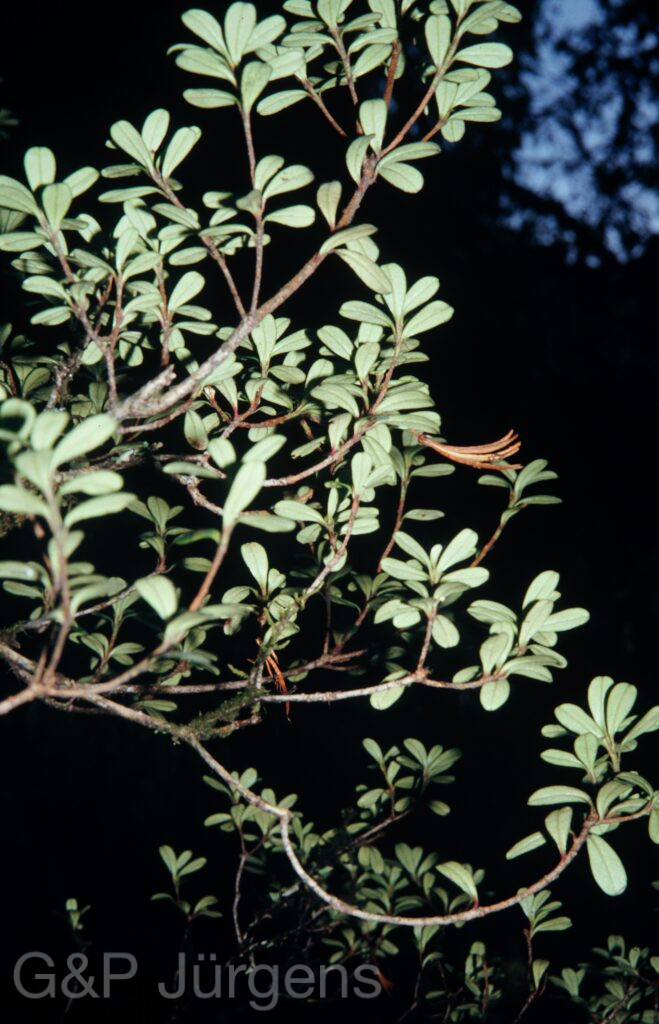
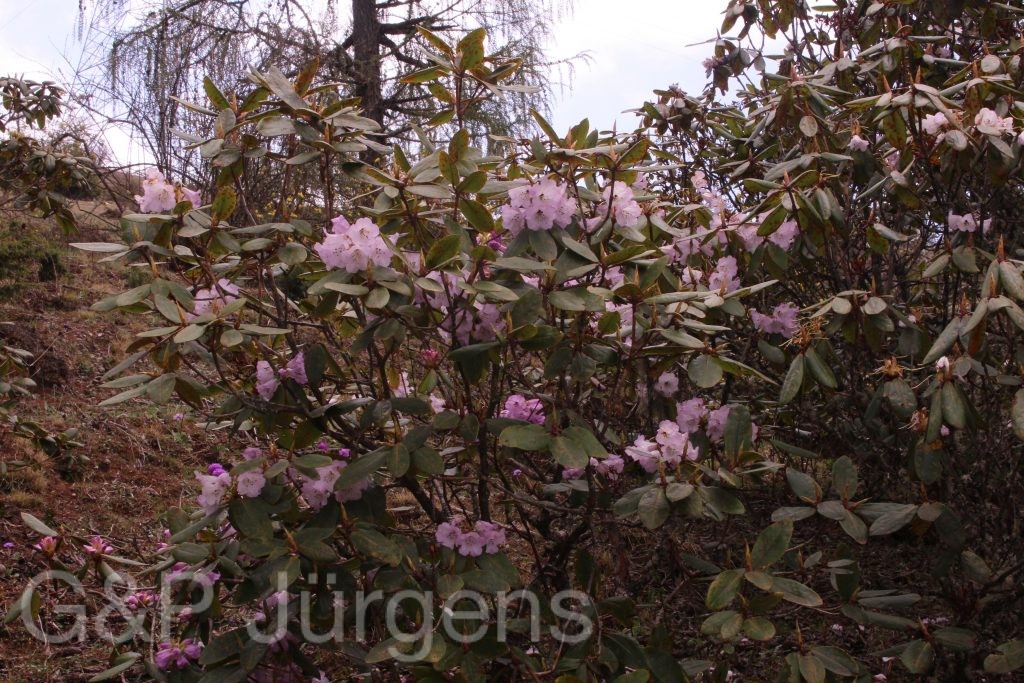
Rhododendron triflorum is an eastern Himalayan rhododendron distributed across China, Bhutan, India, Nepal and Myanmar, with about 484 GBIF occurrences (additional records abroad reflecting its popularity in cultivation). It grows in temperate forest, forest margins, rhododendron and conifer thickets and open shrubby slopes, generally between roughly 2700 and 3700 m. The plants photographed at Tumching-La (about 3100 m) and Yatong-La (about 2900 m) in Bhutan, both in May, exemplify its mid-montane forest habitat, where it flowers in late spring among mixed broad-leaved and coniferous woodland.

The species is an erect shrub or small tree with smooth, attractive coppery to reddish-brown, peeling bark. The leaves are evergreen, ovate to elliptic, glabrous above and conspicuously scaly (lepidote) beneath, the scales characteristic of the lepidote rhododendrons. The flowers are borne in small terminal clusters, typically in threes as the epithet triflorum indicates; the broadly funnel-campanulate corolla is pale yellow, often flushed or spotted with green, and densely scaly outside. There are ten stamens and a scaly ovary, and the fruit is a small dry capsule splitting to release numerous minute seeds.

Rhododendron triflorum belongs to subgenus Rhododendron (the lepidote, scaly-leaved rhododendrons), section Triflora, a group of slender-flowered species centred on the Sino-Himalaya. The lepidote indumentum and small capsular fruits with abundant wind-dispersed seed are characteristic of this clade. With a wide eastern Himalayan distribution the species is of least concern, and its handsome bark and yellow flowers have made it a valued ornamental; like its congeners it is an important component of the rhododendron-dominated temperate forests of the eastern Himalaya.

Author: Hook. f. · Sources: POWO (Kew), GBIF, Flora of China, Flora of Bhutan, Annotated Checklist of the Flowering Plants of Nepal, Cullen revision of lepidote Rhododendron
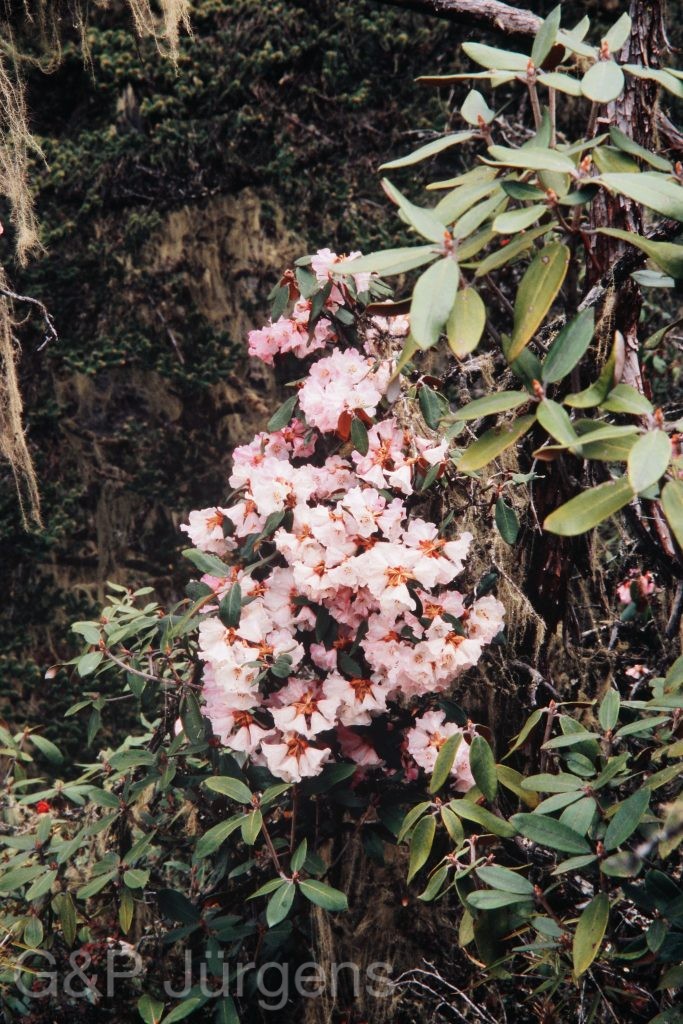
Cowan

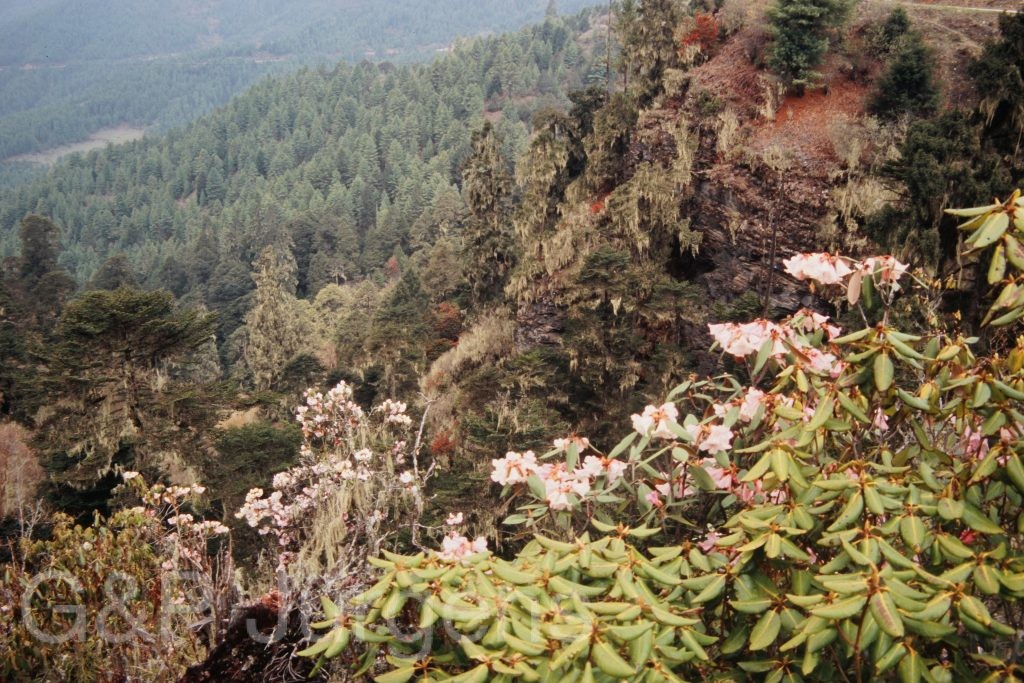
Bh2008 223 G352
Bhutan Tumching-La, 3800m April
Bh2008 224 P355
Bhutan Tumching-La, 3800m April
Bh09 339 G553
Bhutan Jakar 3700m April

Description

Rhododendron tsariense is a shrub of the eastern Himalaya, restricted to China (south-eastern Tibet), north-eastern India and Bhutan, with a small number of records (66 occurrences in GBIF) reflecting its limited range. It inhabits high subalpine and alpine zones, growing in open coniferous and Rhododendron scrub, on rocky slopes, ridges and the margins of fir forest, characteristically between about 3000 and 4300 m. The photographed plants come from Bhutan, at Tumching-La (3800 m) and near Jakar (3700 m), flowering in April as the high passes emerge from winter, an elevation typical of the species' montane habitat.

It is a compact, much-branched evergreen shrub, the young shoots and undersides of the leaves clothed in a dense, felted, fawn to rusty-brown indumentum that is one of its most diagnostic features. The leaves are small, leathery, elliptic to obovate, dark green and somewhat rugose above. The flowers are borne in small terminal trusses; the corolla is campanulate (bell-shaped), creamy white to pale pink, often flushed rose and spotted within. The fruit is a woody dehiscent capsule, the persistent style and calyx remaining at the apex.

The species belongs to subsection Lanata (subgenus Hymenanthes), a group of indumented eastern Himalayan rhododendrons characterised by their conspicuously hairy leaf undersurfaces. Named for the Tsari region, it is a narrow-range endemic of conservation interest, its alpine populations potentially sensitive to climate shifts and to grazing and burning pressure in the high pastures. Like other rhododendrons it is bee- and bird-pollinated and forms ericoid mycorrhizal associations adapted to acidic, peaty mountain soils.

Author: Cowan · Sources: POWO (Kew), GBIF, Flora of Bhutan, The Genus Rhododendron (Cowan & Davidian), Edinburgh Rhododendron revision

Hook.

Bhutan2014 811
Bhutan Wangdi Mo-Chu 1600m, May
Nepal 97 108 P184
Nepal Dongen 2400m April
Nepal 1994 196 ergebnis
Ost-Nepal Mewa-Khola
2100m April

Description

Rhododendron vaccinioides is a small epiphytic rhododendron of the eastern Himalaya and adjacent China and Southeast Asia, recorded from China, India, Myanmar, Nepal, Bhutan, Vietnam and Japan, with some 245 GBIF occurrences. It grows as an epiphyte on mossy trunks and branches, and occasionally on rocks, in humid temperate broadleaved and conifer forest, generally between about 1600 and 3000 m. The documented populations span Wangdi Mo-Chu in Bhutan at 1600 m, Dongen in Nepal at 2400 m and the Mewa Khola in eastern Nepal at 2100 m, flowering in April and May in the cloud-bathed mid-montane belt.

It is a small, much-branched epiphytic shrub with slender, often pendent or sprawling branchlets bearing scattered scales (lepidote indumentum). The leaves are small, obovate to oblanceolate and somewhat fleshy, clustered toward the branch tips, vaccinium-like in aspect, hence the epithet, and lepidote beneath. The flowers are small, solitary or few at the branch ends, with a short-tubed, broadly funnelform to rotate, white to pinkish corolla that is sparsely scaly outside. The fruit is a small lepidote capsule splitting into valves to release numerous minute seeds adapted to wind dispersal among the canopy.

The species belongs to Rhododendron subgenus Rhododendron, section Vireya (the largely epiphytic, tropical-montane rhododendrons), of which it is one of the few representatives reaching the Himalaya. It is widespread and not threatened, but as an epiphyte dependent on humid, moss-laden old-growth forest it is sensitive to deforestation and to drying of the montane cloud belt.

Author: Hook. · Sources: POWO (Kew), GBIF, Flora of Bhutan, Flora of China, Argent monograph of Rhododendrons of Subgenus Vireya

Hook. f.

Bhutan2014 43
Bhutan Trashigang 1300m, May
Bhutan2014 391
Bhutan Tumching-La 3000m, May
Bh2008 146 P243
Bhutan Chendebji, 2450m April

Description

Rhododendron vaccinioides Hook. f. is a small epiphytic rhododendron of the eastern Himalaya and adjacent montane Asia, ranging from Nepal and India through Bhutan to southern China, Myanmar and Vietnam, with around 245 GBIF occurrences. It grows characteristically as an epiphyte on mossy trunks and branches, and occasionally on rocks, in humid broadleaved and mixed evergreen forest, across a wide altitudinal span. The three Bhutan gatherings cited, from Trashigang at 1300 m and Chendebji at 2450 m flowering in April and May, and Tumching-La at 3000 m, illustrate its broad range from warm subtropical to cool temperate cloud forest where atmospheric moisture is high.

The species is a dwarf, much-branched epiphytic shrub with slender twigs clothed in scales and bearing small, obovate, leathery leaves whose lower surface is densely lepidote, resembling the foliage of Vaccinium as the epithet implies. The flowers are small, solitary or few together at the branch tips, with a short tubular to campanulate, white to pale pink corolla, the lobes spreading; the ovary and style are scaly. The fruit is a small lepidote capsule splitting septicidally to release numerous minute seeds adapted to wind dispersal in the canopy.

Rhododendron vaccinioides belongs to subgenus Rhododendron, section Vireya-allied scaly rhododendrons, an epiphytic lineage radiating through the wet forests of Asia. Its diminutive epiphytic habit is unusual among Himalayan rhododendrons. Widespread and locally frequent, it is of least conservation concern, though dependent on intact humid forest canopy.

Author: Hook. f. · Sources: POWO (Kew), GBIF, Flora of Bhutan, Flora of China, The Genus Rhododendron (Royal Botanic Garden Edinburgh), Cullen monograph of lepidote Rhododendron
Hook. f.

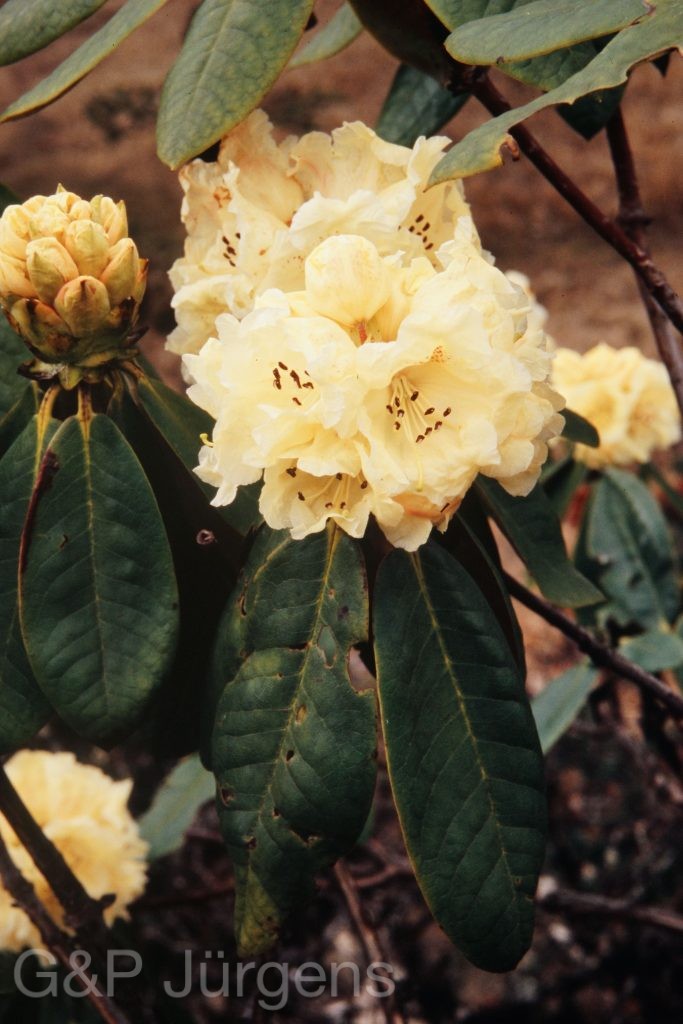
Bhutan2014 988
Bhutan Chele-La 3900m, May
Bhutan2014 989
Bhutan Chele-La 3900m, May

Bh2008 575 P864 1
Bhutan Shele-La 3800m, May
Bh2008 573 P861 1
Bhutan Shele-La 3800m, May

Description

An evergreen rhododendron of the eastern Himalaya, native to China, Bhutan, Nepal and India, with about 353 GBIF occurrences (extra-range entries reflect cultivation in botanic gardens). It is a shrub to small tree of the upper subalpine and lower alpine zone, forming part of rhododendron-fir and dwarf rhododendron scrub, on cool, moist, humus-rich slopes generally between about 3300 and 4300 m. The depicted plants were photographed in May on the Bhutanese passes of Chele-La at around 3900 m and Shele-La at about 3800 m, exposed high-elevation habitats where it flowers as the snow recedes.

The species forms a rounded shrub with smooth, peeling bark and stout branchlets. The leaves are coriaceous, elliptic to oblong-elliptic, dark green and glabrous above, and beneath bear a distinctive thin, patchy, fawn to brownish indumentum of dendroid hairs that often wears away to leave scattered remnants. The flowers are borne in compact terminal trusses; each has a campanulate corolla of pale lilac to rose-pink, often with crimson basal blotches and spotting, the limb shallowly seven- to eight-lobed, with numerous stamens and a glabrous ovary topped by a slender style. The fruit is a curved, woody, septicidal capsule releasing many small winged seeds.

Though GBIF flags the name as a synonym, R. wallichii is widely accepted at species rank and placed in subsection Campanulata, allied to R. campanulatum, from which it is separated by its thinner, more fugacious leaf indumentum. Ecologically it is a major component of high Himalayan rhododendron heath, providing spring nectar and structural cover. Locally abundant within its range, it faces no immediate threat but is sensitive to grazing pressure, fire and the warming of its narrow alpine belt.

Author: Hook. f. · Sources: POWO (Kew), GBIF, Flora of Bhutan, Flora of China, Royal Botanic Garden Edinburgh revision of Rhododendron

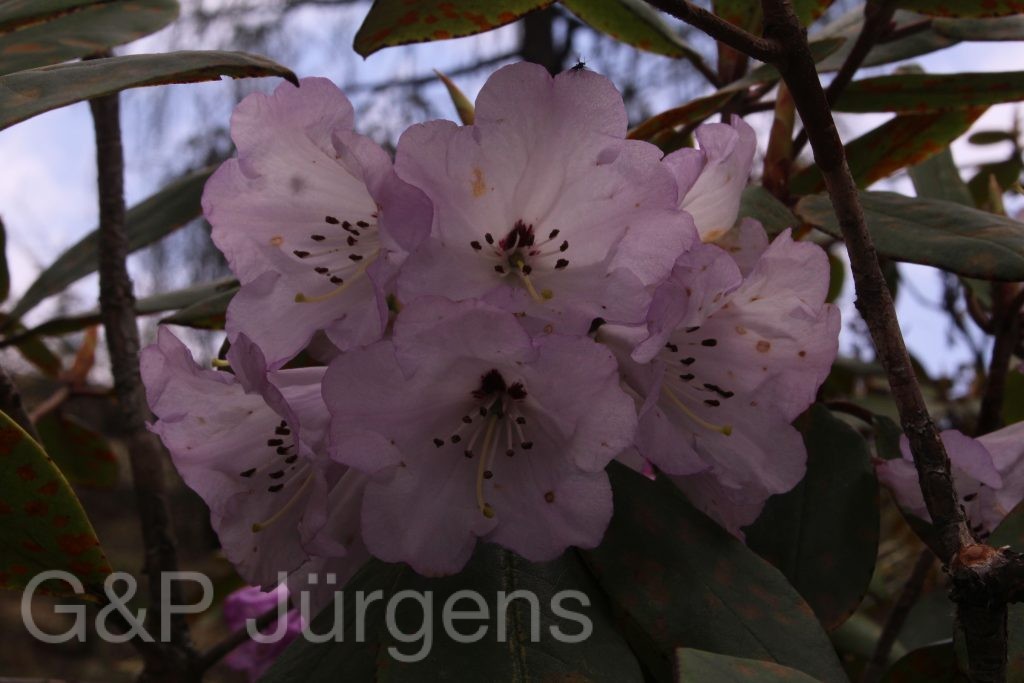
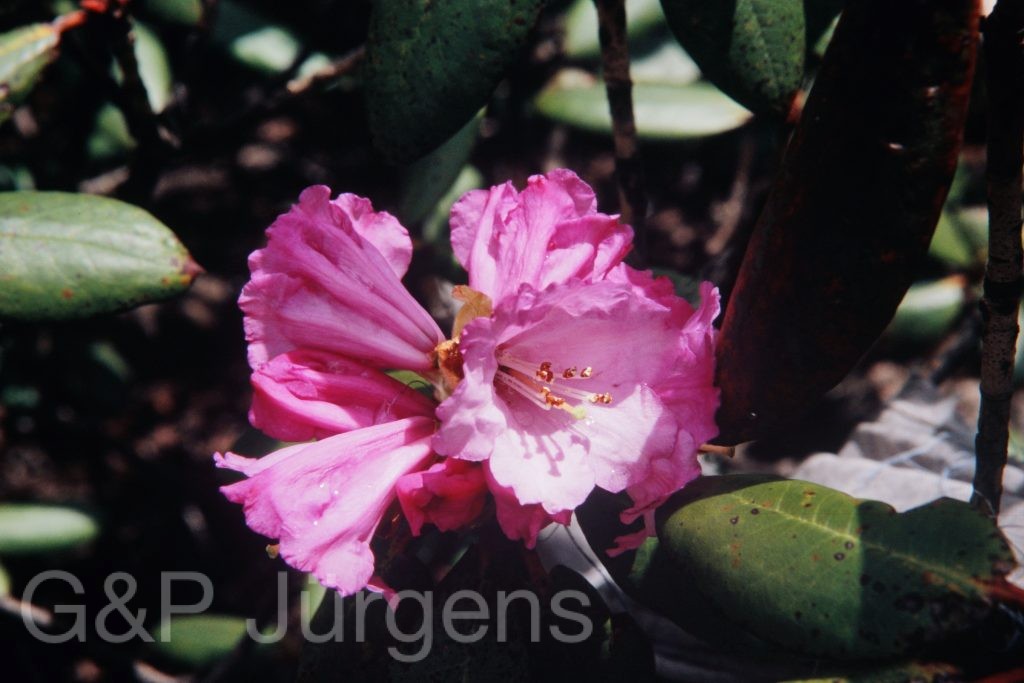
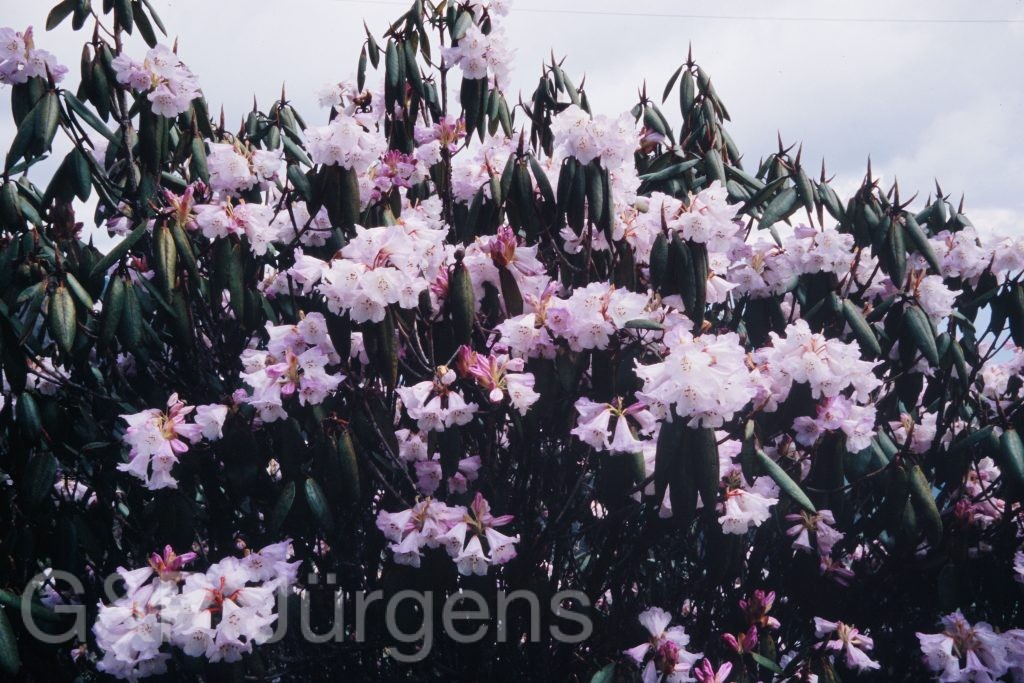
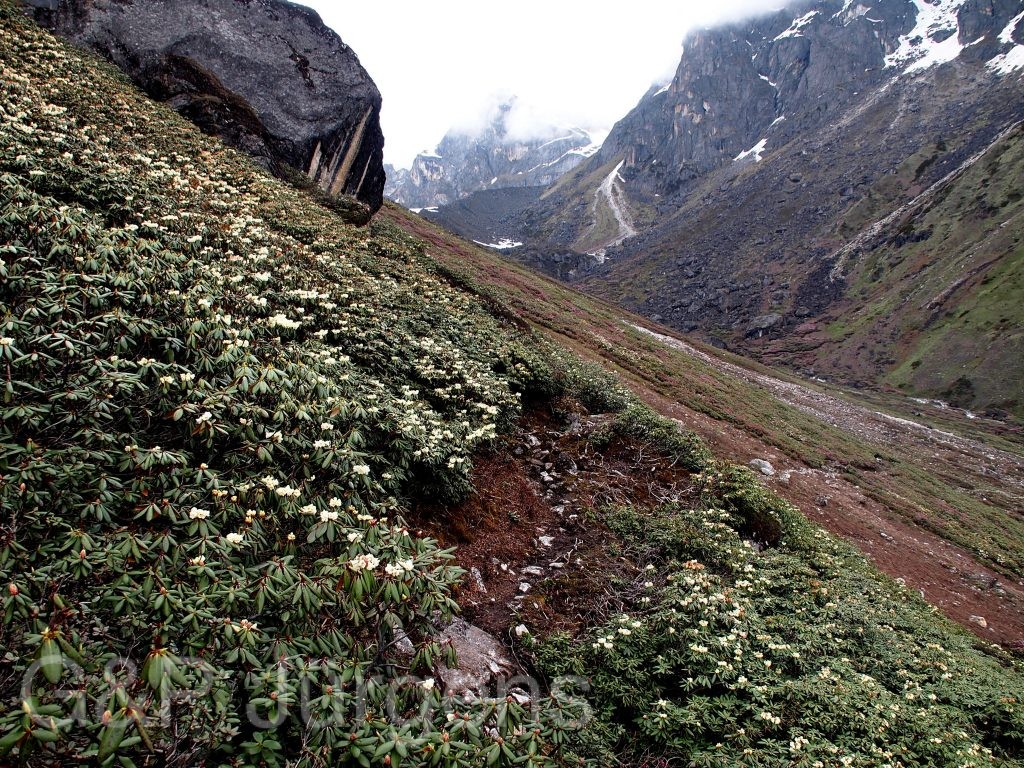
Hook. f.

Sikkim2011 290
Sikkim Lada-La 3950m, June
Bh2008 257 G404
Bhutan Tumching-La, 3750m April
Bh2008 591 P884
Bhutan Tumching-La, 3750m April
Bh2008 592 P885
Bhutan Chele-La, 3850m April
Sikkim2004 224 P383
Sikkim/India Singalila 4000m May

Description

Rhododendron wightii is an Eastern Himalayan shrub or small tree ranging from eastern Nepal through Sikkim and northern West Bengal into Bhutan and adjoining southern Tibet (China), with GBIF recording 251 occurrences over IN, NP, CN and BT alongside cultivated records from Britain and elsewhere. It is a constituent of the upper temperate to subalpine zone, growing in rhododendron thickets, at the forest limit and among open hillsides between about 3300 and 4300 m. The photographed populations span Sikkim (Lada-La 3950 m, June; Singalila 4000 m, May) and Bhutan (Tumching-La 3750 m and Chele-La 3850 m, April), documenting its spring to early-summer flowering.

It is an evergreen shrub to small tree with stout branches. The leaves are leathery, elliptic to obovate, dark green and glabrous above, and conspicuously coated beneath with a dense, suede-like, fawn to rust-coloured indumentum of agglutinate hairs that is diagnostic. The flowers are grouped in lax, one-sided terminal trusses; each campanulate corolla is pale yellow to creamy-yellow, often marked with a crimson basal blotch, and has five lobes. The androecium of ten stamens surrounds a superior ovary topped by a long style, and the fruit is a curved, woody, septicidal capsule releasing numerous small seeds.

Within the genus, R. wightii belongs to subgenus Hymenanthes (the elepidote rhododendrons), allied to the Taliensia group and characterised by its yellow flowers and thick leaf indumentum. Named for the botanist Robert Wight, it is valued in horticulture for hardiness and foliage. Its dwarf-rhododendron habitat is locally extensive, but high-altitude shrublands face pressure from grazing, burning and a warming climate.

Author: Hook. f. · Sources: POWO (Kew), GBIF, Flora of Bhutan, The Genus Rhododendron (Cullen & Chamberlain, Edinburgh), Hooker's Rhododendrons of the Sikkim-Himalaya

(Blume) Faden

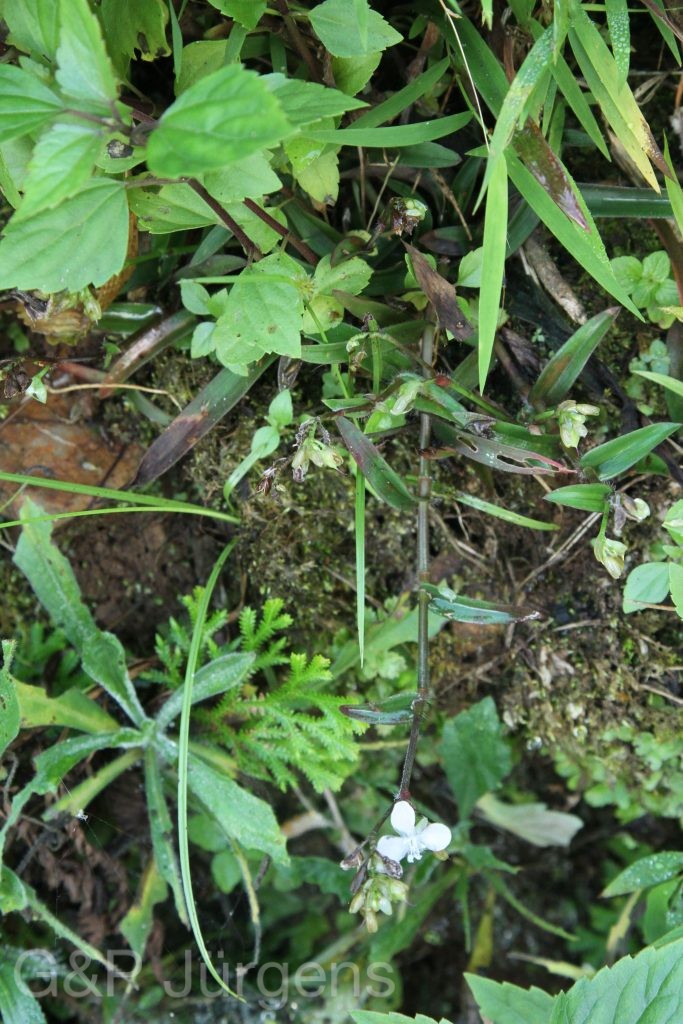
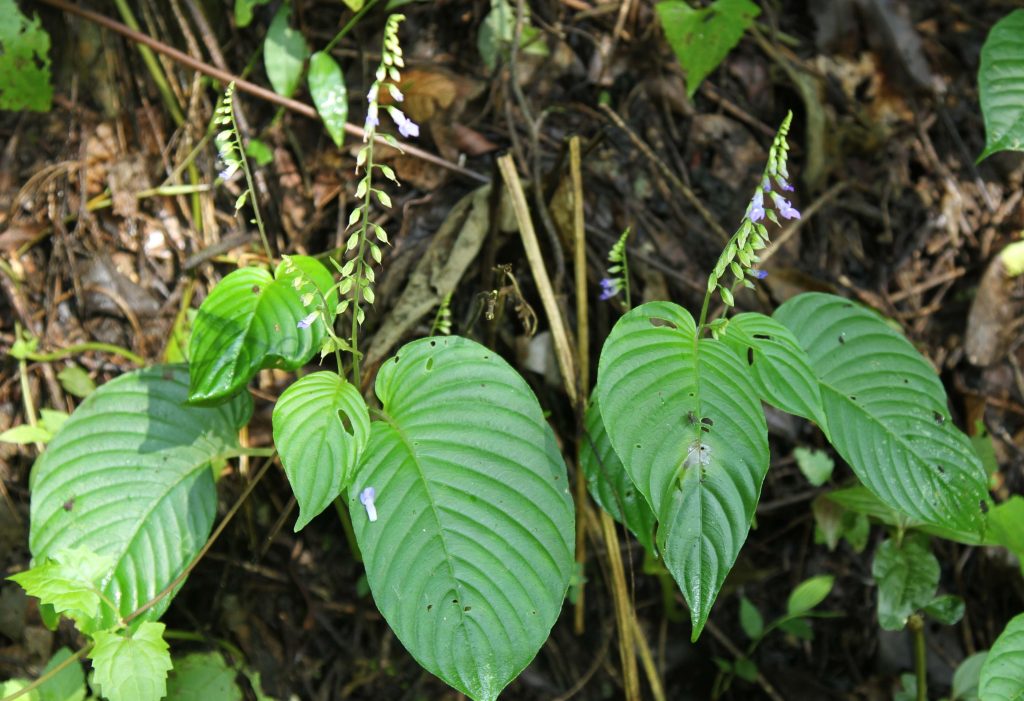
Bhutan2015 254
Bhutan Zhemgang 910m, October

Description

Rhopalephora scaberrima is a tropical to subtropical spiderwort widely distributed across South and Southeast Asia, recorded from India, Nepal, Bhutan, Bangladesh, Sri Lanka, Myanmar, Thailand, Malaysia, Indonesia, the Philippines, Vietnam, southern China and Taiwan. Its GBIF profile, with about 1,104 occurrences spanning these countries, confirms a broad Indomalayan range. The plant illustrated was photographed in southern Bhutan at Zhemgang at about 910 m in October. It is a species of warm, humid lowland and lower-montane settings, growing in forest understorey, along shaded streambanks, in moist grassy clearings and on disturbed roadsides, generally below about 1,500 m where high rainfall and warmth prevail.

It is a perennial, somewhat straggling herb with ascending to decumbent stems that root at the lower nodes, the surfaces and leaf-sheaths conspicuously scabrid-hispid, as the epithet indicates. The leaves are alternate, ovate-lanceolate to elliptic, with a closed sheathing base and an acuminate apex. The flowers are borne in small scorpioid cymes aggregated into a terminal panicle; each has three free sepals and three blue to violet petals, with the androecium showing the differentiation characteristic of the family, the fertile stamens separated from reduced staminodes. The fruit is a small loculicidal capsule, distinctively two-locular with the seeds arranged in two rows, a key feature separating Rhopalephora from related genera.

The genus Rhopalephora was segregated from the broadly defined Aneilema and Commelina on the basis of its bilocular capsule, biseriate seeds and stamen architecture, as clarified in Faden's revisionary work. As a common and adaptable plant of disturbed humid habitats, R. scaberrima is not threatened and serves as a useful indicator of warm, moist forest edge in the eastern Himalayan foothills.

Author: (Blume) Faden · Sources: POWO (Kew), Flora of China Vol. 24, Flora of Bhutan Vol. 3, GBIF, Faden: Commelinaceae (revisionary studies)

Blume

Bhutan2012 983
Bhutan Trithangebe 1100m, October
Bhutan2012 984
Bhutan Trithangebe 1100m, October

Description

Rhynchoglossum obliquum is a widespread tropical Asian gesneriad ranging from India, Nepal, Bhutan and Bangladesh through Myanmar, Thailand, southern China, Taiwan and the Malesian region (Malaysia, Indonesia, Philippines, New Guinea, Timor) to Indochina, with more than 2200 GBIF occurrences. It is an annual herb of moist, shaded habitats on forest floors, damp rock faces, stream banks and roadside cuttings in the subtropical to tropical lowland and lower-montane zone. The plant recorded at Trithangebe in southern Bhutan at 1100 m, flowering in October at the close of the monsoon, typifies its occurrence on humid, shaded ground at low to mid elevations.

It is a soft, erect annual with succulent, often translucent stems. The leaves are markedly asymmetric (oblique) at the base, ovate to ovate-lanceolate, membranous and entire to obscurely toothed, the strong inequilaterality reflected in the epithet and frequently arranged so that the lamina appears one-sided. The flowers are borne in slender, secund, one-sided terminal racemes; each has a tubular, winged or keeled calyx and a small two-lipped blue to violet corolla with a short tube, the lower lip often marked white. There are two fertile stamens, and the superior ovary ripens into a small ellipsoid capsule enclosed by the persistent calyx, releasing numerous minute seeds.

The input places the species in the subtribe Loxonieae (here as Loxodinae) within Gesneriaceae, where Rhynchoglossum is distinguished by its oblique leaves and secund racemes. Its small bilabiate flowers are insect-pollinated and the dust-like seeds dispersed by rain-wash, aiding colonisation of disturbed shaded ground. As a widespread weedy annual it is of no conservation concern.

Author: Blume · Sources: POWO (Kew), GBIF, Flora of China Vol. 18, Flora of Bhutan Vol. 2, Flora of Nepal, The Gesneriaceae of the Old World (Rhynchoglossum)

(L.) Blume

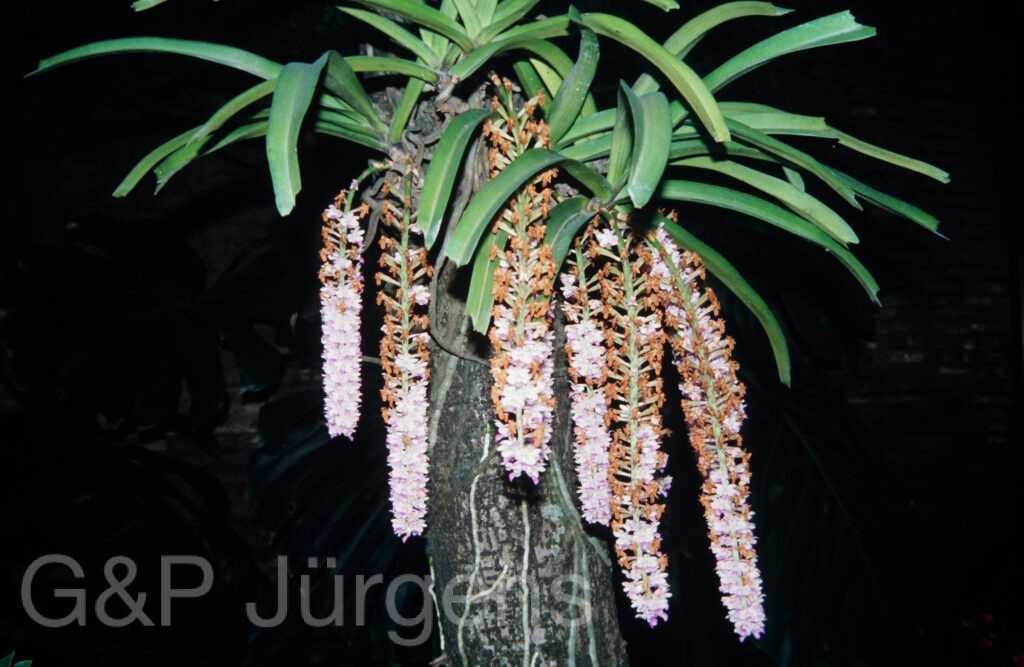
Nepal 99 1024 ergebnis ergebnis
Nepal Kathmandu 1300m, July
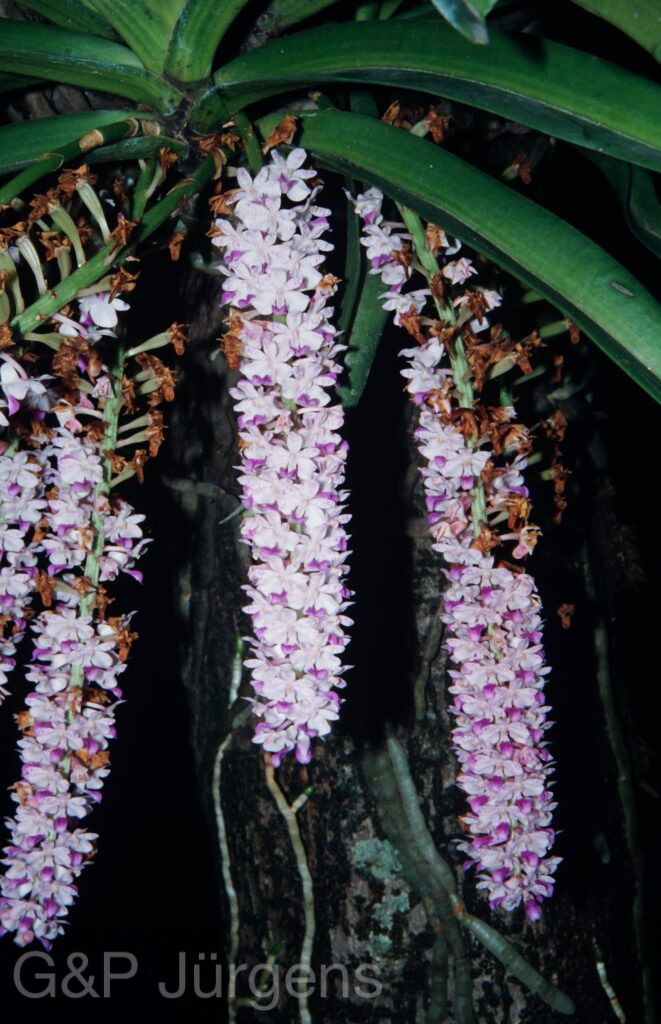
Nepal 99 1025 ergebnis ergebnis
Nepal Kathmandu 1300m, July

Description

Rhynchostylis retusa (L.) Blume, the foxtail orchid, is an epiphyte widely distributed across tropical and subtropical Asia, with GBIF (617 occurrences) recording it from India, Nepal, Bhutan, China, Myanmar, Thailand, Laos, Vietnam, Cambodia, Sri Lanka, Bangladesh, Indonesia and the Philippines, plus many cultivated records. It grows on the trunks and branches of broadleaved trees in humid lowland and submontane forest, along forest edges and on roadside trees, flowering during the warm, wet summer. The photographed plant from the Kathmandu valley in Nepal at 1300 m in July reflects its typical occurrence in the warm-temperate to subtropical foothill belt of the Himalaya, where it flowers with the monsoon.

The species is a monopodial epiphyte with a short, stout stem clad in the persistent bases of distichous, fleshy, strap-shaped leaves that are channelled and conspicuously praemorse (retuse to unequally bilobed) at the apex, giving the epithet. Numerous thick, greyish aerial roots clasp the host bark. The inflorescence is a dense, pendent, cylindrical raceme of many small fragrant flowers, each white spotted and suffused with rose-purple or violet, with a spurred, entire to obscurely lobed labellum and a small column. The fruit is a pendent dehiscent capsule shedding dust-like wind-dispersed seeds.

Within the vandaceous alliance Rhynchostylis is a small genus of showy, scented epiphytes much esteemed in horticulture, and R. retusa holds particular cultural significance, being the state flower (kopou phul) of Assam. Like all orchids it is protected under CITES Appendix II. While still locally common, wild populations are reduced by habitat loss and unsustainable collection for the ornamental trade.

Author: (L.) Blume · Sources: POWO (Kew), GBIF, Flora of Nepal, The Orchids of the Himalaya (King & Pantling), Genera Orchidacearum (vandaceous orchids), CITES Appendix II

Wall.

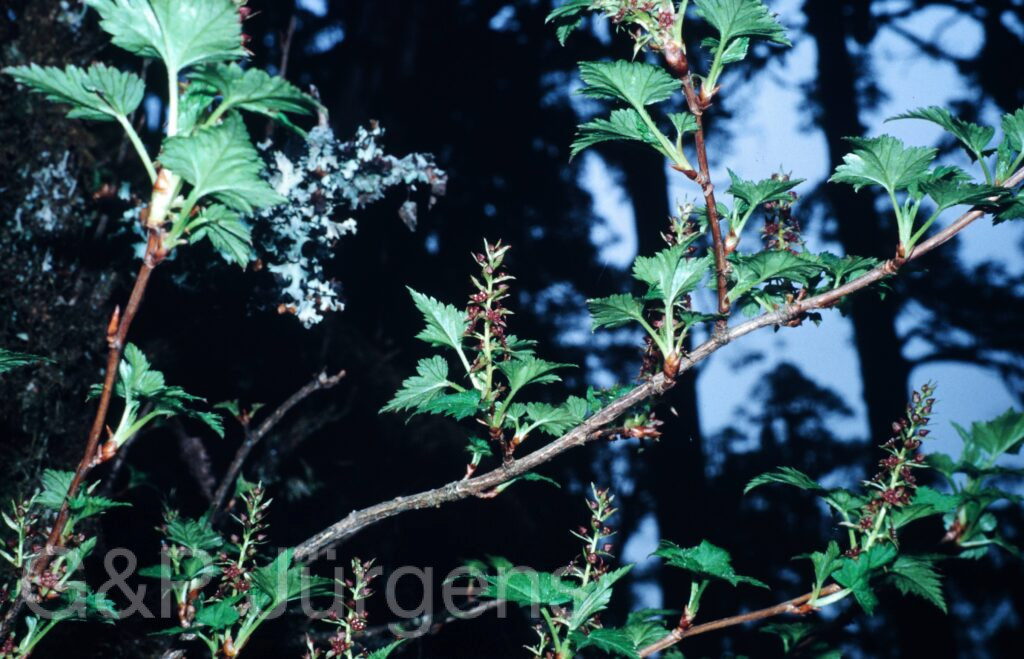
Nepal 2001 373 ergebnis ergebnis
Nepal Kharka 3140m, May

Description

Ribes glaciale is a Himalayan and Sino-Himalayan currant distributed from Afghanistan and Pakistan through Nepal, NW India and Bhutan into SW and central China, with 2,141 GBIF occurrences (records from Europe and the Americas reflect cultivated or naturalised material). It is a shrub of subalpine and temperate forest, forest margins, shrubberies and rocky slopes, typically between about 2,500 and 4,000 m. The Nepalese collection from a kharka (high pasture) at 3,140 m in May captures it flowering in the spring, when it forms a component of mixed deciduous and conifer understorey thickets.

It is a deciduous, unarmed shrub 1–2 m tall with slender, glabrous to sparsely glandular branches. The leaves are alternate, small, broadly ovate to suborbicular, 1.5–4 cm wide, palmately 3–5-lobed with the central lobe longer, the margins toothed, on slender petioles. The plant is functionally dioecious or sub-dioecious; the flowers are borne in short erect racemes, small and reddish to purplish, with a shallow campanulate hypanthium, five reflexed sepals and minute petals. The fruit is a small, globose to ovoid red berry crowned by the persistent calyx.

The species belongs to Ribes subgen. Ribes and is one of several closely allied, lobed-leaved Himalayan currants that can be difficult to separate. GBIF treats the name as accepted; note that the image filename references R. laciniatum, but the named taxon R. glaciale is followed here. The red berries are taken by birds and provide effective dispersal, and the species is widespread and of least concern.

Author: Wall. · Sources: POWO (Kew), Flora of China Vol. 8, Flora of Pakistan, GBIF, Berger: A Taxonomic Review of Currants and Gooseberries (1924)