
Hook. f.
Description
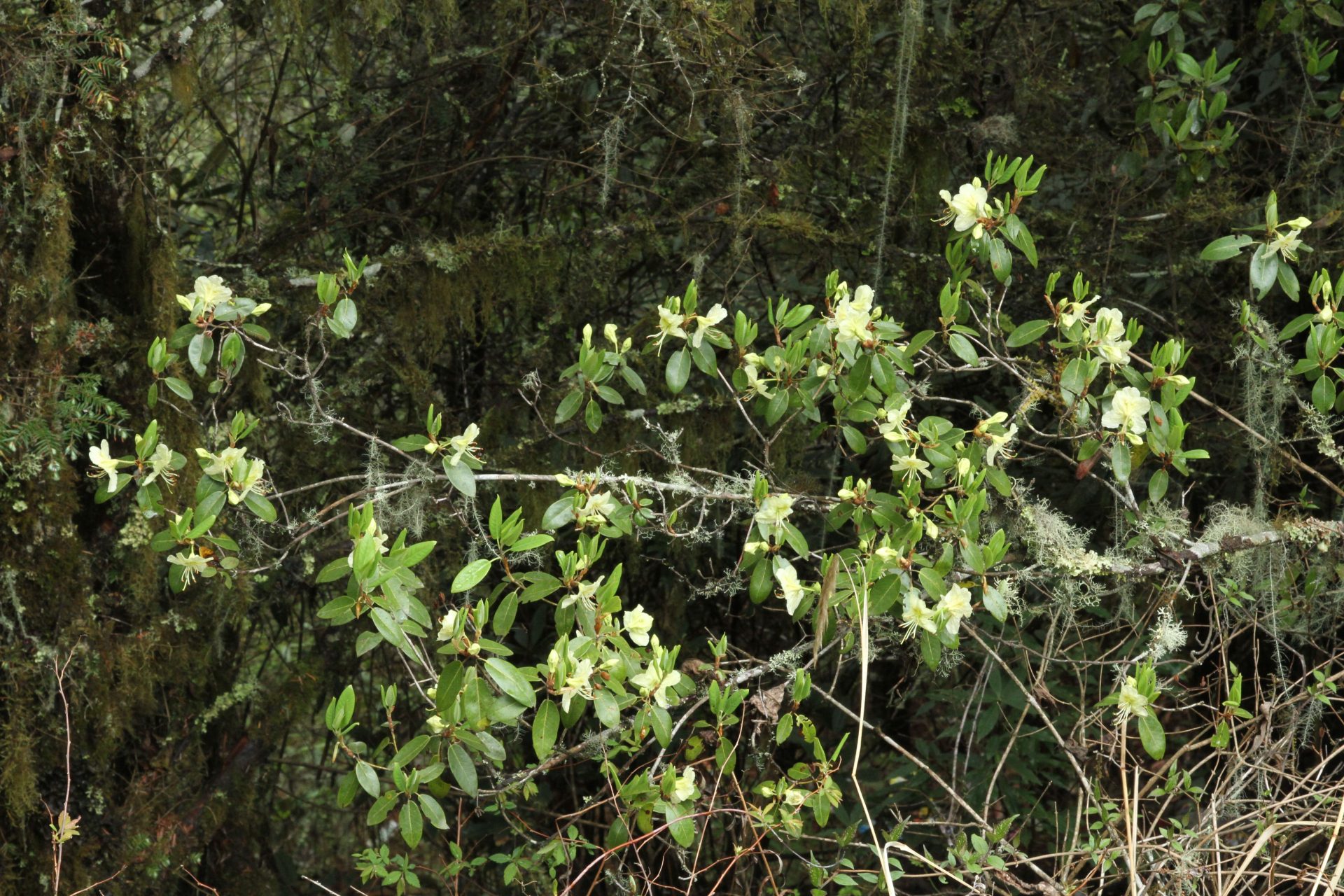
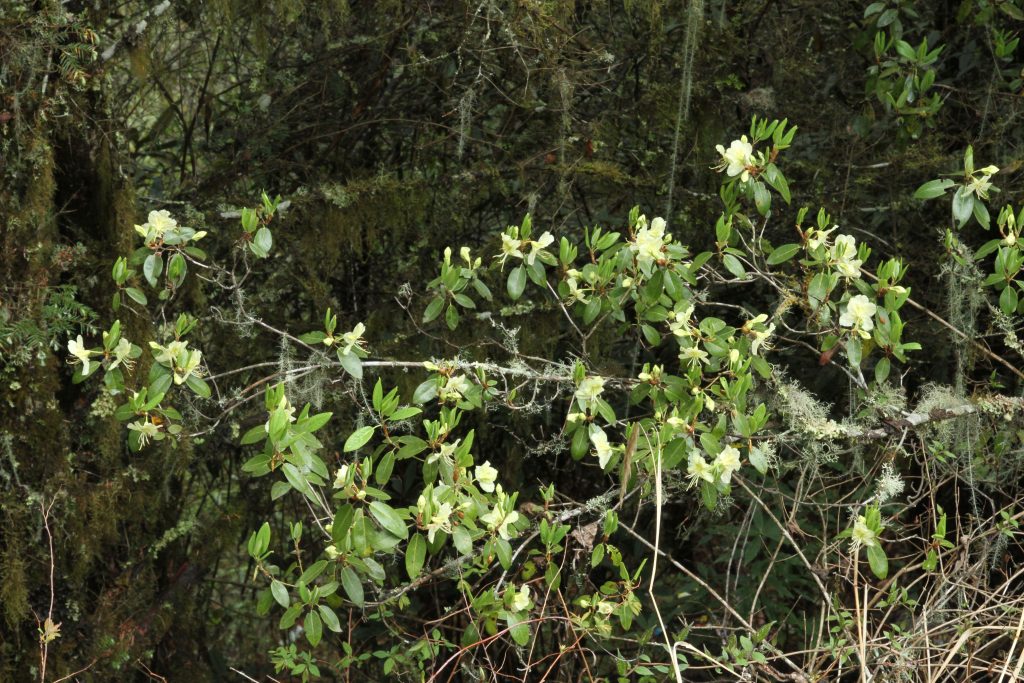
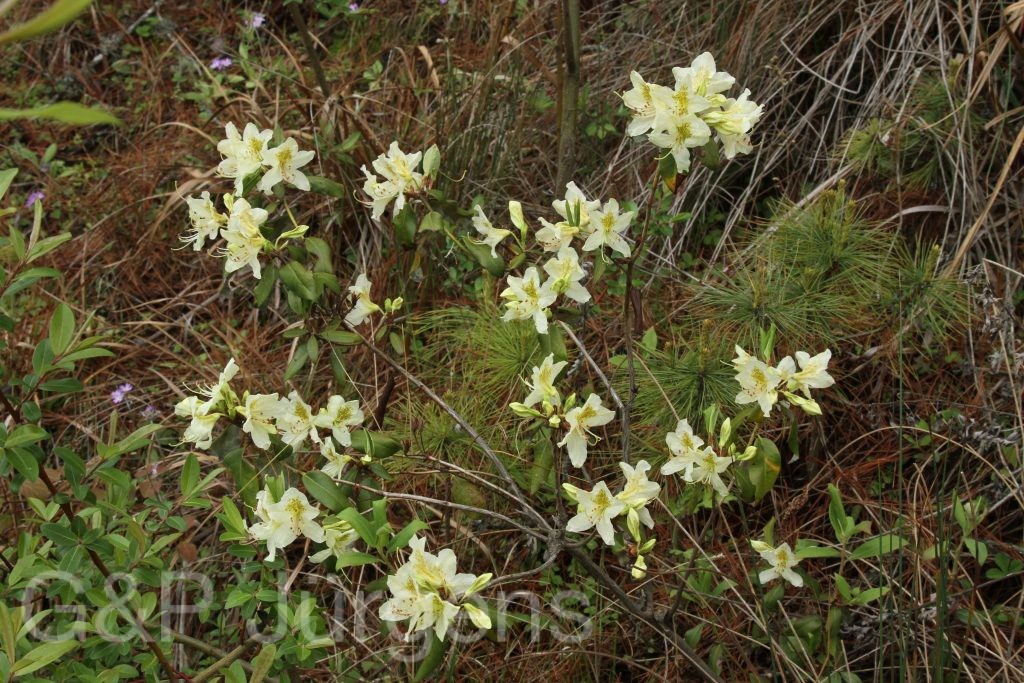
Rhododendron triflorum is an eastern Himalayan rhododendron distributed across China, Bhutan, India, Nepal and Myanmar, with about 484 GBIF occurrences (additional records abroad reflecting its popularity in cultivation). It grows in temperate forest, forest margins, rhododendron and conifer thickets and open shrubby slopes, generally between roughly 2700 and 3700 m. The plants photographed at Tumching-La (about 3100 m) and Yatong-La (about 2900 m) in Bhutan, both in May, exemplify its mid-montane forest habitat, where it flowers in late spring among mixed broad-leaved and coniferous woodland.
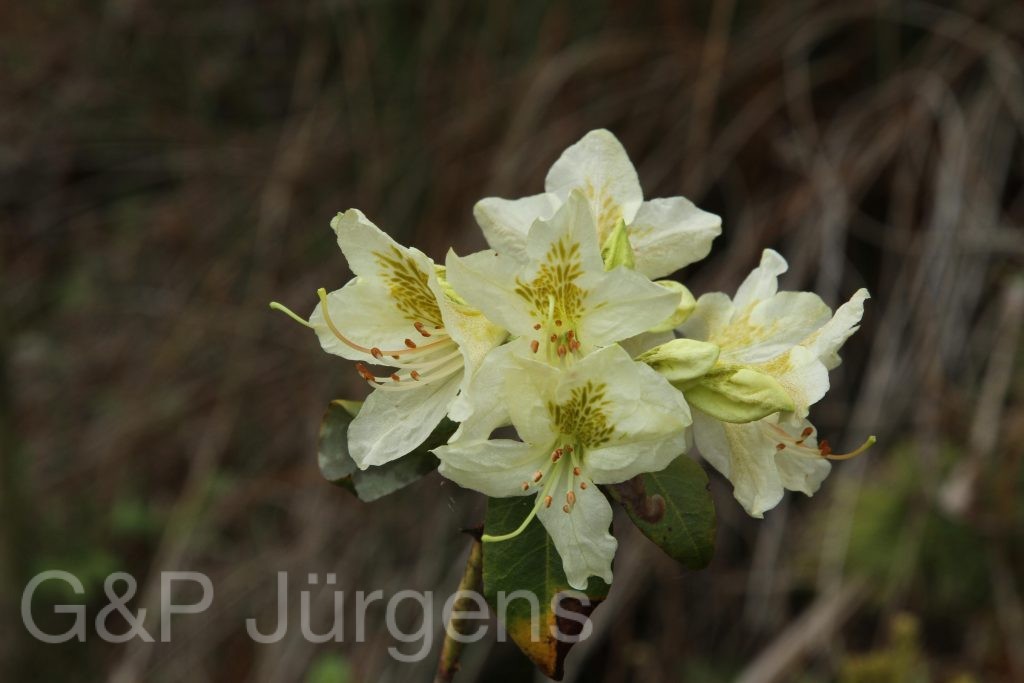
The species is an erect shrub or small tree with smooth, attractive coppery to reddish-brown, peeling bark. The leaves are evergreen, ovate to elliptic, glabrous above and conspicuously scaly (lepidote) beneath, the scales characteristic of the lepidote rhododendrons. The flowers are borne in small terminal clusters, typically in threes as the epithet triflorum indicates; the broadly funnel-campanulate corolla is pale yellow, often flushed or spotted with green, and densely scaly outside. There are ten stamens and a scaly ovary, and the fruit is a small dry capsule splitting to release numerous minute seeds.
Rhododendron triflorum belongs to subgenus Rhododendron (the lepidote, scaly-leaved rhododendrons), section Triflora, a group of slender-flowered species centred on the Sino-Himalaya. The lepidote indumentum and small capsular fruits with abundant wind-dispersed seed are characteristic of this clade. With a wide eastern Himalayan distribution the species is of least concern, and its handsome bark and yellow flowers have made it a valued ornamental; like its congeners it is an important component of the rhododendron-dominated temperate forests of the eastern Himalaya.
Author: Hook. f. · Sources: POWO (Kew), GBIF, Flora of China, Flora of Bhutan, Annotated Checklist of the Flowering Plants of Nepal, Cullen revision of lepidote Rhododendron