Author

GP Jürgens

Hook. f. & Thomson

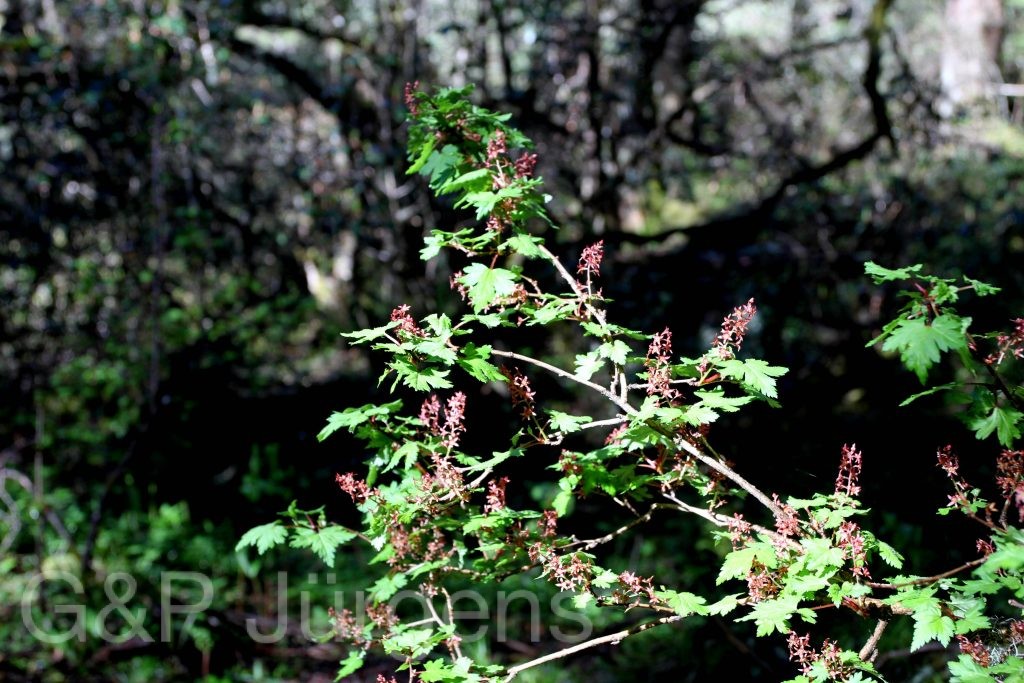
Sikkim2011 366
Sikkim Lada-La 3900m, June

Description

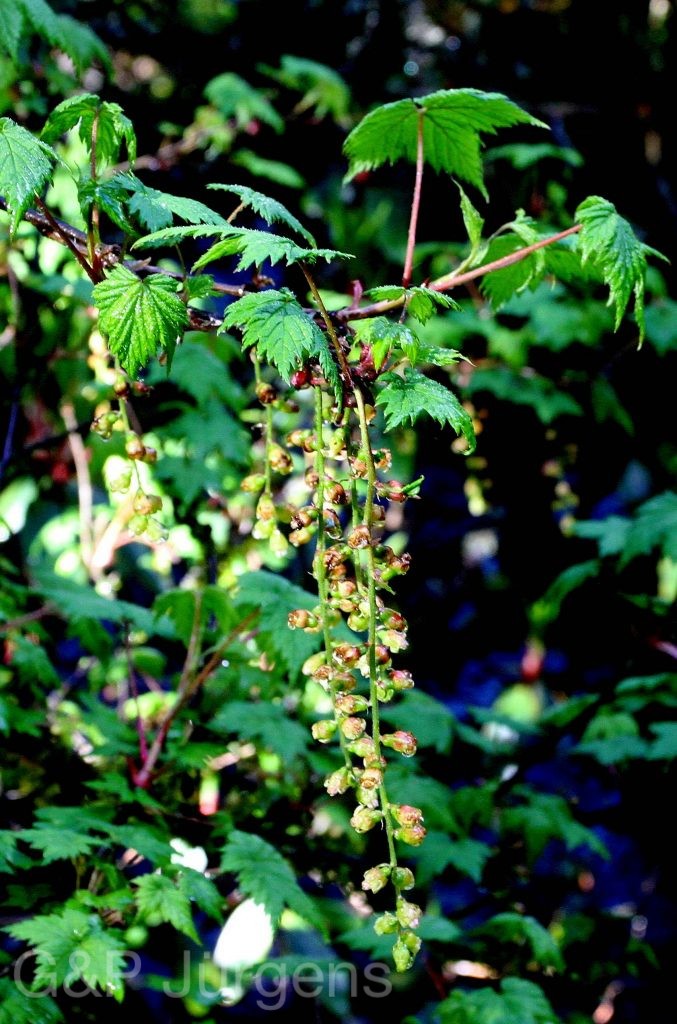
Ribes griffithii is a Sino-Himalayan currant of high-elevation shrubberies, distributed through China, Nepal, Bhutan and India (with a few scattered extralimital records); GBIF lists 277 occurrences, the great majority along the Himalayan and Tibetan margins. It occupies subalpine forest edges, Rhododendron and juniper scrub, moist rocky slopes and streamside thickets, generally between about 3000 and 4000 m. The illustrated plant was recorded in Sikkim near Lada-La at 3900 m in June, a characteristic upper-montane to subalpine station where the shrub leafs out and flowers as the snow recedes.

The plant is a deciduous, unarmed shrub with arching to ascending branches and smooth or flaking bark. Leaves are alternate, palmately three- to five-lobed with a cordate base and a serrate to crenate-dentate margin, glabrescent to slightly pubescent and borne on slender petioles. The flowers are arranged in pendulous, many-flowered racemes; each is small, with a saucer-shaped to shallowly campanulate hypanthium, five reflexed greenish to reddish sepals, five smaller petals, five stamens and an inferior ovary. The fruit is a glabrous, ellipsoid to globose berry, reddening to dark red at maturity and crowned by the persistent perianth.

The species belongs to subgenus Ribes among the unarmed true currants, distinguished from the spiny gooseberries by its racemose, many-flowered inflorescences. POWO and GBIF accept the name. As a fleshy-fruited shrub it contributes to the diet of Himalayan birds and small mammals that disperse its seeds across the subalpine mosaic.

Author: Hook. f. & Thomson · Sources: POWO (Kew), GBIF, Flora of China, Flora of Bhutan, Annotated Checklist of the Flowering Plants of Nepal, A Monograph of the Genus Ribes (Grossulariaceae)
Hook. f. & Thomson

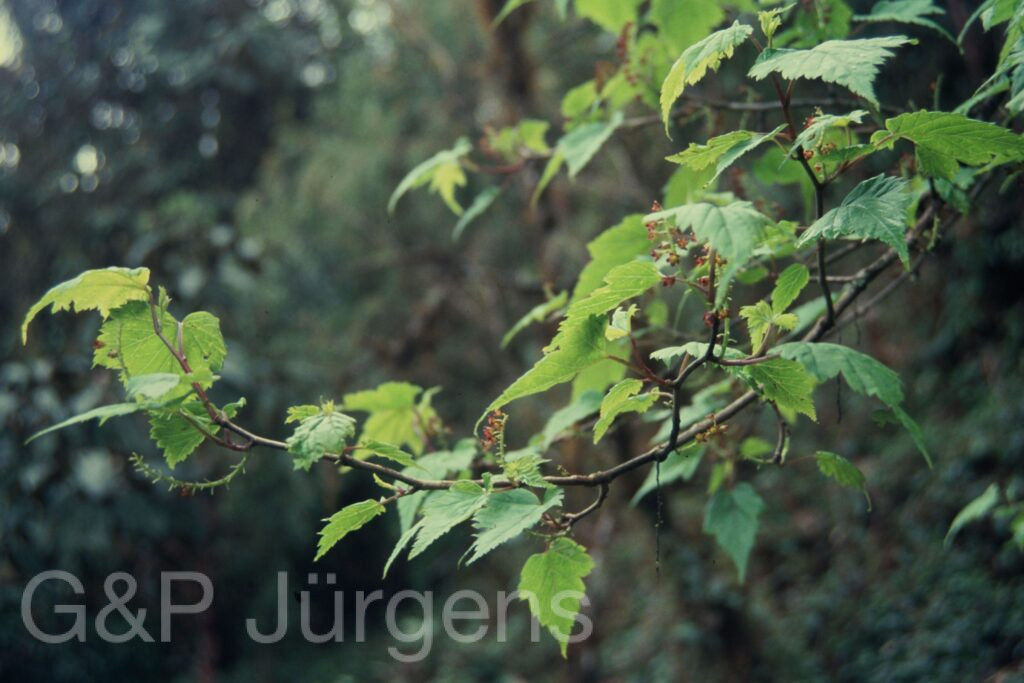
Bhutan2014 606
BhutanPhobjika 2810, May
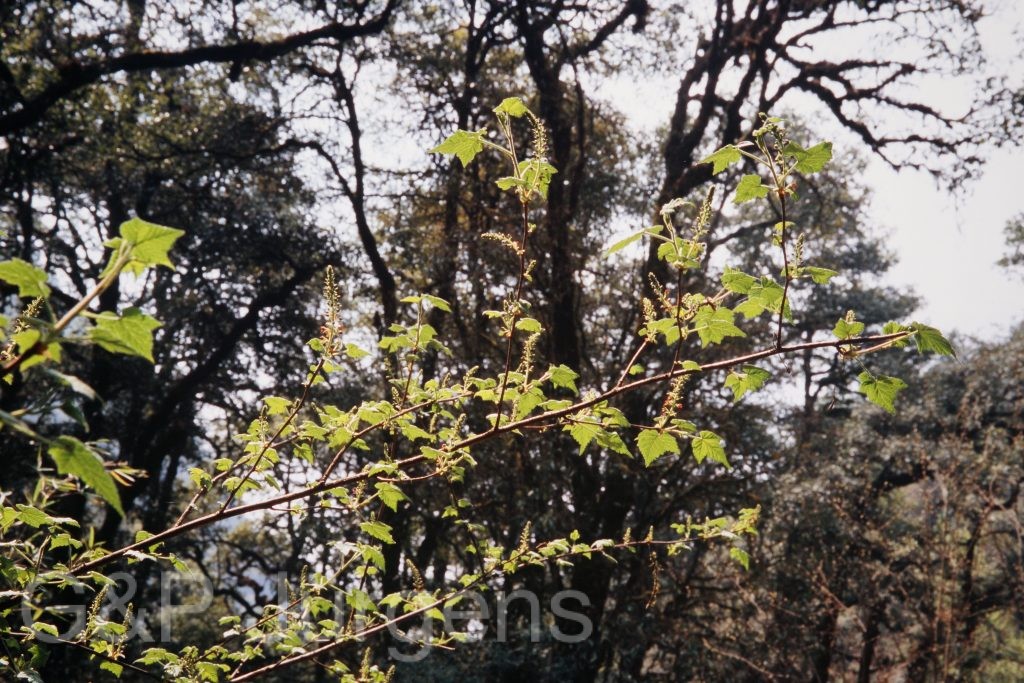
Sikkim2011 76
Sikkim Tanghu 3900m, June

Description

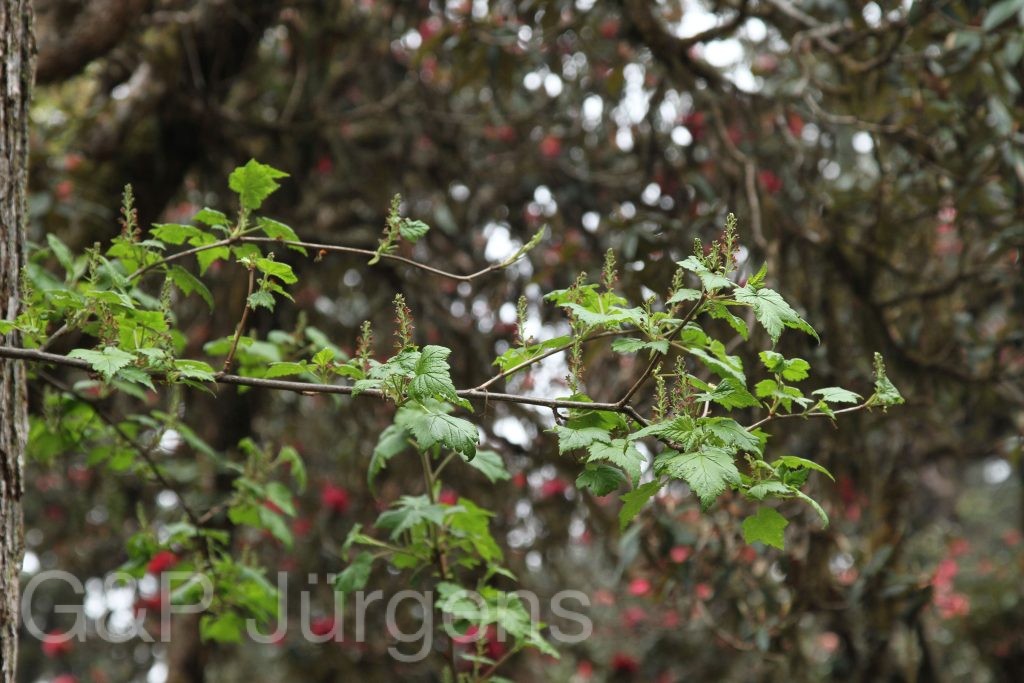
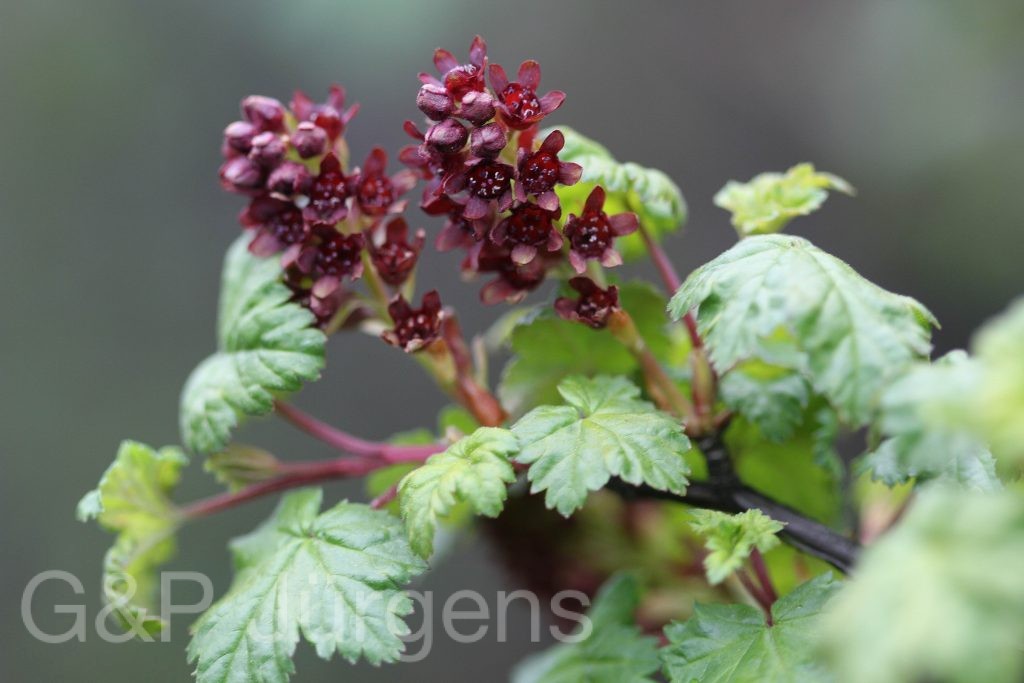
Ribes luridum is a Sino-Himalayan currant distributed from south-western China through northern Myanmar, Nepal, northern India and Bhutan, with around 348 GBIF occurrences (the records from US, CA, PL and RU largely representing cultivated or herbarium material). It is a shrub of cool-temperate to subalpine forest, scrub margins and rocky slopes, typically between about 2800 and 4000 m. The collections from Phobjika in Bhutan at 2810 m in May and from Tanghu in Sikkim at 3900 m in June bracket this altitudinal range and its late-spring to early-summer flowering, on moist, humus-rich ground at and above the upper forest belt.

It is a deciduous, unarmed shrub with spreading branches and finely glandular young growth. The leaves are alternate, orbicular-cordate in outline and palmately three- to five-lobed, the lobes crenate-serrate, sparsely pubescent and often glandular beneath. The species is dioecious or functionally so, the small flowers borne in short, few-flowered, pendulous racemes; each has a saucer-shaped to shortly campanulate hypanthium and five small, dull purplish to lurid greenish-brown petals and sepals, the colouration alluded to by the epithet. The fruit is a small subglobose berry, glandular-bristly and reddish to dark purple when ripe.

Within Ribes the species sits in the section of unarmed currants and is distinguished by its dingy, glandular flowers and dioecious tendency. The pendulous berries are dispersed by frugivorous birds, an important agent in fragmented montane forest, while the inconspicuous flowers attract small bees and flies. The species is widespread across the eastern Himalaya and faces no recognised conservation threat.

Author: Hook. f. & Thomson · Sources: POWO (Kew), GBIF, Flora of China Vol. 8, Flora of Bhutan Vol. 1, Flora of Nepal, A Monograph of the Genus Ribes

D. Don

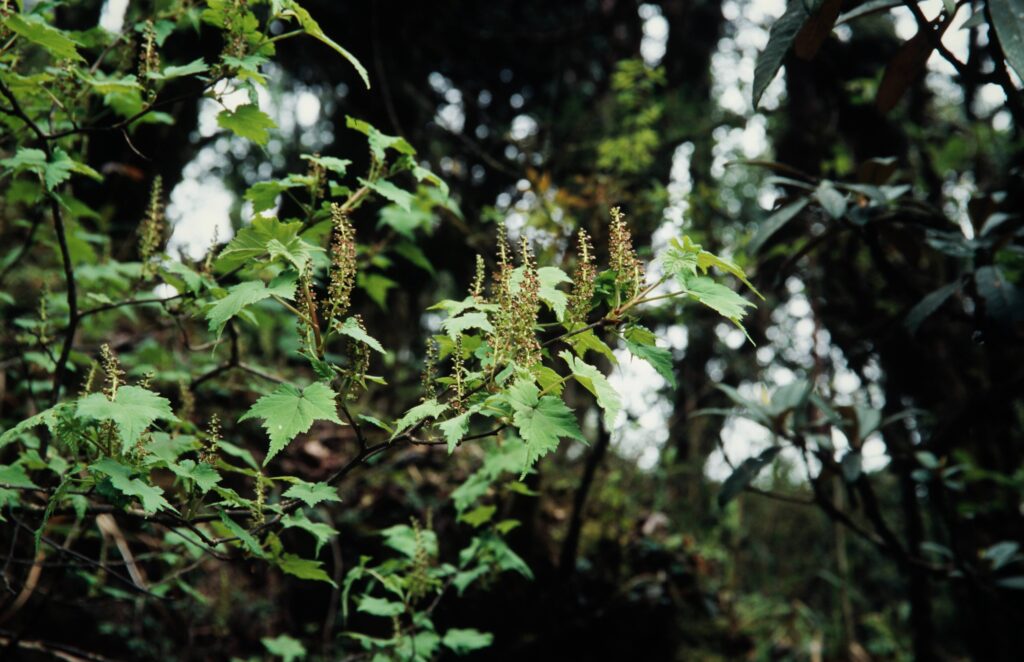
Sikkim2011 365
Sikkim Lada-La 3900m, June
Bh2008 12 P20
Bhutan Thimphu-Chu, 2750m April
Sikkim2004 62 P110
Sikkim West-Bengal, Bersay 2700m April
Sikkim 2006 30 ergebnis
India West-Bengal Tonglu 3150m, May

Description

Ribes takare is a Himalayan currant distributed along the temperate and subalpine belt from Afghanistan through Pakistan, Nepal, India and Bhutan into southwestern China and Myanmar, with GBIF recording close to a thousand occurrences across this arc. It grows in moist temperate and upper montane forest, forest margins, shrubberies, ravines and rocky slopes, typically between about 2500 and 4000 m. The image caption documents this range well, with collections from the Lada La in Sikkim at 3900 m in June, the Thimphu Chu in Bhutan at 2750 m in April, Bersay in West Bengal at 2700 m in April, and Tonglu at 3150 m in May, showing both its broad altitudinal span and its spring-to-early-summer flowering as the snowline retreats.

It is a deciduous, spineless (unarmed) shrub up to about 2-3 m tall, with greyish, peeling bark and glandular-pubescent young shoots. The leaves are alternate, palmately three- to five-lobed with crenate-serrate margins and a cordate base, somewhat resembling a maple leaf and often glandular-hairy beneath. The flowers are borne in many-flowered, pendulous racemes; they are small and reddish to purplish-brown, with a saucer-shaped to shallowly campanulate hypanthium, five reflexed sepals, five smaller petals, five stamens and an inferior ovary. The fruit is a glandular-bristly, reddish to purplish-black berry that is edible but rather acidic and somewhat resinous.

The genus Ribes, sole genus of Grossulariaceae, is well represented in the Himalaya, where R. takare belongs to the unarmed, raceme-flowered black-currant alliance and has been treated under synonyms including R. acuminatum and R. glaciale-related names by various authors. Its pendent racemes of nectariferous flowers attract bees and other insects, while the berries are dispersed by birds and small mammals; the species forms an understorey component of moist Himalayan forest. It is widespread and common across its extensive range and is of no conservation concern, while its acidic fruits are gathered locally and its hardiness has drawn modest horticultural interest.

Author: D. Don · Sources: POWO (Kew), GBIF, Flora of China Vol. 8, Flora of Bhutan Vol. 1, Flora of Nepal, Flora of Pakistan, Berger's taxonomic review of Ribes

(Raf.) N.Tanaka

Nepal1992 155 P227 ergebnis
Nepal Simbua-Khola 2000m March 

Description

Rohdea nepalensis is a rhizomatous perennial herb of the Himalaya and adjacent montane Asia, documented by GBIF from China, India, Nepal, Bhutan, Myanmar, Bangladesh and Thailand across some 133 occurrences. It is a forest-floor species of shaded, moist broadleaved and evergreen forest, growing on humus-rich slopes, banks and rocky ground in the subtropical to warm-temperate zone. The photographed plant was recorded in Nepal in the Simbua-Khola at 2000 m in March, an early-season flowering in the cool, damp understorey characteristic of the species.

It forms clumps from a short, stout rhizome and produces basal, distichous, strap-shaped to oblanceolate leaves that are leathery, arching, prominently veined and tapered to a sheathing base. The inflorescence is a short, dense, sessile or shortly pedunculate spike borne near ground level, carrying numerous small, crowded flowers; each flower has a fleshy, urceolate to campanulate perianth of six connate tepals, usually pale yellow to greenish, with six included stamens and a superior ovary. The fruit is a one- to few-seeded berry that ripens red.

GBIF accepts the name, recombined by N. Tanaka, who expanded Rohdea to include species formerly placed in Tupistra and Campylandra; under that classification the plant appears in older literature under those genera. It is treated within an enlarged Asparagaceae (subfamily Nolinoideae, the former Convallariaceae/Ruscaceae). Several Rohdea are cultivated as evergreen ornamentals and used in traditional medicine. Widely distributed in suitable forest, R. nepalensis is of no conservation concern.

Author: (Raf.) N.Tanaka · Sources: POWO (Kew), GBIF, Flora of China, Flora of Nepal, Tanaka revision of Rohdea

Rosa brunonii

by GP Jürgens

Lindl.

Bh09 42 P79
Bhutan Timphu 2500m, May
Nepal 99 165 ergebnis
West-Nepal South of Tara-Lake 3000m, June

Description

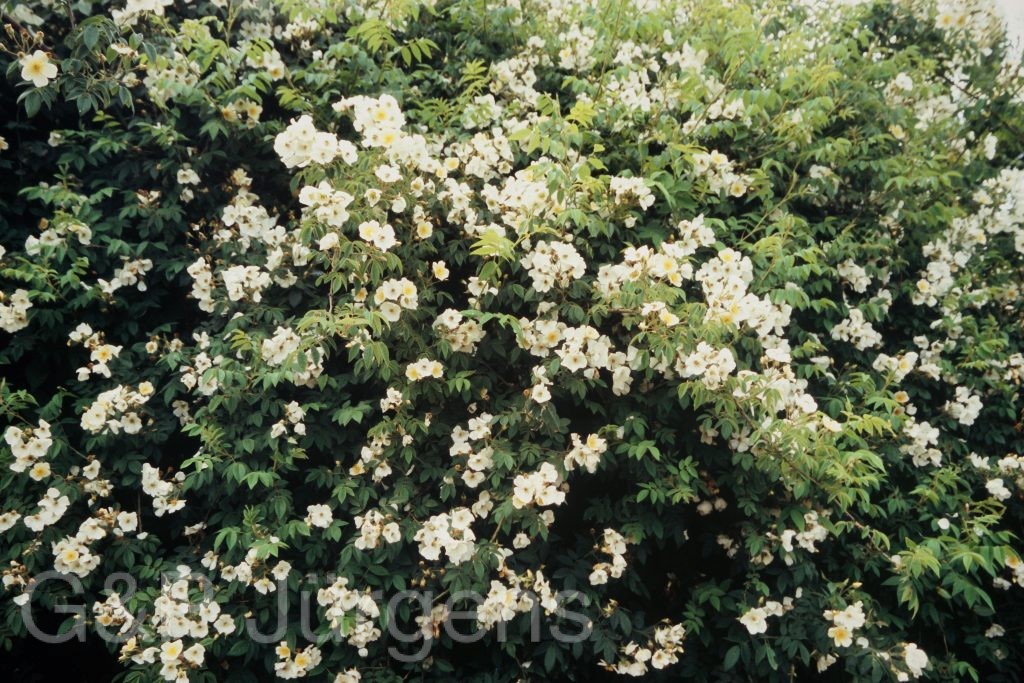
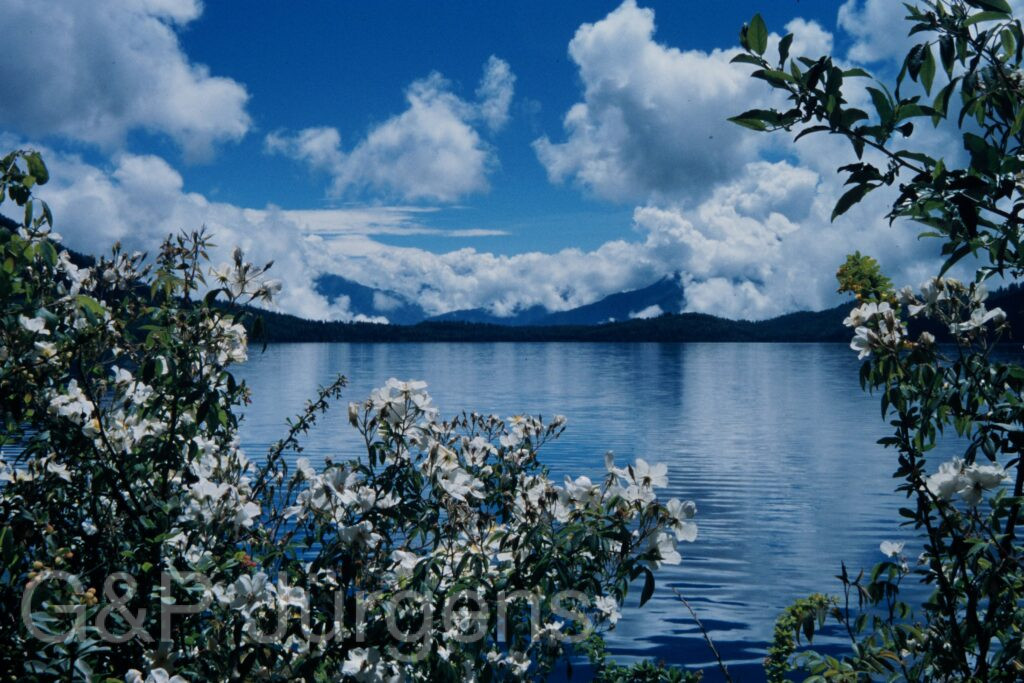
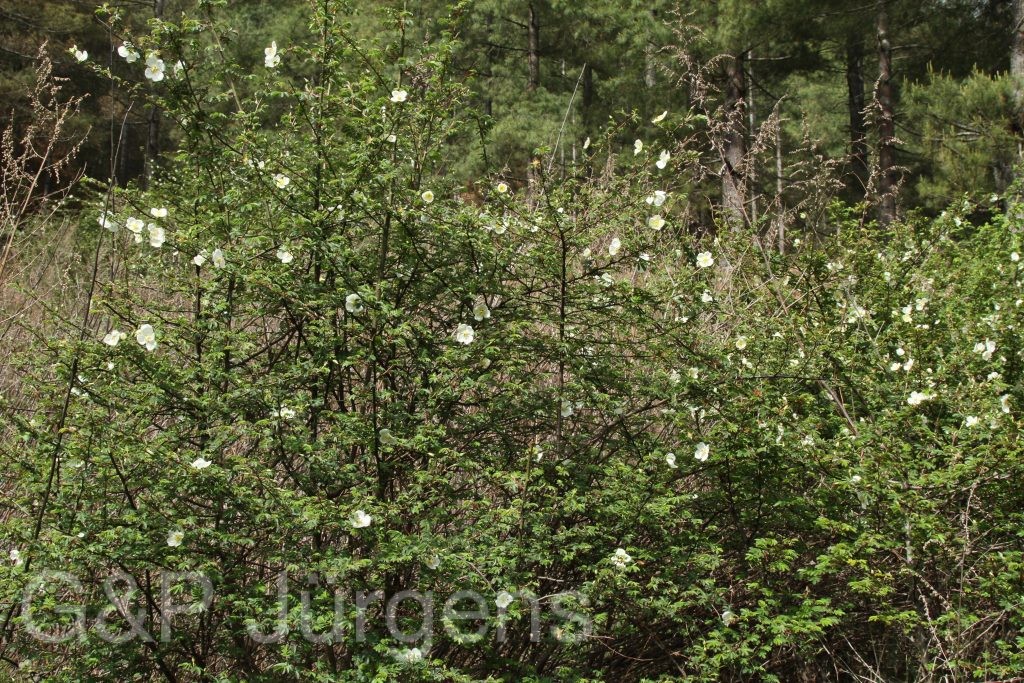
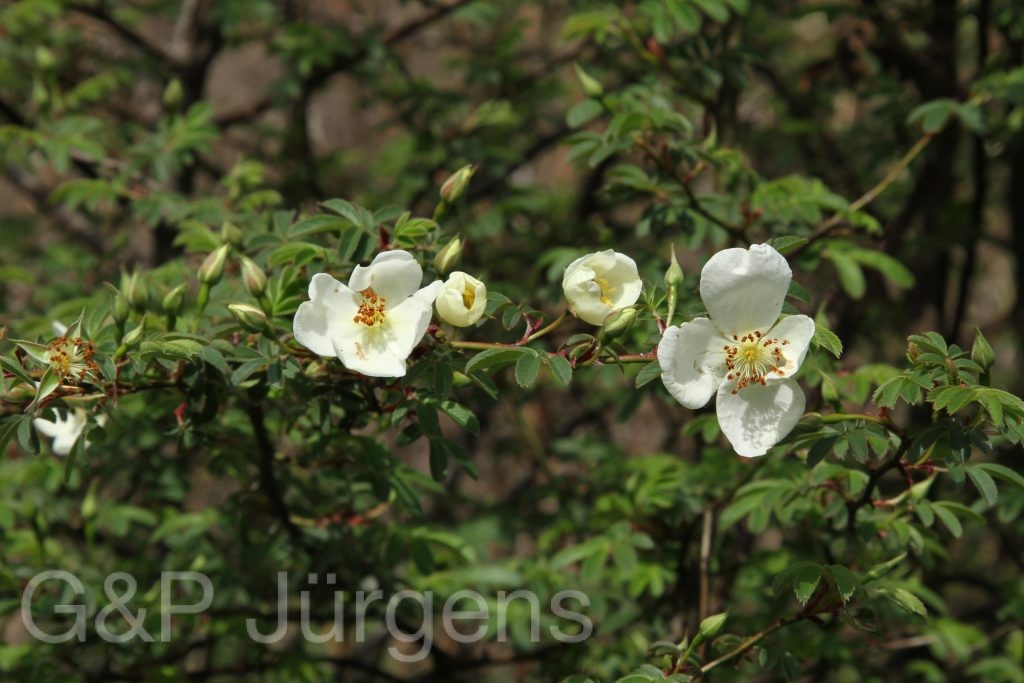
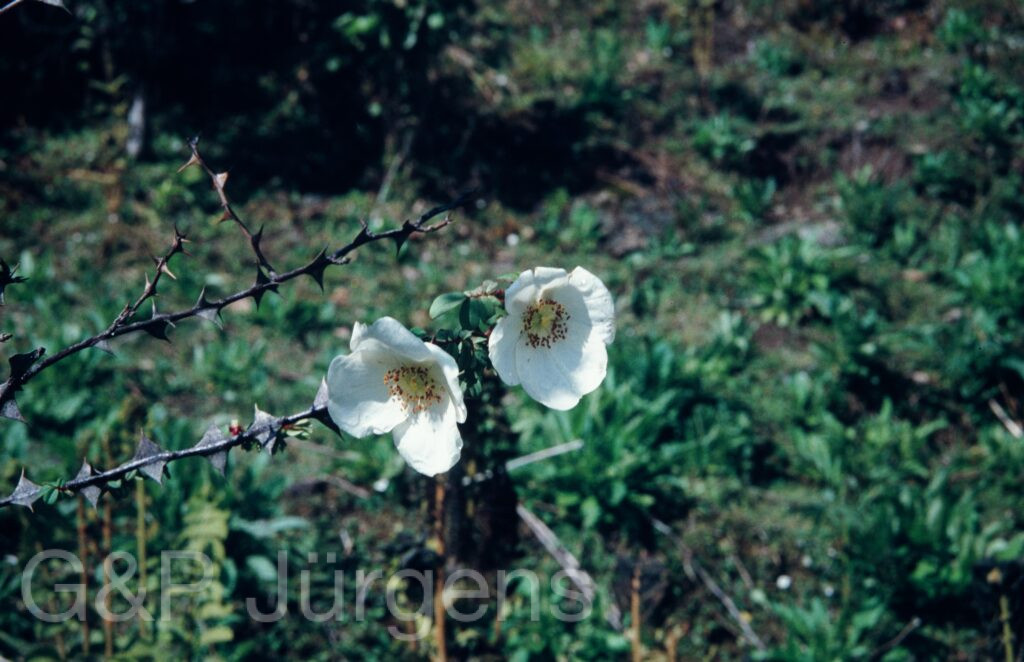
Rosa brunonii, the Himalayan musk rose, is a vigorous climbing or scrambling shrub of the Himalaya and adjacent ranges, recorded by GBIF (435 occurrences) from China, Nepal, India, Bhutan, Pakistan and Afghanistan, with cultivated and naturalised reports in Europe, North America and elsewhere reflecting its long history in gardens. It grows in forest margins, thickets, ravines, hedgerows and on open slopes throughout the temperate zone, generally between about 1500 and 3500 m. The plants illustrated from Thimphu in Bhutan at 2500 m in May and from south of Tara Lake in western Nepal at 3000 m in June capture its early-summer flowering across this elevational band.

The species is a robust, long-trailing shrub with arching, often reddish stems armed with stout, recurved, flattened prickles. The leaves are alternate, imparipinnate with usually five to seven leaflets that are oblong-lanceolate, finely serrate and characteristically greyish-green and softly pubescent beneath, with stipules adnate to the petiole. The flowers are borne in many-flowered corymbose cymes; each is fragrant, with five white, broadly obovate and emarginate petals surrounding numerous yellow stamens, the styles united into an exserted column. The receptacle ripens into a small, ovoid to subglobose, orange-red hip crowned by the deciduous sepals.

Rosa brunonii belongs to section Synstylae, the white-flowered, united-styled climbing roses, and is the principal Himalayan representative of the musk rose group long valued horticulturally and used in the parentage of cultivated ramblers. The clustered, scented flowers attract bees and other insects, and the bird-dispersed hips spread the species along forest edges. It is abundant and ecologically robust throughout its native range and is of no conservation concern.

Author: Lindl. · Sources: POWO (Kew), GBIF, Flora of China, Flora of Bhutan, Flora of Pakistan, The Genus Rosa (Phillips & Rix)

Rosa sericea

by GP Jürgens

Lindl.

Bhutan2014 399
Bhutan Yatong-La 2800m, May
Bhutan2014 400
Bhutan Yatong-La 2800m, May
Nepal 1994 253 ergebnis
Ost-Nepal Milka-Danda 2600m May 

Description

Rosa sericea is a Sino-Himalayan rose native to China, Nepal, India, Bhutan and Myanmar, widely grown and naturalised so that GBIF's roughly 2293 occurrences include records from Britain, Germany, the Netherlands, North America and beyond. In the wild it is a shrub of the temperate and subalpine zones, occupying open slopes, forest margins, scrub and ravine sides generally between about 2200 and 4000 m. The cited material from the Yatong-La in Bhutan at 2800 m and from the Milka-Danda in eastern Nepal at 2600 m, both flowering in May, is typical of its preference for sunny, well-drained montane situations where it blooms in late spring.

It is an erect, much-branched deciduous shrub whose stout stems bear paired prickles, in some forms broadly flattened and translucent. The leaves are imparipinnate with several pairs of small, oblong, serrate leaflets, the lower surface frequently silky-pubescent, a feature reflected in the epithet sericea. The flowers are solitary and famously distinctive in being four-petalled rather than five-petalled, a rarity in the genus, the petals white to creamy and broadly obcordate, surrounding numerous yellow stamens. After flowering the receptacle develops into a fleshy, pear-shaped to subglobose hip, often red and in some variants bearing conspicuously swollen yellow or red pedicels.

Rosa sericea is placed in section Pimpinellifoliae, the group of small-leaved, prickly Asian and European roses, and is closely allied to R. omeiensis, with which it intergrades; the form with enlarged winged prickles is much prized horticulturally as 'Pteracantha'. Its four-merous corolla is of botanical interest as an exception within a genus otherwise rigidly pentamerous. The bright hips provide autumn forage for birds and small mammals, aiding seed dispersal, and the species is in no way threatened, being common in the wild and long established in cultivation.

Author: Lindl. · Sources: POWO (Kew), GBIF, Flora of China, Flora of Bhutan, Flora of British India, Krüssmann 'Roses' and the genus Rosa monographic literature

K.Schum.

Sikkim2003 49 W68
Sikkim above Yoksam 2200m 08.2003
Nepal 99 909 ergebnis
West-Nepal Hanke 2700m, July

Description

Roscoea auriculata is an eastern Himalayan terrestrial ginger recorded from India, China, Nepal and Bhutan across some 126 GBIF occurrences. The photographed plants were found above Yoksam in Sikkim at 2200 m in August and at Hanke in West Nepal at 2700 m in July, locations typical of its range in moist temperate forest glades, grassy banks and open slopes between roughly 2000 and 3000 m. Unlike most members of the predominantly tropical Zingiberaceae, Roscoea is adapted to cool montane conditions, dying back to a tuberous rootstock to overwinter and emerging with the summer monsoon.

The plant is an erect perennial herb arising from clustered fleshy, tuberous roots. The leaves are few, lanceolate and arranged distichously, their sheaths forming a false stem (pseudostem); the diagnostic feature signalled by the epithet is the conspicuously auriculate leaf-sheath base. The flowers are large, showy and orchid-like, deep violet to purple, emerging successively from a terminal cluster; each has a hooded dorsal corolla lobe, two erect lateral staminode-like structures and a broad, often bilobed reflexed labellum, with a single fertile stamen.

Note that the input family is given as "Zingiberacaea", an evident misspelling of Zingiberaceae, in which Roscoea is correctly placed. The genus is celebrated for its convergence on an orchid-like floral form, an adaptation for pollination by long-tongued bees, and is much prized in cultivation for hardy temperate gardens. R. auriculata has a relatively restricted eastern Himalayan distribution; though not formally threatened, it is locally collected and sensitive to habitat disturbance.

Author: K.Schum. · Sources: POWO (Kew), GBIF, Flora of Bhutan, Flora of Nepal, Flora of China, Cowley – The Genus Roscoea (Royal Botanic Gardens Kew monograph)

Ngamr.

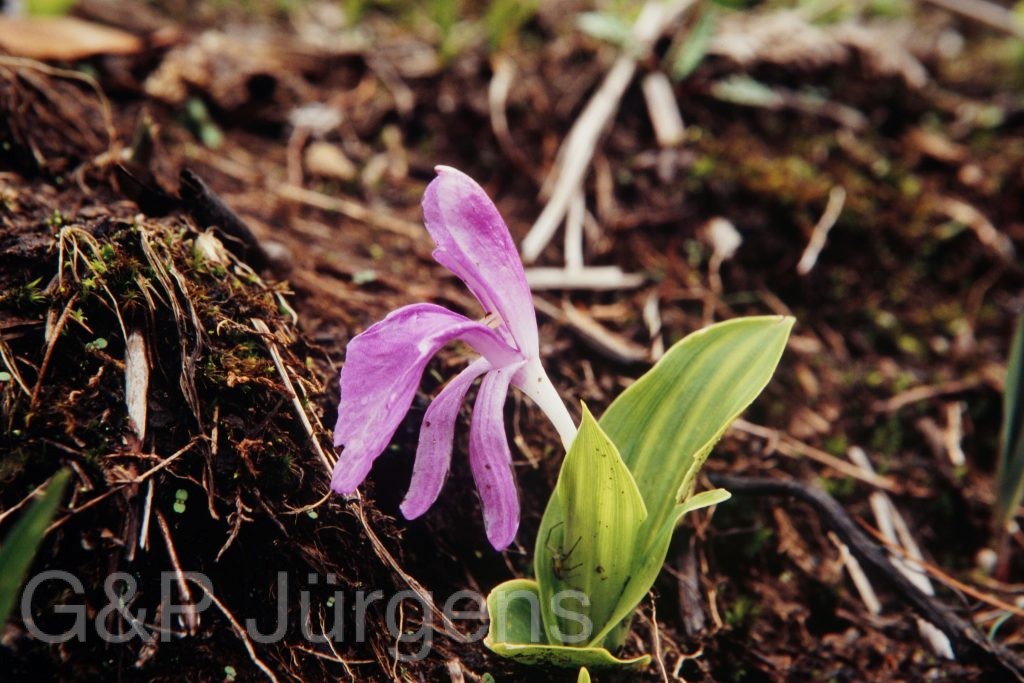
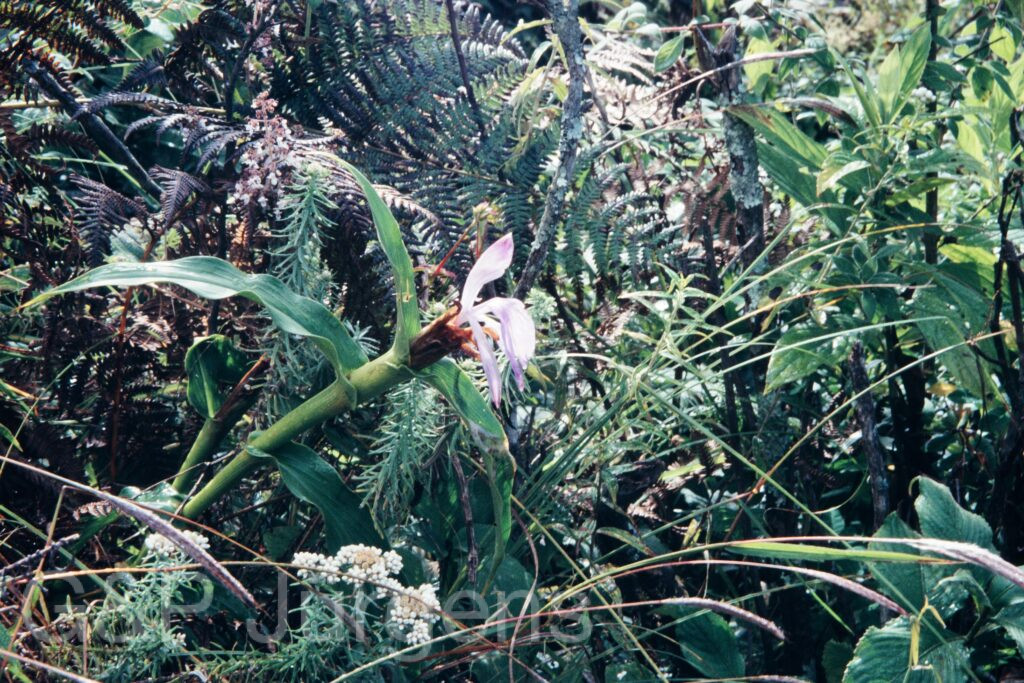
BhutanPG2011 734 01 01
Bhutan Has-Valley, 2750m June
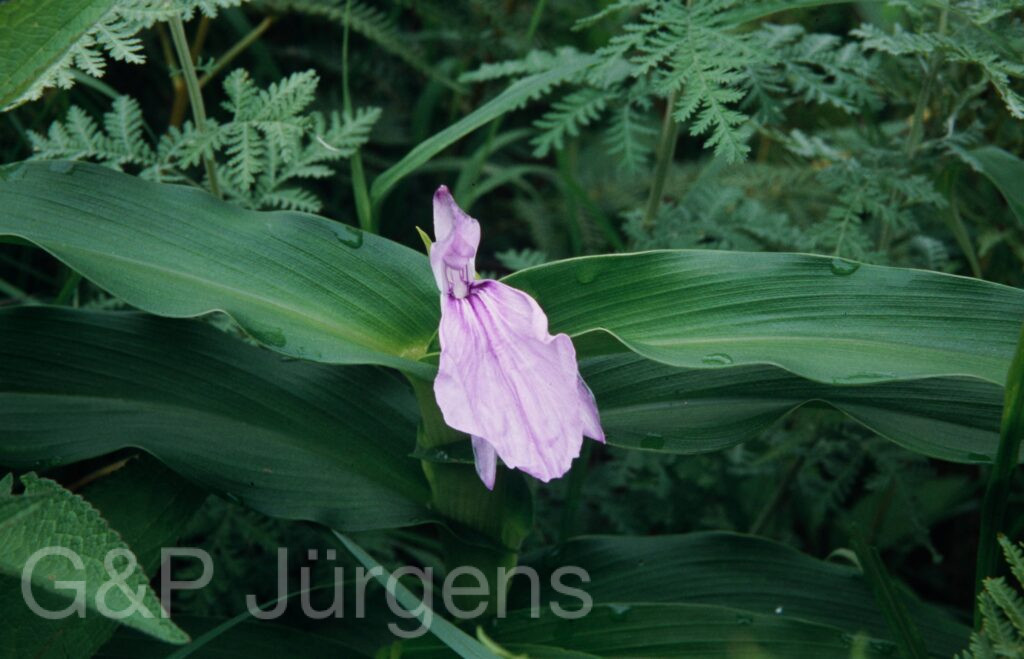
Bh09 200 P339
Bhutan above Thimphu, 3000m June

Description

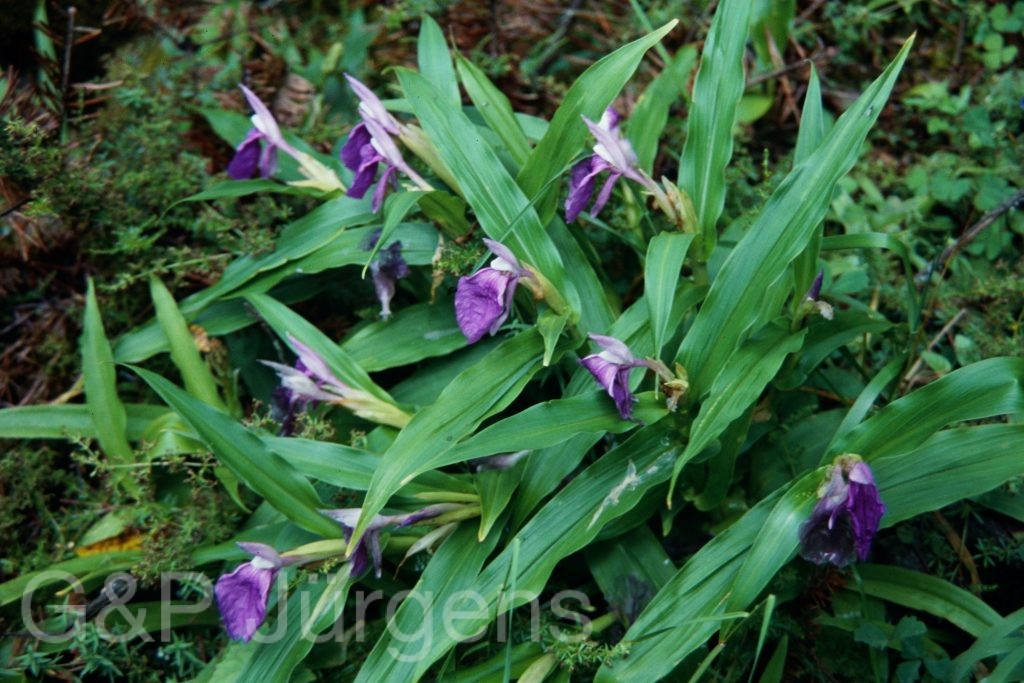
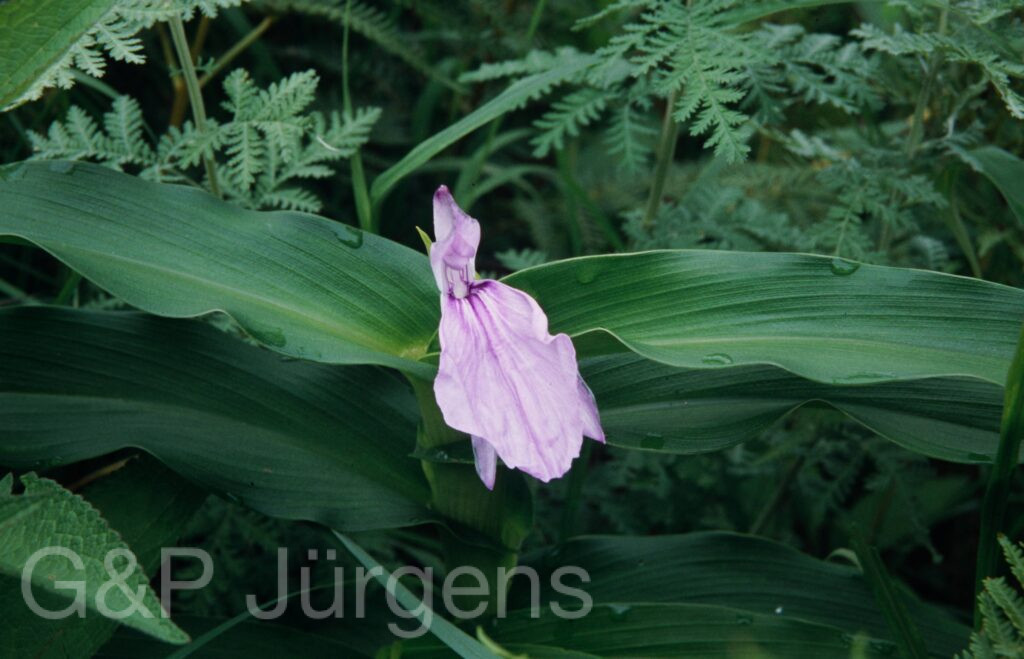
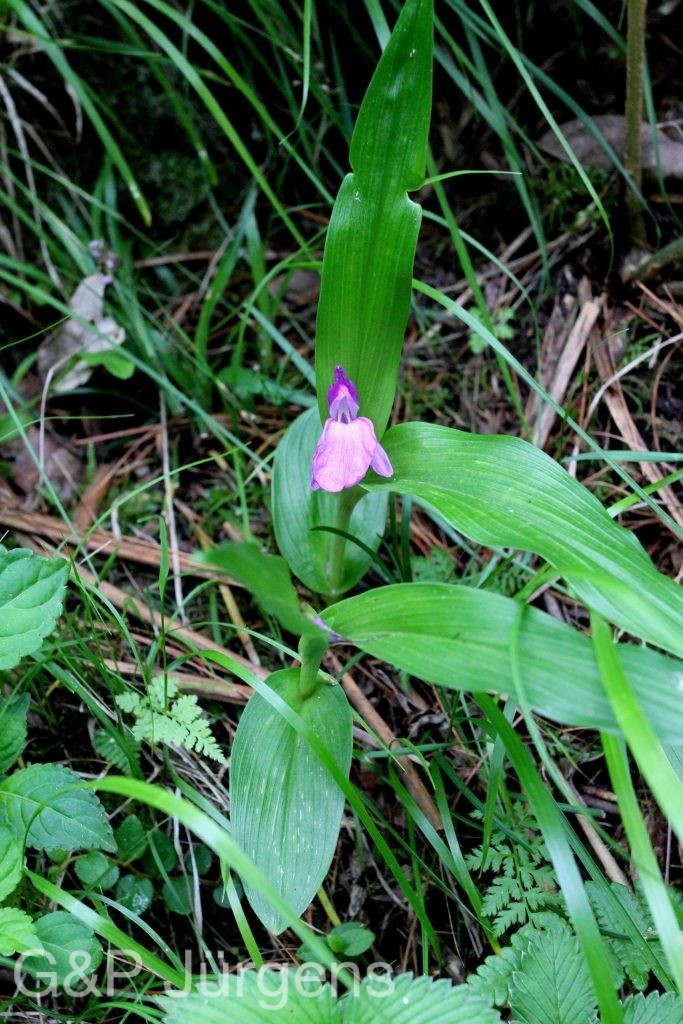
Roscoea bhutanica is a Himalayan terrestrial ginger known chiefly from Bhutan and adjacent southern China, with around 48 GBIF occurrences documenting its restricted Sino-Himalayan range. Unlike most Zingiberaceae, the genus Roscoea is adapted to cool temperate climates, and this species grows in open grassy slopes, forest clearings, banks and meadows in the upper temperate zone, broadly between 2,500 and 3,400 m. The plants photographed in the Haa Valley at 2,750 m and above Thimphu at 3,000 m, both in June, capture it flowering at the onset of the summer monsoon, when the rootstock breaks dormancy with the first rains.

It is a deciduous perennial herb arising from a cluster of fleshy, fasciculate roots and a short rhizome, producing an erect pseudostem formed by overlapping leaf sheaths. The leaves are few, lanceolate to oblong-lanceolate and glabrous, the lowermost reduced to bladeless sheaths. The inflorescence is terminal, the flowers emerging successively; each has a long, slender corolla tube, a hooded dorsal corolla lobe, two petaloid lateral staminodes, and a large, deflexed, bilobed labellum that is typically purple to violet, providing a conspicuous landing platform. The fruit is an elongate capsule containing numerous arillate seeds.

Roscoea comprises some twenty species disjunctly distributed across the Himalaya and the mountains of south-west China, a pattern interpreted as a response to Himalayan uplift and monsoon climate. R. bhutanica was segregated relatively recently from the R. tumjensis-R. alpina complex on floral and phenological characters, and its long, narrow corolla tube indicates pollination by long-tongued insects. Its limited range and dependence on undisturbed montane grassland make it of conservation interest given grazing and land-use change in the eastern Himalaya; it has not yet been formally assessed for the IUCN Red List. (The family is given as printed in the source; the species belongs to Zingiberaceae.)

Author: Ngamr. · Sources: POWO (Kew), GBIF, Flora of Bhutan, Flora of China, The Genus Roscoea (Jill Cowley, Kew monograph), Zingiberaceae of the Himalaya

Sm.

Nepal 95 114 P202 ergebnis
Nepal south of Rupien La 3200m October
Nepal 99 909 ergebnis
Nepal Sepka 2760 m, JUly

Description

Roscoea purpurea is a tuberous-rooted ginger of the Himalaya, ranging through Nepal, northern India, Bhutan and adjacent China, with peripheral records (KR, MY, US, ZZ) reflecting horticultural cultivation, as it is widely grown as a hardy ornamental. Of nearly 400 georeferenced records, the densest concentration falls in the central and eastern Nepalese hills. It grows on open grassy slopes, in forest clearings, on banks and among shrubs in the upper temperate and subalpine belt. The photographed plants from south of the Rupien La at 3200 m in October and from Sepka at 2760 m in July illustrate its broad altitudinal span and its summer-to-autumn flowering, timed to the monsoon when the rootstock is in active growth.

It is a deciduous perennial herb arising from a cluster of fleshy, fascicled root tubers and a short rhizome. The pseudostem is formed by the overlapping leaf sheaths and bears several lanceolate to oblong, distichous leaves that are smooth and often with a sheathing, ligulate base. The showy flowers emerge from the leaf axils or a short terminal spike; each is enclosed by a green bract and has a slender corolla tube. The perianth is strongly zygomorphic, typically purple to lilac, with a hooded dorsal corolla lobe, narrow lateral lobes, and a large, conspicuously bilobed, deflexed labellum that serves as the pollinator platform. A single fertile stamen with a spurred connective and an inferior ovary produce an elongate capsule.

Roscoea is remarkable within the otherwise tropical Zingiberaceae for its adaptation to cold, seasonally dry montane climates, the genus disjunct between the Himalaya and the mountains of south-west China. R. purpurea is the type-associated and most variable Himalayan species, encompassing several named colour and form variants, and is pollinated chiefly by long-tongued bees and, in some populations, by long-proboscid flies. It remains locally common and is not considered threatened.

Author: Sm. · Sources: POWO (Kew), GBIF, Flora of China Vol. 24, Flora of Bhutan Vol. 3, Flora of Nepal, Cowley's The Genus Roscoea (Kew)

(Buch.-Ham. ex Roxb.) Koehne

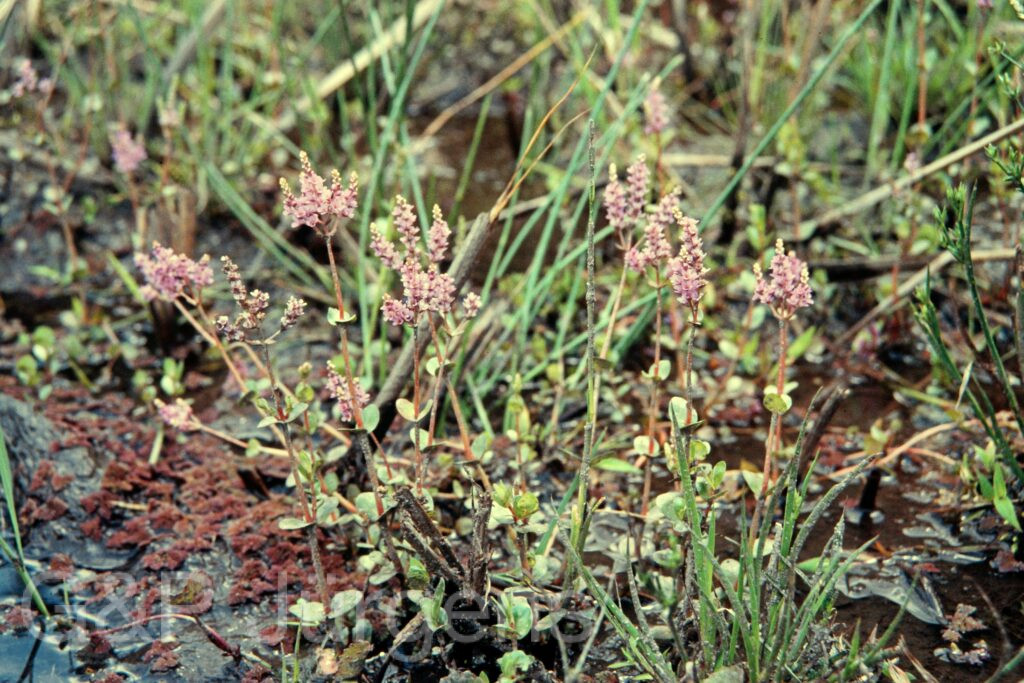
Nepal 97 63 P97
Nepal Mewa-Khola 1195m April

Description

Rotala rotundifolia (Buch.-Ham. ex Roxb.) Koehne is a small amphibious herb of the Lythraceae with a wide Asian distribution and an extensive secondary range. GBIF, with 2,686 occurrences, records it natively across China, Taiwan, India, Nepal, Bhutan, Bangladesh, Myanmar, Thailand, Laos, Vietnam and Japan, and as an introduction in the USA, Australia, Brazil and elsewhere, partly through the aquarium trade. The species inhabits wet paddy margins, ditches, marshes, riverbanks and shallow standing water from the lowlands to around 1,500 m. The illustrated material from the Mewa-Khola in eastern Nepal at 1,195 m, in April, is typical of its subtropical wetland habitat.

The plant is a creeping to ascending annual or short-lived perennial, often rooting at the lower nodes and producing erect flowering shoots. Its stems are slender and four-angled, and the leaves are opposite, sessile, orbicular to ovate (as the epithet indicates) on submerged or basal parts but narrower on emergent shoots, a marked heterophylly. The flowers are minute and sessile, crowded into dense, spike-like terminal racemes; each has a four-lobed campanulate calyx, four small pink to rose-purple petals, and few stamens. The fruit is a small septicidal capsule with a finely striate surface containing numerous tiny seeds.

Rotala rotundifolia is taxonomically variable, with submerged and emergent forms differing strikingly in leaf shape and colour, a plasticity that has made it a popular ornamental aquatic. This same adaptability allows it to behave as an aggressive invasive in introduced regions, where it can clog drainage and displace native wetland flora. In its native Himalayan and Asian range it is an abundant and ecologically unremarkable component of seasonally inundated habitats.

Author: (Buch.-Ham. ex Roxb.) Koehne · Sources: POWO (Kew), GBIF, Flora of China Vol. 13, Flora of Nepal, Flora of British India Vol. 2, Cook: Aquatic and Wetland Plants of India