
D. Don
Description
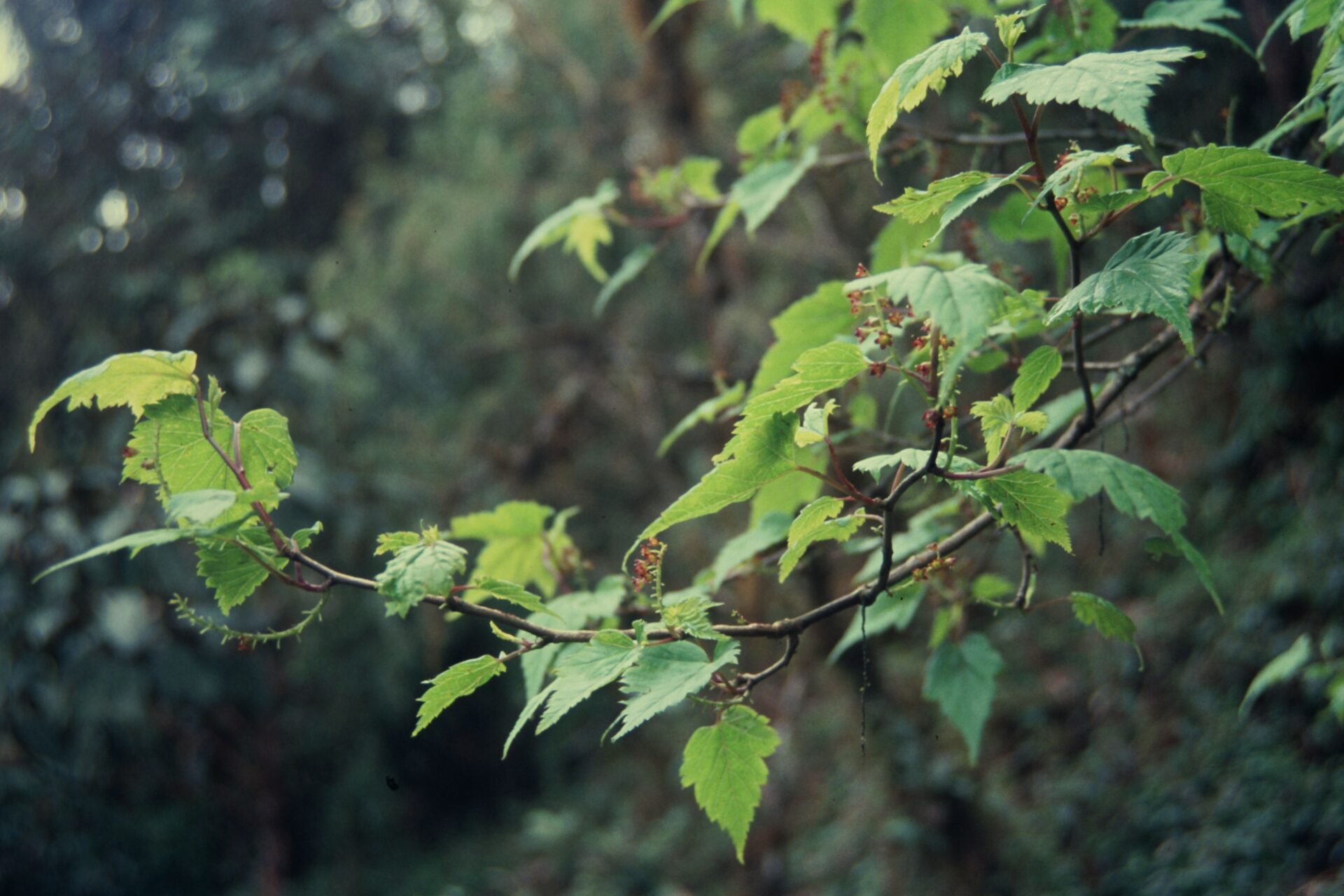
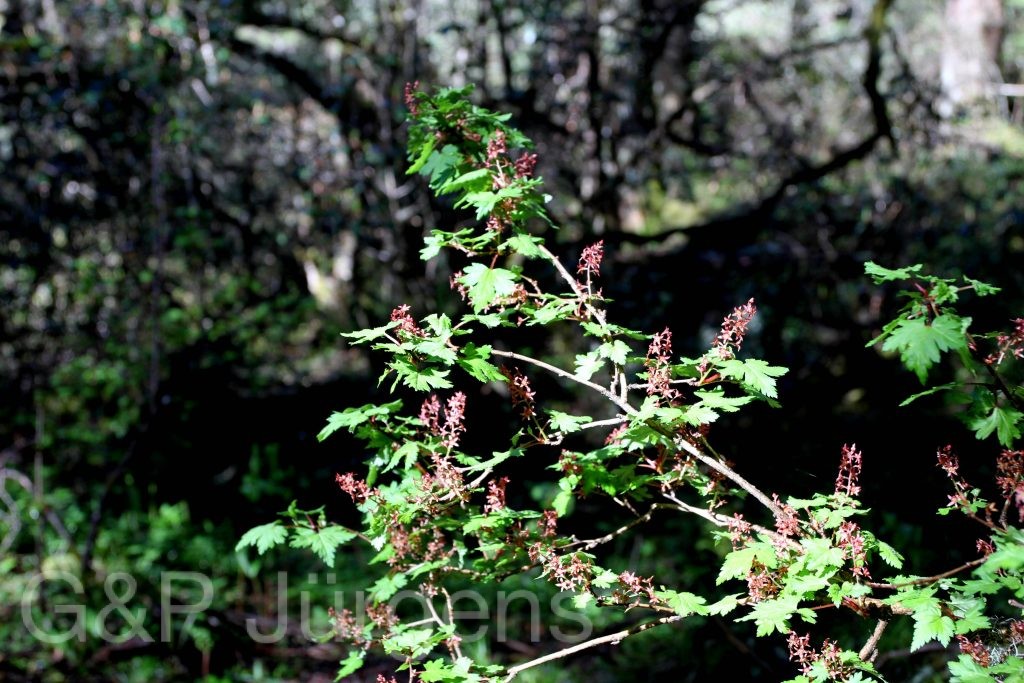
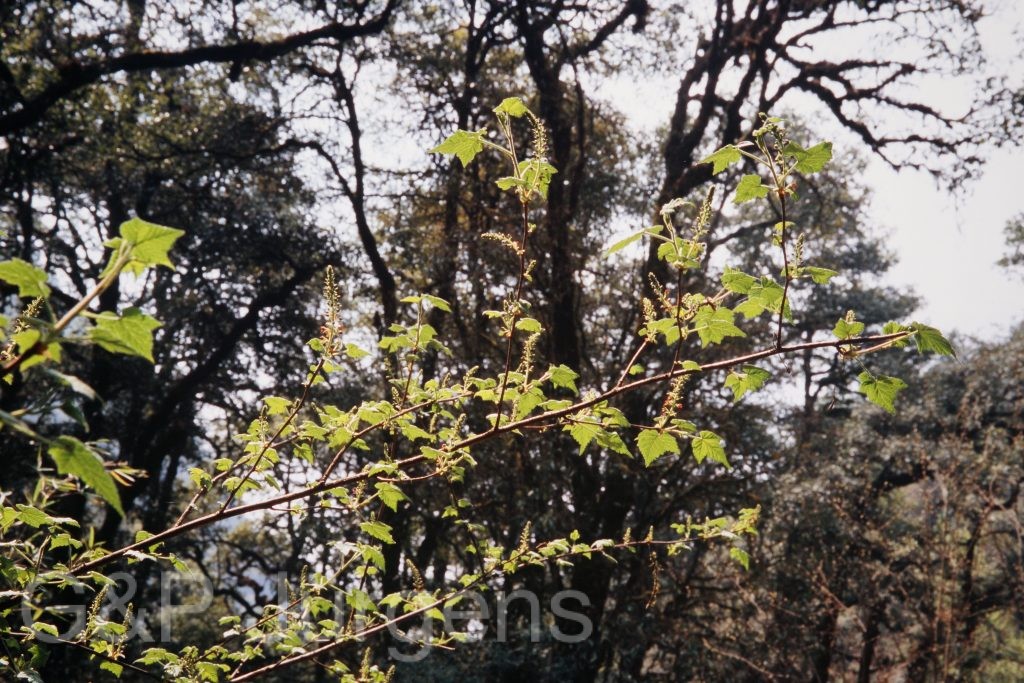
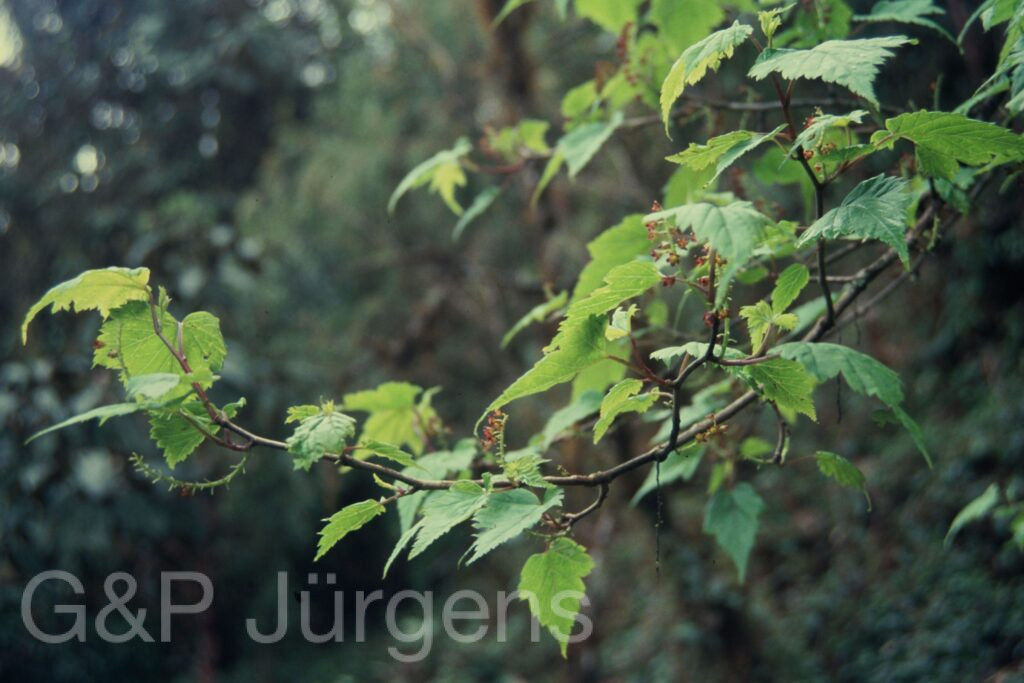
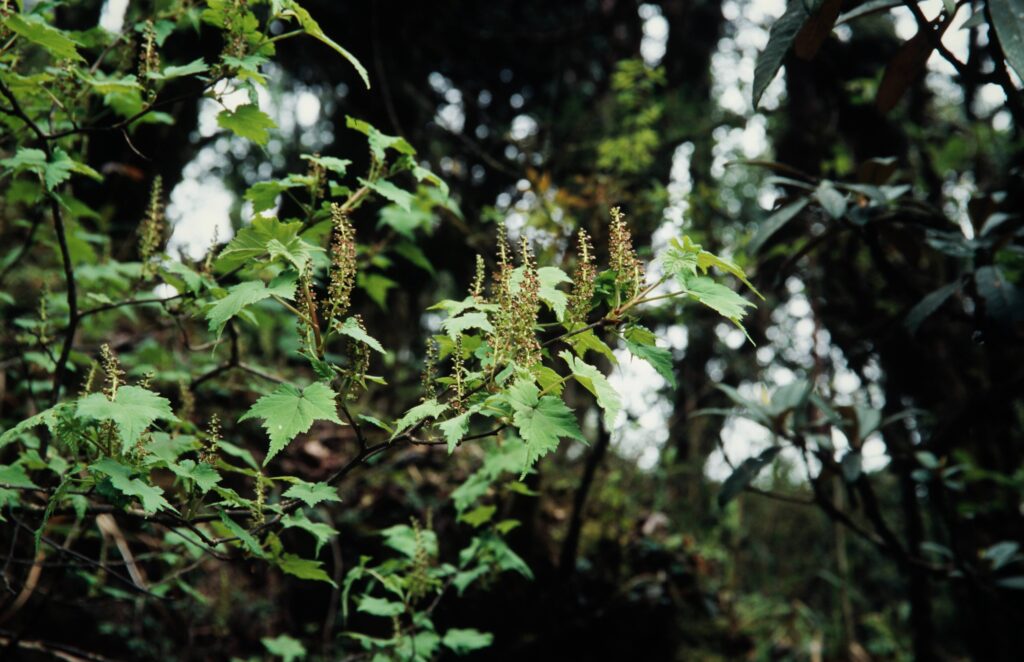
Ribes takare is a Himalayan currant distributed along the temperate and subalpine belt from Afghanistan through Pakistan, Nepal, India and Bhutan into southwestern China and Myanmar, with GBIF recording close to a thousand occurrences across this arc. It grows in moist temperate and upper montane forest, forest margins, shrubberies, ravines and rocky slopes, typically between about 2500 and 4000 m. The image caption documents this range well, with collections from the Lada La in Sikkim at 3900 m in June, the Thimphu Chu in Bhutan at 2750 m in April, Bersay in West Bengal at 2700 m in April, and Tonglu at 3150 m in May, showing both its broad altitudinal span and its spring-to-early-summer flowering as the snowline retreats.
It is a deciduous, spineless (unarmed) shrub up to about 2-3 m tall, with greyish, peeling bark and glandular-pubescent young shoots. The leaves are alternate, palmately three- to five-lobed with crenate-serrate margins and a cordate base, somewhat resembling a maple leaf and often glandular-hairy beneath. The flowers are borne in many-flowered, pendulous racemes; they are small and reddish to purplish-brown, with a saucer-shaped to shallowly campanulate hypanthium, five reflexed sepals, five smaller petals, five stamens and an inferior ovary. The fruit is a glandular-bristly, reddish to purplish-black berry that is edible but rather acidic and somewhat resinous.
The genus Ribes, sole genus of Grossulariaceae, is well represented in the Himalaya, where R. takare belongs to the unarmed, raceme-flowered black-currant alliance and has been treated under synonyms including R. acuminatum and R. glaciale-related names by various authors. Its pendent racemes of nectariferous flowers attract bees and other insects, while the berries are dispersed by birds and small mammals; the species forms an understorey component of moist Himalayan forest. It is widespread and common across its extensive range and is of no conservation concern, while its acidic fruits are gathered locally and its hardiness has drawn modest horticultural interest.
Author: D. Don · Sources: POWO (Kew), GBIF, Flora of China Vol. 8, Flora of Bhutan Vol. 1, Flora of Nepal, Flora of Pakistan, Berger's taxonomic review of Ribes