
Hook. f. & Thomson
Description
Ribes griffithii is a Sino-Himalayan currant of high-elevation shrubberies, distributed through China, Nepal, Bhutan and India (with a few scattered extralimital records); GBIF lists 277 occurrences, the great majority along the Himalayan and Tibetan margins. It occupies subalpine forest edges, Rhododendron and juniper scrub, moist rocky slopes and streamside thickets, generally between about 3000 and 4000 m. The illustrated plant was recorded in Sikkim near Lada-La at 3900 m in June, a characteristic upper-montane to subalpine station where the shrub leafs out and flowers as the snow recedes.
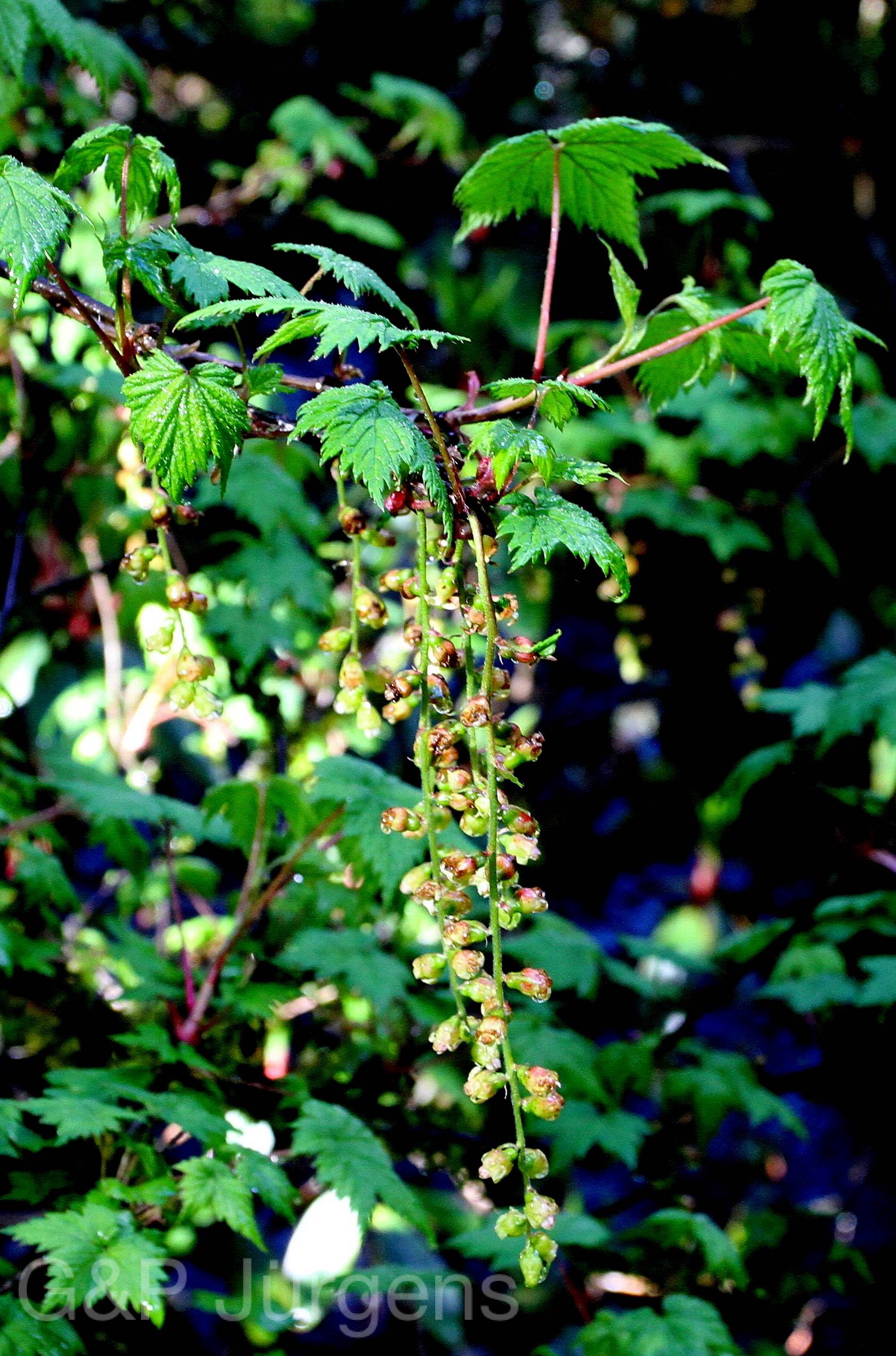
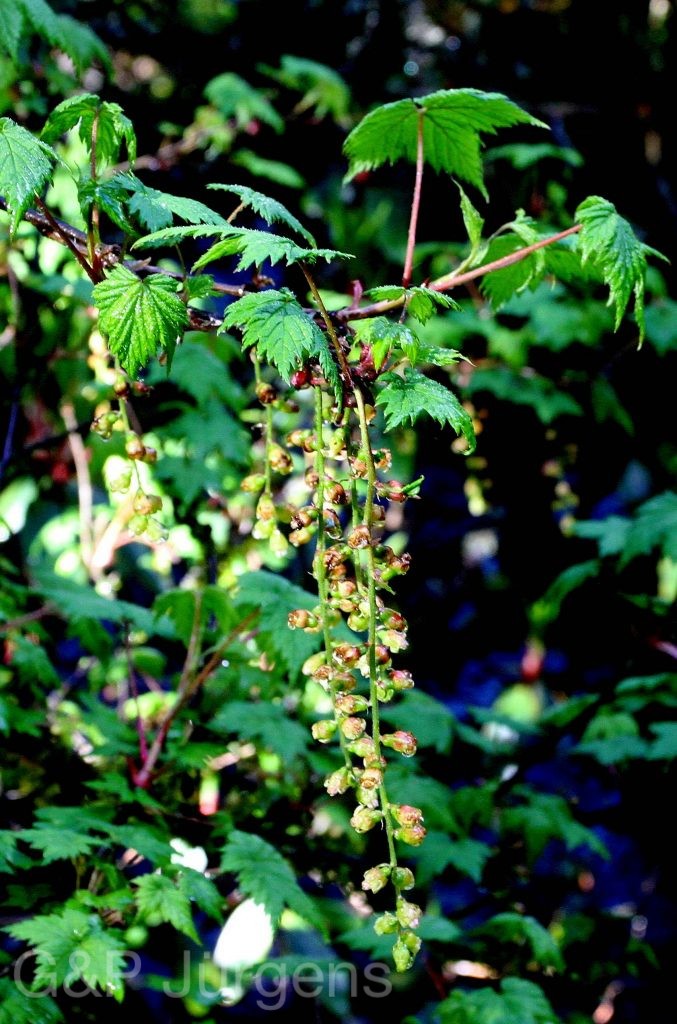
The plant is a deciduous, unarmed shrub with arching to ascending branches and smooth or flaking bark. Leaves are alternate, palmately three- to five-lobed with a cordate base and a serrate to crenate-dentate margin, glabrescent to slightly pubescent and borne on slender petioles. The flowers are arranged in pendulous, many-flowered racemes; each is small, with a saucer-shaped to shallowly campanulate hypanthium, five reflexed greenish to reddish sepals, five smaller petals, five stamens and an inferior ovary. The fruit is a glabrous, ellipsoid to globose berry, reddening to dark red at maturity and crowned by the persistent perianth.
The species belongs to subgenus Ribes among the unarmed true currants, distinguished from the spiny gooseberries by its racemose, many-flowered inflorescences. POWO and GBIF accept the name. As a fleshy-fruited shrub it contributes to the diet of Himalayan birds and small mammals that disperse its seeds across the subalpine mosaic.
Author: Hook. f. & Thomson · Sources: POWO (Kew), GBIF, Flora of China, Flora of Bhutan, Annotated Checklist of the Flowering Plants of Nepal, A Monograph of the Genus Ribes (Grossulariaceae)