Author

GP Jürgens

Andersson

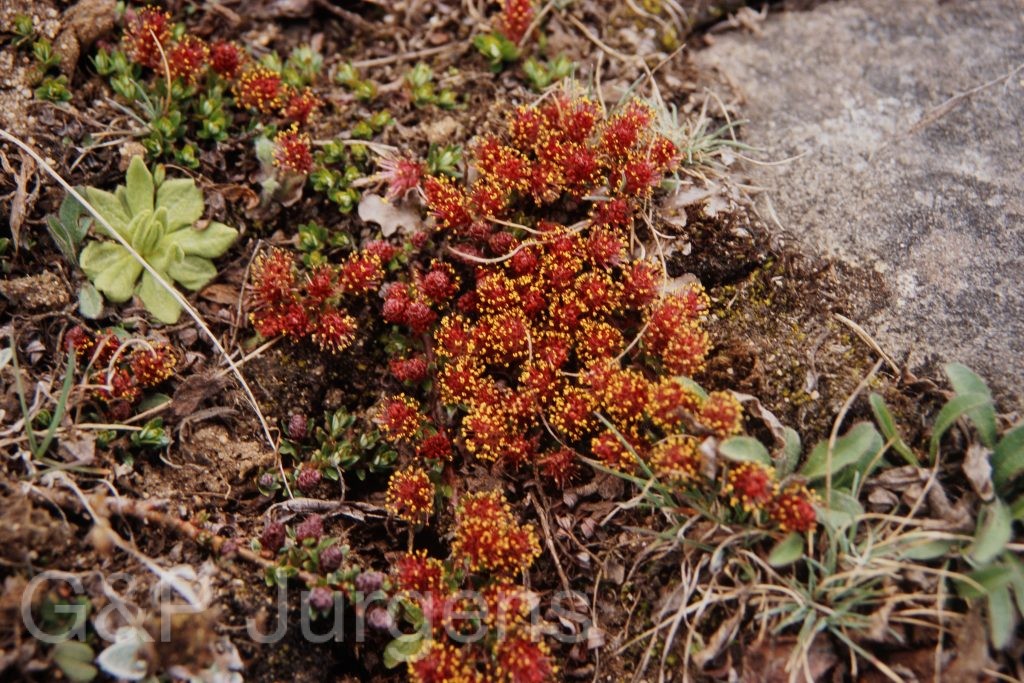
Bh2008 587 G879
Bhutan Chele-La 3900m April
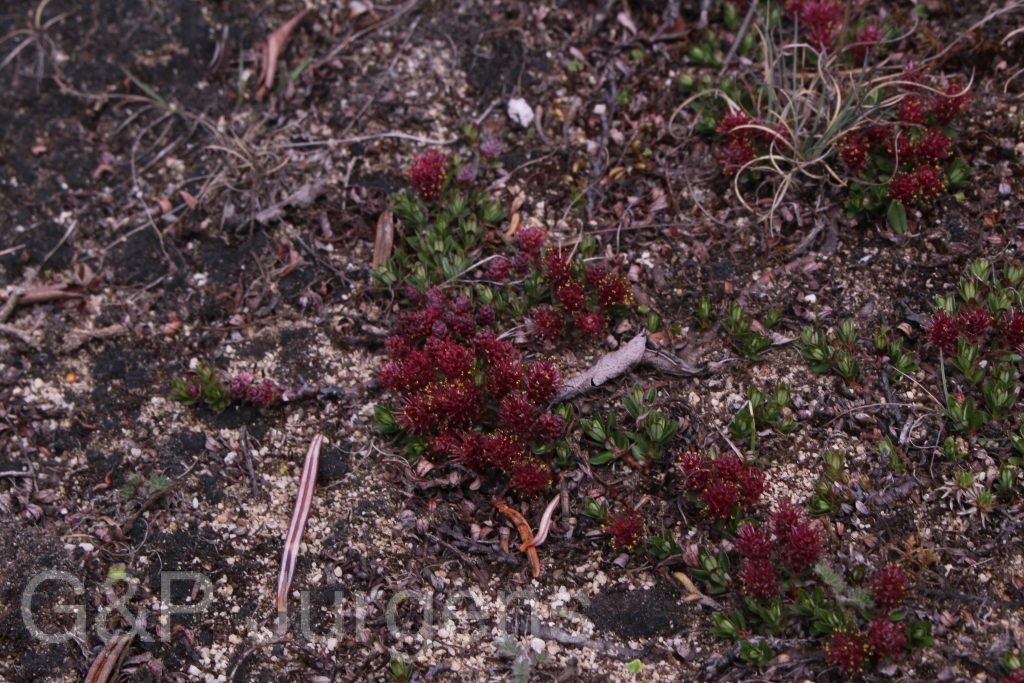
Bhutan2014 932
Bhutan Chele-La 4000m, May

Description

Salix thomsoniana is a dwarf, high-alpine willow of the family Salicaceae, endemic to the Himalaya. GBIF records, though few in number, are restricted to India, Nepal and Bhutan, reflecting both its genuine narrow range and the limited collecting of prostrate willows at extreme elevations. It is a plant of the upper alpine zone, growing among rocks, on stony slopes, moraine and the margins of alpine turf, typically between about 3,800 and 4,500 m. The collections illustrated from the Chele-La pass in western Bhutan at 3,900–4,000 m in April and May capture the species at the very start of its short growing season, flowering as the snow melts.

Like many high-mountain willows it is a low, decumbent to prostrate shrublet with creeping, often partly buried woody stems and short ascending shoots. The leaves are small, elliptic to obovate, with entire or finely toothed margins, glabrescent above and somewhat paler beneath. As in all Salix, the plant is dioecious, the flowers reduced and aggregated into short, erect catkins that appear with or just before the leaves; each minute flower is subtended by a hairy bract, the staminate flowers with two stamens and the pistillate flowers reduced to a single gynoecium with a nectary. The fruit is a small capsule releasing numerous minute, plumed seeds dispersed by wind.

The alpine willows form a taxonomically intricate group in which species are separated on subtle characters of leaf shape, indumentum, catkin structure and bract coloration, and hybridisation further complicates delimitation. As a cushion-forming dwarf shrub of the high Himalaya, S. thomsoniana contributes to soil stabilisation and provides early-season forage and pollen in an otherwise sparse environment. Its restricted range and dependence on the narrow alpine belt make such species potentially vulnerable to upward shifts in vegetation zones driven by warming.

Author: Andersson · Sources: POWO (Kew), GBIF, Flora of Bhutan Vol. 1, Flora of China Vol. 4, Flora of Nepal, Skvortsov: Willows of the USSR and adjacent regions
Wall. ex Benth.

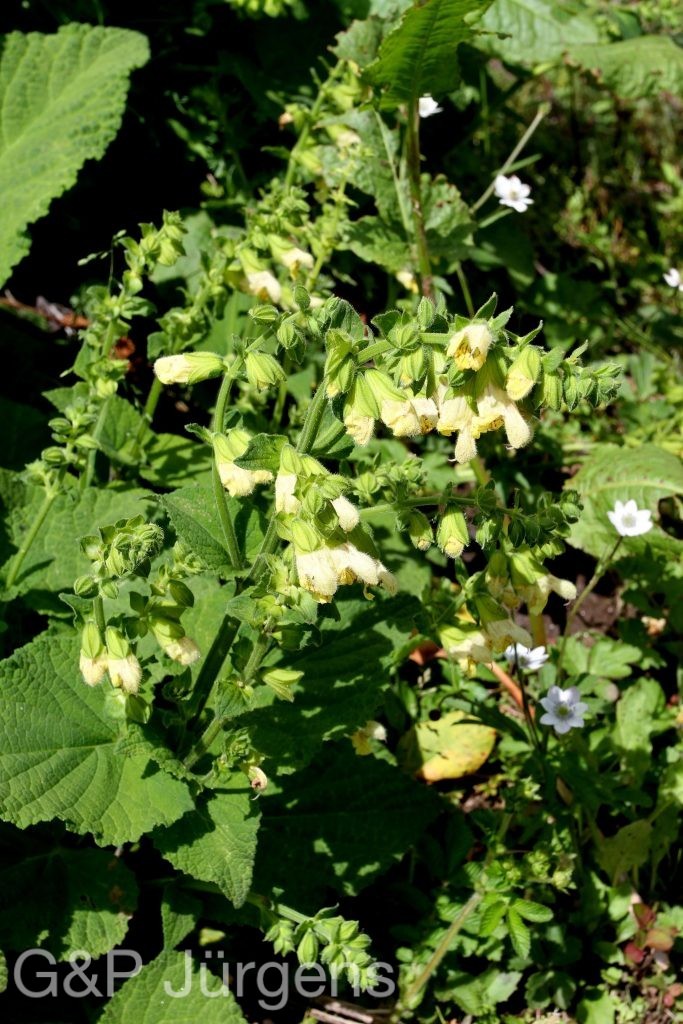
BhutanPG2011 767 01 01
Bhutan Dur-Tso, 3600m June
also included: Anemone rivularis DC.
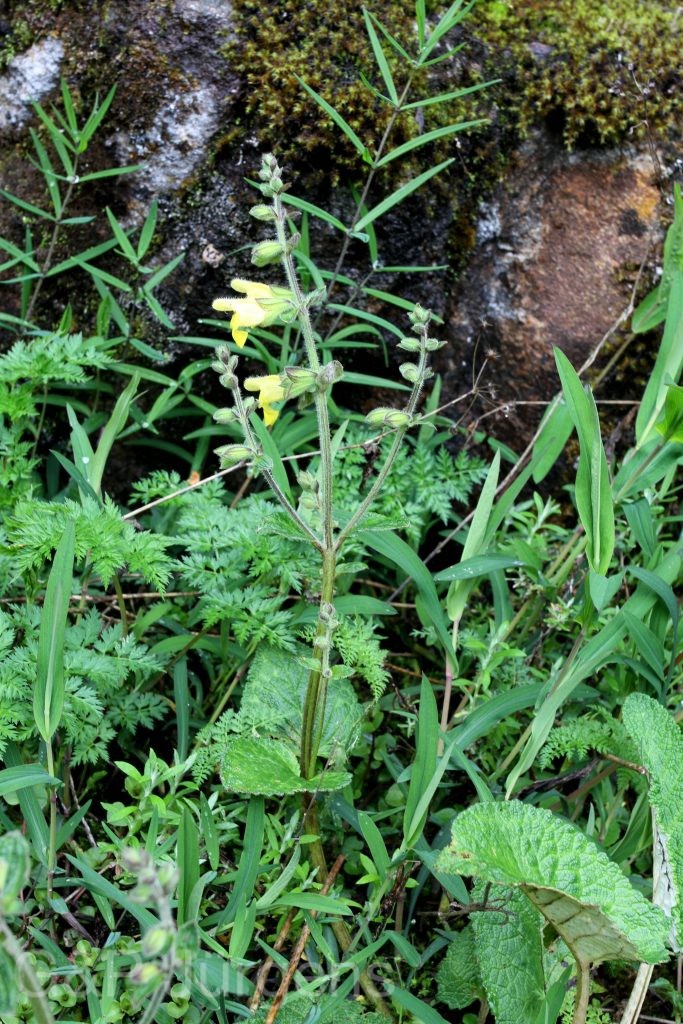
BhutanPG2011 374
Bhutan Dur-Tso, 3600m June

Description

Salvia campanulata is a robust perennial sage of the Himalaya and adjacent China, with verified occurrences in Nepal, China, India, Bhutan and Myanmar. It grows on open grassy slopes, in forest clearings, scrub and along streamsides through the upper-temperate and subalpine zones, broadly between about 2500 and 3800 m. The plant illustrated from near Dur-Tso in Bhutan at around 3600 m in June, where it grows in company with Anemone rivularis, exemplifies its preference for moist, open subalpine grassland flowering early in the monsoon season.

The species arises from a stout rootstock and produces erect, quadrangular stems clothed, like the foliage, in soft hairs. The leaves are mostly basal and on the lower stem, large, broadly ovate to triangular-hastate with cordate bases and crenate-serrate margins, and long-petiolate. The inflorescence is an elongate terminal raceme of remote whorls (verticillasters), each of a few flowers. The calyx is bell-shaped, the feature noted in the epithet campanulata, and the corolla is comparatively large, yellow to greenish-yellow often marked with brown or purple, strongly two-lipped with a hooded upper lip enclosing the two functional stamens characteristic of the genus. The fruit comprises four smooth nutlets enclosed in the persistent calyx.

Salvia, the largest genus of Lamiaceae, is distinguished by its specialised lever-arm stamen mechanism that promotes precise pollen placement on visiting bees and other long-tongued insects. S. campanulata, described by Bentham from a Wallich collection, belongs to the Himalayan assemblage of large-leaved montane sages. It is widespread and locally common across its range and is not regarded as being of conservation concern.

Author: Wall. ex Benth. · Sources: POWO (Kew), GBIF, Flora of China, Flora of Bhutan, Annotated Checklist of the Flowering Plants of Nepal

Salvia castanea

by GP Jürgens

Diels

BhutanPG2011 828 01 01
Bhutan Chele-La, 3400m July

Description

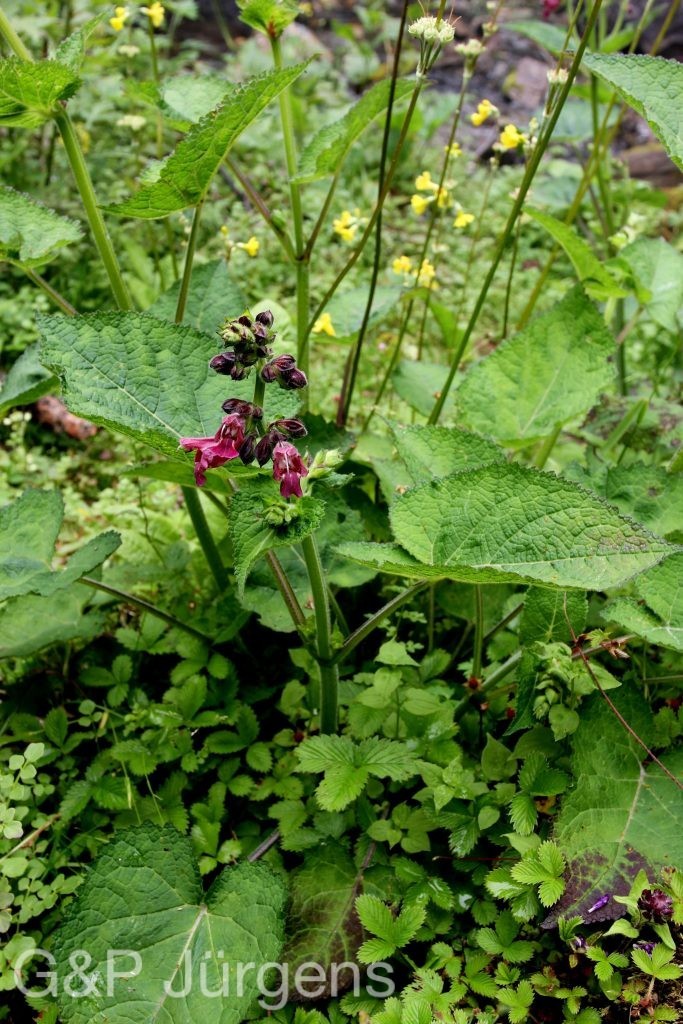
Salvia castanea is a montane perennial distributed across the eastern Himalaya and adjoining south-western China, with georeferenced collections recorded from China, Bhutan, Nepal and India; some 202 occurrences are documented in GBIF. It favours open forest margins, scrub, alpine meadows and grassy slopes between roughly 2700 and 4000 m, the photographed plant having been gathered at Chele-La in Bhutan at about 3400 m in July, at the height of the monsoon flowering season. It thrives on humus-rich, well-drained soils in cool, moist subalpine conditions.

The plant forms an erect, woody-based perennial herb 30-60 cm tall from a stout rootstock, with quadrangular, sparsely pubescent stems. The basal and lower cauline leaves are long-petiolate, the lamina ovate to oblong-lanceolate, cordate or subcordate at the base, crenate-serrate, and rugose with impressed venation. The inflorescence is a lax raceme of distant 2-6-flowered verticillasters; flowers bear a campanulate calyx and a chestnut-brown to dull purplish-red corolla 2.5-3.5 cm long, with an arched, galeate upper lip and the characteristic Salvia lever mechanism of two stamens. The fruit comprises four smooth nutlets enclosed in the persistent calyx.

The distinctive chestnut corolla colour, reflected in the epithet castanea, separates this species from most Himalayan sages, which tend toward blue or violet flowers. As a member of the large genus Salvia (Lamiaceae, subfamily Nepetoideae), it relies on long-tongued bees and occasionally birds for pollination via the staminal lever. Though not formally assessed as threatened, it is locally frequent within its restricted Sino-Himalayan range, where habitat continuity in subalpine meadows underpins its persistence.

Author: Diels · Sources: POWO (Kew), GBIF, Flora of China, Flora of Bhutan, A Revision of Salvia (Lamiaceae) in Asia

Salvia nubicola

by GP Jürgens

Wall. ex Sweet

Bhutan2012 15 scaled
Bhutan Paro, 2300m September

Description

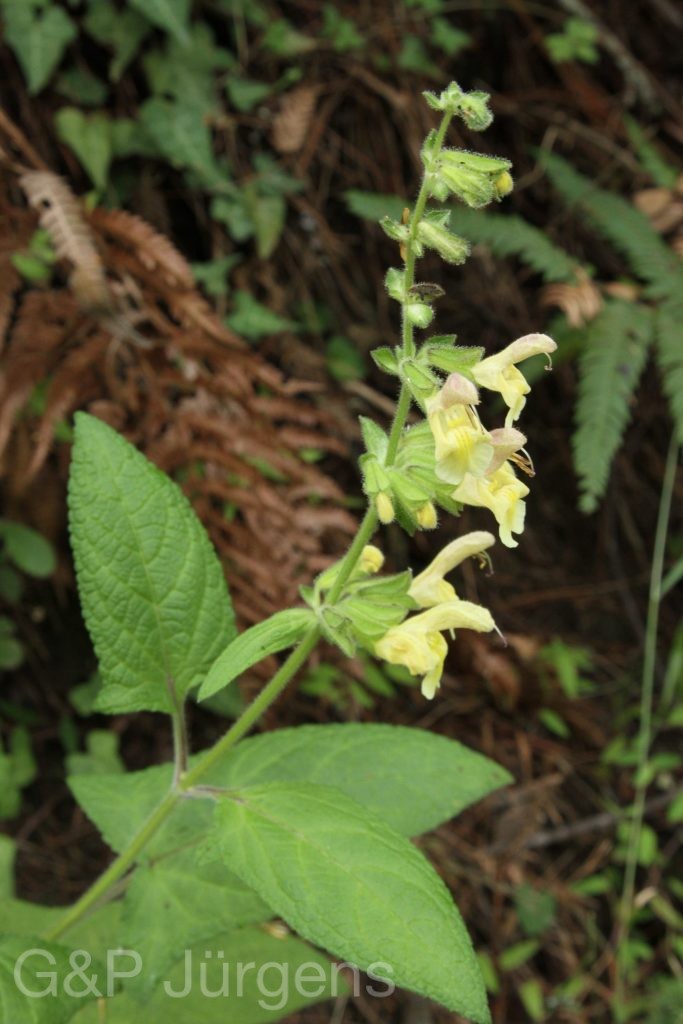
Salvia nubicola is a robust herbaceous sage of the Himalaya and adjacent mountains, distributed from Afghanistan and Pakistan through Nepal, northern India and Bhutan into south-western China, with 372 GBIF occurrences that include naturalised or cultivated material in Europe, North America, Iran and New Zealand. It favours open slopes, forest margins, clearings, roadsides and disturbed ground in the temperate montane zone, broadly between 1800 and 3600 m. The illustrated plant was photographed at Paro in Bhutan at 2300 m in September, in the late-summer to autumn flowering season characteristic of the species at mid-elevations.

It is a stout perennial herb up to 1-1.5 m tall with quadrangular, glandular-hairy stems and a strong aromatic scent. The leaves are large, ovate-triangular to hastate with a cordate or sagittate base and crenate margin, long-petiolate and rugose. The flowers are arranged in widely spaced verticillasters forming an elongate terminal inflorescence, subtended by conspicuous bracts. The corolla is pale yellow, often blotched or veined with purple or brown on the lower lip, strongly two-lipped with a hooded galea-like upper lip; the two fertile stamens bear the characteristic lever-like connective of Salvia. The fruit comprises four smooth nutlets enclosed in the persistent two-lipped calyx.

The staminal lever mechanism deposits pollen on visiting long-tongued bees and is a defining synapomorphy of Salvia; in S. nubicola the pale, dark-marked flowers attract bumblebees. The species belongs to a Himalayan group of large-leaved yellowish-flowered sages allied to S. glutinosa of Europe. Wide-ranging, weedy-tolerant and locally common, it is of least concern, and like many sages it has minor local use in traditional medicine and is grown as an ornamental in temperate gardens.

Author: Wall. ex Sweet · Sources: POWO (Kew), GBIF, Flora of China, Flora of Pakistan, Hedge: Labiatae of South-West Asia

Griff.

Bhutan2014 162
Bhutan Trashigang 2100m, May
Bhutan2014 163
Bhutan Trashigang 2100m, May

Description

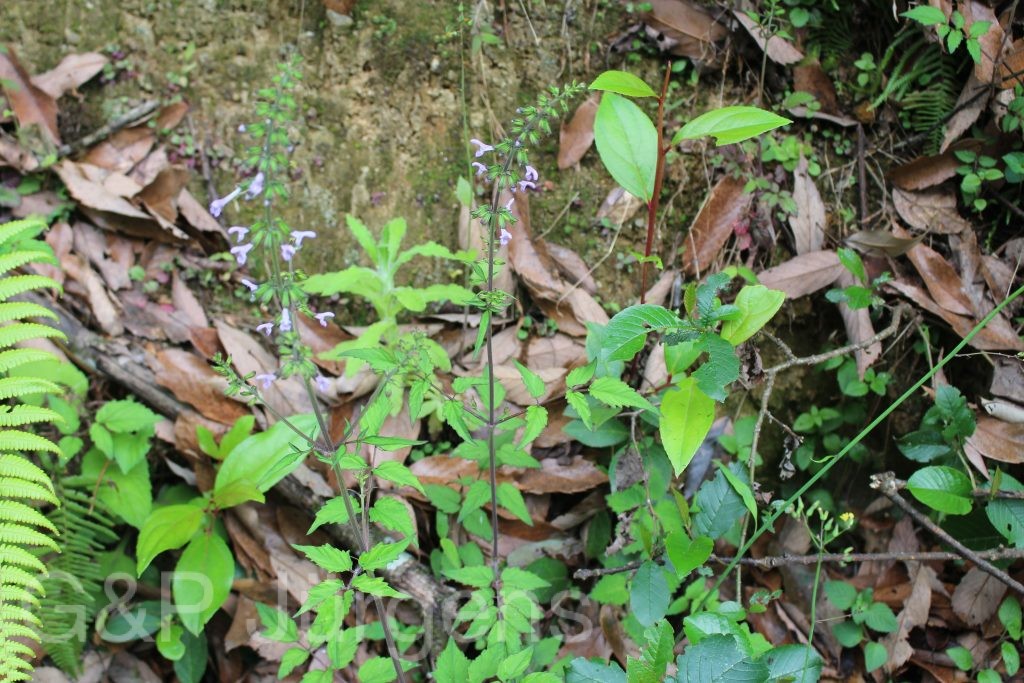
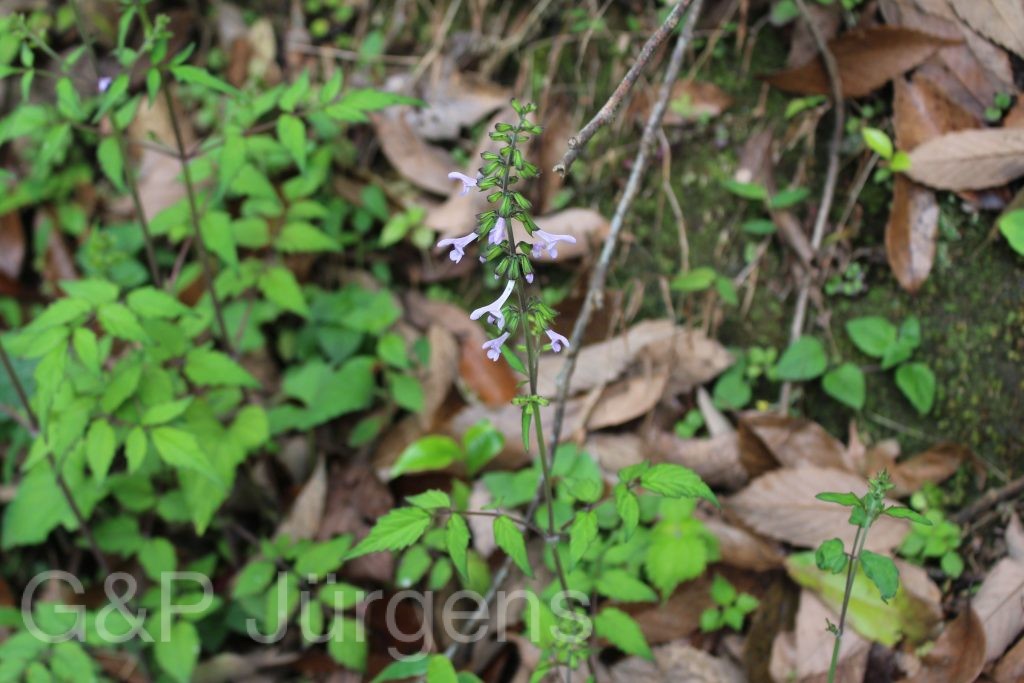
Salvia plectranthoides Griff. is an Eastern Himalayan and Sino-Himalayan element distributed across southern China, Bhutan and northeastern India (gbif_countries: CN, BT, IN), with some 391 georeferenced occurrences recorded in GBIF. It occupies warm-temperate to subtropical montane habitats, favouring open forest margins, shrubby slopes, roadside banks and disturbed grassy ground between roughly 1500 and 2700 m. The photographed plant from Trashigang in eastern Bhutan at 2100 m, flowering in May, typifies its preference for the mid-elevation broad-leaved forest belt of the eastern monsoon ranges, where humid summers and mild winters prevail.

It is an erect perennial herb arising from a woody rootstock, with quadrangular, often purple-tinged and retrorsely pubescent stems. The leaves are opposite, petiolate, ovate to ovate-lanceolate with a cordate to truncate base, an acuminate apex and a crenate-serrate margin, the lamina rugose and pubescent on both surfaces. The inflorescence is a lax terminal panicle of verticillasters, each whorl 2–6-flowered. Flowers bear a campanulate, two-lipped calyx and a bilabiate corolla, pale violet to bluish-purple, the upper lip galeate and the lower lip three-lobed; the two fertile stamens display the characteristic Salvia lever mechanism. The fruit comprises four smooth ovoid nutlets enclosed in the persistent calyx.

Within the large genus Salvia (subfamily Nepetoideae), this species belongs to the East Asian assemblage and the specific epithet alludes to a superficial resemblance to Plectranthus. The staminal lever, a hallmark of the genus, facilitates precise pollen placement on visiting bees and contributes to floral isolation among congeners. It is not of conservation concern given its broad range and tolerance of disturbed habitats.

Author: Griff. · Sources: POWO (Kew), GBIF, Flora of China (Lamiaceae), Flora of Bhutan, A Revision of Salvia (Lamiaceae) and allied genera

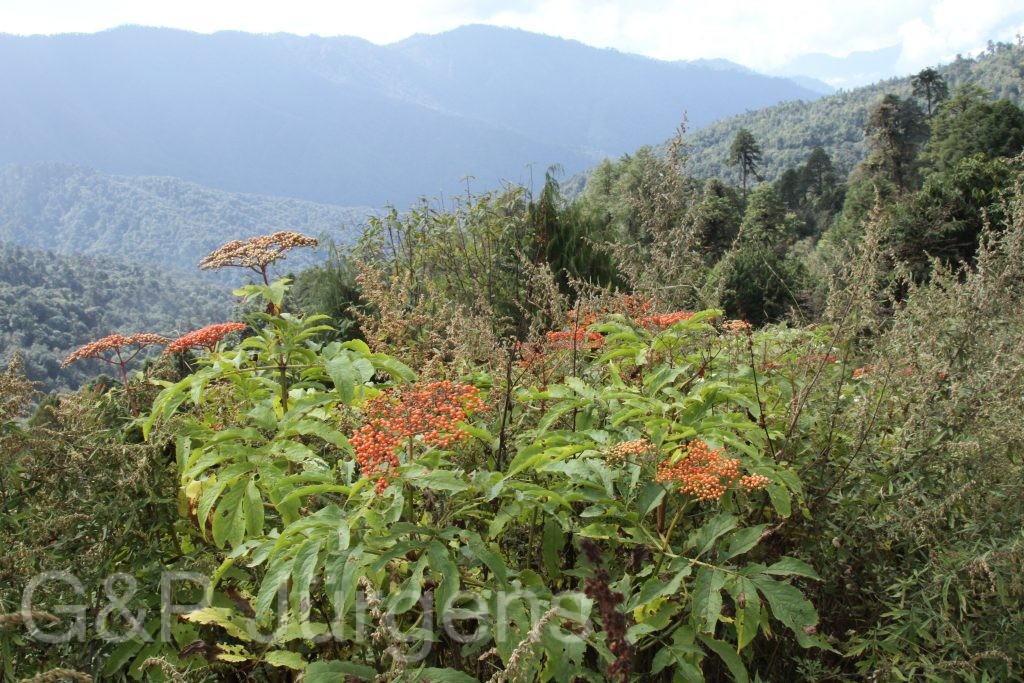
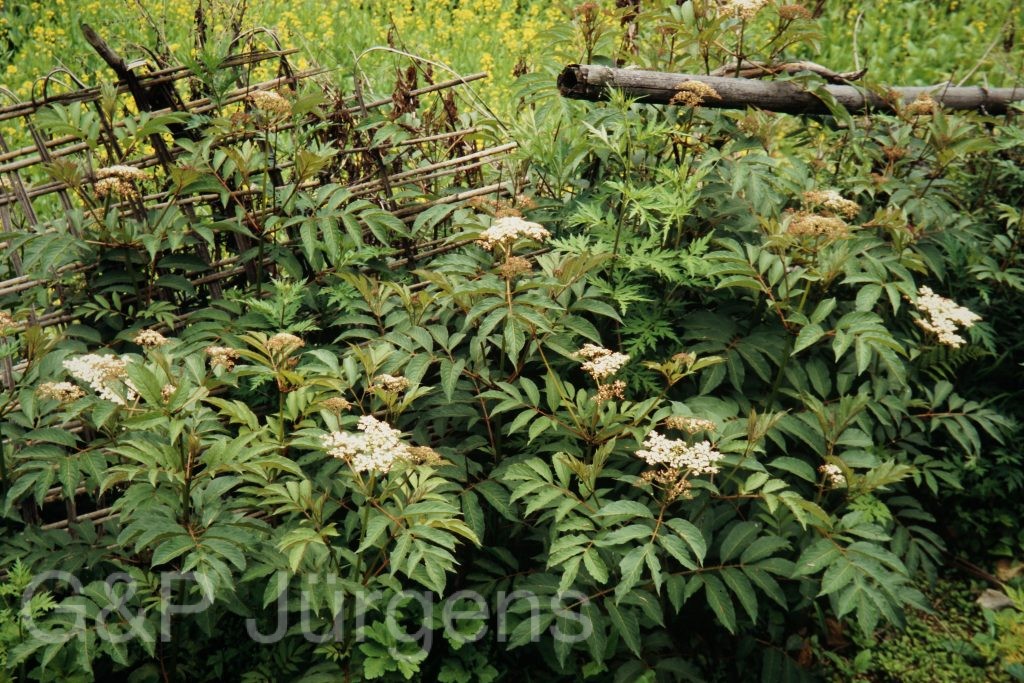
Sambucus adnata

by GP Jürgens

Wall. ex DC.

Bhutan2015 322
Bhutan Trongsa 2100m, October
Bh09 202 P341
Bhutan Thimphu, 2500m June

Description

Sambucus adnata is a herbaceous elder distributed across the Himalaya and western to central China, occurring in Nepal, Bhutan, northern India and widely in China, with its very numerous GBIF records (over 1700) concentrated in this region; records from Germany, the United States, Austria, Japan and elsewhere reflect cultivation and herbarium accessions. It grows in moist forest clearings, on shrubby slopes, along stream banks, roadsides and at forest margins, generally between about 1600 and 3600 m. The photographed plants from Trongsa (2100 m, October) and Thimphu (2500 m, June) in Bhutan illustrate its range through the cool, humid mid-montane belt of the eastern Himalaya.

Unlike its woody relatives, S. adnata is a tall, robust perennial herb dying back to a thick, fleshy, creeping rhizome. The stout, erect, ridged stems bear large, opposite, imparipinnate leaves with several pairs of lanceolate, serrate leaflets, the lowest leaflets often adnate to the rachis or with adnate stipule-like outgrowths, a feature reflected in the epithet. The inflorescence is a large, flat-topped to convex compound cyme of numerous small flowers with a rotate, whitish to pinkish corolla and conspicuous reddish anthers or nectaries. The fruit is a small, globose, red drupe containing a few seed-like stones.

Sambucus, formerly placed in the Caprifoliaceae, is now referred with the genus Adoxa and Viburnum to the Adoxaceae on molecular and morphological grounds. S. adnata is distinctive among elders for its fully herbaceous, rhizomatous habit. It is widespread, common and weedy in disturbed montane habitats, and is of no conservation concern; the plant has a record of local medicinal use for bruises and swellings.

Author: Wall. ex DC. · Sources: POWO (Kew), GBIF, Flora of China, Flora of Bhutan, Annotated Checklist of the Flowering Plants of Nepal, Sambucus (Adoxaceae) monograph

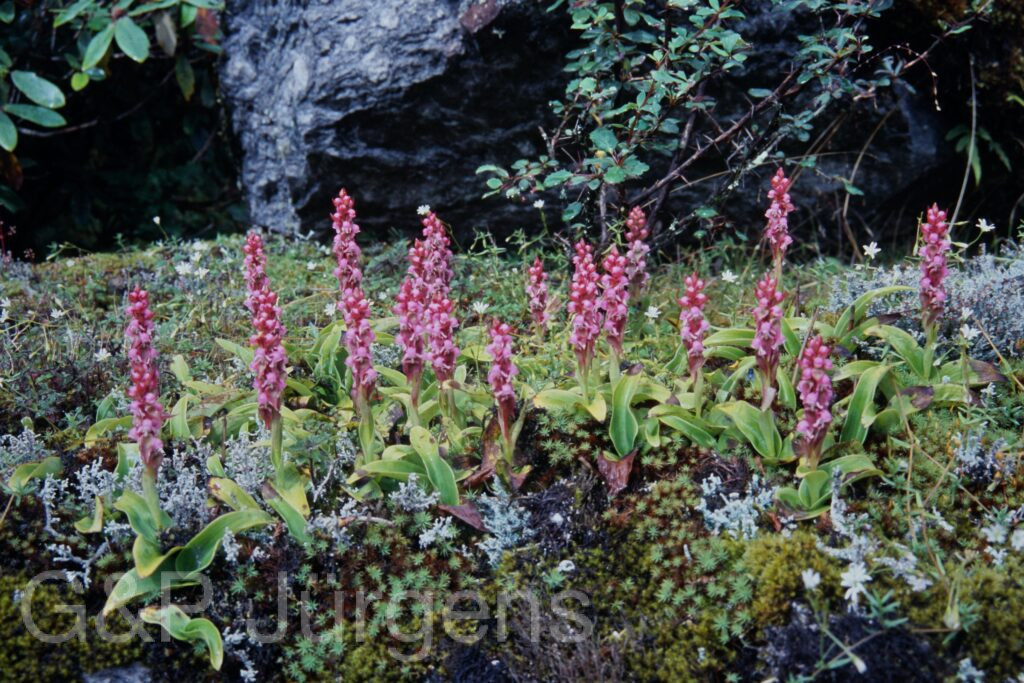
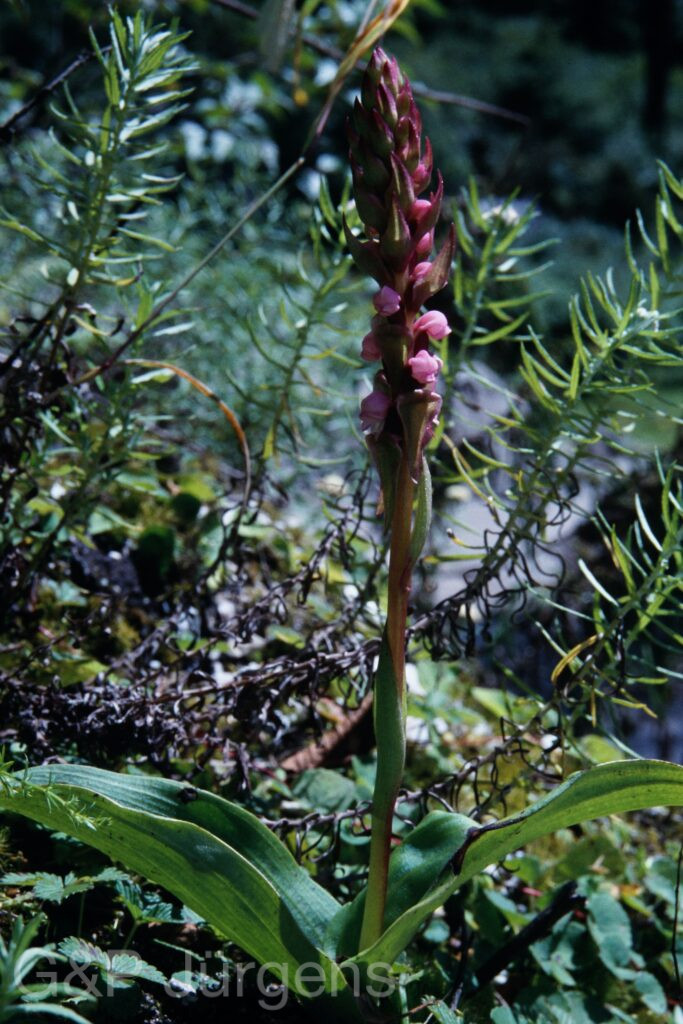
D.Don

Sikkim2003 363 P512
Sikkim Lachen Tista Tal 3450m August
Sikkim2003 364 P511
Sikkim Lachen Tista Tal 3450m August
Nepal 95 100 P178 ergebnis
Nepal Barphak 2450m October
Nepal 95 135 P228 ergebnis
Nepal Barphak 2450m October

Description

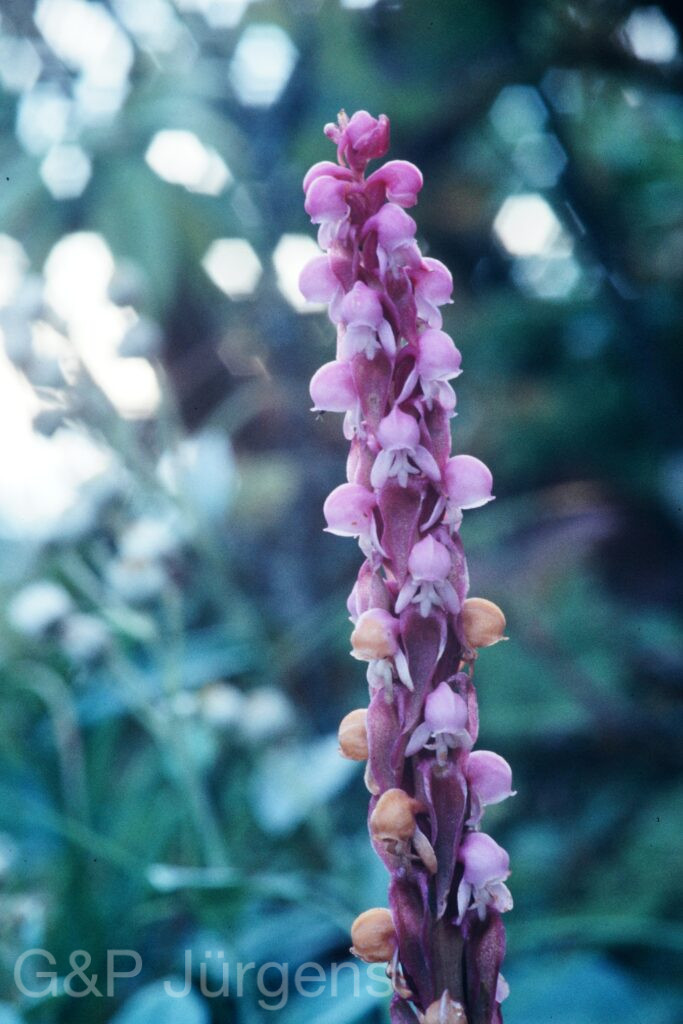
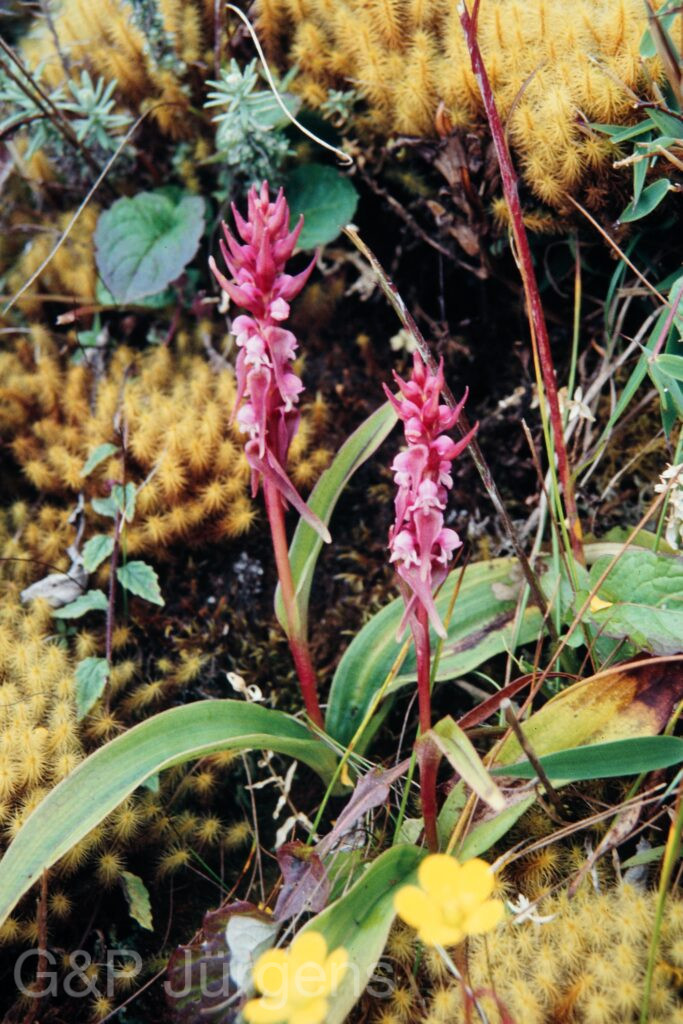
Satyrium nepalense D.Don is a terrestrial orchid of remarkably wide distribution, ranging across the Himalaya and southern Asia from Pakistan, India, Nepal, Bhutan, Sri Lanka and southern China to Myanmar, and extending through tropical and southern Africa; GBIF records nearly 1921 occurrences, reflecting its broad ecological tolerance. It grows in open grassy slopes, meadows, scrub and forest clearings from the submontane belt to high alpine pastures, broadly between about 1500 and 3700 m. The cited material from Lachen in Sikkim at 3450 m in August and Barphak in central Nepal at 2450 m in October illustrates its long flowering season across a wide altitudinal range.

The species is a terrestric herb arising from paired ovoid, tomentose tubers, with an erect leafy stem bearing a few ovate to lanceolate sheathing leaves. The inflorescence is a dense cylindrical raceme of many small, pink to rose-purple, fragrant flowers; each flower is non-resupinate, with the lip uppermost and produced into two slender, parallel spurs at its base, a diagnostic feature of the genus. The fruit is a small dehiscent capsule releasing abundant dust-like seeds.

Satyrium (Orchidaceae, subtribe Satyriinae) is a chiefly African genus with an outlying Asian representation, of which S. nepalense is the most widespread; its twin-spurred, non-resupinate flowers and moth pollination are characteristic. Valued in traditional medicine for its tubers, the species is locally collected, and although still common it warrants monitoring where harvesting pressure is intense.

Author: D.Don · Sources: POWO (Kew), GBIF, Flora of Bhutan, Flora of China, Orchids of Sikkim Himalaya, Pridgeon et al. Genera Orchidacearum

Franch.

Sikkim2003 293 P407
Sikkim Samiti-Lake 4400m, August
Nepal 99 626 ergebnis
West-Nepal Kagmara-La 4900m, July

Description

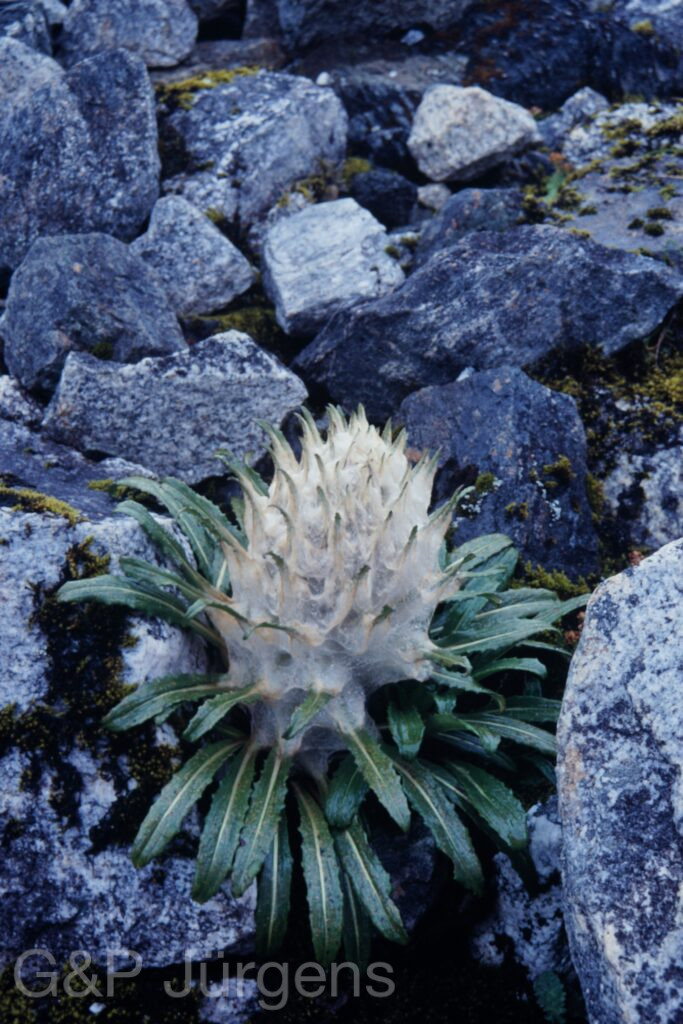
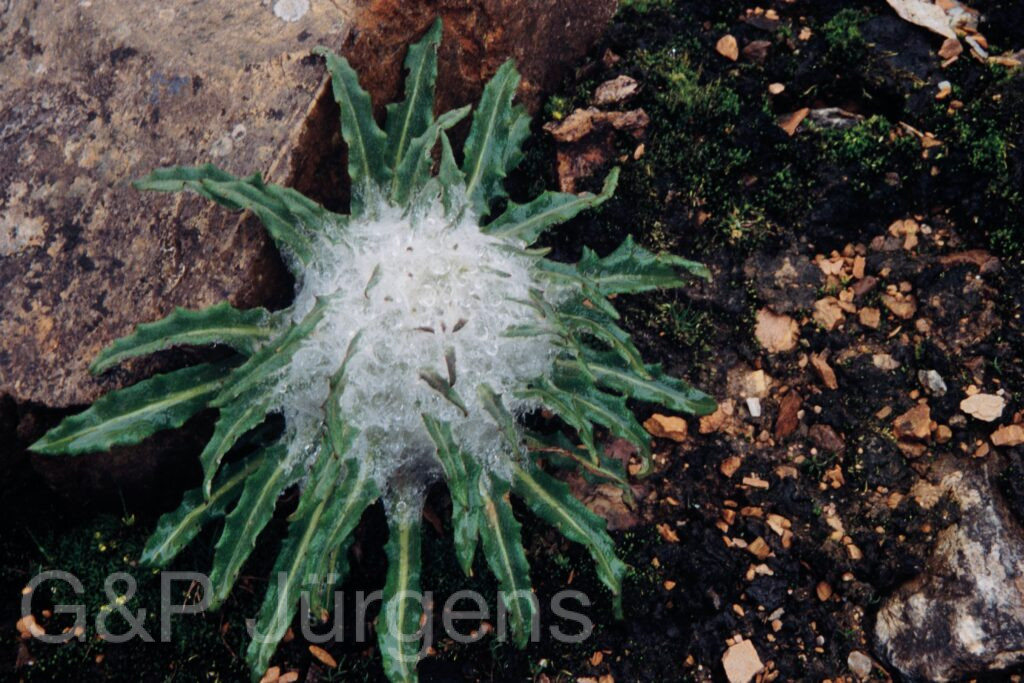
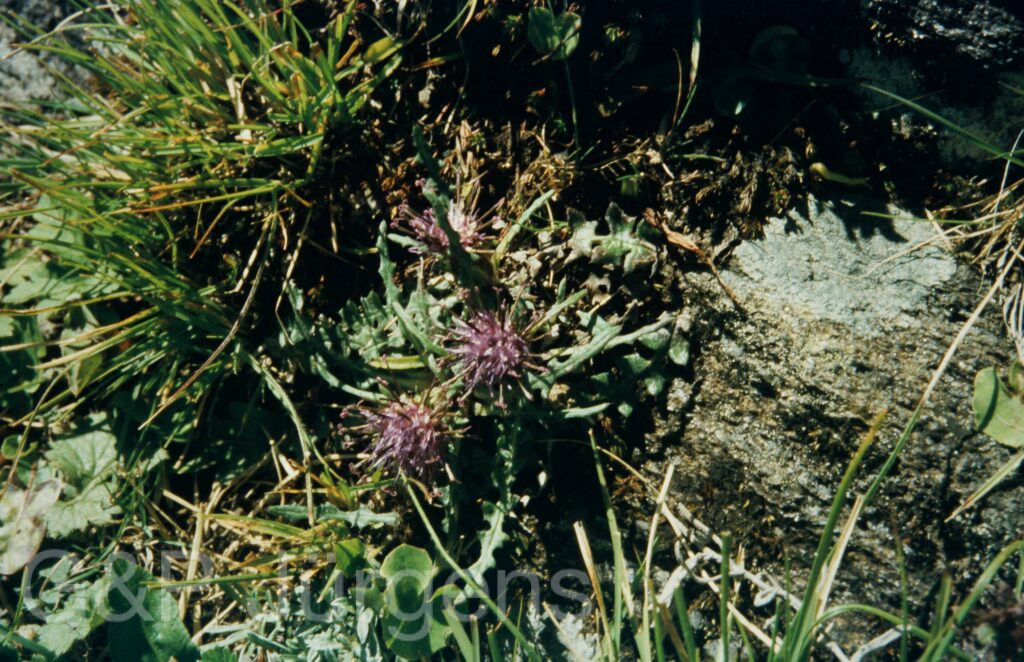
Saussurea gossypiphora, the snowball or cotton-headed saussurea, is a remarkable high-alpine herb of the Himalaya and adjacent Tibetan China, recorded only from China and Nepal in GBIF with a mere 26 occurrences, reflecting both its extreme habitat and its restricted, fragmented distribution. It is among the highest-growing flowering plants, inhabiting open scree, moraine, gravelly alpine slopes and the margins of glacial debris in the upper alpine and subnival zone. The images document it in Sikkim near Samiti Lake at about 4400 m in August and in West Nepal on the Kagmara-La at around 4900 m in July, among the most extreme elevations at which it grows.

It is a stout, dwarf perennial herb forming a dense rosette, in which the upper leaves and the capitula are enveloped in a thick mass of long white woolly hairs forming a globose, cotton-wool-like dome. Beneath this insulating covering the leaves are oblanceolate, deeply toothed and arachnoid-hairy. The numerous small discoid capitula are clustered at the apex within the wool, each with purplish tubular florets and a multiseriate involucre. The fruit is a glabrous achene crowned by a feathery, plumose pappus aiding wind dispersal once the protective wool opens.

The dense lanate indumentum is a celebrated adaptation to the subnival environment, trapping heat, buffering night frost and ultraviolet radiation, and sheltering pollinating insects, paralleling the "glasshouse" and "woolly" growth forms found in other high-elevation Saussurea and Rheum. As a slow-growing, habitat-specialised plant of limited range it is potentially vulnerable to climate warming and collection pressure, though it has not been formally assessed.

Author: Franch. · Sources: POWO (Kew), GBIF, Flora of China, Flora of Nepal, Annotated Checklist of the Flowering Plants of Nepal, Lipschitz Monograph of the Genus Saussurea

(DC.) Sch.Bip.

Garw 2005 104 ergebnis ergebnis
India Garhwal Gaushon 3200m, September
Nepal 95 160 P261 ergebnis
Nepal South of Rupina La October

Description

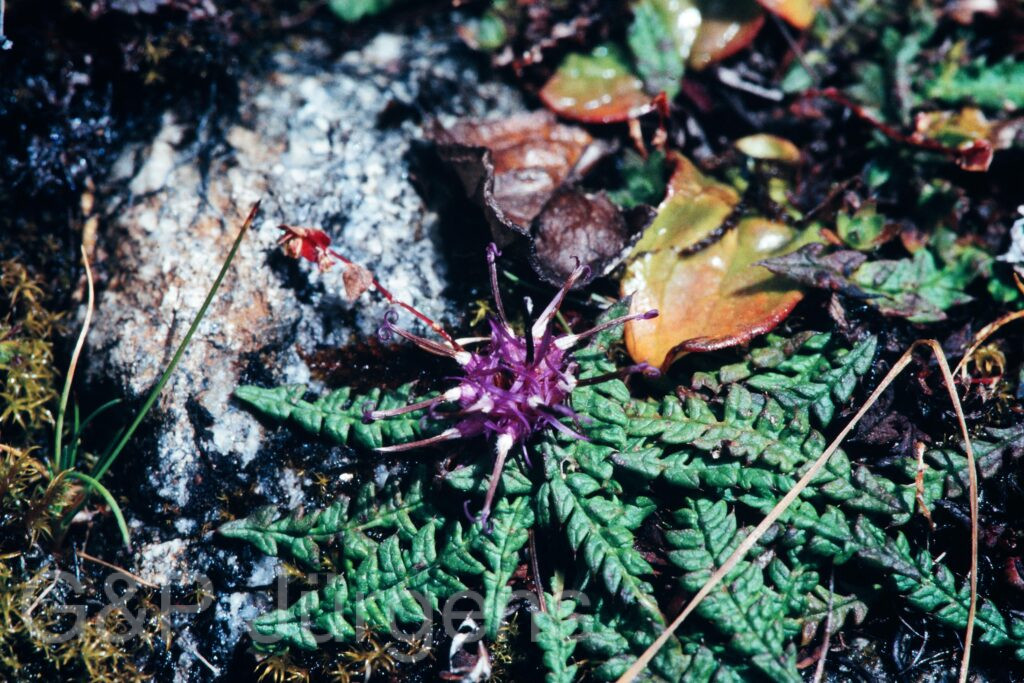
Saussurea leontodontoides is a widespread high-alpine composite of the Himalaya and the Tibetan plateau, distributed through China, India, Nepal, Myanmar and Bhutan and well documented with some 683 GBIF records. It colonises stony alpine slopes, screes, gravelly pastures and open turf, generally between about 3000 and 5000 m. The cited material from Garhwal at Gaushon (3200 m, September) and from south of the Rupina La in Nepal (October) illustrates its broad longitudinal range and its late-summer to autumn flowering, when the rosettes persist on exposed, well-drained substrates baked by intense montane sun and chilled by night frosts.

The plant is a low, more or less stemless perennial herb forming a flat basal rosette from a stout, often woody taproot. The leaves, evoking those of Leontodon as the epithet implies, are oblanceolate in outline and deeply pinnatifid to runcinate, with the surfaces frequently grey-tomentose, and they spread radially against the ground. The capitula are sessile or shortly stalked at the rosette centre, solitary or few, with imbricate, often purple-tinged involucral bracts. The florets are all tubular (discoid) and purple to pink-purple, characteristic of the genus, and the cypselae bear a feathery, plumose pappus aiding wind dispersal.

Saussurea belongs to tribe Cardueae of the Asteraceae, and S. leontodontoides sits among the cushion- and rosette-forming alpine snow-line species adapted to extreme cold, desiccation and high irradiance. Its tap-rooted, ground-hugging habit and woolly indumentum are classic alpine survival traits. Pollination is by alpine insects, and the plumed achenes disperse readily on mountain winds. The species is common and not of conservation concern, though, like related Saussurea, it may be gathered locally for traditional medicinal use.

Author: (DC.) Sch.Bip. · Sources: POWO (Kew), GBIF, Flora of China (Asteraceae), Annotated Checklist of the Flowering Plants of Nepal, Lipschitz Saussurea monograph

(DC.) Edgew.

Sikkim2003 453 G623
Sikkim Chopta Valley 3800m August
Sikkim2003 451 P628
Sikkim Chopta Valley 3800m August

Description

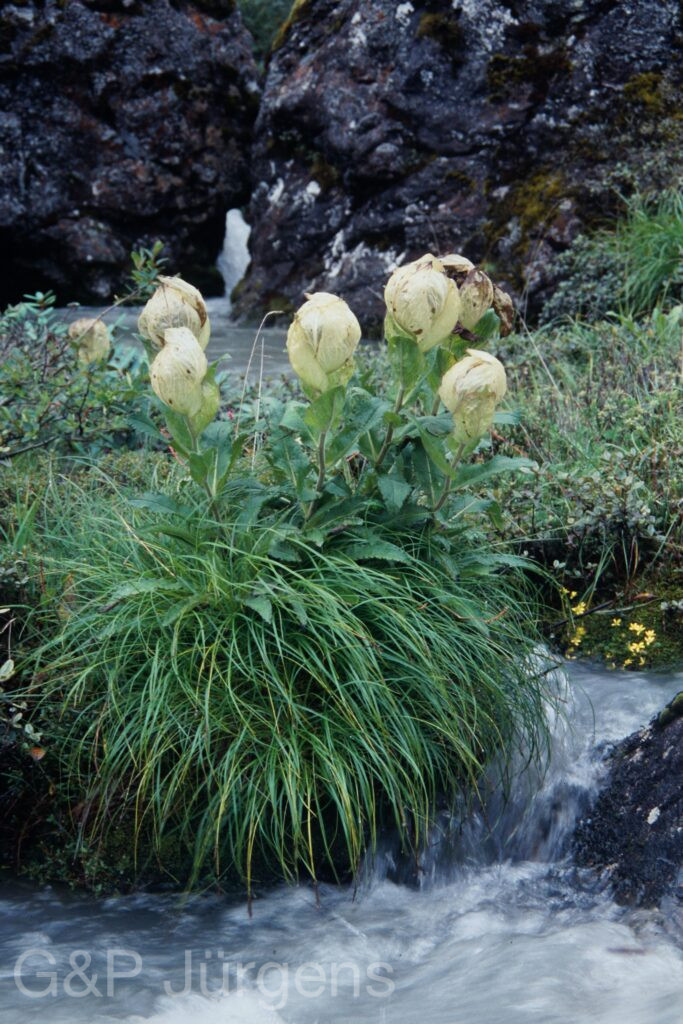
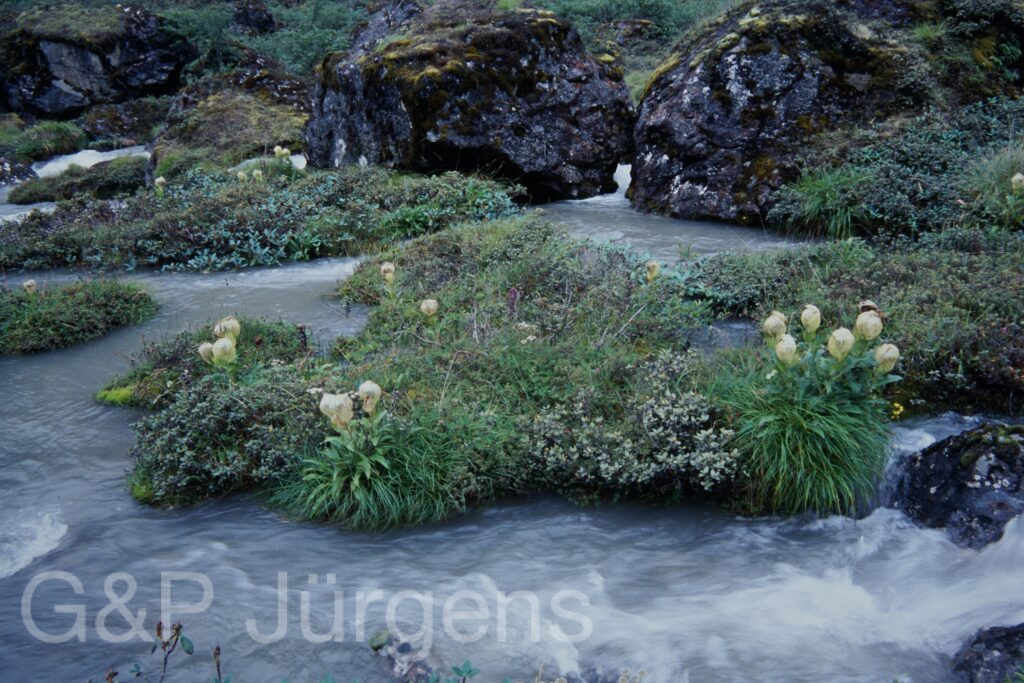
Saussurea obvallata is a high-alpine herb of the Sino-Himalayan region, distributed across the mountains of China, India, Bhutan, Nepal, Myanmar and Pakistan, with some 350 georeferenced records documenting a broadly continuous arc along the Greater Himalaya. It is a plant of open alpine meadows, moraines, scree slopes and rocky pastures, typically between about 3500 and 4800 m. The photographed material from the Chopta Valley in Sikkim at 3800 m, flowering in August, is characteristic of its preferred late-monsoon habitat on moist, well-drained alpine turf where snow lies long into early summer.

The species is a stout perennial arising from a thick taproot, with an erect, simple, leafy stem. The lower leaves are oblanceolate and dentate, narrowing to a winged petiole, while the upper leaves grade into membranous, pale, semi-translucent bracts that arch inward to enclose the inflorescence. These greenish-straw involucral bracts form the conspicuous globose to urn-shaped "lantern" that almost entirely hides the cluster of dark purple capitula within. The florets are tubular and purple-black, and the achenes bear a feathery, plumose pappus that aids wind dispersal.

The enclosing bract chamber is widely interpreted as an adaptation that buffers temperature, protects pollinating insects from cold and wind, and shelters developing florets at extreme elevation, a striking example of greenhouse-like alpine convergence shared with Rheum nobile. Long known in Himalayan tradition as the sacred "Brahma Kamal," the plant is heavily collected for ornament and medicine, and populations near pilgrimage routes face local pressure of regional conservation concern.

Author: (DC.) Edgew. · Sources: POWO (Kew), GBIF, Flora of China, Flora of Bhutan, Annotated Checklist of the Flowering Plants of Nepal, Lipschitz monograph of Saussurea