
Griff.
Description
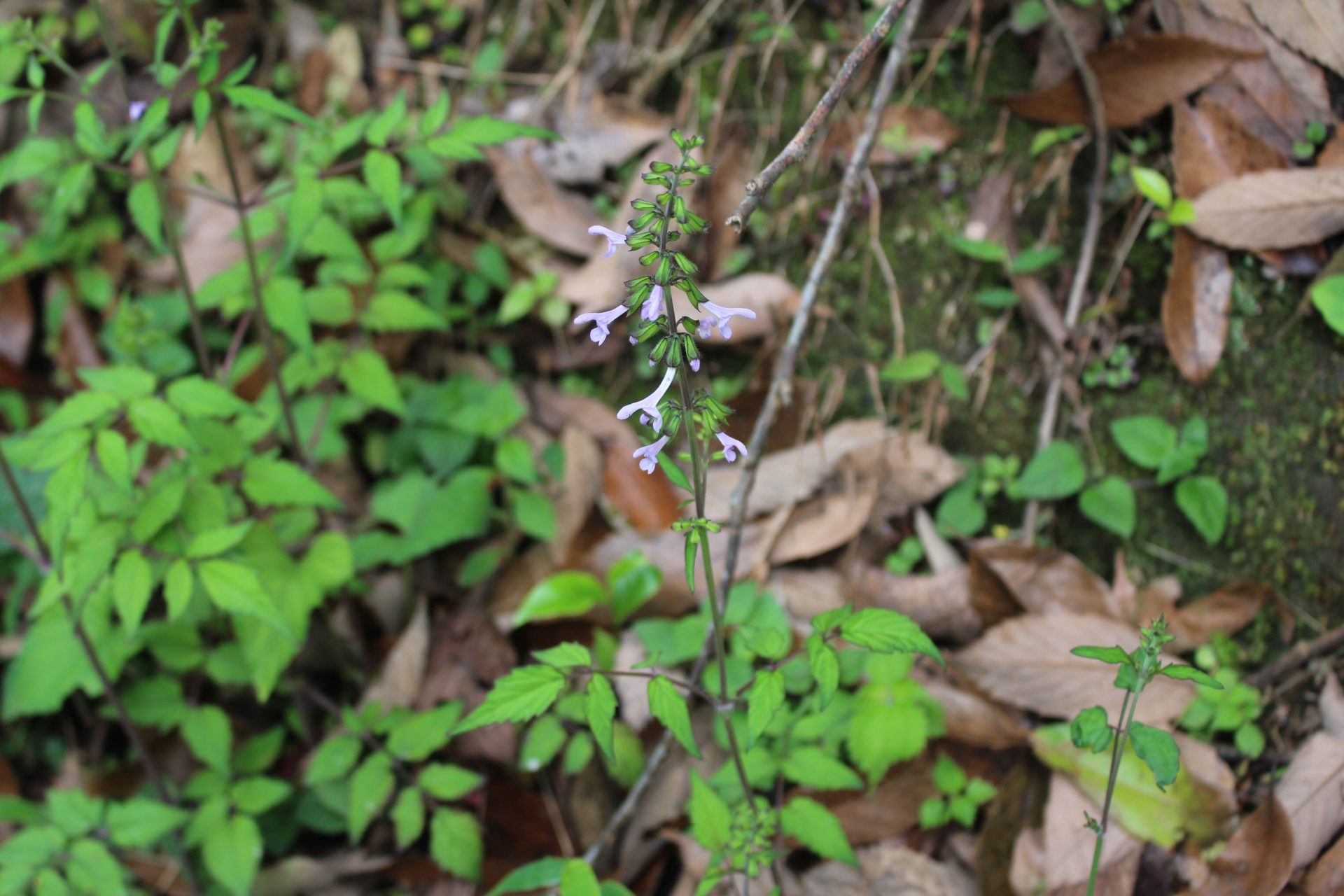
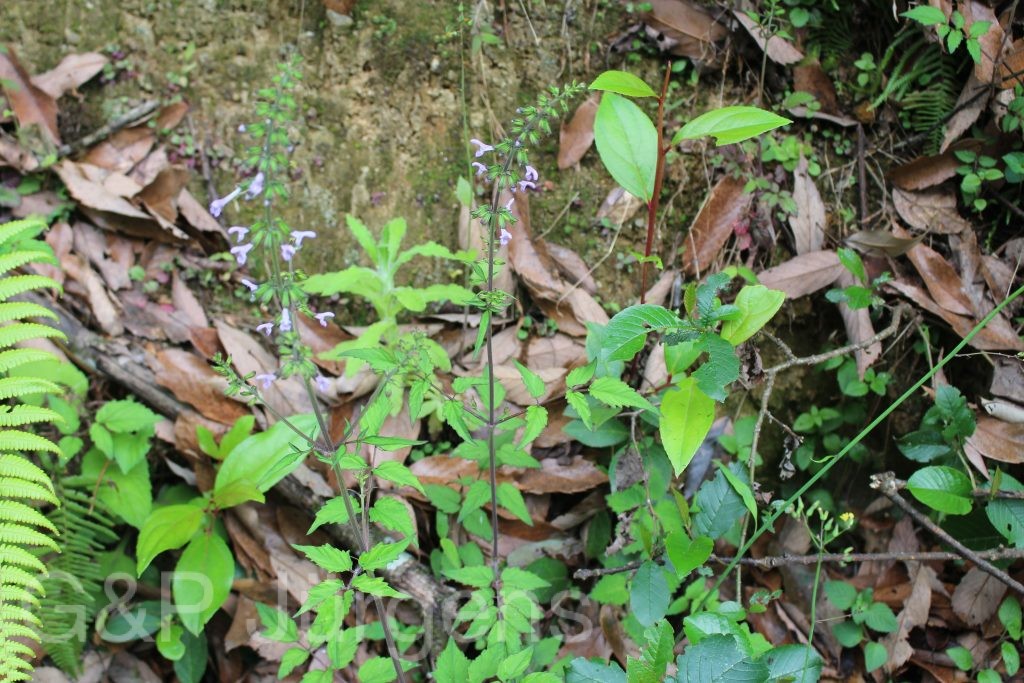
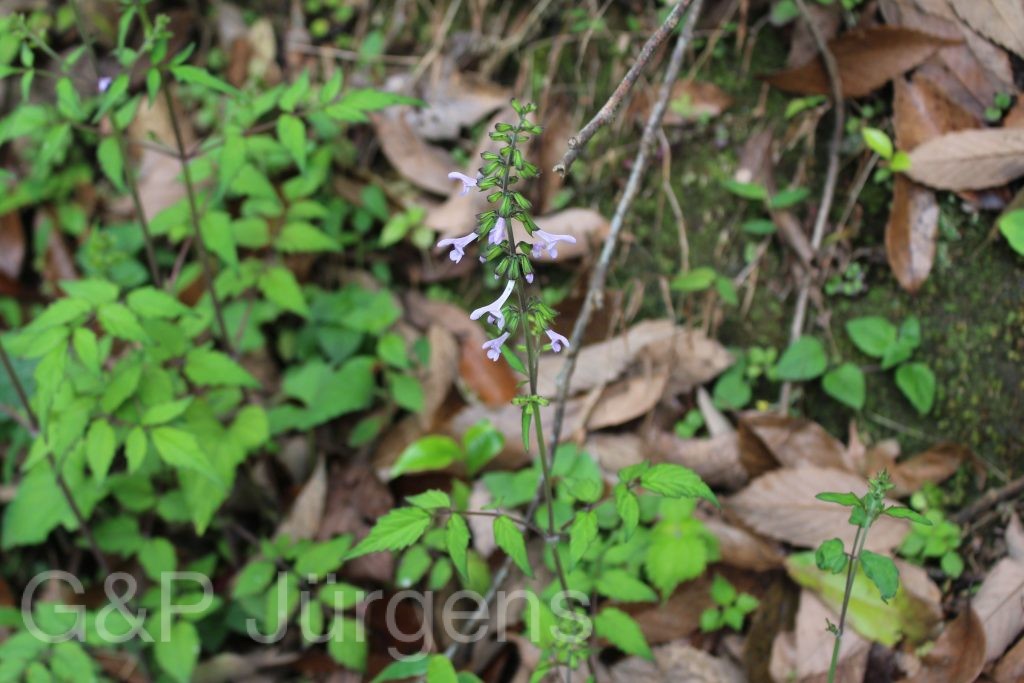
Salvia plectranthoides Griff. is an Eastern Himalayan and Sino-Himalayan element distributed across southern China, Bhutan and northeastern India (gbif_countries: CN, BT, IN), with some 391 georeferenced occurrences recorded in GBIF. It occupies warm-temperate to subtropical montane habitats, favouring open forest margins, shrubby slopes, roadside banks and disturbed grassy ground between roughly 1500 and 2700 m. The photographed plant from Trashigang in eastern Bhutan at 2100 m, flowering in May, typifies its preference for the mid-elevation broad-leaved forest belt of the eastern monsoon ranges, where humid summers and mild winters prevail.
It is an erect perennial herb arising from a woody rootstock, with quadrangular, often purple-tinged and retrorsely pubescent stems. The leaves are opposite, petiolate, ovate to ovate-lanceolate with a cordate to truncate base, an acuminate apex and a crenate-serrate margin, the lamina rugose and pubescent on both surfaces. The inflorescence is a lax terminal panicle of verticillasters, each whorl 2–6-flowered. Flowers bear a campanulate, two-lipped calyx and a bilabiate corolla, pale violet to bluish-purple, the upper lip galeate and the lower lip three-lobed; the two fertile stamens display the characteristic Salvia lever mechanism. The fruit comprises four smooth ovoid nutlets enclosed in the persistent calyx.
Within the large genus Salvia (subfamily Nepetoideae), this species belongs to the East Asian assemblage and the specific epithet alludes to a superficial resemblance to Plectranthus. The staminal lever, a hallmark of the genus, facilitates precise pollen placement on visiting bees and contributes to floral isolation among congeners. It is not of conservation concern given its broad range and tolerance of disturbed habitats.
Author: Griff. · Sources: POWO (Kew), GBIF, Flora of China (Lamiaceae), Flora of Bhutan, A Revision of Salvia (Lamiaceae) and allied genera