
Diels
Description
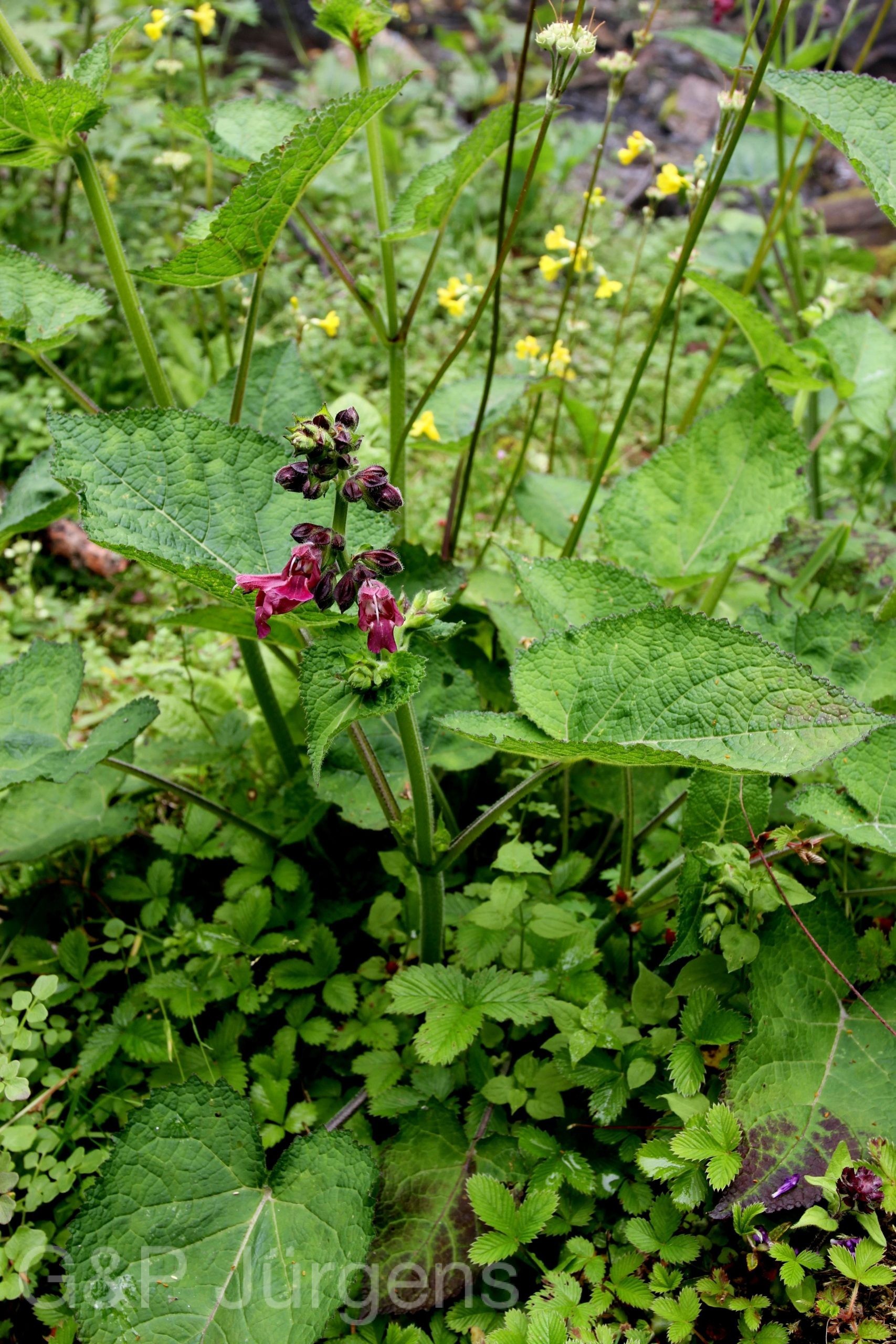
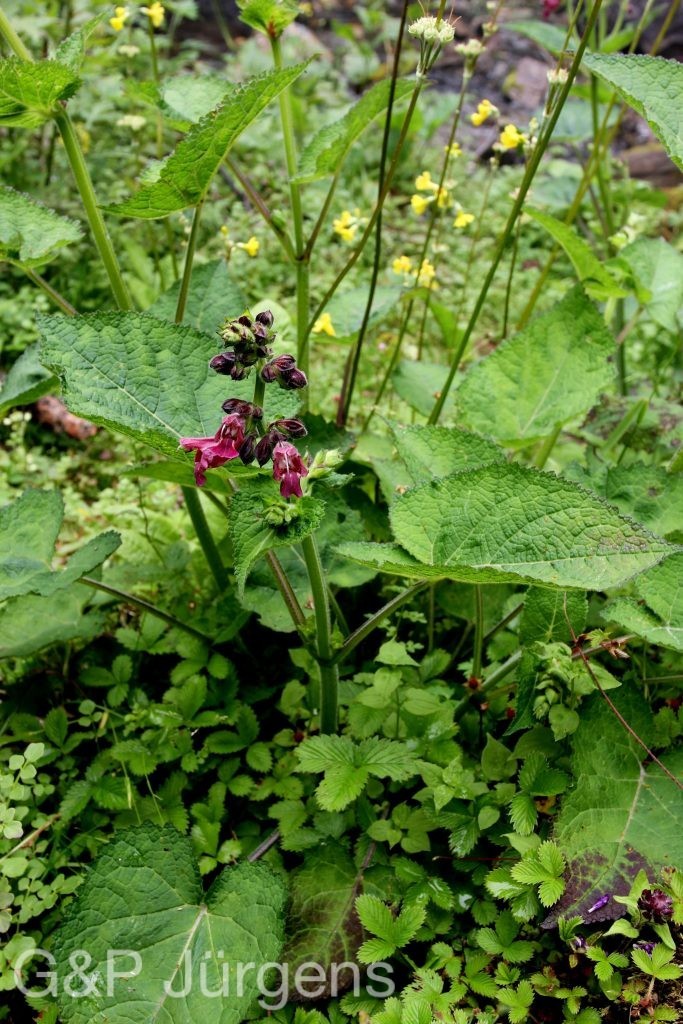
Salvia castanea is a montane perennial distributed across the eastern Himalaya and adjoining south-western China, with georeferenced collections recorded from China, Bhutan, Nepal and India; some 202 occurrences are documented in GBIF. It favours open forest margins, scrub, alpine meadows and grassy slopes between roughly 2700 and 4000 m, the photographed plant having been gathered at Chele-La in Bhutan at about 3400 m in July, at the height of the monsoon flowering season. It thrives on humus-rich, well-drained soils in cool, moist subalpine conditions.
The plant forms an erect, woody-based perennial herb 30-60 cm tall from a stout rootstock, with quadrangular, sparsely pubescent stems. The basal and lower cauline leaves are long-petiolate, the lamina ovate to oblong-lanceolate, cordate or subcordate at the base, crenate-serrate, and rugose with impressed venation. The inflorescence is a lax raceme of distant 2-6-flowered verticillasters; flowers bear a campanulate calyx and a chestnut-brown to dull purplish-red corolla 2.5-3.5 cm long, with an arched, galeate upper lip and the characteristic Salvia lever mechanism of two stamens. The fruit comprises four smooth nutlets enclosed in the persistent calyx.
The distinctive chestnut corolla colour, reflected in the epithet castanea, separates this species from most Himalayan sages, which tend toward blue or violet flowers. As a member of the large genus Salvia (Lamiaceae, subfamily Nepetoideae), it relies on long-tongued bees and occasionally birds for pollination via the staminal lever. Though not formally assessed as threatened, it is locally frequent within its restricted Sino-Himalayan range, where habitat continuity in subalpine meadows underpins its persistence.
Author: Diels · Sources: POWO (Kew), GBIF, Flora of China, Flora of Bhutan, A Revision of Salvia (Lamiaceae) in Asia