
Lindl.
Description
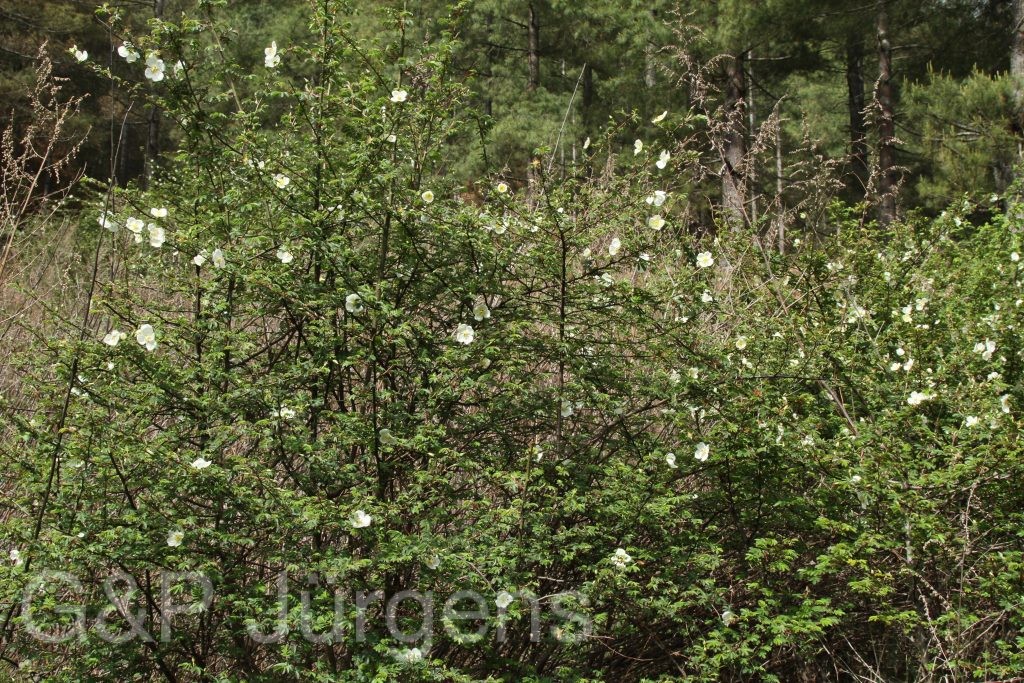
Rosa sericea is a Sino-Himalayan rose native to China, Nepal, India, Bhutan and Myanmar, widely grown and naturalised so that GBIF's roughly 2293 occurrences include records from Britain, Germany, the Netherlands, North America and beyond. In the wild it is a shrub of the temperate and subalpine zones, occupying open slopes, forest margins, scrub and ravine sides generally between about 2200 and 4000 m. The cited material from the Yatong-La in Bhutan at 2800 m and from the Milka-Danda in eastern Nepal at 2600 m, both flowering in May, is typical of its preference for sunny, well-drained montane situations where it blooms in late spring.
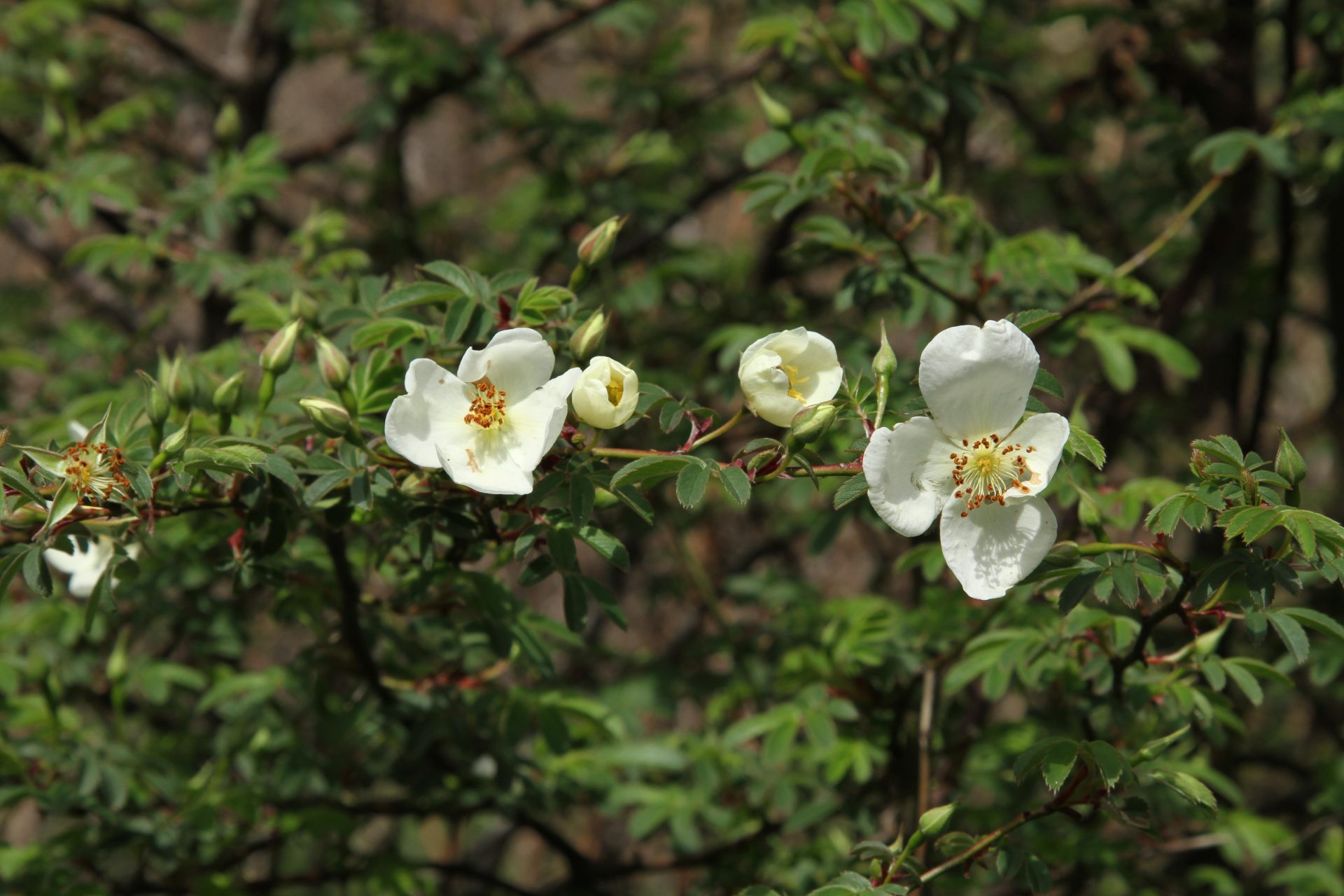
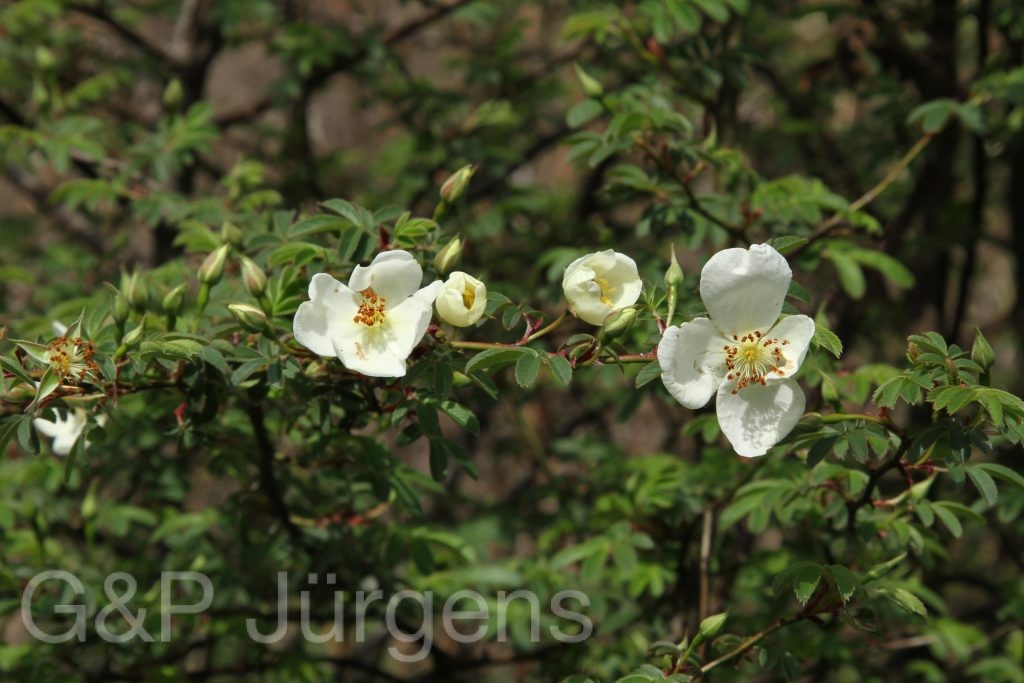
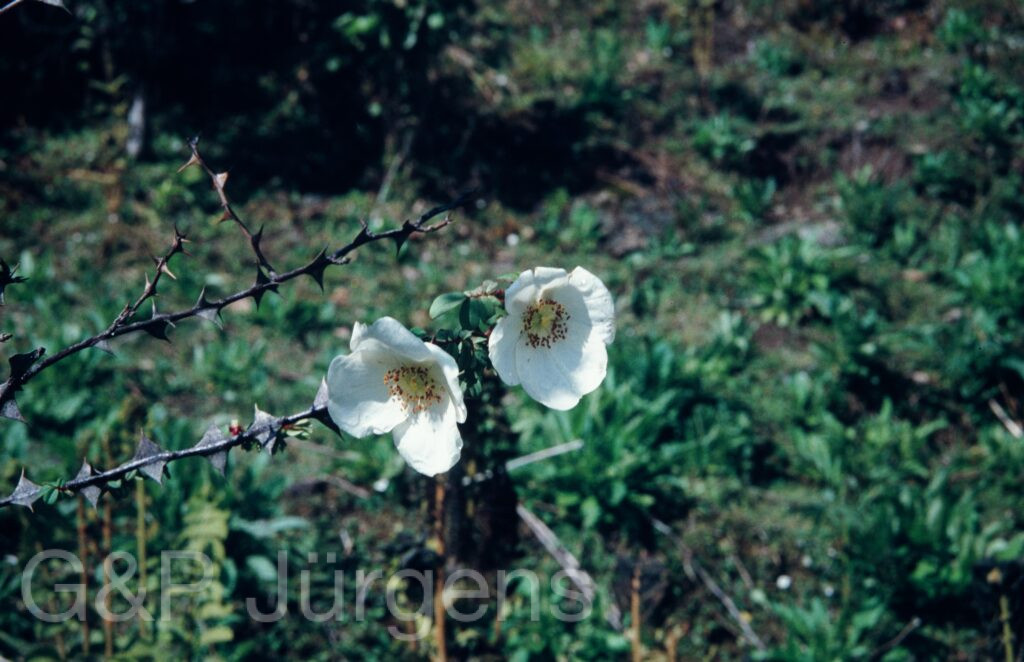
It is an erect, much-branched deciduous shrub whose stout stems bear paired prickles, in some forms broadly flattened and translucent. The leaves are imparipinnate with several pairs of small, oblong, serrate leaflets, the lower surface frequently silky-pubescent, a feature reflected in the epithet sericea. The flowers are solitary and famously distinctive in being four-petalled rather than five-petalled, a rarity in the genus, the petals white to creamy and broadly obcordate, surrounding numerous yellow stamens. After flowering the receptacle develops into a fleshy, pear-shaped to subglobose hip, often red and in some variants bearing conspicuously swollen yellow or red pedicels.
Rosa sericea is placed in section Pimpinellifoliae, the group of small-leaved, prickly Asian and European roses, and is closely allied to R. omeiensis, with which it intergrades; the form with enlarged winged prickles is much prized horticulturally as 'Pteracantha'. Its four-merous corolla is of botanical interest as an exception within a genus otherwise rigidly pentamerous. The bright hips provide autumn forage for birds and small mammals, aiding seed dispersal, and the species is in no way threatened, being common in the wild and long established in cultivation.
Author: Lindl. · Sources: POWO (Kew), GBIF, Flora of China, Flora of Bhutan, Flora of British India, Krüssmann 'Roses' and the genus Rosa monographic literature