
Lindl.
Description
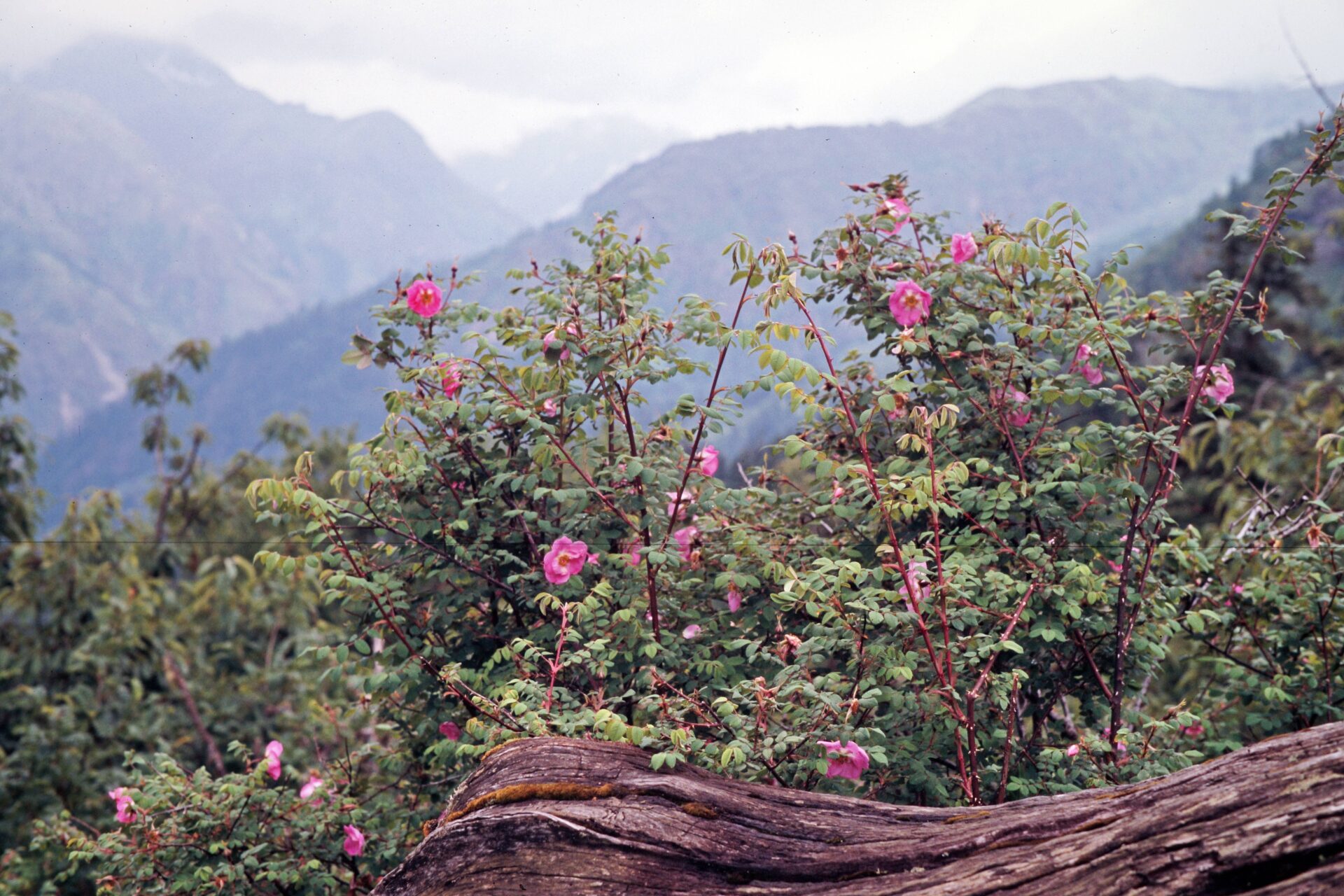
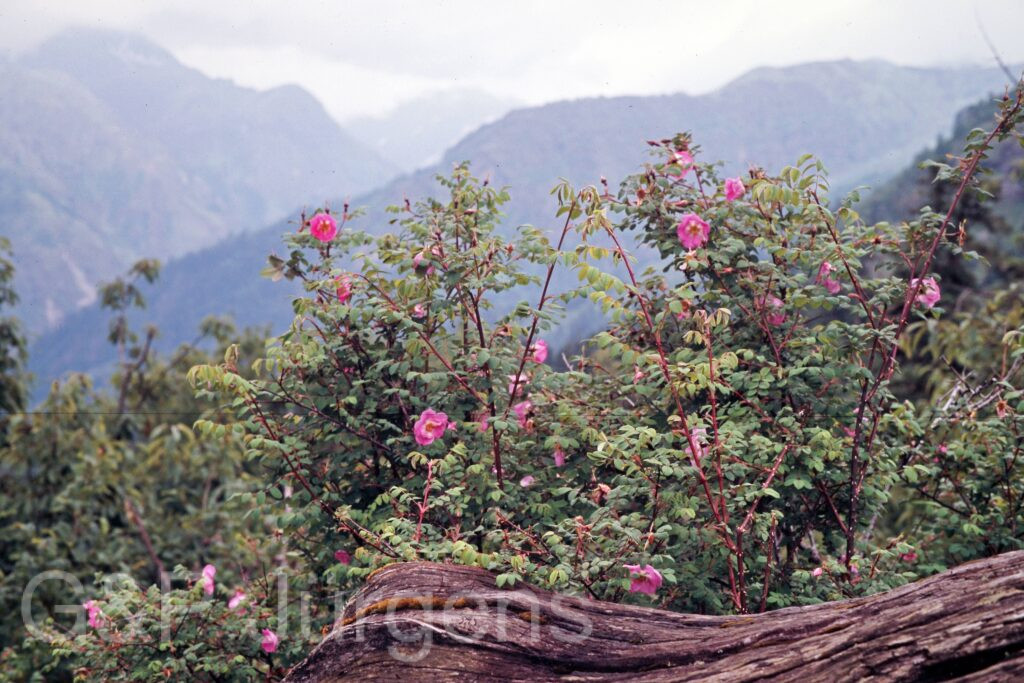
Rosa macrophylla is a wild rose of the Himalaya and southwestern China, recorded from China, India, Nepal, Bhutan, Pakistan and Afghanistan, with numerous cultivated occurrences across Europe and North America; GBIF holds around 1506 georeferenced records. It grows in open temperate to subalpine habitats: forest margins, scrub, shrubberies, riverbanks and grassy slopes, typically between about 2400 and 3700 m. The photographed plant from Barron Chatti in Garhwal, India, at 2450 m in June is characteristic of these mid-montane Himalayan settings, where it flowers in early summer along trails and woodland edges.
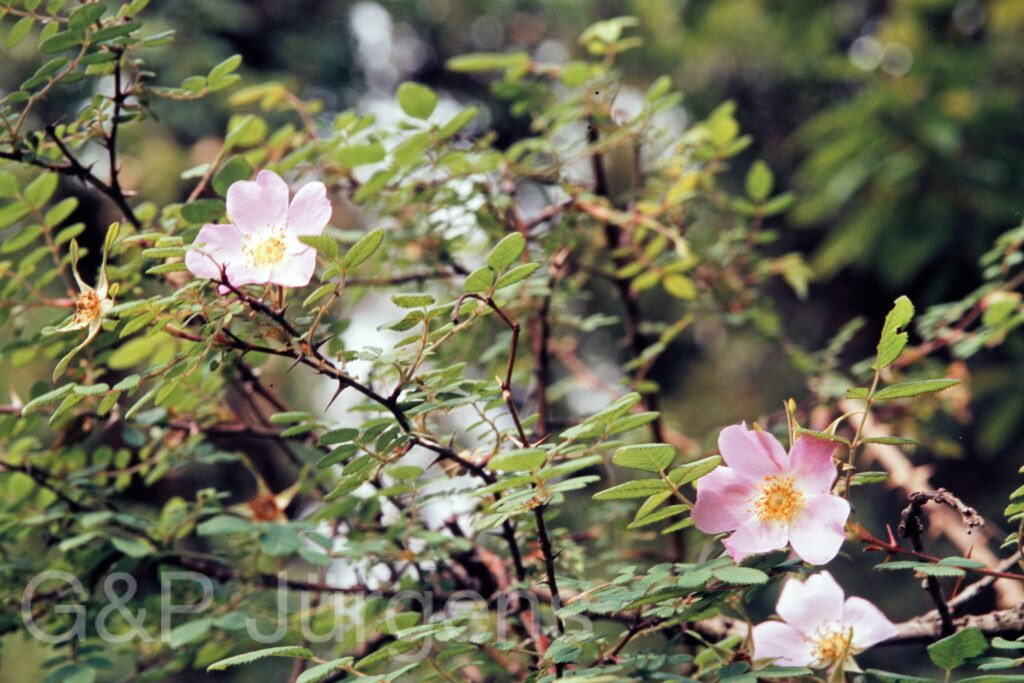
It is a deciduous shrub 2–4 m tall with stout, erect to arching reddish-purple stems that are usually sparsely armed with straight or slightly curved prickles, sometimes nearly unarmed. The leaves are imparipinnate with usually 7–11 leaflets, these elliptic to oblong, serrate, glaucous or pubescent beneath. The flowers are large, solitary or in few-flowered corymbs, with five broad bright deep-pink to crimson petals, numerous stamens, and a glandular-setose pedicel and receptacle. The fruit is a large, conspicuous, flask-shaped to oblong-ellipsoid scarlet-red hip crowned by the persistent erect sepals, enclosing numerous bony achenes.
Described by Lindley, Rosa macrophylla belongs to section Cinnamomeae, the cinnamon roses, and is distinguished by its large flowers, large persistent-sepalled hips and big leaflets, having contributed to garden roses and several named cultivars and hybrids. The showy hips are dispersed by birds and mammals, while the flowers attract bees and other insects. Locally common across its Himalayan range and widely cultivated, it is of no conservation concern.
Author: Lindl. · Sources: POWO (Kew), GBIF, Flora of China Vol. 9, Flora of Bhutan Vol. 1, Flora of Nepal, The Genus Rosa (Phillips & Rix)