
(Hook.f.) Hand.-Mazz.
Description
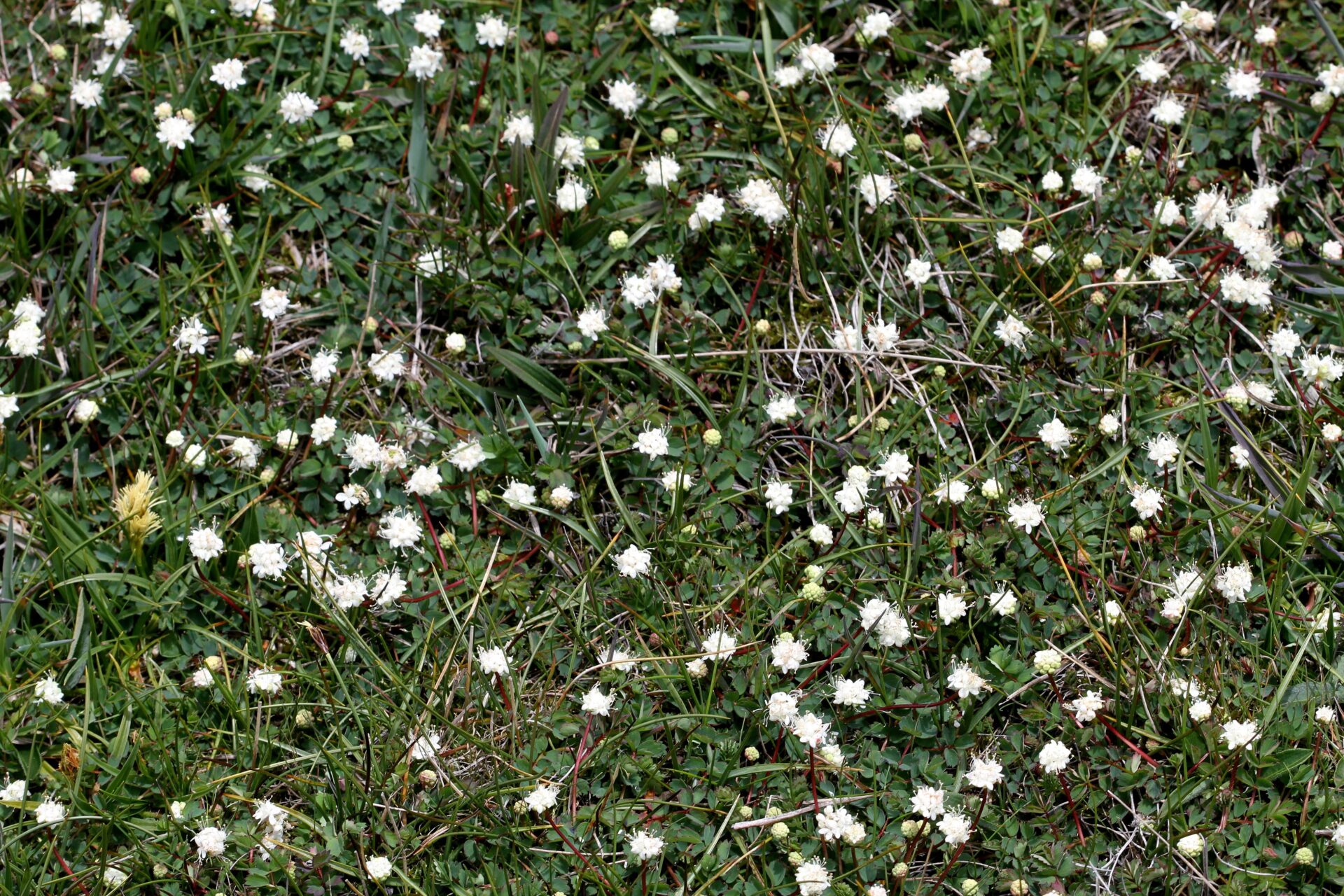
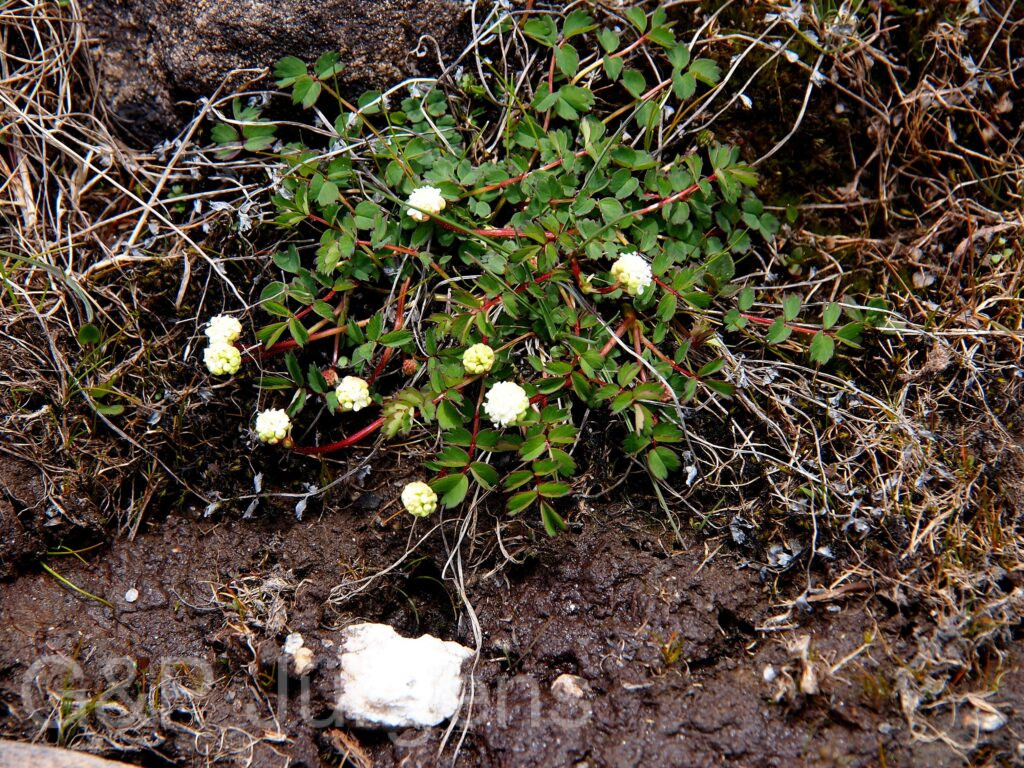
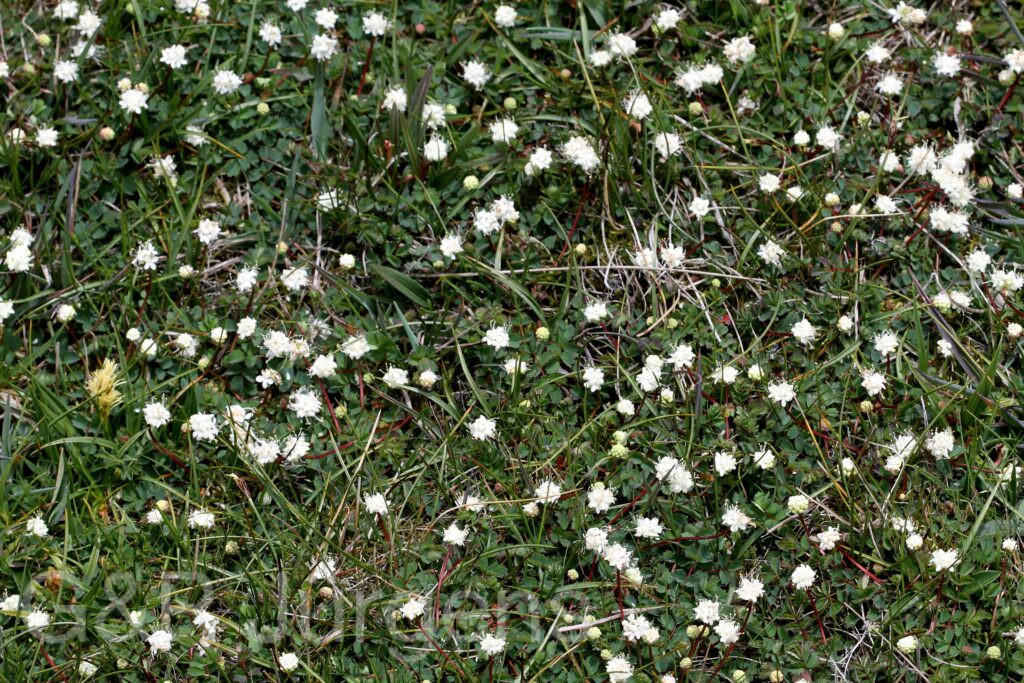
Sanguisorba filiformis (Hook.f.) Hand.-Mazz. is a slender, alpine perennial herb of the Rosaceae, distributed across the eastern and central Himalaya and the mountains of southwestern and central China. Its documented range encompasses China, Bhutan, India and the Korean Peninsula, with GBIF recording 471 georeferenced occurrences. The species is a characteristic component of moist alpine meadows, streamsides, seepage slopes and open turf at elevations of roughly 3,500–4,800 m. The photographed material from the Chopta valley in Sikkim at 4,100 m in June represents typical high-altitude habitat, where the plant flowers as the snow-melt season advances.
The plant develops a short, woody rhizome bearing a basal rosette of pinnately compound leaves; the leaflets are small, ovate to oblong, crenate-serrate at the margins, glabrous and somewhat glaucous beneath. From this rosette arise wiry, filiform, often nodding flowering stems that give the species its epithet. The inflorescence is a small, loose, capitate to shortly oblong head of few flowers; unlike most Sanguisorba the perianth is comparatively reduced, with whitish to pale pink segments, four stamens, and exserted filaments. The fruit is a small dry achene enclosed within the persistent hypanthium.
Formerly placed in the segregate genus Poterium and the subgenus Sanguisorbella, the taxon is sometimes treated under Sanguisorba filiformis as the accepted name, reflecting its distinctive reduced floral architecture. Its restriction to high-altitude wetland and meadow habitats makes it a useful indicator of intact alpine hydrology, and like many Himalayan turf species it may be sensitive to grazing pressure and climate-driven shifts in snowpack.
Author: (Hook.f.) Hand.-Mazz. · Sources: POWO (Kew), GBIF, Flora of China Vol. 9, Flora of Bhutan Vol. 2, Nordborg: Sanguisorba — a monographic study (1966)