
Wall. ex Lindl.
Description
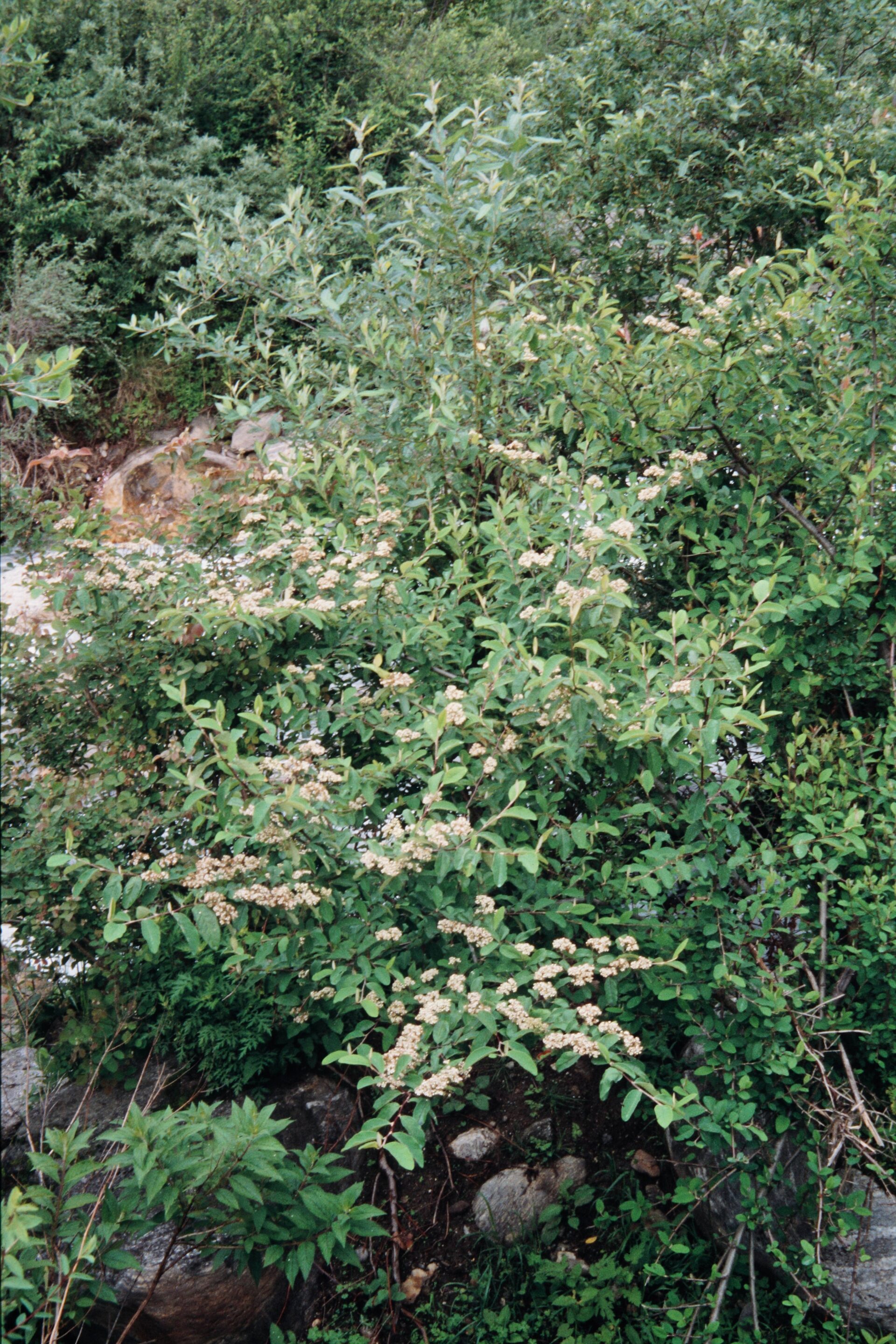
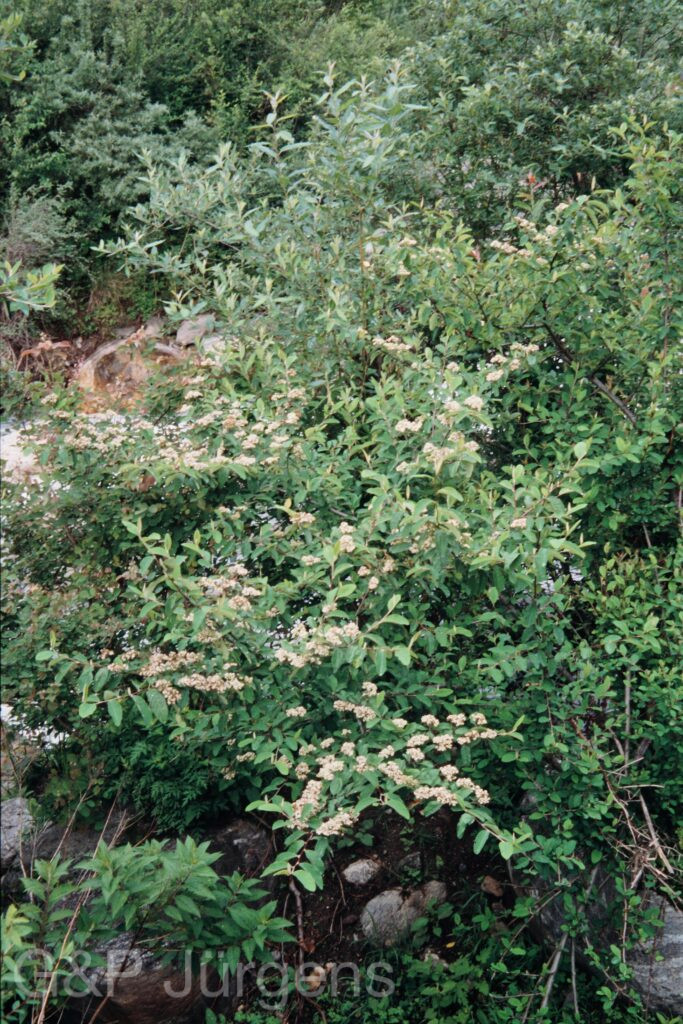
Cotoneaster frigidus is a large shrub or small tree native to the Himalaya, recorded from Nepal, India, Bhutan and China, with its many further records from Britain, New Zealand, the United States and continental Europe reflecting its long history in cultivation and naturalisation. In the wild it occupies open slopes, forest margins, scrub and ravines in the temperate Himalayan zone, typically between about 1800 and 3000 m. The plant photographed at Hurikot in West Nepal at 2700 m in June is a representative wild occurrence in the moist temperate hill forest belt, flowering as the summer monsoon approaches.
It is a vigorous, semi-deciduous shrub or small tree with arching, spreading branches and grey-brown bark. The leaves are alternate, elliptic to oblong, dark green and glabrous above and grey-tomentose beneath when young, with an entire margin and a short petiole. The small, white, five-petalled flowers are borne in dense, many-flowered, flat-topped corymbs and have numerous stamens and a half-inferior ovary. The fruit is a small, bright red, globose pome borne in heavy, conspicuous clusters that persist into winter, each containing usually two pyrenes.
Cotoneaster is a taxonomically intricate genus of the Rosaceae, subfamily Amygdaloideae (Maloideae), in which apomixis and hybridisation have generated many microspecies. Cotoneaster frigidus is among the largest-growing and most ornamental species and is the parent of widely grown garden hybrids such as the 'Cornubia' group; in parts of Britain and elsewhere it has escaped to become naturalised. Its abundant red pomes are eaten and dispersed by birds, while the nectar-rich flowers attract bees, making it ecologically valuable in both its native and introduced ranges.
Author: Wall. ex Lindl. · Sources: POWO (Kew), GBIF, Flora of China, Annotated Checklist of the Flowering Plants of Nepal, Flora of Bhutan, Fryer & Hylmö's Cotoneasters monograph