
(Bertol.) Paule & Soják
Description
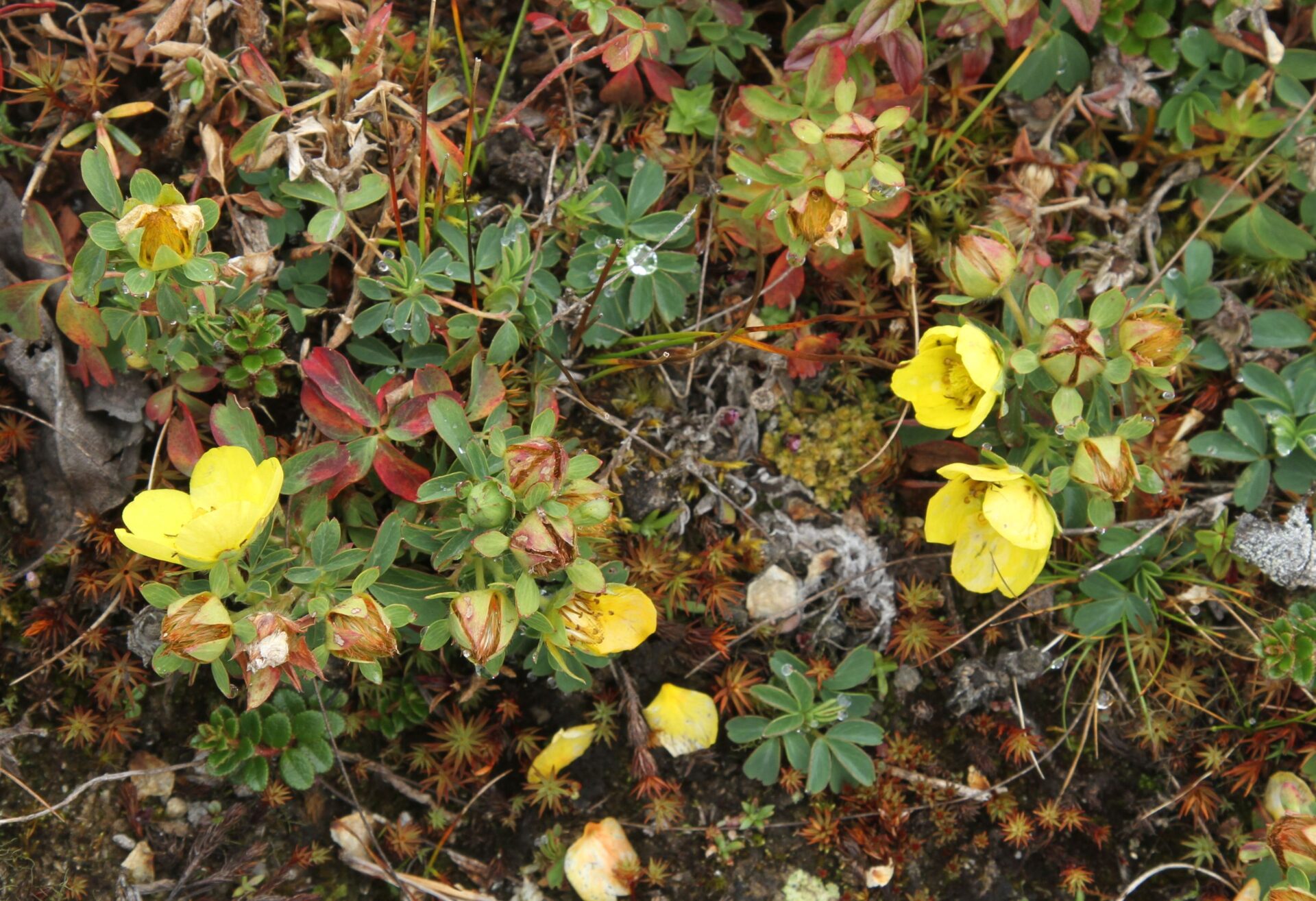
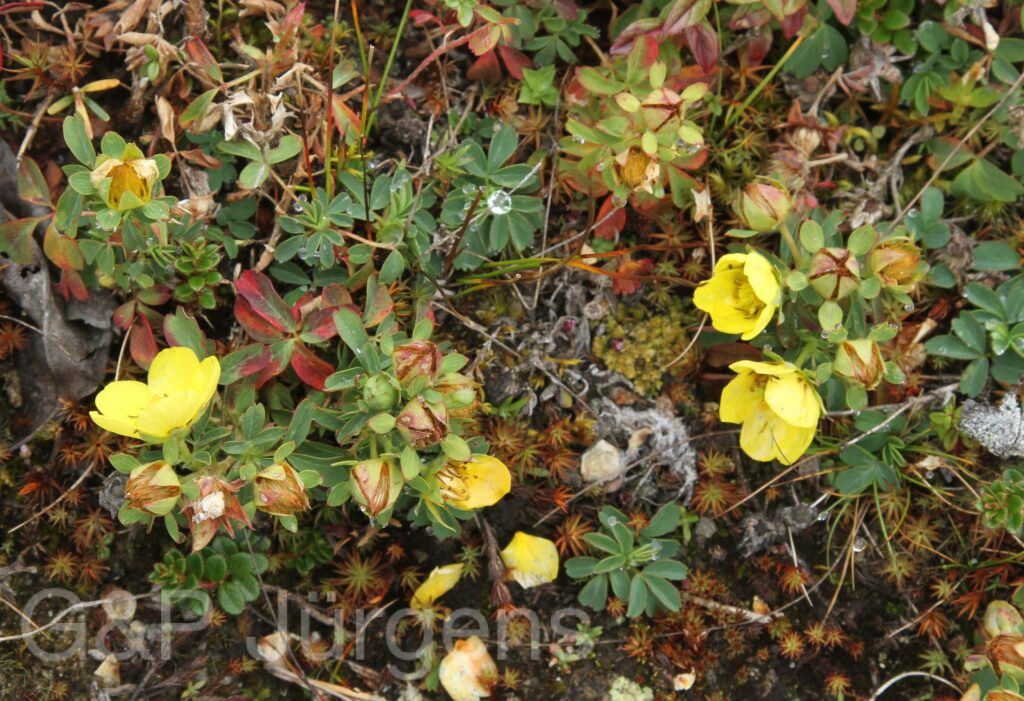
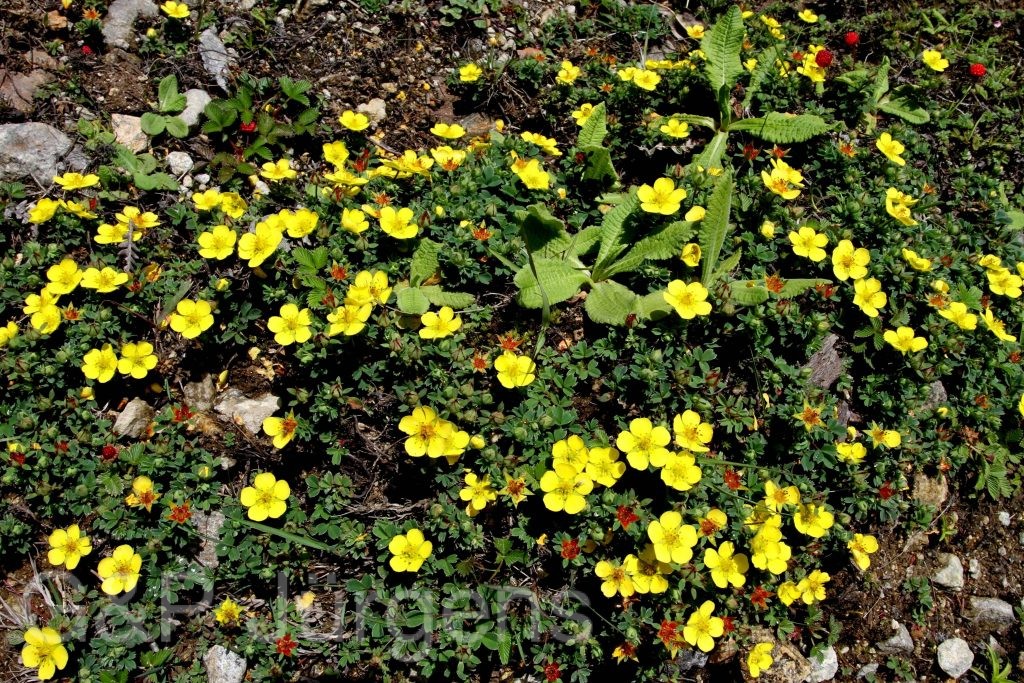
Sibbaldia cuneifolia (Bertol.) Paule & Soják is a cushion-forming perennial of the high Himalaya and adjoining Central Asian mountains, distributed across India, Nepal, Bhutan, Pakistan and SW China, with additional records from temperate Europe (Austria, Switzerland, Britain, Sweden, Finland) reflecting both a wide alpine range and naturalised or rock-garden occurrences; the roughly 184 georeferenced collections concentrate in the Sino-Himalayan alpine belt. It inhabits open stony slopes, screes, glacial moraine, alpine turf and the margins of late-melting snowbeds. The species ascends to considerable altitude, as the photographed material from the Tumching-La pass in Bhutan at about 4,000 m in October and from Lachen at 2,800 m in June illustrates, spanning the subalpine to high-alpine zones.
It is a low, mat-forming herb arising from a woody, branched rootstock and slender creeping rhizome. The leaves are trifoliolate and basal in dense rosettes, the obovate-cuneate leaflets wedge-shaped at the base and conspicuously few-toothed at the truncate apex, often somewhat fleshy and sparsely strigose. Short cymes bear small flowers with five green sepals alternating with smaller epicalyx segments, and five minute yellow petals shorter than the calyx; stamens are typically five, and the carpels few, ripening into small dry achenes seated on a dry receptacle.
The genus Sibbaldia is closely allied to Potentilla, into which it is sometimes merged, and the basionym links this taxon to the Potentilla ambigua complex referenced on the source page. Adapted to short growing seasons, intense insolation and frost, these prostrate cushions exemplify alpine stress tolerance. The species is widespread and not considered threatened, though high-altitude populations are sensitive to grazing pressure and climate-driven upslope shifts.
Author: (Bertol.) Paule & Soják · Sources: POWO (Kew), Flora of China Vol. 9, Flora of Bhutan Vol. 1, GBIF, Soják: Notes on Potentilla and allied genera (2008)