
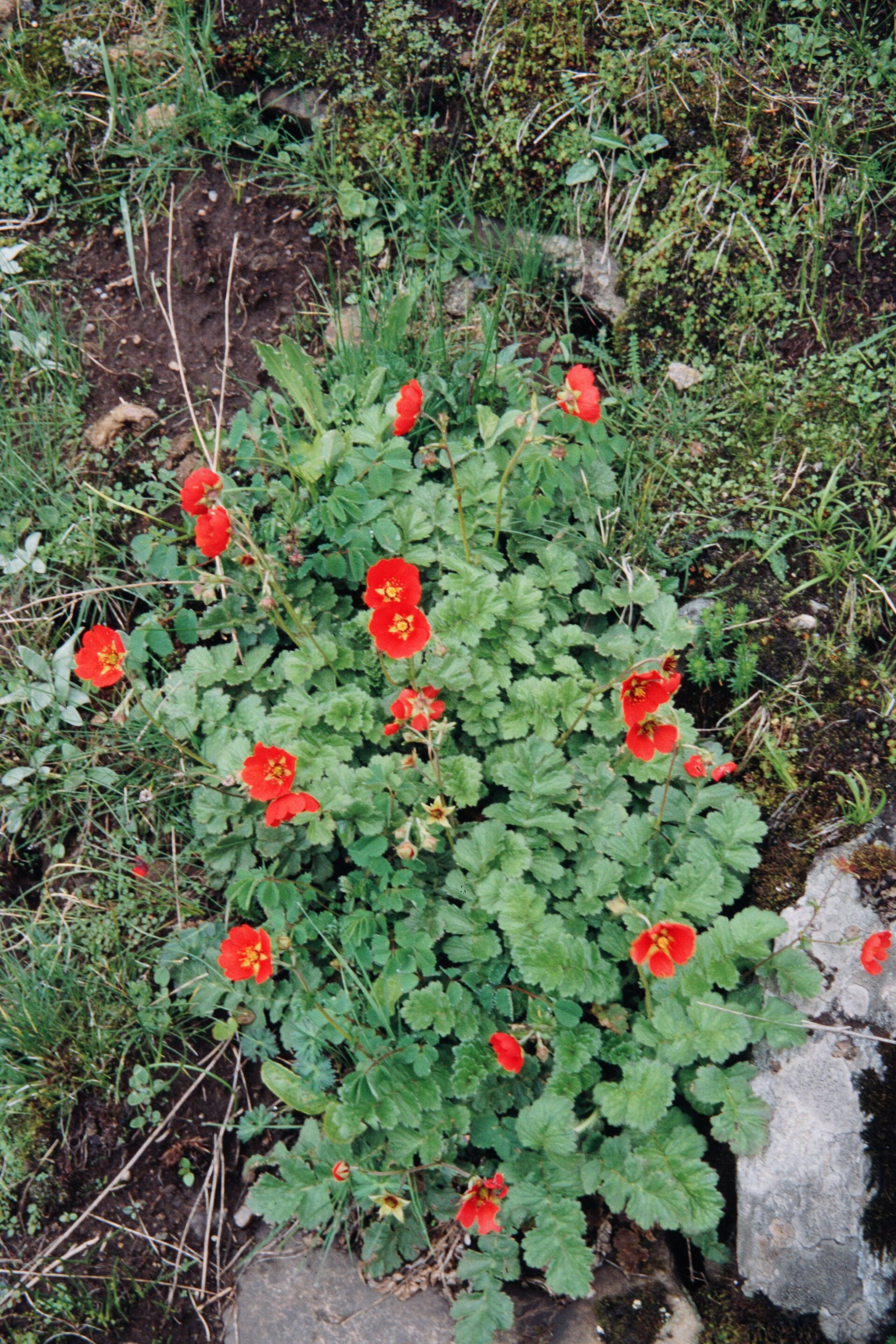
Wall ex. G.Don.
Description
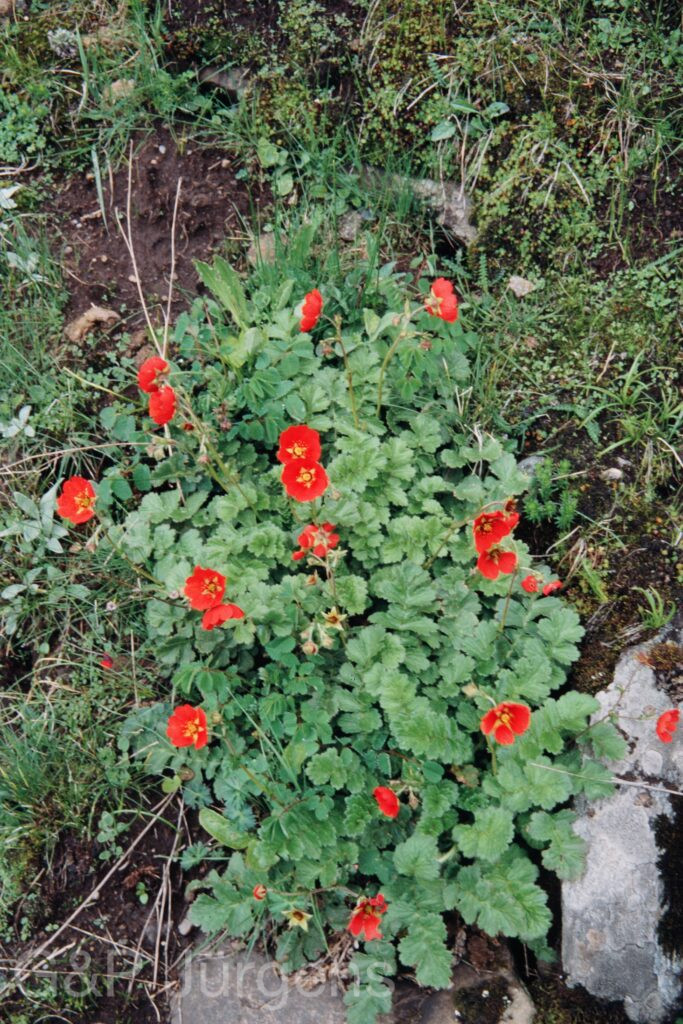
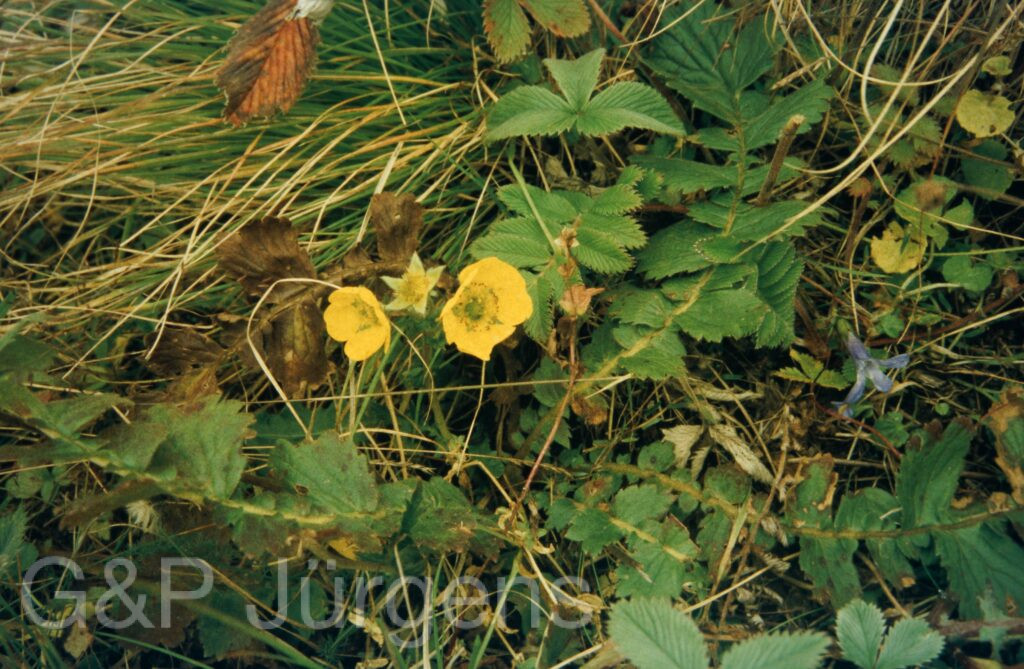
Geum elatum is a perennial herb of the high Himalaya, distributed along the alpine and subalpine belt from Pakistan and Afghanistan eastward through India, Nepal, Bhutan and south-western China. GBIF aggregates some 366 occurrences, densest in Nepal and the Indian Himalaya. It grows in open alpine meadows, moist grassy slopes, rocky ledges and snow-melt flushes, typically between about 3000 and 4500 m. The populations imaged in West-Nepal at Churta-Khola (3600-3800 m, June) and in Indian Garhwal at Patanathi (3800 m, September) typify its preference for cool, humid turf near the upper limit of vegetation.
The plant arises from a stout, scaly rhizome bearing a basal rosette of pinnate to lyrate-pinnatifid leaves, the terminal leaflet conspicuously enlarged, reniform to orbicular and crenate-lobed. Flowering stems are erect to ascending, simple or sparingly branched, bearing one to several comparatively large, nodding to suberect golden-yellow flowers. These have five spreading obovate petals, five reflexed sepals alternating with small epicalyx segments, numerous stamens, and many free carpels on a hairy receptacle. In fruit the styles elongate into persistent, often plumose or hooked awns, forming a globose head of achenes adapted to epizoochorous dispersal.
Geum elatum belongs to a Himalayan complex sometimes segregated under Acomastylis or Sieversia, and varieties (notably var. leiocarpum) have been recognised on indumentum and style characters. Its nodding, large-flowered habit and montane ecology distinguish it from lowland Geum species. As a widespread, locally common alpine perennial it is of no immediate conservation concern, though potentially sensitive to grazing and climate-driven upward shifts of the alpine zone.
Author: Wall ex. G.Don. · Sources: POWO (Kew), GBIF, Flora of China, Flora of Pakistan, Flora of Bhutan, Annotated Checklist of the Flowering Plants of Nepal, monograph of the genus Geum (Gajewski)