Caryophyllaceae

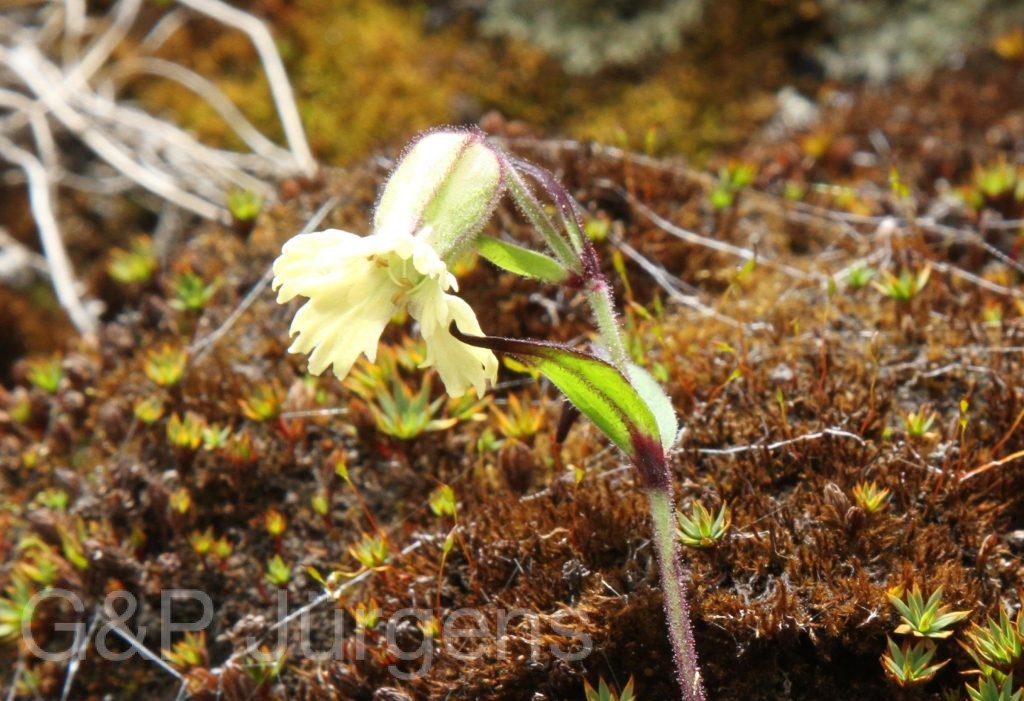
(Rohrb.) Majumdar

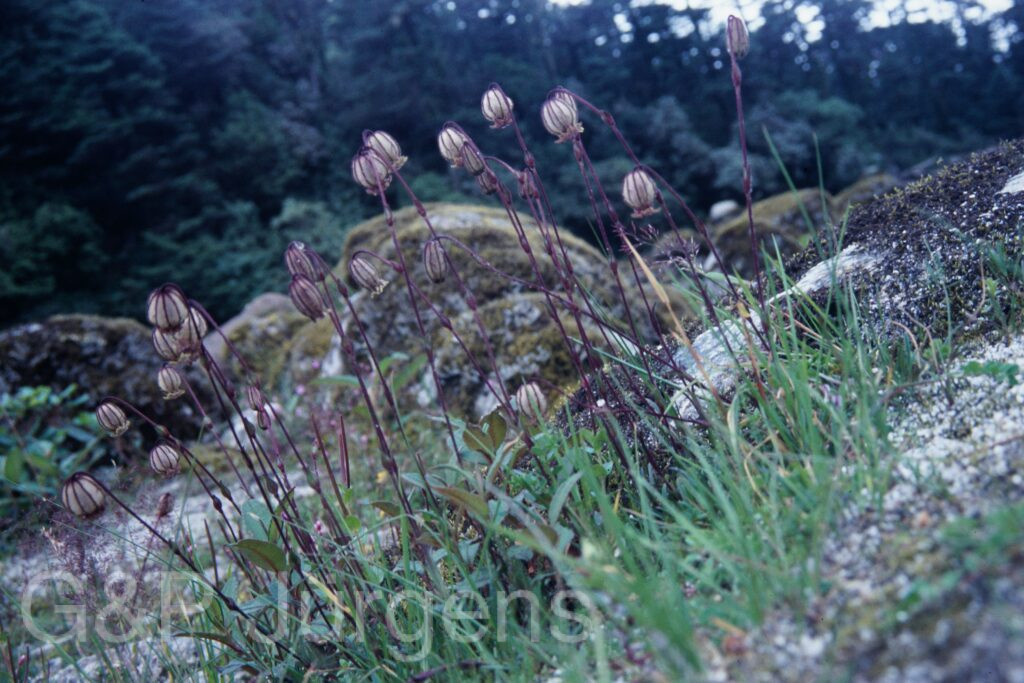
Nepal 99 517 ergebnis
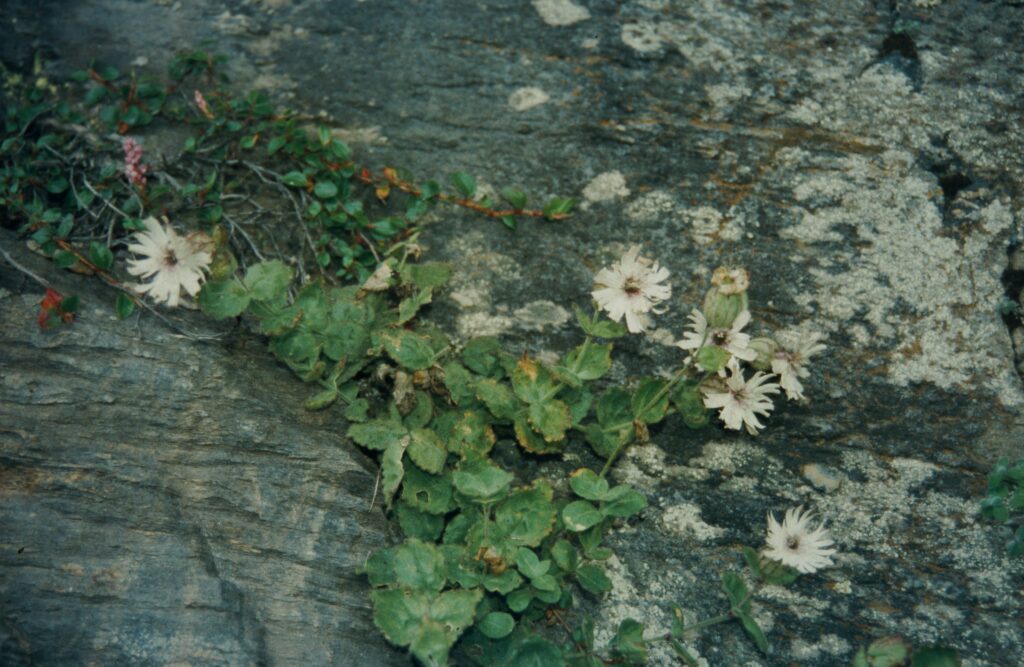
West-Nepal Churta-Khola 3800m, June

Description

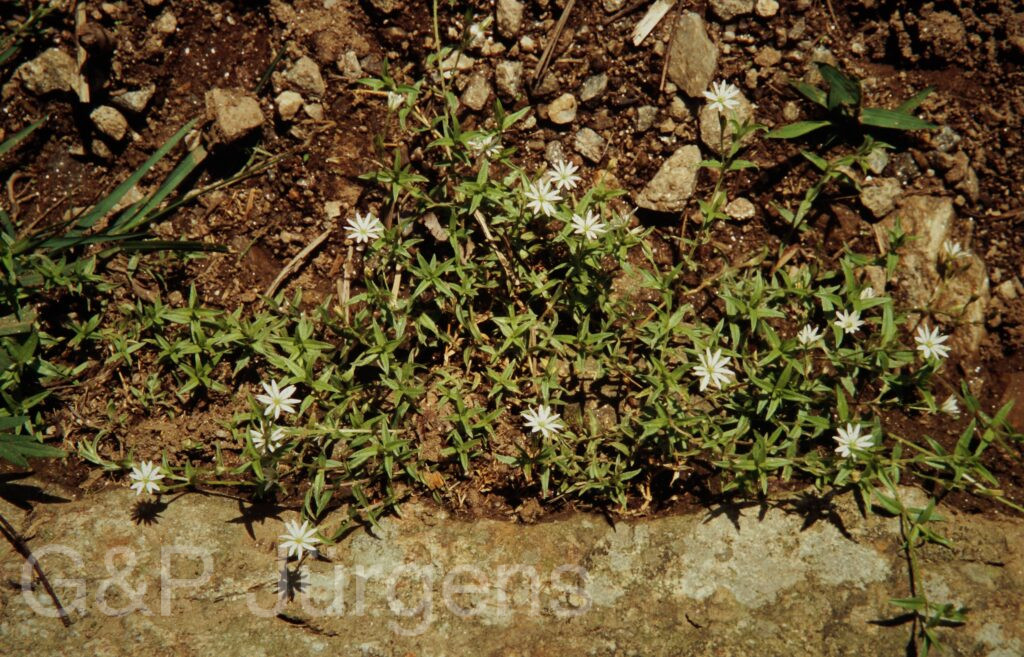
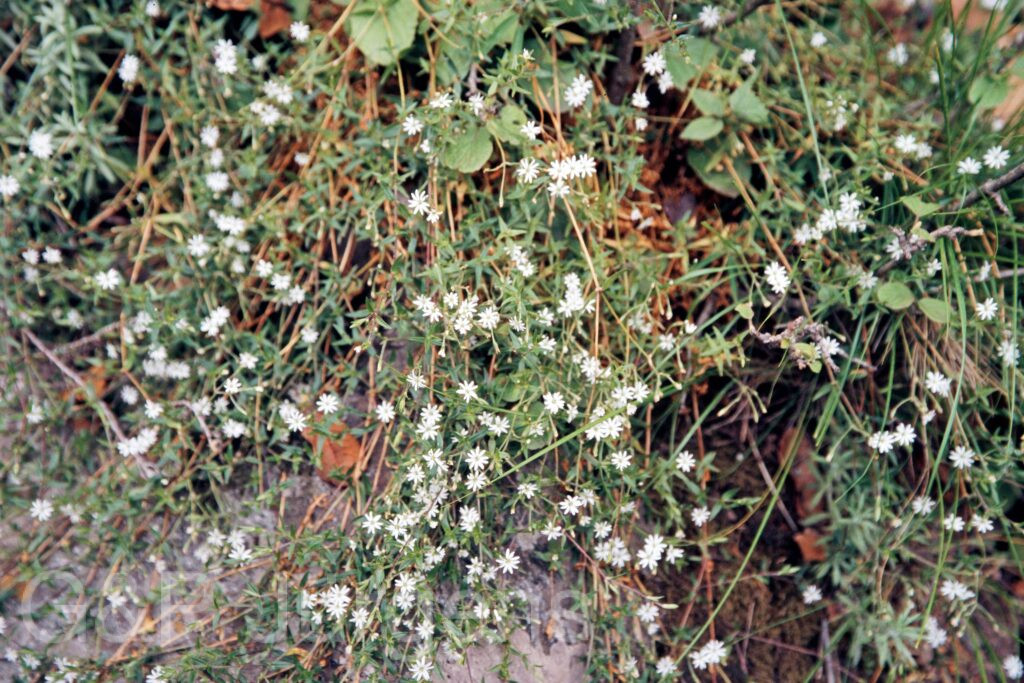
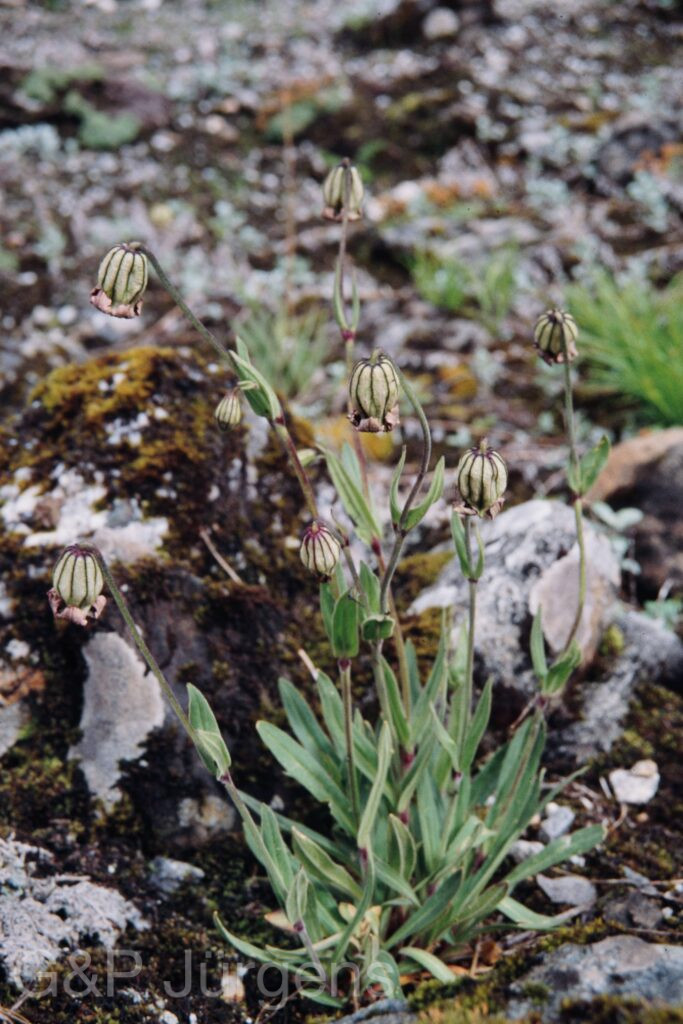
Silene himalayensis is a perennial campion widely distributed across the high mountains of Central and South Asia, ranging from Afghanistan and Tajikistan through Pakistan and the Himalaya (India, Nepal, Bhutan) into south-western China. GBIF records around 817 occurrences, concentrated in the Himalayan arc and the Chinese borderlands. It grows in alpine and subalpine habitats, favouring open meadows, grassy and stony slopes, screes and streambanks, generally between about 3000 and 4500 m. The West-Nepal population photographed at Churta-Khola (3800 m, June) is characteristic of its occurrence in moist alpine turf at the height of the short montane summer.

The species forms tufts from a branched woody rootstock, producing several ascending to erect, slender, often glandular-pubescent stems. The leaves are opposite, linear-lanceolate to oblanceolate, the basal ones tapering to the base and the cauline pairs sessile. The inflorescence is few-flowered, the flowers solitary or in lax dichasia and frequently nodding in bud. Each flower has a tubular to clavate, ten-nerved, glandular calyx, often suffused with purple, and five clawed petals, pink to purplish or whitish, the laminae bifid and bearing small coronal scales. Ten stamens and three styles are present; the fruit is an ovoid capsule opening by six apical teeth on a short carpophore, releasing reniform, tuberculate seeds.

The genus Silene is taxonomically complex in the Himalaya, and this species was transferred by Majumdar from Melandrium, reflecting uncertainty about generic limits between Silene and its segregates. Its glandular indumentum, nodding flowers and high-elevation ecology aid recognition among the many regional campions. As a broadly distributed, locally frequent alpine perennial it is not considered threatened, although high-altitude grazing and warming may locally affect marginal populations.

Author: (Rohrb.) Majumdar · Sources: POWO (Kew), GBIF, Flora of China, Flora of Pakistan, Flora of Bhutan, Annotated Checklist of the Flowering Plants of Nepal, Caryophyllaceae monograph of Silene (Bocquet)
(W.W. Sm.) Bocquet

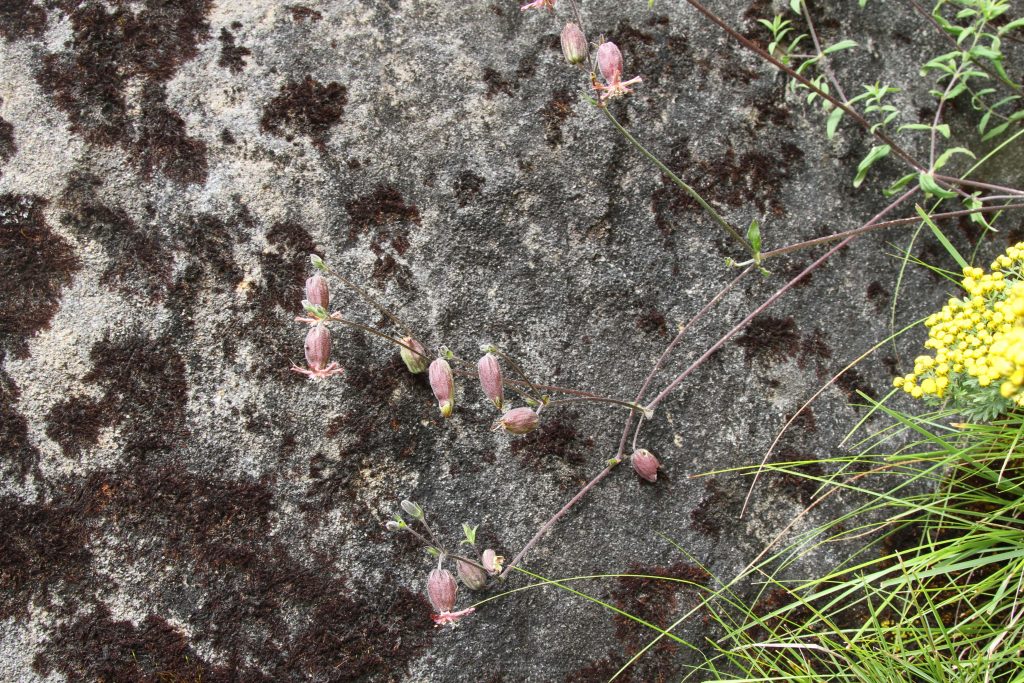
Bhutan2012 276
Bhutan Shele-La, 4000m September
Bhutan2012 277
Bhutan Shele-La, 4000m September

Description

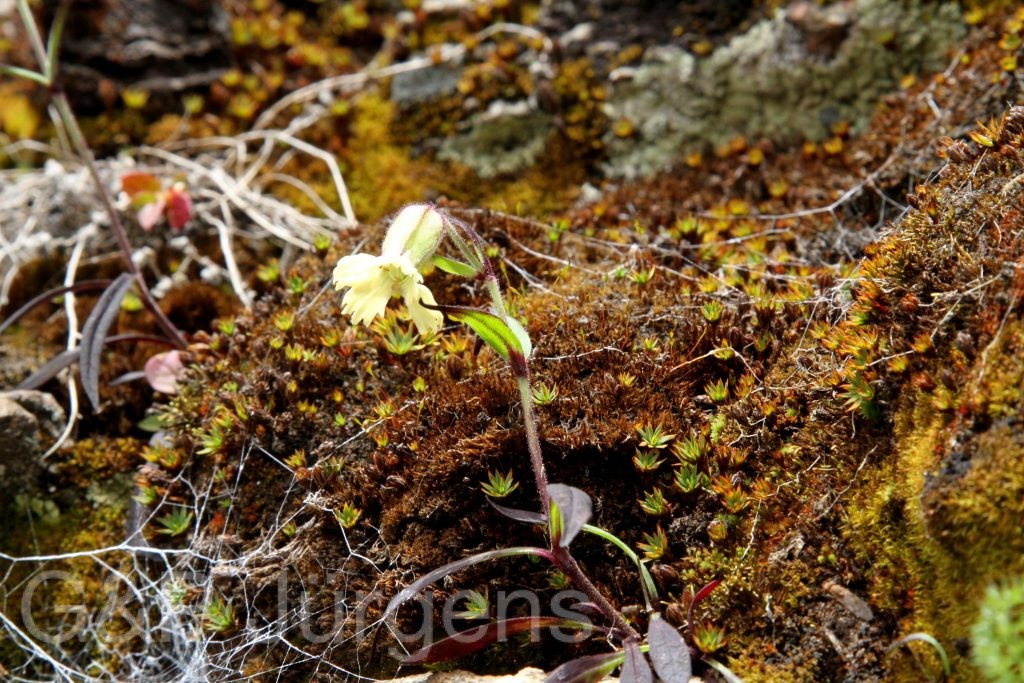
Silene indica var. bhutanica is a campion of the high Himalaya, recorded from Nepal, Bhutan, India and adjacent China. It occupies alpine and upper subalpine habitats, growing on open grassy slopes, stony pastures, screes and rocky ground in the high mountains, generally between about 3500 and 4500 m. The photographed plant comes from the Shele-La in Bhutan at around 4000 m, flowering in September towards the close of the monsoon season. With only eighteen georeferenced records this variety is sparsely documented, in keeping with its restricted eastern Himalayan range and the difficulty of access to its high-altitude habitats.

It is an erect to ascending perennial herb arising from a stout rootstock, the stems usually several, simple or sparingly branched and often glandular-pubescent above. The leaves are opposite, linear-lanceolate to oblong, sessile or shortly stalked, with entire ciliate margins. The flowers are borne in a lax cymose inflorescence; each has a tubular, inflated and prominently 10-veined calyx, often glandular and tinged purple, enclosing the claws of the petals. The five petals are pink to purplish, the limb bifid or notched and bearing a small scaly corona at the throat. There are ten stamens and three styles, characteristic of the genus, and the fruit is a capsule dehiscing by apical teeth and shedding numerous reniform seeds.

Silene is the largest genus of Caryophyllaceae, and var. bhutanica is distinguished within the variable S. indica complex by features of indumentum, calyx and petal form, its delimitation depending on revisionary treatment of Himalayan Silene. Given its narrow range and few records, its conservation status is poorly known; restricted high-alpine taxa of this kind are potentially vulnerable to grazing and climatic shifts.

Author: (W.W. Sm.) Bocquet · Sources: POWO (Kew), GBIF, Flora of Bhutan, Flora of China, Bocquet's revisions of Asian Silene

(Bocquet) Y.J.Nasir

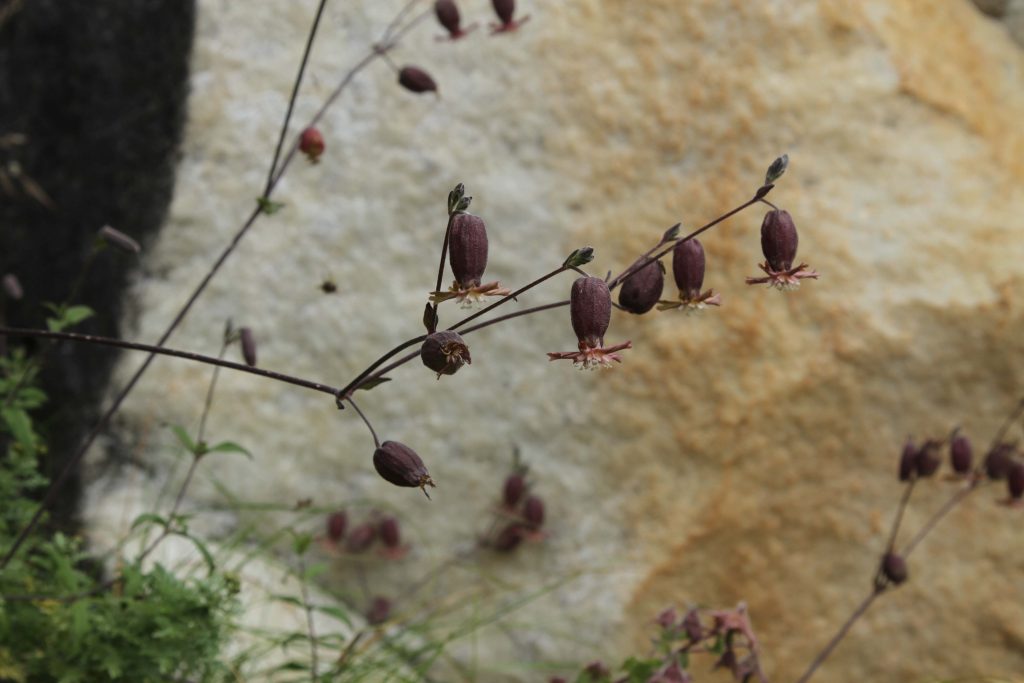
Garw 2005 312 ergebnis
India Garhwal Bagubas 3800m, October

Description

Silene indica var. edgeworthii is a western Himalayan campion recorded from Pakistan, India and Nepal, known from a small set of around 18 georeferenced occurrences that together delimit a fairly narrow distribution along the inner ranges. It is a plant of open, high-elevation habitats, favouring alpine and subalpine meadows, stony slopes, grassy hollows and the margins of moraines where snowmelt provides seasonal moisture. The individual illustrated near Bagubas in Garhwal (India) at about 3800 m in October exemplifies this affinity for the upper alpine zone, where it flowers and fruits late in the growing season as the surrounding turf begins to senesce. According to GBIF, the name carries a SYNONYM status, with Silene indica edgeworthii treated as the accepted name.

It is a perennial herb arising from a stout rootstock, producing erect to ascending stems that are often glandular-pubescent in the upper parts. The leaves are opposite and entire, the basal ones spathulate to oblanceolate and the cauline pairs narrower and sessile. The flowers are borne in a lax, few-flowered cyme; each is subtended by a tubular, prominently ten-nerved calyx that is frequently inflated and contracted at the mouth. The five petals are pink to whitish, clawed, and bear a bifid or shallowly lobed limb with a small coronal scale at the throat. The fruit is a many-seeded capsule dehiscing by apical teeth, the seeds reniform and minutely tuberculate.

Within Silene, this taxon belongs to a Himalayan complex in which infraspecific variation in calyx form, indumentum and petal limb has prompted repeated reassessment, hence its fluctuating rank as a variety versus an accepted entity. Its restricted range and dependence on intact alpine grassland make it a useful indicator of high-pasture condition, while heavy summer grazing and trampling along transhumance routes represent the principal pressures on its populations.

Author: (Bocquet) Y.J.Nasir · Sources: POWO (Kew), GBIF, Flora of Pakistan, Flora of Nepal, Flora of Bhutan Vol. 1, Bocquet Revision der Gattung Silene (Caryophyllaceae)

Majumdar

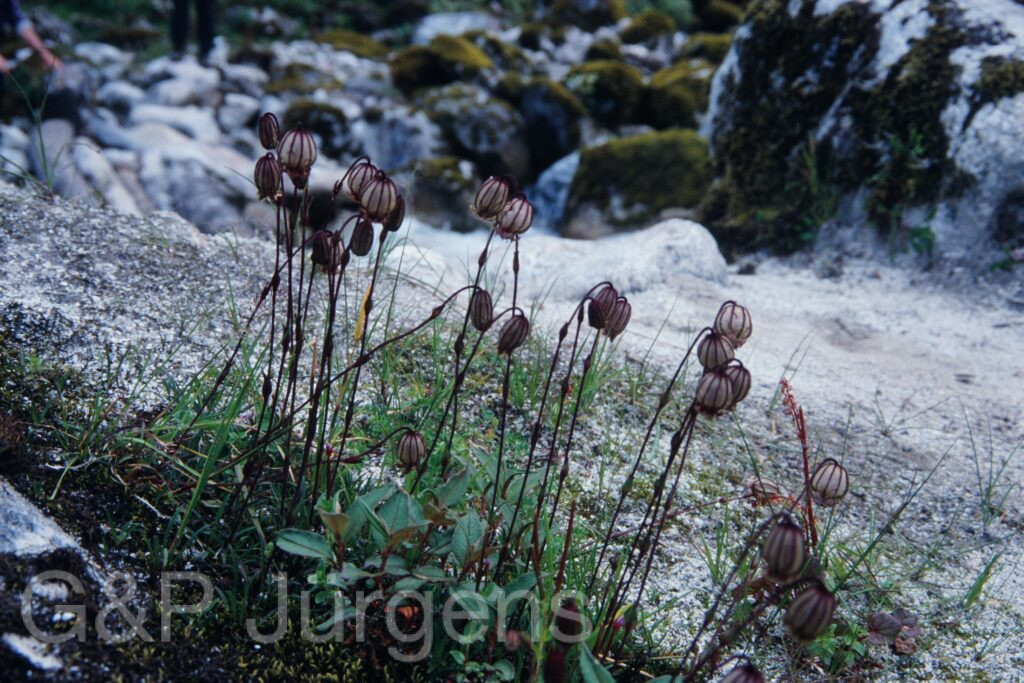
Bhutan2012 241
Bhutan, Shele-La 4000m, September
Bhutan2012 242
Bhutan, Shele-La 4000m, September

Description

Silene nepalensis is a Himalayan campion distributed from Pakistan through Nepal and northern India to Bhutan and south-central China, the nearly four hundred GBIF records confirming a fairly broad high-montane range across the range. It occupies alpine and subalpine meadows, open stony slopes, rock crevices and the margins of scrub above the forest, where it flowers into the late season. The photographed plant from the Shele-La in Bhutan at 4000 m, flowering in September, illustrates its tolerance of the cold, exposed high passes and its comparatively late, autumn flowering at the upper limits of the alpine zone.

The species is a tufted perennial herb arising from a stout, often woody rootstock and producing several ascending to erect stems. The leaves are opposite, narrowly lanceolate to linear and somewhat ciliate at the margins. The flowers are borne in a lax cyme; the calyx is tubular to clavate, ten-veined and inflated in fruit, while the five petals are clawed with a bifid, white to pinkish limb and a small coronal scale at the throat. The androecium has ten stamens and the ovary three styles; the fruit is a capsule dehiscing by six apical teeth and containing numerous reniform seeds.

Silene nepalensis is an accepted species of the large, taxonomically difficult genus Silene (Caryophyllaceae, tribe Sileneae), where the inflated ten-veined calyx and clawed coronate petals are diagnostic. Its perennating woody base and crevice habit are adaptations to the desiccating winds and shallow soils of the high Himalaya. The species is widespread and not currently regarded as threatened, though its alpine populations are sensitive to grazing pressure and warming-driven range contraction.

Author: Majumdar · Sources: POWO (Kew), GBIF, Flora of China, Flora of Bhutan, Bocquet & Chowdhuri revision of Himalayan Silene (Caryophyllaceae monograph)

(Edgew.) Majumdar

Sikkim2003 215 G299
Sikkim Dzongri 3900m, August
Sikkim2003 216 P300
Sikkim Dzongri 3900m, August

Description

Silene nigrescens is an alpine campion of the Himalaya and adjacent mountains, ranging across China, Nepal, India and Bhutan and into Myanmar; GBIF records about 410 occurrences concentrated in the eastern and central Himalaya. It grows in high alpine meadows, grassy slopes, screes and stony pastures, generally between about 3500 and 4800 m. The illustrated plant was photographed at Dzongri in Sikkim at around 3900 m in August, during the monsoon flowering season when these dark-flowered campions colour the short turf of the eastern Himalayan uplands above the rhododendron scrub.

The species is a perennial herb growing from a slender, branched rootstock, forming low tufts of ascending to erect stems that are often glandular-hairy above. The leaves are opposite, sessile, narrowly lanceolate to oblanceolate, the lower ones crowded near the base. The flowers are nodding and few, with an inflated, ten-nerved, often dark-purple to nearly blackish calyx that gives the species its name; the petals are dingy purple to brownish with a bilobed limb and a small ligulate scale at the throat. The flower has three styles, and the capsule dehisces by six teeth, releasing numerous reniform seeds.

Described as (Edgew.) Majumdar from an Edgeworth basionym, Silene nigrescens belongs to the high-alpine, dark-calyx group of Himalayan Silene whose species limits are notoriously difficult owing to variation in vestiture and flower colour. Its broad eastern-Himalayan to southwest Chinese distribution makes it secure, and it forms part of the characteristic flora of monsoon-influenced alpine meadows, pollinated mainly by insects drawn to its sombre nodding flowers.

Author: (Edgew.) Majumdar · Sources: POWO (Kew), GBIF, Flora of China, Flora of Bhutan, Bocquet: Revision of Himalayan Silene

Bocquet & N.P.Saxena

Sikkim2003 259 P357
Sikkim Dzongri 4200m, August

Description

Silene purii is a narrowly distributed high-alpine herb of the eastern Himalaya, recorded by GBIF only from Bhutan, with just four occurrences and closely allied populations extending into adjacent Sikkim. It occupies open turf, rocky slopes, moraine and grassy hollows above the treeline, generally between about 3900 and 4500 m. The illustrated plant was photographed at Dzongri in Sikkim at roughly 4200 m in August, during the brief monsoon flowering season when these tufted campions exploit the short, cool growing window of the eastern Himalayan summits.

The species is a perennial herb forming low tufts from a branched woody rootstock. The stems are short, ascending and often glandular-pubescent, bearing opposite, narrowly lanceolate to linear, somewhat fleshy leaves crowded toward the base. The flowers are few, terminal and shortly stalked; the calyx is tubular to inflated, ten-nerved and frequently purplish, while the petals are pink to purple with a bilobed or notched limb and a small scale at the throat. The ovary bears three styles and matures into a capsule dehiscing by six apical teeth, releasing numerous reniform seeds.

Named for its collector, Silene purii (Bocquet & N.P.Saxena) is one of many Himalayan campions whose limits remain poorly understood owing to scant collections and the plasticity of alpine Silene. Its extreme rarity in the herbarium record and restricted known range make it of considerable phytogeographic interest as an eastern Himalayan endemic. The paucity of records suggests it may be genuinely localised and potentially vulnerable, warranting targeted survey and conservation assessment.

Author: Bocquet & N.P.Saxena · Sources: POWO (Kew), GBIF, Flora of Bhutan, Flora of China, Bocquet: Revision of Silene sect. Physolychnis

H. Hara

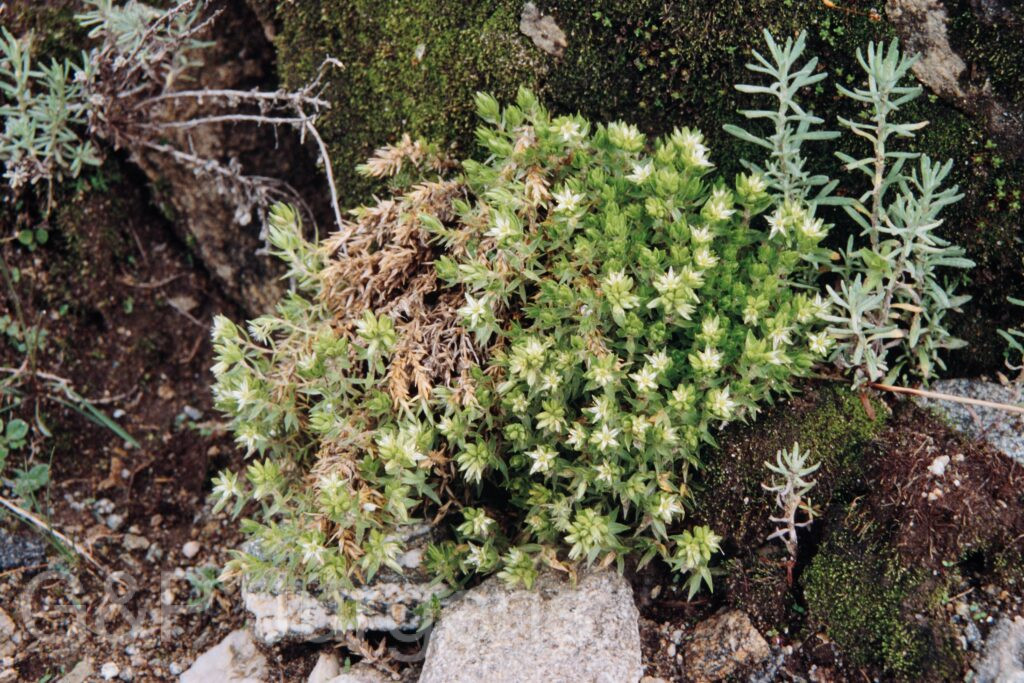
Nepal 99 554 ergebnis
West-Nepal Churta-Khola 4230m, June

Description

Stellaria congestiflora is a high-alpine chickweed of the Himalaya, recorded from Nepal, China, Bhutan and India, a restricted and infrequently collected distribution reflected in its small number of georeferenced records. It grows in alpine meadows, on stony slopes, screes and the gravelly margins of streams and snowbeds at high elevations, generally well above 4000 m. The plant photographed at Churta-Khola in West Nepal at 4230 m in June is a characteristic occurrence in the cold, open alpine zone, flowering soon after snowmelt at the upper limit of vascular plant growth.

It is a small, tufted or mat-forming perennial herb arising from a slender, branched rootstock. The stems are short, slender and often densely clothed, bearing opposite, sessile, narrowly lanceolate to linear leaves. As the epithet indicates, the small white flowers are aggregated into congested, head-like terminal clusters subtended by leafy bracts, rather than borne in the open, spreading cymes typical of many relatives. Each flower has five sepals and five deeply bifid white petals, ten stamens and a superior ovary bearing three styles; the fruit is a capsule dehiscing by valves to release several small seeds.

Stellaria is a large, cosmopolitan genus of the Caryophyllaceae distinguished by the deeply two-cleft petals, and the dense, congested inflorescence of S. congestiflora, described by H.Hara, separates it from the looser-flowered Himalayan species. Its narrow, high-elevation range makes it potentially sensitive to alpine climate change and habitat shifts, though its remote habitat limits direct human pressure. As a cushion-like alpine herb it contributes to the sparse but specialised flora of the upper screes and snowbed margins.

Author: H. Hara · Sources: POWO (Kew), GBIF, Flora of China, Annotated Checklist of the Flowering Plants of Nepal, Hara's Flora of Eastern Himalaya, monographic studies of Himalayan Stellaria (Caryophyllaceae)

Edgew. & Hook. f.

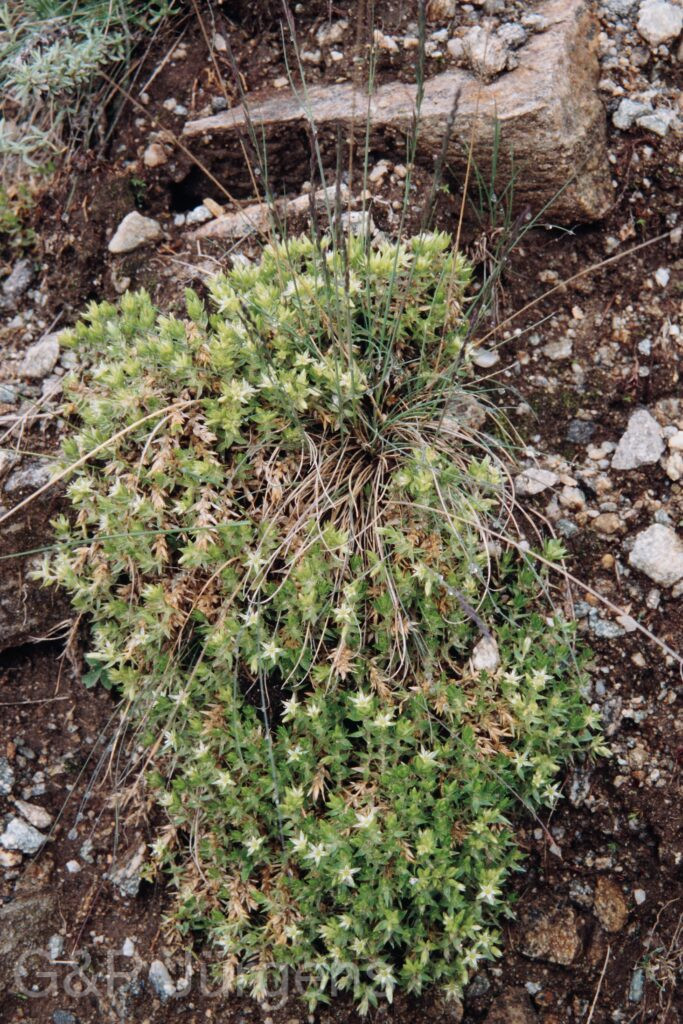
Nepal 99 555 ergebnis
West-Nepal Churta-Khola 4100m, June
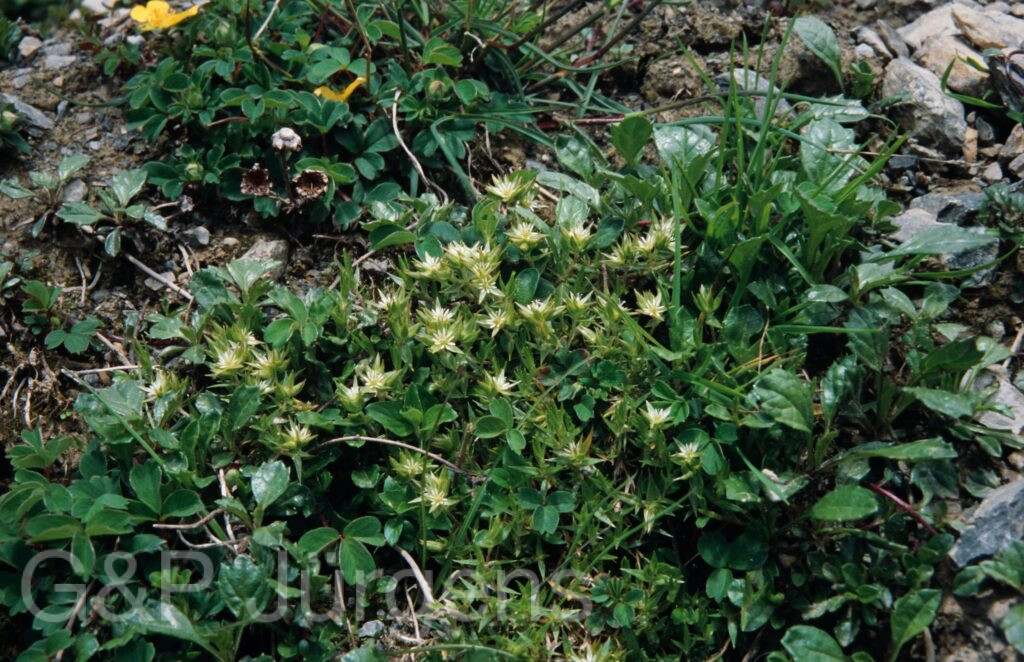
Nepal 99 799 ergebnis
West-Nepal Baga-La-Phedi 4500m, July

Description

Stellaria decumbens var. pulvinata is a diminutive alpine chickweed of the Himalaya and adjoining Tibetan plateau, recorded by GBIF from China, India, Nepal and Bhutan with around 104 occurrences. The variety occupies cold, exposed alpine and subnival terrain, where it grows in rock crevices, on stabilised scree and among cushion vegetation at very high elevations. It was photographed in West Nepal in the Churta-Khola at 4100 m in June and near the Baga-La-Phedi at 4500 m in July, habitats typical of its preference for open, gravelly ground close to the upper limit of vascular plant life.

As its epithet pulvinata implies, this variety forms dense, hard, compact cushions, more condensed than the laxer typical S. decumbens. The slender, much-branched stems are crowded and decumbent, bearing small, sessile, narrowly lanceolate to ovate leaves arranged in opposite pairs, often somewhat fleshy and ciliate at the margins. The minute flowers are solitary or few, with five free, lanceolate, acuminate sepals and five white petals that are deeply bifid for roughly half their length, the characteristic forked petals of Stellaria; stamens are typically ten and the styles three. The fruit is a small ovoid capsule dehiscing by six valves and releasing several reniform, finely tuberculate seeds.

GBIF accepts the variety. The cushion habit represents convergent adaptation to wind desiccation, frost and a short season shared by many unrelated high-Himalayan plants. Within Caryophyllaceae the species belongs to a complex of dwarf alpine Stellaria whose infraspecific limits remain debated. No conservation concern attaches to this widespread, naturally cryptic high-altitude taxon.

Author: Edgew. & Hook. f. · Sources: POWO (Kew), GBIF, Flora of Nepal, Flora of China, monograph of Himalayan Caryophyllaceae

Edgew.

Nepal 2009 68 ergebnis
Nepal Helambu Yangri 1330, May
Garh 07 340 ergebnis
India Garhwal Dohdi-Tal 3070m, June

Description

Stellaria semivestita Edgew. is a delicate herbaceous member of the Caryophyllaceae native to the Himalaya and the mountains of southwestern China. GBIF data place it in Nepal, India and China, with a modest 22 georeferenced records reflecting its inconspicuous habit and uneven collection. The species occupies a broad altitudinal span, from warm-temperate forest understorey and shaded banks at around 1,300 m up to subalpine meadows and damp rocky slopes near 3,000 m. The cited gatherings from Helambu (Yangri, Nepal) at 1,330 m and from Dohdi-Tal in Garhwal at 3,070 m illustrate this ecological amplitude across the monsoon-influenced Himalayan front.

The plant is a weak-stemmed, ascending to straggling perennial with quadrangular stems that are pubescent at least in lines, the indumentum being uneven or "half-clothed" as the epithet implies. The leaves are opposite, sessile to shortly petiolate, ovate-lanceolate to lanceolate, acuminate and ciliate at the margins. Flowers are borne in lax, leafy dichasial cymes; the five sepals are lanceolate and the five white petals are deeply bifid, equalling or slightly exceeding the calyx. The fruit is an ovoid capsule dehiscing by six valves and containing numerous reniform, finely tuberculate seeds.

Stellaria semivestita belongs to a taxonomically complex genus in which species delimitation rests on subtle differences in pubescence, petal length and seed sculpture. It is of no conservation concern, being widespread and adaptable, but it contributes to the ground-layer diversity of Himalayan forests and clearings and exemplifies the genus's success across a wide elevational gradient.

Author: Edgew. · Sources: POWO (Kew), GBIF, Flora of China Vol. 6, Flora of Nepal, Flora of Pakistan (Caryophyllaceae), Majumdar: Caryophyllaceae of India

Kurz

Bhutan2014 1072
Bhutan Paro 2400m, May

Description

Stellaria vestita is a widespread chickweed of tropical and subtropical Asia, ranging from the Himalaya through southern China and Taiwan to Indochina, the Malesian archipelago, the Philippines and New Guinea, and eastward to Japan and Korea; GBIF records over 2,000 occurrences. It grows in open forest, scrub, grassy slopes, hedgerows and disturbed ground, generally from low elevations to about 2,800 m. The individual photographed near Paro in western Bhutan at 2,400 m in May reflects its presence in the temperate mid-montane belt of the eastern Himalaya, on moist, partially shaded banks and forest margins.

It is a perennial herb with weak, ascending to straggling stems 30-90 cm long, terete and densely clothed throughout with spreading white hairs, hence the epithet vestita ('clothed'). The leaves are opposite, sessile or shortly petiolate, ovate to ovate-lanceolate, 1-4 cm long, acuminate and pubescent on both surfaces. The inflorescence is a lax, dichasial cyme of several flowers on slender pedicels. Each flower has five lanceolate, pubescent sepals and five white petals deeply cleft nearly to the base into two lobes, the petals about equalling the calyx; there are typically ten stamens and three styles. The fruit is an ovoid capsule dehiscing by six valves and containing several reniform, tuberculate seeds.

Within the large and taxonomically complex genus Stellaria, S. vestita is recognised by its dense indumentum, deeply bifid petals and pantropical Asian distribution, features separating it from the S. media group and from glabrous montane species. The deeply two-lobed white petals are typical of the genus and aid pollination by small insects, while the many-seeded capsules favour effective local dispersal. As a common, weedy and ecologically tolerant species occupying a wide range of habitats and elevations, it is of least concern and faces no recognised conservation threat.

Author: Kurz · Sources: POWO (Kew), GBIF, Flora of China, Flora of Bhutan, Annotated Checklist of the Flowering Plants of Nepal, Caryophyllaceae monograph

  • 1
  • 2