
(Edgew.) Majumdar
Description
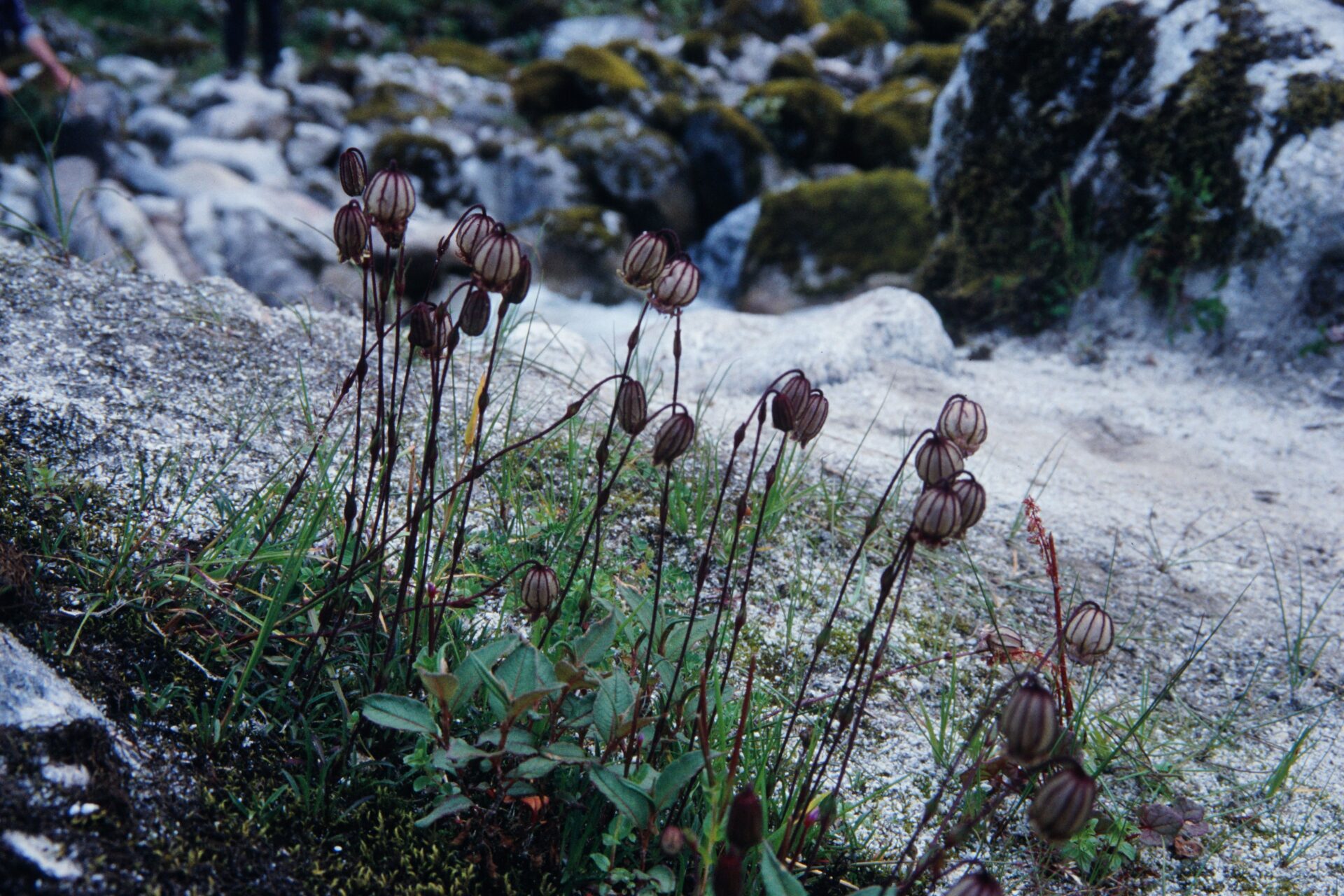
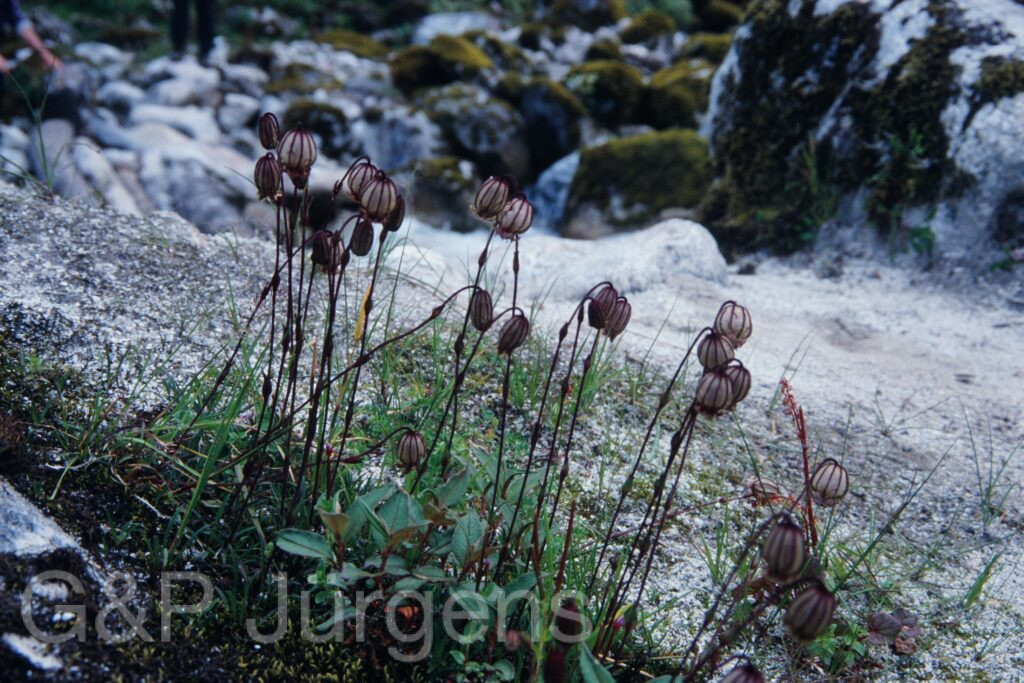
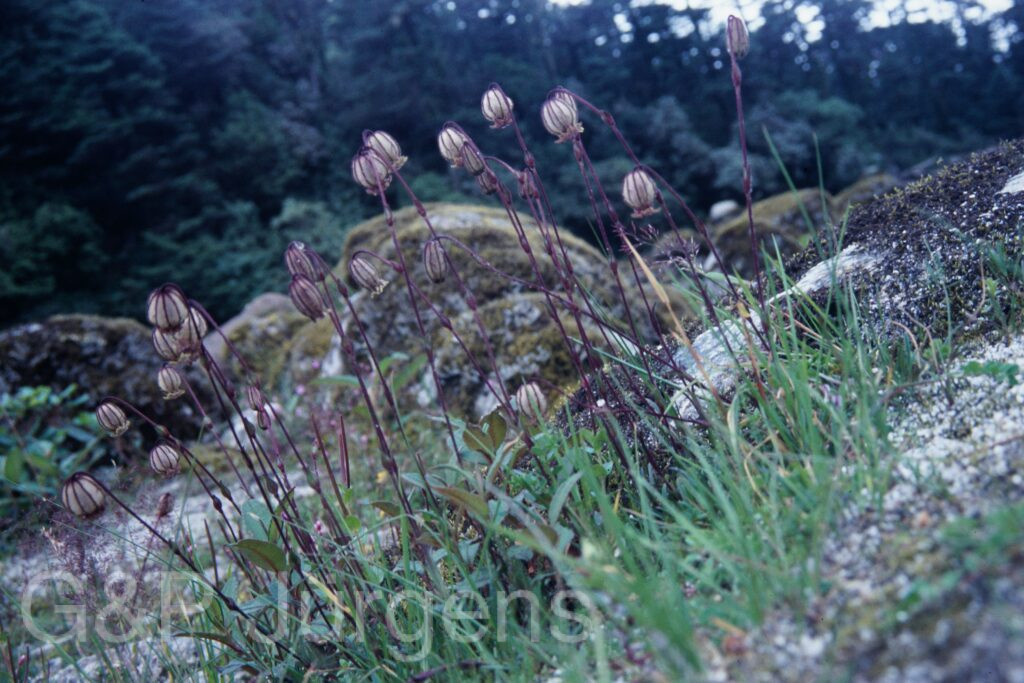
Silene nigrescens is an alpine campion of the Himalaya and adjacent mountains, ranging across China, Nepal, India and Bhutan and into Myanmar; GBIF records about 410 occurrences concentrated in the eastern and central Himalaya. It grows in high alpine meadows, grassy slopes, screes and stony pastures, generally between about 3500 and 4800 m. The illustrated plant was photographed at Dzongri in Sikkim at around 3900 m in August, during the monsoon flowering season when these dark-flowered campions colour the short turf of the eastern Himalayan uplands above the rhododendron scrub.
The species is a perennial herb growing from a slender, branched rootstock, forming low tufts of ascending to erect stems that are often glandular-hairy above. The leaves are opposite, sessile, narrowly lanceolate to oblanceolate, the lower ones crowded near the base. The flowers are nodding and few, with an inflated, ten-nerved, often dark-purple to nearly blackish calyx that gives the species its name; the petals are dingy purple to brownish with a bilobed limb and a small ligulate scale at the throat. The flower has three styles, and the capsule dehisces by six teeth, releasing numerous reniform seeds.
Described as (Edgew.) Majumdar from an Edgeworth basionym, Silene nigrescens belongs to the high-alpine, dark-calyx group of Himalayan Silene whose species limits are notoriously difficult owing to variation in vestiture and flower colour. Its broad eastern-Himalayan to southwest Chinese distribution makes it secure, and it forms part of the characteristic flora of monsoon-influenced alpine meadows, pollinated mainly by insects drawn to its sombre nodding flowers.
Author: (Edgew.) Majumdar · Sources: POWO (Kew), GBIF, Flora of China, Flora of Bhutan, Bocquet: Revision of Himalayan Silene